How I Got My Career in Foreign Policy: Tjada D’Oyen McKenna
Tjada D’Oyen McKenna has always been driven by a commitment to expanding opportunities for others. The CFR member and CEO of Prosper Global spoke to CFR about career pivots, leading through uncertainty, and the lessons she has learned from the private, public, and humanitarian sectors.
By experts and staff
- Published
- Senior Writer/Editor, Latin America
- Tjada D'Oyen McKennaCEO, Prosper Global
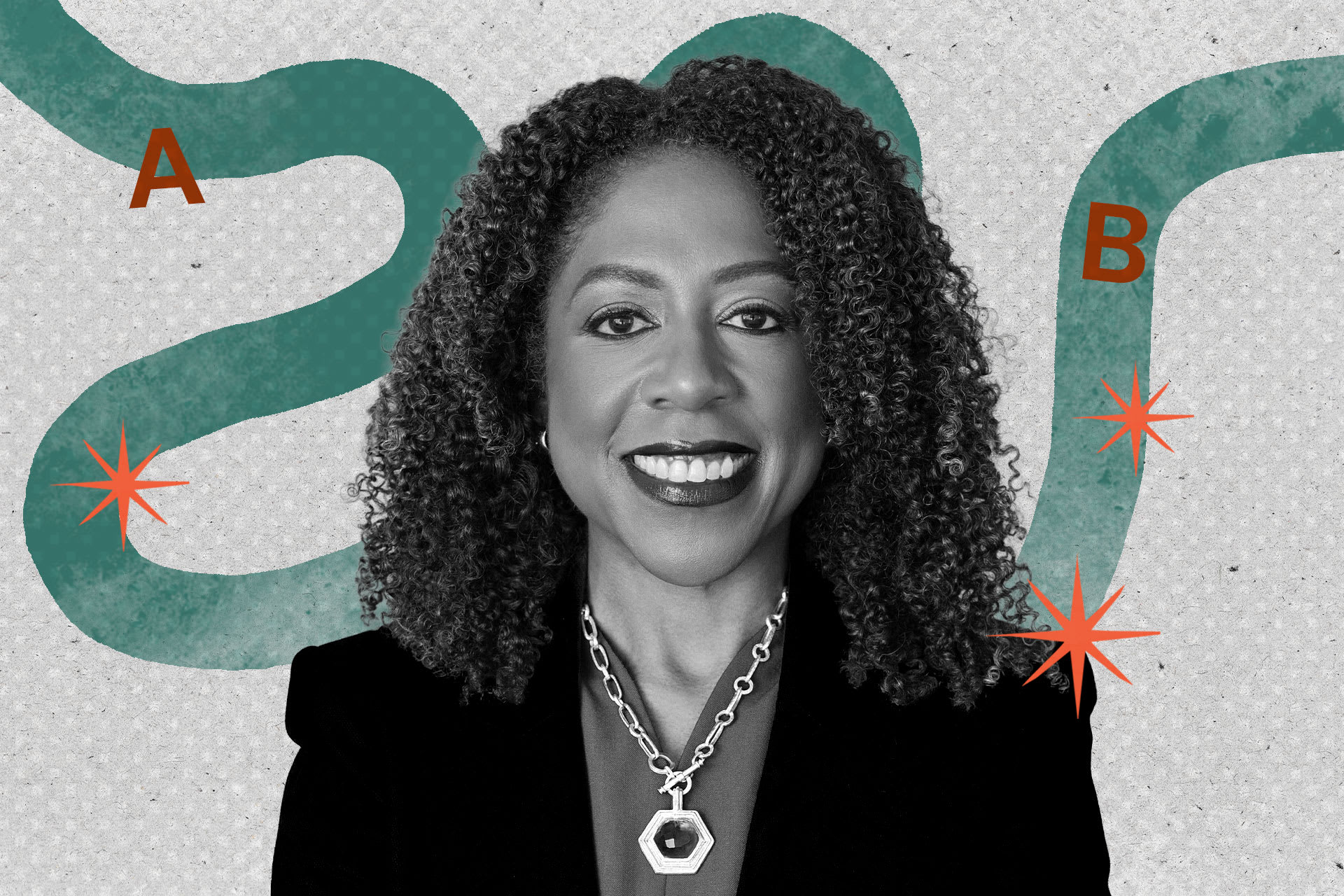
CFR member Tjada D’Oyen McKenna is no stranger to change. She shaped her career “one pivot at a time,” moving from the private sector to government and then to the humanitarian sector. She currently serves as CEO of Prosper Global (formerly Mercy Corps), a global humanitarian aid organization working with communities around the world facing conflict, climate change, and economic hardship. Read more about how McKenna’s experiences across sectors shaped her approach to leadership, why she embraces calculated risks, and why she believes in maintaining constant curiosity.
Here’s how Tjada D’Oyen McKenna got her career in foreign policy. If you’re interested in this series, check out more editions here.
What did you want to be when you were growing up?
I imagined that I would become a lawyer in international law. I definitely wanted to travel abroad. I grew up in the Washington, DC, area primarily, surrounded by lawyers and federal employees, so that was where my mind took me.
After graduating from Harvard with a bachelor’s and an MBA, you worked in the private sector at McKinsey, American Express, and General Electric. What prompted the shift to the humanitarian field? Were there any lessons from those private sector experiences that you took with you?
I got to understand how big American companies work and how much power they wield in people’s day-to-day lives. I also became really interested in business itself—how products are made, how they’re sold, and where business opportunities are. Intellectually, I was very stimulated. I always imagined that I would use my business career to be helpful. I wanted to climb the corporate ladder like everyone else, but I was always looking for opportunities to serve.
When I was at McKinsey, I said to a partner that I was very interested in African development. That partner suggested that I start doing some agriculture work. That ended up being the most relevant path to humanitarian work, although at the time I was enjoying what I was learning in the private sector.
By 2005, I was working a lot of hours at a job I didn’t love. Then Hurricane Katrina hit New Orleans, which happened to coincide with a milestone birthday, and I started thinking: given all the time that I’m spending on my career, how could I be more directly useful? My first point of entry was actually more of a development job than a humanitarian one, at the Gates Foundation helping smallholder farmers access markets. It really drew directly on my private-sector experience, which was a nice way for me to pivot into something more service-oriented and international while still leveraging the skills that I had developed in the private sector.
Development and humanitarian work are so closely related to each other, it might be easier to pivot between those two than go into a totally different field.
Coming from the private sector, I probably could have done microfinance or finance, but one pivot at a time.
You mentioned the Gates Foundation, but you also did a lot of work at the U.S. Agency for International Development (USAID) on hunger prevention. What did those experiences teach you about how change can actually happen in the development world?
The Gates Foundation was my first direct international development sector experience. One thing it instilled in me is that you have to work extra hard to really get to the truth.
When President Obama was elected, my boss at Gates, Rajiv Shah, was appointed to run USAID. Based on the work I’d been leading, he asked me to join the team building one of Obama’s signature development initiatives. Ultimately, I helped launch and lead Feed the Future. That time in government was so invaluable: I learned a lot of different theories of development, met a lot of people, and it was a huge leadership experience. My mother was a federal government employee, so I grew up with some understanding of how the government worked. Stepping into USAID taught me just how different leading in that environment could be. I had to learn the different levers I could use to bring together people with very different incentive structures, motivations, and time horizons in order to move change forward.
Government is the only place where you can really affect so many people at scale. At Gates, we talked a lot about scaling. They always said, “The government is the ultimate scaler.” I learned that quite quickly. In the midst of learning how to develop good programming and steer government funds, I was also learning what it meant to be accountable to Congress and to talk to our constituents, which were nonprofit groups or other actors. It was a unique experience and transformational in my career.
I’m sure there’s a lot of red tape in government, too.
I learned a lot about flexibility. As a political appointee, I learned how to work through conflict and how to work with people that didn’t always agree with me. I got very comfortable deploying different tactics. You have to be really agile and willing to try a lot of approaches to make progress.
You then transition to serving as COO of Habitat for Humanity, and then COO for CARE. What was different about leading those large international organizations compared to government work?
One thing I learned from my private-sector experience was that I really enjoyed working in and leading operating environments. As a political appointee, I probably could have stayed in government long term, but what drew me to the international NGO sector was that it’s so different. You have more flexibility in how you approach problems and in how you mobilize funds and donor support to make that work possible.
It’s also just a very complex operating environment, dealing with thirty or forty countries. Habitat, CARE, and where I am now, Prosper Global—we are in so many different countries. In government, there’s a lot of infrastructure that you never have to think about, such as the entire embassy system. But being on the operating side of an NGO means managing employees, developing teams, and working in different languages around the world, all without that infrastructure of the government behind you. These are big operational roles, with a lot of depth to them.
I’m sure there is also a lot of pressure, too. You took charge of Prosper Global in late 2020, and steered the organization through the COVID-19 pandemic and substantial foreign aid cuts. How have those challenges changed the way you lead the organization and make decisions?
One thing that’s especially important when leading in a time of crisis is learning how to communicate uncertainty. You can never communicate enough in these roles. I think being comfortable with saying, “These are our hypotheses, and some things may work, some things may not work.” This also involves truly listening to staff, having empathy for people’s day-to-day, and learning how to prioritize the causes we’re working toward.
It’s easy sometimes to get lost in the noise or the drama, but at the end of the day, there are more people in need of humanitarian assistance than ever, and they are living through increasingly brutal circumstances and wars. It’s important to stay focused on the needs of the populations and the communities we’re serving.
We’re building a broader base of understanding and support for this work. We can’t take for granted that people understand what we’re doing or why we’re doing it. That can sometimes mean taking a step backward to ask, “How do I explain this in plainer language? How do I talk about this in different ways while still continuing to do the exact same work?” I think it’s about being in the trenches together and being open about how we’re being flexible, that we may not always get it right, and that we’re going to keep moving and keep doing what our mission tells us we should be doing.
What skills or relationships have helped you succeed, not just at Prosper Global, but in previous leadership roles?
The number one thing is just to have a constant curiosity. There is humility in curiosity: Why are things this way? What am I not seeing? Just the willingness to talk to different types of people and really listen. The more senior you become, the more you have to seek that out and show openness to different opinions.
The other thing that has served me well in my career—and I really encourage people to do this—is the fact that I have been in the public sector, the private sector, and now in the NGO sector. All of those types of organizations are different, but they’re also interrelated. Being able to talk to those different audiences effectively and really help them understand each other is more unique than it should be in our sector. There’s a lot to learn and gain from seeking out opportunities across sectors.
So you’re never fully working in a silo.
Yes, and especially at the leadership level, there’s so much management. I started as a program officer giving grants, but I’m very grateful for my private sector experience learning how to manage a balance sheet, how to think about expenses, and what different human resources policies might be. So much of running these big organizations is about making business decisions, and I think it’s really valuable to have that experience in addition to really understanding the day-to-day program work.
You’ve been in a lot of high-level leadership positions for quite some time. What is something about leadership that you learned only after stepping into that kind of role?
I went from being a COO to a CEO, and there are still things that astound me about being the CEO. I often think, “I wish I knew then what I know now.”
There were so many times when I was more junior that I was sure I understood a situation, or why or how a decision had been made. In hindsight, I realize I knew nothing, or I was so overconfident that I knew more. There are many reasons why I wouldn’t have had complete information—it could have been because of privacy reasons or issues in places I just didn’t manage. So I learned to understand that decisions are more complex than what they appear to be, particularly when there are humans involved.
As I mature in leadership, I think about how important it is to remember that we are all human, and that means understanding that this is one element of a person’s total life and really making room for some of those human frailties. When I was younger or more junior in leadership, I didn’t see all those perspectives.
What advice would you give someone who wants to get involved in the humanitarian sector or international affairs?
Be clear about what your core skill is and really use that to anchor your way into whatever position you’re going for.
Second, go toward positions and people where you will learn the most or that will challenge you the most. A lot of times, I raised my hand for things that were new and unknown. So going to USAID, helping set up Feed the Future—that was unknown. Even when I joined the Gates Foundation, the agriculture team was just starting and I was hire number seven. Being willing to raise your hand and take the side assignment, or even the new thing that’s not as secure, is important.
I’ve been fortunate to work for great people who did interesting things who I was able to follow, learn from, or grow with. I mentioned Raj Shah—I worked with him at Gates and then went with him to USAID. Being able to see him across two different organizations was valuable, but he also grew and changed a lot during that time period.
I think especially for people in government, thinking about who the principal is and what you’ll learn from that person helps a lot. Making sure you’re always looking at the skill or expertise that you’re going to gain, and having a willingness to try new things, has really helped me quite a bit.
Did it ever give you pause to put yourself out there for a new position that wasn’t fully established yet?
The Gates Foundation is very established, so I’m conscious that I took controlled risks that were good for me. But when I left the private sector and went to the Gates Foundation, it was a huge financial decision with real implications that I had to weigh at the time.
A boss once said to me, “The only thing that you can’t reverse in life is having children.” I’ve really taken that to heart. I know I can go back to a job, which has allowed me to take more risks. I have younger children now, so I might not have as much risk tolerance as I had before. But I was very aware when I had more freedom, and it’s important to take advantage of that and recognize that it’s okay to make a mistake.
To close the conversation, what is a moment in your career that you will simply never forget?
There’s one moment that reminds me of why I do what I do for a living. I had this opportunity to go to a very remote area of Malawi during a drought. This was years ago, I was around twenty-five. There was a woman there who looked to be about my age and she had a child that kept reaching for her chest for milk, but it was clear she had none. To see that child constantly patting and trying for food and getting frustrated was an image that I’ll never forget. It’s what really motivated me to work toward hunger and food security. It’s a reminder every day of why we do what we do.
A more hopeful memory was when the United States hosted one of the last Group of Eight (G8) meetings at Camp David. There was an Africa session during the G8 meeting devoted to food security. Ahead of the meeting, we had a community meeting where we brought together a few African heads of state, Bono, and various other officials to talk about the importance of food security.
It was this wonderful moment to see Bono talking about this issue that I was passionate about, to see heads of state there, and to know that there was going to be this important meeting the next day on this subject. It was just a real moment of pride and celebration.
Two very memorable moments for different reasons, but I think impactful all the same.
This interview has been edited for length and clarity.
This work represents the views solely of the author(s). The Council on Foreign Relations is an independent, nonpartisan membership organization, think tank, and publisher, and takes no institutional positions on matters of policy.