How I Got My Career in Foreign Policy: Rebecca Blumenstein
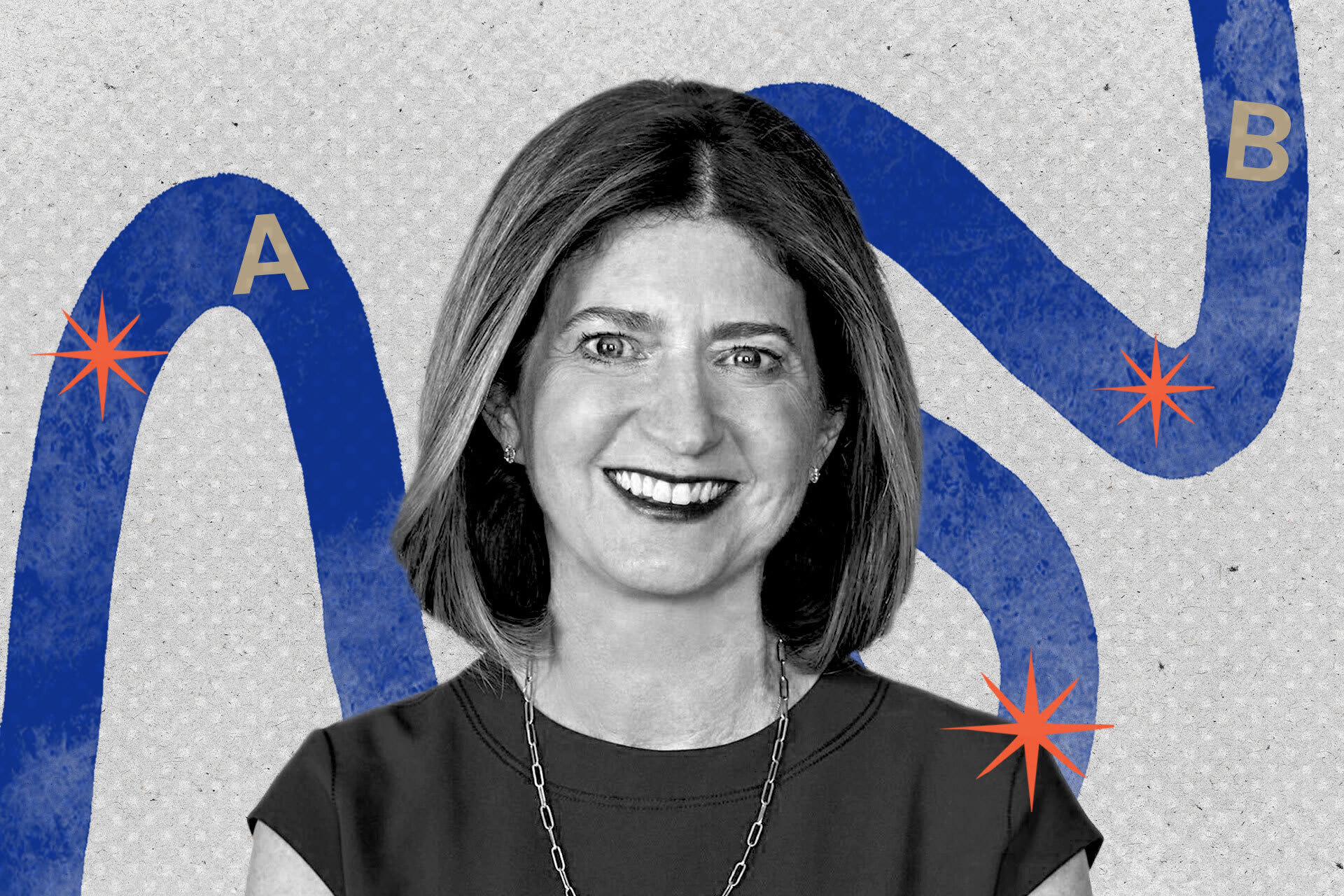
NBC President of Editorial Rebecca Blumenstein spoke to CFR about the experiences, risks, and mentors that have shaped her career, from small-town newsrooms to some of the country’s most influential news organizations.
By experts and staff
- Published
- Senior Editor
- Rebecca BlumensteinPresident - Editorial, NBC News
Rebecca Blumenstein knows the value of putting in the work as a journalist. The CFR member and president of editorial at NBC News built her career by starting small, covering local and regional news in Florida and Michigan, before making her way to national news organizations, including the Wall Street Journal and the New York Times. In a conversation with CFR, Blumenstein talked about embracing unexpected opportunities, leading a team that won a Pulitzer Prize, and why she remains optimistic about the future of journalism.
Here’s how Rebecca Blumenstein got her career in foreign policy. If you’re interested in this series, check out more editions here.
What did you want to be as a child?
It sounds kind of basic, but I wanted to be a journalist. I remember some of my earliest memories were of being shooed out of the room when I believed there was disturbing footage from Cambodia or Vietnam, and I always was interested in and trying to dissect what was happening.
You studied economics and social science at the University of Michigan. How did you end up in a newsroom?
I spent my entire college career with a student newspaper, and I would say my major was The Michigan Daily. The University of Michigan didn’t have a journalism program per se, and The Daily is one of the great independent student newspapers in this country. I worked there for four years and was eventually the editor-in-chief. At the time, it had a circulation of forty thousand. It was a really big undertaking.
So I learned by doing, and then also internships. I did think that economics was an interesting way to understand the world more deeply, and in many respects, it led me to my career at the Wall Street Journal.
You started your career at the Tampa Tribune and worked your way to Gannett Newspapers and Newsday. What was the value of those local and regional-focused journalism roles, and do you think that kind of early-career experience is still important for young journalists?
I think it’s just essential. There’s something in TV called reps, and you just have to get your reps in. Too often I see younger people wanting to stay in New York, and not want to go to smaller markets to begin their career. You can do it that way, maybe, and certainly Washington and political reporting there offers some unique opportunities. But I think there’s just nothing like starting small, whether it’s at a local television station or a newspaper—and there are admittedly fewer of them.
It was hard at times. My friends were all in San Francisco and New York, and I was in New Port Richey, Florida. But I was competing every morning against the St. Pete Times, covering county government, and the experiences covering local news were invaluable and have shaped me in terms of who I am as a journalist today.
They gave me a really good leg up when I started at the Wall Street Journal. Though I had not covered business before, I’d done a lot of breaking news, and I’d learned how to be a reporter and talk to people, even in the most difficult moments. Doing obituaries, knocking on doors when a loved one has died—going through experiences like that is really important. So I’m a huge believer in starting small. I actually think it’s a big test of hunger, if someone is willing to go to a local market and put in the paces, so they get their reps.
You start small and then you go much bigger, joining the Wall Street Journal, where you spent more than two decades—first as China bureau chief and then deputy editor-in-chief. What drew you to work at a larger news organization?
Some of it was just the evolution of my career. I was interested in politics. I had interned at Newsday after college in New York, and fell in love with the city. But then New York Newsday closed, and there was a possibility of six hundred people losing their jobs, and I heard about an opening at the Wall Street Journal in Detroit. I actually got in touch with the bureau chief and did something that I learned was pretty effective. I said, “I happen to be in town”—which wasn’t really true, I flew myself there—“and I could meet.” That began my career at the Journal.
I was very nervous. I had never covered business before, but I’m from Michigan and I knew that the car industry played such a role in shaping the entire Midwest. I think the fact that I was jumping up and down to go to Detroit helped me get hired because there weren’t many people who were. So they took a chance on me.
I was at the Wall Street Journal for twenty-one years. I had fantastic opportunities. I moved to New York when my first son was six months old, and they helped me take risks that, at times, were terrifying, including moving to China to become bureau chief. When that opening in China came up, it wasn’t part of a long-term plan. But they didn’t know who was going to run it, and I mentioned it to my husband. He’s like, “China? I’d go to China.” We had young kids, and off we went. So I think I was open to possibilities.
While at the Journal, you led the China-based team that won the 2007 Pulitzer Prize for International Reporting. What was it like winning one of the highest honors in journalism, and what did it teach you about the value of your work?
It was remarkable in the sense that it was just over a year after I arrived in China, maybe a year-and-a-half. The New York Times had won the Pulitzer for its China coverage the year before, and with the war in Afghanistan happening, I was sure at the time it would be the last China prize for ten years.
I moved to Beijing at a time of transition in the bureau. A number of the reporters had left for other news organizations, or gone to other countries, or to write books. So I started with a total rebuild. We moved in a very talented reporter from Taiwan and hired a couple who had been in Hong Kong. We just gelled in a way that allowed us to bring fresh eyes to the China story.
I came up with a theme called “naked capitalism” during one of my first weeks in China. I’d just never seen anything like people working all hours, workers dangling from the buildings, people selling things everywhere you went in China. I went back to the home office and told my editor about it. I said, “It’s almost like naked capitalism.” He’s like, “Naked capitalism. That’s your theme.” We covered it all year. We did stories about the environmental cost of capitalism, how there were no rules, and the impact on the people there. Those are stories that I’m really proud of that stand the test of time today.
We never thought we’d win the Pulitzer, and the fact that we did, especially after the Times, was just one of the more surreal moments of my career. It was one of these cases where we defied expectations and a really proud moment for all of us.
In 2017, you joined the New York Times, where you were deputy managing editor. What motivated you to shift from the Journal to the Times?
When I was in China, I got to know Joseph Kahn, a fabled China reporter and China bureau chief who is now executive editor of the Times. After the 2016 U.S. election, I think there was some soul-searching at the Times about how they could cover the country better, and they wanted to remake their coverage of business and the economy. He reached out to see if I might be interested, and it was a very hard decision. I had been at the Wall Street Journal for twenty-one years, but I also felt that it was a really good opportunity to learn a new place and have an impact there. So I decided to take the leap.
You took another leap in 2023, when you joined NBC News as president of editorial. How do you think about serving your audience across such different formats, and is there anything that surprised you about leading a broadcast organization after spending so much time in print?
I really love NBC. I’ve loved all the places I’ve worked, and they all have a unique, crucial role. I was drawn to NBC because of its reach—I mean, it’s called the National Broadcasting Corporation. There was a Pew study recently that found that 83 percent of the country doesn’t pay for news, and there’s a lot at stake in the quality of the news that the rest of the country receives.
The power of video and television remains very high. Nightly News gets almost seven million viewers a night. The Today show reaches millions of people a day. We have a very strong website with tons of original journalism. We have one of the last election Decision Desks left in the business, staffed with computer scientists from Penn who have decades of data to help them model election calls. In an era when many consumers are clearly indicating they want to watch the news, I think it’s been incredible to combine the power of journalism with the power of video.
There’s a lot to be said for bearing witness to events, whether it’s a tornado in Illinois, a tsunami, what our reporters do at the White House every day, or in China and anywhere around the world. To have video to show people where we are is really important.
With Meet the Press, one of the first big decisions I made was putting Kristen Welker in that spot. She’s interviewed President Donald Trump a number of times, but also Democrats and Republicans. There’s something very powerful about watching an interview and letting people decide for themselves what they think. We publish transcripts in full of the biggest interviews we get. We do video in full. We are really committed to transparency.
What has not changed is journalism itself. I think people underestimate how hard it is to do what TV correspondents do every day, talking live about the news and synthesizing so many new developments. By combining digital with television, we’re able to unlock a lot of opportunities. When our TV and digital correspondents work together, they break a lot of news. But what just never changes in journalism is: Do you have the fact that nobody else has? Do you have the interview that nobody else has? Do you have the angle that nobody else has? We’re very focused on that. Many of these correspondents have worked two or three places before they got a big break. They are hungry, they are humble, they know the country well, and they’re really good reporters. So it’s been fun to help them become the great reporters that they are.
Looking at the news landscape today, the industry is under enormous pressure as concerns grow about trust and misinformation. What do you see as the future of journalism, and are you optimistic?
I am really optimistic about it. I think that trust is so important, and I believe that a lot of consumers are realizing that there’s a lot of misinformation out there. We’re proud that we offer a ton of reporting that’s accessible to everyone.
We’ve also started a subscription product at NBC News because we feel it’s important to have more direct relationships with consumers who want a deeper dive and analysis on what’s happening. They see the value of a Steve Kornacki, of robust data from our Decision Desk, of getting NBC’s expert account of whatever has happened.
We believe in going to where consumers are. We’ve invested a lot in TikTok, vertical video, and social media, because we think it’s important to be where people, especially the younger generation, are getting their news. But at the end of the day, that original journalism doesn’t change. If you have the story, people will come.
You recently published a book with journalist Diana Kapp about four Afghan women who escaped Afghanistan after the fall of Kabul in 2021 and built a life in the United States. What compelled you to write that story, and to tell it in a longer format?
It was a story I couldn’t shake. It started when I was an editor at the Times. When Kabul fell, we were all pressed into action to evacuate the entire Times bureau that had been there for twenty years. It was an unbelievably high-stakes, high-pressure situation. Our people on the ground in Kabul rushed to the airport. We were calling all over the world to try to get a plane to take them out, a country to accept them. They fell under attack. We tried again, got them out, and somehow got a group of 124 to Houston. I was put in charge of their resettlement.
I never planned to write a book about this, but over time it just unfolded. We got them settled. We got their children into schools. There began to be a bit of attention paid to the young people, especially the young women who had worked so hard in Afghanistan to take advantage of the educational opportunities afforded to them by the U.S. occupation and had now been crushed by the Taliban once again. I felt a duty to try to help them get into college and rebuild their lives.
A lot of the book is about four remarkable women who were on the cusp of building this new Afghanistan, and their struggle and success in rebuilding their lives here. It’s a story about hope, about the people who helped along the way, and it’s a reminder of how many of us came to this country. It’s my first book, and luckily I had a co-author who helped a lot.
We’ve been really heartened by the response to it from many in the Afghan community and around the world. And I think, at a time of declining trust in institutions, it’s really an incredible example of how the Times and a number of media organizations, veterans, and others pushed so hard to do whatever they could to help the people who worked for them.
Is there a story you’ve edited or a journalist you’ve worked with that sticks with you?
There’s a woman named Amanda Bennett, who is a former Wall Street Journal editor and ran Bloomberg, The Philadelphia Inquirer, The Oregonian, and many others. Then she ran Radio Free America for many years. She is a strong leader and a remarkable journalist and editor. She has been a great mentor to me over the years. She’s really encouraged me to remain ambitious and keep going in terms of my own developments as a leader. I’m really grateful to her.
If I could add one more, her name is Cathy Panagoulias. She sadly passed away a few years ago, but she was a former top editor of the Wall Street Journal and touched generations of Journal reporters. When she was a national editor, she was feared. She was very competitive and wanted to win, but she was an incredible human. She spotted the talent of international journalists long before it was trendy and brought people to the Journal who ended up becoming stars. She also taught me a lot about how to succeed as both a leader and a journalist.
One day she told me to be a closer, and I said, “What does that mean?” She said, “Do not CC another person on an email. Just take care of it. Be someone who solves problems.” It was good advice because we all end up in these giant email chains, and sometimes balls get dropped. My biggest advice, especially to young people, is to do your job, but also be someone who your boss is happy to see because they know you’re going to take the initiative and be the closer who will help carry things across the finish line. I’ve always remembered that advice, and it’s served me very well.
This interview was edited for length and clarity.
This work represents the views solely of the author(s). The Council on Foreign Relations is an independent, nonpartisan membership organization, think tank, and publisher, and takes no institutional positions on matters of policy.