Cuba’s challenges are well known: an authoritarian government unwilling to undertake deep reform, an unproductive economy, and the constant pressure of U.S. sanctions.
But another crisis has drawn less attention even as it could outlast the rest and prove even more irreversible—the largest outflow of people in Cuba’s history.
The Cuban government acknowledges that there has been a steep decline in population on the island since 2020.
However, the true scale of the exodus is almost certainly larger. Up to a quarter of the population has left since 2020, according to independent experts. This unprecedented exodus has few modern parallels outside active war zones.
We spoke to nine Cubans now living in Mexico, Brazil, and Uruguay—and over a dozen more on the island itself—to understand what drove the once-in-a-generation outflow, and what it means for the island’s future.
Inside Cuba’s Mass Exodus: How Losing a Quarter of the Population Has Changed the Island
Inside Cuba’s Mass Exodus: How Losing a Quarter of the Population Has Changed the Island
<p>An unprecedented emigration wave has emptied Cuba of up to a quarter of its population since 2020. The demographic fallout will reverberate for decades to come, affecting any future economic recovery or political transition.</p>
Will Freeman ·
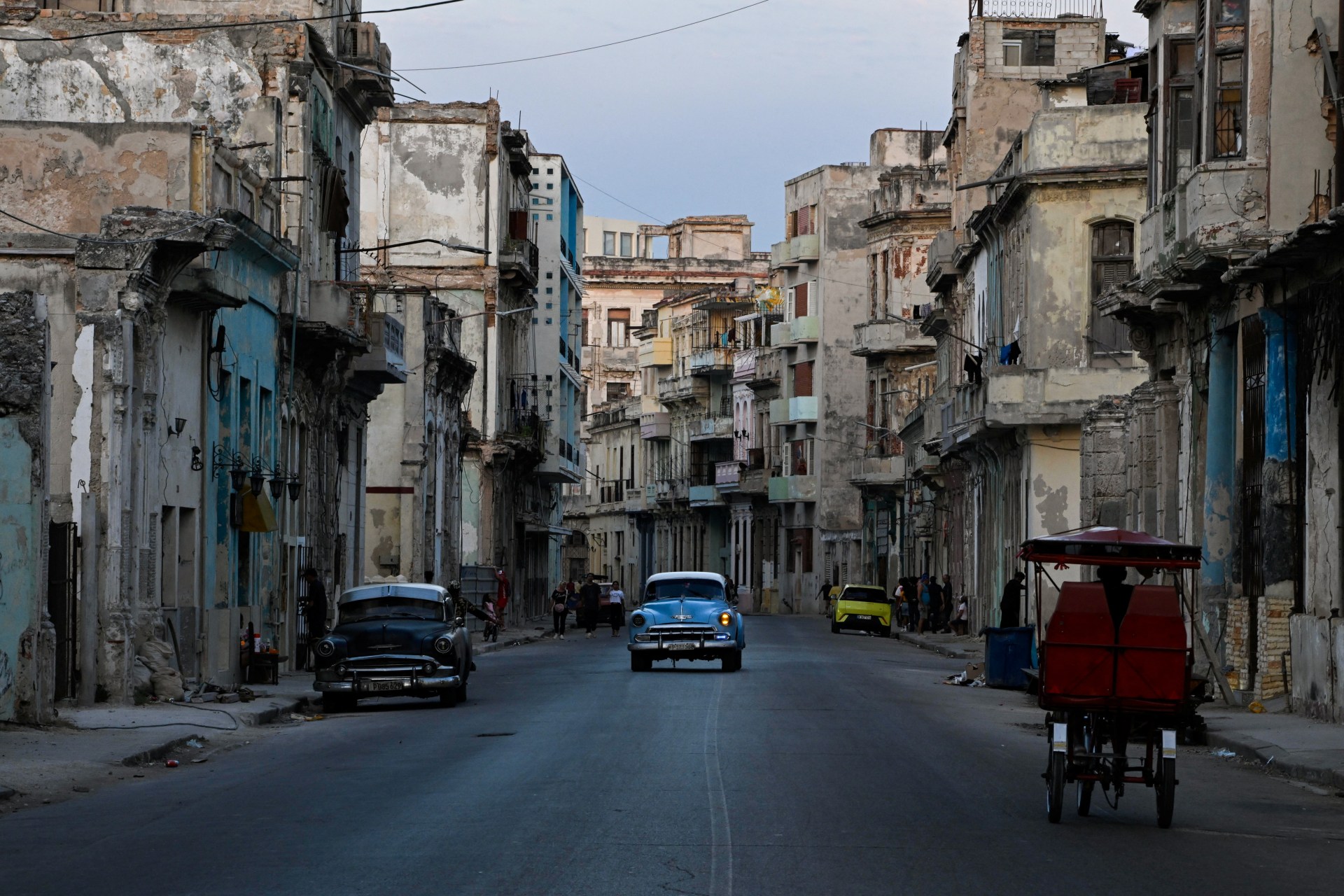
Havana is strikingly empty. The Cuban capital’s Plaza de la Revolución—the vast open square flanked by government ministries bearing the giant steel faces of revolutionary leaders Che Guevara and Camilo Cienfuegos—stands all but deserted. In many neighborhoods, residents have grown used to living next to empty houses. In the countryside, so many clergy have left that a single priest often serves three or four parishes, and crops ripen unpicked for lack of labor. One farm located two hours east of Havana used to employ two hundred workers; today it has two dozen, half of them over the age of sixty. The manager said that he has vacancies to fill and money to hire. What he cannot find is people.
An estimated 1.6 to 2.75 million Cubans—roughly 13 to 25 percent of the population—have left the island since 2020; the low-end figure comes from Cuban officials, the high-end figure from Juan Carlos Albizu-Campos Espiñeira, a leading Cuban demographer and researcher at the Christian Center for Reflection and Dialogue in Cuba. The scale is unprecedented in Cuban history, with few modern parallels outside active war zones.
Cubans have migrated in large numbers before: some 250,000 after the 1959 revolution, a similar number during the 1965–73 Freedom Flights, and later waves such as the 1980 Mariel Boatlift and the 1994 rafter crisis, when tens of thousands headed for Florida on homemade vessels. And yet the outflow that began in 2021 is now three times larger than all those episodes combined.
It began as a response to Cuba’s post-pandemic economic collapse and a renewed crackdown on dissent. But the latest emigration wave has become an engine of crisis in its own right, compounding other problems. Public services are failing, in part because so many teachers, doctors, and nurses have left. A divide is widening between Cubans with family abroad—who have foreign currency and often a foothold in the island’s fledgling private sector—and the many without.
As migration separates families, crime seems to be rising among youth left behind without stable homes. And a graying society may no longer be able to muster the mass street protests that many, including the Trump administration, hope could dislodge the island’s long-standing one-party rule.
Even in the best case, which would see Cuba turn from authoritarianism and central planning toward democracy and a social market economy, the demographic challenge will remain. Some sanctions can be lifted in a day, and investment may return over the years, but there is no equivalent timetable or tested mechanism for enticing back millions of people. Cuba can still recover. But it will have to do so as a smaller, older country and design its path accordingly.
Converging Pressures
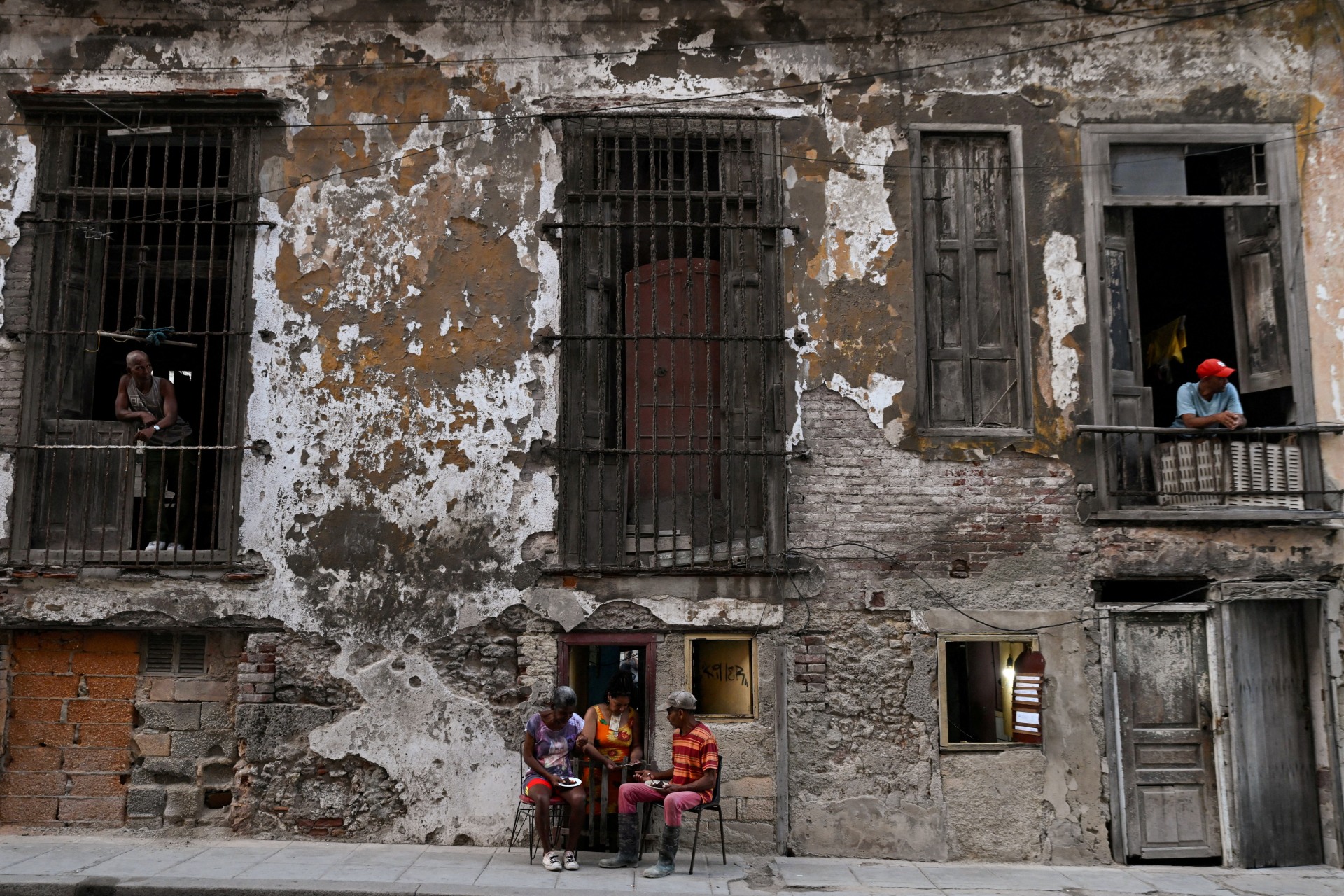
“I had no choice,” Anita, a twenty-eight-year-old Cuban biologist now living in Brazil, said of her decision to migrate. She asked that her real name not be shared for fear of reprisals against her family still living on the island. By 2021, the year Cuba’s mass exodus started, Anita found herself without work—the state-run labs that had employed her were out of money—and unable to reliably feed herself. After she saw friends jailed for participating in historic protests that year, she began her journey by buying a one-way plane ticket to Guyana.
A series of forces converged to put countless other Cubans in Anita’s position. A primary one was homegrown. Cuba’s chronically mismanaged, centrally planned economy had kept growth feeble and much of the population dependent on meager subsidies and poorly paid state jobs for decades. Since opening to tourism in the 1990s and building schemes that let the military and other insiders capture much of the profits, the regime had also reordered its priorities, redirecting public capital investment from health, education, or agriculture to hotels, tourism, and real estate.
When a series of shocks arrived—the COVID-19 pandemic, tightened U.S. sanctions and a ban on U.S. tourists visiting the island during the first Trump administration, and a collapse in Venezuelan oil production, the island’s main energy source—the Cuban economy had no capacity to absorb them.
So began an economic crisis even more devastating, in some respects, than the so-called Special Period of the 1990s, when the collapse of the Soviet Union and the aid it provided Havana triggered widespread deprivation in Cuba. Chronic underinvestment in the energy grid and fuel shortages drove increasingly frequent blackouts, while a sweeping monetary, wage, and price reform shredded Cubans’ purchasing power and sent inflation soaring. On July 11, 2021, tens of thousands took to the streets on a scale not seen for decades to protest these conditions and demand freedom. The regime arrested more than seven hundred people and implemented even harsher anti-dissent laws.
With protesters now facing punishing crackdowns and Cubans’ living conditions continually worsening, many decided that the only way to better their lives was to leave the island.
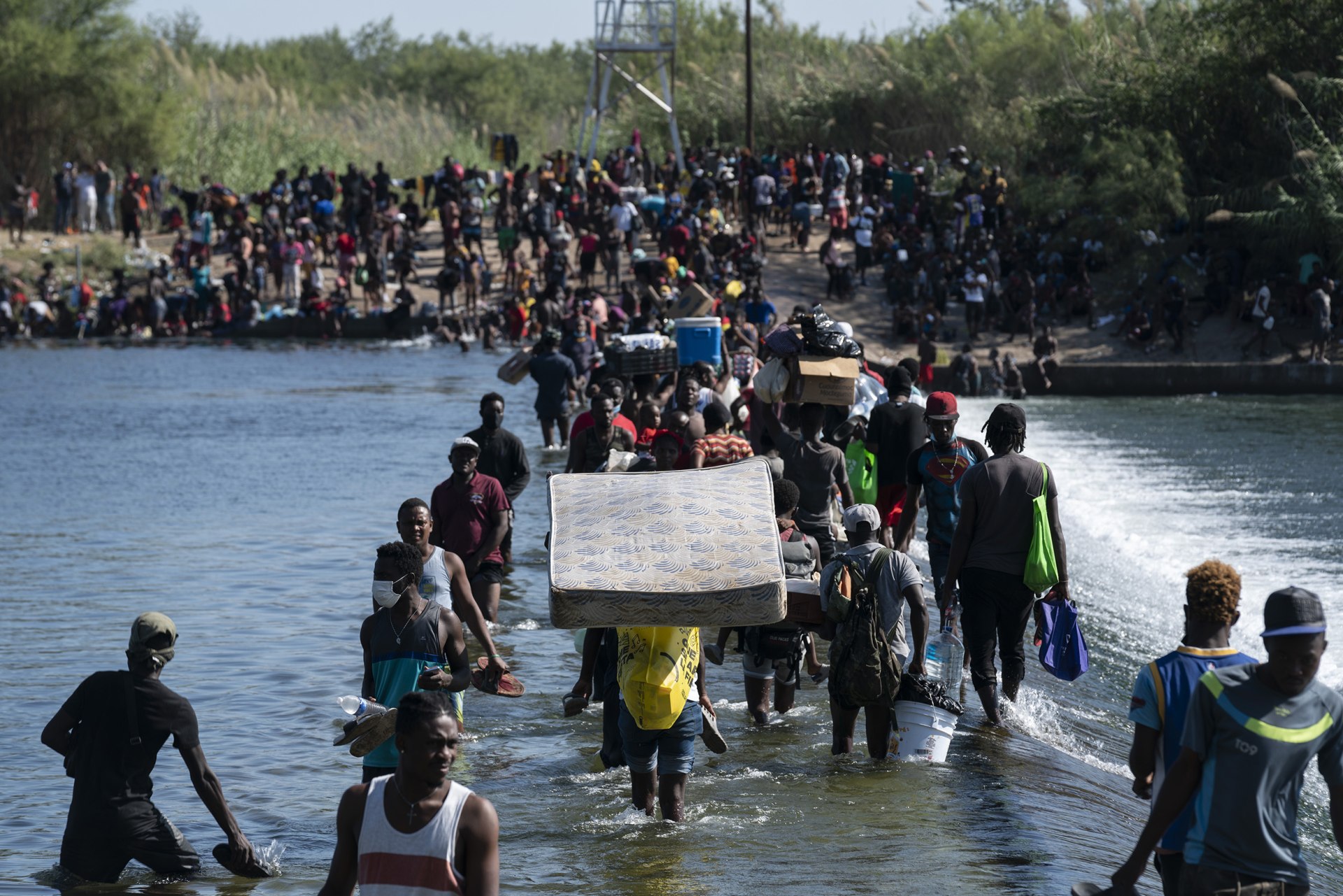
By the end of 2021, more than fifteen thousand Cubans had traversed the dense, roadless jungle of the Darién Gap bridging South and Central America, later reaching the U.S.-Mexico border. But that was a minor route compared to the one that was opening through Nicaragua, whose dictatorial president, Daniel Ortega, dropped visa requirements for Cubans in November 2021 to extract profits from charter airlines on which they arrived, and as a favor to his Cuban regime allies. Flights began arriving daily from Havana, each one paying a landing fee to the Nicaraguan regime. By January 2024, more than four hundred thousand Cubans had landed in Nicaragua, often paying thousands of dollars per ticket, and then moved north.
The Biden administration revived a Cuban family reunification program and created a humanitarian parole program offering temporary residence to Cubans—along with Haitians, Venezuelans, and Nicaraguans—who could secure U.S. financial sponsors. Hundreds of thousands more people left the island, only now on U.S.-bound flights, carrying legal documents.
The second Trump administration, however, broke with decades-old precedent. As part of a broader effort to deter migration, it began treating Cuban immigrants much like any other nationality. It shut down both parole programs and the application CBP One, which was the only way to claim asylum for those who reached the U.S.-Mexico border. Arrests of Cubans by U.S. Immigration and Customs Enforcement soared 463 percent, while green card approvals fell 99.8 percent. Cubans soon became the largest nationality among third-country deportees—migrants deported to countries other than their own—since the Cuban government accepted so few of them. Many became stranded along Mexico’s crime-ridden borders.
One Cuban trapped at the U.S.-Mexico border described these changes, which ended her hopes of reuniting with her husband, as “one final blackout” after all the literal energy blackouts she had suffered on the island. Another, stranded in southern Mexico, said, “I left Cuba with a plan: arrive in Tampa, work, send money to my mom. That plan no longer exists. That world no longer exists.”
The Trump administration’s policies worked as intended. Encounters with Cuban migrants at U.S. borders fell 98 percent from October 2025 to January 2026 compared with a year earlier. But rather than ending the mass exodus, U.S. policy simply redirected it.
More than six hundred thousand Cubans applied for Spanish citizenship between 2022 and 2025 under a new law recognizing the descendants of Spanish grandparents. The country today has at least 250,000 Cuban-born residents, though a Spanish diplomat in Havana estimated the true number was more than double that. Asylum applications in Brazil, meanwhile, nearly doubled in 2024 to more than forty-four thousand. Large Cuban communities emerged in cities such as Curitiba, dubbed the new Miami, as well as farther south in Montevideo, Uruguay.
But the country most transformed by the outflow was Cuba itself.
A GrAying Island
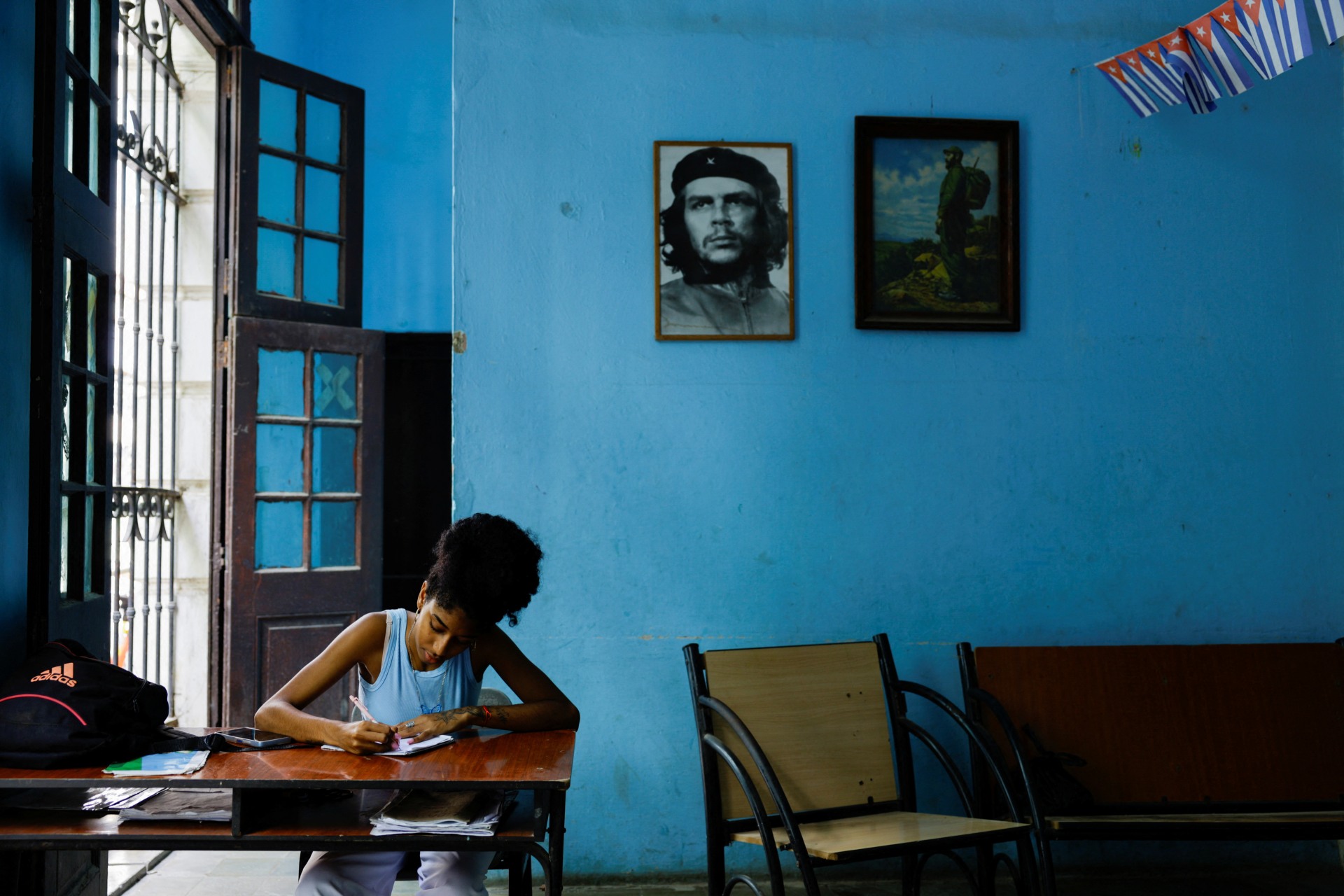
There are constant reminders of the missing when visiting Havana. Stories of graduating medical students preparing to leave the country; parents urging their adult children, upon finishing degrees, to do the same. One resident of Alamar, a district of Soviet-style apartment blocks on Havana’s eastern outskirts, recounted how a neighbor, a heart surgeon, found himself unable to afford food or fuel, leading him to skip meals and ride a bike to work. Then he, too, migrated, “like everyone who has specialized knowledge here,” the resident said.
Many skilled and talented Cubans remain on the island. But the country’s brain drain—and the corrosive social effects of mass emigration—are real. A psychologist in the small city of Cárdenas linked migration’s unraveling of family structures, with children and teens often left in the care of family friends or distant relatives, to an alarming rise in violent crime. Several Cubans commented on how emigration had widened a social divide between the winners and losers of the new private-sector economy that Cubans increasingly rely on to feed themselves and meet their basic needs. Those with relatives who left in recent years have access to remittances and the means to become small-business owners, while those without family abroad are becoming an underclass that cannot afford their prices. Cubans from the poorer, more rural east are moving to the relatively better-off capital, deepening an already severe shortage of farm laborers elsewhere.
These accounts are anecdotal, but data—as scarce as it is in Cuba—points to another challenge: educated women of reproductive age have been disproportionately likely to leave, accelerating Cuba’s already rapid aging. Among the Cubans who left from 2021 to 2024, an estimated 133 women left for every 100 men; 80 percent of those women were of reproductive age. In 2024, there were fewer new births than in any year since 1899.
Demographers now predict Cuba’s population could plunge by half by 2100. By 2050, the government’s own statistics agency predicts that Cubans over the age of sixty will make up more than a third of the population—a significant older population for a shrinking working-age cohort to support. Tellingly, private eldercare facilities were among the categories of business legalized by a recent package of economic reforms. But the usual routes to supporting an aging population, such as raising productivity or attracting immigrant labor from elsewhere, are not viable options for Cuba at present.
The Demographic Hurdle to Recovery
Many other countries have gone gray or seen large parts of their population emigrate, but Cuba faces unique obstacles to recovery.
The African and Middle Eastern countries that have seen millions go abroad, for example, tend to be buoyed by high birth rates. Rapidly graying European and East Asian countries have had more of a financial buffer to manage the transition. Puerto Rico’s massive outmigration has strained its pension and health-care systems, but it has skewed working class, doing less to deplete the island’s stock of skilled professionals than Cuba’s emigration wave.
The end of one-party rule offers Cuba its best chance of demographic recovery. Most people in Havana said it was a precondition for even encouraging their relatives to return. The absence of any foreseeable path to political change was one reason many said they themselves hoped to emigrate.
Democratization and stabilization have rarely brought migrants home in large numbers in other countries. After Augusto Pinochet left office in 1990, Chile introduced a national return program offering customs exemptions and pension credit to those who had spent years in exile; it enticed home only fifty-six thousand of the five hundred thousand or more Chileans who had fled under Pinochet’s dictatorship. In El Salvador, dramatic security gains under Nayib Bukele have persuaded barely 1 percent of Salvadorans in the United States to return permanently to their home country.
But if Cuba does transition to a democracy, its unusually large, geographically proximate, and entrepreneurial diaspora could prove an asset, even if many do not return to stay. Other countries have tapped their diasporas to build their economies and weather crises without luring them back. Examples include China drawing foreign direct investment (FDI) from its diaspora during its market opening, India selling bonds to its population abroad to bolster its foreign exchange reserves during crises, and Vietnam raking in remittances on par with its total FDI. In an eventual transition scenario, Cubans in the United States (mostly Florida), Brazil, Spain, and elsewhere might help seed new businesses, train the next generation of Cuban entrepreneurs, and send more money to the island to smooth the adjustment to a market economy.
For now, with the political situation stalemated and the regime hanging on, many Cubans abroad are focused on putting down roots where they are.
“I’m happy here,” Anita said of her new life in Curitiba, the South American Miami. “The community, the warmth of the people, feeling welcomed—none of that has a price,” she added. Though she was still looking for work, she “kept adapting.”
If Cuba gets a chance at rebuilding, that spirit, so clearly abundant among the millions who left, will be more necessary than ever.
Will Freeman, a Latin America studies fellow, traveled to Havana in June 2026. His work at the Council on Foreign Relations focuses on politics and organized crime in Latin America, as well as U.S.-Latin America relations.
This work represents the views solely of the author(s). The Council on Foreign Relations is an independent, nonpartisan membership organization, think tank, and publisher, and takes no institutional positions on matters of policy.
Colophon
Staff Writers
Data Visualization
- Austin Steinhart
Additional Contributions
Jaya Rose, Research Associate, Cuba Studies
Toby Mayhew, Research Associate, Latin America and Geoeconomics
Phil McCausland, Editorial Director, News
Diana Roy, Senior Writer/Editor
Sabine Baumgartner, Senior Photo Editor
Will Merrow, Senior Editor, Data Visualization
Asher Ross, Lead Content Strategist
Additional Photo Credits
In the introduction, the photo of a street in downtown Havana, Cuba is from Norlys Perez/Reuters and the photo of migrants crossing the Rio Grande is from Veronica G. Cardenas/The New York Times/Redux.