Brazil’s 2026 Election: What to Know About the Lula-Bolsonaro Runoff
Latin America’s largest democracy will hold a runoff presidential election on October 25. Experts say the result could reshape Brazil’s regional and international relations.
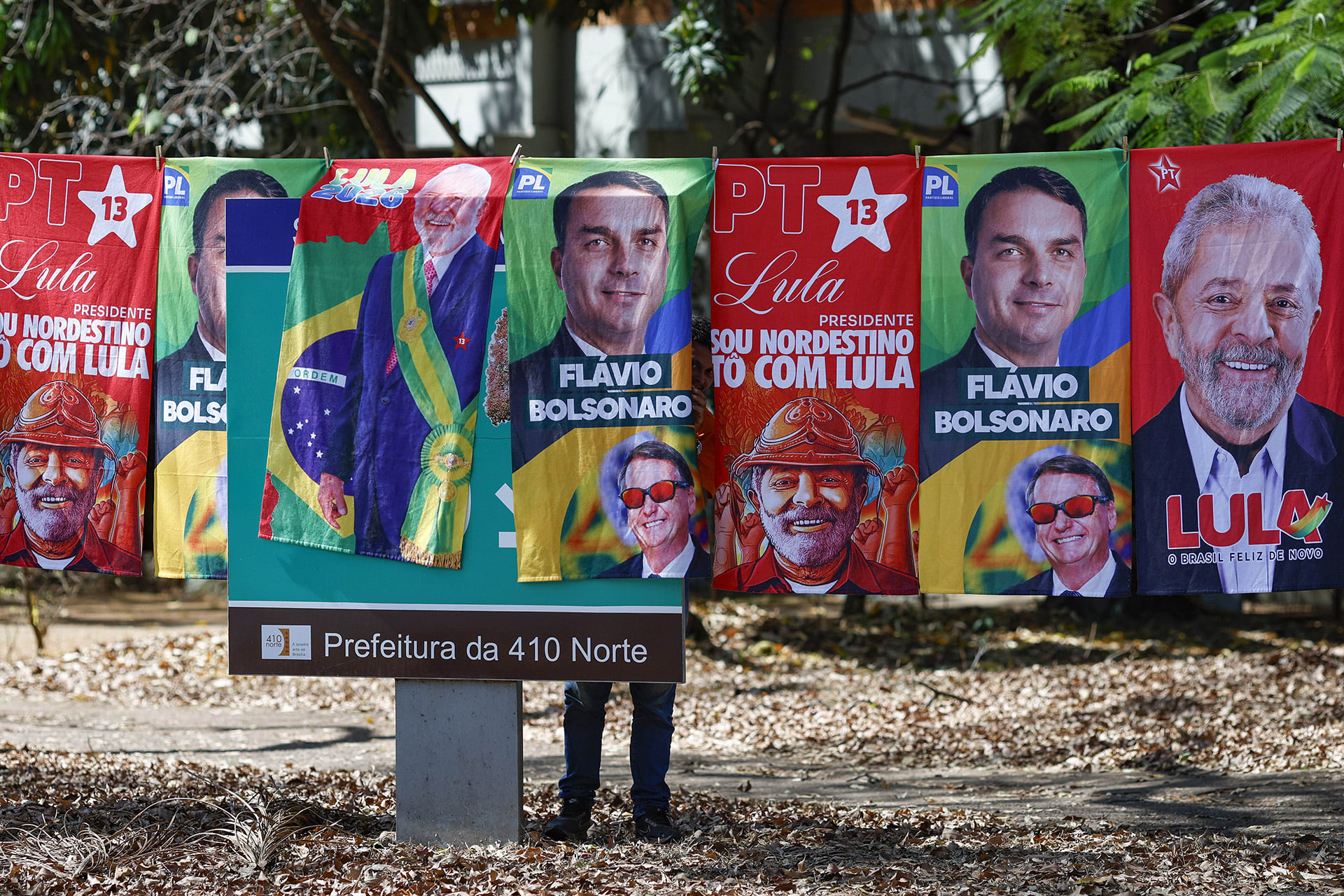
Brazilians will vote in a runoff on October 25 after the first round of the country’s general election failed to see any candidate secure more than 50 percent of the vote. Senator Flávio Bolsonaro, son of former President Jair Bolsonaro, won 47 percent of the vote, while incumbent Luiz Inácio Lula da Silva (commonly known as Lula) won 45 percent. The winner of the runoff will determine the leadership of Latin America’s largest democracy and biggest economy.
It is Brazil’s first presidential election since supporters of President Jair Bolsonaro stormed and ransacked government buildings in the capital in January 2023, seeking to overturn the results of the 2022 vote that saw him narrowly defeated.
“Brazil’s weak party system rewards personalistic leadership, and this election is, in effect, a rematch of 2022 by proxy: most voters are deciding for or against Lula and for or against the Bolsonaro family,” Oliver Stuenkel, an associate professor of international relations at the Getulio Vargas Foundation in São Paulo, told CFR. “Most voters I speak to are motivated by their dislike or fear of the other side, rather than any specific policy issues,” he said.
Beyond domestic politics, experts say the election’s results could reshape Brazil’s foreign policy at a time of broad political change in Latin America. The next government will need to navigate Brazil’s relations with the United States and China—its two largest trading partners—and the rest of the Global South.
Who are the candidates?
Luiz Inácio Lula da Silva. The eighty-year-old incumbent president and member of the left-wing Workers’ Party is seeking a historic fourth term in office. Lula previously served two consecutive terms, from 2003 to 2011, during which he helped lift some forty million Brazilians out of poverty. After serving time in prison from 2018 to 2019 on corruption and money laundering charges, he returned to politics to win the 2022 election, edging out right-wing populist Jair Bolsonaro.
Lula has ushered in modest economic improvements and environmental wins in his third term, and taken a more active role in multilateral organizations. His campaign platform [PDF] promises to continue many of these policies if he is reelected, with a greater focus on reducing inequality, expanding industry, and promoting sustainability. Lula has also emphasized defending Brazil’s sovereignty against foreign interference and expanding the country’s geopolitical partnerships.
Flávio Bolsonaro. A current senator, he is the eldest son of the former president, who was sentenced in 2025 to twenty-seven years in jail on charges of plotting a military coup—and is currently under house arrest. Flávio Bolsonaro leads the conservative Liberal Party, and is campaigning on a platform that primarily continues his father’s policies. “There is no daylight between himself and his father,” Shannon K. O’Neil, CFR senior vice president of studies and Maurice R. Greenberg chair, said. “[Flávio’s] campaign is about his familial relations rather than policy, to the implicit frustration of many on the right.” The younger Bolsonaro has said that he would work to issue an amnesty—or if that fails, a pardon—to his father and others convicted of involvement in the January 2023 riots.
Security is also a core component of Bolsonaro’s campaign. In June, he released a twelve-point security plan [PDF] that includes measures to designate criminal groups as narcoterrorist organizations and build maximum-security prisons modeled after those in El Salvador. Such measures “intuitively make sense to voters, but they are unlikely to address the problem [of insecurity] in a meaningful way,” noted Stuenkel. On the economy, Bolsonaro has promised to lower inflation, cut government spending—including plans to introduce a public debt ceiling—and bolster Brazil’s critical minerals sector.
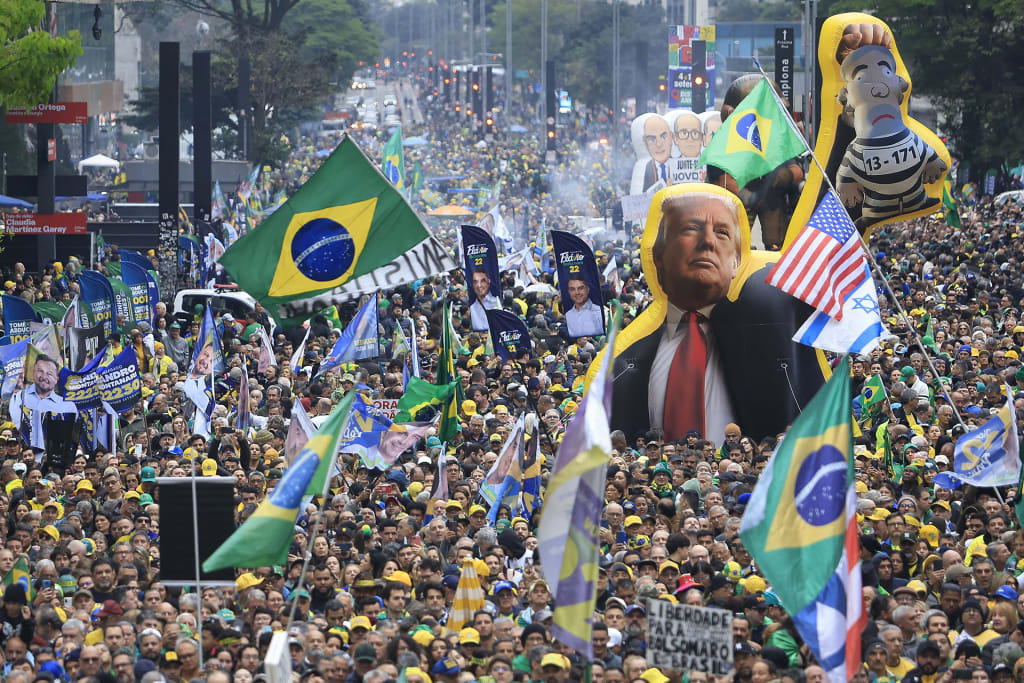
What are the main issues for voters?
Security. Organized crime and drug trafficking are a top concern. In a September survey by Quaest/Pax, 28 percent of respondents said violence is the country’s main problem, followed by corruption and the economy. Criminal groups have expanded their territorial foothold and increasingly infiltrated the political and judicial system. In December 2025, the head of Rio de Janeiro’s state assembly was arrested for alleged links to Red Command, one of Brazil’s largest criminal groups.
Corruption. Several recent scandals and fraud investigations have rocked Brazil. In November 2025, authorities arrested a prominent banker in a multibillion-dollar fraud case alleging fake loans and bribes to lawmakers and Supreme Court justices; court documents unsealed in September implicated Flávio Bolsonaro in the investigation. Another prominent case links Lula’s son to a scheme that defrauded Brazil’s pension system of more than $1 billion.
Affordability. Despite some economic improvements since 2022, including a decline in the country’s poverty rate, many Brazilian voters remain concerned about the cost of living. Some 33 percent of Brazilians say their income did not rise in the last year, and 21 percent say it rose but did not outpace cost-of-living increases, according to a September Quaest survey. Inequality remains stark, while Brazil also faces persistent inflation, a large budget deficit, and high debt.
Sovereignty. Brazil has been subject to considerable U.S. tariffs under the second Trump administration, with Lula framing them as political interference. In his speech at the UN General Assembly in September 2026, Lula voiced concern that the United States may attempt to influence the election’s outcome. “We will not allow the enemies of democracy, whether domestic or foreign, to undermine popular will,” he said, and affirmed that Brazil has a “modern and robust electoral system.”
How might the election reshape Brazil’s regional posture?
As the largest and most populous country in Latin America, Brazil has long played an economic and diplomatic leadership role in the region. Brazil accounts for approximately 31 percent of Latin America and the Caribbean’s total gross domestic product (GDP), and is a founding member of South America’s Mercosur trade bloc, as well as the Community of Latin American and Caribbean States and the Organization of American States.
“Neither candidate has said much about South America, where Brazil has been losing influence for years,” explained Stuenkel, who pointed to low levels of economic compatibility between countries in the region and “historically low” levels of regional integration. The region has shifted rightward following recent national elections, including those in Chile, Colombia, Ecuador, Honduras, and Peru. A Bolsonaro victory would add Brazil to that list, CFR’s O’Neil said.
Relations with Cuba and Venezuela also loom. Lula has condemned the U.S. blockade against Cuba and criticized the January 2026 U.S. operation that ousted Venezuelan leader Nicolás Maduro, calling it “another regrettable chapter in the continuous erosion of international law.” Bolsonaro’s campaign strongly opposes the governments of both countries, and has expressed a desire to emulate the so-called Marco Rubio model—after the U.S. secretary of state—and take a more aggressive approach to authoritarian regimes in the region.
What’s at stake for Brazil’s foreign policy?
Lula and Bolsonaro offer different visions for Brazil’s foreign policy, which has historically emphasized diplomacy and multi-alignment. Two of the country’s most important bilateral relationships are with the United States and China. Lula has brought Brazil closer to China since taking office in early 2023; the two countries have signed dozens of agreements on issues including trade, technology, and environmental protection. In November 2024, Brazil and China announced an elevation of their bilateral partnership to a “China-Brazil community with a shared future for a more just world and a more sustainable planet.”
By contrast, Flávio Bolsonaro’s proposed agenda calls for stronger ties with the United States, which his father also pursued as president. If Flávio Bolsonaro wins the election, Brazil could aim to participate in the Trump administration’s Shield of the Americas regional security initiative, which Lula declined to join.
Experts say that regardless of who wins the election, the next president is likely to maintain ties with both major powers, largely out of economic necessity. The United States and China are Brazil’s top two trading partners and primary markets for Brazilian exports of commodities such as beef, soybeans, and iron ore. China is also a growing investor in Brazil’s mining sector; the country has vast reserves of critical minerals.
Although there is increasing pressure for Brazil to side with either the United States or China, “deeper alignment with either Washington or Beijing is hardly an option for a country that depends on both,” Stuenkel said. Bolsonaro himself has said that he would maintain an “economically pragmatic” relationship with China, despite his strongly pro-U.S. platform.
The results of the election could also influence Brazil’s approach to multilateralism. The Lula government has prioritized engagement with the Global South and used Brazil’s participation in groups such as BRICS to advocate for a more multipolar international system. Bolsonaro, meanwhile, has indicated a preference for bilateral relationships—namely with the United States, Argentina, and Israel—and has said he would reassess Brazil’s membership in BRICS if elected.
This work represents the views solely of the author(s). The Council on Foreign Relations is an independent, nonpartisan membership organization, think tank, and publisher, and takes no institutional positions on matters of policy.