Andrei Gromyko Tells a Lie at the United Nations
Not everything diplomats say should be believed.
By experts and staff
- Published
 James M. LindsayCFR ExpertMary and David Boies Distinguished Senior Fellow in U.S. Foreign Policy
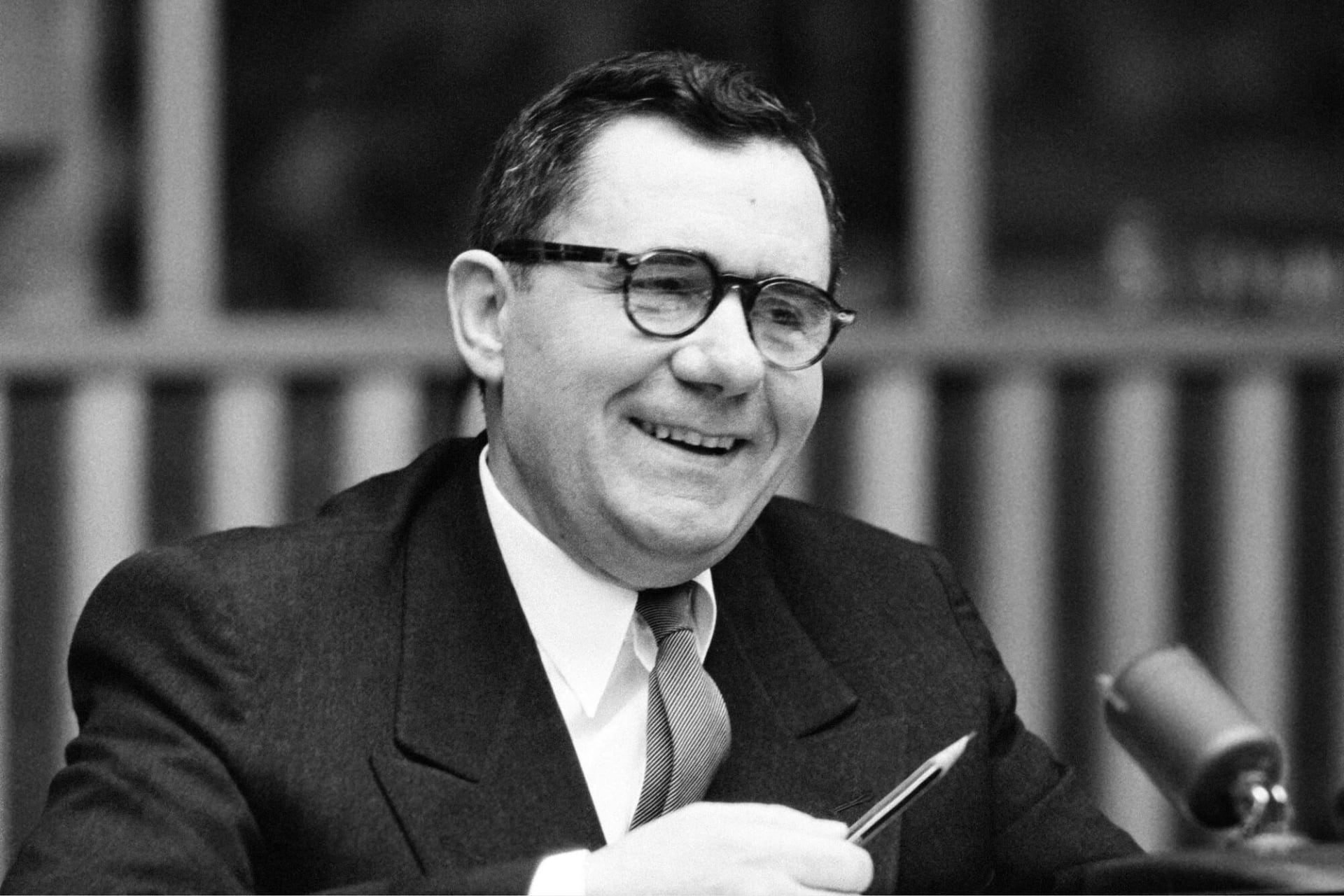
The eighty-first session of the United Nations General Assembly convenes tomorrow. Heads of state and foreign ministers will be giving speeches galore over the next two weeks. Some will be good. Some will be awful. Almost all will be forgotten before the month’s end. With any luck, none will be as deceitful as the speech that Soviet foreign minister Andrei Gromyko gave sixty-four years ago today when he told the world that Soviet military assistance to Cuba posed no threat to the United States.
Hints of a Problem
The back story for Gromyko’s speech began in the summer of 1962 when U.S. intelligence agencies accumulated evidence that the Soviets were shipping weapons to Cuba. The intelligence data alarmed CIA director John McCone. He told President John F. Kennedy in August that the Soviets planned to ship—or perhaps had already shipped—nuclear-armed, medium-range ballistic missiles to Cuba, a development that would upend the nuclear balance.
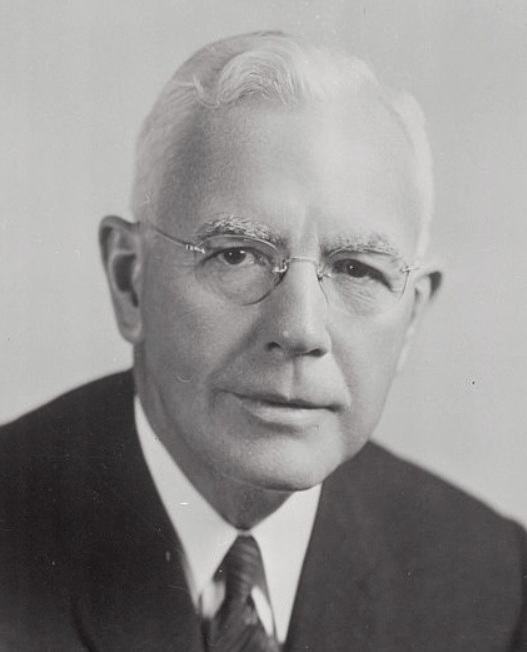
Much of the intelligence community thought that McCone’s warning went beyond what the evidence showed. But Kennedy, wisely as subsequent events showed, decided not to take McCone’s warning seriously. On August 23, he issued National Security Action Memorandum 181. It directed the national security bureaucracy to begin thinking about what to do if the CIA director turned out to be right.
“The Gravest Issues Would Arise”
Two weeks later, the U.S. intelligence community confirmed that the Soviets had shipped less threatening, conventionally armed surface-to-air missiles to Cuba. The news prompted Kennedy to issue a statement on September 4 drawing a line in the sand—he would not tolerate the Soviets giving Cuba weapons that could threaten the United States:
There is no evidence of any organized combat force in Cuba from any Soviet bloc country… of the presence of offensive ground-to-ground missiles; or of other significant offensive capability either in Cuban hands or under Soviet direction and guidance. Were it to be otherwise, the gravest issues would arise… [Cuba] will be prevented by whatever means may be necessary from taking action against any part of the Western Hemisphere.
The Soviets insisted that Kennedy had no cause for concern. On September 7, the Soviet ambassador to the United States, Anatoly Dobrynin, told the U.S. ambassador to the UN, Adlai Stevenson, that the Soviet Union had shipped only defensive weapons to Cuba. Four days later, TASS, the official Soviet news agency, made the same claim publicly:
The armaments and military equipment sent to Cuba are designed exclusively for defensive purposes...there is no need for the Soviet Union to shift its weapons…for a retaliatory blow to any other country, for instance Cuba.
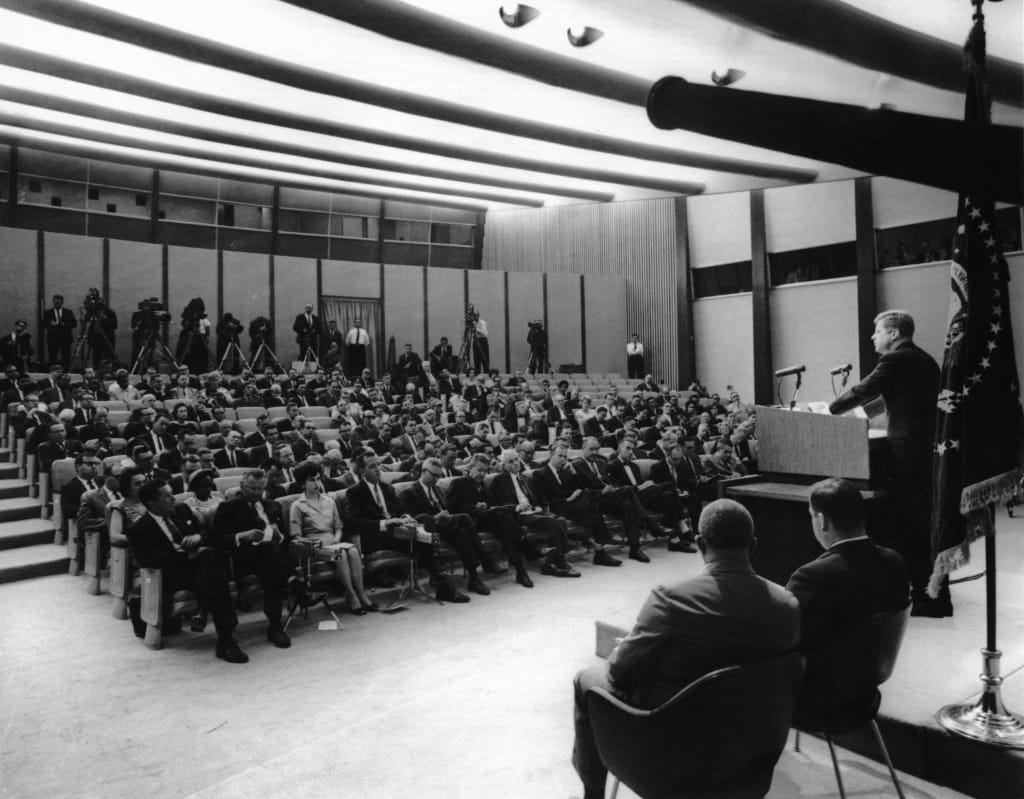
At a press conference on September 13, JFK repeated his threat to stop Cuba should it threaten the United States or any country in the Western Hemisphere, vowing: “this country will do whatever must be done to protect its own security and that of its allies.”
“Any Clear-Thinking Person Knows”
Those exchanges set the stage for Gromyko’s speech in the General Assembly Hall at the UN’s headquarters in New York. He spoke for nearly an hour, lashing into the United States for manufacturing excuses to wage war on Cuba. Repeating previous Soviet denials, he insisted that “any clear-thinking person knows” that Cuba was not seeking to threaten the United States or any other country in the Western Hemisphere. He added:
The statemen of the United States of America also know this full well. They are further quite aware of the fact that the assistance rendered by the Soviet Union to Cuba for the strengthening of its independence has none of those objectives in view, since they are foreign to our policy.
The only problem with Gromyko’s statement was that it was a bald-faced lie, as a U.S. U-2 spy plane established just three weeks later. While he was lambasting U.S. foreign policy in New York, Soviet technicians were building launch pads for nuclear-tipped missiles in Cuba. The discovery raised, as Kennedy had warned, the gravest issues and brought the United States and the Soviet Union to the brink of nuclear war.
For other posts in this series on the Cuban missile crisis, click here.
Oscar Berry assisted in the preparation of this article.
The United States celebrates its 250th anniversary in 2026. To mark that milestone, I am resurfacing essays I have written over the years about major events in U.S. foreign policy. A version of this essay was published on September 21, 2012.
This work represents the views solely of the author(s). The Council on Foreign Relations is an independent, nonpartisan membership organization, think tank, and publisher, and takes no institutional positions on matters of policy.