Lessons From 9/11 and Its Aftermath
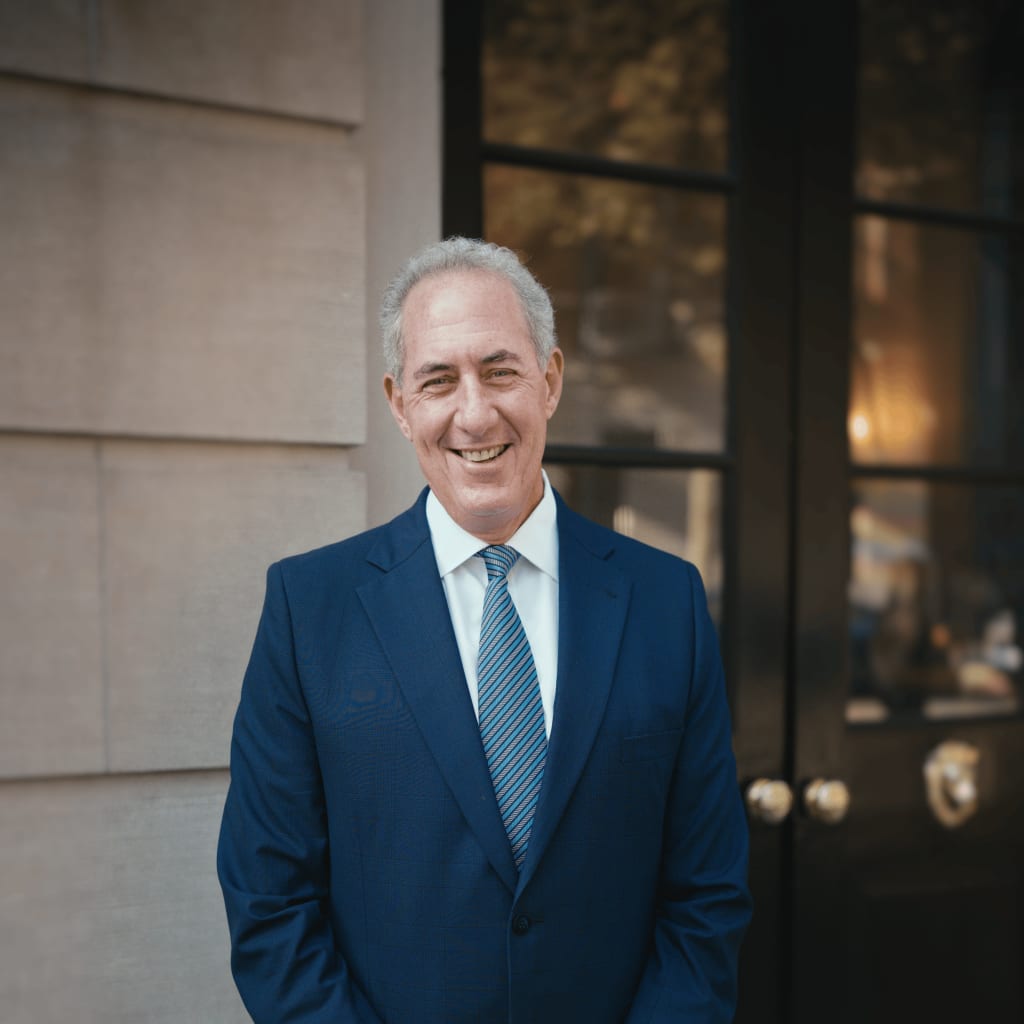
CFR President Michael Froman reflects on how the world has changed since 9/11 on the twenty-fifth anniversary of the attacks.

On the twenty-fifth anniversary of the September 11, 2001 attacks, we are faced with an opportunity to mourn with the families who lost loved ones that day, but also to consider what became of us and the world—and the role of the U.S. in the world—in the two-and-a-half decades that followed.
For those of us who lived through the attacks, anniversaries have a way of collapsing time. Twenty-five years of distance fall away, and with little effort, you are transported back to where you were, who you were with, what you did, and who you called first. We are rightly compelled to never forget, wrongly assuming, though, that for some that is ever possible. It isn’t, in no small part because so much radically changed in response to 9/11. In crucial arenas, the world today hardly resembles the one that preceded it.
First and most obviously, the United States engaged in a two-decade-long project to find and punish those responsible for the attacks and to reshape the region that allowed their ideology to fester. In the initial months and then years that followed, the United States demonstrated the might of its military and the courage of its citizens, while learning, painfully, the challenges and complexities of counterterrorism and nation-building.
What began with the successful removal of the Taliban from power in Afghanistan and the establishment of a new transitional government soon gave way to decades of instability and insurgency, culminating in the Taliban’s return. We won the battle but effectively lost the war, in part because we overextended ourselves. The invasion of Iraq, justified with poor intelligence amid the fear and anxiety felt in the wake of 9/11, set the United States (to say nothing of Iraq and its neighbors) down a depleting, destructive, and distracting path.
As we were busy rebuilding Afghanistan and then Iraq, we were also undertaking a process of remaking our own nation, politically as well as physically.
At Ground Zero in lower Manhattan, thousands of New Yorkers volunteered to clear the rubble and search for survivors and loved ones. The unity of that moment, in New York and around the country, born of equal measures of pain and patriotism, showed the best of this country. And it was a moment of international solidarity. Who can forget Canada taking in stranded American travelers and foreign leaders declaring, “We are all Americans today”?
At the same time, a more permanent shift was occurring in Washington, D.C., and around the nation. The establishment of the Department of Homeland Security (DHS), the implementation of the Patriot Act, and the expansion of the intelligence community made us safer from foreign threats. But our politics became more acrimonious and less trusting: that spirit of national unity soon gave way to mutual suspicion and a loss of faith in the government and its attendant institutions, from the press to civil society.
America’s role in the world today is also, in part, the product of 9/11 and the subsequent wars. On the eve of the attacks, the United States was enjoying its peace dividend, economically as well as geopolitically. The fall of the Soviet Union had left the United States as the lone superpower, uncontested and thus unrestrained. Two “forever” wars created an opening for rising or resurgent powers to realign the global balance of power, the long tail of which we are living with today.
The complex shifts in the balance of power in the twenty-first century cannot be boiled down to a single cause. China’s rise and Russia’s belligerence, the global financial crisis, Britain’s departure from the European Union, the COVID-19 pandemic, and President Donald Trump’s determination to raise fundamental questions about the manner in which the U.S. engages with the world all upended the pre-existing order and contributed to this new international landscape.
In the days and weeks following 9/11, many were quick to invoke Pearl Harbor. Not since December 7, 1941, another date seared into the collective national memory, had the United States been the victim of such a catastrophic surprise attack. The deaths of nearly three thousand civilians in the heart of America’s cities only compounded the sense of shock and anger. But post-Pearl Harbor America was different in fundamental ways from post-9/11 America.
After Pearl Harbor, the entire country was mobilized: hundreds of thousands were drafted to fight and die in Asia and Europe, factories were retooled to produce fighter planes and battleships, and the domestic economy became a wartime economy. The scale of the challenge and the commitment was enormous. It changed the everyday lives of every person.
However much 9/11 remade the country in profound ways, most Americans returned to a state of normalcy soon after. A far smaller share of the population saw combat than did in World War II or any other major U.S. conflict. For most people, work and life resumed as usual shortly after the attacks. The normalcy that returned after 9/11 soon calcified into an acceptance of a grinding war, hunting for terrorists, and rebuilding the Middle East, all of which was physically and emotionally far away—making possible the “forever” quality of the “forever wars.” Yet 9/11 and its aftermath had enormous costs at home and abroad, to our economic strength and to our geopolitical power, to our domestic politics and national culture.
On the anniversary, we owe it to ourselves, to those who died on 9/11, to those who volunteered to serve their country to prosecute those wars, and to the hundred million Americans born after 9/11, to think constructively about what should be done differently in our politics and foreign policy.
A few clear lessons stand out.
First, we need to ensure we are thinking broadly and creatively about the kinds of threats we face on a daily basis, and how those are constantly changing. At the Council on Foreign Relations, we were honored to host four former secretaries of homeland security at our symposium yesterday commemorating the twenty-fifth anniversary of 9/11. As all the secretaries noted, achieving security at home requires thinking about the diversification of threats, including the threat of domestic and political terrorism.
Second, it is important to remember that 9/11 also marked a technological revolution. The notion of weaponizing passenger planes was a shocking innovation that few could reasonably have seen coming. The pace of technological progress today and the diffusion of access to the frontier presents immense opportunities but also a new set of threats for which we need to be prepared. With 9/11 also came a sea change in the nature of war, as former Acting Director of the CIA John McLaughlin made clear at our symposium yesterday. From drone technology to new cyber capabilities, 9/11 forced us to change the way we understand both threats and innovation.
Finally, poorly structured government institutions made it difficult, if not impossible, to share the crucial intelligence about a threat from al-Qaeda before 9/11. It is vital that both those in government and outside it are thinking creatively and proactively about ensuring Washington can meet the changing security landscape. DHS was established too late—it was needed on September 10. Former DHS Secretary Jeh Johnson’s proposal for an entirely overhauled domestic security apparatus, published in Lawfare this morning, is illustrative of the kind of proactive thinking needed to meet this moment.
One thing is clear: We cannot afford complacency—particularly at this critical moment in history—about the shifting balance of power, the nature of evolving threats, and the government structure, tools, and technology needed to ensure our national security. Tragic anniversaries shouldn’t be necessary to remind us of that, but we should not let them pass without reflection.
Let me know what you think about how the world has changed since 9/11 and what this column should cover next by replying to [email protected].
This work represents the views solely of the author(s). The Council on Foreign Relations is an independent, nonpartisan membership organization, think tank, and publisher, and takes no institutional positions on matters of policy.