Twenty-Five Years After 9/11, the United States Is Unprepared for Terrorism’s Next Wave
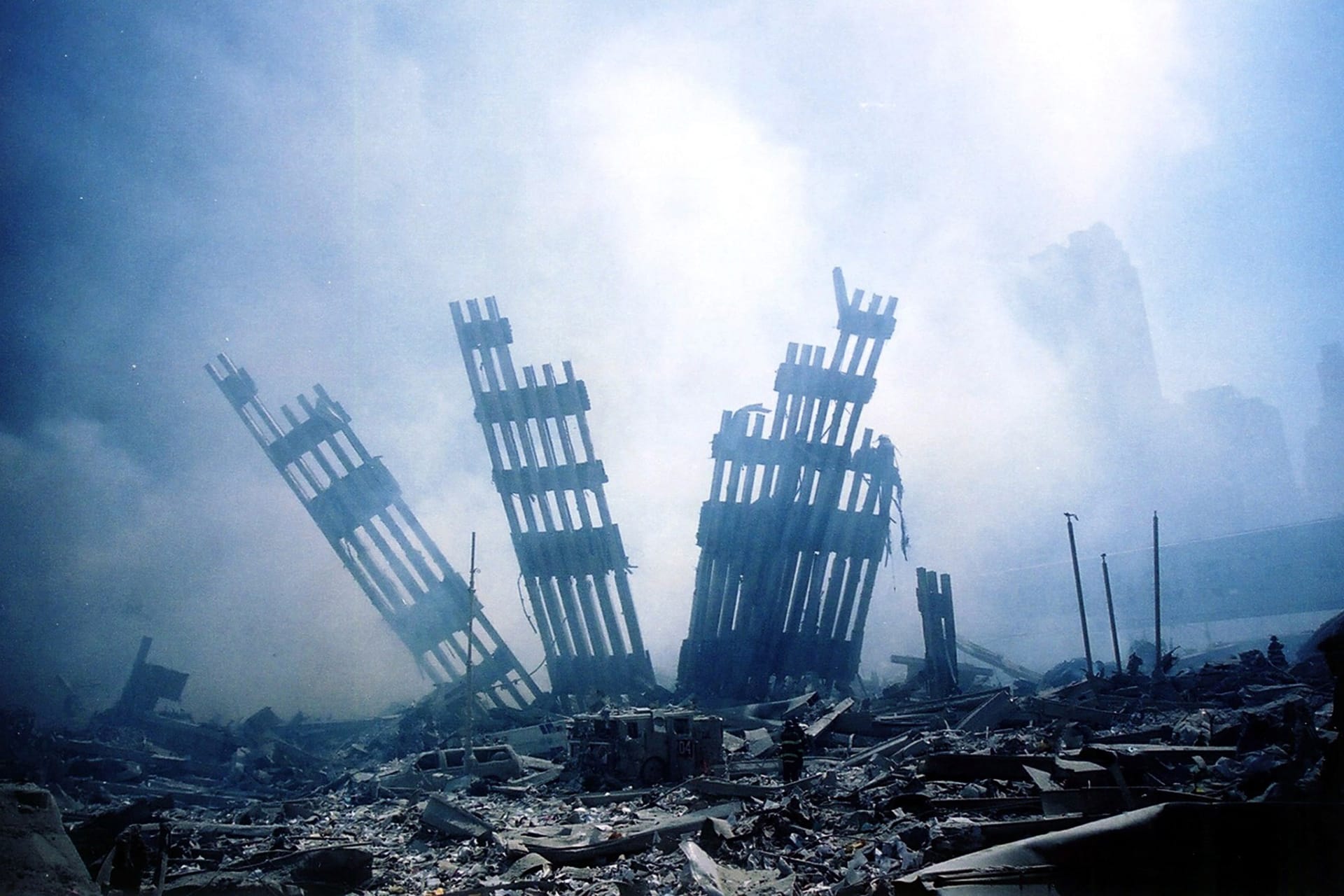
Twenty-five years after al-Qaeda terrorists killed nearly three thousand civilians, technology is driving new terrorism threats to the U.S. homeland. Policymakers have been slow to recognize the danger.
By experts and staff
- Published
 Bruce HoffmanCFR ExpertShelby Cullom and Kathryn W. Davis Senior Fellow for Counterterrorism and Homeland Security
 Farah PandithCFR ExpertSenior Fellow
The United States marks the anniversary of the worst terrorist attack on U.S. soil with a stunning lack of preparedness to handle mounting new threats and resurgent old ones. Rapidly evolving technologies such as drones make the U.S. homeland vulnerable to attack by terror groups. Combined with the weaponization of social media by digitally savvy terrorists, the country faces the phenomenon of increasingly lethal autonomous weapons and emerging populations of radicalized youth. An eruption of violence in the Middle East triggered by the October 7, 2023, Hamas terrorist attacks on Israel and the U.S.-Israel war with Iran has further fed extremist sentiment that could be directed at the United States.
To mark the twenty-fifth anniversary, CFR Senior Fellows Bruce Hoffman and Farah Pandith have convened a special year-long comprehensive discussion series with leading experts and national security practitioners assessing the profound societal and policy effects of the 9/11 attacks. They offer their analysis on the United States’ current challenges and their recommendations on how to act.
The new threat from above
The most pressing threat posed by terrorists and hostile actors today, and arguably across the past quarter century, comes from unmanned aerial systems (UAS): drones. Throughout the four years of the ongoing Russia-Ukraine war, the October 7 Hamas attacks, subsequent fighting across the Middle East, and the Iran war, drones have played a larger role in the conduct of both state-to-state warfare and terrorism.
Despite that demonstrated threat, the United States’ ability to defend its homeland—its cities and population centers, critical infrastructure, and military installations—remains inadequate. The Federal Aviation Administration (FAA) documented more than four hundred illegal drone flights over U.S. airports in the first quarter of 2025 alone. The U.S. military recorded three hundred fifty incursions at more than a hundred bases. And a senior U.S. Department of Homeland Security (DHS) official told the Senate Judiciary Committee in 2025 that roughly one hundred fifty drones per day were detected crossing the U.S.-Mexico border during the first half of 2025.
The gap between the drone threat and the response is significant and, lamentably, remains unaddressed. Bipartisan congressional legislation that would reform and enhance current legal authorities for both DHS and the Department of Justice to counter that threat, as well as improve the FAA’s ability to thwart drones, has yet to be passed.
More broadly, one of the greatest U.S. counterterrorism weaknesses is authorities’ inability to put together pieces of the threat landscape and to respond to actions from a variety of sources. Yet the United States is in a moment of complex violent extremism that will require a shift in thinking about how terrorists are being recruited and shaped by current events.
[Video: https://vimeo.com/1224964463]
An array of bad actors
The risk of terrorism has indisputably increased in the last quarter century. On September 11, 2001, the United States faced one enemy: al-Qaeda. The wave of domestic terrorism that had washed over the United States from left- and right-wing extremists, militant opponents of legalized abortion, and various ethnonationalists and separatists had largely abated.
Today, the United States faces myriad foreign and domestic terrorist threats.
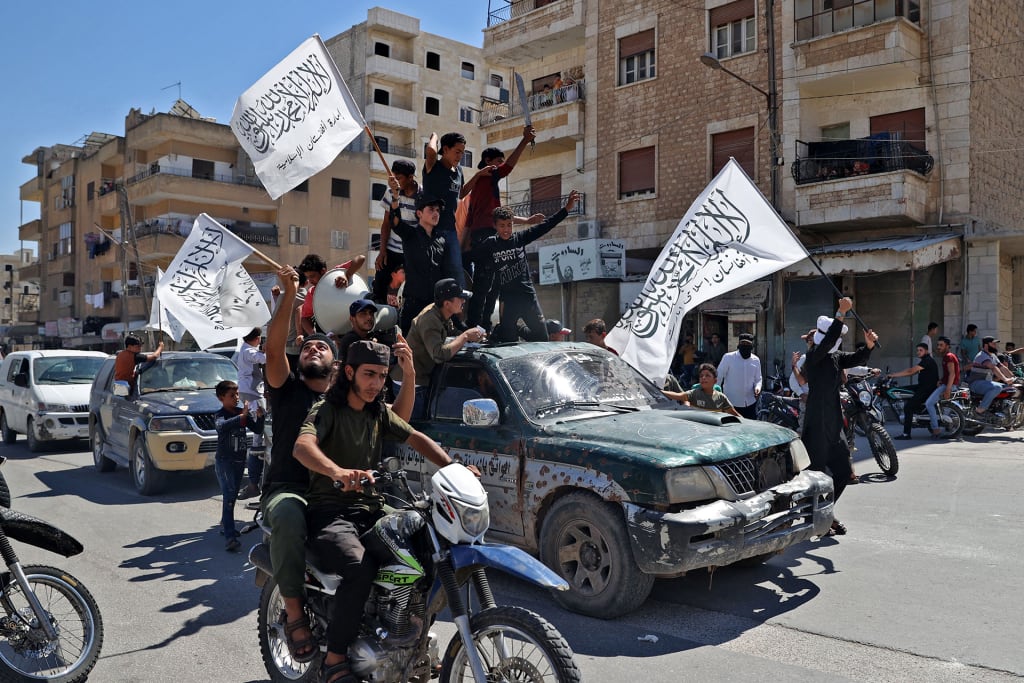
Al-Qaeda and its many franchises are still active in Africa, the Middle East, and South Asia. Its even more extreme offshoot, the self-declared Islamic State, and that group’s global network of branches are active in those same regions. The Iranian threat network, composed of long-standing terrorist proxies such as Hezbollah and Hamas, is now reportedly joined by pay-for-hire criminals, including “Russian mobsters, Mexican cartel hit men and a Canadian Hells Angel.” The Trump administration has also designated Latin American narcotics traffickers as foreign terrorist organizations.
Domestically, the United States in recent years has seen terrorist acts committed by Islamist terrorists; by far-left and far-right extremists; and by a new category of adversaries that the FBI terms nihilistic violent extremists [PDF]. That is certainly a more expansive array of terrorist threats than the United States had to address in 2001.
In addition to formal terrorist organizations, the terrorism risk comes from those who act in the name of an ideology because they are inspired by a group, an individual, or a cause.
Social media and the weaponization of emotions
Terrorists have been effective manipulators of media. In the quarter century since 9/11, by far the most notable change in this space has been the advent of social media, and the self-declared Islamic State’s effective exploitation of it for recruiting and fundraising. It became the first truly international terrorist group by having recruited fifty-three thousand foreign fighters from eighty countries.
The digital-native generations born after 9/11 are unique in the way they ingest social media content. The sophisticated algorithms—designed to bring each group and subset along with speed and ease—mean that, over the last twenty-five years, radicalization and recruitment have dramatically increased, especially through the campaigns of the Islamic State. Its dynamic peer-to-peer efforts and understanding of culture and geopolitics have in effect weaponized emotions. The success of the Islamic State and other violent extremist groups in creating appealing content, designing narrative campaigns, destroying the status quo through misinformation and disinformation, and mobilizing online actors is unprecedented. The danger is that, as their skills and malleability increase, youth will be even more emotionally engaged and interested in what those bad actors believe.
Among the lessons of the post-9/11 period is that global audiences have long memories about reported abuses by U.S. forces or their allies, from the 2003 scandal at Abu Ghraib prison in Iraq to the Israeli military’s destruction of hospitals in Gaza while pursuing Hamas fighters after the group’s terror attack on Israel.
Iran’s menace
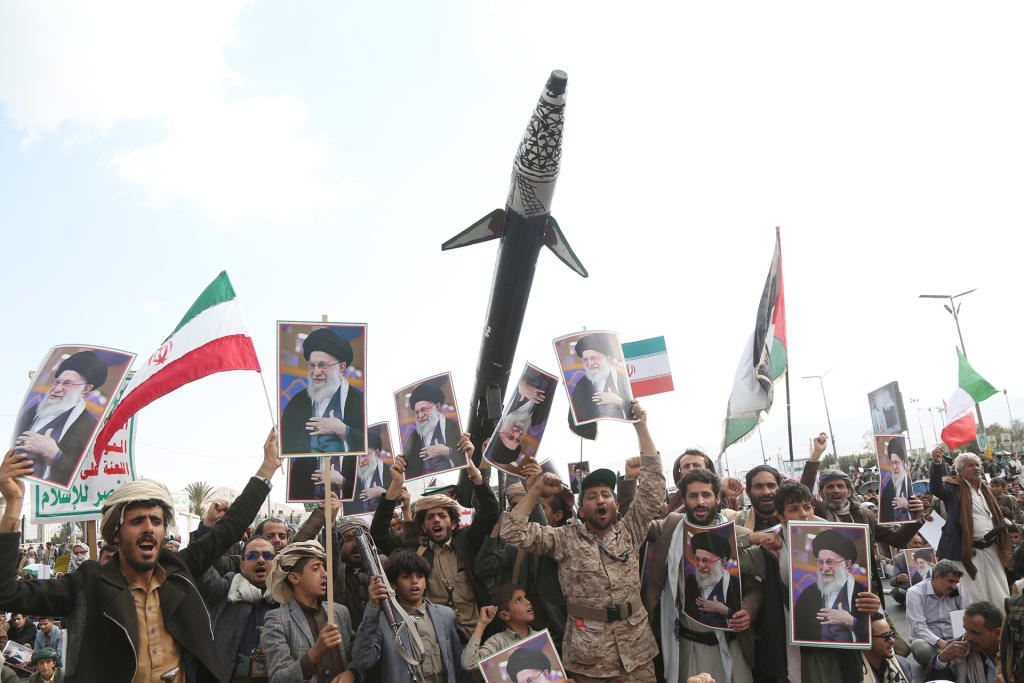
The 2026 U.S.-led war on Iran could add further appeal to the terrorists’ narratives. Iran has a long history of covert operations on U.S. soil targeting dissidents and foreign enemies. In 1980, the exiled former Iranian embassy official Ali Akbar Tabatabai, a critic of Ayatollah Ruhollah Khomeini, leader of the Islamic revolution who overthrew the shah in 1979, was murdered in suburban Washington, DC. Thirty years later, Iran was implicated in a plot to assassinate Saudi Arabia’s U.S. ambassador at a Washington, DC, restaurant. But Iran more recently has turned to criminals, drug gangs, thugs, and others to mount attacks. That has resulted in a string of failures in the United States by arguably less motivated—that is, driven by money and not ideology—and less capable adversaries.
Nonetheless, Iran has repeatedly threatened President Donald Trump and the senior U.S. government officials responsible for the 2020 targeted assassination of Qasem Soleimani, the commander of Iran’s Quds Force. Those include the former secretaries of state and defense, as well as the national security advisor, chairman of the Joint Chiefs of Staff, a U.S. ambassador to the United Nations, and a 2020 presidential contender. The threat to Trump has been taken seriously, as evidenced in July, when he covertly changed aircraft to fly back to the United States from the NATO Summit in Turkey.
The U.S. and Israeli war against Iran should not be looked at independently. For terrorist groups that have long used the narrative that the West is at war with Islam, any war in the Middle East bolsters their argument. The wars in Afghanistan and Iraq have allowed that messaging to grow and take shape in the culture, mindset, and experience of people in the region and beyond.
It would be folly to believe the Iran war will not produce new, ideologically driven recruits intent on reprisals, including terrorism, against U.S. and Israeli targets for their governments’ 2026 campaign against Iran. Significantly, Muslim populations in every part of the world have staged protests and expressed alarm at U.S. and Israeli forces’ seemingly purposeful decimation of ancient Iranian heritage sites and civilian infrastructure and at the U.S. bombing that destroyed an Iranian girls’ school in Minab, killing one hundred twenty students.
AI enters the arena
Terrorists will increasingly exploit artificial intelligence (AI) to enhance their operations. Of particular concern is AI’s ability to identify cultural trends and even nuanced subcultures that extremists can engage with in specific ways. For instance, Islamic State affiliates are using AI to make fabricated news content seem real, with fake anchors such as those on the News Harvest show. If it has not already happened, AI will soon enable terrorists to sharpen communications and propaganda, generate deepfakes and disinformation, recruit fighters, and conduct surveillance and target selection.
At the same time, governments will leverage AI’s greater resources more effectively than terrorists can to anticipate and predict terrorist activity, identify vulnerabilities, and develop defenses against emerging tactics. What is clear is that AI will intensify the technological competition between terrorists and the governments attempting to counter that emerging threat.
A dangerous preparedness gap
Today, the United States is at risk of the same diminution of terrorism and counterterrorism as a leading national security priority that occurred in the years preceding the 9/11 attacks.
Countering terrorism was ranked as the seventh sub-bullet in a list of global priorities articulated by the Biden administration’s National Security Strategy in October 2022. It did not even make it onto the list of the eight national security priority sub-bullets [PDF] delineated in the Trump administration’s 2025 iteration. That document, in fact, cites terrorism only once in passing, within the context of one of many transborder threats facing the United States.
The most recent U.S. National Counterterrorism Strategy [PDF] released in May 2026, cites “Narcoterrorists and Transnational Gangs, Legacy Islamist Terrorists, [and] Violent Left-Wing Extremists, including Anarchists and Anti-Fascists” as the main terrorist threats facing the United States, but makes only passing references to state-sponsored terrorism and cyberterrorism and omits violent, far-right extremists—each of which poses serious challenges to the United States’ security and safety.
U.S. policymakers have neither prioritized nor invested in the current and future threat landscape. They have not deployed creative ideas that have been tested over the last twenty-five years to reduce the appeal of extremist ideology. Funding for programs has dried up, and the lack of government interest in managing global coalitions to build more resilience online and offline is a serious error in judgment and a missed opportunity.
A bright spot in the work that has been done over the last twenty-five years concerns the knowledge and understanding about why humans are attracted to terrorist groups and what can be done to prevent bad actors from expanding their forces. U.S. policymakers could leverage experts’ understanding of algorithmic threat, create laws to build guardrails as the European Union has done with its Digital Services Act, and dramatically scale local real-life community programs that pull people away from dangerous ideologies.
Overall, U.S. policymakers need to more thoroughly assess the threat environment and what could be around the corner. This is the time to reboot their thinking about what to do right now to take easily accessible weapons away from bad actors. They should begin by launching robust efforts to deal with the seductive ideologies of hate and extremism.
This work represents the views solely of the author(s). The Council on Foreign Relations is an independent, nonpartisan membership organization, think tank, and publisher, and takes no institutional positions on matters of policy.