The Lessons of September 11
A quarter century after the attacks on the World Trade Center and the Pentagon, Washington’s response offers important lessons for U.S. foreign policy today.
By experts and staff
- Published
 James M. LindsayCFR ExpertMary and David Boies Distinguished Senior Fellow in U.S. Foreign Policy
What can we learn from how the United States reacted to the September 11 attacks?
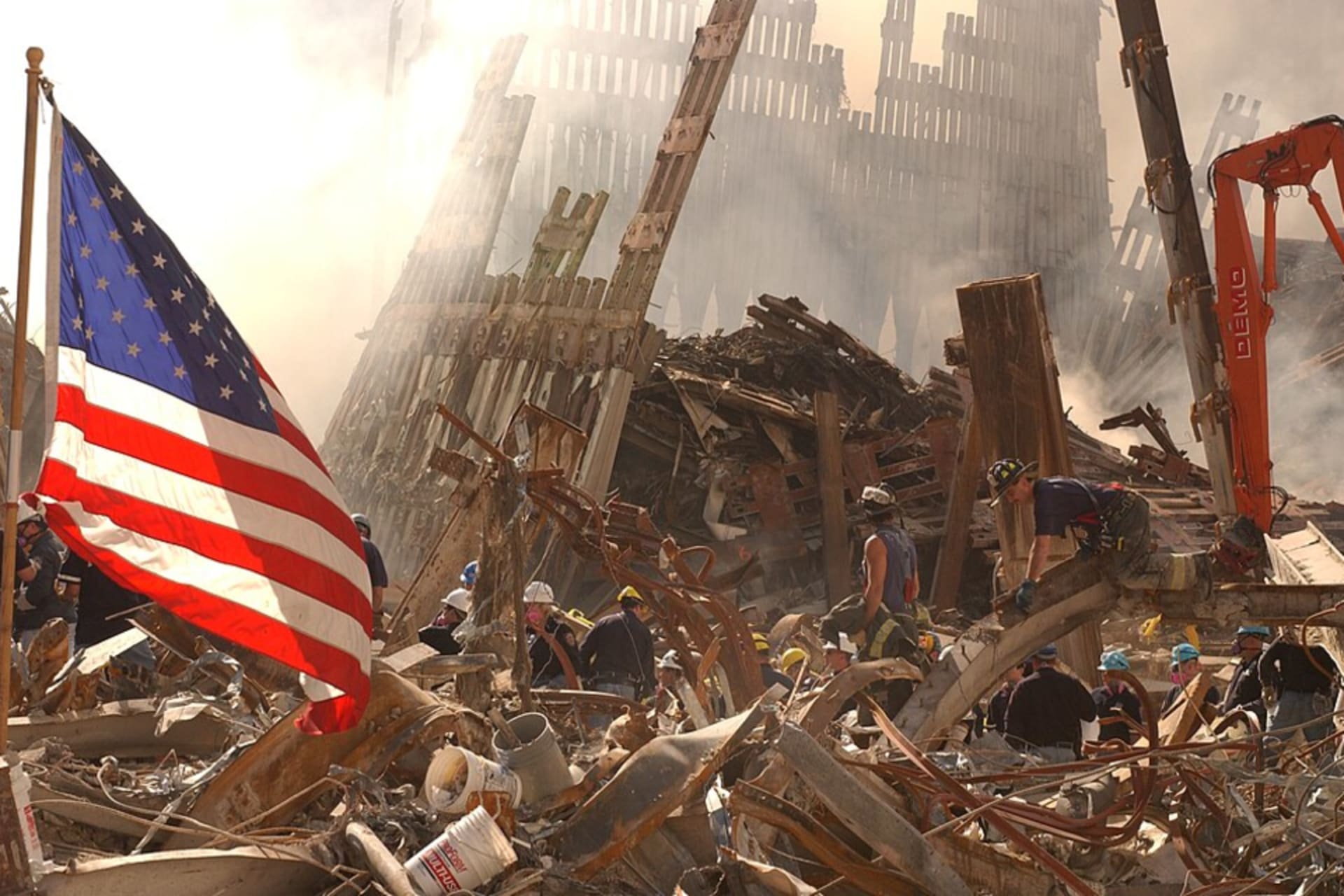
I have been pondering that question as the twenty-fifth anniversary of one of the darkest days in U.S. history approaches. Nearly 3,000 people died in the attacks. As many as 25,000 were injured, while thousands of first responders developed chronic and sometimes fatal illnesses.
The horror of September 11 changed the direction of U.S. foreign policy and with it the course of world events. Countering terrorism had not been a top priority during the first eight months of the George W. Bush administration, even though outgoing Clinton administration officials had repeatedly warned of the threat al-Qaeda posed to U.S. interests. The Bush administration’s focus lay elsewhere, most notably in extricating the United States from agreements and diplomatic commitments it believed its predecessor had unwisely embraced.
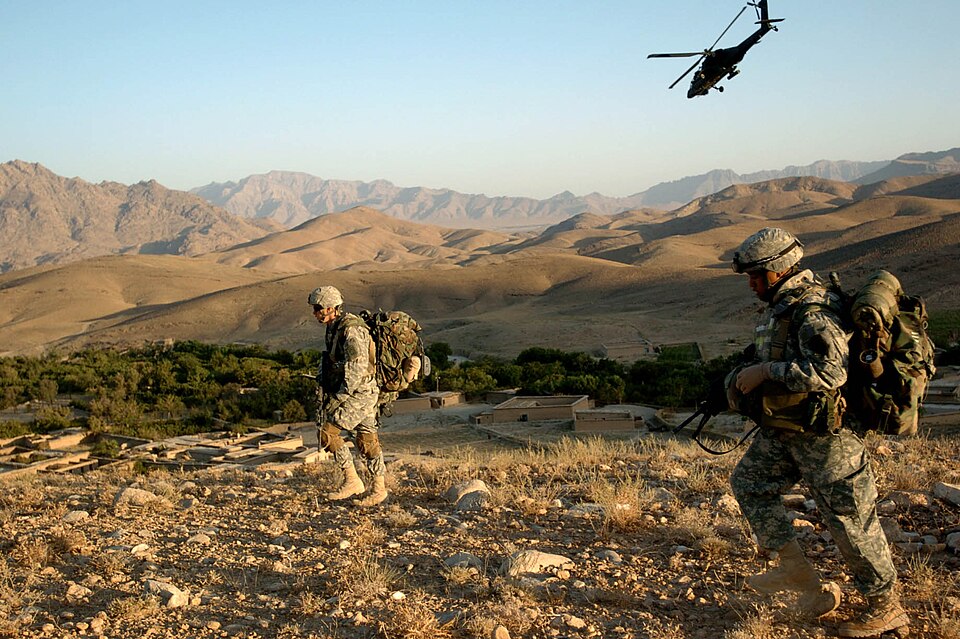
That changed after September 11. The United States launched a “Global War on Terrorism.” Within eighteen months, the United States had invaded and toppled the governments of both Afghanistan and Iraq, begun counterterrorism operations around the world, and used its immense diplomatic and economic might to disrupt terrorist operations and cut off terrorist groups from state support.
But the war on terrorism did not produce a decisive victory akin to what the United States achieved after another surprise attack sixty years earlier, the Japanese bombing of Pearl Harbor. The occupations of Afghanistan and Iraq turned bloody. High civilian casualties and “enhanced interrogation” of terrorist suspects blackened the U.S. global image. Americans eventually soured on “forever wars.” Terrorism faded as a driving force for U.S. foreign policy.
Was the war on terrorism an inevitable response to the September 11 attacks, or did it reflect the specific worldview of Bush and his chief advisors? Why did it fail to produce a decisive victory? How did the attacks reshape U.S. politics? And what lessons should U.S. leaders take from September 11 as they debate and decide how the United States should navigate a world in which the terrorist threat has become more ideologically diverse and technologically advanced?
To get a better understanding of what we can still learn from the September 11 attacks, I spoke with Walter Russell Mead on the latest episode of the CFR podcast, The President’s Inbox. Walter is the Global View columnist at the Wall Street Journal and the Alexander Hamilton Professor of Strategy and Statecraft with the Hamilton School for Classical and Civic Education at the University of Florida.
[Video: https://vimeo.com/1225452779]
My conversation with Walter was far-ranging and left me with three takeaways:
1. The fear that Americans felt in the fall of 2001 was overwhelming, something all assessments of the policy choices the United States made in the wake of September 11 need to acknowledge. There is a saying that all our knowledge is about the past, while all our decisions are about the future. A quarter century after September 11, we know that al-Qaeda failed to launch another attack on the United States of a similar magnitude. The many military, law enforcement, and regulatory steps Washington took to disrupt terrorist operations no doubt prevented further tragedies. But no one at the time knew that would be the case. To the contrary, most Americans feared that more and perhaps deadlier attacks would be coming, a fear that was deepened by anthrax attacks that began later that same September. The choices that the Bush administration made cannot be understood without understanding that backdrop.
2. The war on terrorism failed to produce a decisive victory because its aims far exceeded what U.S. power could achieve. Walter highlighted the difference between President Franklin D. Roosevelt’s success in responding to Pearl Harbor and Bush’s ultimate failure in his response to September 11. FDR’s task was easier in the sense that he faced “a well-organized state that was making an attack for conventional reasons with conventional goals.” Such a challenge could be rebuffed as it had been many times before in history. In contrast, the rise of al-Qaeda reflected what Walter called a “cultural crisis in which the Islamic world was finding itself at the time.” Bush administration officials declined to acknowledge the immense difficulty, if not impossibility, of responding “effectively to chaos” in good part because of the “overconfidence” of U.S. officials in their ability to “apply universal principles” about democracy and liberty to the situation.
3. September 11 proves the adage that an ounce of prevention is worth a pound of cure. Trying to solve problems is generally harder than trying to prevent them. Walter noted “how much better off we’d all be” if the United States had foiled the September 11 plot, if the Israelis had prevented the October 7 attack, or if the West had deterred Russia’s invasion of Ukraine. The challenge, of course, is both to identify what the problems are (diagnosis) and to generate the right remedies (prescription). On that score, Walter argued that a lot more could be done to “educate the American people to understand more clearly what the dangers are, but also what we can do for peace at this critical moment.”
Walter and I also discussed whether Al Gore would have chosen differently had he won the 2000 presidential election, the tendency of U.S. policymakers and the public to think of foreign policy problems as things to be solved rather than managed, whether the United States missed an opportunity during the war on terrorism to build a better relationship with Russia, and how foreign policy decision-making is more often about choosing among bad choices rather than picking between a right and a wrong choice. I encourage you to give the episode a listen.
Oscar Berry and Asher Ross assisted in the preparation of this article.
This work represents the views solely of the author(s). The Council on Foreign Relations is an independent, nonpartisan membership organization, think tank, and publisher, and takes no institutional positions on matters of policy.