Membership Without Membership: What Can Europe Really Offer Canada?
Donald Trump’s trade pressures have rapidly pushed Canada and Europe toward each other. Whether the proposed EU “associate membership” for Canada survives contact with twenty-seven European capitals, however, is another matter.

Matthias Matthijs is an expert on European political economy, the politics of economic ideas, transatlantic relations, and EU integration. He holds the Dean Acheson Chair at Johns Hopkins University’s School of Advanced International Studies.
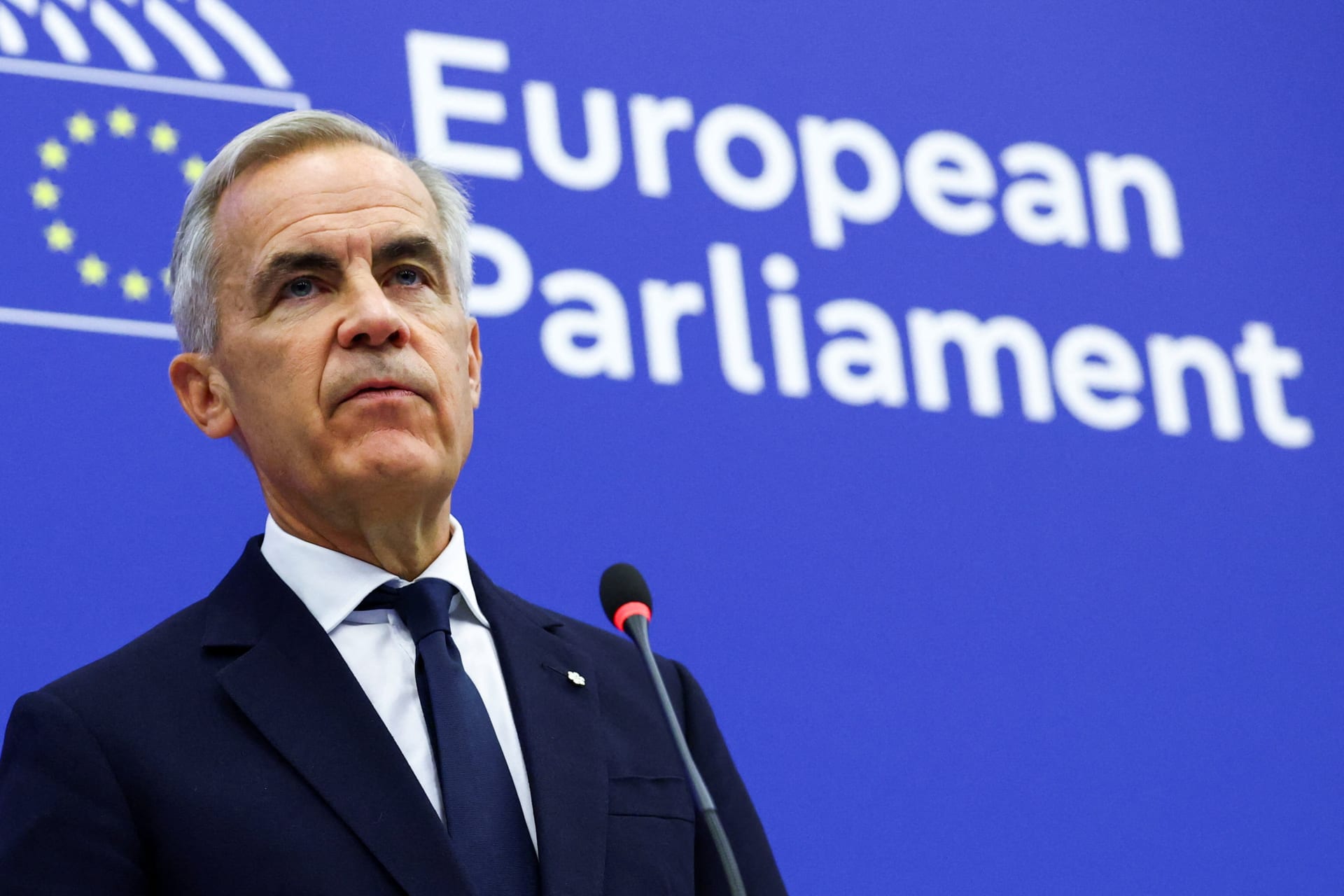
In her annual State of the European Union address on Wednesday, with Canadian Prime Minister Mark Carney watching from the chamber, European Commission President Ursula von der Leyen called for Canada and the European Union to move beyond the Comprehensive Economic and Trade Agreement (CETA), their existing free trade agreement, and create an “Alliance for the Future.” Addressing Carney directly, she said she wanted to work with him on “opening the door for Canada to be the first associate member of the EU.” The president of the European Parliament, Roberta Metsola, immediately went further and suggested that Australia and New Zealand could eventually follow.
U.S. President Donald Trump wasted no time in responding. He called the proposal “laughable,” dismissed Canada as a “terrible trade partner,” and warned that if he judged the new arrangement to be a “hostile act,” he would impose severe new tariffs on Europe or even halt trade in some areas. The same day, he signed a presidential memorandum directing officials in his administration to identify Canadian goods to be excluded from the $280 billion U.S. federal civilian procurement market. Carney seemed undeterred and addressed the European Parliament on Thursday morning, welcoming von der Leyen’s offer and noting that polling showed an overwhelming majority of Canadians supported much closer ties with Europe.
Asked afterward about Trump’s threats, Carney told reporters that a stronger and more sovereign Canada would be a more effective partner for the United States before adding, in a more defiant tone, that “Canadians are united that nobody is going to tell us what language we speak, no one is going to dictate our culture, or with whom we can strike agreements internationally.”
But Trump was not the only one left upset by this development. Several EU governments were reportedly furious that they had not been consulted beforehand, and even Germany, which in general supports closer relations with Ottawa, publicly suggested reconsidering the term “associate member.”
What would associate membership mean in practice?
The honest answer is that nobody quite knows yet, including those in the Brussels bubble. The EU treaties do not have an “associate member” category, and Article 49 of the Treaty on European Union only allows a “European State” to apply for membership—though it does not define what that actually means. Canada is also not asking to join the EU. In his speech to the European Parliament in Strasbourg, Carney stressed that Canada is neither seeking nor in a position to become a full member, and that the substance of the future relationship matters more than its label.
The substance of this development would presumably build on what already exists. CETA has been provisionally applied since 2017, even though ten EU member states have still not ratified it. Canada has been associated with Horizon Europe, the EU’s flagship research program, since 2024. At their June 2025 summit in Brussels, Canada and the EU signed a Security and Defense Partnership and also launched a new Strategic Partnership of the Future. And this past February, on the margins of the Munich Security Conference, Canada became the first non-European country to join Security Action for Europe, or SAFE, the EU’s €150 billion joint defense procurement instrument.
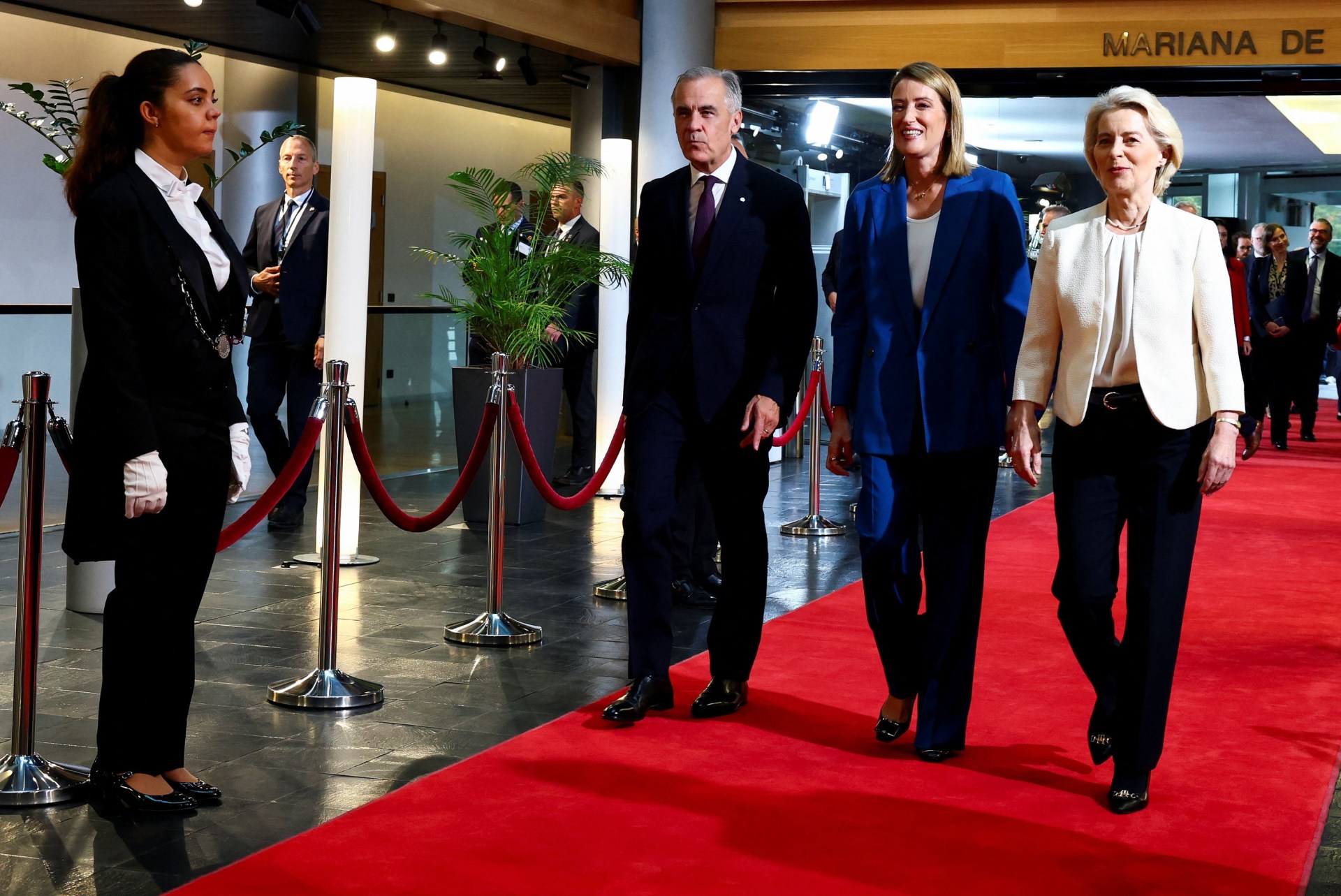
But Carney’s own wish list on Thursday was nevertheless ambitious. It included deep cooperation across the full range of strategic capabilities, including critical minerals and their processing, defense industrial capacity, artificial intelligence and computing power, energy security, space exploration, and payment systems. To that list he added seamless digital trade in nonagricultural goods and a wide range of services, including an integrated market for financial services. He also hoped for far greater freedom for young Canadians and Europeans to live, work, and study on either side of the Atlantic, including Canadian membership in the next generation of Horizon and Erasmus+, the EU’s well-known student exchange program. The European Parliament’s Metsola, for her part, has pointed to common regulation on issues that like-minded democratic countries care about, including social media and the protection of minors.
In other words, Canada would participate in large parts of the EU’s economic, technological, and educational ecosystem while staying out of its political institutions. So don’t expect a Canadian commissioner, Canadian members of the European Parliament, or a seat at the European Council table.
Why Canada, and why now?
The short answer is Trump. Roughly 70 percent of Canada’s exports still go to the United States, down from more than three-quarters before the U.S.-Canada trade war. This degree of economic integration has underpinned Canadian prosperity for decades, but it is now increasingly seen as a vulnerability. Carney’s strategy is to diversify his country’s trade. He wants to create enough alternative markets, suppliers, and political partnerships so that no single country, including the United States, can coerce or bully Canada through its trade dependence. Europe has arrived at a similar conclusion for many of the same reasons, given its own reliance on the United States for its security and technology, on China for its critical raw materials and manufacturing, and—until recently—on Russia for its energy.
Carney made his case in Strasbourg with characteristically Canadian imagery, recounting how a Canadian lieutenant gathered acorns at Vimy Ridge during World War I and planted them in Ontario; a century later, their descendants have been replanted on the same French ridge. But his symbolism was used to serve a much harder edged argument. “Economic integration is now being weaponized,” he warned, “and tariffs are being used as a means of pressure.” The combination of trade coercion, climate change, and eroding democratic norms amounted to what he called “a ferocious storm.” And in such a storm, he argued, “a single tree will come down in it [while] a forest will not.”
How seriously should President Trump’s threats be taken?
Beyond the concrete move on federal procurement, the House of Representatives this week gave final passage to the Lindsey O. Graham Sanctioning Russia and Iran Act, named for the late senator and approved by the Senate in August, which Trump is expected to sign. The law gives the president new authority to impose tariffs of up to 100 percent on the largest purchasers of Russian oil and natural gas. Although it is aimed mainly at China and India, critics have warned that its broad language and generous presidential waivers mean European countries could fall within its scope as well, given that Europe was long Russia’s biggest gas consumer. Threats of sweeping new tariffs can therefore no longer be dismissed for lack of a plausible legal instrument.
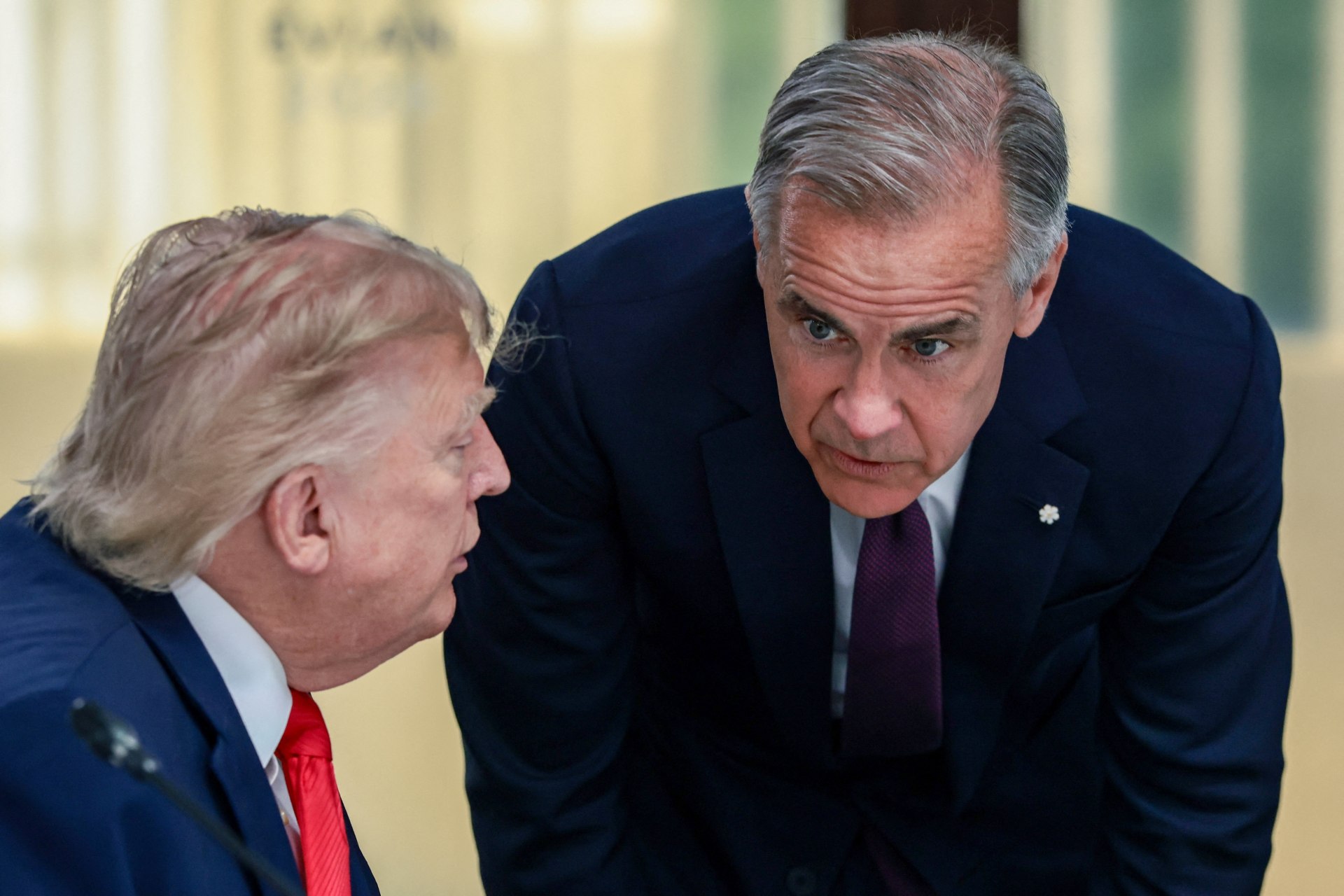
This means Trump’s ultimatums could carry new weight.
The irony, of course, is that Washington’s pressure and economic coercion tactics are the main reason Ottawa and Brussels want to reduce their dependence on the United States in the first place. And every new threat only strengthens the case for further diversification. That said, the same pressure could make the project harder to realize. Several EU governments were wary of provoking Trump even before von der Leyen made her offer, and they were apparently not even consulted. Any ambitious new arrangement with Canada will ultimately require their unanimous blessing, so the Commission president’s enthusiasm may well have gotten ahead of European politics.
Could other countries follow Canada’s example?
Metsola clearly thinks so, having already mentioned Australia and New Zealand.
For the past three decades, the EU has divided the world into three rather clean categories: full members, candidate members in the process of joining, and third-country outsiders with varying degrees of access to the EU single market. That division is less fit for today’s world. The United Kingdom has left the EU but remains deeply intertwined with the continent’s economy and is embedded within its broader security architecture through NATO. Ukraine would love to join but may need many more years to get there. Indeed, when German Chancellor Friedrich Merz floated the idea of “associate membership” for Kyiv as recently as last May, the reaction in Brussels was lukewarm at best, which makes the offer to Canada all the more notable.
Neither Canada, nor Australia, nor New Zealand could join the EU under the current treaties, but it is clear that they share most of Europe’s strategic interests and political values. Associate membership could provide a new outer circle of countries that opt into specific parts of the EU system. This could include research and education as well as defense procurement and technology standards, in exchange for abiding by the relevant rules and contributing to the EU budget as appropriate.
There is a certain irony here for London because Brexit was partly premised on the complaint that the EU offered nothing in between full membership and the exit door, which is why the United Kingdom left to negotiate a more bespoke relationship from the outside. More than six years after the UK left the EU’s institutions—on January 31, 2020—Brussels is contemplating exactly such an intermediate category. And it is doing so for Canada of all countries, a nation that, technically at least, still has a British monarch as its head of state. British governments may never want the country to be labeled an “associate member” of the EU, but sooner or later they will have to decide how much of its substance they want.
Will it actually happen?
The obstacles are real, especially because several EU member states have long resisted anything that smacks of a Europe à la carte. There has always been a fear, especially since Brexit, that outsiders could enjoy the benefits of membership without its obligations. Candidate countries from the Western Balkans to Ukraine, which have long been knocking on Brussels’s door, can reasonably ask why Canada should receive privileged access while they continue to undertake painful reforms in hopes of being able to join one day. And the fact that ten EU member states still have not ratified CETA after nine years is a sobering indication of how difficult an agreement that is far more ambitious than CETA would prove to realize.
Canada, for its part, remains deeply integrated in the North American economy and probably has little appetite to become a giant Norway that accepts EU rules without having a vote on them. Carney was therefore careful to frame the alliance as a means of enhancing Canadian sovereignty and collective resilience, insisting that he was not proposing some sort of “third bloc in order to become a great power rival—only with better manners.”
This work represents the views solely of the author(s). The Council on Foreign Relations is an independent, nonpartisan membership organization, think tank, and publisher, and takes no institutional positions on matters of policy.