NSC-68 and the Dawn of the Cold War
One of the foundational documents of U.S. Cold War Strategy unnerved the president who commissioned it.
By experts and staff
- Published
 James M. LindsayCFR ExpertMary and David Boies Distinguished Senior Fellow in U.S. Foreign Policy
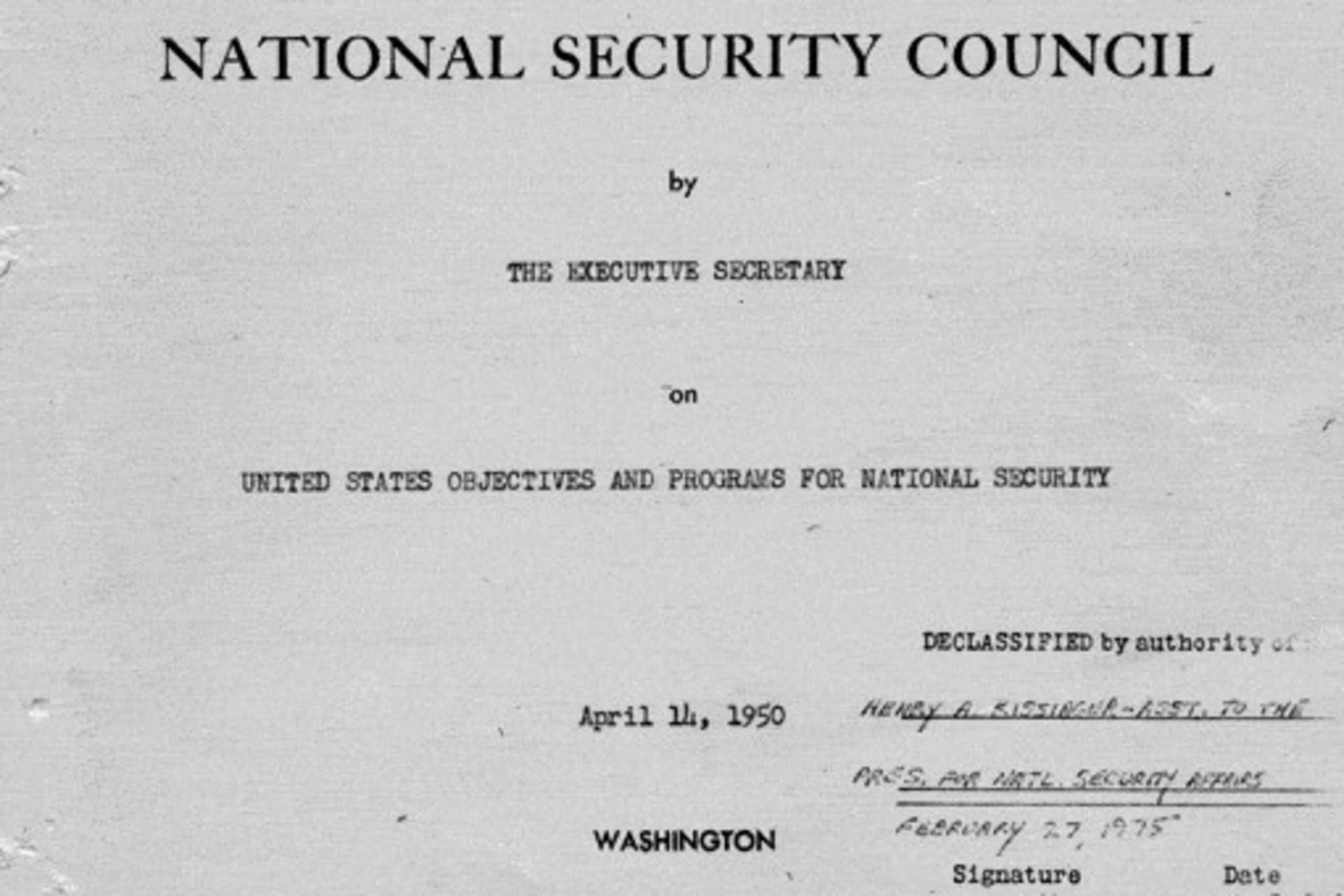
“United States Objectives and Programs for National Security” is a bland title for a report. But that’s the formal name given to NSC-68, the report that President Harry Truman’s National Security Council circulated for review on April 14, 1950. It initially seemed destined for the dustbin of history, known only by a few people obsessed with the arcana of government decision-making. But then, events halfway around the world turned it into one of the foundational documents for America’s Cold War strategy.
The Red Tide
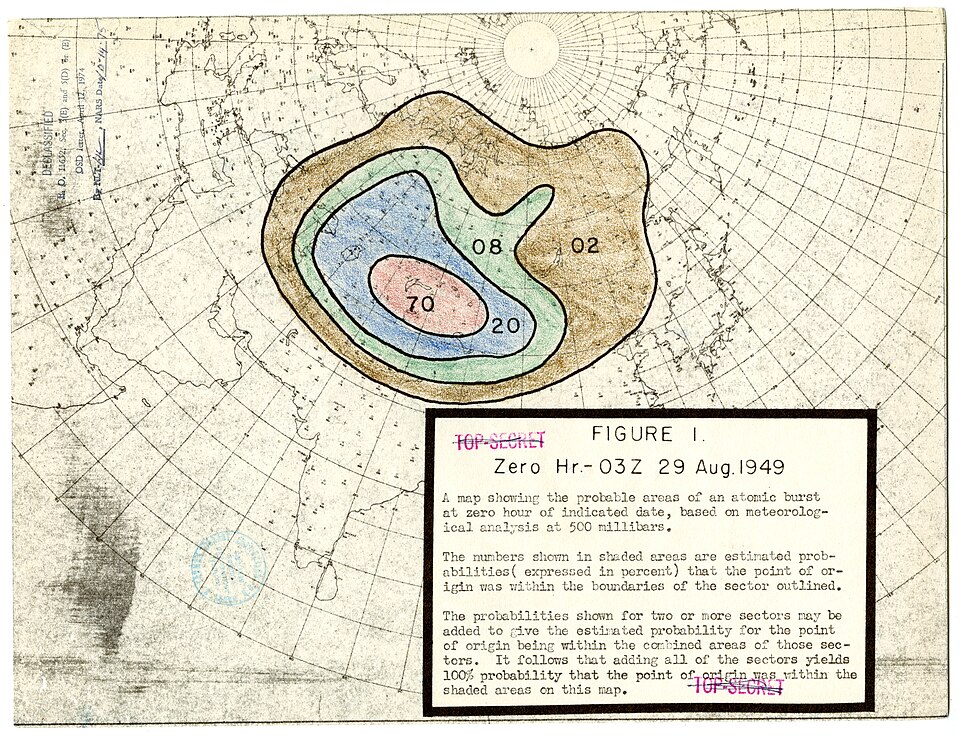
All government reports reflect their times. NSC-68 is no exception. The second half of 1949 had been tough for the Truman administration on the foreign policy front. In August, the Soviet Union detonated an atomic device for the first time. That ended the U.S. nuclear monopoly far sooner than Washington thought was possible. Then, in October, Mao Zedong established the communist People’s Republic of China while the Nationalist Chinese retreated to Taiwan (then known as Formosa). That triggered a bitter debate in the United States over who “lost” China. Republican Senator Joseph McCarthy of Wisconsin answered that question in February 1950 by claiming that communists were running rampant at the State Department.
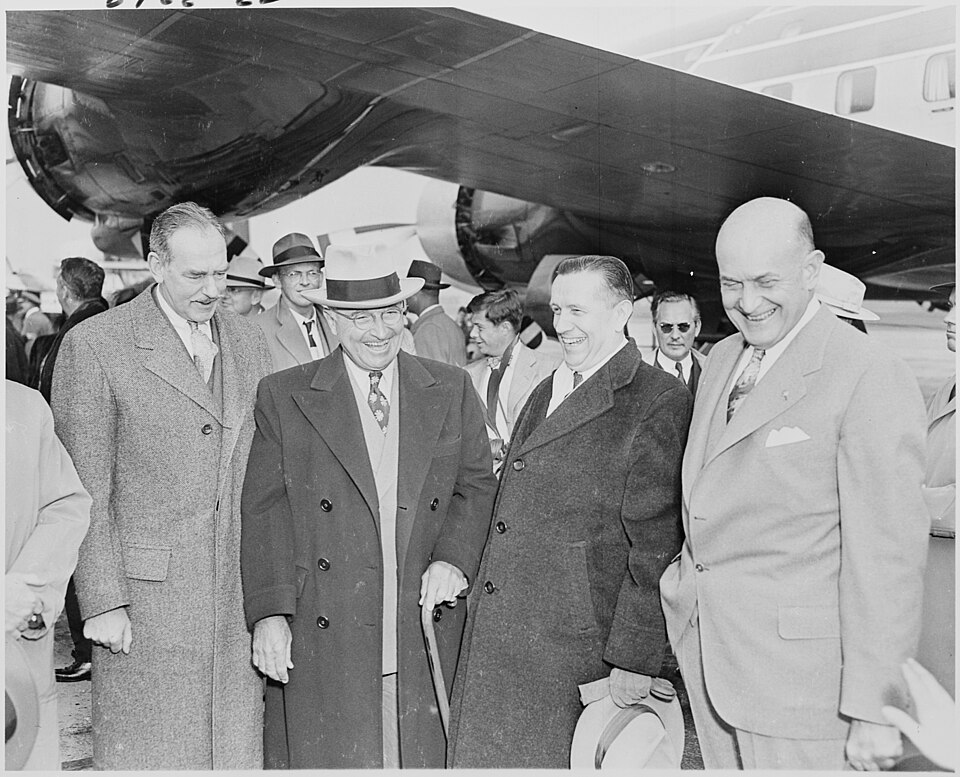
On January 31, 1950, with communism seemingly on the march, Truman ordered a reevaluation of U.S. national security policy. The task of leading the review was handed over to a group known officially as the State-Defense Policy Review Group. They were led by Paul Nitze, the director of the State Department’s Policy Planning Staff, and supported by Secretary of State Dean Acheson. Nitze’s efforts would produce a report quite different from what Truman expected—or wanted.
“Hemingway Sentences”
The participants in the NSC-68 review believed that the U.S. government and public had reacted too passively to the growing Soviet threat. This passivity in turn emboldened Moscow’s appetite for expansion. A tougher foreign policy was needed to meet the challenge.
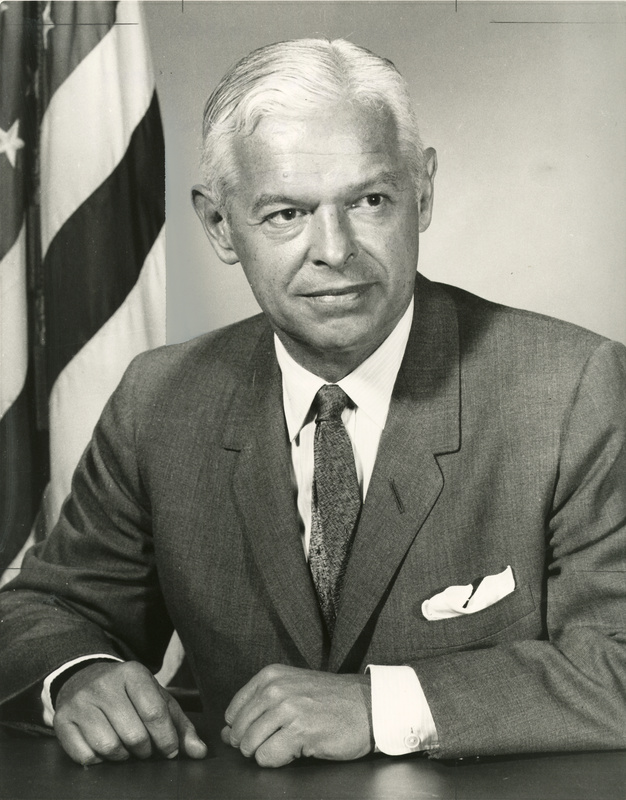
Nitze was the person to make the case for a tougher foreign policy. He was the quintessential hawk. He consistently pushed a hardline foreign policy agenda over the course of a distinguished career in U.S. national security that lasted until Ronald Reagan’s presidency.
The men who advised Nitze saw his report as their chance to convince their colleagues and the country of the need to do much more to stop the Soviet Union and its client states. They intended to make the most of it. Under Secretary of State Robert Lovett said the report should use “Hemingway sentences” to make its points. Lovett added:
If we can sell every useless article known to man in large quantities, we should be able to sell our very fine story in larger quantities.
Acheson held the same view. “The purpose of NSC-68,” he wrote in his memoir Present at the Creation, “was to so bludgeon the mass mind of ‘top government’ that not only could the President make a decision but that the decision could be carried out.”
Civilization at Risk
Nitze and his team took Lovett’s and Acheson’s advice. NSC-68’s title may have been bland, the report itself was not. The dramatic tone started in the introduction:
The issues that face us are momentous, involving the fulfillment or destruction not only of this Republic but of civilization itself. They are issues which will not await our deliberations. With conscience and resolution this Government and the people it represents must now take new and fateful decisions.
So, what were the momentous issues? The Soviet Union and its client states stood diametrically opposed to everything that the United States, and by extension the rest of the free world, stood for:
The implacable purpose of the slave state to eliminate the challenge of freedom has placed the two great powers at opposite poles. It is this fact which gives the present polarization of power the quality of crisis.
What made matters worse was that the Soviet threat was growing rapidly by the day. The United States had to respond.
“A Build-up of Strength”
The question was, how? NSC-68 outlined four possible strategies. The first three were isolationism, war, or a continuation of business as usual. Not surprisingly, the report dismissed all three as inadequate and dangerous for the moment.
What NSC-68 proposed instead was the “rapid build-up of political, economic, and military strength in the free world.” The United States should use the time afforded by its (dwindling) nuclear advantage to:
launch a build-up of strength which will support a firm policy directed to the frustration of the Kremlin design. The immediate goal of our efforts to build a successfully functioning political and economic system in the free world backed by adequate military strength is to postpone and avert the disastrous situation which, in light of the Soviet Union’s probable fission bomb capability and possible thermonuclear bomb capability, might arise in 1954 on a continuation of our present programs. By acting promptly and vigorously in such a way that this date is, so to speak, pushed into the future, we would permit time for the process of accommodation, withdrawal and frustration to produce the necessary changes in the Soviet system. Time is short, however, and the risks of war attendant upon a decision to build up strength will steadily increase the longer we defer it.
In some ways, NSC-68 simply extended George Kennan’s strategy of containment. The report described containment as a strategy that
seeks by all means short of war to (1) block further expansion of Soviet power, (2) expose the falsities of Soviet pretensions, (3) induce a retraction of the Kremlin’s control and influence, and (4) in general, so foster the seeds of destruction within the Soviet system that the Kremlin is brought at least to the point of modifying its behavior to conform to generally accepted international standards.
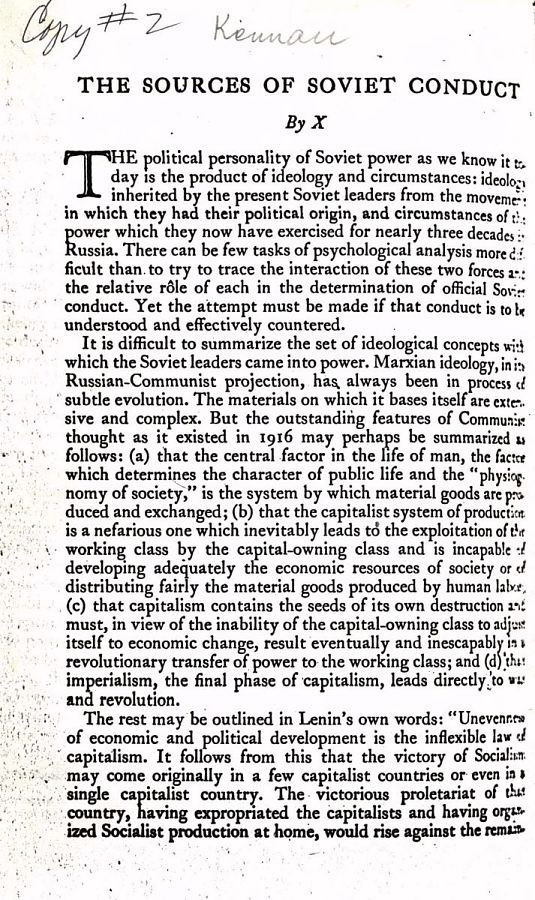
But NSC-68 proposed a far more militarized and aggressive version of containment than Kennan had envisioned. Implementing it would require a massive increase in both conventional and nuclear armaments. NSC-68 did not specify exactly how big the bill would be or when it might stop growing. But everyone understood that the price would be steep.
Tax Hikes or Budget Cuts?
NSC-68’s recommendations unnerved Truman. He wanted to rein in defense spending. NSC-68 meant spending substantially more. That would require either raising taxes or cutting spending elsewhere in the federal budget. Neither of those options appealed to a president who expected to run for reelection in two years. But rejecting the report out of hand would expose Truman to accusations that he was ignoring the country’s national security needs, or even worse, going soft on communism.
Faced with two unappealing options, Truman did what many presidents in his situation do—he called for another study. In this case, he asked for an assessment of how much it would cost to implement NSC-68’s recommendations. Assessments take time, of course. As a result, the fate of NSC-68 and the sweeping changes it advocated were in doubt as summer came to Washington.
Enter North Korea
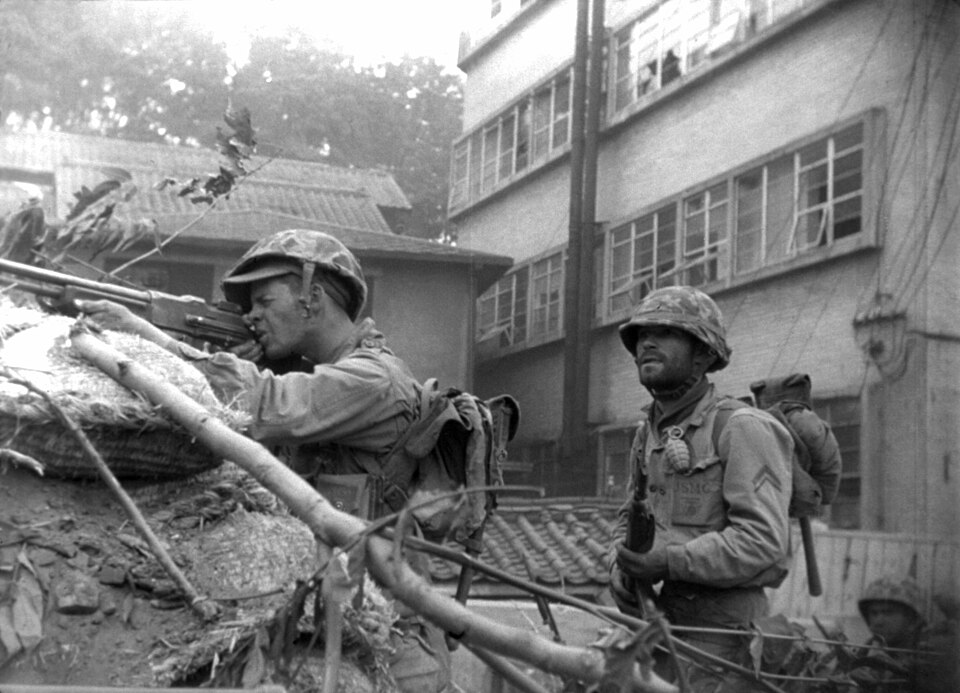
Had history played out differently, the debate over NSC-68 might have sputtered out and the report might have become a historical footnote. But on June 25, 1950, North Korea invaded South Korea. The surprise attack by the Soviet Union’s protégé seemed to confirm what NSC-68 had argued: the Soviet slave state was on the march. Only U.S. military might could stop it.
Truman’s decision to order U.S. troops to defend South Korea guaranteed a major jump in U.S. defense spending. The spike exceeded anything Nitze and his team had imagined. Truman had proposed spending $13 billion on defense in FY 1951; the United States spent $58 billion. With cost no longer an obstacle, NSC-68 became official policy. As Acheson later observed, “Korea saved us.”
Historians might debate Acheson’s claim—and many have. They might also debate whether NSC-68 correctly gauged Soviet intentions and actions, or whether it exaggerated the Soviet threat and exposed the United States and its allies to needless conflicts and crises. What is not in dispute is that the blandly named “United States Objectives and Programs for National Security” set the basic guidelines that governed U.S. national security policy for four decades.
The United States celebrates its 250th anniversary in 2026. To mark that milestone, I am resurfacing essays I have written over the years about major events in U.S. foreign policy. A version of this essay was published on April 14, 2012.
Oscar Berry assisted in the preparation of this post.