Securing Ukraine’s Future in Europe: Ukraine’s Defense Industrial Base—An Anchor for Economic Renewal and European Security
Ukraine’s wartime innovation has transformed its defense industry into a rapidly scaling hub for drones, autonomy, and battlefield technology. Integrating Ukrainian firms into European and NATO procurement is not an act of charity, but a strategic investment in collective security.

Heidi Crebo-Rediker is a senior fellow for the Center for Geoeconomics at the Council on Foreign Relations.
This Ukraine Policy Brief is part of the Council Special Initiative on Securing Ukraine’s Future and the Wachenheim Center for Peace and Security.
Executive Summary
Ukraine’s defense industrial base (DIB) has evolved into a pillar of Europe’s future security and Ukraine’s postwar economy. However, the country’s innovative defense sector—especially in drones, autonomy, electronic warfare, and battlefield software—will require capital, certification, and integration into European and NATO procurement ecosystems if it hopes to scale beyond Ukraine. Some European countries have developed a promising path forward: coproduction models, where Ukrainian firms develop and manufacture arms at facilities elsewhere in Europe. Expanding support for Ukraine’s DIB is an essential investment in the continent’s long-term security.
Introduction
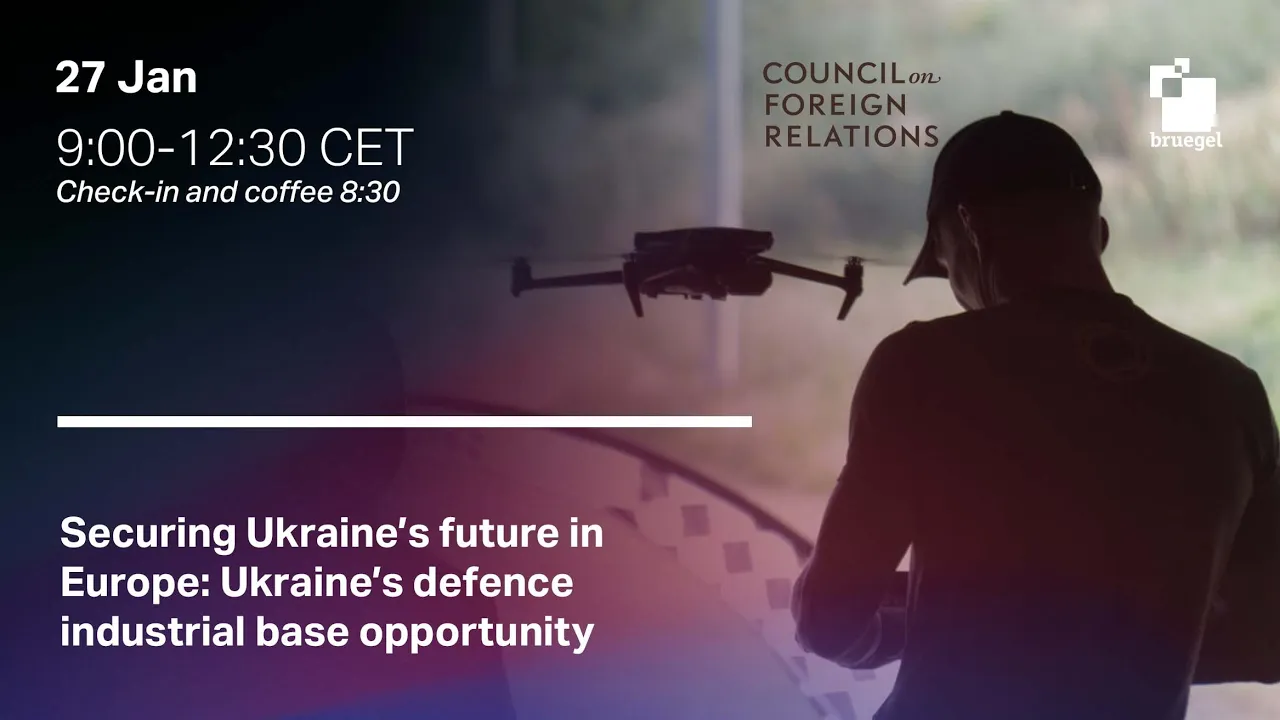
As Russia’s war against Ukraine enters its fifth year, Kyiv’s defense industrial base (DIB) has grown from an improvised wartime response to a pillar of Europe’s future security and industrial architecture. What began as a survival mechanism—a patchwork of innovators producing drones, munitions, and vehicles under bombardment—has matured into a fast-evolving defense powerhouse. At a recent Council on Foreign Relations–Bruegel event in Brussels, policymakers, analysts, and practitioners underscored this shift: Ukraine’s defense industry is central to Europe’s capacity to deter a future Russian attack.
Funding Battlefield Experimentation to Industrial Scale
The war has accelerated Ukraine’s defense innovation at a speed unseen in Europe since World War II. Under the pressure of necessity, Ukrainian firms—most privately owned and operating outside legacy state conglomerates—developed new systems for drones, counter-drone operations, electronic warfare, and battlefield command software. Many of those early-to-growth stage companies were initially funded by donations, crowdfunding, and angel investors. They have worked with Ukraine’s Brave1 platform (a government initiative to accelerate the development of defense technologies) for the past four years to finance operations and scale the most promising innovations. In 2025, Brave1 reported that publicly disclosed investment in Ukraine’s defense tech companies rose to over $105 million, up from $1.1 million in 2023—a one-hundred-fold increase in just two years. Through this model, Ukraine built a real-time test lab for military technology, where innovation cycles that can take Western firms years are compressed into weeks or months. The remaining challenge is how to scale those firms rapidly through both investment and customer orders beyond Ukraine.
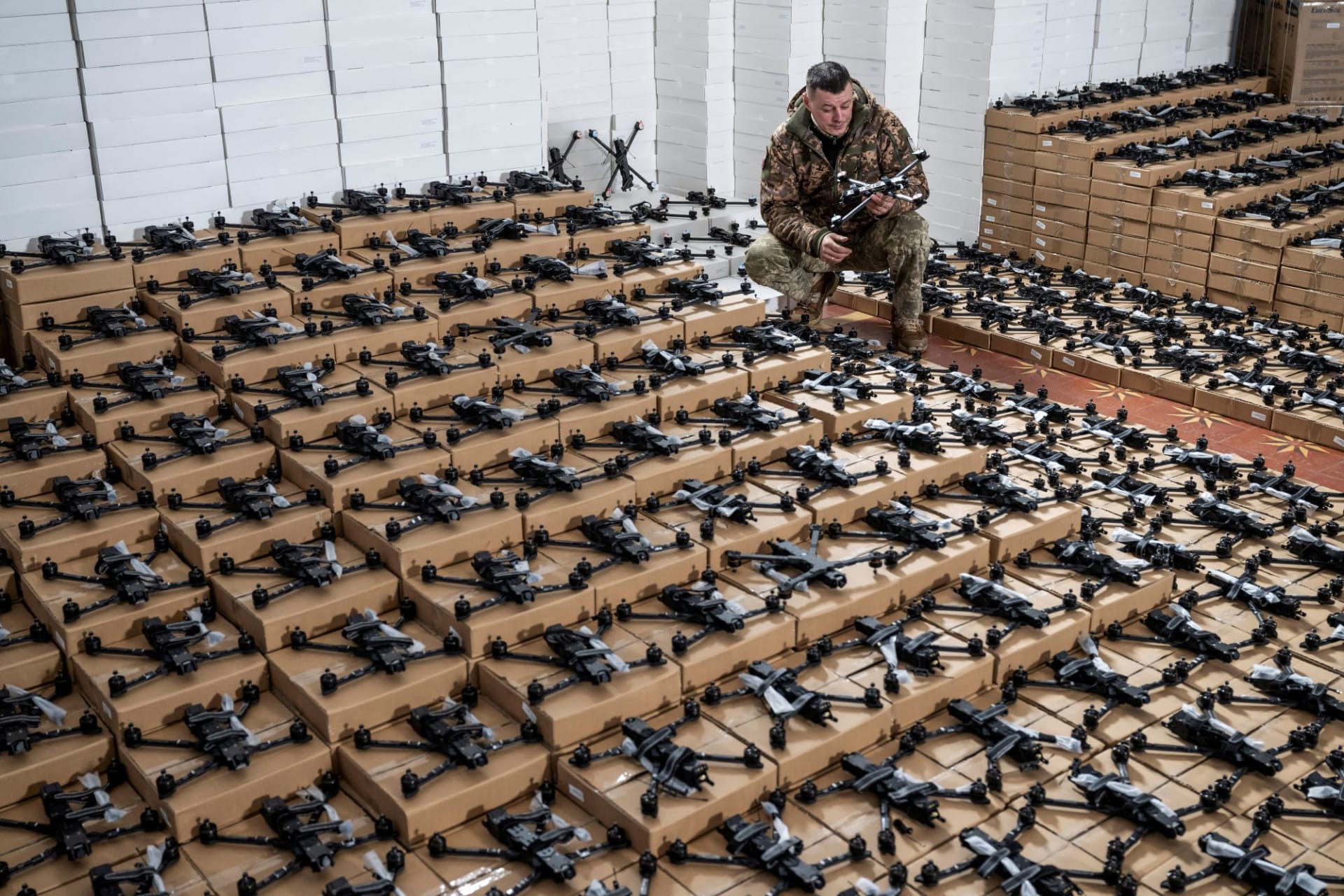
Ukraine manufactured between 2.5 million and 4 million drones in 2025 and aims to produce around 7 million drones of various types in 2026. Yet potential now outstrips domestic infrastructure and financing, preventing many early-to-growth defense-tech companies from scaling quickly. The limiting factors are not creativity, capacity, or talent, but capital, certification, and integration into European and NATO procurement ecosystems. Ukraine has the engineers and battle-tested products, but it lacks the industrial scaffolding and investment needed to plug into Western supply chains and, until recently, an export market to lock in orders.
Funding Models, Integration, and Export Centers
In addition to private and philanthropic capital, European state funding has been essential to the rise of Ukraine’s DIB. Over the past few years, Denmark’s funding model has evolved from providing grants to manufacture weapons in Ukraine for Ukraine to directly financing Ukrainian weapons production in Denmark for Ukraine’s use. Diversifying production geographically protects output from Russian attacks while embedding Ukrainian companies and their designs in European supply networks and creating domestic industrial stakeholders. Germany is advancing its own model, tying large-scale financing for national defense firms to joint ventures that produce Ukrainian-designed systems in Germany, primarily for transfer to Ukraine. Similar arrangements in countries including Lithuania, Norway, and the United Kingdom signal a wider European shift toward funding coproduction of Ukrainian systems in allied factories for both Ukrainian and, eventually, domestic European rearmament needs.
Even better, a major barrier to expanding those models has just been eased. In early February 2026, Ukrainian President Volodymyr Zelenskyy announced the creation of ten Ukrainian defense export centers across Europe, signaling Ukraine’s pivot from a recipient of aid to a supplier of strategic capability. This plan marks a watershed in defense-industrial diplomacy. For most of the war, Ukrainian production was for domestic use, constrained by export bans and the absence of structured channels into EU markets. Formal export hubs will now allow Ukrainian systems—especially drones, sensors, and electronic warfare tools—to enter European markets directly. More importantly, those centers will serve as institutional bridges: legal, regulatory, and commercial nexuses linking Ukrainian firms to EU procurement processes and compliance frameworks.
The Ukrainian export centers are not just about selling arms. They are designed as platforms for coproduction, standardization, and industrial learning. They will enable technology transfers, facilitate joint ventures, and accelerate Ukraine’s alignment with EU defense and industrial standards. This process advances a core goal of Ukraine’s EU accession path: synchronizing its regulatory and manufacturing norms with those of the single market.
For Europe, this means access to tested technologies at a time when demand for affordable, high-performance systems exceeds supply. For Ukraine, it means export revenue, reinvestment capacity, and entry into a sustainable growth loop: earnings finance innovation, innovation generates exports, and exports fund further upgrading.
The Ukrainian export centers also address a broader European challenge: the need to rebuild defense manufacturing at scale as the U.S. government sours on NATO. Ukraine’s surging DIB industrial transformation is therefore not just a national story—it is an opportunity to expand Europe’s capacity rapidly, with Kyiv as both partner and catalyst.
Anchor for Ukraine’s Economy: Investment and Human Capital
Ukraine’s defense sector could become a cornerstone of its postwar economy and a magnet for private capital. Three channels of investment stand out. First, early-stage technology firms in Ukraine’s so-called mil-tech valley—specializing in drones, autonomy, artificial intelligence–driven targeting, and tactical software—are drawing venture investors attracted by dual-use potential. The early February announcement that Swarmer, a leading Ukrainian defense-tech company, is filing for a Nasdaq initial public offering will further sharpen investor attention. Second, mid-sized manufacturers—especially in armor and munitions—are building joint ventures in the Czech Republic, Poland, and Slovakia, marrying Ukrainian design with EU-based production. Third, larger Ukrainian defense conglomerates are seeking export finance and capital market access to scale their operations.
Human capital is the connective tissue of this transformation. Ukraine’s engineers, machinists, and systems designers have gained operational expertise few European countries can match. Retaining this talent—and encouraging some who left to return—requires sustained investment in stable, high-value industrial work opportunities. Defense manufacturing offers precisely that.
In this sense, Ukraine’s DIB could become a central engine for reconstruction and economic convergence with the EU. Much as aerospace and automotive manufacturing drove Central Europe’s industrial modernization after the 1990s, defense manufacturing could play that role for Ukraine—embedding technical quality, corporate governance, and export competitiveness at the core of its economy.
The Obstacles: Risk, Regulation, and Interoperability
Those economic opportunities sit alongside significant barriers. In addition to fighting a brutal war, Ukraine’s domestic investment climate remains fragile. Corporate governance and procurement transparency still fall short of Western expectations. Regulatory reforms are progressing, but gaps in defense contracting, intellectual property protection, insurance, and lingering fears about corruption continue to deter institutional investors. Interoperability adds another layer of difficulty. NATO and EU procurement systems are demanding, with certification rules that few Ukrainian firms yet meet. Without targeted support—joint certification programs, EU‑Ukraine technical cooperation, and NATO standardization pathways—many capable producers risk remaining outside formal European markets.
Geopolitics compounds those risks. Uncertainty over continued military and intelligence support for Kyiv from Washington and Brussels leave investors cautious. Multilateral guarantees, export credit insurance, and joint risk-sharing instruments could help. Crowding in private finance will require European governments to move from grants to commercial off-take agreements and guarantees, embedding Ukraine’s industrial rebuilding in investment‑grade frameworks rather than ad hoc assistance. Dual-use tech firms looking to scale also need guidance on corporate governance, accounting systems, and best practices. Supporting them should be a priority for EU institutions charged with small- and medium-sized enterprise development as Ukraine moves toward membership.
Why Europe Needs Ukraine’s DIB
Rebuilding Ukraine’s defense industrial base is a strategic investment in Europe’s own security and resilience. The war has exposed Europe’s production shortfalls: from ammunition to missile components, demand vastly exceeds supply. Integrating Ukrainian capacity can help close that gap. Furthermore, Ukraine is leading the revolution in warfare and can support Europe as it develops its own defense innovation ecosystems.
Ukraine offers three major advantages: speed, with design and production cycles measured in weeks; adaptability, with a culture of engineering innovation forged by necessity; and cost-effectiveness, with skilled labor and existing infrastructure that can deliver competitively priced systems. Embedding those capabilities in Europe’s defense ecosystem increases not only scale but agility, essential in an era of rapid technological change and hybrid threats.
Just as important, integration shifts the geography of European defense. A Ukraine fully linked to European supply chains becomes a forward base of production and innovation, extending industrial resilience eastward. That makes Europe’s security posture stronger and more distributed, reducing dependence on a handful of Western industrial hubs.
From Survival to Strategy
Ukraine’s defense industrial base began as a lifeline, but it is now becoming a springboard. The creation of export centers, the spread of joint ventures, and the gradual alignment of standards mark the sector’s evolution from improvisation to structural integration. If Europe and Ukraine seize this moment, the country’s innovative DIB could become an engine not only of national defense but of industrial renewal.
The implications extend beyond the war with Russia. Spillovers into machine learning, robotics, and secure communications can fuel Ukraine’s broader technological modernization, anchoring its postwar economy in high-value, innovation-driven sectors. For Europe, supporting this process is prudent: every euro invested in Ukraine’s defense industry expands the continent’s capacity for deterrence, innovation, and self‑reliance.
Ultimately, the partnership between Ukraine’s battlefield-tested industry and Europe’s capital and regulatory systems could define the next phase of Europe’s security. A Ukraine that manufactures as well as fights will contribute not only to its own survival but to Europe’s future strength—turning a front-line struggle into an engine of shared resilience and strategic renewal.
This work represents the views and opinions solely of the author. The Council on Foreign Relations is an independent, nonpartisan membership organization, think tank, and publisher, and takes no institutional positions on matters of policy.
[Video: https://www.youtube.com/watch?v=BQjBjb5_hKk]