The Real Reason Why Everything Seems to Be Crashing
To understand the recent spate of tech system failures, we need to turn a Silicon Valley adage on its head. Instead of “move fast and break things,” think more “move fast and fix things, but still break them inadvertently.”
By experts and staff
- Published
 Adam SegalCFR ExpertIra A. Lipman Chair in Emerging Technologies and National Security and Director of the Digital and Cyberspace Policy Program
Adam Segal is an expert on security issues and technology development. From April 2023 to June 2024, he was a senior advisor in the State Department’s Bureau of Cyberspace and Digital Policy, where he led the development of the United States International Cyberspace and Digital Policy.
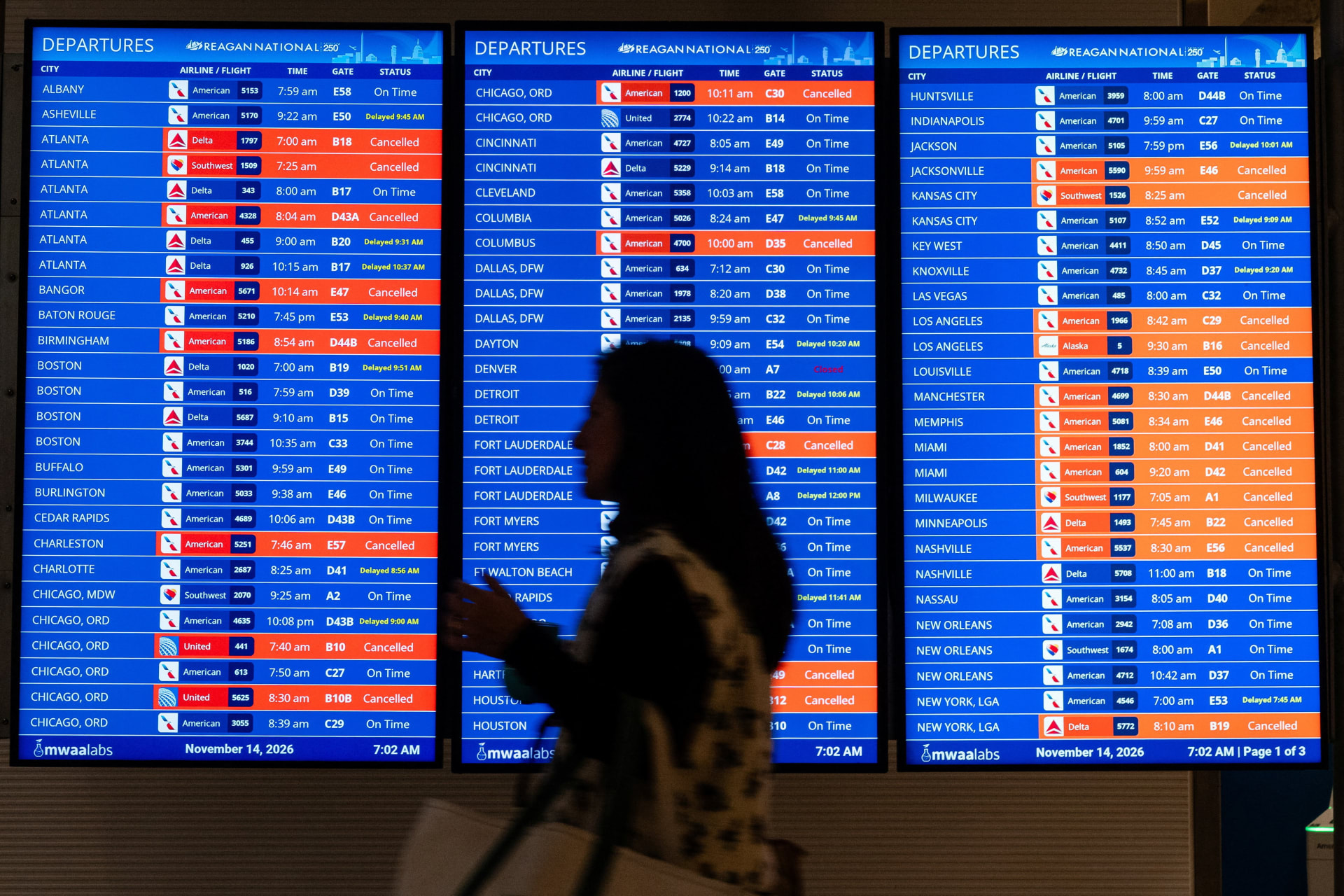
Over the last week, the American people have experienced multiple system failures, including a Microsoft outage, a nationwide ground stop by the Federal Aviation Administration (FAA), and the disruption of banking and Apple services. NSANet, the internal network of the National Security Agency (NSA), also went down, interrupting the communication of top-secret information. The quick succession of the failures, and their widespread impact, has left many wondering: what exactly is happening and why.
All the available public evidence suggests these events are unconnected, with different technical sources and causes. But big network interruptions tend immediately to provoke questions about malicious actors and the vulnerability of critical infrastructure. Many cybersecurity analysts and U.S. government officials have warned for years about a potential “cyber Pearl Harbor”, a devastating attack that causes physical destruction or social dislocation, and, as the war with Tehran has dragged on, the FBI, the Cybersecurity and Infrastructure Security Agency, the NSA, and the Department of Energy have issued advisories alerting critical infrastructure operators that hackers linked to Iran’s Islamic Revolutionary Guard Corps targeted programmable logic controllers and other operational technologies. Just last week, French authorities attributed to Iran an attack that reset temperatures on hundreds of supermarket refrigerators causing tens of millions of euros’ worth of food to spoil.
There is no doubt that U.S. critical infrastructure is vulnerable to cyber operations, especially from a highly capable actor such as China. But the events of the last week do not look to be cyberattacks. None of the victims have claimed that hackers are responsible, and U.S. officials have consistently said U.S. adversaries are not behind the disruptions. In response to questions about the outages, Director of National Intelligence Jay Clayton , for example, said, “This is not a cyberattack and this is not a coordinated effort by a nation state.”
With hackers seemingly ruled out, suspicion soon turned to artificial intelligence (AI) as having had either a direct or indirect role. On the direct line of thinking, the FAA was said to have installed a new AI-supported air traffic management tool—Strategic Management of Airspace, Routes and Trajectories (SMART)—a few days before the outage, leaving some wondering if that interacted with the old system in unexpected or uncontrollable ways. Transportation Secretary Sean Duffy, however, denied that the system was connected to core radar and tracking systems and the FAA has blamed a new router for the outage.
In terms of indirect role, there has been speculation over whether systems have gone down due to AI’s ability to discover new vulnerabilities at incredible pace and at scale. Over the last several weeks, security researchers have used AI tools to discover major bugs in PHP and Java, code used by thousands of businesses and governments. Security analysts for their part have warned of the risk of a “cyber apocalypse” in which defenders are overwhelmed by thousands of new attacks. This has created tremendous pressure on companies to patch and update software as quickly as possible. But as anyone with a laptop and cellphone knows, sometimes things work less than perfectly after the first update.
According to Senate Intelligence Committee Vice Chair Mark Warner, “What appears to be happening...is a consequence of how quickly artificial intelligence is changing the cybersecurity landscape.” Silicon Valley’s old adage of “move fast and break things” could be replaced with “move fast and fix things, but still break them inadvertently.”
So where does this all leave us? No matter the cause, the last week has been a clear reminder of how dependent U.S. society is on complex systems that are vulnerable to disruptions caused by technical mistakes and malicious actors. And it is only going to get worse before it gets better, as new AI systems are integrated with legacy software.
As this instability becomes a more constant part of our daily life, clear, timely communication from technology platforms and the government about what they know becomes even more critical, especially as people will often see patterns where none exist.
This work represents the views solely of the author(s). The Council on Foreign Relations is an independent, nonpartisan membership organization, think tank, and publisher, and takes no institutional positions on matters of policy.