Boom or Bubble? Understanding AI and the U.S. Economy
Investments in artificial intelligence (AI) have powered much of the U.S. stock market’s gains in recent years. But growing debt and public backlash are making investors wary that the AI boom could go bust, threatening the U.S. economy and its ability to compete with China.
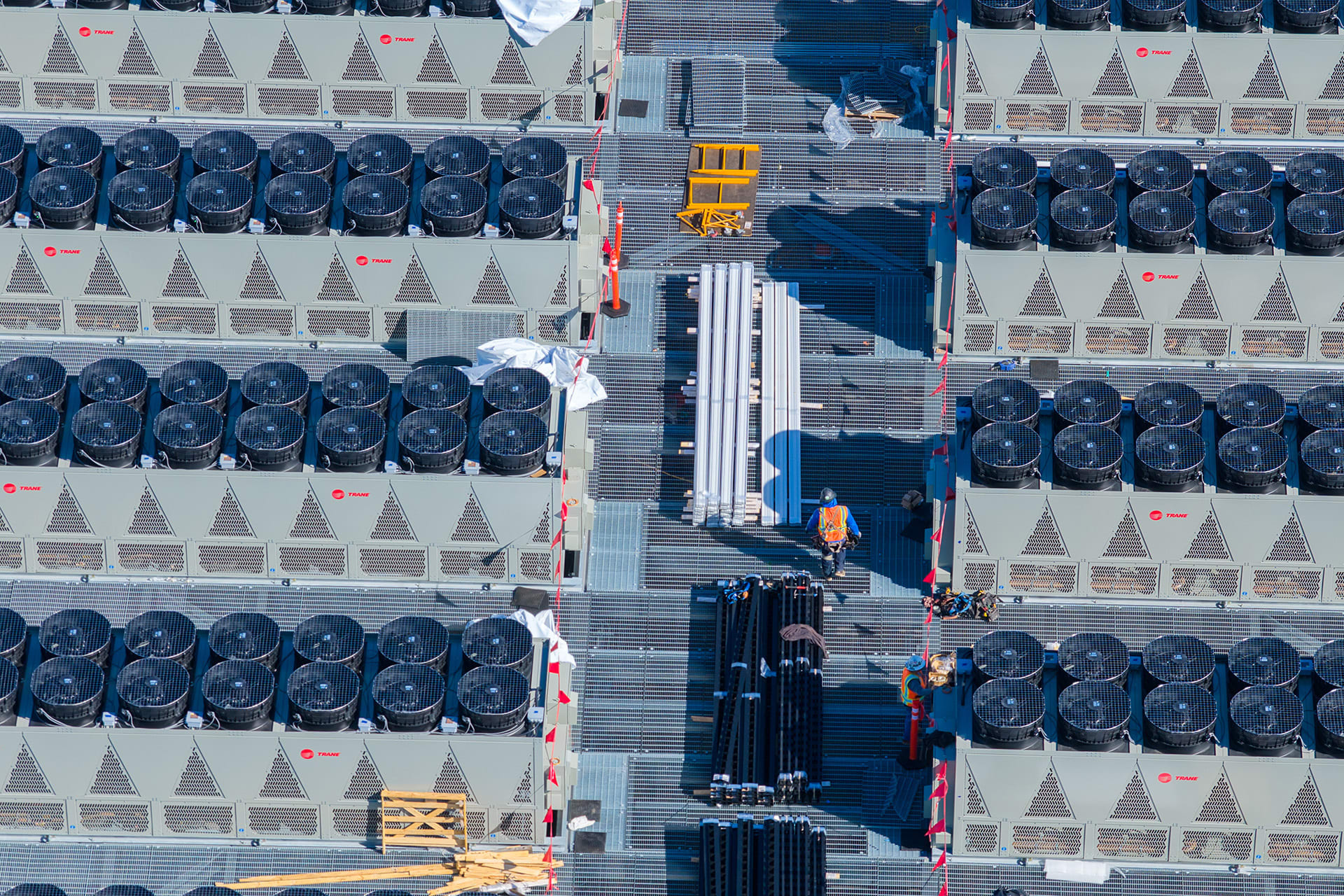
AI is on track to become the largest investment boom in U.S. history, surpassing those of railroads, highways, and the internet. A small coterie of large tech companies, including Amazon and Alphabet (the parent company of Google), has been leading the charge, spending hundreds of billions of dollars on software, hardware, and data centers to power their AI models.
AI investment has fueled U.S. stock market growth, which has, in turn, boosted consumer spending. But despite the vast sums that AI firms have spent on the technology, they have yet to see meaningful returns. Rising debt and softening revenues, coupled with concerns about a potential AI backlash following Democrats’ capture of Congress in the U.S. midterms and an alleged Chinese espionage operation targeting the CEO of chipmaking firm Nvidia, have spooked investors and sent stocks tumbling in November.
“The leading frontier AI labs have a ‘whatever it takes’ approach to spending to win the AI race,” Rebecca Patterson, a CFR senior fellow and macroeconomic researcher, said. “What we’ve seen recently, though, is that financial markets are growing more skeptical about ‘whatever it takes.’ The growing use of debt to finance the AI build-out, alongside questions about the timing and degree of revenue, is pushing up the cost of debt for many AI-related firms.”
Experts agree that it’s too early to tell whether the AI boom will go bust and believe that much will depend on whether demand for AI keeps up with the massive amounts of money that companies are investing in the technology.
How has AI contributed to U.S. economic growth?
The AI investment boom has accelerated in the four years since OpenAI released its foundational generative model, ChatGPT. This year, the five largest U.S. hyperscalers—Alphabet, Amazon, Meta, Microsoft, and Oracle—estimate they will spend $800 billion or more on data centers, chips, and other AI-related infrastructure, a 94 percent increase over 2025. And that spending is expected to keep growing.
A September 2026 report published by the Brookings Institution projects that U.S. investment in AI and related equipment will exceed $10 trillion between 2025 and 2032—an average of 3.6 percent of GDP per year. The last time a new industry’s expansion made up such a large share of the U.S. economy was during the railroad boom of the late nineteenth century. The AI boom “may be one-and-a-half to three times bigger, as a percentage of GDP, than was true in other technology booms,” Roger W. Ferguson Jr., CFR’s distinguished fellow for international economics, said. “We haven’t ever seen anything quite like this.”
The AI build-out has fueled an economic rally. U.S. stock portfolios have roughly doubled in value since 2022, boosting consumer spending by increasing household wealth. In 2026, the ten largest AI stocks in the S&P 500 accounted for about 50 percent of the index’s gains, according to Goldman Sachs.
However, these figures likely understate AI’s contribution to U.S. economic growth because most of the infrastructure powering AI relies on imported equipment, and GDP calculations subtract the value of these imports. Excluding this discount, Bloomberg estimates that U.S. growth in 2025 would have been 3.1 percent, higher than the 2.3 percent officially reported. AI investment has also spurred data center construction in an otherwise struggling construction sector and created around one million U.S. jobs, according to Economist estimates.
Yet the benefits of the AI boom have not been evenly distributed. Many lower-income households have not benefited from the stock market rally and continue to struggle with high inflation and energy prices, as well as slow wage growth. Meanwhile, the hundreds of billions of dollars poured into AI infrastructure have generally yet to translate into clear productivity gains. Some studies have found productivity growth in sectors with high-skilled services and high rates of AI adoption, such as software development and finance, while others have found no measurable growth in industries that have adopted AI.
“I think long-term growth will come from the diffusion of the technologies, but it will take the next five to eight years to realize,” Vinh Nguyen, CFR senior fellow for AI, said. But those productivity gains could come at the expense of employment growth, particularly for entry-level workers. As companies automate more of their production processes, they expect to reduce their workforces and shift away from clerical roles toward more technical roles. AI could displace between six million and sixteen million American workers over the next decade, according to a September 2026 McKinsey study.
Is the AI industry a bubble?
Experts say that certain features of the AI build-out reflect a bubble. “It’s too early to declare this as inevitably a boom that’s going to burst. On the other hand, one can’t deny that it’s moved very quickly, and there are, to be blunt, some companies that will probably go under because their financial models prove to be unsustainable,” Ferguson said.
The winner-take-all nature of the AI market could induce overinvestment, as companies spend heavily to outcompete rivals. Tech companies are now spending more on data centers and other AI investments than they are earning back. In third-quarter earnings reports, Alphabet, Amazon, and Meta all posted negative free cash flow—a negative cash balance left over after paying for operating costs and capital expenditures.
Beyond hyperscalers’ soaring expenditures, revenues have fallen short of expectations, prompting many investors to question whether companies have enough cash to finance their investments. The S&P 500 slumped after companies released their third-quarter earnings in late October, and dropped more precipitously—by 4.4 percent—following massive Democratic gains in the U.S. midterms, before rebounding slightly. Investors, concerned about increased government regulation and restrictions on AI, sold tech stocks. Experts say it is unclear whether this is the beginning of a larger downturn or just a momentary blip. Despite recent market jitters, investor enthusiasm for AI still appeared high in mid-November, when Anthropic, the developer of the chatbot Claude, raised a record-breaking $81.3 billion in an initial public offering, and its market valuation topped $2 trillion.
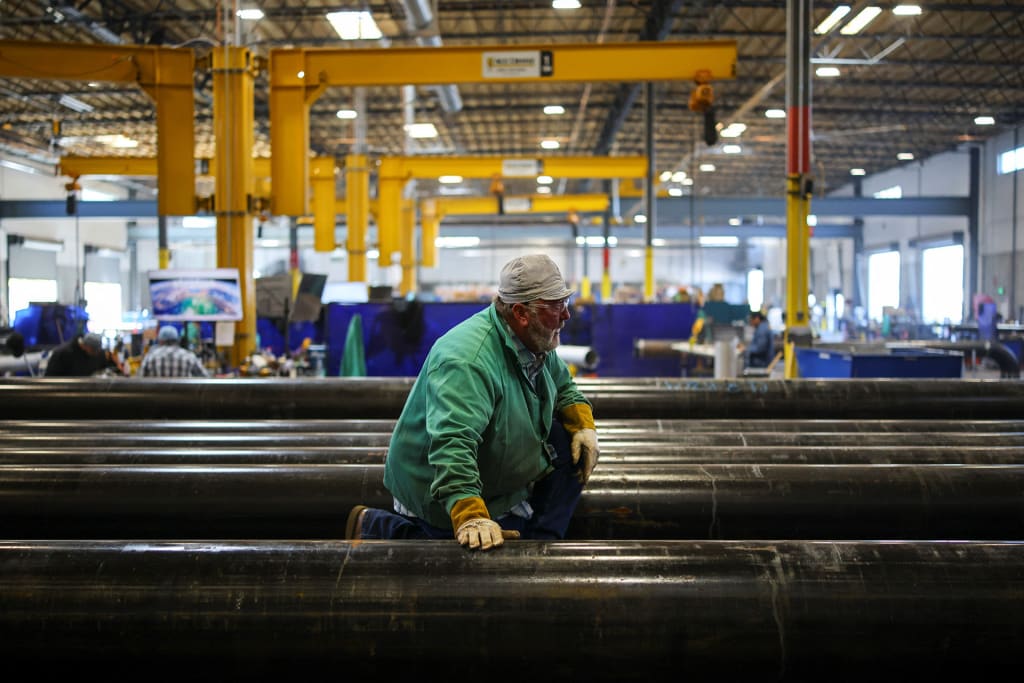
AI companies have started raising equity and taking on debt to fund their build-outs. Alphabet, Amazon, Meta, and Microsoft have borrowed a combined $214 billion so far in 2026, up from $83 billion for all of 2025. Some firms have also been engaging in so-called circular financing: buying and selling AI infrastructure among themselves and lending each other vast sums in exchange for future purchase commitments. Sona, a London-based asset manager, identified 176 unique AI-related circular financing deals worth $3.6 trillion in the past three-and-a-half years. This interconnectedness inflates demand for AI products and can obscure financial vulnerabilities, comparable to the housing market bubble before the 2008 financial crisis.
Nvidia, which sits at the center of many of these circular deals, lost roughly $1.7 trillion in market value after an alleged Chinese spy operation forced out CEO Jensen Huang in early November. After thirty-three years at Nvidia’s helm, Huang exemplifies “key man risk,” Patterson told CFR, and his departure casts doubt on both the company’s continued profitability and the stability of the entire AI financing ecosystem, given Nvidia’s dominance in the market.
But AI differs from past technologies that have experienced boom-and-bust cycles in several ways. The companies investing in AI are much larger and more profitable than the start-ups that fueled the internet bubble, and advanced AI inputs are “generally multipurpose,” Ferguson explained, meaning they can be used in a variety of technologies beyond AI. Additionally, AI has been adopted more quickly than many previous technologies, including the personal computer and the internet, Ferguson said. Even if the AI boom faces financial setbacks, it’s “a fundamentally revolutionary technology, and it’s just not going to go away.”
What could slow the AI build-out?
Several constraints on the AI build-out could exacerbate the risks of overinvestment, including difficulties sourcing electricity, land, and water for the data centers that power AI. To accelerate AI development and deployment, U.S. President Donald Trump has moved to roll back federal regulations governing land use and permitting for new data centers and semiconductor manufacturing facilities. But construction takes time. Imports of advanced inputs, such as memory chips and power grid equipment, also face backlogs of between two and ten years.
Even if the United States can secure the necessary equipment, it lacks the sheer volume of skilled labor needed to build the technology. “The challenge is training the people and building the right skill set,” Nguyen said. “We have a limited number of electricians and skilled talent in building data centers and manufacturing chips.”

Federal deregulation efforts may not do much to speed up the process. Most permitting occurs at the state and local levels, and few communities are enthusiastic about the prospect of a new data center being built, citing concerns about higher electricity prices, environmental harm, and diminished quality of life. With Democrats about to take control of Congress, Nguyen expects that “the data center build-outs will be much more limited and much more constrained.”
Patterson agreed that the pace of investment could slow down. “My question is more around how quickly and why it slows. If it’s gradual and happens alongside growing revenues, that will be easier for financial markets and the economy to absorb,” she told CFR.
How does the AI build-out shape U.S. foreign policy?
“For the foreseeable future, the United States’ ability to sustain AI-driven growth hinges on the ability to access key inputs,” Patterson said, such as chips, servers, and networking equipment. In 2025, approximately 90 percent of those inputs originated in East Asia. Dependence on foreign imports leaves the United States vulnerable to global supply chain bottlenecks and disruptions. “If China in particular wants to slow the United States down, it just has to pause exports of things like critical minerals. The United States is working hard to build resiliency across the AI supply chain, but it will take years, not months,” Patterson said.
Adding to these challenges are the Trump administration’s tariffs on aluminum, copper, semiconductors, and steel. AI companies must pay higher rates to import advanced manufactured goods, and avoiding imports is not an option: “American manufacturing is not up to par to do this at this time,” Nguyen said.
The Trump administration sees rapid AI development and deployment as central to outcompeting China, its biggest competitor in the AI race. The United States has restricted companies from selling chips to China, but export controls have been difficult to enforce. Although Chinese AI investment pales in comparison to that of the United States, Chinese AI models have effectively closed the performance gap with their U.S. counterparts.
“The Chinese will beat us at pricing and will have comparable capabilities eventually,” Nguyen said. But where the United States’ advantage over China lies is in AI safety and security, he added. After all, “you’re unlikely to adopt a piece of AI technology or integrate AI technologies if you don’t trust what it does.”
This work represents the views solely of the author(s). The Council on Foreign Relations is an independent, nonpartisan membership organization, think tank, and publisher, and takes no institutional positions on matters of policy.
Colophon
Data Visualization
- Austin Steinhart