The Pacificus-Helvidius Debate Between Alexander Hamilton and James Madison
Two men who were instrumental in the writing and ratification of the U.S. Constitution differed on how the document allocated power in foreign policy between the president and Congress.
By experts and staff
- Published
 James M. LindsayCFR ExpertMary and David Boies Distinguished Senior Fellow in U.S. Foreign Policy
Original intent. The term pops up frequently in debates over how to interpret the U.S. Constitution. At its core, the concept of original intent holds that constitutional interpretation should be guided (or bound) by what the framers envisioned when they wrote the document in 1787. But what happens to original intent when the framers disagree on how to interpret their handiwork?
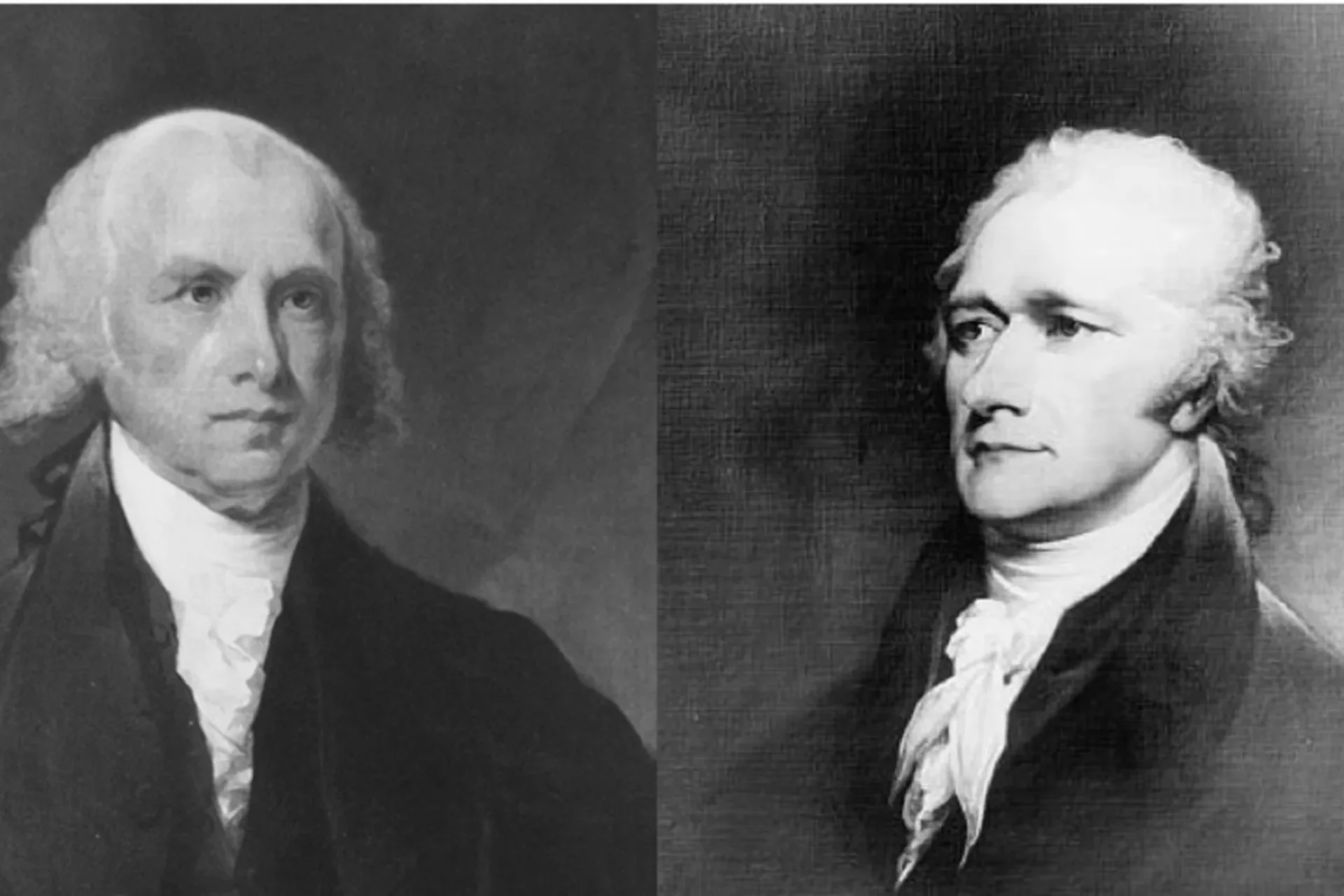
It’s not an academic question. Just look at the so-called Pacificus-Helvidius debate, which began 233 years ago today. The debate pitted Alexander Hamilton against James Madison in a series of dueling essays over President George Washington’s decision in April 1793 to declare the United States neutral in the war that had begun two months earlier between Britain and France.
As was typical for the age, Hamilton and Madison each wrote under a pseudonym. Hamilton chose “Pacificus,” the Latin word for “peaceful” or “peacemaking.” The choice was no accident. Always looking to frame an argument in ways to help make his case, Hamilton wanted to underscore that he opposed allowing the United States to be drawn into war. Madison chose “Helvidius” as his pen name, after a Roman senator who criticized imperial overreach and was executed on the orders of Emperor Vespasian. Madison wanted readers to associate his essays with a voice standing up to emerging tyranny.
Even though Hamilton and Madison both influenced the writing and ratification of the Constitution—they both attended the Constitutional Convention and contributed the majority of the essays that make up the Federalist Papers—they painted decidedly different views of the relative powers of Congress and the president in foreign affairs. Their contending visions echo to this day.
The Neutrality Proclamation
Washington’s decision to declare U.S. neutrality created a political firestorm. Many Americans continued to harbor a deep hatred for Britain. The memories of the War of Independence were fresh, and London had refused to carry out several provisions of the peace treaty ending the war. Conversely, many Americans had a deep affection for France. Not only had French support made victory over Britain possible, the French Revolution that had begun just four years earlier seemed to emulate, and legitimate, the principles of America’s revolution.
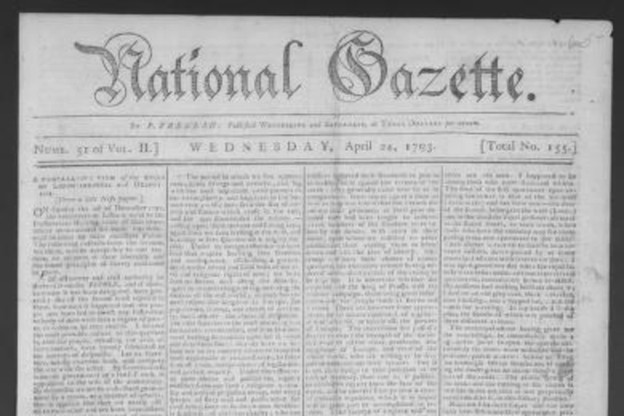
The passions unleashed by the neutrality proclamation were further enflamed when Edmond-Charles Genêt, the new representative of the revolutionary French government, arrived in Philadelphia, then the capital of the United States. He immediately took to whipping up pro-French sentiment, even to the point of criticizing Washington personally. Then Vice President John Adams later recalled the spring and summer of 1793, perhaps with a touch of hyperbole, as a time “when ten thousand people in the streets of Philadelphia, day after day, threatened to drag Washington out of his house and effect a revolution in the government or compel it to declare war in favor of the French Revolution and against England.”
The Problem With Neutrality
As Adams’s recollection suggests, much of the opposition to Washington’s decision was on the substance. Many Americans favored siding with France and knew that neutrality favored Britain. The Royal Navy dominated the oceans and could effectively prevent U.S. trade with France. Why would the United States help its hated enemy and hurt its greatest supporter?
But critics of neutrality also raised a constitutional objection: By what authority did Washington act? The Constitution said nothing about neutrality. It did, however, lodge the war power with Congress. By opting for neutrality, had Washington infringed on Congress’s constitutional war powers?
Even members of Washington’s cabinet doubted the propriety of his decision. Secretary of State Thomas Jefferson wrote that “the Executive had no authority to issue a declaration of neutrality.” The future president told Washington that he could avoid the constitutional problem by not using the word “neutrality” in the eventual proclamation, a suggestion that Washington took. Nonetheless, Jefferson, who detested Britain and saw himself as battling the monarchical impulses of Hamilton and others around Washington, did not abandon his effort to torpedo the neutrality proclamation.
The Debate Begins
Hamilton, who was at the time the secretary of the treasury, never shied away from a fight. He intended to defend Washington and make the case that the president had discharged his constitutional duties, not exceeded them. The first of Hamilton’s seven essays defending Washington appeared in a Philadelphia newspaper, the Gazette of the United States, on June 29, 1793. The final essay appeared on July 27.
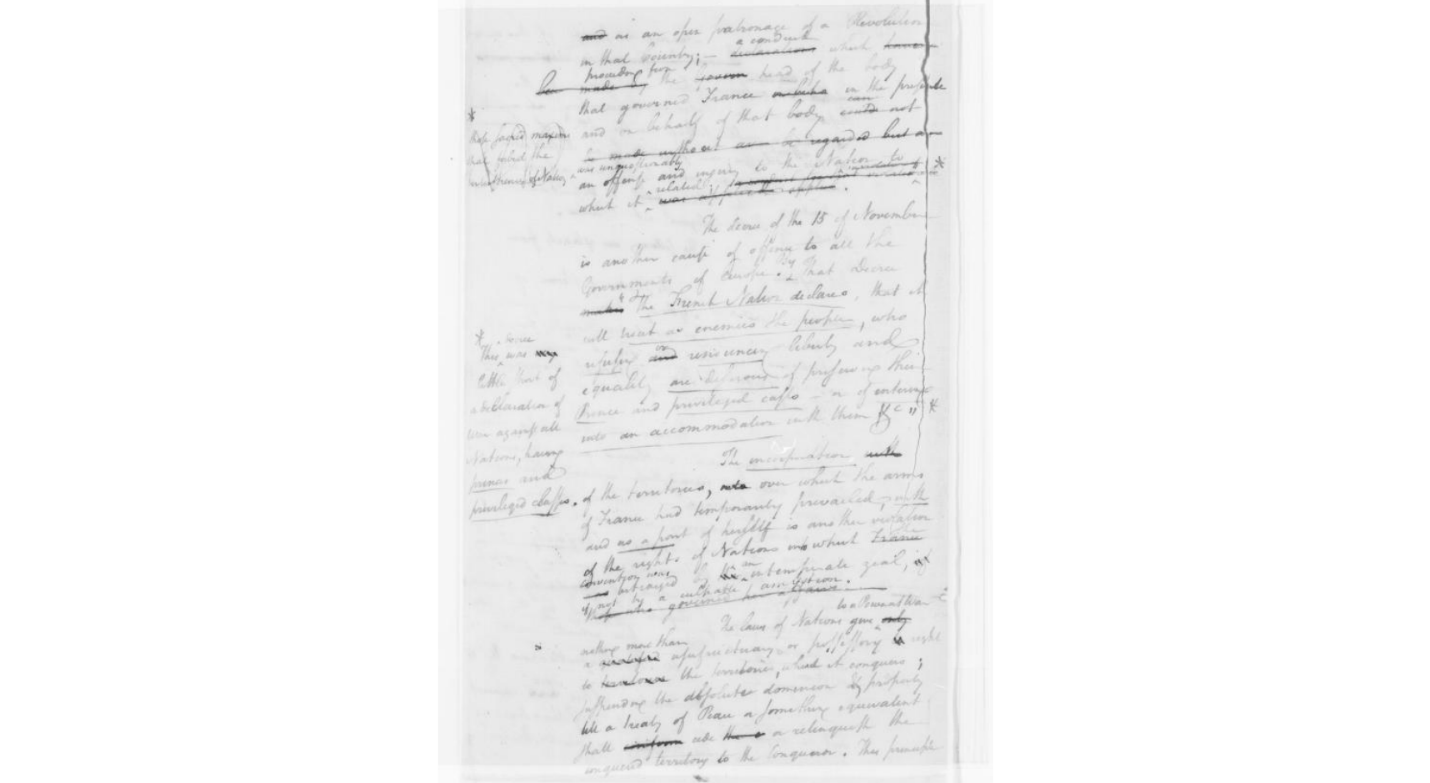
The essays infuriated Jefferson. He knew instantly who Pacificus was. The first essay repeated arguments he and Hamilton had exchanged in cabinet meetings. Jefferson immediately wrote to Madison, a sitting member of the U.S. House of Representatives who was then at his estate at Montpelier because Congress was not in session, to complain of Hamilton’s “heresies.” A week later, Jefferson wrote to Madison again, urging him to respond to Hamilton:
Nobody answers him, & his doctrines will therefore be taken for confessed. For God’s sake, my dear Sir, take up your pen, select the most striking heresies, and cut him to pieces in the face of the public. There is nobody else who can & will enter the lists with him.
Madison initially tried dodging his friend’s request, even though he opposed Washington’s decision, perhaps even more so than Jefferson, on both substantive and procedural grounds. Madison complained that he had too many house guests, was missing the books he needed, and was too detached from what was happening in Philadelphia to write an effective rejoinder. He ultimately relented, though he told Jefferson that “I have forced myself into the task of a reply. I can truly say I find it the most grating one I ever experienced.” Madison’s five essays appeared in the Gazette between August 24 and September 18.
Hamilton’s Argument
Both sets of essays addressed the substantive criticisms of the Proclamation of Neutrality. But the enduring legacy of the exchange was the differing constitutional visions the two framers sketched. Hamilton argued for a broader reading of presidential power than was popular at the time, insisting that:
the general doctrine of our Constitution…is… that the executive power of the nation is vested in the President; subject only to the exceptions and qualifications, which are expressed in the instrument.
In contrast, the role of the Senate in treaty-making and Congress in declaring war were “exceptions out of the general ‘executive power’ vested in the President, they are to be construed strictly, and ought to be extended no further than is essential to their execution.” Hamilton further argued that while the:
legislature have the right to declare war, it is on the other, the duty of the executive to preserve peace, till the declaration is made; and in fulfilling this duty, it must necessarily possess a right of judging what is the nature of the obligations which the treaties of the country impose on the government.
This vision of a president able to act independently of Congress and armed with implied constitutional powers differed markedly from the vision of limited presidential authority Hamilton had laid out in the Federalist Papers. There he had painted a presidency with circumscribed powers. The president’s position as commander in chief “would amount to nothing more than the supreme command and direction of the military and naval forces,” he assured readers, and the president’s authority to receive foreign ambassadors would be “more a matter of dignity than of authority.”
Perhaps most notably, Hamilton had argued in Federalist No. 75 that:
the history of human conduct does not warrant that exalted opinion of human virtue which would make it wise in a nation to commit interests of so delicate and momentous a kind, as those which concern its intercourse with the rest of the world, to the sole disposal of a magistrate created and circumstanced as would be a President of the United States.
Pacificus said nothing about what had changed in “the history of human conduct” to make it now wise to commit the nation’s interests to one man.
Madison’s Rebuttal
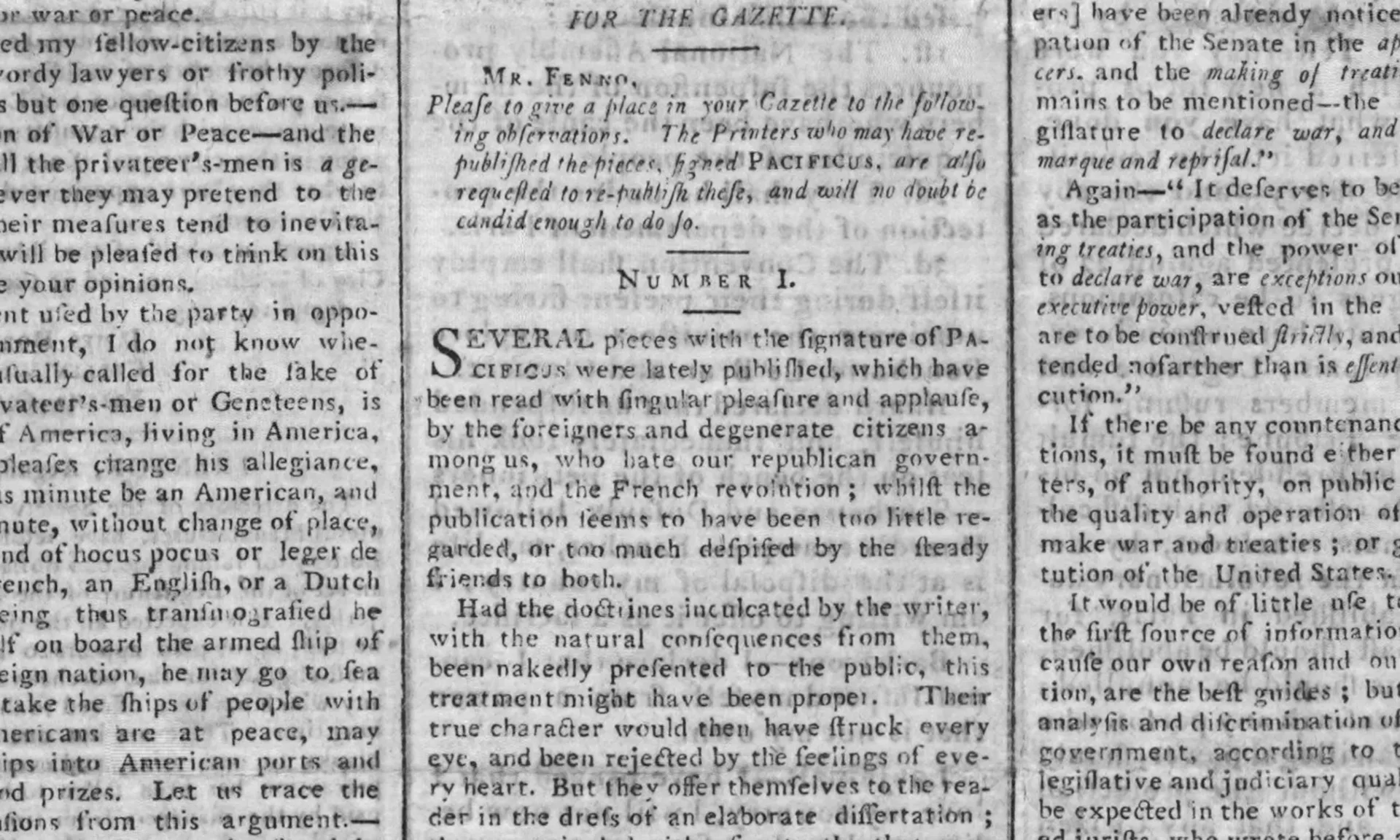
Madison was quick to vent his spleen on Hamilton, whom he had grown to fear and detest. In his first essay, Madison wrote that Pacificus’s essays had:
been read with singular pleasure and applause, by the foreigners and degenerate citizens among us, who hate our republican government, and the French revolution.
He did not stop there. He asked rhetorically where Pacificus had gotten his misguided views. The answer was Britain, where “the power of making treaties and the power of declaring war, are royal prerogatives.” Not only was Pacificus an anglophile, Madison was signaling to readers, he was peddling monarchist doctrines.
Besides casting aspersions on Hamilton’s pro-British leanings, Madison made a substantive argument. Pacificus had things backward—the balance of power between the executive and the legislature under the Constitution tilted toward Congress. The president’s foreign policy powers were restricted to those specifically mentioned in the Constitution and even those did not amount to much.
For instance, Madison dismissed Hamilton’s contention that the power to receive foreign ambassadors imbued the president with broader authorities by observing “that little, if anything, more was intended by that clause, than to provide for a particular mode of communication.” In making his case, Madison quoted what Hamilton had written in the Federalist Papers, though in keeping with the custom of the time, he did not name Hamilton as the author.
For Madison, the president was essentially an agent who acted on behalf of Congress and so should avoid acting in ways that circumscribed its freedom of action. This vision of the presidency was more pinched than the one Madison had sketched five years earlier at the Virginia ratifying convention, showing that Hamilton was not the only framer whose constitutional views shifted with time and circumstance. (Madison’s flexibility on constitutional interpretation showed up again a few years later during the debate over the Jay Treaty.)
The Legacy of the Pacificus-Helvidius Debate
Madison had the better of the argument in terms of the system the framers who met in Philadelphia in the summer of 1787 thought they were creating. But Hamilton had the better of the argument of how the system would operate in practice. Over the next two centuries, power—both constitutional and practical—shifted toward the president. It did so in good part because presidents accepted Hamilton’s idea of implied power and because of a dynamic that Hamilton had recognized in the Federalist Papers, namely, that:
decision, activity, secrecy, and dispatch will generally characterise the proceedings of one man, in a much more eminent degree, than the proceedings of any greater number; and in proportion as the number is increased, these qualities will be diminished.
The shift would be helped along by the frequent willingness of members of Congress to put aside qualms about the president’s authority to act when he delivered policy outcomes they wanted.
In their jousting, Hamilton and Madison both pointed to constitutional provisions that supported their position. In doing so, they highlighted how the framers, perhaps unwittingly, had created a constitutional structure of separated institutions with overlapping powers. These overlapping, or concurrent, authorities, in turn, have meant, as the legal scholar Edwin Corwin famously put it, that the Constitution extends “an invitation to struggle for the privilege of directing American foreign policy.”
That struggle can generate a productive tension, with the two branches checking each other’s worst tendencies—or bringing out each other’s best qualities. But it also raises the possibility that one branch trumps the other. As the historian Arthur Schlesinger wrote more than a half-century ago in The Imperial Presidency:
if the President were to claim all the implications of his control of diplomacy, he could, by creating an antecedent state of things, swallow up the congressional power to authorize hostilities. If Congress were to claim all the implications of its power to authorize hostilities, it could swallow up much of the presidential power to conduct diplomacy.
I leave it to you to decide which is the greater risk today.
The United States celebrates its 250th anniversary in 2026. To mark that milestone, I am resurfacing essays I have written over the years about major events in U.S. foreign policy. A version of this essay was published on June 29, 2020.
Jack Patton and Jacob Wentz assisted in the preparation of this article.