Trump’s Iran Deal Reopens the Strait. Much Remains to Be Done.
CFR President Michael Froman and four leading regional experts assess the details of Trump’s U.S.-Iran deal: what it achieves, what it defers, and what it means for Iran, Israel, Lebanon, and the Gulf.
By experts and staff
- Updated
 Michael FromanCFR ExpertPresident, Council on Foreign Relations
 Ray TakeyhCFR ExpertHasib J. Sabbagh Senior Fellow for Middle East Studies
 Elliott AbramsCFR ExpertSenior Fellow for Middle East Studies
 Elisa EwersCFR ExpertSenior Fellow for Middle East Studies
 Steven A. CookCFR ExpertEni Enrico Mattei Senior Fellow for Middle East and Africa Studies
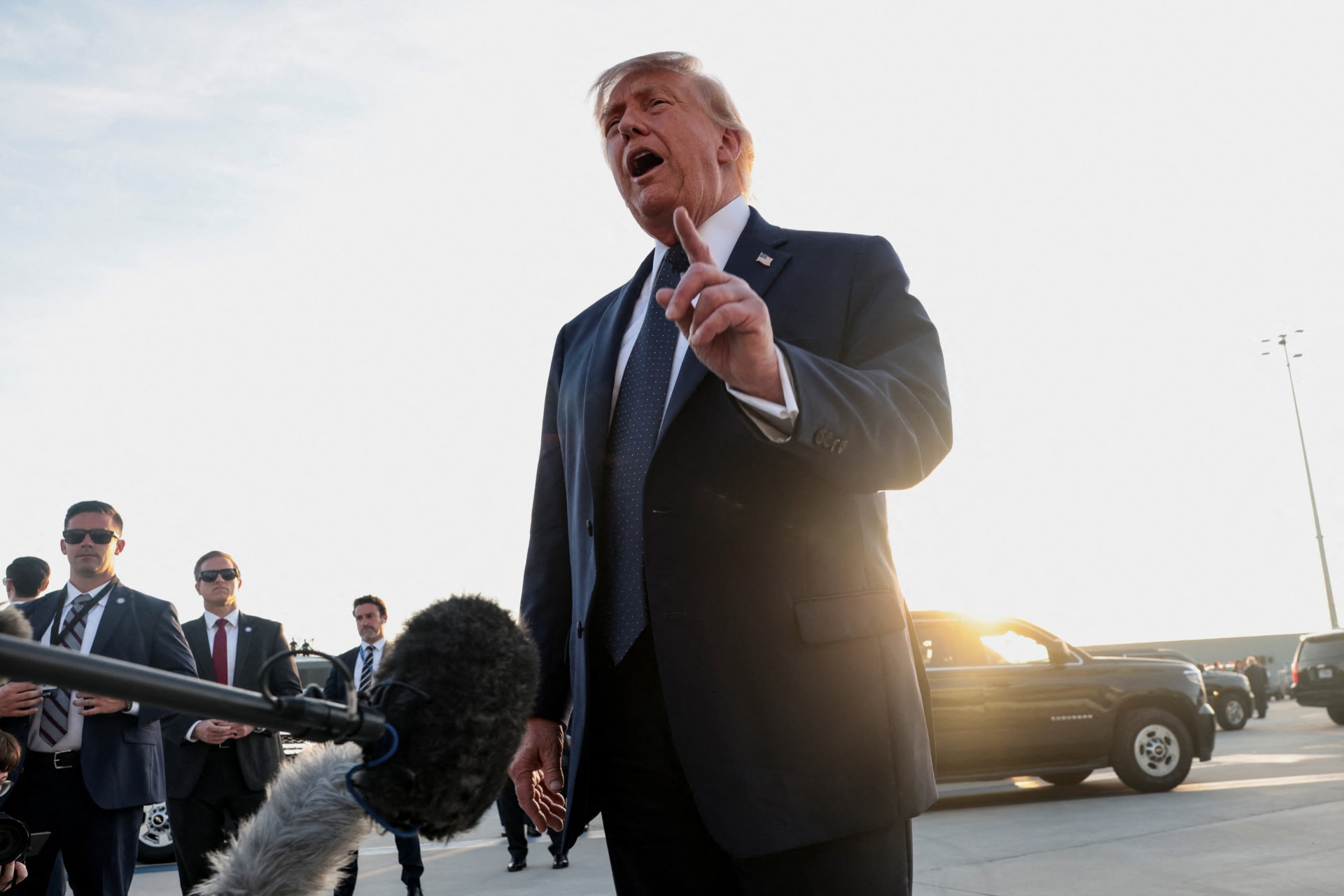
On Sunday, U.S. President Donald Trump announced on Truth Social that “The Deal with the Islamic Republic of Iran is now complete. Congratulations to all! I hereby fully authorize the toll free opening of the Strait of Hormuz, and, simultaneously herewith, authorize the immediate removal of the United States Naval blockade. Ships of the World, start your engines. Let the oil flow!”
Details of the agreement were made public on Wednesday after a U.S. official read the text to reporters. It was later announced that Trump signed the deal while at the Palace of Versailles in France for the G7 summit. But this agreement is just a start, creating a process for opening the Strait of Hormuz in the short run and laying out a sixty-day timetable to address many of the remaining issues, including constraining Iran’s nuclear ambitions and the scope of sanctions relief and financial support for Iran. Surprisingly, the agreement does cover Israel’s war with Hezbollah in Lebanon and raises the prospect that the United States’ military presence in the region is open to negotiation.
Needless to say, there are a lot of details to be negotiated and, if the past is prologue, good reasons to be skeptical that a comprehensive peace, even if reached, will hold. Nonetheless, this could be seen as breaking a deadlock that has threatened the global economy, even if it puts on the table issues we may later come to regret.
Perhaps the memorandum of understanding (MOU) should be best understood as mostly a ceasefire. Such an arrangement could be extended indefinitely while a grand bargain is negotiated. As Trump said on the sidelines of a G7 summit in France, “It’s a memorandum of understanding. And if I don’t like it, we’ll go back to shooting at them, dropping bombs on their head. If I don’t like it, if they don’t behave, we’ll go right back to dropping bombs right smack in the middle of their head.”
As the dust settles, Iran knows how far the United States is willing to go. It also knows it can bring the Strait of Hormuz (and the global economy) to its knees with a barrage of missiles and drones. It will take time to see if the war in Iran was worth it.
Below is a roundup of what CFR’s leading regional experts have to say about the current state of play and how the deal is reverberating around the region:
Trump’s deal reflects Iran’s priorities, not the United States’
Ray Takeyh is Hasib J. Sabbagh senior fellow for Middle East studies at CFR. His areas of specialization are Iran, U.S. foreign policy, and the modern Middle East.
Wars are defined by their narratives. The much-touted MOU between Iran and the United States is greeted differently in each country. The Americans are talking of peace; the Iranians of victory. The public release of the document did not give much clarity, given that so many essential issues are deferred to the later rounds.
For now, Iran and the United States have agreed to lift their blockades on maritime traffic through the Persian Gulf and then spend the next two months sorting out everything else. It is hard to see how this timetable is sustainable.
Thus far, the Iranians have partly succeeded in setting the agenda. The nuclear issue is not part of the agreement but Israel’s conduct in Lebanon is. Tehran has already made clear that it will not ship out its highly enriched uranium and it does not view the International Atomic Energy Agency as a neutral arbiter. If they stick to this position, any nuclear accord cannot be adequately verified. Nor has the Islamic Republic given up on monetizing its geography. Tolls can come in various forms, fees for transit or payment for not attacking the Gulf sheikhdoms. The first is a formal arrangement; the second is the prerogative of a tributary state.
There is a reason it is called the Persian Gulf.
In the U.S.-Iran agreement, Israelis fear they will lose the peace
Elliott Abrams is senior fellow for Middle East studies at CFR. He served as special representative for Iran in the first Trump administration.
Israelis do not like what they have heard so far for several reasons.
First, Israel wanted to end the Iranian nuclear weapons program. The agreement will allow Iran to continue to enrich uranium at some level, even if there is a temporary moratorium. Moreover, though Iran must give up or down blend its 60 percent enriched uranium, it may be able to keep very large amounts of uranium enriched to lower levels.
Second, Iran successfully linked this agreement with events in Lebanon, which is a defeat and great worry for Israel. Like Lebanon’s elected government, Israelis want Iran to butt out of Lebanon, but it seems that the agreement instead calls for an end to Israeli action there. Israelis believe the United States is tying their hands while Iran will continue to support Hezbollah, covertly if necessary. When Hezbollah fighters try to return to southern Lebanon and border areas—without initially firing a shot—they worry that any action against Hezbollah will create a crisis between the Israeli government and Trump’s administration.
Third, the removal of all sanctions on Iran and release of billions of dollars in frozen funds is of grave concern to Israelis. That could mean there are more resources available for Iran’s proxies like Hamas, Hezbollah, the Houthis, and Shia militias in Iraq because the agreement says nothing to stop this. It also remains silent on the Iranian missile program, which the recent war showed is extremely dangerous for Israel.
Finally, those financial resources will extend the life of the regime. In fact, the language that Trump is now using about the regime is friendly—at the exact moment when he is harshly criticizing Israel’s prime minister for actions in Lebanon. Far from supporting Iranians who want regime change, it seems that Trump now wants to work with the Iranian regime, legitimizing it despite its conduct (for example, killing thousands of protesting Iranians in January and attacking the Gulf Arab nations during the war). In fact, some leaks about the agreement say the United States will pledge not to “interfere in the internal affairs” of Iran, which means zero support for democrats there. Remembering U.S. support for people like the human rights campaigners Andrei Sakharov and Anatoly Scharansky in the Soviet Union, this pledge would be a complete abandonment of the democracy movement among Iranians.
While many Israelis are critical of Prime Minister Benjamin Netanyahu and will vote against him in the upcoming election, the complete change in tone in Washington about a regime that still calls for “Death to Israel” deeply concerns Israelis. They fear it means that for the remainder of his term, Trump will be more interested in protecting his agreement than in protecting Israel.
Trump’s Iran deal has a Lebanon problem
Elisa Ewers is a senior fellow for Middle East studies at CFR. Her expertise covers the Middle East and North Africa, security cooperation, Congress, and U.S. national security decision-making.
The White House says in its reported internal talking points on the U.S.-Iran MOU that one of the deal’s major accomplishments is “ending the fighting on every front, including Lebanon: no forever wars.” At the same time, it states that the “end of the fighting is not a hope. It is a precondition.”
Herein lies the paradox of what the MOU could mean for Lebanon, and why Lebanon might be the place where spoilers to the MOU will emerge. While the text of the agreement calls for the ceasefire to extend to Lebanon, there is no indication that it would require Israel to withdraw its forces from southern Lebanon. U.S. officials, including the president, have delivered conflicting remarks about how the MOU affects Israeli action in Lebanon, including Israel’s right to self-defense against Hezbollah attacks. Israeli politicians, including Netanyahu, have said a security buffer will remain in the south, along with Israeli Defense Forces (IDF) in it. Iran and Hezbollah reject this. Attacks from both IDF and Hezbollah have continued since the weekend’s e-signing of the MOU.
The agreement grants Iran a win with respect to Hezbollah. Iran sought to protect its proxy in Lebanon and test the Trump administration’s resolve to keep Lebanon separate from MOU negotiations. Tehran learned that U.S. resolve can bend. Now, at minimum, Hezbollah earns a reprieve. At best, it may benefit from the economic relief that Iran stands to receive over the next sixty—or more—days of negotiations.
The Lebanese government is left in a difficult position going into the fifth round of direct talks with Israel next week. It will not be able to force an IDF withdrawal from the south despite the MOU. It will need to contend with Hezbollah’s continued provocations toward Israel while the militant group also seeks to undermine the government’s historic but fragile talks. And it still has the massive task of simultaneously pursuing its disarmament campaign of Hezbollah and a recovery plan for the displaced Lebanese who no longer have homes in the south.
With the sixty-day clock on U.S.-Iran negotiations started, Lebanon is the variable most likely to play spoiler to any long-term deal.
An agreement that leaves the Gulf states on their own
Steven A. Cook is Eni Enrico Mattei senior fellow for Middle East and Africa studies at CFR. He is an expert on Arab and Turkish politics as well as U.S.-Middle East policy.
Throughout the three-and-a-half-month war, Tehran has made good on its warning that the U.S.-Israeli strikes on Iran would result in attacks on U.S. partners in the region. That is why the Gulf states all expressed support for Trump’s deal this week—the MOU promises to reduce the immediate threat of Iranian drones and missiles.
But as much as the Gulf states may welcome the respite from violence, the war and how Trump has chosen to end Operation Epic Fury will change the region in ways that will not necessarily benefit U.S. allies there.
The Gulf states did not advocate for this war, but they are now forced to confront the fallout from the conflict. They will likely have to contend with the aftermath without help from the United States. According to the MOU, U.S. forces will withdraw from areas around Iran within thirty days of a final agreement. Trump may have enjoyed the tactical achievements of the U.S. and Israeli militaries, but the president has now concluded the conflict without a strategic victory—on terms that seem to favor Iran.
Early reporting suggests Tehran will enjoy a sanctions waiver on oil sales, will be able to enrich uranium, and will not be required to dismantle its network of proxies. And although the president has declared freedom of navigation in the Strait of Hormuz, Iranian officials insist that they will impose a transit fee after the sixty-day period of the MOU expires. The Omanis may actually benefit by joining Iran in collecting a toll. The Saudis and Emiratis have options to go around the strait, but Kuwaitis, Qataris, and Bahrainis do not. They will be forced to comply with Iranian demands or experience economic dislocation. The conflict will likely lead to additional Gulf hedging in the form of non-aggression pacts with Iran.
Few Gulf states believe the war should have happened in the first place, and they are all concerned that the United States empowered Iran as a result. Now these countries’ leaders are left to put on brave faces over the MOU.
This work represents the views and opinions solely of the author. The Council on Foreign Relations is an independent, nonpartisan membership organization, think tank, and publisher, and takes no institutional positions on matters of policy.