Turning Crisis Into Opportunity: Lessons From East Africa
CFR President Michael Froman reflects on a recent CFR fact-finding mission in Ethiopia and Kenya.
NAIROBI, Kenya — While much of the world’s attention has pivoted to Asia this week, I thought I’d write on an oft-overlooked part of the world: Africa.
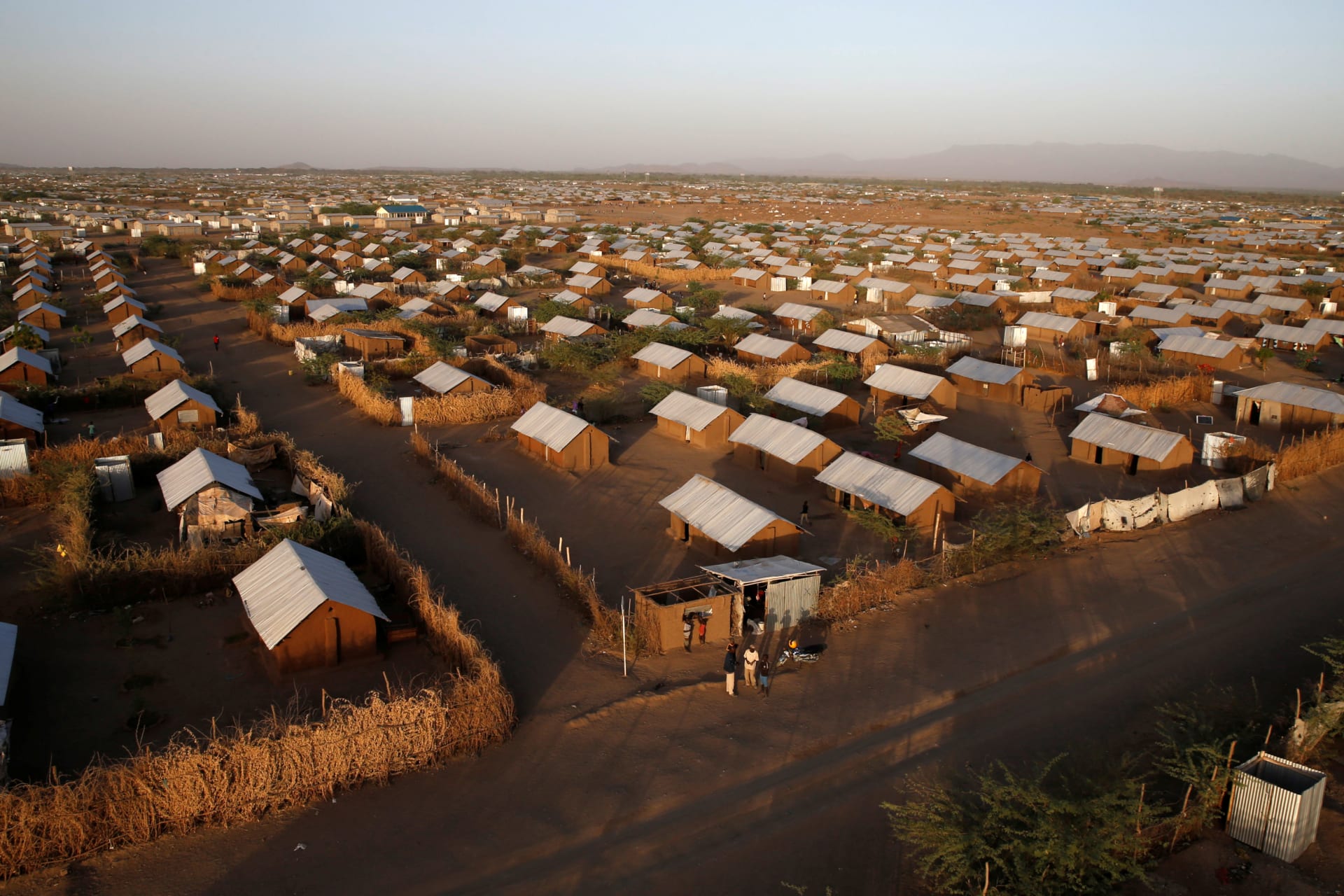
We are just wrapping up a weeklong CFR fact-finding mission to Kenya and Ethiopia. For those who have spent substantial time in Africa, it will come as no surprise that contradictions abound. In Kenya alone, we witnessed the deprivation of Kakuma, a refugee camp of more than three hundred thousand refugees, as well as the buzz of the high-tech start-up community of Nairobi. Desperation and hope live in close proximity, or even in the same place, like Kibera, the largest slum in Africa, where a grassroots community organization, Shining Hope for Communities (SHOFCO), is effecting real change.
Kakuma draws refugees largely from South Sudan and Sudan but includes families from the Democratic Republic of Congo, Ethiopia, Uganda, and a range of other countries such as Afghanistan and Yemen. It embodies all of the challenges—and a few of the opportunities—associated with humanitarian assistance. Some refugees have been there as long as thirty years. Only eight hundred returned to their countries of origin last year. These aren’t temporary camps; they are more akin to informal settlements, quasi-cities, supported by the Kenyan government and an alphabet soup of UN agencies, government assistance programs, and international nongovernmental organizations.
When the refugees arrive, they go to a processing center. In theory, they are supposed to be there for three days and then moved to housing in the camp itself, but given a backlog caused by increased arrivals and reduced resources, some might remain in processing for as long as three years. The World Food Program (WFP) and others provide for their basic nutritional needs by serving the same meal—rice and beans—twice a day. The most vulnerable get 60 percent of the 2,100 calories considered to be the minimum daily nutritional requirement. The less vulnerable get 40 percent. When families are transferred to the camp itself, they get a ten-by-ten-foot living space which was designed to house five people but is now expected to accommodate as many as ten.
Malnutrition is a chronic issue. A visit this week to the main hospital, supported by the International Rescue Committee (IRC) found benches and benches of people waiting to be seen by the emergency room. The maternity ward is a single open room with forty patients lined up, side by side. The pediatric wing is mostly focused on stabilizing children suffering from serious malnutrition, with special high-nutrition formula and Plumpy’Nut, a peanut butter–like nutritional supplement. Chillingly, there is a chart on the wall, tracking weekly morbidity and mortality metrics. Last week, 8.7 percent of the children treated in that ward died.
And still, in the midst of all this suffering, there are rays of hope. The dirt roads among the makeshift structures are replete with small stands selling pots and pans, shoes and clothing, and tomatoes. Western Union and M-Pesa, a Kenya-based telecom payment service, facilitate remittances into the camp from relatives abroad and from refugees to their families back in South Sudan or elsewhere. The WFP and other institutions have set up a farm where five hundred refugees are being trained in farming and where whatever few vegetables are available in the camp are grown.
And then there are the stories of remarkable individuals. Take Dr. Bul, a refugee from South Sudan who came to the camp as a child, was educated in camp schools, received a scholarship to medical school in Nairobi, and now works back at the clinic in Kakuma as one of the six doctors on staff seeing an average of five hundred patients a day. And there is Fabiola, a dynamic young woman in her thirties, who turned her concern about her own children’s malnutrition into an agribusiness, the Fabiola Amazing Food Company, which now employs twenty women and produces high nutrition flour and other grain products. She received training under a WFP/Mastercard Foundation program and sells her products across Kenya.
Much of the discussion during our meetings focused on the abrupt change in U.S. foreign assistance policy in 2025 and the reduction of aid more generally by donors from other countries. There was a moment of panic after the Trump administration announced a cease-work order for U.S. Agency for International Development (USAID) contractors. The staff of the pediatric wing we visited thought they would have to close, causing dozens of children to die in a short period of time. In the end, the Trump administration exempted life-saving activity, and the international organizations shifted resources to priority activities to avoid a calamity. Still, the impact of the cuts is evident everywhere, from the reduction in calories provided to the malnourished to the backlog in processing and the overcrowding of shelters. The WFP estimates that, on the current trajectory, it will run out of food to distribute in Kakuma in the spring. Resources were top of mind for everyone we met.
But it is not just an issue of money. The refugee crisis existed long before the Trump administration, and the issues raised by the administration about foreign assistance have as well: creating sustainability vs. deepening dependency, focusing on local priorities vs. congressional earmarks, investing in systemic improvements (e.g., strengthening health systems) vs. individual projects, strengthening government capacity vs. investing in parallel systems. These are all issues development experts have raised over the years as they criticized traditional approaches to foreign assistance. That said, it would be easier to address those issues in the absence of the kind of cuts that cause or exacerbate real, immediate humanitarian crises.
When it comes to development, sustainable economic growth is ultimately going to be driven by leveraging private-sector activity. The U.S. government has a number of tools to catalyze and leverage that activity. The U.S. International Development Finance Corporation (DFC) was substantially boosted by former President Joe Biden and further empowered by President Donald Trump. The Export-Import Bank, Millennium Challenge Corporation, and Trade and Development Agency all have a role to play. Loans, loan guarantees, and political risk insurance can help mitigate risk. Congress created a capacity for the DFC to provide equity financing, but government accounting rules make it cumbersome to use. That should be fixed.
Of course, some sectors, such as energy, are more attractive to private investment than others (e.g., education). The Delta 40 venture studio in Nairobi has served as an inspiring hub for entrepreneurs launching technology, fintech, and alternative energy start-ups since 2021. It would feel right at home in the Bay Area or Austin, and may well attract market-based risk capital. There is still an important role for grant funding and philanthropy, but much remains to be explored in terms of real public-private partnership.
Take agriculture: 30 percent of Kenya’s GDP is agriculture, 70 percent of the Kenyan population is involved in agriculture, and 60 percent of young people outside Nairobi are unemployed. Kenya is unlikely to meet its economic potential without its agricultural sector playing a significant role.
We visited the facilities of Kentegra, a company in the Rift Valley that is producing organic insecticides from locally grown flowers. Kentegra is making it possible for fifteen thousand farmers to make a decent living, with substantial potential upside. It has benefitted from USAID grants and DFC loans, which together reduced its risk profile and laid the groundwork for private investment that is allowing it to expand and scale. It now awaits approval by the U.S. Environmental Protection Agency to gain access to the U.S. market. If successful, it could be a model for development going forward because Kenya needs firms that can support tens of thousands of jobs, not just tens of jobs. The same is true across much of Africa, where the population is expected to reach 3.8 billion people by century’s end, accentuated by a huge youth bulge in the coming decades.
One thing is clear. There needs to be better linkage between humanitarian and development strategies, programs, and resources. It is inconceivable that generations could be born, live, and die in refugee camps such as Kakuma, wholly dependent on humanitarian assistance, rather than be channeled into productive activity and integrated into the broader economy. Kenya is beginning down that road with the Shirika Plan, under which camps would become municipalities and refugees would integrate further into their host communities. Given the scale of that challenge—there are more than eight hundred thousand refugees in Kenya alone, but there are more than forty million refugees and more than one hundred million forcibly displaced people (including internally displaced people) worldwide—it is going to require the kind of growth that comes from private-sector activity. And that is only going to happen if the government uses the tools at its disposal to crowd in private investment.
The cuts in assistance created crises with real human consequences, and the need to reform and improve the effectiveness of U.S. development and humanitarian policy remains. Every crisis creates opportunities. It’s important we not let this crisis go to waste.
Let me know what you think about the future of U.S. development policy and what this column should cover next by replying to [email protected].
This work represents the views solely of the author(s). The Council on Foreign Relations is an independent, nonpartisan membership organization, think tank, and publisher, and takes no institutional positions on matters of policy.