What Trump Said at the UN Was Important. What He Didn’t Was Important, Too.
Despite pointed criticism of the United Nations, the United States does not seem ready to walk away entirely from the global body.
By experts and staff
- Published
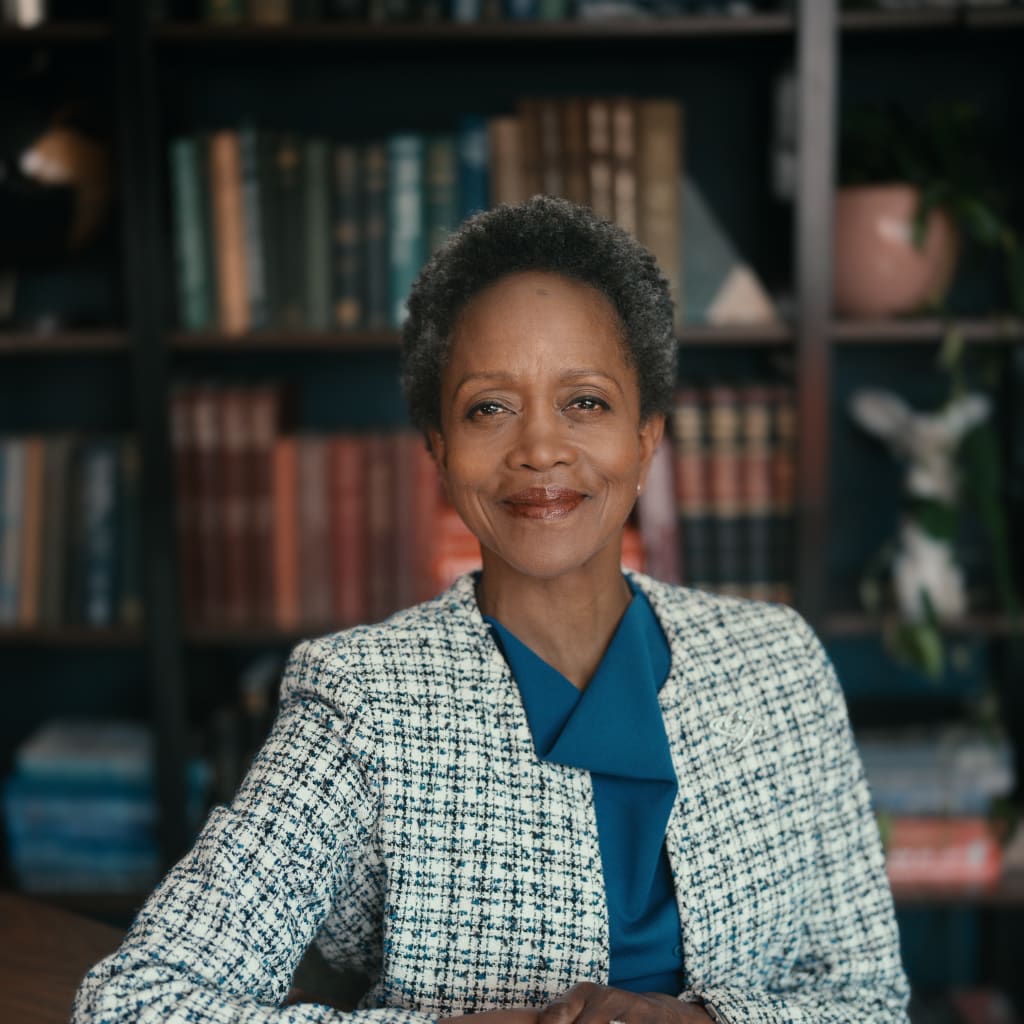 Esther BrimmerCFR ExpertJames H. Binger Senior Fellow in Global Governance
Esther Brimmer’s work focuses on governance of the global commons, international organizations, and transatlantic relations. She previously served as the assistant secretary of state for international organization affairs from 2009 to 2013.
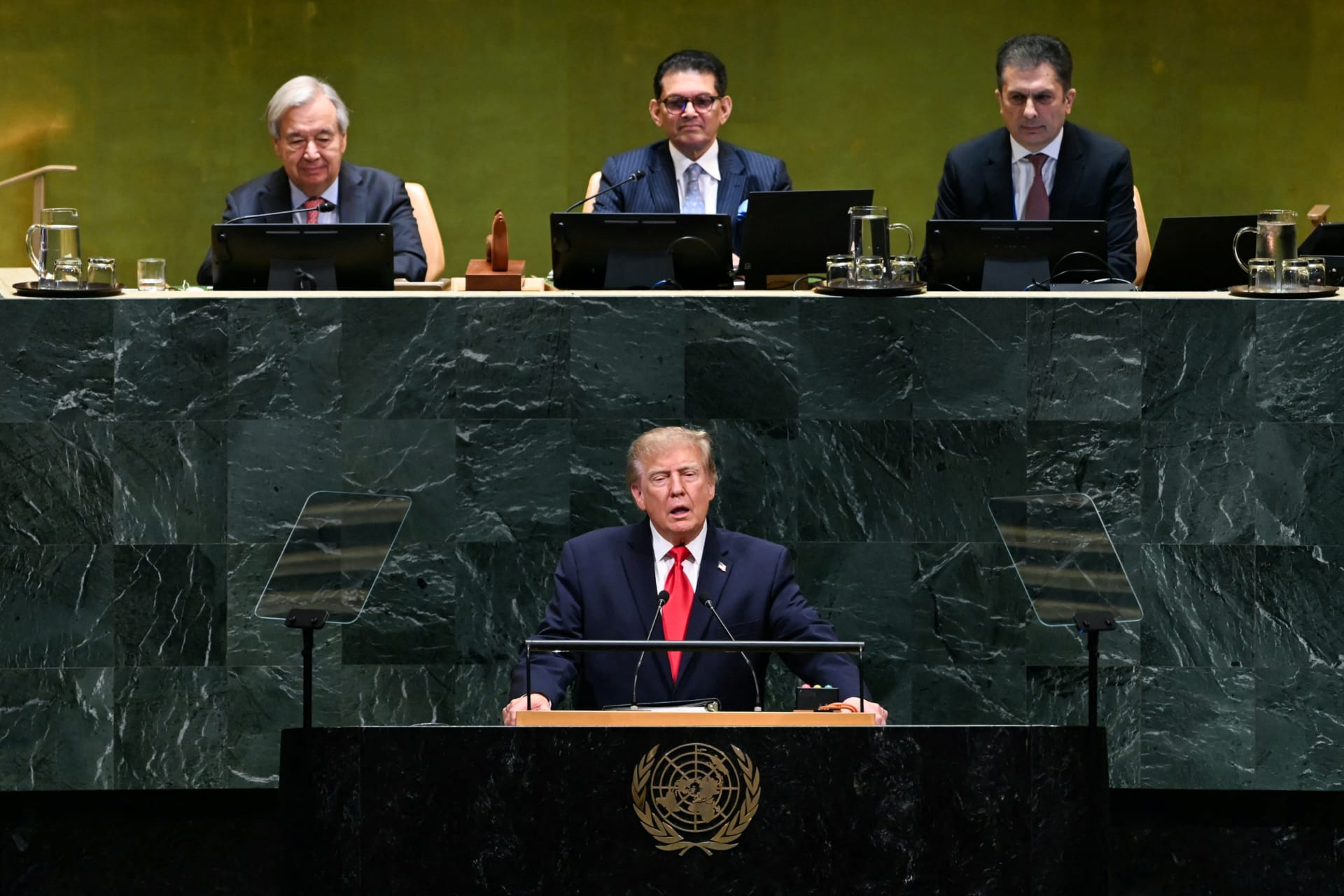
For the fifth time, U.S. President Donald Trump ascended the marble dais to deliver his speech at the opening of the UN General Assembly. Over the decades, world leaders have unleashed much heated rhetoric over that stage’s cool green stone. But this year, what was not said was almost as important as what was.
In last year’s speech, Trump railed against “uncontrolled migration” and a “green energy scam.” This year, he sounded more like a weary frontier sheriff contending with an outlaw. His deliberations veered from wrathful punishment to political analysis as he pondered whether to drive the Islamic Republic of Iran “into hell with no chance of survival and no hope of future greatness or generations?” Then he suggested that, in fact, Iran’s leaders will reach a deal with the United States “because it doesn’t make sense for them not to. They’re waiting to see how I do in the midterm election.”
Trump’s speech came soon after his administration kept the United States in the game by paying some of the dues it owes to the United Nations—$725 million in overdue regular dues and $102 million for peacekeeping. This was vital because member states lose their vote in the General Assembly if they do not pay dues for two years. (The United States still owes $4.2 billion.)
And, after running through a checklist of international conflicts that he says he has resolved, Trump acknowledged that the United States did not accomplish everything completely on its own. As in many a good old western movie, the sheriff was helped by grateful townspeople.
“Working with many nations in this room, we are solving decades of intractable challenges, and we are settling years of unfinished business, and we’re doing it well,” Trump said. He also thanked “the UN Security Council for voting overwhelmingly to pass a resolution condemning Iran’s despicable terrorist attacks on commercial shipping.”
To be sure, this speech was not a paean to the UN system. The president prefers one-on-one diplomacy, not the multilevel chessboard of multilateral negotiations. He was strongly critical of the “far-left agenda of globalist bureaucrats.”
But despite some of the bracing rhetoric, and significant U.S. foreign aid cuts under the Trump administration, there was no threat to walk away entirely from the organization. With that in mind, how can the United States work wisely with—and within—international organizations such as the United Nations?
For a start, the United States needs a sustained strategy, complementing work at the United Nations with initiatives in other settings. For example, themes raised at the opening of the General Assembly could be echoed in December, when the United States hosts the Group of Twenty (G20) (in the president’s own Doral Hotel in Miami) and the Group of Seven (G7) in 2027.
The work of the United Nations is usually grouped into three facets: peace and security, development, and human rights. However, I would assert that there are at least four: peace and security, development and humanitarian response, human rights, and regulatory affairs.
Peace and Security
The Trump administration sees peace and security as the main and preferably only focus of the United Nations, and Trump’s remarks were largely focused on this first category, personified by the Security Council, which he sees as holding some value. In contrast, the administration’s withdrawal from the World Health Organization (WHO) and dramatic cuts to development assistance and disaster relief suggest a lack of focus on international cooperation in areas that directly affect individual well-being rather than governments.
One of the most interesting developments since the end of the Cold War is the widening of international society to include not only states but also nongovernmental organizations and even individuals who are shaping global affairs. Select parts of the private sector are also part of this conception of international society, including traditional energy companies in oil and gas and dynamic companies at the frontiers of artificial intelligence. But the Trump administration’s view is that states, and state instruments such as the use of military power and economic sanctions, are primary.
Development and Humanitarian Response
In 2025, the Trump administration began withdrawing the United States from the WHO and slashed support for the World Food Program. It also closed the U.S. Agency for International Development—a crucial partner in many aspects of UN relief and development efforts. Health and development are critical areas of the United Nations’ work, yet that work did not get a mention in Trump’s speech. Surprisingly, the president did not mention that U.S.-nominated candidate Luke Lindberg had been appointed executive director of the World Food Program (WFP) by the UN secretary-general just four days before. An American has headed WFP since 1992 (Carl Skau, a Swedish national, was picked to serve as interim head of the organization until the designation of its next executive director).
Human Rights
Trump made remarks sharply critical of the UN Human Rights Council, and his administration withdrew the United States from that body in 2018, during his first term, and again in 2025, during his first and second terms, respectively. Yet the absence of the United States during the creation of the Human Rights Council—it voted against the body’s creation in 2006—and its two withdrawals removed a serious diplomatic actor and left the fledgling body to be contorted by those who wanted it to fail.
Regulatory Affairs
UN agencies help manage places beyond national jurisdiction. These include the International Civil Aviation Organization for air travel around the world, the International Maritime Organization (IMO) for the shipping industry, and the International Telecommunication Union that allocates frequencies for radio and for use in Earth orbit, which is crucial for both cell phones and expanding space industries. But with Trump’s criticism of the IMO for “secretly establishing” a carbon tax, for example, it is clear that the Trump administration is dismissive of at least some of the United Nations’ regulatory roles.
What Comes Next
Whoever is selected as the next UN secretary-general must work with member states to refashion the global body, including around these four areas. This will not be easy. Rivalry between the United States and China, divergent desires of emerging middle powers, and financial strain will all be factors. And there will no doubt continue to be calls to reform or scrap the UN system altogether.
But while it is true that some agencies do need to be rethought, reorganized, or even eliminated, a restructured organization based on the existing UN Charter can still provide a solid foundation for the future.
A breakthrough concept of the late twentieth century was the vision that all human beings are part of one global system, one that helps us navigate life based on the only planet in our solar system where we can breathe. Even as the United States and others seek to reform that system, they must not lose sight of this vision.
This work represents the views solely of the author(s). The Council on Foreign Relations is an independent, nonpartisan membership organization, think tank, and publisher, and takes no institutional positions on matters of policy.