The 2028 Presidential Race Is About to Begin
Even as votes for the midterms elections are being counted, eyes are turning to the 2028 presidential election.

By experts and staff
- Published
 James M. LindsayCFR ExpertMary and David Boies Distinguished Senior Fellow in U.S. Foreign Policy
Election Day is finally here. We will soon know if a blue wave has swept over Capitol Hill and returned divided government to the United States or if Republicans have pulled off a political upset for the ages that triggers yet another round of debate over why public opinion polls keep misjudging the public mood.
But instead of talking more about the midterms, I want to discuss the next national election: the 2028 presidential race. Whatever the partisan alignment of the Congress that takes the oath of office on January 3, 2027, the campaign to succeed President Donald Trump will hang over American politics for the next two years. And that race in many ways begins tomorrow.
The Race for the Republican Presidential Nomination
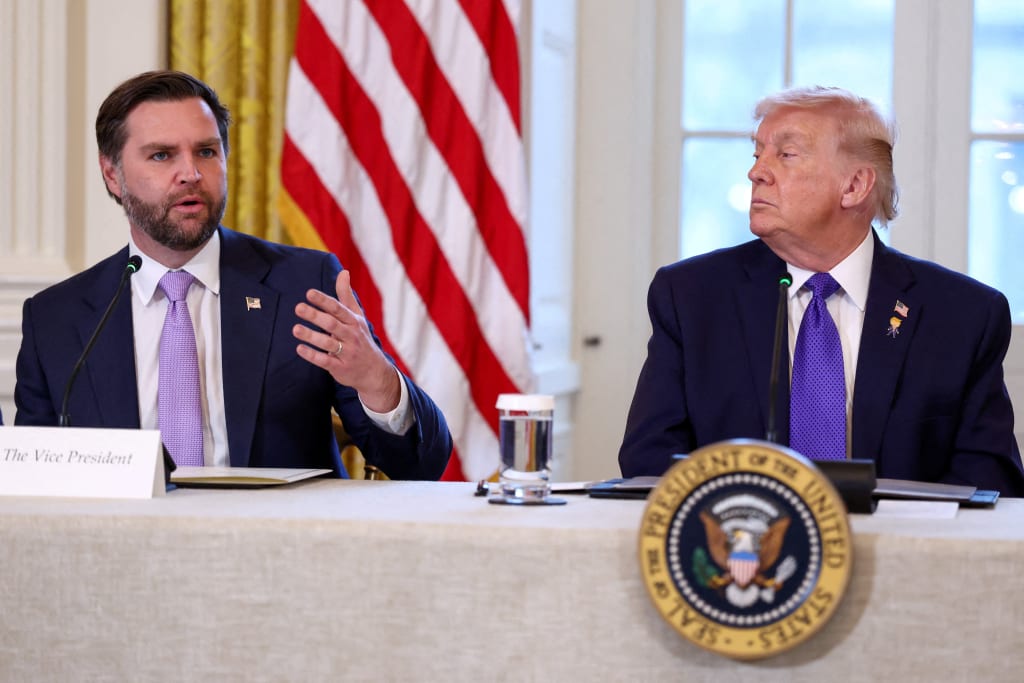
Incumbents first. Vice President JD Vance is the odds-on-favorite to win the Republican nomination. The last sitting vice president who tried and failed to win his party’s presidential nomination was Alben W. Barkley in 1952. Since then, Richard Nixon (1960), George H.W. Bush (1988), Al Gore (2000), and Kamala Harris (2024) have all won their party’s nomination as the incumbent vice president.
The bad news for Vance is that sitting vice presidents seldom win the presidency. Only four of them have been elected president, and only one in the past 190 years—the elder Bush in 1988. Incumbency does not convey much of an advantage to sitting vice presidents.
One reason why is that incumbent vice presidents struggle to get out of the shadow of the incumbent president without losing their support. Vice presidents seeking to move into the Oval Office need to establish themselves as their own person, especially if the public is happy to see the incumbent president go. But distancing oneself from the president comes at a risk. Even gentle criticism could be interpreted as disloyalty, possibly alienating the president and the president’s supporters.
In 1968, Vice President Hubert Humphrey tried distancing himself from President Lyndon B. Johnson’s Vietnam War policies. LBJ responded by undermining Humphrey’s campaign. Kamala Harris took the opposite tack in 2024. When asked to name how she would have governed differently than President Joe Biden had, she responded: “There is not a thing that comes to mind.” Despite her efforts to minimize conflict with Biden, he took several steps that hurt her campaign.
Even a few off-message words from the president can harm the sitting vice president’s chances. In August 1960, President Dwight D. Eisenhower was asked at a press conference to name a major contribution Nixon had made to the administration’s work. Ike responded: “If you give me a week, I might think of one. I don’t remember.” The remark, which Eisenhower later said he intended as a joke, cut against Nixon’s campaign argument that he was an experienced leader ready to serve as commander in chief. Nixon lost the 1960 election in one of the closest races in U.S. history.
Vance could face similar problems in his run for the Republican nomination, and if he succeeds in that quest, in his race for the presidency. Trump is notoriously intolerant of criticism, and many Republican voters are deeply loyal to him. But some Republican and Republican-leaning voters may want a candidate who acknowledges what they see as the shortcomings in Trump’s agenda.
Pressure from other Republican presidential candidates could complicate Vance’s efforts to thread that needle. Senator Ted Cruz of Texas, soon-to-be former Florida Governor Ron DeSantis, and former New Jersey Governor Chris Christie are among the prominent Republicans rumored to be considering presidential campaigns. If they do choose to enter the race, they may decide that their best shot at winning the nomination lies in stressing issues where Trump has lost the support of Republican voters.
Secretary of State Marco Rubio is another possible candidate. A recent New York Times poll found that he enjoys the support of nearly one out of four self-identified Republican primary voters. Like Vance, however, he could find it challenging to establish himself as his own man without alienating Trump and his most diehard supporters. Fun fact: The last sitting secretary of state to win the presidency was James Buchanan in 1856.
The Race for the Democratic Presidential Nomination
The race for the Democratic presidential nomination could be a free for all with a dozen candidates or more, as happened in 2020. Or the race could see just a few competitors. What Harris decides may determine the size of the Democratic field. She is the frontrunner in most polls, though not necessarily by much, and comes with name recognition and fundraising capability that most other candidates cannot match. If she stays on the sidelines, other Democrats may see a more realistic path to the party’s presidential nomination for themselves.
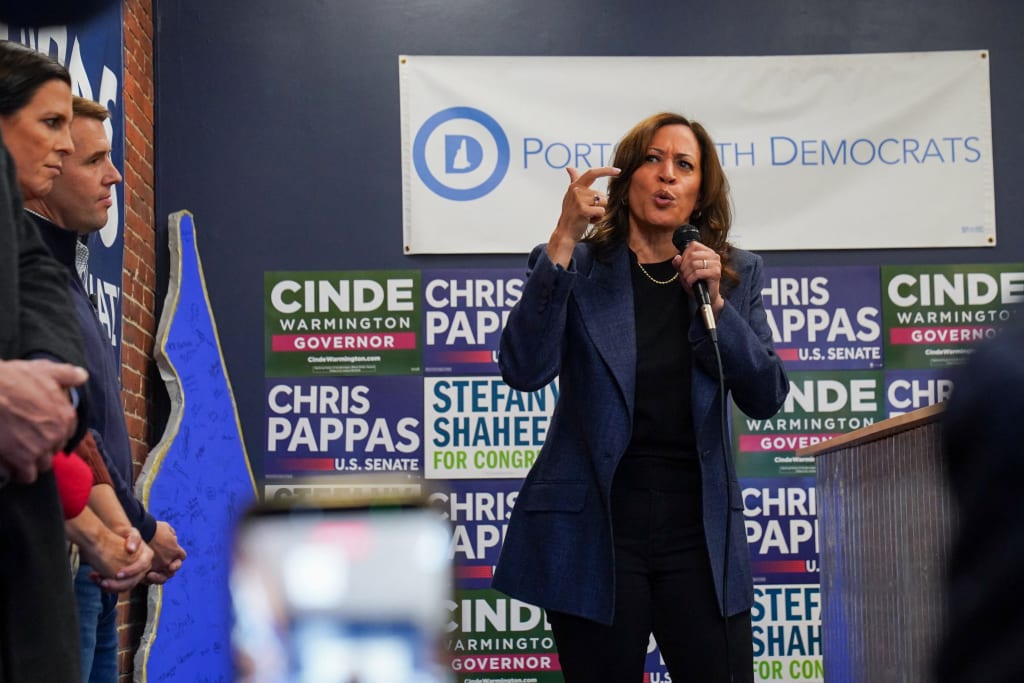
If Harris does run, she would be the first former Democratic vice president since Humphrey in 1972 to make a repeat bid for the White House. The Happy Warrior finished third in the delegate race. Walter Mondale and Al Gore both declined to run for president a second time after losing their first bids for the White House.
Many Democrats hope that Harris will follow Mondale and Gore’s lead. Her critics fear that if she wins the nomination, she will fall short in 2028 just as she did in 2024. The reasons for this skepticism vary. Some critics argue that she failed to offer a compelling vision to voters in 2024 and continues to lack one. Others argue that her memoir shows that she did not learn the right lessons from her failed presidential campaign. Still others argue that she has a damaged brand with voters who see her as championing outdated progressive views. And then there is the concern, often whispered rather than spoken, that the 2016 and 2024 elections show that voters are not ready to elect a woman president.
Recent history offers a cautionary note for Harris. Over the past half century, the front runners at the start of an open Democratic presidential race—that is, one in which neither a sitting president nor a sitting vice president is seeking the nomination—all failed to take the party’s nomination. In contrast, Jimmy Carter, Bill Clinton, Barack Obama, and Joe Biden were all long shots when they launched their eventually successful presidential bids.
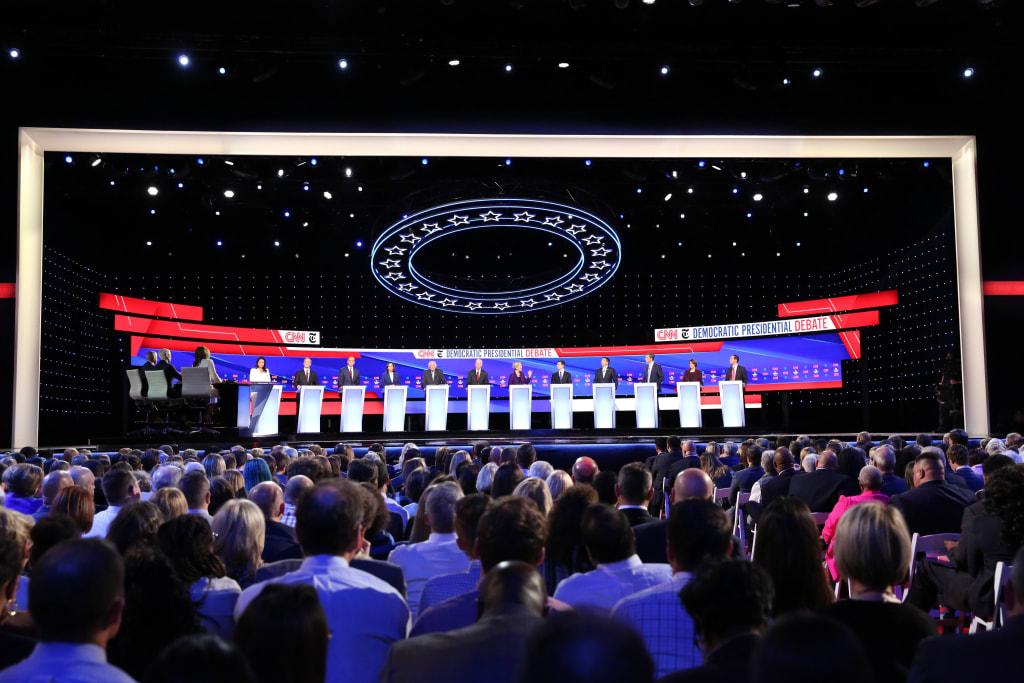
The list of candidates besides Harris who might enter the race is long. Some of the names that have been mentioned, include (in alphabetical order): Governor Andy Beshear of Kentucky, Senator Cory Booker of New Jersey, former Secretary of Transportation Pete Buttigieg, former Chicago Mayor Rahm Emmanuel, Senator Ruben Gallego of Arizona, former Governor Josh Green of Hawaii, Senator Mark Kelly of Arizona, Representative Ro Khanna of California, Governor Wes Moore of Maryland, former Governor Phil Murphy of New Jersey, Senator Jon Ossoff of Georgia, former Governor of California Gavin Newsom, Representative Alexandria Ocasio-Cortez, Governor J.B. Pritzker of Illinois, Governor Josh Shapiro of Pennsylvania, Senator Elissa Slotkin of Michigan, Senator Chris Van Hollen of Maryland, Senator Raphael Warnock of Georgia, and former Governor Gretchen Whitmer of Michigan. The Democrats cannot complain that they have shortage of plausible candidates.
The Primary Schedule
Democratic presidential candidates will need to master the party’s new schedule of nominating events. Gone are the days of camping out in Iowa for months hoping to impress caucus voters and then heading to New Hampshire. The first six nominating events will now be: South Carolina (January 22, 2028), Nevada (February 1), New Hampshire (February 8), New Mexico (February 15), Michigan (February 22) and Viriginia (February 29).
The demographics of those states differ greatly from Iowa and New Hampshire. Some pundits argue that “it doesn’t really matter which state(s) vote first” because “the eventual Democratic nominee will have will need to win across racial, class, and geographic lines.” But sequencing matters. Candidates who struggle in South Carolina or Nevada may not have the financial wherewithal to make it to a later nominating event that could be friendlier to them. Conversely, candidates tempted to downplay or skip South Carolina or Nevada in favor of friendlier political terrain elsewhere could see themselves eclipsed by a rival who has gained irreversible political momentum.
The Republican Party has announced its first four nominating events. They will be held in the same order as in 2024: Iowa, New Hampshire, Nevada, and South Carolina. The specific dates are still to be determined.
A Final Thought
If we do see a flood of Democrats throw their hats into the presidential ring in the coming months, the odds are good that most of them will fold up their campaigns before South Carolinians cast their first primary vote. In 2020, the last time the Democrats had an open presidential race, eleven major candidates—defined as those who had served or were serving in the House or Senate or were sitting or former governors—entered the race only to call it quits before the Iowa caucuses.
November 7, 2028, is Election Day. It is just 735 days away.
Oscar Berry and Jack Patton assisted in the preparation of this article.
This work represents the views solely of the author(s). The Council on Foreign Relations is an independent, nonpartisan membership organization, think tank, and publisher, and takes no institutional positions on matters of policy.