- Headlines
Iran War: The Background Students Need to Think Critically About the Conflict
Ground your students in history and foundational foreign policy concepts to give them the context they need to form their own opinions about the evolving situation in Iran.
By experts and staff
- Updated
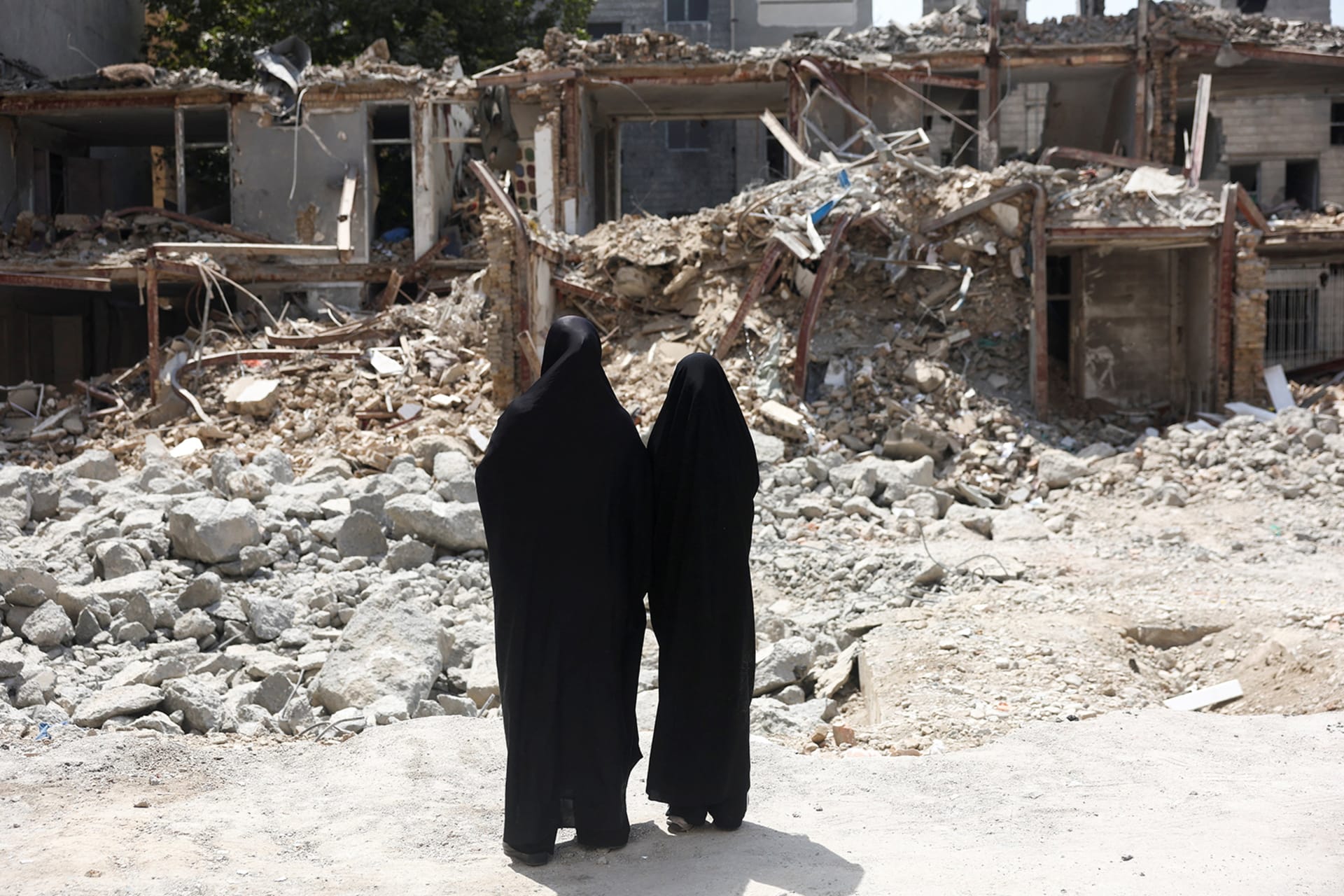
In February 2026, the United States and Israel launched a major assault on Iran, during which Supreme Leader Ayatollah Ali Khamenei and other top Iranian leaders were killed. In response to those strikes Iran launched retaliatory attacks throughout the region.
Over the past six months, successive cease-fire agreements have halted large-scale fighting, though both sides have continued to exchange sporadic strikes. Disagreements over Iran’s nuclear program, the Strait of Hormuz, and sanctions relief have stymied negotiations. The latest cease-fire expired in mid-August with no progress made toward a lasting peace deal. In the weeks following, the United States took steps to ramp up economic pressure on Iran. Then on August 30, the United States and Iran traded missile strikes, raising fresh uncertainty about the future of the conflict
To help your students think critically about the news they see, whether on TV, TikTok, or elsewhere, they need a basic understanding of U.S.-Iran Relations and foreign policy. In this blog, you will find timelines, readings, and simulations to help you ground your students in history and foundational concepts so they can evaluate the developing conflict and form their own opinions about the evolving situation.
For the latest coverage, check out the Council on Foreign Relations’s hub for Iran content and the global conflict tracker.
What Should My Students Know About Iran’s Modern History?
During World War II, Iran was occupied by Britain and Russia. In 1953, U.S. and British intelligence agencies helped elements in the Iranian military overthrow Iran’s prime minister. The coup reinstated the Western-friendly monarchy, headed by Shah Mohammad Reza Pahlavi, who relied on U.S. support to remain in power, as he was quite unpopular.
Twenty-six years later, the Iranian people revolted against the Pahlavis, and the Shah fled the country. This ousting enabled the rise of the formerly exiled cleric Ayatollah Ruhollah Khomeini, who replaced the Shah’s Westernizing/western-friendly government with a vehemently anti-Western Islamic Theocracy.
Tip: Not all revolutions are the same, but they share defining characteristics. Use the case studies in this resource to help your students understand movements that challenge a ruling authority.
Over the past few decades, Iran has sought to expand its influence across the Middle East, supporting nearby governments and militias that have served as useful proxies in nearly every other war in the region.
While Congress and several administrations have pursued diplomatic and economic approaches to Iran, U.S. policymakers have also entertained the idea of military action to force a change of regime. Though multiple goals have been cited for the conflicts, the Trump administration’s early efforts appeared aimed at regime change.
For a comprehensive look at U.S. relations with Iran, refer to this timeline.
What Role Do Sanctions Play?
For decades, the United States has sought to punish or deter what it views as adversarial behavior from Iran—from supporting terrorist organizations and regional proxy groups to enriching uranium—by enacting economic sanctions. Throughout the war with Iran, the U.S. has announced sanctions on both Iran and other countries doing business with it. Most recently, U.S. Treasury Secretary Scott Bessent revealed “economic D-Day” measures to continue these efforts.
Sanctions are an interesting foreign policy tool. Their relatively low cost and risk make them an increasingly popular tool for policymakers. But they rarely lead countries to fundamentally change their behavior when used on their own. This reading can be used as a guide to explain how sanctions work and the different forms they take.
If you want to drive home the trade offs of imposing sanctions, invite students to participate in this hypothetical simulation that asks them to roleplay the National Security Council (NSC) and to decide whether and how to impose sanctions on a hypothetical country. Since the simulation uses hypotheticals, it isolates the concept of sanctions without requiring a broader and potentially charged conversation about the war.
What about Iran’s Nuclear Weapons Program?
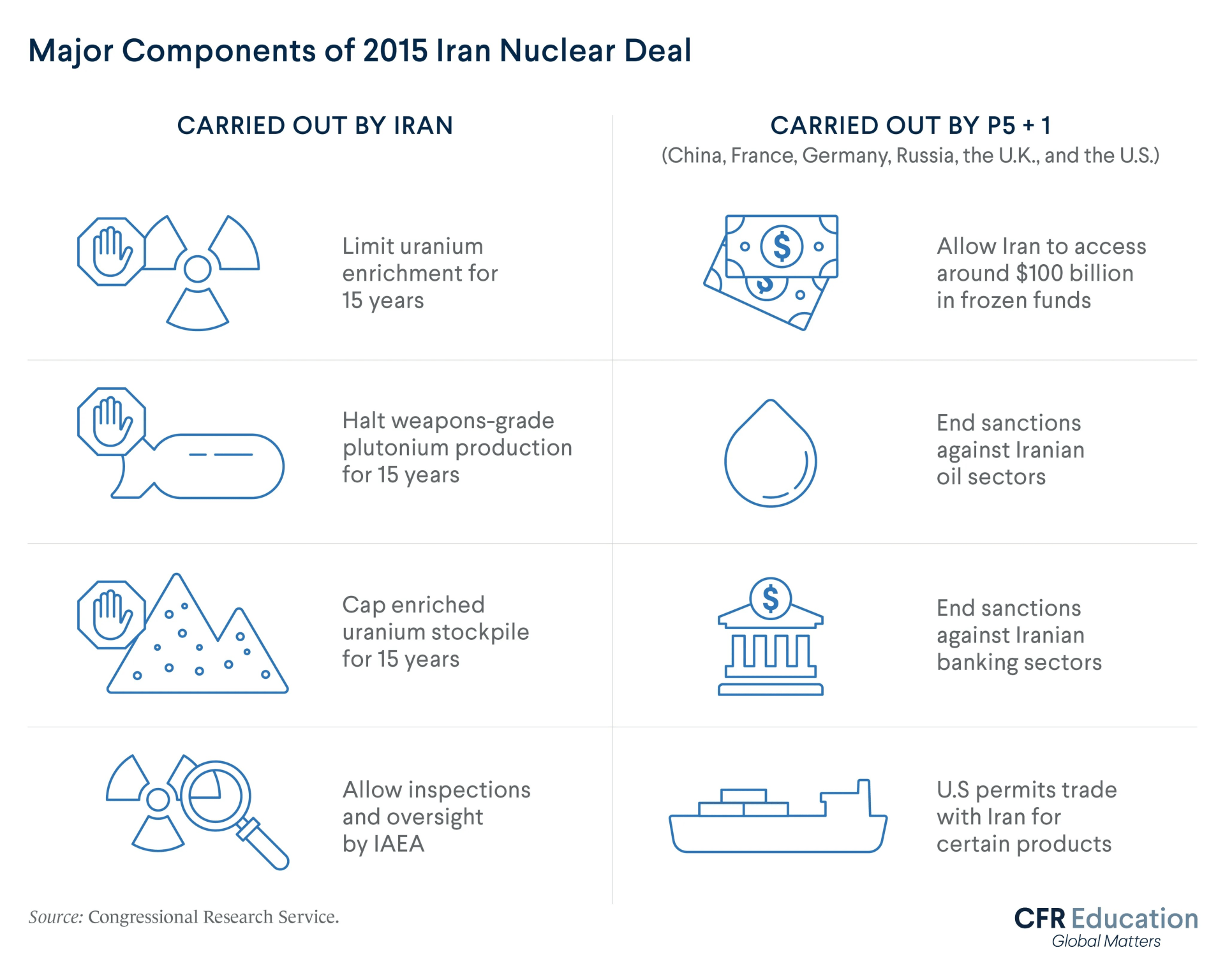
This is most likely not the first time your students have encountered Iran in the news. Since at least 2002, many countries have believed that Iran intended to build a nuclear weapon. After years of negotiations, the United States, Iran, and several other countries reached a nuclear agreement in 2015. This agreement was known as the Joint Comprehensive Plan of Action (JCPOA). Iran agreed to limit its nuclear program and subject its nuclear facilities to much stricter monitoring. In exchange, the United States and others relaxed sanctions on Iran’s economy. But just three years later, President Donald Trump announced the U.S. withdrawal from the deal.
The Biden administration held negotiations to revive the JCPOA, but ultimately failed to make progress, partly due to the shift in foreign policy focus to the war in Ukraine. All the while, there were signs that Iran was continuing to develop its uranium-enrichment capabilities. When President Trump returned to office in 2025, talks resumed only to be followed two months later by a U.S. military strike on a major nuclear site in Iran.
Targeting Iran’s nuclear program was a major stated goal of the Trump administration’s 2026 military operations in Iran. While it’s unclear where Iran’s nuclear capabilities stand at the moment, the program’s future remains a critical sticking point in negotiations.
Tip: Dive into the full history of nuclear weapons and the efforts to stop them with this timeline.
Foreign Policy Fundamentals
Use the current conflict to teach your students about the fundamentals of foreign policy and the ways in which the U.S. government is structured.
This short video explores three fundamental questions that shape a country’s relationship with the world through foreign policy:
- How extensively should countries involve themselves in foreign engagements (Engagement vs. Isolationism)
- Which principles should drive foreign policy (Idealism vs. Realism)
- What approach should governments take to achieve a country’s foreign policy goals (Unilateralism vs. Multilateralism)
After watching the video, ask your students to think about the U.S. policy toward Iran in the past year. Which of those approaches do they see at work?
Just as there are various ways to approach foreign policy, there are numerous tools policymakers can use to implement those approaches. The war in Iran revolves around the use of armed force. This reading examines the objectives of using armed force, the different forms it can take, and why officials often resort to it only when all other options have failed to influence a situation.
Who gets to determine when armed force can be used in foreign policy? The Constitution assigns certain enumerated powers to both the executive and legislative branches. But there has been ongoing debate about where presidential power ends and Congressional authority begins, especially as presidents have increasingly used military force without formal declarations of war. Congress has passed legislation, including the War Powers Resolution of 1973, aimed at limiting the president’s ability to deploy troops without its approval. However, friction between the two branches has persisted over how to apply those limits in practice. This reading explains how the Constitution currently splits foreign policymaking responsibilities between the executive and legislative branches.
Teaching with Expert Takes
The Council on Foreign Relations has a roster of more than eighty Fellows, experts who cover all the world’s major regions and significant foreign policy issues. Their expertise can help students analyze pressing global challenges.
This new piece from CFR called The Iran War at Six Months: A Region—and Its Relationship With the U.S.—Transformed was written by seven different CFR Fellows, each using their distinct professional expertise to explain what the war means for U.S. foreign policy and what to look for moving forward. Use the article as a basis for a primary source analysis of U.S. policy and the Iran conflict, assigning each student a fellow’s analysis and asking them to identify the ways in which the fellow’s background or expertise might have impacted the conclusions they drew. Bring the class back together to compare what the various experts agreed on despite looking at the same conflict through different lenses. How can a person’s perspective impact the conclusions they reach?
Other expert takes on Iran:
Not So Strait-Forward: Hormuz, Iran, and the Future of Gulf Oil and Gas Flows by Clara Gillispie, Senior Fellow for Climate and Energy
Six Months Into the Iran War, the United States Has No Good Options by James M. Lindsay, Distinguished Senior Fellow in U.S. Foreign Policy
How Does the Iran War End? by Michael Froman, President, Council on Foreign Relations
Trump’s Iran Deal May Be Over, But It Is Clear What the Regime Wants by Ray Takeyh, Senior Fellow for Middle East Studies
Rising U.S. Casualties in the Iran War Should Force a Rethink of Middle East Basing by Elliott Abrams, Senior Fellow for Middle Eastern Studies
This work represents the views solely of the author(s). The Council on Foreign Relations is an independent, nonpartisan membership organization, think tank, and publisher, and takes no institutional positions on matters of policy.
What Happens Next?
What happens next in Iran is uncertain, but possessing a basic understanding of U.S.-Iran relations, foreign policy, and history will help your students evaluate the outcomes, regardless of what they are.