2026 UN Secretary-General Candidate Series: A Conversation With Rebeca Grynspan
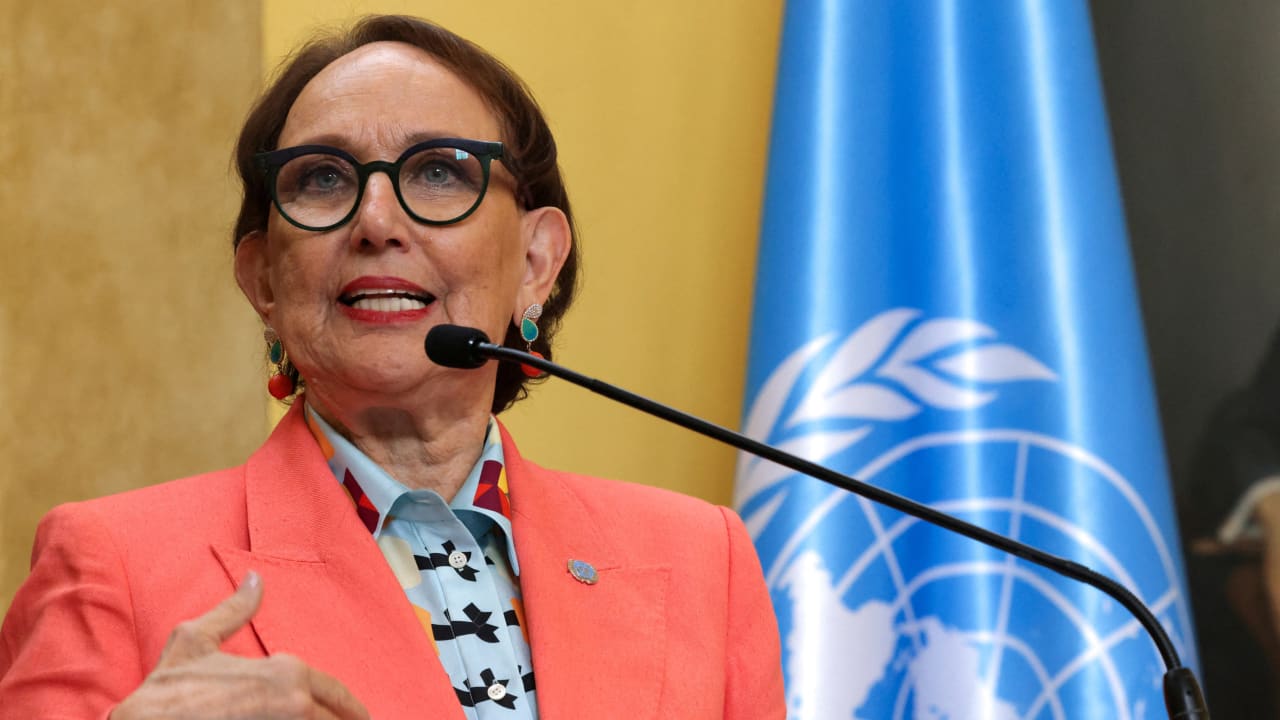
Event date
Speaker
- Candidate for UN Secretary-General; Secretary-General, UN Trade and Development (on leave)
Presider
- Linda RobinsonCFR ExpertSenior Fellow for Women and Foreign Policy, Council on Foreign Relations
UN Secretary-General Candidate Rebeca Grynspan discusses her UN candidacy, her plans and priorities for the future of the United Nations, and the challenges facing the global economy, international trade, and multilateral cooperation.
To recognize the upcoming selection of a new UN Secretary-General, CFR has invited official candidates for the next UN Secretary-General selection to examine the major challenges facing multilateral governance and to discuss their vision for the future of the United Nations.
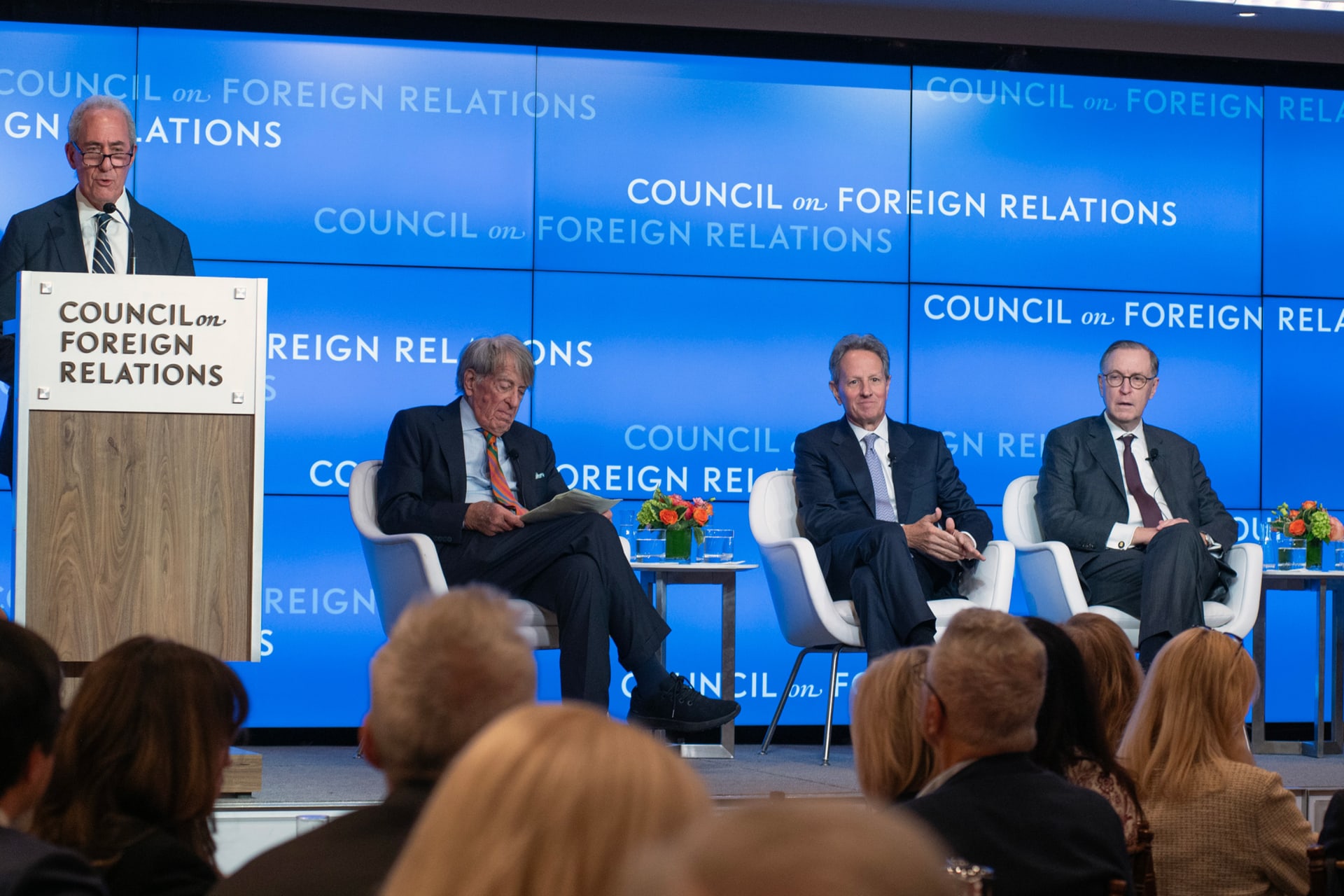
ROBINSON: Good evening. I’m Linda Robinson. I’m the senior fellow for women in foreign policy at the Council on Foreign Relations and I will be presiding at tonight’s meeting.
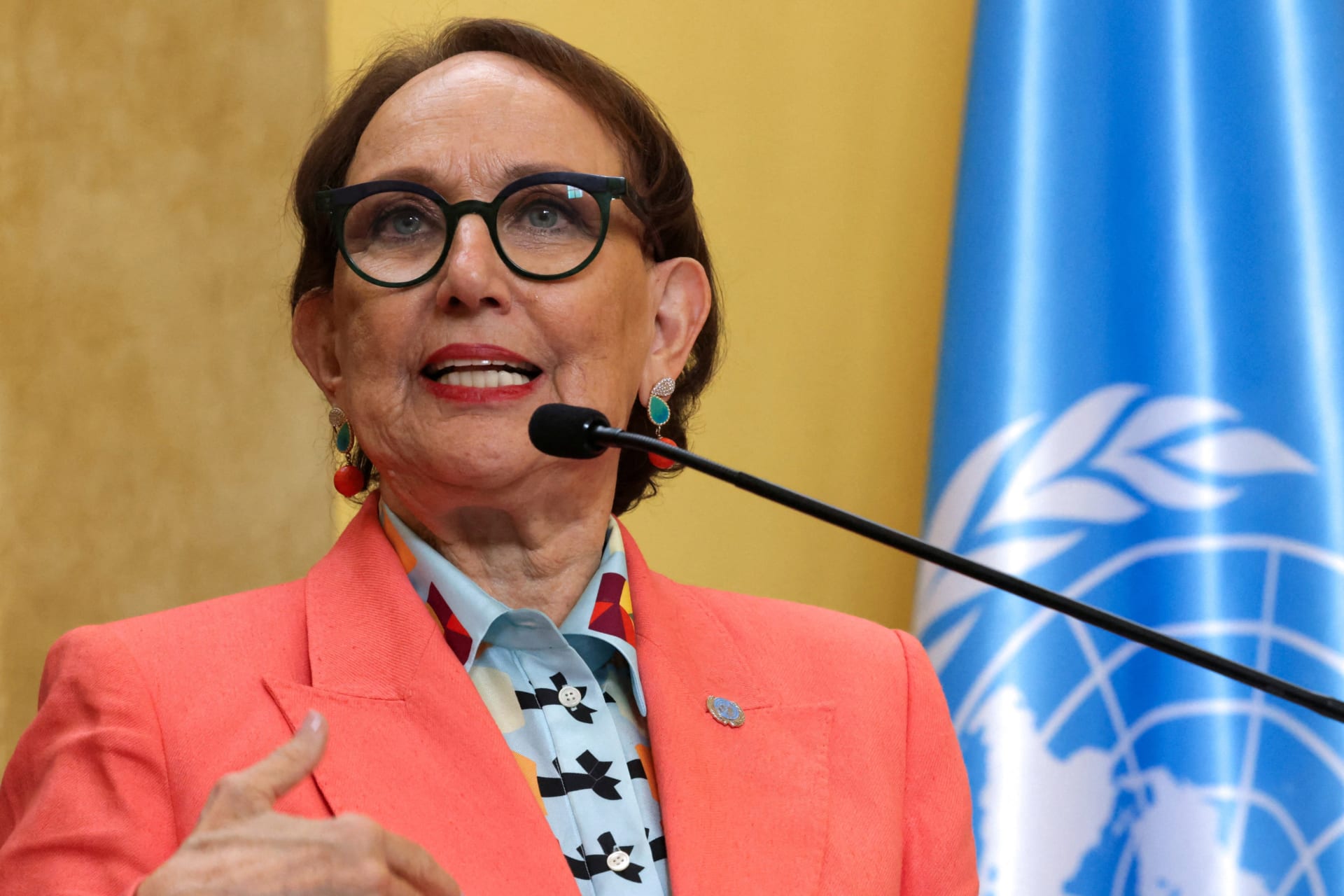
Today’s discussion is part of the Council’s U.N. Secretary-General Candidate Series. And I’m joined today by Ms. Rebeca Grynspan, who is candidate for U.N. secretary-general and secretary-general, on leave, of U.N. trade and development. She stepped back from day-to-day functions to avoid any perception of conflict of interest, and we are delighted to host you here for this meeting. As we already have been informed, it is on the record.
So I would like to just—you have the bio in your packet, but I would like to note that Rebeca is the secretary-general—the first woman secretary-general of U.N. trade and development, and she’s had a long career in international public service including also as the first female head of the Ibero-American General Secretariat, and many roles at the U.N. development program, and also as vice president and cabinet minister in two governments of Costa Rica. She brings an extensive track record and expertise in international organizations, development finance, debt sustainability, trade, human development, and multilateral economic governance.
As we all know, the tenth secretary-general will face daunting challenges from the expanding violent conflicts, deteriorating respect for human rights, economic strains, and extraordinary technological revolutions, the very foundations of the international order under stress. But this also opens new opportunities to refashion and reinforce multilateral cooperation for the better.
So we’ll begin with my discussion here and then open to your questions and online. I would like to start with the topic of peacemaking, and this is in part because it’s not only a feature of your vision statement as a candidate, but you have mentioned it quite prominently both in interviews and a recent essay last month for the Economist.
And in—to Reuters you said peacemaking has to be the center of the efforts of the U.N., and in the Economist, you said the U.N. has too often been outside the room and its absence from the diplomacy that matters has sapped trust. As wars multiply, you said the U.N.’s legitimacy increasingly rests on its ability to meet its peacekeeping mandate.
Those are very strong statements, and so I’d like to really start with that and particularly with your suggestion that the Office of the Secretary-General needs to have a mediation nucleus there in the Office of the Secretary-General.
Could you explain your idea for that and how it would improve the effectiveness for peacekeeping?
GRYNSPAN: Thank you very much. It is really an honor to be here and to see so many friends and known faces. So thank you so much, Linda, for your introduction.
So let me start by saying that in these months that I have been campaigning and I have been talking to a lot of political, government, ambassadors, civil society, private sector, and everywhere I go people ask me where is the U.N., and that gives you a sense of how the U.N. is being perceived out there.
They don’t see the U.N. as an important actor in any of the scenarios of conflict that we are living through today, and it’s because I really believe the U.N. has become very risk averse.
The U.N. wants to be called and to be given space, and we have to fight for it. Nobody will give you anything if you are not there, if you don’t try, if you don’t bring ideas, if you don’t risk it.
And I always say that the bureaucracies are naturally risk averse, but leadership cannot be, and that’s why I talk about the good offices of the secretary-general because the good offices of the secretary-general are established in the charter of the U.N.
The secretary-general doesn’t have to ask anybody for, you know, the permission to go and use its good offices, and if you look at the Office of the Secretary-General, you will see that it’s that structure to have support for that very important and central role, that is, to be able to prevent, to go, to—you know, to try.
The Office of the Secretary-General has a political unit that is basically an information unit for the secretary-general, but it doesn’t have anybody or the people, the robustness, the gravitas of people that really the secretary-general can refer to the important conflicts of the world.
And that doesn’t make sense for the U.N. because, at the end, if you go to the charter and you go for Article I of the charter, the first goal is peace, and today we are at the peak of conflicts in the world.
By a lot of indicators, since 1945 this is the highest we have had, and one of the characteristics I am trying to explain is not only internal conflicts that was the case twenty years ago. It’s conflicts between states, and the U.N. has not developed the tools to really try to be at the table when these conflicts arise. And it has made us—you know, we have been sidelined because we have sidelined ourselves from trying, being there, risk it.
You know, you will have to be rejected many times, you know. I have said that when we were negotiating the Black Sea grain initiative—and, Ambassador, you were there—we had to navigate a lot of noes until we got a yes.
But the yes was the most important thing to be able to avoid a food insecurity crisis in the world. And we were able to do it, doing things that the U.N. never did before, partnering with regional actors, partnering with the private sector, and really convincing that this was something that we could do together.
Many times—this is my feeling and I will hear you—but many times we think we have to solve everything to solve something—(laughs)—and I can tell you that we can solve things even—we didn’t solve the war between Ukraine and Russia, but we solved a problem that really affected millions of people in the world, and that was the smart, the wise thing to do at that moment and we should do it much more today.
ROBINSON: Let me ask you if there is—among the many conflicts, and, of course, I would not only note what you said, the statistics about both number of conflicts, number of casualties, it’s also the view of the U.S.—the current U.S. government—that this should be the central focus for the U.N. in this period.
So is this Black Sea grain initiative, this idea of taking what you can and addressing it with the available parties, do you see that applying to any of the current conflicts, be they Ukraine still ongoing, the Sudan, Gaza, or some other conflict that you could see a window for near-term action using this good offices of the secretary-general and the approach you mentioned?
GRYNSPAN: I think that we lost the opportunity to do something in the Strait of Hormuz that was, you know, having consequences very similar to the Black Sea, and we are losing the opportunity to do something now in the Black Sea because the Black Sea it came back as very contentious, and free navigation is not happening and it’s really affecting food prices and fertilizer prices.
We don’t feel all the impact today but we will feel the impact next year if nothing has been done. So I think that the U.N. could have been more active in those conflicts.
ROBINSON: May I also ask, just to stay on the peacekeeping for another minute, the mission—you had much experience in Haiti both in your UNDP experience and then on the secretary-general’s Reconstruction Commission, but you recently had also said there could be innovation there or in peacekeeping missions that might expand the boundaries.
I know you’ve also said too many mandates, no sunset—you don’t want proliferate mandates—but is there a new approach that you were thinking of when you mentioned Haiti?
GRYNSPAN: Yeah.
Well, first, let me say I worked in Haiti long ago after the earthquake, and I really feel that the U.N. has failed Haiti, yes, and now we are in this situation that is really a terrible situation.
And but in Haiti, the Security Council is testing a model that we didn’t have before, yeah. We have the gang suppression force that is not a U.N. peacekeeping force; it is from the countries that want to help with the sharing—burden sharing between the countries that want to pay for the gang suppression force.
But at the same time—but it’s important that it was a Security Council decision, yes? And then you have the political mission that is in the logistical unit that are supporting the gang suppression force. So you have the logistics that the U.N. is providing and you have the political mission that is working with the communities, you know, to be able to help the communities overcome the situation that they are in.
So this is a different model from other models that we have tried. There is burden sharing between the countries and also burden sharing between the countries and the U.N., and so we are keen to see how this evolves, to see if it may provide a model for the future that is worth maybe replicating if it—if it works.
For the moment, I think that there are around 2,500 policemen that have come from Chad, I think from Kenya, from several countries. So we really hope that we will be able to test a different model of intervention that if works will open up the options for peace operations in the future.
ROBINSON: Thank you.
Let’s turn now to development issues, which, of course, have been core to your career both at the national government level but certainly at the U.N. The Sustainable Development Goals, the deadline of 2030—very far from meeting it—will happen during the tenure of the next secretary-general.
So I’d really like to understand your thoughts about how to be more pragmatic in goal setting, and I believe you have one proposal about a demand-driven model that the countries start articulating what and how they may do to meet this.
But I’d like to understand a bit more, if you’d elaborate.
GRYNSPAN: Well, you know, when I was vice president, I was in charge of cooperation and the relationship with the international organizations, and I always say that when they came to talk to me, they offered me what I didn’t want and they didn’t offer what I needed.
And, you know, at the beginning, the conversation was a bad conversation, and many times that happens, you know, with international organizations. They come to offer what they have, not what you need, and I really believe that the U.N. should be much more demand driven than supply driven.
We are very supply driven. We want to go to the country, push them to do whatever we have developed and whatever we think is good for the country, and sometimes we don’t listen.
And I was on that side of the table. So all the time when I meet with ministers of trade that come to talk to me, I always say, I am not going to offer you anything. Tell me what you need and I will tell you if I can give you, you know, the quality service that you deserve.
And I think that, as I said in an interview before, there has to be a cultural change in the U.N. When I—I’m sorry to tell you this anecdote a little bit, but when I went—I was elected the director for Latin America and the Caribbean in UNDP, and when I went to UNDP there was this, you know, melancholy or how do you say, they—you know, they really, you know, were so sad that the days where they were so strong and so powerful in our countries were gone.
And I looked at them and I said, that’s exactly the opposite of what I feel. (Laughs.) You know, I was in government when you felt, you know, strong, that you knew better than me that was an elected official in my country what the country needed.
And they have this nostalgia, yes, about when they were strong and they decided everything. And I said, but precisely we don’t—you know, you are not so strong now because of the good reasons. The countries have more capacities. They know better in Latin America what they want to do. They have educated their people. Why do you feel sad? (Laughs.) You have to celebrate and be very happy that maybe they don’t need you anymore.
But that’s not the mentality in the U.N. You know, they are always looking for this powerful role instead of a role that will support capacity building, training, countries being able to do it by themselves.
At the end, the goal is for you not to exist in the development side—you know, for countries to be able not to need you, and I really believe that part of it is that a lot of people have never gone out of the U.N., yes?
They haven’t gone to have responsibilities and come back, you know, that synergies or experiences that you have when you—you know, you play different roles.
ROBINSON: So—
GRYNSPAN: So my point there is, you know, the development part is to support countries to be able to do it better on the priorities that they set for themselves, and there is no competition here with sovereignty, you know.
When you think that you know better than the country is when the conflict comes—(laughs)—and it’s when then, you know, the U.N. is perceived in a different—not as a proposal and not as a helping hand for them to make it better.
ROBINSON: So listening to member states and their needs is a key part of your proposal. You’ve also spoken about an urgent need to reform international financial architecture to address structural issues and the fact that servicing debt takes 22 percent of the developing world’s income, Africa paying much, much higher interest rates, receiving only 2 percent of foreign direct investment.
So there are these imbalances in servicing of debt and capital flows and availability of finance. So what would be your idea? And also, I should mention, you’ve also spoken about small island developing states impacted by climate change, so there are countries that are really struggling. How would you address that in the development scheme?
GRYNSPAN: Well, first of all, I think that the most important role in this area has to be done by the multilateral development banks. I think that our role is to bring the analysis and the awareness of what is happening.
Let me give you the—two numbers. Three point four billion people today—that is 40 percent of the population of the world—live in countries that are paying more in servicing the debt than on health or education.
And so, obviously, there is a problem for the future. You cannot invest in health and education, then you won’t have the population or the stability that will be able to propel growth and investment and innovation for the future.
And part of this debt doesn’t come from bad behavior. When there is bad behavior, you have to assume responsibility, yes? But some of this debt has come from COVID. When COVID hit these countries, these countries didn’t have instruments to really sustain their population during that period and so their only way out was the debt.
And part of the problem, for example, of the countries from Africa is that they pay between four and eight times the rate of interest that the developing countries pay because of the perception of risk.
Can the U.N. solve that problem? No.
The multilateral development banks have to solve that problem in trying to crowd in private investment and lowering the risk and the perception of risk in these countries. We cannot do it. The U.N. cannot do that.
It’s the role of the development banks, and I have to say that I have seen the World Bank really going that way. You know, I have seen, you know, how they have innovated new instruments for financing, for crowding, for bringing private investment, because in many of these countries private investment feels that it’s too risky and they don’t have the knowledge many times of these countries.
Let me give you this indicator. Right now, if you take all the foreign direct investment in renewable energy that is so important for the communities that don’t have—that are energy poor, Africa receives only 2 percent of the total—2 percent—having the majority of people that are energy poor.
So there is something to be done there, and I think that the instruments have been created in the international financial system for the multilateral development banks to be able to level the playing field for the private sector to be able to have a conduit to get to these countries and to invest and to— you know, to diffuse the technology and bring growth and stability.
But the role of the U.N., in my view, is twofold. One is many times we build the capacity for a long time, yes. For example, we in the organization, in the Conference of Trade and Development, we have built and digitalized the custom systems in these countries, and that has been so important because it’s revenue for the countries and they are able then to trade in a better way, and we are the ones that have digitalized one hundred countries and territories during the last two decades, for example.
They cannot do it alone. They don’t have the software. We train the people. We build the capacity. This is good for the private sector because the private sector then have a real instrument for trading and it’s building the capacities of the country to be able to participate in the global economy.
We can do that, but we cannot—we cannot do the other part. The international financial system and the multilateral development banks or the Bretton Woods institutions or the regional banks the ones that have to do that, not the U.N.
ROBINSON: So I would like to ask a brief question, and then the other of the three pillars, the mandates for the U.N., in addition to peace and security and development is human rights. You have used the phrase that it should be—it is a package, not a menu.
Could you explain?
GRYNSPAN: Well, yes.
You know, many times when we talk about human rights, you pick and choose—(laughs)—and you cannot pick and choose. You know, you cannot pick and choose the charter. The charter is a package, too, yes.
And so I have said that also with respect to all the people of the world, yes. You cannot pick to comply with human rights for one and not for the other. You have to be consistent.
ROBINSON: Very good.
So let’s turn now to the issue of the reform of the U.N. There’s the UN80 process and much has been written about that, and in your vision statement you said you would prioritize streamlining U.N. structures, aligning mandates, budgetary structures and implementation so that decisions are based on complementarity and not competition within the U.N. system. It seems kind of a principle for how you might streamline the organization for better effect.
GRYNSPAN: Let me here very, very straightforward. Reforming the U.N. is urgent. It’s not an option; it’s a necessity. No organization after eighty years can say, we don’t have to change anything. We do everything right. And be defensive—we have been so defensive.
And in that sense, let me say the U.S. is right. You know, they have pushed for the reform and they’re right. If they don’t push, you know, you get too comfortable. Change is difficult. Reform is difficult, and so nobody wants to do it because it takes a lot of energy, a lot of—and a lot of enemies. You have to go, you have to push against many of the entrenched interests in the organization.
ROBINSON: Could you give us an example or two of what structures you would prioritize for streamlining and what would be an exemplar of that change?
GRYNSPAN: Well, I think—I think that the U.N. should go—there are three things maybe, yeah, that I will say.
First, I think that the U.N. has to refocus. We cannot do everything.
There—now, as I was saying before, there are more capacities in the world. There are regional organizations that can play a very important role for the region. There are actors that are willing to do a lot of things that maybe we do today.
The U.N. has this mentality that everything has to happen in New York, in the U.N., and done by us. We don’t know how to partner. We compete. We don’t partner.
But—so my point is resources are not going up. Are going down. You cannot do all the time more with less. You have to do better with less, and to do better with less you have to refocus. You have to do those things where the U.N. is unique, and that’s my phrase.
You know, I say the U.S. is unique but it’s not alone. It can partner with others, allow others or enable others to do things that maybe we do today and dedicate ourselves to the things that nobody else can do, because we have the—our uniqueness lies in our universality and the participation in—you know, in equal—in an equal form of all the countries of the world.
ROBINSON: Very good.
So I want to raise one specific question. The women in foreign policy program—obviously, we look at those issues and there is a certain concern about the idea of combining U.N. Women and UNFPA because they have very distinct missions that might—what might happen is that you would have less attention as a net result to the issues of poverty, violence, especially the wartime violence that hits women disproportionately, and generally their lack of inclusion in spheres including government.
So is there—I don’t know if you have a position on that, but that concern I hear a lot about that in streamlining you would lose a focus for what is half the world’s population.
GRYNSPAN: Well, let me say, first of all, I think that with the two proposals for mergers that we made, we made a mistake. Not in the proposal—(laughs)—but the proposal came without the business case. And so why do you propose this merger and not the other merger is the first problem. I think that we should have had a business case for the mergers—my first point.
Second mistake, we asked the organization that we wanted to merger to negotiate themselves the merger. That doesn’t happen, yeah. I always say when I studied industrial policy, the line was called mergers and acquisitions. In the U.N., when you say merger you think about acquisitions. (Laughs.)
One will, you know, swallow the other and that’s the way that the negotiation goes and, obviously, there is no result.
And so I think that if you want to be serious about the consolidation in several parts of the U.N.—I am not saying which ones, but what I say is be serious, bring the business case, and if you decide to go you have to put an external force to make it happen.
You cannot put to negotiate those that will, you know, lose from the merger because, you know, the only thing that you will have is a fight. That is exactly what happened, yes. It’s exactly what happened.
Let me—let me also say that many times in the U.N. when you merge, the conditions for the mergers start by saying no loss of jobs, no change of structure. And so what is to be gained? You know, I think that consolidation is needed but we have to be serious. We need business case and we need external push for the mergers to happen.
ROBINSON: Thank you.
So now I’d like to invite members here in Washington and online to join our conversation with their questions. A reminder again that this is on the record.
And we’ll take our first question here in D.C. Good evening, Odeh.
Q: Odeh Aburdene, the Capital Trust Group.
What would you do about expanding the Security Council? It’s been like this since ’45.
GRYNSPAN: No, very good. You know, one of the reforms that is on the table is the expansion of the Security Council. You know that the—that the Security Council thinks that the secretary-general should not have an opinion on this but I will give mine. (Laughs.)
Anyway, I really believe that the Security Council will gain a lot of legitimacy if it will reform and will represent the world of 2026 and not the world of 1945. I think that there is wide consensus on that to be, especially on the representation of Africa that has nobody in the Security Council because most of Africa was not independent states when we signed the charter.
Just to remind everybody, when we signed the charter, the charter was signed by fifty-one countries. Today we are one hundred ninety-three. So one hundred forty-two countries were not, you know, in the signing of the charter in 1945. So—especially Africa—I would say Latin America—Latin America is also not represented.
But as I said before, there are two problems. You know, there’s wide consensus on that. The problem is the following. Who should be in the council? So who will represent Africa? Who will represent Latin America?
Every time a country, you know, says me, another country says, not you, but me. You know, it’s not an easy negotiation. There is an agreement in the Africa Group that they want several permanent positions and rotation positions, and they want the council to allow them to decide who, yes. But it’s a difficult conversation, who.
And the second discussion is with veto or without veto and if there will be permanent seats. Already once the council reformed—the Security Council was reformed, expanding the non-permanent members.
So the big question here is will this be an expansion only of the non-permanent members or we will have permanent members, and if we will have permanent members who will have veto. Will they have veto or not?
And something that I always say we have to remember that if that decision was taken, we will have to go to the parliaments of the world to ask for this to pass through parliament. And so that’s another hurdle that we will have to go through.
ROBINSON: I’m looking for my person to tell me if there’s any online. I want to honor any online questions that we have here.
Yes, let’s go online, and then we’ll come back to folks in the room.
OPERATOR: We’ll take our next question from Peter Galbraith.
Q: Hello. I’m Peter Galbraith and I’ve worked closely with the U.N. as an American ambassador negotiating the peace agreements in Croatia and Bosnia in the ’90s, and then as a senior U.N. official in the missions in East Timor and Afghanistan.
And at that time, the U.N. actually played a very important role in negotiating in the most critical conflicts of the day. It was—East Timor was exclusively a U.N. issue from the negotiation to the successful mission. It was essential to the—although the Americans basically did the Croatia and Bosnia agreements, the U.N. was essential—had the essential role before and in the implementation in both countries.
And so my question to you is what has happened in the last twenty-five years? How has the U.N. become less relevant at a time, you know, when in that time it really was a period of great relevance and a great relief at the end of the Cold War?
GRYNSPAN: Well, you have given two very good examples. Can I expand on them?
Because Timor-Leste really was a success, as was Liberia, for example. You know, we can—you know, we have several successes with an important participation of the U.N., and I like the two examples because Timor-Leste was U.N. led and Bosnia-Herzegovina was a U.N. support—not led by the U.N. initially but implemented by the U.N. afterwards.
And I think that you are right, how to explain that today we are not in any of the tables where agreements are being negotiated.
And I said before, Peter, that the—first of all, we have become very risk averse. We don’t want to risk it, and I really believe that the secretary-general has to bear the cost of failure, the cost of rejection, and try.
Maybe governments cannot try ten times and fail because they won’t be re-elected. But the U.N. can try ten times, fail, and go for the eleventh. And, you know, if we will be more equipped—let me just say this, Linda.
If you go—if you look at the Office of the Secretary-General today, it is structured for 2016, not 2026. I asked many times people, you know, if you want—if you have an idea, if you want—if you have a problem, if you want a mediation, who do you call in the Office of the Secretary-General?
And, you know, that will be the first task. The first task is to have the capacities and the platforms in the Office of the Secretary-General for the political action to be linked to the information and the analysis that the U.N. does. Right now, they are not linked and so no action is being—is being taken.
But with respect to the Bosnia and Herzegovina, that’s a good example also where the U.N. is not the center, is not the leader, but can support with the instruments that we have developed, and it could be very important to sustain the effort of others in trying to get a peace agreement to sustain the effort you will leave the U.N., and we don’t have to be always the center, the leader. We don’t have the monopoly of peace. We have to partner with whoever is necessary so we can be helpful to lead when we have to lead and to support and implement when that’s the case.
ROBINSON: I know we have many questions here. Let me go to you and then over to you.
Max (sp), please.
Q: Thank you so much.
Good evening. My name is Theresa Lou and I’m currently at the Asia Group. I had the privilege of serving as a senior policy advisor for actually Ambassador Thomas-Greenfield in the most recent administration.
One of the challenges—one of many, but one of the challenges for the next secretary-general is to continue to navigate increasing geopolitical tensions in an increasingly complicated landscape while still ensuring that the U.N. is servicing all people.
And so one question that comes to mind is the meaningful participation of Taiwan in international organizations. So I was wondering, you know, if you were elected to be the next secretary-general how would you approach this question, particularly when it comes to important things such as global health we saw with the pandemic or international aviation?
Taiwan is an international transit hub, but also a source of key geopolitical tension for a couple of the permanent members. So I’d be curious to get your thoughts on this particular issue. Thank you.
GRYNSPAN: Well, it’s a very tricky question because in the U.N., as you know, only China is a member of the U.N. and that has been a discussion on health. There has been in the WHO connections and collaboration with Taiwan.
But in the area of the U.N., Taiwan is not a member of the U.N. So the General—you know, the General Assembly—that’s the decision of the General Assembly. That’s the decision that was taken when China was recognized as the only representative of the U.N. and that’s the situation up to now.
ROBINSON: Yes?
Q: My name is Marc Rotenberg. I’m the director of the Center for AI and Digital Policy here in Washington. I’d like to ask you about artificial intelligence.
The secretary-general made this a priority over the last few years. He created the Global Dialogue. He launched the Independent Scientific Panel. We also had the UNESCO recommendation on AI ethics and several good resolutions. I would say there’s more to do. Perhaps we need a special rapporteur on AI and human rights, which has now become a key concern. But, of course, we’re very interested in your views. What work would you carry forward that the U.N. is currently doing on AI and what additional steps would you recommend?
GRYNSPAN: Yeah. I think I am—I am really a fan of the—of the Scientific Panel. I think that it was a very good step forward and I think that the governance dialogue is also a good—a good example of a platform for dialogue with the private sector and the—on all the issues that arise with AI, opportunities and risks.
And I like the UNESCO work on the principles and, you know, the soft law that they have put forward. What I think is now that we have too many initiatives because we don’t have only these three but we have also AI for good, and now we have a commission for AI that was put forward by ITU, and that works also in AI. So now—and we have ODET in the Office of the Secretary-General.
And I think that some clarity on who will lead the different parts of this puzzle will be good for everybody because right now everybody’s jumping into the AI business, I’m sorry to say, and we can lose the capacity to really impact in the good way, you know, in a structured and rational way without a lot of initiatives.
Sometimes the private sector comes to me and say, you know, where do I go? You know, there are so many initiatives that I’m lost, and I want to help. We want to partner, but we will need to concentrate a little bit, the leadership, I think, of the—of the different initiatives.
And the Office of the Secretary-General doesn’t have to compete in operational issues, you know, to train, to capacity building for technology diffusion. There are other organizations that are on the ground doing that. There is no reason why the advisor to the secretary-general has to go and try to build an agency in what they’re doing. You see my point, and probably you have suffered.
And so I think that, yes, we need to sustain the effort to be very focused on the scientific panel on the governance, on the soft law, and try to understand better what are the next steps for the U.N. We cannot just jump into it without really knowing what is it that we need to plan for the future.
And that’s why I want the academia to be there and the science to be there and the private sector to be there and the governments to be there to try to build the minimum consensus necessary for the next steps.
ROBINSON: That is such a—
GRYNSPAN: Let’s try not to have a chaotic, you know, ecosystem that nobody knows who does what because that won’t help us, you know, go further.
ROBINSON: Let’s take one more here in the room and then we’ll go online.
Sir?
Q: Good evening. Bob Moore, the University of Maryland.
Rebeca, you mentioned the private sector multiple times tonight, but the U.N. is often not a terribly welcoming place for the private sector. What would you seek to do as secretary-general to involve the private sector in more issues and to create space among the member states for the private sector?
GRYNSPAN: That’s a very good question because you are right, yes. For example, in AI and technology, if you don’t involve the private sector you won’t get anywhere because they are the main actors. You know, so I think that we have open up—open up for that.
For example, I think that we will need more help of the private sector to reform the U.N. with the new technologies. I have to confess to you that the—I came to UNCTAD in 2021. In 2023, I hired the first data—two data scientists of the organization, and this is only to show that we are really, you know—you know, behind the curve of the new technology.
I think that we should call the private sector to help us there also in the reform and the new tools and the new things that we—that we need to do.
And my third point will be in crisis setting. My experience in the Black Sea was very telling to me because really we were successful also because we partnered with the private sector. We went to the insurance companies, to the shipping, to the ICC to see what was happening in the countries, what—where fertilizers were a problem, where food was not being able to get to the ports.
We didn’t use them for money; that is usually what we do. We used them for knowledge and, you know, to have the information that we needed to act on time on the issues that we needed to solve, and that type of partnership in many of the crisis settings will be essential if we want to be successful.
In the platform that is being discussed for information and crisis indicators, I would like to see much more the private sector involved with us for knowledge and for capacity. In humanitarian aid, for example, more and more now OCHA is trying to also learn from the private sector and the best ways to deliver goods and innovate and the chains of distribution.
So I think that we have to think about the private sector more as an enabler of many of the things that we want to get better and not only as a resource or philanthropist to the U.N. Their knowledge, their capacity, I think that is much more important.
ROBINSON: One online, please.
OPERATOR: We’ll take the next question from Amina Tirana.
Q: Hi, Rebeca. Amina Tirana, presently at New York University, formerly UNDP.
I wanted to ask you some about your business plan for reform of the U.N., and an important part of any business plan is the timeline and the practicalities of how to get it done. And so how do you see or what would you share is a reasonable timeframe for change that would be observable? And I think those of us who have worked with the U.N. know that something that feels tremendous change inside the U.N. might be barely perceptible at the outside. And yet, one of my big learnings from ten years in the private sector was, wow, it’s great when they say we’re going to make a change and the day they announce it is the day it starts. So would love your thoughts on that, knowing—understanding how hard it is and yet how important.
GRYNSPAN: Yeah. I think that’s—sorry. That’s a very good question because management—managing change is the most difficult thing always, because you can reform and not change anything and, you know, we all have had those experiences, yes?
Let me—let me say two things. One is that I think that being an insider is becoming a strength for me because I know exactly how to navigate the U.N. I know the U.N. inside out, and many, many, many times perceived me as—because I am an insider, I won’t be—I won’t do the reform.
And I think that is the opposite. Because I am an insider, because I know how to navigate the system, I can start from day one to reform.
And you have to spend your political capital, yes? Reform is not something that anybody, you know, cheers when you come to do it. This is hard work. You have to be very strategic. You cannot do everything at the same time. You have to really choose the nodes that will be more important for the reform to happen.
And the other part of the reform is you have to bring the staff with you. It cannot be just against the staff. You have to bring the staff with you. You have to—you will have to take very tough decisions, but you have to explain what you are doing and you have to share it as difficult as it is.
You cannot build trust if you are non-transparent and you surprise with your actions, you know. I cut—in UNCTAD I cut 20 percent of the post—20 percent—and 16 percent of the financial resources. It is not a small reform. It is a very important reform that has happened there.
Everybody knew all the time what was going to happen, and those that needed to take decisions for their family or for their post or for their life or for their future had the time to adjust and take the decisions that they needed to take without being surprised one day and be without a job the next day, because then what you have is an uproar and not really a reform. You will have only the pushback and you won’t be able to manage the process going forward.
So I am very experienced on that. I have reformed all the organizations I’ve been in, and I am very confident that I can set up a roadmap for the reform not to die and still have important results in a reasonable time. Because also people get exhausted from, you know, all the time being in—you know, you cannot have, like, one wave and another wave and another wave of reform on the same people. Then you don’t work; you are in the reform all the time.
So I think that we have to be very strategic. We have to do it from day one. The secretary-general has to lead the effort, and you have to know the system to be able to navigate the intricacies that will come with it.
ROBINSON: I see at least three hands and I’d like to try to get to them before we close. I know you have a hard stop.
Let’s come over here first. Thank you.
Q: Thank you. Good evening. My name is Natalia Cote-Muñoz. I am with the Inter-American Dialogue.
My question is, how do you plan to manage the growing anti-globalist sentiment of various leaders in the United Nations?
GRYNSPAN: Sorry? I didn’t—what?
ROBINSON: The anti-globalist sentiment.
GRYNSPAN: In—
ROBINSON: Do you want to just repeat what—
GRYNSPAN: In the leadership?
Q: Yes.
GRYNSPAN: Yeah. Great.
Let me—let me—we don’t have time, but I don’t think that we are de-globalizing. If you look at all the indicators, I think that we are at the peak of trade and interdependence. But what I think is that we are de-governing.
What is happening is that even with this interdependence, we don’t agree on the rules that have to rule all of us. So there is a divergence in how we perceive the rules, and I think that that is the task.
Interdependence will continue to be as strong as it is. Part of the interdependence has been used as leverage, and so there is a reaction to that leverage. Yes, you have industrial policy or you have trade duties or you have different payment systems or, you know, people react to the leverage when interdependence is used as leverage.
But the problem is how we create a framework for a process to agree on the rules. It is the rules what is in question mark; it’s not how interdependent or globalized we are.
ROBINSON: Yeah, thank you.
Yes, please, in the middle here.
Q: My question is going to sound like it’s the opposite of what Bob asked, but it’s actually a different stream of question.
ROBINSON: Do you want to identify yourself?
Q: Oh, I’m sorry. My name is Yuri Kim. I’m from ExxonMobil, but previously I was thirty years with the State Department.
So my question is this. The U.N., from time to time, there have been entities/programs/activities that member states have either been unwilling or unable to fund, at which point from time to time private individuals or entities have stepped in to fund. What’s your view on that practice?
GRYNSPAN: Well, we don’t have so many philanthropists in the U.N., do we? No.
Q: Ted Turner.
GRYNSPAN: Yeah. The U.N. Foundation, no? More or less. Huh?
Q: (Off mic.)
GRYNSPAN: But he doesn’t finance a lot of the—
Q: (Off mic.)
GRYNSPAN: In the U.N.? No.
Q: UNFCCC?
GRYNSPAN: Well, but, most of the UNFCCC is—it comes from regular budget. The organization, the staff, most of it comes from regular budget, as far as I know.
So but I have—I have nothing against philanthropy. No, God forbid. Please come. (Laughs.) We need everybody.
But the U.N. is very strict in the rules for that, yes, in terms of what the U.N. can do or cannot do with money that comes from outside.
On the opposite, precisely, I am with Bob. Most of the time we say no. No, you cannot do that and you cannot do the other, and we have very little flexibility in the U.N., really, to partner or to receive resources from the private sector. There are very strict rules in the organization.
ROBINSON: Let’s get one last question in, if you don’t mind.
Yes, please. Jeff?
Q: Thanks. Jeff Pryce, Johns Hopkins SAIS.
On peace operations I wonder if you could say more about your thoughts about how the U.N. currently conducts peace operations, how they interact with larger international security problems, and any improvements you might think of in that regard.
GRYNSPAN: No, thank you. Thank you very much for that question.
First of all, I think that the planning of the missions is the first problem. We don’t have an integrated platform between the political department and the peace operation department for the planning of the missions. It’s a juxtaposition of what each of them think that mission should be but there is not an integrated planning. I think that that’s the first problem that we have to face.
The second problem is to be realistic. If you take any of the resolutions of the Security Council and you see how many are the objectives of the mission—I took one randomly. There were three pages of objectives for the—for the peacekeeping mission in one country. They didn’t have the resources and they didn’t have the human resources and financial resources to be able to do everything at the same time.
So I think that more realistic and more to the point, you know, in the—in the decisions of the Security Council will be important. The first task is to maintain the political agreement, because if you cannot maintain the political agreement you can do a lot of other things, and if the agreement fails then you will be again in war and in conflict.
And maybe my third point is the relationship of the secretary-general with the Security Council, and I think that it has to—the secretary-general has to open up more spaces for convergence with the Security Council and tell the truth.
And I’m sorry to say this in this sense, many times a mission doesn’t report to the Security Council on the decisions that the Security Council has taken and they have not carried out. You know, you have an objective, you cannot comply with it, go to the Security Council and tell them so.
Why they don’t—they don’t do it is because they think what the Security Council will do is to cut their resources instead of saying use the resources for the objective that has to be the primary objective today.
There is no trust there. I heard one mission say to me once, you know, I didn’t need the five radio operators that I had—I needed something else. But I didn’t abolish those posts because the Security Council is not going to give me the other five posts that I need and that will really make a difference.
I think that we have to cut that very vicious circle and that peace operations will continue to be an important instrument of the U.N. There will be, I think, innovations. That’s why I talked about Haiti, because it’s a hybrid model that maybe in other parts of the world we can—we can also try and innovate.
But I believe in peace operations and they have had an important role to play. But I think that we will have to streamline to be very clear in the information that goes to the Security Council and not to have—to be a wall between what is happening on the ground and what gets to the Security Council for decision making.
ROBINSON: So thank you for coming to speak with us, for your candor, for your many proposals, and we would—please join me in thanking Ms. Grynspan. (Applause.)
GRYNSPAN: Thank you.
(END)
This is an uncorrected transcript.