Russia-Ukraine War Update and Perspectives From NATO Member Countries: Lunch and Discussion with CFR’s Global Board of Advisors
Event date
Speakers
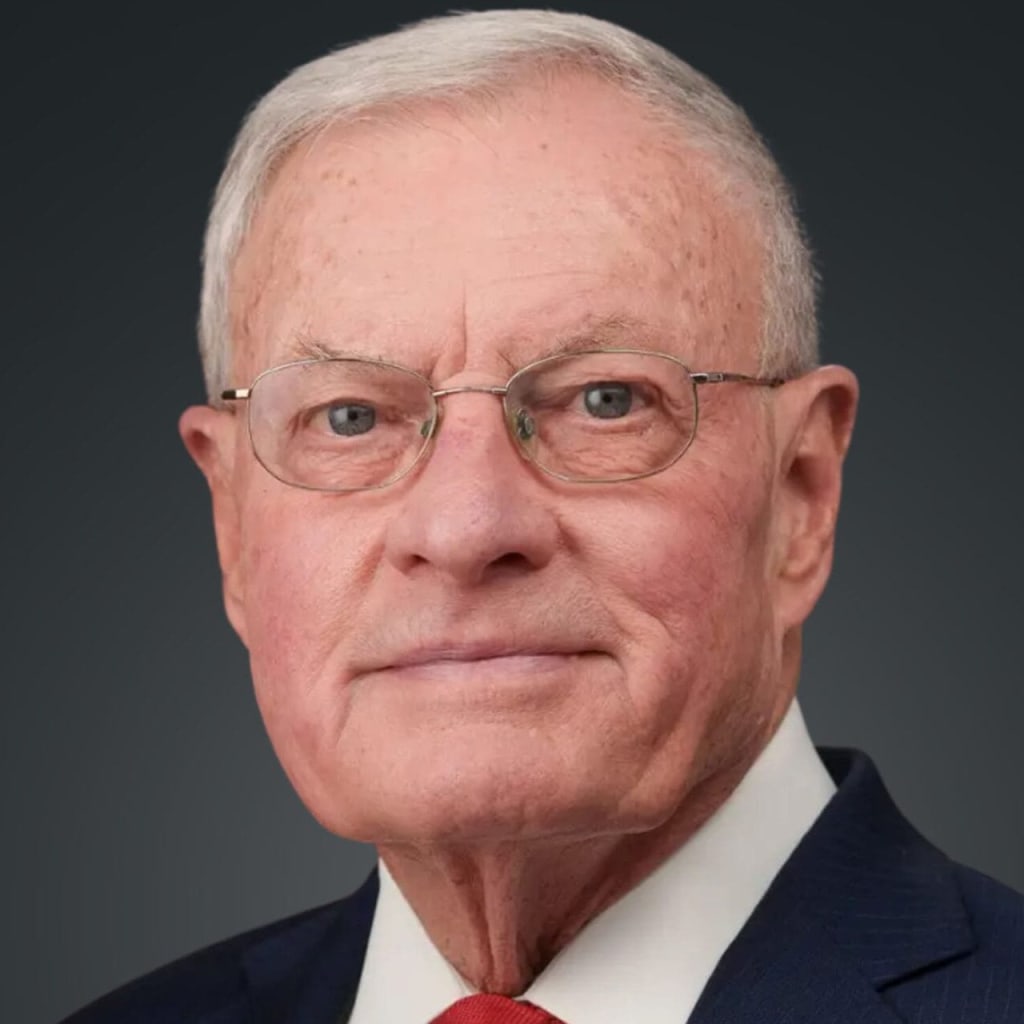 Joseph Keith Kellogg, Jr.CFR ExpertDistinguished Fellow, Council on Foreign Relations; Former Assistant to the President and U.S. Special Presidential Envoy for Ukraine
- Former Permanent Representative of Germany to the United Nations; Former Chairman, Munich Security Conference (Germany)
- Vice Chair, Kreab Worldwide; Cochair, European Council on Foreign Relations; Former Prime Minister and Foreign Minister of Sweden (Sweden)
- Founder and Executive Chairman, Newbridge Advisory; Former Chief, Secret Intelligence Service MI6 (United Kingdom)
Presider
- Chief Executive Officer, MCC Global Enterprises; Contributor, CNBC; CFR Member
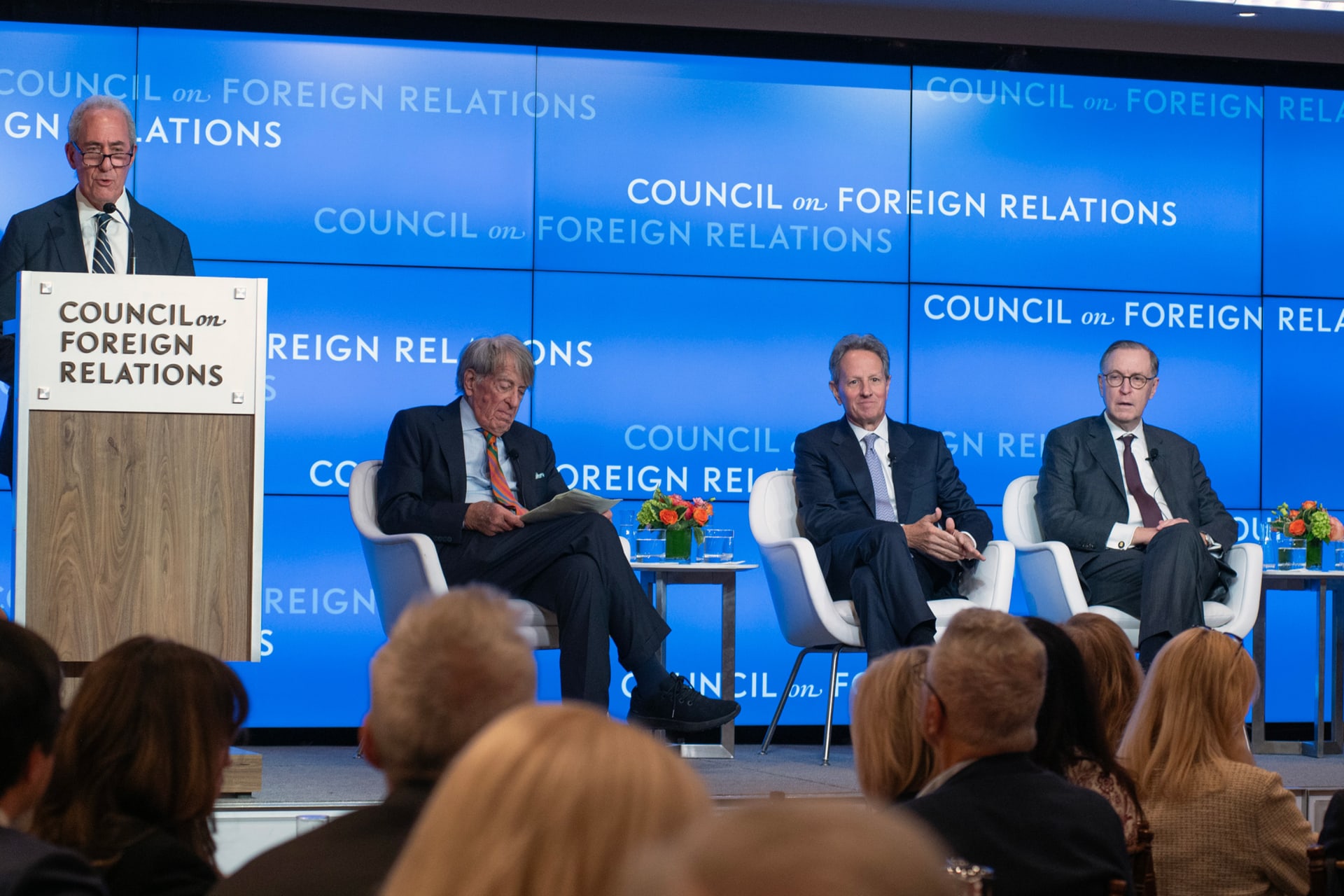
At the midpoint of CFR’s Global Board of Advisors’ annual two-day summit, we invite you to a seated lunch with members of CFR’s Global Board. The lunch will be followed by a discussion featuring Global Board members from the United Kingdom, Germany, and Sweden on the state of the Russia-Ukraine war and how it is viewed from NATO member countries.
CARUSO-CABRERA: Welcome to today’s meeting, “Russia-Ukraine War Update and Perspectives from NATO Member Countries.” We’re joined today by both CFR members and members of CFR’s Global Board of Advisors. Hello, everyone. Nice to see such a full room.
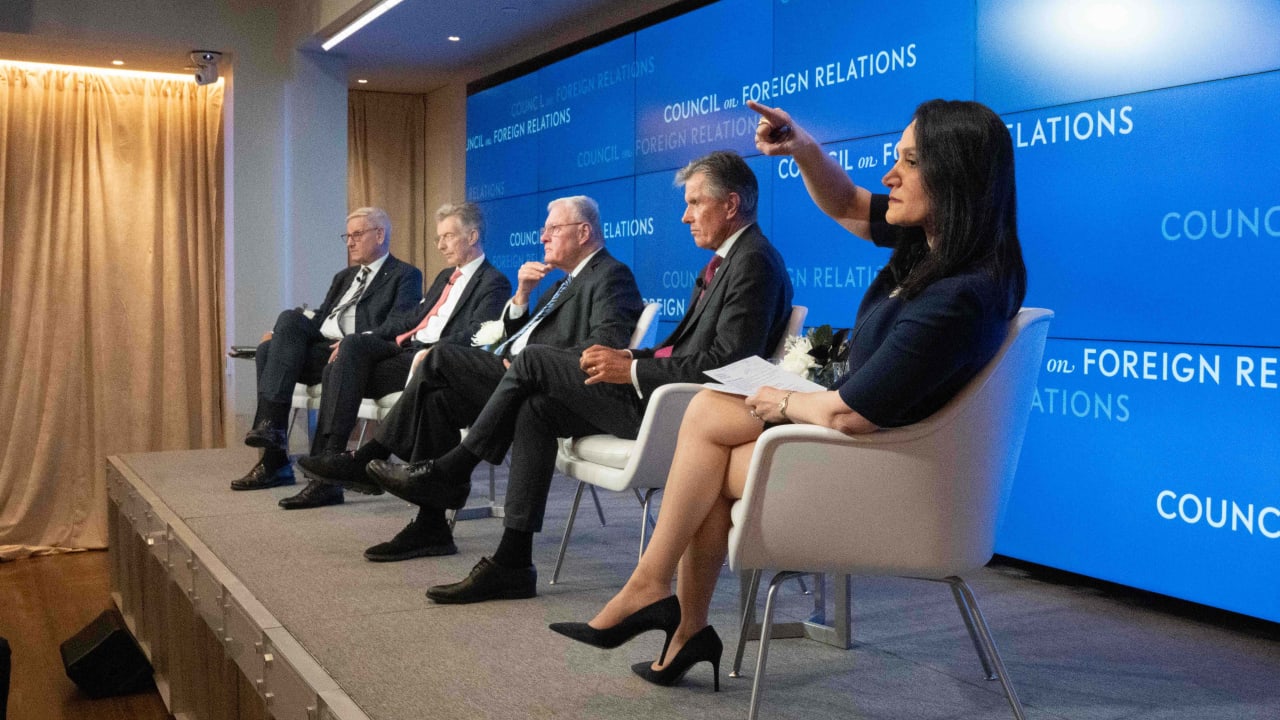
My name is Michelle Caruso-Cabrera. I’m the CEO of MCC Global Enterprises and a longtime journalist, current contributor to CNBC. And I’m presiding over today’s discussion, which, by the way, is on the record. It’s a large panel so we’re going to go longer than normal, an hour and fifteen minutes rather than just one hour.
Joining us on the stage, I’ve got you in a different order: Minister Carl Bildt, European Council on Foreign Relations, former prime minister and former minister of Sweden. Ambassador Christoph Heusgen. He’s the former permanent representative of Germany to the United Nations and the former chairman of the Munich Security Conference. General Keith Kellogg, Council on Foreign Relations distinguished fellow, former assistant to President Trump, and special presidential envoy for Ukraine during Trump one. And Sir John Sawers—no Y. We’ve had a conversation about this before. He’s the founder and executive chairman of Newbridge Advisory, and the former chief of the secret intelligence service MI6. A very distinguished panel, and it’s an honor to be doing this today.
I’m going to start with both—and these gentlemen have insisted that I call them by their first names. I’m going to try, but it’s difficult for me. Going to start with Carl and Keith. You’ve both recently returned from Ukraine. I wanted to structure this conversation about the three ways that Russia is attacking Ukraine. There’s the ground war, there’s the attack on the civilian population trying to demoralize them, and then the gray war that’s happening against NATO countries. So, Carl, could you tell us what you saw in Ukraine and how you think the ground war is going? You were there three weeks ago.
BILDT: Well, overall, you could say that the ground war is, from the Russian point of view, a spectacular failure. We are in the fifth year of war. Who could have thought that? And they have managed to capture somewhat less than 20 percent of the territory of Ukraine. It is, by all reasonable standards, a spectacular strategic failure. The war is changing roughly every four months, with new technologies and new tactics. The Ukrainians have been ahead in sort of adopting new things, but the Russians are catching up. And they are particularly catching up in terms of industrial capacity of producing drones, and missiles, and things like that. And that is affected. But the ground war, I think, is sort of slight advantage on the Ukrainian side, at the moment.
What is the new thing in the last, I would say, two months, is that the Russians are significantly escalating the war against the Ukrainian economy at large. I was in Odesa in mid-July. And they were then handling thirty, forty ships a day in terms of agricultural exports. All of that is gone. All of the port infrastructure of the Black Sea is gone. All of the agricultural export of Ukraine is gone. The last two, three weeks, they have taken out the metallurgical industry—second largest export. They go deliberately against all of the industries. They go against retail. And this is important also because it collapses state income for Ukraine, which means that Ukraine, which has a difficult economic situation—war is very expensive.
You know that in the States but, I mean, last year the war was $140 million a day. Now it’s $190 million a day for Ukrainians. Income now going down because of the war on the economy. And that is very serious. So there would be need, from the European point of view, to step up further the economic support. Virtually all of the economic support. I mean, there is Qatar, there is Japan, and there is a couple of others, but the Americans, if I—the Americans are gone. There’s not a single dollar coming in the last two years from the U.S. So it’s all Europe. And we have to significantly step up the economic support. That’s going to be challenging, but that will happen.
The Ukrainians, even if it’s got to be a horrible winter, with the Russians taking out heating and water and power in Kyiv, possibly having to evacuate part of the city, the Ukrainians are not going to capitulate because of that. Simply not going to happen. But the pain level and the cost level is going to increase, but is not going to affect, in my opinion, either the determination of the Ukrainians to resist, nor the determination of the Europeans to support.
CARUSO-CABRERA: Keith.
KELLOGG: Well, I’ll give you a shorthand. I think the Russians are losing. The Ukrainians are winning this fight. And I think he’s—Putin, you can—by extension you see what he’s doing right now. He’s increasing his attack on the Ukrainian civilians. If you have been to Kyiv recently it’s a very vibrant city. And the people are very, very determined to get over what’s happening right now, which you can equate to basically the German blitz on London in World War II. He’s trying to punish the Ukrainian people. He is not going to do that. The Ukrainians are tired, you would be after five and a half years of war, but they’re very determined. There is absolutely visceral hatred of the Russians in Ukraine. You can smell it, you can taste it, you can feel it. And they just do not want to be—go back into Russian domination.
And when I say the Russians are losing, I will give you numbers that, as an American, are astronomical. They are losing thirty-five soldiers—35,000 soldiers a month. That’s more than an Army division a month, losing. They’ve lost between 1.2 and 1.4 million soldiers, killed or wounded, in the last five years of war. They lost 18,000 and left Afghanistan. So think of the two differences there. And I think Putin, if he does do something and tries to withdraw right now, he’s end up going to be another Nicholas II, which means that somebody’s going to throw him out of a thirteen-story window. And I think he’s very concerned about his personal survival. I think he—you know, our point to him is, why don’t you just declare victory and go home? That’d probably be the best way to do it.
As Carl said, when you look at the territory gained by the Russians in five and a half years, if you discount the invasion period, they’ve gained 1 percent of land. And right now the Ukrainians are pushing back with their current activities going on. So the people are tired, but they can absorb it. But the Russians have increased the drone attacks. They’ve got the jet drones. They’re doing their best on the internal, how they make munitions. We originally, at one of the munitions factory they’re building, which they call the Flamingo. Interesting enough, they call it the Flamingo because Terekh, who runs the—she loves pink and she loves flamingos. That’s where you get the name of the weapon. But they’ve increased the ability of their systems to attack the Russians deep. And now the Russians are starting to see the war brought home to them. They’re hitting their refineries, which is a military target. They’re hitting things now these days the Russian civilian population can see. And I think Putin is afraid of that.
Look, recently John Ratcliffe, our director of the CIA in America, went to see Putin. He wouldn’t see him. And what reason—we’re pretty sure is the reason why John Ratcliffe went to Moscow, not to see the chief of the FSB, his counterpart, but to tell Putin ground truth, what we were seeing, they were seeing on the ground, that you cannot win this fight against the Ukrainians. There was a period of time, I believe, that Putin thought with the Russians that we, the United States, would acquiesce in giving up the final part of Donbas province. You know, the four provinces are Luhansk, Donetsk, and then you look at Zaporizhzhia, and you look at Kherson. And they’re fighting—for a minute there until recently, they had most of Luhansk province, about 80 percent of Donetsk province, and Zaporizhzhia and Kherson less than that.
But if you give up that land, you give up all defensible terrain for Kharkiv. I’ve been on the ground. I’ve seen the ground. You can’t give it up. They won’t give it up. They basically told Putin, if you want that land, you’re going to have to fight for it. Putin was, I believe, absolutely convinced that we were going to force Zelensky to give up that land. That was dumb, because we would not do that. We would not tell him to give up the land, when the president knows very well that is defensible terrain. He has been briefed on that. I know he’s been briefed on that. And he was shown what the Ukrainians can do and the way they can fight.
CARUSO-CABRERA: And you think he’s still committed to that?
KELLOGG: Pardon?
CARUSO-CABRERA: You think he’s still committed to that?
KELLOGG: I think he’s still committed to it. But I think—I tell everybody to go back to your history. You know, when the Russians talk about the Third Guards Tank Army, if the Third Guards Tank Army is fighting Ukraine, that’s five guys in a wheelbarrow. I mean their forces have been decimated. They’ve got the titles, but they don’t have the organization. And the Ukrainians have been very good about fighting. They’re very experienced. You know, in the long term they’re going to be the best army in Europe, the most experienced army in Europe, the largest army in Europe. And that’s one of the reasons why I think the West should make sure they stay on the side of Ukraine, because who you’ve got as an anchor thing, they and the Poles going forward as well.
So I just think it’s—I think, bottom line, I’ll complete the circle, is if anybody out there who thinks the Russians are winning, they are not. And if I were betting on the Polymarket—(laughter)—I think I’d bet right now on the Ukrainians. I wouldn’t bet on the Russians.
CARUSO-CABRERA: If we could drill down into this particular moment right now, because, for example, Sir Lawrence Freedman, who is very influential and probably one of the preeminent historians—war historians in Europe, has been writing extensively about right now, Operation Vivaldi, because it has four seasons, launched by the Ukrainians. And that he says, for the first time, they’ve either stopped the Russians or actually regained territory in a significant way, on the edges. Is that your perception of what’s happening? He says we won’t know until the spring, or maybe a year from now, whether or not this is a turning point in the war. But he thinks it’s important.
KELLOGG: Well, I like the word “perception.” If you’re a military guy, you never say absolutes, because you don’t know. But right now, it appears they’re pushing the Russians back in critical areas to do it. Again, the Russians don’t have the strength of their positions, meaning true fortified positions or units. In fact, it’s—and I will tell you, it goes back to the way they, the Russians, fight. And like they originally defend what’s called the Surovikin line years ago, when the Ukrainians were putting offensive effort towards the Black Sea and towards the—and I think what they were trying to do was punch through. The Russians put up five lines of defense, which they normally do, and they just ran out of—what we call airspeed and altitude, getting there. But they’re not in strength. And a lot of people think the Russians’ next stop is going to be somewhere else. They don’t have the combat power to do that. They just don’t. Their best units were totally destroyed in the first part of the war.
Now what they’re looking is they’re throwing money into people, getting conscripts that are out there, and the Ukrainians are fighting from what we in the military call interior lines, which means you’re fighting on your own soil. Your lines of communication are better. And the Ukrainians are now starting to strike deep. They’re starting to hit their refineries. They’re starting to hit targets which are a lot deeper than they thought. And then they’re bringing the war home to the Russian population. And I think that’s what Putin fears. He fears that if this really gets out to the Russian population, he’s going to fall into the habit of a lot of Russians these days of falling out of a twelve-story window. And I and I think right now that’s his biggest worry is keeping the population in control. But I would, if—as again before, if he had plans of taking all of Ukraine, he can’t. He’s lucky if he’s going to hold on to what he’s got right now.
CARUSO-CABRERA: Because of that, there’s now this gray war. Attacks happening in NATO countries. Leipzig Airport is the most recent. I want to call you Sir John, John. (Laughs.) What is your assessment about whether or not that’s going to have the impact that Putin wants, which is to try to turn European populations against supporting Ukraine because they don’t want to deal with conflict on their territory, or the threat of widening out to a wider NATO conflict?
SAWERS: I think you’re right that that is what the Russians are trying to do by the attacks. Christoph can speak to the recent attack on Leipzig Airport, which was a—it was a warlike act to send an explosive-laden drone across into—to disrupt an airport in a major NATO country. We’re fortunate that the explosives didn’t go off. He’s just been—there’s a Russian—there was a Russian attack last week to firebomb a factory in Estonia that was providing defense materiel to Ukraine.
CARUSO-CABRERA: A NATO member, yeah.
SAWERS: A NATO member. And we’re seeing both physical attacks and, not just propaganda, but cyberattacks, and also funding for extremist political parties, potentially pro-Russian political parties in Europe. Now, is this going to turn European opinion? It hasn’t so far. I don’t think it will. There are some important elections coming up next year in Europe, including in France and in Italy. And we’ll wait and see what the outcome is. I’ve learnt since 2016 not to predict the outcome of elections. (Laughter.) We’ll have to—
CARUSO-CABRERA: But critical, because you could see a party come to power that is far less interested in supporting Ukraine.
SAWERS: You can’t rule that out. I agree. I think the essence of populism in Europe, a bit like populism in the United States, is you put your own country first and forget about the rest. The rest you use leverage against. And I think that is a danger, that some of that might spread to Europe. We’ve had a taste of that in Britain, back when we had a choice seven years ago between Jeremy Corbyn and Boris Johnson for prime minister. And, you know, that was populism on both extremes, both right populism and left populism. There was a risk there. But I think so far—I don’t entirely share Keith’s confidence that Ukraine is winning. I think Ukraine has pushed back, but the Russians still have the preponderance of population, of industrial might, of resources that they can throw into this war. Ukraine has got the advantage, as you say, Keith, of defending their own territory. They’re fighting for their very existence. They’re not fighting for some imperial advantage that the Russians are seeking.
But the Ukrainians are holding their own on the front line. They’re probably winning the supply line war. They are very effective in disrupting the supply lines. And the Operation Vivaldi, as you described, exposed not just the weakness in Russian performance on the battlefield, but the fact that their supply lines were broken, and that the people on the front line were not getting food and water and medicines, let alone the ammunition they needed to move forward. But I think the fact that the Russians are not making movements on the ground has led Putin to widen this war and try to undermine European opinion. I don’t see that succeeding either.
CARUSO-CABRERA: Christoph, you want to weigh in on that same topic?
HEUSGEN: Yes. Let me follow up. Carl said earlier that the U.S. is right now no longer supplying economic and military aid. And, contrary to general belief, actually Europe was able to, you know, step up to the plate. When you look today at the Scandinavian countries, the Baltic countries, Poland, you see the enormous support there is there for Ukraine, the increase in military spending, the increase in military aid to Ukraine. This is enormous. And my own country, Germany, has now replaced the U.S. as largest military and economic donor to Ukraine. And our chancellor, Chancellor Merz, who may have some weaknesses in some areas, but with regard to the support of Ukraine, the fight of Ukraine against Russia, he has been unwavering in his support. Actually, on Saturday, even against Russian warning for politicians, diplomats from the outside, to travel to Kyiv, he was in Kyiv. And he committed another one billion euro in defense aid and about 350 million in defense cooperation.
What does that mean? We are trying to give to Ukraine what they need most urgently. And that is the defense against incoming drones and missiles. Where this—Carl spoke about, you know, the innovation race. They have now these propelled drones that are very fast and really damaging. We have to support Ukraine doing this. And now we do a lot of defense cooperation so that Ukrainians produce the missiles and that can hit objectives deep into the country, which they have—which they are successfully doing. So the support is there. The question is, and this is where the race we are in, Putin believes he can outlast Ukrainians, he can outlast the countries that support. This is Britain that does an enormous amount of intelligence. This is France and Germany. And he believes that he has more staying power. We have to prove him wrong.
But, of course, there are—there is certain skepticism. You talked about the elections in France. And if the Rassemblement National wins, I’m certain that France would try to cut the support to Russia. Now, it’s not a given. And I’m—I live in Paris right now, and I’m optimistic that the center will win, from what I see. But it’s not a given. My own country, yes, Chancellor Merz and the coalition is very determined, but when you look at regional elections, in particular in the eastern Germany, the former GDR, you have now in regional elections a majority. A majority of people who believe that we should stop supporting Ukraine. And you feel the impact of something that we should not underestimate. And this is the influence that Russia has through not only drone attacks and overflights and hacking, but through social media. I think we underestimate the influence that Russia has through different social media, through bots, where they actually, you know, maximize their own propaganda and support, and, you know, multiply those critics of German or European policy against Ukraine. And this has a certain influence.
Now, last point, this all comes, of course, against the backdrop of European budgets that are rather tight. With high deficits—
CARUSO-CABRERA: Speaking of France.
HEUSGEN: France in particular. And there, again, Putin calculates that in the long run he can outlast the European countries because the population will at some point say, no, we have had it. We don’t want to support Ukraine anymore. I think, and I agree with the general, I’m optimistic. I think that Putin has a miscalculation there. But we have to make sure that we have politicians and the governments stay firm on this. It would help, though, if our—coming to you guys—it would help, of course, if the U.S. were, you know, returning to good old, you know, Ronald Reagan, you know, evil empire policy, and support Ukraine more. And one wouldn’t need to read stories in the New York Times about Jared Kushner and Mr. Witkoff getting into deals where investors would buy Lukoil assets and put a lifeline to Putin there. So that would help, but this is for you to—you guys in the U.S. to discuss. (Laughter.)
CARUSO-CABRERA: Keith, do you want to respond to what he just said there, about the U.S.?
KELLOGG: Well, I think we should—
HUESGEN: (Laughs.) (Albeit ?)—
KELLOGG: I liked what he was saying. Look, I think what we’re saying to you is, I guess you have to define winning. But here’s my definition of winning, Russia—
CARUSO-CABRERA: No, I was meaning about the U.S. support. (Laughter.)
KELLOGG: Well, that was about support. But I want to go back to that because the reason it’s important, because if Russia was considered winning, he’d be in Kyiv, crossed Dnieper River, he would have taken all four oblasts, he’d have gained more than 1 percent. I don’t think he’s done it. So I think he’s worried about what’s happening.
What’s happening with the U.S. and the support we’re looking at, is, you know, I think there’s a sense of realism inside the White House of what’s actually happening. And I think what happened when Putin ended up going to Alaska, I think he had an indication from some people that he was going to force Zelensky to give up land, the rest of land. And I could—I could tell you, and we were on a phone call late that night, that wasn’t going to happen out there. Now, I don’t know what the negotiators—I mean, at that time it was Steve Witkoff—told Putin, but it was not—it was not grounded reality out there. And I think the president sees that. I think it’s the reason why President Trump sent his director of the CIA, Ratcliffe, to Moscow, to tell Putin ground truth. He never got to see Putin. He saw his counterpart, the FSB. But I think it was one way to say, hey, look, you need to see ground truth here.
And we were—frankly, I’ll give you an extension—we were just recently in Pakistan. And I saw Field Marshal Munir, who’s one of the negotiators internationally in the gulf war, but he also talks to Putin. He says, just declare victory and go home. That’s one way to get out of this thing. And I think he’s looking for—he may not be looking for a way out. But I think if he truly—if he mobilizes his forces, I think the Russian people are going to say, we’re kind of enough of this one. It’s happened before in Afghanistan. It could happen again. So I think he’s kind of betting on something that isn’t going to happen.
CARUSO-CABRERA: All right. We’ll come back to U.S. funding and the president in just a little bit. I just want to wrap up this idea, Carl. We have attacks on NATO countries. He’s doing that to try to convince Europeans not to support Ukraine. Is that going to work? And to what degree are you worried about this becoming a much wider conflict, if there is a strong attack against a NATO country? What should the proper response be doing this?
BILDT: Well, first, I mean, he has clearly succeeded with the United States, to get the United States to stop supporting Ukraine. That’s the brutal fact of the situation. Will he succeed with any of the European countries? I don’t think so. Take Meloni in Italy. She doesn’t have any money. She’s like France in that particular respect. So I don’t think we should expect too much in terms of money, that sort of thing. But the political support is there. So I don’t think he will succeed. It will be sort of—and if I look at the numbers, I mean, what is needed, if we take it on the basis of the next few years? I would say the deficit that needs further financing is 60-70 billion, roughly. Well, that’s 0.2 (percent), or something like that, of GDP, of EU, U.K., and Norway. Well, we have committed to 3.5 percent of GDP to defense.
I would say that the 0.2 or 0.3 (percent) that we give to Ukraine is even more significant than the 3.5 (percent) we give for defense, because the defense of Ukraine today is our defense tomorrow. If Putin were to succeed in Ukraine—I don’t think it’s going to happen, I think we agree—but is there anyone who believes that after he had had a march of his tanks and parades in Kyiv, that he will turn into a friendly guy? (Laughter.) Smooth and nice and peaceful again? No. The appetite will grow with eating. So that is—the defense of Ukraine today is the defense of Europe tomorrow. And that is why I think the recognition is there, and the financing, with all of the difficulties we will have in our budgets—because it will be difficult. It will be difficult, particularly going through election campaigns. I think it will happen, because it is so absolutely fundamental to the security of Europe.
CARUSO-CABRERA: The attack on a German airport. What is the proper response? What if it’s bigger? What if he escalates? What is the best strategy to respond?
BILDT: Well, let’s go to Christoph about this.
HEUSGEN: Well, John mentioned the attack actually was on the Leipzig Airport, but the dangerous situation where there were—we have Ukrainian planes taking military load in Leipzig. So this was actually probably the effort to hit a Ukrainian plane in Leipzig, in Germany. So this was—didn’t work out. It was not done very professional, when I see it. But this is a new method that the Russians use. They use these people that they, you know, get for cheap money to just create some havoc left and right. Sometimes they succeed, mostly not. But this is what they try to do.
Now, how did we respond to it? Well, we closed the biggest consulate, their former embassy, in Bonn, where they had dozens of people still, probably lots of spies there. We closed that. And then we also closed—those of you who know Berlin, in the center, Unter den Linden, is a big Russia house. And we closed that one. So it was a strong message. And the visit of Chancellor Merz to Ukraine to, again, underscore our support for the country was also a response. So we find the right response. We have to continue to do that. We must not escalate from our side, but we have to make a firm response whenever something happens there, so that Putin in the end at some stage comes to the conclusion that he has to, you know, declare victory and stop this war. Will this happen? We have to see. But we have to sustain our support for Ukraine.
CARUSO-CABRERA: John, do you believe this war ends while Putin is in power?
SAWERS: No. I think it’s conceivable the next year or two that both sides feel such a degree of pain from this conflict that they might agree a pause, a cessation of hostilities. But that would not be a peace between Ukraine and Russia. I think, as Putin’s whole legacy, his history, will shape his contribution based on the outcome of this war. If he’s successful in bringing Ukraine back under the control of Moscow, then he will be seen in Russian history as a hero. He’s not going to achieve that, so he is likely to want to keep this war boiling, keep this war going for some time. And I think there’s a real question mark as to whether, if the war came to an end, a complete end, whether he could survive politically. There’d be such a reaction against him. But I certainly don’t think there can be peace between a democratically organized Ukraine and a Putin-led Russia. I think that we have to steel ourselves for the reality that this conflict is likely to go on for a long time.
CARUSO-CABRERA: Carl, I see you nodding your head.
BILDT: No, I—
CARUSO-CABRERA: You agree?
BILDT: I agree completely with that. Putin’s place in Russia’s history is going to be decided by how he succeeds to fails with this particular war. And if the war ends roughly along the lines where it is now, no question that he will be seen as a spectacular failure, also by a centuries-long Russian history. And the consequence—
CARUSO-CABRERA: But it will also mean the Ukrainians have, by default, ended up giving them territory, right?
BILDT: Yeah, absolutely. Ukrainians will lose control of—perhaps not legally—but control of 20 percent of its territory. The thing that is painful, that is important for the psychological position, is Crimea. Crimea has a sort of psychological value, both for the Russians and the Ukrainians. Donbas, to be quite honest, doesn’t have the same value.
CARUSO-CABRERA: Don’t tell them. They’ll be very upset about that. (Laughter.)
BILDT: Sorry? I mean, Donbas is what—now Pittsburgh is a nice place nowadays—(laughter)—but otherwise, it’s Pittsburgh, Duisburg, Magnitogorsk. It was the Stalinist coal and steel, which has very limited relevance in the world of today.
HEUSGEN: I’m a bit more optimistic. I can foresee a situation where Putin sees that his power is waning, that there is more criticism, that he at some stage agrees with a ceasefire, that he may agree also with a stop then of bombing, et cetera. And then tells this—and then maybe, you know, in negotiations some kind of commitment for Ukraine not to enter NATO, or, you know, I don’t want to speculate on a package. But I still believe, as the general said, you know, he can declare victory. He still has—continues to have the media under his control. And he can spin it that way. And people will, you know, I mean they suffer from this war, so maybe there is a chance, John, that even with Putin we get at least a stop to the situation right now. How sustainable it is, we have to see. But this is something I think could be possible.
CARUSO-CABRERA: So we had a—we had the prime minister of Norway here and the president of Finland during U.N. Week. And it became very clear during that discussion amongst the audience that there’s real concern about the future of NATO under President Trump. Keith, is President Trump a threat to NATO?
KELLOGG: No. I mean, when you add two new members of NATO, I think he’s strengthened it. When they’re going to 5 percent of their GDP spent on defense, that’s the strength of NATO. When you look at basically the—by his verbiage, what he’s talked about, NATO has become stronger because they are building more themselves now. Look what the French just did. And it really kind of surprised me. There’s a picture of President Macron watching a launch of one of their nuclear missile—or, a ballistic missile off of one of their submarines. You know, have you ever thought about maybe there’s going to be now British, French nuclear deterrence? An umbrella over Europe rather than just U.S. umbrella? They’ve got the capacity to do that if they want to do it. You know, they’ve got over 250 nuclear weapons. You only need one out there if you want to really have a protection of your own environment, of Europe itself. So I think he’s really strengthened NATO by his verbiage. And I think it’s OK to do that.
And I look at—and what Carl was saying earlier—is one of the things about Donbas is that a lot of their critical minerals, precious metals, are there. There are seventeen precious metals in the world. Ukraine holds 5 percent of those, of the entire world’s supply. There was a comment that was made to us when we were in Ukraine that Russia, with Ukraine, is a global power. Russia without Ukraine is a regional power. And that’s a good way to think about it, because there’s a lot of—when you look at going to Ukraine itself, and what their capacity is for the future, and what they built up—what they can build up, and they do things that just surprise me. We should take advantage of that.
For example, when I look at their drone technology, when we were over there a year ago they were reiterating their drone technology once every six months. Now they do it every six weeks. They’re able to do that with their technicians that they’ve got. So it’s really a tremendous power within a country that I don’t think we in the West, meaning the United States, really has grown to appreciate, how good they really are. And I just—every time I go there I’m just amazed not only the resilience of the population, the people, but their technical expertise as well. So to finish that, no, I don’t think President Trump is a threat to NATO. He’s asked it to be reevaluated, but that’s what happens in alliances all the time.
CARUSO-CABRERA: So, John, Keith says Donald Trump has strengthened NATO. What do you think? Has he strengthened it, or is he a threat?
SAWERS: Well, for seventy-odd years, the Russians tried to detach Europe from the United States and divide the alliance. And now they’re presented with the United States threatening to walk away from European security and giving the Russians what they wanted all the time. There was a time when we thought of NATO as the Russians—as the—to deal with the Russians the United States would take the lead, and the Europeans would discuss the details, but we’d be loyal there in support. What we’ve seen—
CARUSO-CABRERA: Does that mean that the whole notion of committing a certain percentage of your GDP to defense spending was just—you all pretended, or? Because that’s the core—
SAWERS: No, it’s very real. But Europeans aren’t spending more on defense because the American president is telling them to do so. There are two reasons why Europeans are spending more on defense. The first is the threat from Russia is a lot greater, and the second is that the reliability of the American ally is a lot less. And so Europeans have to do a whole lot more themselves. Now, you could say—
CARUSO-CABRERA: Did it work?
SAWERS: Well, it’s certainly—Europeans traditionally spent too little on defense and relied too heavily on the United States. That is now being corrected. But I think what we’re seeing, what Putin is doing, is he’s testing where Article 5 kicks in. And he’s doing it in order to exploit what he sees as an opportunity of an American president who considers the defense commitments to his allies, both European allies and Asian allies, as conditional. Conditional, and it’s not a contractual arrangement. It’s a conditional, and depending on how he analyzes the situation at the time.
CARUSO-CABRERA: Or wasn’t it always conditional? You were supposed to spend that much on your defense. And you didn’t.
SAWERS: Well, it was agreed—I think David Cameron is here—it was agreed at the Wales summit in in 2013, I think it was, wasn’t it, David? That allies would spend 2 percent of GDP. I think all allies now, over time, and now all allies are spending that 2 percent. The new target has now been set at 3.5 percent. And all allies are committed to working towards that goal. Now, we won’t all get there at the same time. We’re seeing the same in East Asia. I see my colleague Tak Niinami agreeing that Japan is too raising its defense commitments, for the same reason. You deal with a bigger, more assertive neighbor with a less reliable American ally. And the biggest thing that’s happening in the world at the moment is America’s role in the world. And, you know, to put it simply, America, for most of my working career, was effortlessly the global power. It’s now retreating into being a regional power. And that’s a matter of concern.
KELLOGG: Yeah, boy, I just—I don’t agree with you at all. (Laughter.) You know, the fact is President Trump’s a sort of transactional actor. And you talk about the United States doing it. The question the United—people of the United States have is, where were you guys in the last twenty years? And the Wales Agreement was 2.5 percent of GDP. I was sitting right across from Merkel when she told Vice President Pence they would never get—Germany at that time would never get the 2.5 percent of GDP. And that was the Munich Security Conference just a few years ago. So I think that you can throw it back on you. Part of that transactional approach is, where have you been? OK, where have you been? And when you finally build enough strength as before?
And I just think, with somebody like President Trump, he is—he will be there, the Americans will be there, but at the same time it’s got to be almost a quid pro quo transaction. And that’s the way he is. And it’s just one of those things I’ve gotten used to him. And, Chris, you know that as well, from being with him since 2015. It’s kind of the—you kind of adjust to that as well. And it goes back to being with Russia. I think Putin’s making a major mistake if he thinks something’s going to give. He’s not. And I think what’s happening is it’s going to be long-term after our elections, the next thirty days, is going to be—because that—because they’re getting—regardless of what happens, remember, the Republicans will still control the House and the Senate until January. So there’s a lot of things that can happen between November and January as well.
CARUSO-CABRERA: Carl, so you put up your hands in what appeared to be frustration. You want to expound on what you were thinking as he spoke? (Laughter.)
BILDT: No, we can discuss this history for a long time. I mean, my country, during the Cold War, we spent 3.5-4 percent of GDP of defense. Then we went down, because it was a different world. So did the Americans. I remember when the last American tank disappeared from Europe in 2013. There was very little in U.S. combat power left in Europe. You can discuss whether that was right or wrong, but the world was a different one then. And now we are—because of Mr. Putin, we all have to increase defense spending quite substantially. And that, we are doing. And as John said, we are now building a NATO with less U.S. Is it significantly less U.S. or little less U.S.? Remains to be seen. We don’t know.
And then there is also the political tensions that are inside the alliance. I mean, in a critical situation, if Putin moves into and does something nasty, the credibility of NATO is not going to be dependent primarily on the prime minister of Sweden sending in the Russian—sending in the Swedish army, or the prime minister of Spain sending the Spanish army, but it’s got to be dependent upon if the president of the United States sends in the U.S. Army, and after he had gotten the call from President Putin saying that it was a necessary defensive step that he had to take because of provocations from NATO. That’s the critical issue that is worrying Europeans slightly. (Laughter.)
CARUSO-CABRERA: One last word before we go to—I’ll go to questions now, unless?
HEUSGEN: No, I can support that. I mean, NATO has become stronger, when you look at the alliance, when you look at the defense planning, it’s really—
BILDT: Membership of Sweden, of course.
HEUSGEN: Membership of Sweden. (Laughter.) And not to forget your—
BUILT: Finland, Finland.
HEUSGEN: —former colony, you know. (Laughter.) Not to forget Finland, you know, that they are very strong, very strong, very able. So we are building ours.
But, you know, Keith, I’m not as certain as you are, you know, I mean, when talking about U.S. support. I mean, when—the only time Article 5 was actually agreed upon, was called for, that was after September 11th. And afterwards our countries, Britain, very heavily ourselves, we supported the U.S. in Afghanistan. There was no question for it. It was domestically very difficult to defend, but we—with German history, to now actually participate in in a war, and we did a lot in in the north of Afghanistan, was a lot of ask. Now, as you were in the meeting with Chancellor Merkel with Vice President Pence, I was present when President Reagan—when President Trump went to the—in 2017 for his first NATO summit, and where everybody expected him to give a commitment to Article 5 and NATO collective defense. And he refused to do it.
So with all the commitments, and all what you say, I think this U.S. government is very transactional. Very transactional. And do we have in Europe the guarantee that if one of the incidents that could happen left and right, would the U.S. be—would under this president—be ready to step in? I have my doubts. Therefore, we have in Europe, and we are working on that. We have to see to it that we have our own capabilities in Europe. That we do have headquarters, but we don’t want to duplicate what is happening at NATO. But can we rely that in Article 5 situation America will be there? So I think we have to organize ourselves within or in parallel to NATO with the command structure so that we, Europeans, if need be, can defend ourselves, without American support. I think we have to be as realistic as that.
CARUSO-CABRERA: So at this time I’d like to invite CFR members and members of CFR’s Global Board to join our conversations with your questions. As a reminder, this conversation is on the record. We’re going to go to this lady here in the front first.
Q: Thank you. Cynthia—
CARUSO-CABRERA: Please introduce yourself.
Q: Cynthia Roberts. I’m an academic. I teach at Hunter and Columbia.
So Russia is not fighting alone. It has support from China, from North Korea. And the question is, are our adversaries able to achieve strategic effects, even when they’re not fully allied? We’ve seen this historically work out in ways that are adverse to us. So the question is, do we need to think more integrated—I’m glad to see a Japanese representative here—to increase our deterrence beyond just NATO, and find ways to deal with this? We see it in Iran and so on. Thank you.
CARUSO-CABRERA: Who would like to take that?
SAWERS: Well, let me kick off. Others will have their own comments to add. I think you’re right that Russia is being strongly supported in this war by components and materiel from China, and by manpower and artillery shells from North Korea, and by drones from Iran. And in some ways, that support is reciprocal. You’re seeing Russian and China supporting the Iranians in this rather misbegotten war in the Gulf that the United States and Israel launched back in February. So you’re seeing some partnerships, some cooperation between these countries. And you’re right to identify that they’re not actual allies, they’re not allied with each other, they don’t have defense commitments, but they all want to sustain one another because they are, in different ways, thorns in the side of the United States, and the West generally. And I think that’s what’s bringing them together in this endeavor.
Now, actually, the outcome of the of the President Xi visit here last month was not—it was not unwelcome. In that, having some calm in the U.S.-China relationship may have some long-term costs but in the short term having that major relationship as a state of calm and being able to use some influence, what limited influence the United States has over China’s role in these conflicts, is helpful. But there’s no doubt that these countries are able to support one another in the way you describe.
CARUSO-CABRERA: Gentlemen here. Oh, go ahead. Go ahead.
KELLOGG: If I could, just a comment. The United States supports Russia as well. Now, here’s what I mean by that. He’s got the pictures up. When they capture Shahed drones that have come in and broken them apart, a lot of their parts are American made. Their microprocessors and the things they’ve got, they all came out of American corporations. So this is one of those where—you know, and I think the Chinese are really supporting them as well. But it’s almost one of those, OK, if we could really withdraw all that Western support, they’d probably get it through third countries anyway. But it’s one of those we shouldn’t just stand up there and say, you know, it’s all the—they’re all the bad guys. We’ve done some of that ourselves. We’ve done it to ourselves. And we’ve got the pictures to prove it.
CARUSO-CABRERA: I saw a lot of hands from this section of the room. This gentleman who’s got the folded piece of paper, please introduce yourself. It’s right behind you.
Q: Hi. I’m David Nachman and I’m unaffiliated.
I was wondering if you could address three interrelated questions about European integration, in the face of the Russian threat. You’ve talked about stepped-up spending. How unified are command and control decisions becoming? Is it an alternative to NATO, or is it integrated into NATO? You know, how do you get a unified European command that’s independent of NATO? What’s happening on supply lines? Is NATO able—are munitions manufacturers able on the continent to provide aerial defense capabilities, munitions? And lastly, politically, what’s it doing to the forces for greater European and EU integration, as opposed to the populist decentralizing influences?
HEUSGEN: Since I mentioned this need for Europe to work closer together, let me respond to this. There are already EU headquarters. There are EU headquarters that can organize EU military or police, civil missions. But they are missions that were crisis management. You know, when you go with a(n) EU mission to a certain theater, and you have to manage this. Now, there is no EU headquarter that could, right now, do the same work as is done in SHAPE. And they do have some mechanism capabilities at the European Union. They have a military staff, military committee. But they are not where it should be.
And I think right now my take from political decisionmakers are that, yes, some want to go into this direction, but so far, at least what my government is concerned, they say we are now fully concentrated on NATO, on getting the NATO defense plans, the NATO capability plans implemented. We don’t want to work on a on a parallel structure. So this is the reality. I just said that we think we need to work into this direction for—in case that, in an Article 5 scenario, a U.S. government will say, listen, Europeans, you are on your own. And you know that SACEUR, the highest officer, the commanding general of NATO, has also a second role. And that is the commander of the U.S. troops in Europe, directly under control of the president. And he has to get the go by the U.S. president to have American troops in Europe engaging in such a case.
So it’s still theory. And I think probably the majority also in my country would say, no, no, no, it will work out. But, you know, nostalgia is not a strategy. So we have to see. You know, I was chairman of the Munich Security Conference when J.D. Vance gave a famous speech there. And he publicly said he doesn’t like Europeans. He supported Viktor Orbán in his campaign to become prime minister. He saw—at the Munich Security Conference—saw neither then-Chancellor Scholz nor future Chancellor Merz. He saw the chairman—the chairperson of the AfD, our radical extreme right-wing party that is pro-Russian. So can we be guaranteed that J.D. Vance doesn’t become American president? I don’t know.
So I think we—you know, we have to—unfortunately, have to bear this in mind. And if it doesn’t happen, the better. So as much as we shouldn’t do, you know, on troops and everything, no duplication. This has to be—we have a single—you know, a single bunch of soldiers, of our troops. But this command and control is something that that bothers me. And I think we’re Europeans. Can we do this as a European Union? I think, yes. We have the instruments also that some people, some countries that don’t want to be part can stay outside. I, by the way, also like a lot what has happened last year, is the cooperation between Great Britain, France, and Germany, that is really very, very strong. Also, including Poland. So the Europeans are stepping up to this—to the plate, yes. Look at defense spending, what we mentioned before. We are not quite there where we ought to be. But I think we Europeans have to get ready for this.
KELLOGG: You know, if I may, saying that the Americans are not going to be there in a minute of crisis is absurd. We have been there before. We were there in World War I. We were there in World War II. We were there during the Cold War. When President Reagan went to Reykjavik against Gorbachev, he had a chance to totally denuclearize and he pushed them back because of SDI. The Americans, when it comes to crises, are there. And we have proven it time and time again. So I would say, if you are looking at the personality part of it, look at that, but when you look at the American people you’re making a big mistake if you say that. I don’t think that’s true at all.
CARUSO-CABRERA: General, there are people in the audience laughing at you. (Laughter.) They are—they’re shaking their heads. I mean, there’s a lot of skepticism in this room.
KELLOGG: Well, skeptics are fine. But I’ve seen it happen. I mean, just show me, tell me when it hasn’t happened. Don’t just nod your head yes or no. Just tell me factually, historically, when that hasn’t happened. Not how you feel, but how it’s really happened on the ground.
SAWERS: Well, General, you could say the Americans turned up three years late for World War I. (Laughter.) They turned up three years late for World War II. (Laughter.) They turned up three years late in the disintegration of the Balkans and Yugoslavia. And they were there in at the start of the Ukraine war, but then walked away. What should Europeans make of all that? (Applause.)
KELLOGG: Yeah. Well, OK. Then historically I’d go back, when you’re talking about it, is if you want to look at a book, just look this one up. Go back and look at the book called Guilty Men, that was written in 1940, written by a pseudonym named—individual named Cato. And where that all came from and what happened at the time. And what they basically said is the organization was ended up within the U.K., they kind of gave that up on their own. So the American people are reluctant lawyers, but when they do fight, they fight. And I said, you can say, no, it doesn’t happen. Yes, it does happen. But I can tell you historically, and I would challenge you historically, show me historically. You talked about the timing out there. Have they been there at the end? The answer is yes. You’re talking about what’s happening right now. We are a global power, in the sense we’re talking about munitions, how much they’ve given, which they’ve given a lot. So much you can ask the American people. And I think they’ve done quite well with it.
SAWERS: Don’t get me wrong. I want America to be a global power. I want America to stand by its allies. I want its allies to do more on their side for their own defense. I think this is a partnership. And it’s got a bit out of kilter over the years. And I think there will be opportunities in years ahead to bring that back together again. And I spent my life working with Americans. They’re the indispensable ally. And we have a very close partnership, both militarily and especially in intelligence. And I think that’s really important. I think there’s a bedrock of that partnership is still there, as it is with all your—all America’s other allies. What I’m just saying is that there’s a sort of—a question mark has been entered into this. As Christoph says, the relationship has become more transactional. And that is a concern, because defense is not a transactional issue.
CARUSO-CABRERA: Right here in the front.
Q: Jane Harman, former member of Congress, CFR member.
Reportedly, President Trump has invited or wants to invite Putin to the G-20 in December in Florida. Has he actually done this? Has Putin accepted? And what is the reaction of the other members of the G-20, should this happen?
CARUSO-CABRERA: Carl.
BILDT: Our understanding is that he has issued an invitation. Putin hasn’t yet answered. I think what the Europeans either have done or will do is to say to President Trump, we don’t particularly like this, but if you do it you should invite President Zelensky as well. And then it will be interesting to see what happens. Will President Putin come anyhow, and be confronted with a meeting directly with President Zelensky, which so far has been avoided? That we don’t know. But it’s a very good question, to which I am also very interested in the answer. (Laughter.)
CARUSO-CABRERA: Right here.
Q: Thank you. Jeff Laurenti, Council member.
The prospect for actually negotiating a peace settlement, and maybe one has to wait until God calls Putin home to actually get to serious negotiations, would normally involve if you’re talking about changing borders, popular consent by some kind of referendum. What are the risks to either side in letting a referendum, oblast by oblast, in Donetsk, Luhansk, and Crimea, be the determining factor for where boundaries might be redrawn as part of a comprehensive peace settlement, rather than just a temporary ceasefire?
CARUSO-CABRERA: Carl, I see you nodding your head.
HEUSGEN: Well, first—
CARUSO-CABRERA: Or, Christoph, go ahead.
HEUSGEN: Well, maybe first to remind everybody that there was a referendum. There was a referendum in 1990 when it came to the question, should Ukraine become an independent country? And the overwhelming majority was in favor of Ukraine becoming an independent country. And even on Crimea, which, contrary, to general belief, does not have any geographic link to Russia but only directly to Ukraine, a majority was in favor of having Crimea be part of Ukraine. Now, on peace deals, you know, we did the Minsk Agreement, everything with all the challenges and everything. I just don’t see how right now on a question like this you can do a referendum.
You see how the population there was in Crimea has been dispelled, has been Russified. Same thing in Donbas. Where have the people gone there? Can you do a—you cannot do a referendum with the people who live there right now. So I don’t see this as part of the equation. I think we have to go by international law. International law is very clear. You don’t change borders by force. And this has to be, you know, the base for negotiations. What in negotiations, the free will when it’s discussed, what comes up there, we have to see. I only know from my Ukrainian friends that, for them, to change the borders of Ukraine is a no-go.
KELLOGG: And, by the way, they can’t do it by their constitution unless they get a national referendum, not by oblast by oblast, but the entire nation must vote for that. And they won’t vote. They can’t vote if they’re under martial law. They are currently under martial law.
BILDT: And could I just add to what Christoph said? If Donbas, the occupied part of Donbas, very difficult to get the numbers, but the number of people living there is less than half what it used to be. And most of them are going to Ukraine. Some are going to Russia as well, it has to be said. And what Russia is doing now in the occupied territory is bring in new people from Siberia and other parts. So they are having a deliberate policy of exchanging the populations in these particular areas. It’s a sort of classical colonization effort, ethnic change that is ongoing.
CARUSO-CABRERA: All right. To be fair to the geography of the room I’m going to go back here. This gentleman against the wall here, blue suit. Yeah. Please introduce yourself. Take the mic.
Q: Jean-Marie Guéhenno, Columbia University.
Ukraine has been very dependent, I think, on U.S. intelligence in the war. If that U.S. intelligence was to stop, do you think that the Europeans would be in a position to step up and have the technical capabilities to replace it, or not?
SAWERS: I think what the Americans have provided in terms of intelligence has been really invaluable. The integrated intelligence picture of the battlefield, bringing together overhead satellite coverage, the heat-seeking, identifying where all the Russian kit is, and also integrating all the sort of loose chatter on mobile phones and so on, has been a remarkable achievement. It’s one of the big steps forward that we’ve seen in this conflict. And, no, the Europeans could not replace that at the moment. What I think we’re discovering is the Ukrainians are becoming more and more self-sufficient across the board. They’ve certainly done that in drone technology. They’re now ahead of the rest of the world in terms of producing their own drones, matched only by Russia. They are extraordinary in the way they’ve innovated both tactics and defense equipment in order to deal with the challenges.
But the two areas where I think Ukraine still remains dependent, one is this integrated intelligence picture. And I very much hope, Keith, that the United States will carry on providing that because I don’t think it’s replaceable by others. And the second is air defense, where I’m afraid the war in Ukraine—the war in Iran, has led to some 70 percent of the United States interceptors, the PAC-3 interceptors, being fired off in that war. And that has rendered Ukraine much more vulnerable. And the one of the tests of this winter is whether Ukrainians can devise, with European support, an alternative to the PAC-3 interceptor to bring down these incoming Russian missiles, which are causing so much damage. So there are areas where there is still dependence on the United States. And it’s very important that U.S. support remains in those areas.
CARUSO-CABRERA: Gentleman right here, has got his arm up.
Q: Richard Sobel, a CFR member.
I spent twenty-plus years in the region doing finance, so it’s very familiar to me. I don’t think anybody who knows these countries thinks it’s a good idea the war continue. From the outside, it’s terrible for Ukraine, it’s terrible for Russia. But how do you stop this? So seems like Russia is playing the Americans. And it’s not the American establishment, it’s the American friends of the president, which looks more like theater.
CARUSO-CABRERA: And what’s your question?
Q: The Europeans are not at the table. So my question is, how do our European friends feel about outsourcing the negotiations on a settlement to the Americans? And at what point would we start to see a path towards a real solution?
BILDT: I mean, first, we were—I don’t think we were outsourcing it to the Americans. We are somewhat skeptical about some of the things happening. But the fact is the Russians are talking to the Americans. The Russians don’t want to talk to the Europeans, because we are supporting Ukraine. The Russians were under the impression that they could get Trump to impose a settlement on Zelensky. And, of course, what happened at Anchorage was, from the European point of view, a very significant setback. Prior to that, we had, as a matter of fact, agreement between the Europeans and Trump on pressing for a ceasefire—ceasefire, ceasefire, ceasefire, then talks. In Anchorage. Putin managed to get Trump on board for saying, no, no, no. No ceasefire. Continue until we have a political settlement. And that made it possible for Putin to start to play for, oh, yeah, yeah, concessions, concessions from the.
I think the Europeans have been very—have been perhaps not at the table, but shaping the table, because we went in then when Trump seized the financial support. We went in and said, we support. And that made it possible for the Ukrainians to resist that particular pressure. Anchorage, I think, prolonged the war substantially. We don’t know that, but that would be my assessment. Had we managed to preserve that unity between the Americans and the Europeans and increased pressure on Putin for ceasefire, we might have been there. But we are not.
CARUSO-CABRERA: Lady back there.
Q: Maggie Lewis, Seton Hall Law School.
China is watching Ukraine. So is Taiwan. Very different situation. Very different geography. But if you were advising the government in Taipei one lesson they should take from the war in Ukraine, what would that be? (Laughter.)
KELLOGG: How we switch over there from Ukraine, I don’t—well, I think what’s—first of all, when you look at President Xi right now, he’s told his military to be prepared to be able to invade Taiwan by 2027. I don’t think he can do it. I mean, the fact of the matter is the difference in the Taiwan channel, the Taiwan Straits, is the same distance between England and Normandy. Basically, it’s over a hundred miles of open water. And I don’t think they’ve got the capacity to do it. They can talk about it—unless they do it bolt from the blue. And I think, you know, there’s—Congress—thankfully, Congress put out the Taiwan Relations Act, which allowed them to develop—basically buy American weapons, which they’ve done. They’ve been delayed this time because we’re delayed production of those weapons that are out there. But, you know, when it comes down to it, we used to have a defense treaty with Taiwan, the United States. It doesn’t anymore. And I just think it would be so destabilizing to the Pacific at the time. I don’t—I think President Xi is more interested in closing down the South China Sea by building the fortified islands than he currently is for Taiwan.
The only thing that Taiwan really gives him right now is bragging rights and semiconductor chips. But the rest of it, he doesn’t get very much for getting it at all. Because really when we’re looking defensively is the island chain around there, from Japan, who’s building up strength right now, to the Philippines, and down to Australia. And I think that’s the real strength that’s coming here. So I think we’re looking at it. I think right now that’s an issue that may come up. But I don’t think when you look at reality that is going to happen in the near term. There may be, like there has been in the past, threats and discussions, but it comes down to capacity. And I don’t think they’ve got—the Chinese—have currently got the amphibious capabilities and capacity to do that right now. They’re going to talk about it, but they can’t get there.
CARUSO-CABRERA: OK, I think this is probably the last question. You had a question, ma’am? Didn’t you raise your hand like six times? (Laughter.) Yes. Yes. If you don’t, I’ll pass to somebody else.
Q: Thank you. I’m Evelyn Leopold, who’s been a journalist in and out of the United Nations for quite a while. And fourteen years with—anyway, I won’t go into it all.
But the war is not clean, no matter who does it and how. But the latest thing that the Russians are pushing is Nazism. And I can understand it having an impact in Russia, but they now find that everybody’s a Nazi. The fact Zelensky’s Jewish doesn’t matter, because Lavrov has made some terrible comments.
CARUSO-CABRERA: And what’s your question?
Q: But anyway, my question is, is this Nazism thing—
CARUSO-CABRERA: Going to work?
Q: Having an impact anywhere outside of Russia?
SAWERS: Is what having an impact?
CARUSO-CABRERA: Saying that Ukraine is full of Nazis. That’s what, you know, Putin has often said. And is that going to work, in terms of turning people’s support?
SAWERS: No. No. Not at all. It’s a complete fabrication. The fact is, Ukraine has got democratic structures. It’s now under—it’s been under siege for the last nearly five years, so it’s not being able to have renewed elections. But the allegations that Putin makes against Ukraine are designed to bring back the Great Patriotic War, which is what the Russians call the Second World War. And he wants to invoke that spirit. But the argument is specious and completely false.
HEUSGEN: And, if I may add to this, you know, the absurdity of the argument is—totally agreed on—is that at the same time, for instance, in Germany Putin works closely together with the AfD, where people—members of the party, according to laws, can be called fascists. So he’s working with the Nazis, so to speak, there. So this is Putin’s—you know, Putin, the way that he argues, the way that he wants to portray this war to his own population as fighting the continuation of the Second World War. He’s fighting against the Nazis. Totally absurd.
CARUSO-CABRERA: Anybody else?
KELLOGG: We can actually just—I’ll make it really simple, from my perspective. Everything he says like that is garbage, poo. I mean, they’re not Nazis. It’s democratic institutions. And it’s just his way of trying to go back to World War II to his people. And not true at all.
CARUSO-CABRERA: Well, gentlemen, I hope you enjoyed this. I hope the audience enjoyed it. Thanks so much for coming. (Applause.)
(END)
This is an uncorrected transcript.