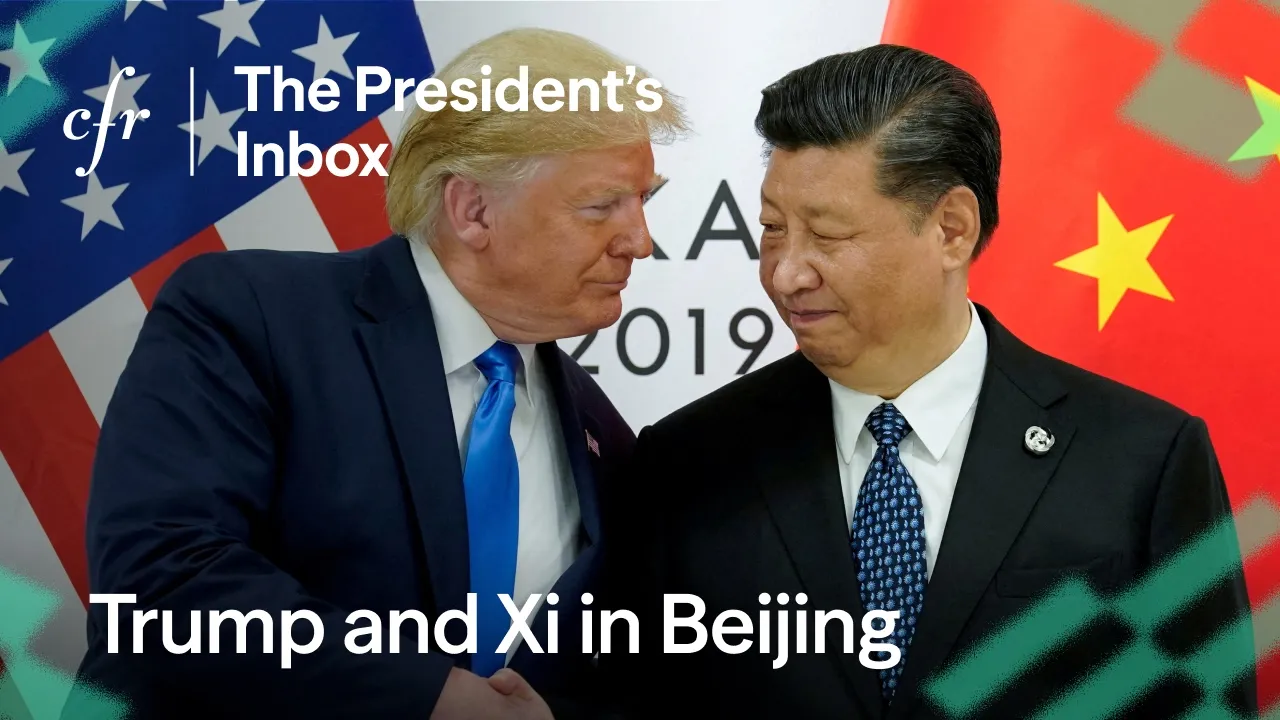
Trump and Xi in Beijing, With Rush Doshi
This episode unpacks President Donald Trump’s upcoming summit with Chinese President Xi Jinping in Beijing, the first by a sitting U.S. President in nearly a decade, as the United States and China work through a tense period of détente.
Published
Host
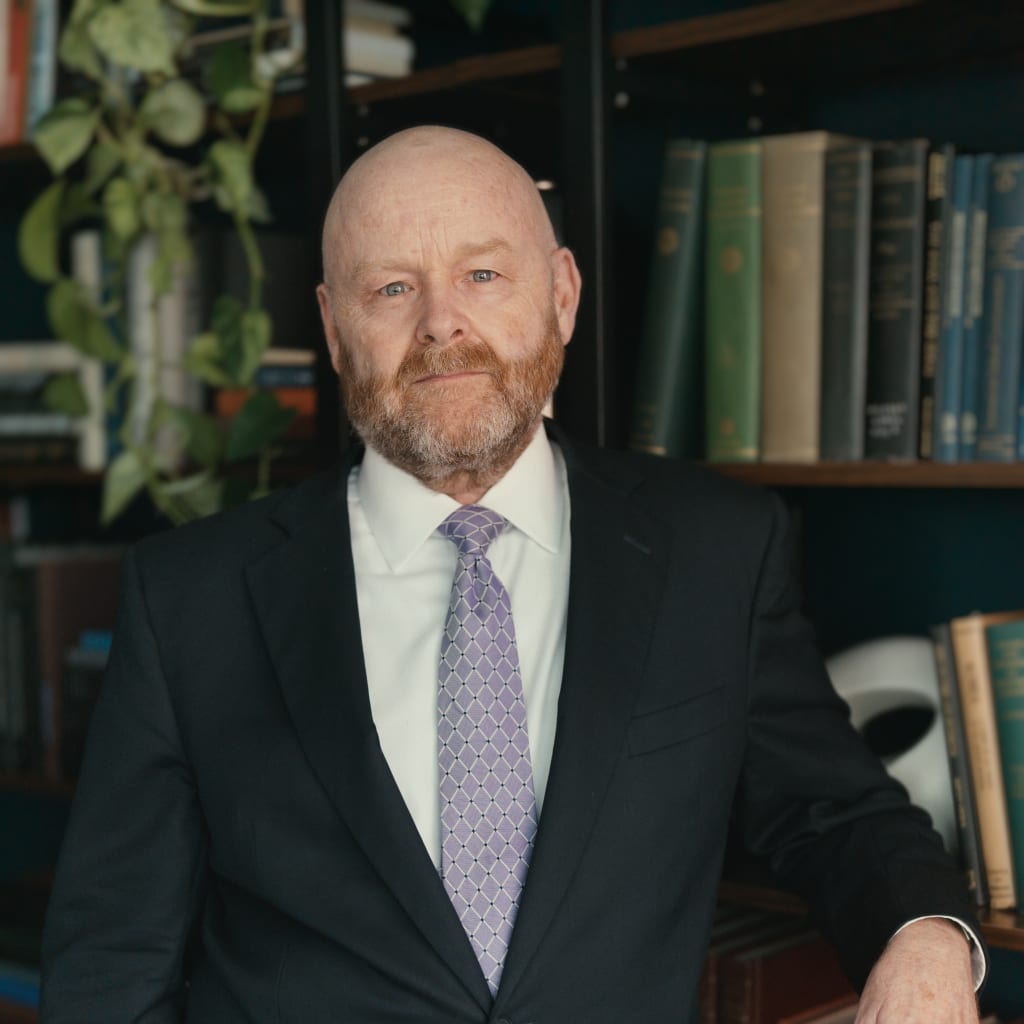 James M. LindsayCFR ExpertMary and David Boies Distinguished Senior Fellow in U.S. Foreign Policy
Guest
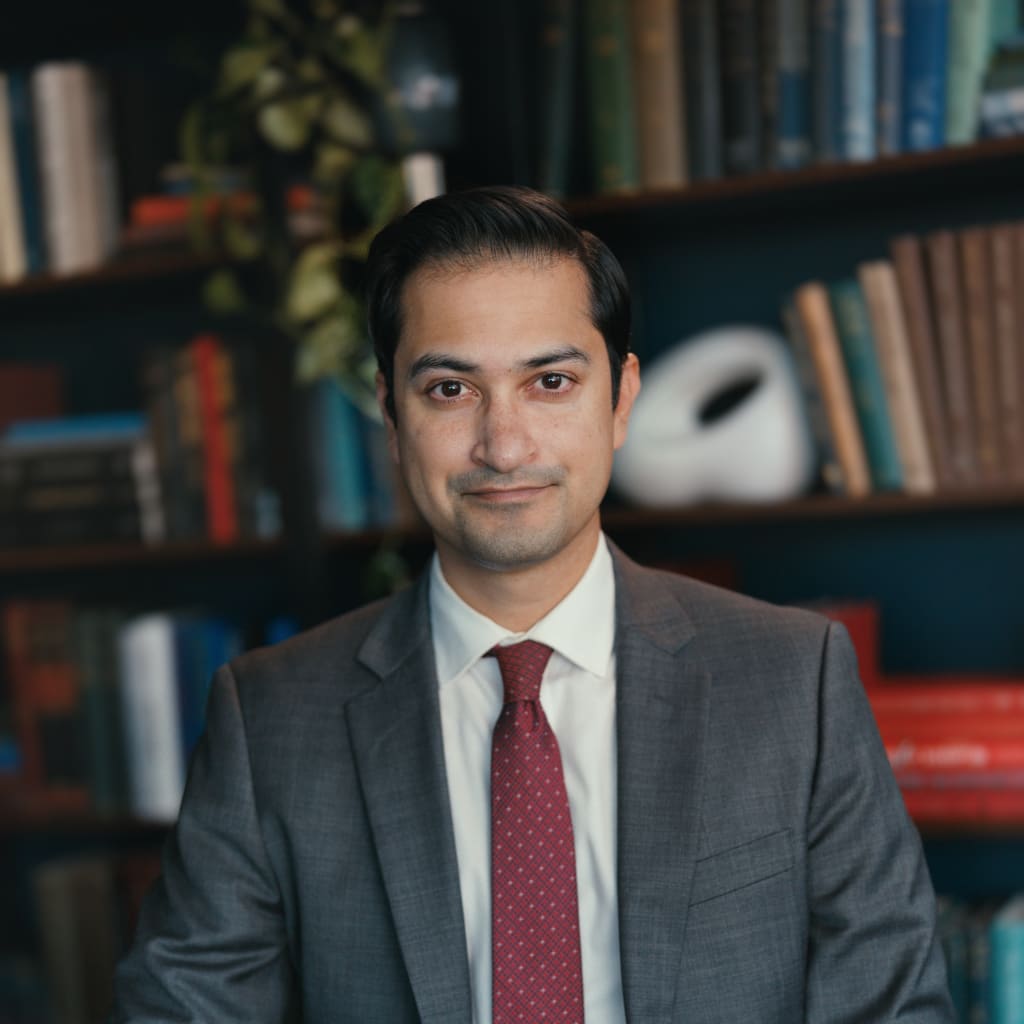 Rush DoshiCFR ExpertC.V. Starr Senior Fellow for Asia Studies and Director of the China Strategy Initiative
[Video: https://youtu.be/3HlZKB2X294]
Transcript
DOSHI:
The backdrop is Iran. The very fact that a U.S. president is going to China, while he’s also having his military blockaded, Chinese ships in the Strait of Hormuz, is a highly awkward and unusual situation.
LINDSAY:
President Donald Trump has just arrived in Beijing to meet with Chinese leader Xi Jinping. It is the first state visit by a sitting U.S. president since Trump traveled to China in November 2017. Trump began his second term by imposing steep tariffs on Chinese goods.
Beijing retaliated in kind, prompting a partial U.S. retreat. In recent months, the White House has shifted toward a strategy of what appears to be managed competition. What does Trump hope to achieve in his talks with Xi?
How will the war with Iran shape their conversation? And will the two superpowers stabilize their rivalry, or are U.S.-Chinese tensions destined to intensify? From the Council on Foreign Relations, welcome to the President’s Inbox.
I’m Jim Lindsay. I’m being joined today by Rush Doshi, C.V. Starr Senior Fellow for Asia Studies and Director of the China Strategy Initiative here at the Council on Foreign Relations. Rush, thank you very much for joining me.
Thanks, glad to be here. Rush, let’s begin with the big question. Trump and Xi are scheduled to meet in the next two days.
This is the first of what will be four meetings, we think, over the course of 2026.
DOSHI:
How important is this meeting? Well, it’s an important meeting in that any time the U.S. and Chinese leaders meet, it’s consequential. A lot could happen.
But if we’re being realistic, I don’t think we should hold our breath for major outcomes at this meeting. This meeting is coming at an unusual time. It’s coming at a time where there is a detente right now between the U.S. and China, an uneasy equilibrium. But in the backdrop is Iran. The very fact that a U.S. President is going to China while he’s also having his military blockade Chinese ships in the Strait of Hormuz is a highly awkward and unusual situation.
LINDSAY:
So let’s, again, we’ll jump right into Iran since you’ve served it up to me on a platter. Lay out for me what the Chinese view of the war in Iran is.
DOSHI:
Well, I think the Chinese are pretty impressed by U.S. military capability, not just in Iran, but also in Venezuela. There is no other country around the world that can project global military power like the United States, and certainly no other country can threaten choke points like the U.S. can around the world. However, at the same time, even though tactically we’ve been quite impressive, they see us strategically as making a massive mistake.
That once again, we have embroiled ourselves in a conflict in the Middle East that was unnecessary, that saps our strength, our diplomatic advantages, and takes up the most scarce commodity you have in government, which is top level time and attention, which is now focused on Iran. They basically see this as an opportunity for them and a mistake for the U.S. That being said, look, China has enormous vulnerabilities here too. They import a lot of oil to the Strait of Hormuz.
Half their oil imports come from Hormuz. But overall on net, they can weather that for a bit given their stockpiles. In the meantime, they’re interested in watching how the U.S. extricates itself from the situation.
LINDSAY:
Okay. So last week, the Chinese foreign minister hosted the Iranian foreign minister in Beijing. Is that significant in and of itself, that meeting?
DOSHI:
I think a lot of people thought that it was, but I’m not so sure that it was myself. I think in the end, we know that China and Iran are carrying out talks at all kinds of levels. They have a close relationship.
There is probably no Iranian drone program or missile program without Chinese support. And there’s a lot of Chinese oil imports that come from Iran. But what I think the more interesting question is, will be whether or not the Trump administration feels like they can put pressure on China that’ll matter on Iran.
They certainly are claiming that they can. Just on Sunday, we saw a senior administration official say that they plan to put pressure on China in this meeting.
LINDSAY:
What does that mean, put pressure on China in this meeting?
DOSHI:
I was just about to say what that means. Concretely, we don’t actually know. I mean, the reality is the U.S. did fight a trade war with China just last year. And I think depending on how you look at it, lost not just once, but twice. And that’s actually another factor for the summit. I’ll come back to Iran in just a but maybe a quick detour.
Last year, President Trump took tariffs to 145% on China. President Xi reached for his break glass tool. That was rare earth minerals and magnets.
Not a lot in terms of the value, but in terms of the need for the U.S. economy, enormous. More than a quarter of economic activity supported by those rare earth minerals and magnets. And when President Xi threatened not to sell them to us, when he threatened to control the export, we ultimately folded once in April and the second time in October.
We took the tariffs down and we basically paused a lot of actions. We call them competitive actions, but they’re really actions to protect American economic and technology interests in a variety of categories. We basically paused those.
And that’s what brought us to this current moment of detente. So if the pressure campaign didn’t really work there, the question is, will it work now over Iran? Is there anything we can credibly do?
The administration has tried a few things. First, they sanctioned a bunch of Chinese companies that were providing satellite imagery to Iran. They did one just this past Friday.
That’s right. And then they sanctioned a number of the teapot refiners. These are the small refiners that basically take Iranian oil and turn it into petroleum products.
And the Chinese invoked their anti-sanctions law, their anti-blocking statute, which they had been modernizing. It came out in 21. They’ve been working on it, making it stronger.
And then they used it just this month. But although publicly they said, hey, we’re going to use this law privately, they told their banks to stop lending to these teapot refiners.
LINDSAY:
So at the end of the day- So they told the teapot refiners, you continue refining. And they told their banks, don’t fund the teapot refineries that we just told to continue refining.
DOSHI:
Yeah, because if the banks provided those loans, they’d be exposed to secondary sanctions. And Secretary Rubio just said, when confronted with Chinese action, our secondary sanctions are real. We’re going to go follow through with these.
So there’s a bit of a game of chicken here, also a game of arbitrage. What you say in public and what you do privately, if you can keep some delta in the Chinese case, you can have your cake and eat it too. Okay.
LINDSAY:
So let’s, we’ve jumped into the weeds. Let’s actually sort of go back again. From the vantage point of the White House, have they indicated what to them would be a successful summit?
Has the administration put down any markers, any pledges of agreements that have already been done? And then I want to come back, because you’ve worked on these issues before. I’d like to talk a little bit about how summits themselves actually work.
DOSHI:
Well, on Sunday, we saw in this press briefing that the administration gave, they said, President Trump doesn’t just go for symbolism. He goes for deliverables for the American people. That being said, I think this meeting is much more about signaling stability in a contentious relationship.
Is there any president who goes to a summit meeting who doesn’t want deliverables? Every president will indicate privately or publicly that there should be some. I think in some cases, leaders do indicate that there’s not going to be a lot.
They try to set the expectations. So this press briefing gave the expectation that maybe we should expect more. But here’s the reality.
I think the Trump administration probably would settle for stability. They want a few things. They want on the economic side, maybe some Boeing purchases, some agricultural purchases, and then a new board of investment and a board of trade.
Is this the five Bs I keep hearing about?
LINDSAY:
Yeah, four or five. Boeing, beef, board of investment, board of trade, and soybeans.
DOSHI:
We dropped the soy. Yeah. Depending on what you count, it’s four or five.
Basically, the idea is we’ll get those on the economic side and that’ll be good for the American people. You could package that as a major win, even though quite frankly, what it looks like in practice is much less than that. The Chinese side probably looking for a bit more stability in their relationships.
They may be offering- What does that mean from the Chinese vantage point, stability in the relationship? Probably means a few concrete things. One is that we’re not going to take significant trade action that’s against their interest.
The second is we’re not going to take significant technology export controls that are against their interest, new ones. Maybe a third one is we’re not going to do a bunch of other things that might prevent them from exporting to us that are not trade actions and not export controls. You could call them import controls.
Saying, for example, certain categories of goods, if connected to the internet, can be banned, like cars. They’re going to say, please don’t do that. There’s a number of actions that the US should take, quite frankly, that are in its economic and technology interests and frankly are consistent with the principle of reciprocity, but that the Chinese don’t want us to take because it’ll be against their interest.
They’d like basically to continue exporting as much as they can to us and the rest of the world and to get through this tough period in their own economy.
LINDSAY:
Let me come back to the issue of Iran because I didn’t hear you say anything in the last few moments about what China might be prepared to do with Iran. I think many people are struck at the way Beijing has played Operation Epic Fury. There’s a lot of evidence that Chinese firms have continued to supply material to the Iranians and certainly the companies, Chinese companies that were sanctioned for providing satellite data have helped the Iranians, but we haven’t seen China try to assert itself as a diplomatic player to come in and mediate a peace between the two sides, even though clearly China and Iran have reasonably good relations. Why is that?
DOSHI:
Well, China and Pakistan came out with a list of what the principles might be for peace. China then pushed for that. They’ve quietly encouraged Iran not to attack the oil and gas infrastructure of neighboring Gulf countries because that’s bad for China.
It seems like they might’ve played some small role in bringing about the previous ceasefire.
LINDSAY:
But Wang Yi’s not getting on a plane and doing shuttle diplomacy a la Henry Kissinger- He’s not going to Tehran.
DOSHI:
Yeah, that’s true. We’re not seeing China play that role in part because they may not feel like they have as many cards to play as Henry Kissinger might’ve had. There’s not a lot that they can do to force the Iranians to the table, I think, and there’s not a lot that they can do to force the United States to do anything.
And so they have a role to play. They might be able to help on the side, but they’re probably not going to be able to push Iran all the way to give in to the United States on these points. So if the US position is one that Iran can’t accept, what role does China have?
I think it’s difficult to see how much they can do in the near term.
LINDSAY:
What about an alternative explanation, which is Beijing is quite happy to see the United States bogged down in a war with Iran because it is sapping American power. It is certainly hard power. Also, it’s soft power.
DOSHI:
That could be part of the explanation, but I think it’s also important to note that Beijing is concerned about the long-term implications of this conflict. They have about 1.2 to 1.4 million barrels in their stockpile. They import about 5 million from the Strait of Hormuz, or five and a half, of which is five and a half out of total of 17 in their consumption, 11 in their imports.
So what I’m saying is that basically half of their oil imports come from the Strait of Hormuz, and about a third of their total consumption. That’s a big problem for them. Now, they’ve got that stockpile.
That’ll buy them some time, but down the road, it’s not going to be enough. This continues for a long period. So they are content perhaps in the near term to see us twist in the wind, but in the medium to long term, they’d like to see a predictable solution to the Hormuz problem.
LINDSAY:
Where do you think Beijing comes out on freedom of navigation? Obviously, one potential outcome of the current circumstances in the Gulf is that tolls will be established to go through the Strait of Hormuz. It may have a different name for it, but that’s certainly one solution that has been proposed.
Of course, one of the knock-on effects is that other countries that sit aside major straits will say, we can do the same thing in a major objective American foreign policy, probably going back to the founding of the Republic, will be kicked to the side. Are the Chinese comfortable with the world in which, in essence, major international waterways are monetized?
DOSHI:
Well, I think they’re being careful not to be too vocal about what Iran is doing now because they don’t want to put Iran in a bad position. Probably their hope is that whatever structure might be negotiated on tolls is temporary or China’s exempted from it, and that therefore doesn’t affect them. But broadly on that principle, the reason why China loses disproportionately in a world where there is no more freedom of navigation, where effectively you pay tolls at choke points, is because they are dependent on the choke points.
They are the biggest goods economy when it comes to exporting. They’re reliant on those sea lines of communication for imports. A lot of those choke points are controlled by countries that aren’t on their team.
India has a lot of interest in the Malacca Strait. The Andaman Islands are right there. Sunda Strait’s not that far either.
The Lombok Strait’s controlled by Indonesia. China has some disputes with Indonesia.
LINDSAY:
Well, I’m told the Indonesians have already begun discussing, well, if this is going to be a precedent, we’re a country that has a lot of development needs, a toll would be a great way to raise funds for our investment.
DOSHI:
Not a lot goes through Lombok, but a lot of the VLCCs go through Lombok, for example. So, at the end of the day, look, this is bad for China. And one of the reasons it’s especially bad is if you don’t have a blue water navy that can project power and others decide they want to charge you, you can’t say anything about it.
You have no power in that situation other than to use a blue water navy, you may not be able to have the say in it that you want to have at an acceptable price. It’s an interesting point, Jim. I mean, there’s a reason Iran never ran this play earlier, because it was only willing to run it when its country had been bombed heavily and its military had been destroyed.
It was a break glass in case of emergency. Exactly. And so, actually, that’s an interesting point.
What I’ve been saying to folks is that the Trump administration has pushed two countries to use their break glass tools, right? China with rare earths and Iran with the Strait of Hormuz. And then once they’ve done it, it has not had a good answer.
And so, that is the danger of not planning multiple steps ahead. If you plan for the fact that they’re going to reach for the inevitable thing that they do have, maybe you could avoid this outcome. But if you escalate, they escalate, and then you deescalate, you essentially show you are a paper tiger.
LINDSAY:
Now, Rush, we jumped into the details and we sort of skipped over some of the headlines I wanted to get to, so we can sort of backtrack for a second. You worked in the Biden administration. Joe Biden did not go to Beijing.
Why was that?
DOSHI:
Well, the beginning of the administration, it was a challenging period. COVID made actually all kinds of bilateral diplomacy hard. The presidents did sit down for a summit, but it had to be virtual.
And that was a December meeting. The first in-person meeting that they did was on the sidelines of the G20, which was in Bali, Indonesia. And largely, it was easy to schedule because they were both going to be there.
Their next meeting after that was in San Francisco. I was directly involved in planning both of those summits. And the summit in San Francisco, again, a little bit easier because there was a good shot that she was going to be there.
The easiest place to meet world leaders, particularly where the stakes are high, where there’s going to be so much attention, is probably a summit because there you can have a business meeting if you don’t have deliverables, or you can have a bigger meeting. If you do, you can dial it up or dial it back. When you go to Beijing, or when she comes to Washington, which hasn’t happened in a very long time, the stakes are much higher because people expect more.
And so it’s a little bit more straightforward. And for both sides, this is the case, to do these meetings on the sidelines of major summits.
LINDSAY:
Okay. So the fact that Trump is going to Beijing, it’s going to be feted for two days. There’s a lot on the line, certainly for the Chinese.
My sense is they may be a bit worried about President Trump because he can be unpredictable in a way that other American presidents have. Do we have a sense of whether the Chinese are giving President Trump sort of the grade A state visit? Is this a C level state visit?
Any sense there?
DOSHI:
Well, the Chinese are very attuned to these questions. They’re very good at pageantry. Well, but they’re also very good at slights.
I mean, so what they’re going to be able to do is dial up and dial down the protocol to make a particular country get the signal. And you’ve seen that with some of the Western leaders who have visited. But the way I would put it is simple.
Nine years ago was the last time a US president visited Beijing for a summit. That was President Trump. That time, 2017, he was given pretty much incredible treatment.
I mean, people called it a state visit plus because the pageantry was so off the charts. And he was in fact awed by it as well. It didn’t stop him from being hilariously impolitic at various points.
We can get into that in a moment. But basically, he was shocked by it and really moved by it. This time around, there’s going to be some, but not nearly anything on that scale.
It’s a much different setup. And I think it’s for a few reasons. One, I don’t think the US side wanted a recreation of 2017, but also the world has changed.
China is more powerful. The relationship is not as good. And President Xi is more confident.
And so the reason for that kind of level of pageantry doesn’t exist the same way.
LINDSAY:
But wouldn’t the Chinese risk disappointing President Trump if they don’t put on a show as good or better than the show they had the last time?
DOSHI:
It’s possible. It’s possible also that they could put on a great show, an even better show, and that he would still launch a trade war against them, which is what happened in 2018, one year after their meeting. So I think that they’ve been sort of burned by that play.
They’re going to make him feel respected. Look, this is interesting. If you look at the schedule, the first day involves a banquet as well as a tour of some key Chinese sites.
The second day will involve sort of a lunch or working meeting. It’s a much more business-like day. But that first night will have the big banquet.
But this isn’t like the Forbidden City tour that he had in 2017, where they shut the whole place down, which they’ve done before, and let him walk the grounds with President Xi directly.
LINDSAY:
Why is that significant? Because I think many Americans have heard the term the Forbidden City, but they don’t really know what it means.
DOSHI:
Well, it’s a site of significance in China. It’s a very important site. And frankly, it’s pretty unusual to have an American leader be able to stroll that with a Chinese leader.
So it’s a show of face to President Trump. I will note, though, they had an interesting exchange when they were strolling alongside each other in 2017, where Trump and President Xi were discussing China, and particularly its ancient history. And I think President Xi said, we’re the oldest civilization.
And Trump says, yeah, that’s right, you are. Then he sort of stops and says, actually, no, I don’t think you are. I think the oldest civilization is Egypt, Aizy.
And you can kind of see President Xi’s confused for a second as the translator is explaining to him what just happened. And then he goes, well, yeah, maybe, but we’re the longest unbroken civilization, right? Yellow skin, black hair is how he puts it, something like that.
And the point here is that even President Trump, wowed as he was by the setting, can’t quite help himself.
LINDSAY:
Okay. So we’re going to have this meeting, and it’s going to last two days. The president is bringing with him a large delegation of business and financial leaders.
Help me understand why. Is that typical for these sort of trips?
DOSHI:
It used to be. It used to be common to have US presidents bring lots of CEOs to China. It hasn’t been the case in a very long time.
I think the last time actually was 2017, nine years ago. He’s bringing a smaller delegation than he’s brought to other locations. When he went to the Gulf, I think there’s something like 40 CEOs went with him.
This time, it may be a dozen. But they are very impressive. I mean, we have CEOs like Elon Musk, the heads of major financial firms on Wall Street, as well as American manufacturers like Boeing.
So we’re bringing a diversified group of industries alongside the president and semiconductor manufacturers as well, like Qualcomm. So pretty significant group. It’s interesting.
There’s been some reporting indicating that the Trump administration didn’t want them to have their own meetings with the Chinese separately from the large delegation. That may or may not be true, but it just suggests that in this era, the optics of all this matters a lot more. And I will say, you asked earlier, why didn’t President Biden go to China?
I mean, what’s interesting about this moment is President Trump can go to China, and generally speaking, his own party will not criticize him. But that Republican group would probably have been very critical if President Biden or anybody had ever gone to China. There was sort of a double standard here.
President Trump is allowed to do diplomacy with China, but if a Democratic president tried to do it, they’d be criticized as being weak on China. That’s not why we didn’t go, but it’s a factor that complicates all of the diplomacy a little bit.
LINDSAY:
So are the CEOs who are going with Trump to Beijing, will they be striking their own deals? Are they there merely to sort of show support for Trump?
DOSHI:
Help me understand what their particular role is. Well, I wish I had a good answer to this, because I’m not entirely sure. I mean, in previous settings, like in the Gulf, there was these big dinners and these big banquets.
It’s probably going to be the case that they’ll, of course, all be at this banquet the first night. But what specific role beyond that they have or whether they’re doing their own business, I can’t say.
LINDSAY:
Okay. So as we sort of think about this unfolding, we don’t know of any known deliverables. We know some of the topics they may talk about.
We’ve already mentioned discussions about Iran. Let’s talk a bit about technology. My sense is China’s very interested.
You’ve already alluded to the fact that the Trump administration has both put on some sanctions and controls on high-tech exports, rolled some off. What is sort of the state of play, particularly on AI and the chips needed for AI?
DOSHI:
Well, there’s been some speculation that the US side or the Chinese side together will come and decide we’re going to have more chips go from the US to China, basically. I should say, Jensen Huang of NVIDIA, NVIDIA makes the cutting edge chips, is supposed to be on this trip, I believe. He’s not on the delegation.
LINDSAY:
Oh, he’s not on the delegation.
DOSHI:
It’s actually quite interesting. Apparently, according to some sources, he was not invited. So I don’t know what that means.
But there was some indication that maybe there would be some US exports of chips to China. Maybe not the very best, maybe a version that was licensed recently, like the H20, but the Chinese hadn’t bought it. Maybe now they’ll actually buy it in some quantities.
But none of that is certain. As for the bigger, most advanced AI chips, and these are the ones that are relevant for training American models. And quite frankly, there’s a scarcity of these around the world.
Not even our own companies have enough. The possibility of them being exported does not seem as high anymore. So the administration has been interesting.
There’s been a lot of speculation about how and whether and when President Trump will cave. But in a few of these areas, the administration staff is signaling that he’s not going to. So what do you think he will do, or has his staff indicated what he will do in a positive sense?
Well, I think people have to acknowledge, and in private they often do, that the president will make his own decisions. And who knows what’ll happen in the room. But in the end, there’s only a handful of areas where I think the risks are high.
We haven’t talked about Taiwan yet, but that’s one. We’re going to. And the second one, of course, is going to be on technology policy and potentially AI.
And so those are the big questions where I think some are expecting the administration might offer up more at China’s request, and maybe not get as much in return.
LINDSAY:
On this issue of AI, there’s been some speculation that there may be some kind of agreement for the two sides to talk about AI. I’m not sure what they would talk about in terms of AI, but presumably about some of the downside risks that come with AI. Do you have a sense of where that dialogue stands, Rush?
DOSHI:
Yeah. Well, let me just give you a bit of context too. I mean, some are saying this will be the first time leaders talk AI between the US and China.
That’s not true. President Trump will, if he does it, it’s a good thing. But President Biden and President Xi also had a discussion on AI in 2023, and that led to a few things.
One was an AI dialogue, which was held in 2024, to go over some of the things about model safety. And the second was an agreement not to connect AI and nuclear command and control, which was agreed to largely in 2023, and then officially rolled out in 2024 when the final negotiations were complete. Those were good things.
But since then, there hasn’t been very much. And if anything, the Trump administration hasn’t shown a lot of interest in this issue with China. If that changes, that’s good.
There’s basically two things that people are speculating could happen. The first is another AI dialogue, which could be good. But I will note for you that last time when we had that AI dialogue, the Chinese didn’t exactly send the right participants, both in terms of their stature and in terms of their expertise.
So we didn’t feel like they took it as seriously. They sent essentially the typical diplomats you’d normally have to staff a North America discussion. The second is the possibility of an AI crisis communication channel or mechanism.
Who knows if that’s going to happen? There’s some reporting suggesting it might. And actually, the administration said something on Sunday suggesting that might be what is decided.
But you got to pick up the hotline if you’re going to have a hotline. That’s how you determine the value. And the Chinese never pick up the existing hotlines we currently have.
When one of their planes collided with our EP-3 back in 2001, they didn’t pick up the phone. And when their balloon overflew the US, they didn’t pick up the phone then either. So it could be good.
But I think the way the administration is couching it, and they did on Sunday, is that whatever comes out of this is a first step. And we’ll just see where it goes.
LINDSAY:
Roger, just a related question here. I know when you were working in the Biden administration, there were a number of efforts to get the Chinese to want to talk about possibility of arms control, to improve mil-to-mil communications. My sense was the Chinese weren’t interested.
Is there any indication they’re more interested now?
DOSHI:
Well, it’s interesting. The Chinese side basically pulled down all of the military diplomacy that existed between the two sides in 2022 after Speaker Pelosi went to Taiwan. And they didn’t restart it for almost a year and change.
It was basically 2023 November when they agreed to restart it. It’s a big gap between these two militaries that don’t have any meaningful communication. Right now, all of the communication we reestablished in 2023 is technically still open.
The Chinese haven’t pulled it down even during the trade war. And I think this tells us something about the Chinese thinking on crisis communication mechanisms. They see them not as substantively valuable in themselves.
They see them as leverage points and tools. They basically are willing to turn them on and turn them off or not pick up the phone as the political environment requires, not as the operational environment requires. And so basically, it’s a tool to manage us.
And when they’re unhappy, they pull it down. They tend to keep it in place with Republican presidents because they think maybe they’ll need it more or there’s not as much value in cutting it, where they think Democrats perhaps are going to be more upset when it’s cut and therefore it functions as leverage. But ultimately, what is going to be necessary for the Chinese to take this seriously is global pressure to say, hey, it’s not appropriate for these two countries who basically the entire world depends on economically for stability to not have these fundamental channels.
And I’ll just add this, Jim, as a final point. We have fewer and less mature channels between the US and China than we did between the US and the Soviet Union. And that is largely because China wants it that way.
LINDSAY:
Do you see any evidence, Rush, that countries would put that kind of pressure on Beijing? It would seem to me that there’s a real let somebody else put pressure on China sort of incentive for countries around the world. And something gets done.
DOSHI:
Yeah, we’re not really there yet. But I mean, if you go back to the Cold War, and you’re an expert on this history better than I am, you did see the non-aligned movement, sort of the Bandung coalition, push the superpowers to do certain things. And they did that somewhat successfully.
We’re not in that world right now. But another crisis in the strait, we very well might be.
LINDSAY:
OK, so we’ve talked about two of the three Ts I want to talk about. We talked about trade. We talked about technology.
Let’s talk about Taiwan. Does Taiwan or will Taiwan come up in this context? And I ask that because for the Chinese, Taiwan is a domestic matter.
They consider Taiwan to be part of China. And at least in public pronouncements, tell everybody else to butt out. So will Taiwan become a topic that Xi and Trump will discuss?
DOSHI:
Yeah, usually presidents discuss Taiwan. The Chinese will always bring it up. They can’t not bring it up most of the time.
Every summit I ever worked on for President Biden, every phone call that I was involved in, generally there was a Taiwan component. Not every phone call because some are very issue specific. But if it was a particularly long call, they might have a Taiwan point in there.
So the point is that the Chinese have to bring it up. What’s interesting, Jim, is they didn’t bring it up in October. So when President Trump and President Xi met Korea in October, Taiwan wasn’t a big part of the agenda.
It really wasn’t mentioned. They focused on economic and tech issues. I think this time the Chinese have been signaling for some period that Taiwan will be a big focus.
And let me just give you a few data points. First off, we saw in a number of call readouts, the American side would be about econ and tech issues, and the Chinese side would be five times longer and it’d be about Taiwan or Japan. In a second, we saw the Chinese foreign ministry basically use interesting language about Taiwan, that it was basically changing our position on Taiwan was a precondition to a more stable relationship with China.
So that was a very different kind of language. And I will say to you, Jim, that when I had the privilege of surveying previously, there were times where the Chinese would say to us ahead of summits, if you want progress on these kinds of issues, like military diplomacy or fentanyl or an AI dialogue, you have to change your Taiwan policy, which I always thought was a bit unwise on their part because it links Taiwan to other issues they may not want to see linked and down the road that could work to their disadvantage. In fact, it could work to their disadvantage with President Trump who might say, give me this or I’ll change my Taiwan policy in a way you won’t like. So all of that suggests it’s going to be a big issue.
And then of course, academics and think tankers from China are coming into town saying, we’re going to talk about this. Now, what does China want on Taiwan? That’s a different question.
LINDSAY:
Well, you asked the question. I’m going to ask you to answer that question. What do you think the Chinese want?
Because obviously, they would love for the United States to say, we have no interest in the fate of Taiwan, do as you wish. That is not under any sort of conceivable set of events going to be Washington’s position or Trump administration’s position. So when the officials in Beijing say we’d like to see a different Taiwan policy, what do they think they can realistically get?
DOSHI:
Well, they probably want a few things. The first is that they want us to change our declaratory policy. Normally, we say we oppose Taiwan independence.
We normally say we don’t support Taiwan independence. They want us to change that to oppose. So they want a firmer, more declarative statement.
So the reason we say we don’t support is because the idea is both sides of the strait can come together and figure out what it is they want to do. We don’t want to preclude any particular set of options, leave that to the people of both sides to decide. The Chinese want us to decide, we’re going to actively oppose this one particular option.
You could quibble about whether that’s a significant enough change, but the symbolic significance is what counts here. It’d be a change in 40 years of policy. It was certainly received as a major change in Taiwan, wouldn’t it?
It’d be a huge political moment in Taiwan. It’s hard to understate how significant politically that would be. Again, largely because of the symbolic significance.
The U.S. does have a position, which is we say we oppose unilateral changes to the status quo. And later we added, we oppose unilateral changes to the status quo from either side. Now what that means in practice is a unilateral change could be China invading Taiwan, a unilateral change could be Taiwan declaring independence.
So American language to a certain degree is pretty negative on the idea of Taiwan independence already, but the Chinese would like it to be firm. They might also want us to say something like we support unification, which again is something we don’t come out and say. We take no position on unification.
We don’t oppose it.
LINDSAY:
Well, many people in Taiwan would say the word, or many people in China would say the word is really reunification.
DOSHI:
That’s right. And as a trained former official, I say unification. But also- I just want to make clear there hasn’t been a change in how Beijing views.
That’s right. That’s right. Not in Beijing’s perspective.
So they’d ask for an administration official or the president to come out and say, we support unification, maybe even peaceful unification if we have to put a modifier. And then the third thing they might ask, and this has been less covered in the press, is the possibility that they will say, President Trump, could you please meet with the leader of the KMT, Chairwoman Cheng Li-wun, when she comes to DC potentially in June? Could you take a meeting with her?
She’s met me. I’d like you to meet her. That’ll be a good thing for stability.
We have to explain why that would be significant, why the KMT is significant. So there’s two major parties in Taiwan. There’s the DPP, which is in government, and tends to be more in favor of stressing Taiwan’s, you could argue, separateness from the mainland.
That doesn’t mean they support independence, but that means that they don’t want to be unifying with China anytime soon. The KMT is the party that fled China, that used to run what we now call China, and fled to Taiwan. And many of their members have very warm feelings towards China, and some of them support unification with China.
So the KMT in general is a party more in favor of strong cross-strait ties, and the DPP more skeptical. And the KMT is in the opposition right now, but they’ve got this chairwoman, who’s the most pro-China chairwoman probably ever, certainly in recent history.
LINDSAY:
She just visited Beijing, right?
DOSHI:
She was able to get an audience with President Xi. Now, it’s important- That was not an accident, I take it. Exactly right.
There was a quid pro quo involved in this as well. It seems like what the Chinese side was insisting is that the KMT hold firm on not allowing Taiwan’s special defense budget to move forward. Now, this special defense budget is Taiwan taking its own defense seriously, investing not only in its own defense, but also the indigenization of certain capabilities that Ukraine has taught us are really important, like drones and missiles.
Tens of billions of dollars were going to be spent on being able to fully indigenize this within Taiwan, so Taiwan could defend itself. It’s the most credible signal of Taiwan’s seriousness you could make, and the KMT has largely blocked that portion. Part of it has gone forward, but not that part.
And we think that was largely at the request of Beijing. So, if I were advising President Trump, I would say, Mr. President, do not meet with the chair of the KMT unless she agrees to allow the rest of the special budget to go forward. I think if Beijing can impose that kind of conditionality, it would be unwise for the US president not to do so.
But President Xi might make the appeal, or it may be made at the staff level, and that would be the third piece of the request, I think, that you could see from Beijing. There is maybe a fourth piece, which is that China might ask for the US side to pre-negotiate or pre-determine what arms are going to be sold to Taiwan, that essentially, we give our list to Beijing, they cross out a few things, they put some check marks here and there, and we work it out in that fashion. That would be contrary to 40 years of US policy, where we have said consistently that we don’t allow Beijing to determine the quantity and quality of the arms that we provide Taiwan, and particularly, we tie the quantity and quality to the question of whether there’s a threat from the mainland.
That’s our position. It has been since the 1980s. So, the more the threat increases, the more logically we should be able to provide Taiwan.
If the threat goes away or China rules out the use of force, then the story is different. All four of these would be pretty big policy moves, and all four of them, we know the Chinese side would like to see. Here’s the thing.
The administration is indicating they won’t do it. At the top level, senior administration officials are saying no change is coming.
LINDSAY:
So, let me ask you, Rush, this may be an unfair question, but certainly for people watching the summit, what, in your view, would be the sort of things that would not mark this summit as being more than just a way station to another summit meeting?
DOSHI:
Well, there are a few things that are interesting to me. Normally, a deliverable isn’t a process. Normally, a deliverable is like a thing.
So, we’ll have some phase one trade agreement on goods, but I think what we’re likely to have here is deliverables that are basically processes. So, the board of trade and the board of investment will be mechanisms for working out some challenging issues, and we’ll see how well they go. The anathema is interesting.
The board of trade itself suggests that the framework for our relationship with China when it comes to the economic piece isn’t completely market determined. It’s instead going to be politically determined, right? Managed trade, as Bob Lighthizer or as Chris McGuire would put it, is sort of back on the agenda.
And I think it’s interesting if the Chinese side agrees to a board of trade, even if the board of trade accomplishes nothing, we’ve sort of gotten rid of the lie that we have truly free trade with China. We’re moving more to the direction of managed trade. The second thing is the board of investment.
Here, this is a question of US investment in China, but there’s already investment in China. The big question is Chinese investment in the US, particularly in US factories that could kickstart re-industrialization. And there’s a lot of reasons to be skeptical that Chinese investment will do those things, right?
The literature on foreign direct investment in political economy and development tells us that a lot matters on the nature of that investment, the localization parameters that the host country has. You don’t just get investment and get rich, right? There’s many steps in the middle.
Will the US govern Chinese investment the right way? We don’t know, but that’s why the board of investment question is so interesting, important, and live. And then frankly, this AI dialogue idea is good.
I mean, there should be discussion of AI, particularly given the Mythos moment, the possibility, as Anthropic showed us with the model Mythos, that there could be a master key to our cyber systems that AI could unlock. The fact that that’s possible is terrifying. And there’s many other terrifying things.
LINDSAY:
Well, I would assume Beijing has a decided interest in trying to get a copy of Mythos, see if it can actually pick that lock.
DOSHI:
I’m sure that Beijing would love to have the most advanced models. And there’s a reason we don’t sell them the most advanced chips, so that they can’t have them before we do. And the fact that we have this advantage means we might have six to eight months to fix some of our systems before China gets the same capability.
That’s why we don’t sell them the best chips. Not because we don’t like them, but there’s a finite number of chips. American companies need them too.
And the Chinese are also preparing to fight a war against us. So maybe they shouldn’t get the first cut. It’s not that complex.
So ultimately, these kinds of considerations should be discussed in some way between these two superpowers. It’s just common sense. And those are some of the things I’m looking to see, quite frankly, at the summit.
I think on the larger economic story, there’s not going to be a big structural breakthrough. We’re not going to get the Chinese to say, you know, you’re right. We should stop exporting so many goods, and we should import more.
It’s not going to happen. And on Taiwan, I don’t think you’re going to see much in terms of agreement. You might get both sides saying, we’re not going to rock the boat.
That’s something.
LINDSAY:
Okay. On that note, I’ll close up this episode of The President’s Inbox. My guest has been Rush Doshi, C.V. Starr Senior Fellow for Asia Studies here at the Council and Director of the Council’s China Strategy Initiative. Rush, as always, a delight to chat. Thank you, Jim. Today’s episode was produced by Molly McAnany with Director of Video Jeremy Sherlick, Senior Video Producer Grace Raver, and Director of Podcasting Gabrielle Sierra.
Our recording engineer was Jorge Flores.
This transcript was generated using AI and may contain errors or inaccuracies.
We Discuss:
- Whether the Trump-Xi summit will represent continuity or a new phase in the U.S.-China relationship.
- How China assesses the military and economic balance of power with the United States.
- What last year’s trade war revealed and how it produced the current period of managed competition.
- As Rush Doshi puts it: “I don’t think there’s going to be a large structural breakthrough.”
- What deliverables the Trump administration is seeking from the summit, and why negotiations are focused on process mechanisms and stability.
- How China has responded to the U.S.-Iran war and why it has stayed on the sidelines despite having clear strategic interests.
- Why China welcomes U.S. entanglement in foreign conflicts but fears their effects on global trade and resource access.
- Why China is more exposed than the United States freedom of navigation threats and naval chokepoints.
- Why President Biden never traveled to Beijing, and how China is framing Trump’s visit.
- Why American CEOs are joining Trump’s trip, and what role they play in the summit.
- Whether the U.S. and China will negotiate agreements on artificial intelligence and its role in great power competition.
- How China has treated seemingly mutually-beneficial crisis communication channels as negotiation ploys in return for U.S. concessions.
- Whether Taiwan will be on the agenda, what concessions China is seeking, and how U.S. policy shifts could affect internal Taiwanese politics on unification.
- How a so-called Board of Trade and other bilateral mechanisms could formalize a lasting state of managed trade between the two countries
Mentioned on the Episode:
“President Xi Jinping Speaks with U.S. President Donald J. Trump on the Phone” Chinese Ministry of Foreign Affairs
Opinions expressed on The President’s Inbox are solely those of the host or guests, not of CFR, which takes no institutional positions on matters of policy.
Associate Producer
- Antonio Antonelli
Producer
- Producer, Podcasts
Supervising Producer
- Director of Video
Editorial Director
- Director, Podcasting
Researcher
- Research Associate, U.S. Foreign Policy
More Episodes
 33:42Podcast
 36:05Podcast
 41:07Podcast
 39:26Podcast
 35:04Podcast
 31:46Podcast