America’s 250th Birthday Reveals a Fragile Bargain Between Democracy and Markets
America’s 250th birthday is the talk of the nation. But the more important story might be what the milestone reveals about the fragile bargain between democracy and markets, and whether the republic can survive its own cultural divisions.
Published
Host
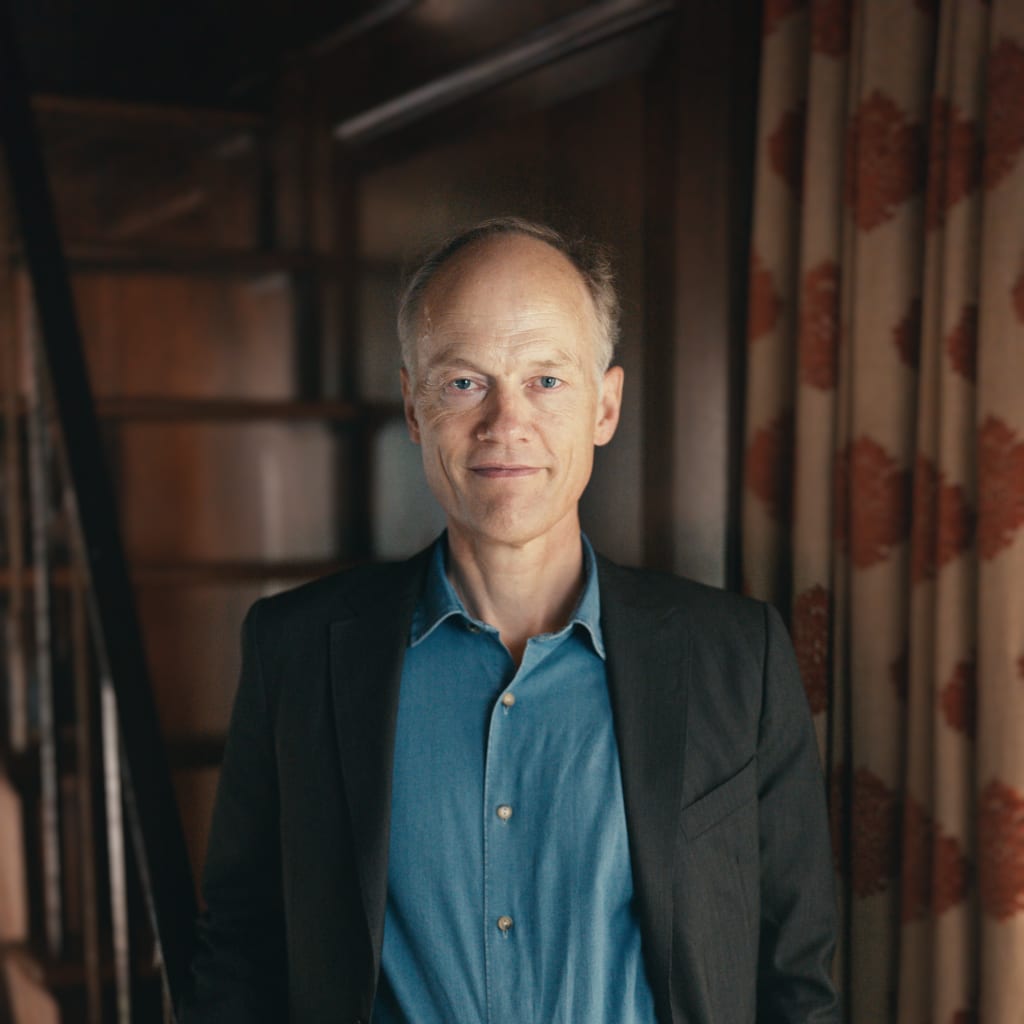 Sebastian MallabyCFR ExpertPaul A. Volcker Senior Fellow for International Economics
Guest
- Martin WolfChief Economics Commentator, The Financial Times
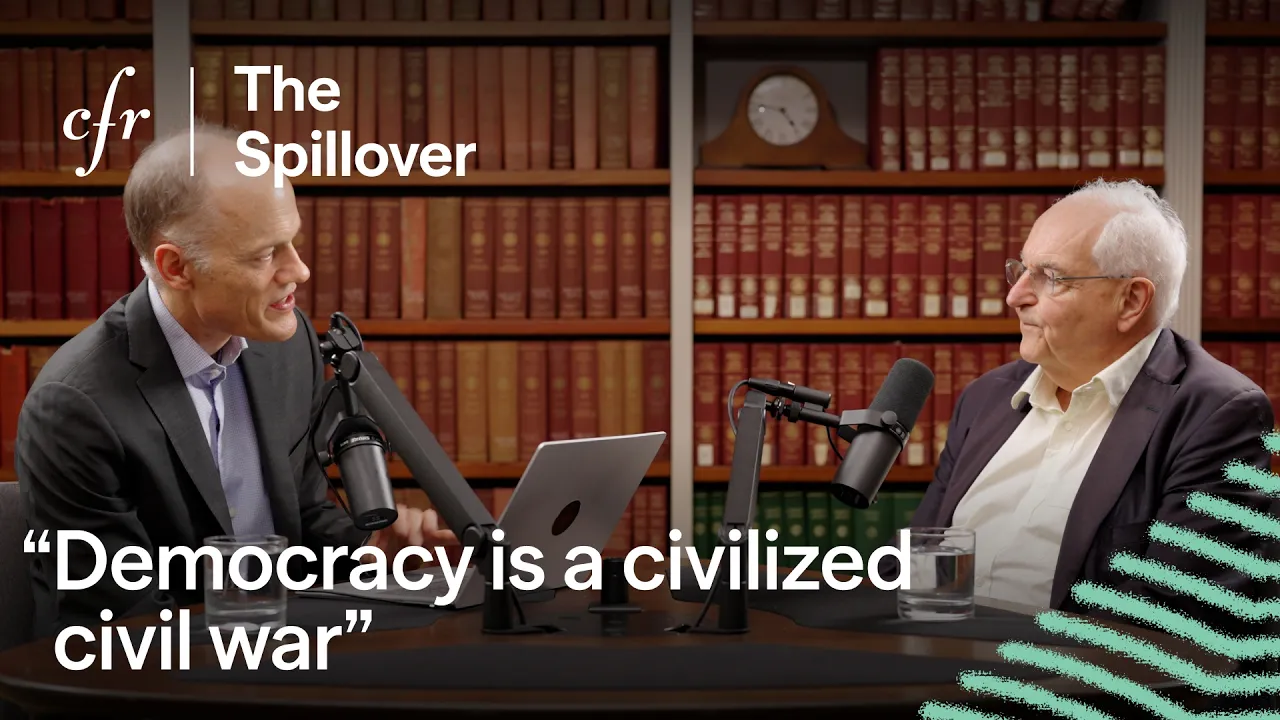
[Video: https://youtu.be/S00ElmIVL50]
Transcript
This transcript was generated using AI and may contain errors.
MALLABY:
Today on The Spillover, we’re going to try something a little bit different. My co-host, Rebecca Patterson, is away traveling. Instead, I’m here with Martin Wolf, the chief economics commentator from the Financial Times, and I think it’s fair to say one of the preeminent commentators of our era.
We’re going to try something a little bit ambitious. We’re going to try to compare the arc of Martin Wolf’s thought with the grander arc of the American Republic. And before you snigger, let me just try the following.
The American Republic was and remains the grandest experiment in fusing a free market with free people. And today, a lot of Martin’s writing is devoted to the proposition that this fusion is coming apart at the seams. I’m Sebastian Mallaby.
Welcome to The Spillover. Martin, thank you for being with me.
WOLF:
It’s a pleasure.
MALLABY:
So there are many ways we could take this conversation. I think back over my professional career, whether it’s the rise of globalization, the period of non-inflationary growth, the great financial crisis, the euro crisis, how we navigated COVID and all these episodes, you were writing about it. You’re one of the great guides to how to think about it.
But I want at least to attempt to live up to the conceit which I advertised at the top. We’re both British, let’s admit that first. We both sound British, but we’ve both spent a lot our professional lives thinking about the U.S. You lived in the U.S. for some time?
WOLF:
I lived here for 10 years.
MALLABY:
10 years, okay. I lived here for 18. I raised my kids here.
Two of them are firmly American and have stayed here. And even though I moved back to London in 2014, I’ve been here just about every month since then. It’s not really about how long one spends in the country.
It’s more what strikes me is that the American experiment features so centrally in your thinking. In the Crisis of Democratic Capitalism, the most recent of your books, you take your rallying cry from Abraham Lincoln’s Gettysburg Address. We must resolve that government of the people, by the people, for the people, shall not perish from the earth.
And of course, you are European. You also cite European thinkers, but many of these thinkers, like Karl Polanyi, like Friedrich Hayek, spent chunks of their professional lives in the United States. So I think it’s fair to say you’re an American thinker.
WOLF:
Well, I think that isn’t right, except that in some sense we all are, if we’re Western at all, because the U.S. experiment and its extraordinary success politically, but we have to be clear also economically, it is such a vast power and has been a dominant power for so long. It shaped our world and therefore it shaped the way we think about the world. We couldn’t avoid it.
So many of the institutions we are familiar with since the Second World War, for example, were created by the Americans. The way of thinking about the world was their way of thinking. It was very different from the British way of thinking.
We can discuss that, much more institutionalized, for example. So I would say we are part of the American world, but it is important to remember that the American world itself, as developed in the 17th, 18th and 19th centuries, was part of the European world. They were profoundly influenced, for instance, by Locke, John Locke, and other great European and particularly British thinkers.
MALLABY:
Okay. So with that as a preface, I’d like to explore maybe one first tension between your own thinking and how one might conceive of the American experiment. There’s a certain amount of optimism in the founding of America.
There’s that famous story about Benjamin Franklin, who is asked after the Constitution has been finalized, what have we got, a republic or a monarchy? And his famous response was a republic, if you can keep it. In other words, without some optimism about the human capacity to live up to the creation of this republic, the United States might not have been founded.
And to this day, America is often described as an optimistic country. But you yourself say in your most recent book, you’re not an optimist. You say, in fact, quote, my biggest mistakes have come from over-optimism, most recently over the wisdom of finance and the good sense of electorates.
You’ve also written, and these quotes also come from the Crisis of Democratic Capitalism, Homo sapiens is prone to orgies of stupidity, brutality and destruction. So you’re a pessimist while America is optimistic.
WOLF:
Well, it’s an interesting way of thinking about it. First of all, the description I gave there of what the human history is like is not only not inaccurate, because anyone who knows anything about just what happened in the 20th century knows that. And also, as I’ve said, I think in that book in the preface, it’s sort of personal since that in my case, of course, there are plenty of Americans for whom that’s true to many refugees.
But in my case, my parents were refugees from Hitler. They managed to get out from, in my mother’s case, the Netherlands, in my father’s case, Austria in time. But they had very large extended families.
These people did not get out and they were massacred down to everybody except one young woman. And that was part of what Timothy Snyder calls the Bloodlands phenomenon, but actually that radiates across all of Europe. So I say I exist because my mother’s father and my father were pessimists, or as I will put it, realists.
And they realized that things could absolutely go to hell. And they did immensely. And of course, America played an immense role, I would say the decisive role in saving us from it.
But I was just thinking about your idea that the Americans are optimistic, optimists. And I’m thinking of the Founding Fathers. Obviously, the project to create a republic is in some sense an optimistic project, because republics are rare in human history.
And republics of the scale that they envisage for the United States, well, there was really only one president and it wasn’t founded at that. It was founded as a city state, namely Rome. And the republic died, which is part of my writing.
So they knew they were doing something extraordinary. And it came out of the fact that they decided that the rule by an arbitrary despot, King George III, our King George III, was intolerable. And they set out to create a state which liberated them from that.
And that, of course, immediately demanded this creation of political institutions of all kinds, which would manage the problem of having effective power without being consumed by it, which in some sense is the core of political philosophy. But if you look at them, particularly Madison, they were pretty worried about this stuff. They were worried about the tyranny of the majority.
They were also worried very, very clear. If you look at the Federalist Paper on the Electoral College and the presidency, yes, you needed an energetic executive, this is Hamilton, but it could get too energetic and you needed the right people. And you couldn’t be sure you would get the right people.
In other words, they were very aware that this was quite fragile. And of course, at the beginning, and this is where Lincoln diverged from them, they didn’t really, the Founding Fathers, the central gravity of the Founding Fathers clearly wasn’t democratic. They found once they created the republic that it had a dynamic of its own towards enlarging the suffrage, but they always knew there might be problems with that.
So I would say Lincoln is a product of the republic and a believer in the republic. And I believe in his vision, but it wasn’t the only vision. And some of it was quite defensive, conservative, and concerned about what they created.
And I think that wonderful quote from that brilliant man, genius, Benjamin Franklin about, well, maybe it’s not going to work. It’s a great ambition that also gets this sense of, well, it’s a, it’s a, we’ve done something really brave. Maybe we’ve been too brave.
MALLABY:
So it’s an optimism, but sort of a guided and it’s a rather realistic.
WOLF:
I mean, one of the reasons I think the republic has done so well is that its institutions were created on the assumption, very clear to the separation of powers and all the rest of it, that nobody could be really trusted.
MALLABY:
Okay. But it’s done well so far, but you also write, and I think this is a quote from your book, our modern capitalist dynamics may finally have overwhelmed the institutional dams, the founders built to hold back tribalism. So you’re suggesting that the equilibrium designed by all those people who are just quoting Madison and so forth, all very well for 250 years, but don’t bet on the next few.
WOLF:
Well, there’s always a tension and I put it more in a broader context. And I think the Founding Fathers were very clear about this, that you, you set up an institutional dynamic, which was about constraining power and legitimizing. That’s essentially the political problem of, of a Republican government.
But there are, there’s a possibility of the mad passions of crowds. There’s a possibility of cynical demagogues. They were very educated.
They would have known what Plato wrote about exactly that. They would have been aware of the dangers of corruption and they would have been aware of the possible emergence of a tyrant because the history that they knew about was not only George the third, but also very much the civil war in, in England, in which had ended up with the English very properly executing their King. So they were very realistic about this.
And I think by and large, it’s worked very well because the balance of power, the balance of forces between the various social elements, regions, uh, were contained within a set of values, a set of principles, which of which Lincoln was a great exemplar, which were insufficient balance to keep it. And it’s not just about institutions in my view. And I feel when I look at America today, don’t quite care.
People remember that.
MALLABY:
I mean, when you talk about the range and the geography, the diversity of the people, I mean, that brings up something else I wanted to ask you about, because clearly at the beginning of the founding, there was a very narrow definition of who was the citizen and that was properly expanded. But then it’s been expanded further by, you know, the melting pot phenomenon, the immigration and so forth. Um, and so as this diversity has deepened and grown, um, you know, uh, there’s a case, um, which you seem to be at least open to, um, that it’s just becomes too much that it becomes something that is hard to pull off.
You write humans naturally separate people into those who belong to their tribe and outsiders. They slaughter the latter gleefully. They have always done so.
WOLF:
Yes. Um, I took this perspective very much from, uh, very famous book by Jared Diamond, uh, Guns, Germs, and Steel in which he had this sentence. I’m sure I’m mistranslating.
We basically said, um, when you say mistranslate, it’s quite funny because it was quite a dense book. He wrote, well, this was, uh, it’s a very dense book. Well, actually I’ve played much sense.
It’s rather nice book. But anyway, what he said was, uh, he was talking about genocide and he would say, that’s something we do. And he gave quite a lot of examples.
So I don’t think one can be a Jew moderately intelligent and know anything about history to not to realize that things can get very, very dark. But if you take your starting point, and this is where it all gets very interesting. When the U.S. was created, the suffrage was incredibly narrow.
Just a few percent of the population were actually voters because there were obviously only men. And there was a property franchise, which was really quite narrow as there was in Britain at the time everywhere. And, uh, and of course slaves obviously.
So it was a really narrow Republic. Um, and not quite a number of the Republics that are very famous, um, Athenian democracy were also pretty narrow. And the point I make in, in my book is that in the late 19th and early 20th century, though, Lincoln talked about this.
And of course the abolition of slavery was our big step in that direction, but it’s actually only in the early part of the 20th century. So a hundred years ago that for the first time in the history of the world, we started getting a lot of States in which every adult was a voter. Universal suffrage democracy was a revolution.
Now it is absolutely clear that if you told Jefferson and Madison and Hamilton, that’s where this would end up. You would have, they would have surely immediately said, that’s mad. Uh, I’m British thinkers at that time would have thought the same way.
And they important to remember that the United States, as it evolves to the democracy I talk about, which is way beyond just an ordinary Republic as important to sinker and was not where they expected to end up. And I think part of the tension that has emerged is that when you start giving the suffrage to everybody, that’s more complications because of ethnic diversity, partly to do with slavery, partly to do with immigration. But a part of it is my God, those people have the vote too.
Well, then you can start getting some really pretty big tensions. And we are, I think part of what we’re seeing now is that.
MALLABY:
Right. Right. And the experiment, you know, seem to be held together.
I don’t know. Um, into the global financial crisis or some inflection point like that.
WOLF:
Um, and, uh, I would say they had several crises just for the, uh, the late 19th century, the Robber Baron period was a crisis for the system. And the reaction was the demand for antitrust and all the rest was a demand for democratic response to the emergence of an enormously powerful plutocracy. Then of course, the great depression was a huge crisis.
And they, the, the, uh, as before that, of course, had been, um, the issue of slavery, the great depression, again, they responded, um, uh, the financial crisis, I argue was not as big a crisis, but a lot of other things were going on. All the great democracies in the U.S. has been accomplished. The most important, um, have had to overcome crises on the way.
And I would say we’re in another one. I think it’s quite obvious. We’re in another one in the Trump era.
And I’m not saying it’s doomed, but every one of these crises has to be managed. And if you fail, you go back over in all probability to what seems, if you look at it to be the natural state of, of complex human societies, which is monarchy in one form or another, that’s how most of them have been. And that they would have understood because they knew that even though they would probably have thought the Americans went far too much towards the democratic side.
MALLABY:
Well, Lincoln would not have, let me read another quote, which I think kind of crystallizes the tension that we’re talking about, which manifests, as you say, through different crises over history, you write democratic politics and national while market economics are global democratic politics are based on the egalitarian idea of one person, one vote while market economics is founded on the inegalitarian idea that successful competitors reap rewards. So there’s this tension.
And I think what you’re saying is this tension is rising to a novel level of intensity at the moment.
WOLF:
Yes, I think, um, well, I started out with the fact that, uh, so universal suffrage democracy is new, uh, in just about 35 years ago when the Soviet Union fell, I am many other people. I’m not the only one thought, well, this idea of universal suffrage, liberal democracy has won. You’ve permitted yourself a moment of optimism.
Yes. Terrible mistake. As I said, and that’s when I’m most wrong.
And, uh, and, uh, but it turned out that, um, that was far too optimistic in the sense that, um, uh, tensions arose within the system and failures arose within the system. And one of the signs of that, which was in, in the book is that we are seeing when you just looked at the polling, the very significant proportion of the populations in countries like this, not only this country, we’re not at all. Sure.
They like democracy very much. They thought it was raped. It was dominated by plutocratic elites.
They, the people who, uh, ran the government were in cahoots with crooks and, uh, different sorts of that foreigners were being invited in without there being asked about it, that basically they’d lost control. That is what we said in the Brexit referendum, which was our version of this. And they felt very strongly that the system was not operating in their favor.
They were very angry. It was inchoate, but you were beginning to see it emerge in politics. And to the, the trigger for my writing, my book was the emergence of Trump as, uh, the, um, the leader of this discontent.
I regarded that as pro profoundly significant as I did Brexit, but less important, obviously Brexit than here. And that was telling you there was really enormous dissatisfaction with the system, not just with, uh, you know, particular policies. And they were looking for a very, people were looking for something very, very different.
What it was, was not clear. Obviously Trump has never been quite clear, but it was a, it was a revolution or counter revolution. And then as you look more and more in the movement that was emerging, you began to see this is actually a counter revolutionary movement.
It’s an anti in some, it’s an anti enlightenment movement and, uh, and shown in many different ways. And the result is ineluctably. And that’s why I find what’s happening now.
Not so surprising. It’s easier, a reaction against the Republic, which was a quintessentially, um, enlightenment project. And that comes back to our Founding Fathers who were enlightenment figures.
Nobody could be more so than Jefferson.
MALLABY:
I want to try a slightly different tack now, which is to think about the ramifications of this pressure inside the U.S. for the rest of the world. Um, and I mean, there’s an argument that says America’s mistake is to attempt to be liberal and tolerant internally and doesn’t always work, but that’s the aspiration. But then to assert those values to aggressively abroad such that that becomes its own form of intolerance, right?
You’re not tolerating other people’s systems. Uh, and there’s a sort of excessively rigid demand that others conform with America’s views of domestic, the right domestic political order and an overestimation of American power to enforce compliance by other actors. So you get Iraq, you get Afghanistan, you get Iran.
Now you get the overplaying in my view of the hand with China, um, repeatedly right back to Bill Clinton being elected in the 1990s and thinking he could change Chinese human rights policy by linking it to most favorite nation status and trade. Um, so I don’t know. What do you think about this idea that what you aspire to do domestically ought not to guide you quite as much in your foreign policy should be more of a realist externally.
WOLF:
I think about the same problem in a slightly different way, but it’s an interesting way of thinking about it. First of all, I, I would take the view that it is a striking feature of the underlying ideas of the founders and as they developed into a democratic culture alongside the fundamental assumptions about the constitution, uh, power, the constraints on power from the rule of law and all that other stuff, which really goes back into, um, the great debates about liberalism in actually the principally in this, let’s say, focus on the 17th century. So there’s that strand and that is an expression. Those are pretty universal ideas that you could say, um, well, and British often did come close to having quite similar ideas evolve, uh, to say, well, we’re the only people who can do it.
You know, everybody else is inferior. They can’t do these. I always get the best ideas, but nobody else can.
But then when you open up your country as they consciously decided to do, as you pointed out to immigrants from all over the world, they were sort of saying anybody can be an American, which is like saying anybody can share these values and ideas. And that’s what we’re trying to do domestically. I mean, it is a very important point about the United States history, which is part of the reaction we’re now seeing is against that.
That actually is this idea. It’s not just for Anglo-Saxons, it’s for anybody who accepts them. And that was one of the great attractions.
Now, if you believe that at home, you believe those are the good universal values, the right way to govern. Well, it’s a natural thing. And it probably goes with, there’s a bit of Christian messianism in here too.
It applies to everybody. This is the good way to do it. And it seems to sort of a natural extension.
But this is where it gets interesting. You’re also a great power. And this republic emerged, really planned, but it emerges the world’s greatest power.
And it was already the world’s greatest power by 1900, but it really established itself in 1940. So it had to decide, well, how do we relate who we think we are and what we think is important to, we are being now the world’s dominant power and we want to rearrange the world. And so you have some people, Kissinger is the most important exponent, who basically said, well, forget all that stuff.
Let’s pretend we’re Metternich’s Austria. And which would be much better, he would say, than trying to make everybody free and liberated. Because we know what we’re doing instead of being quite confused.
So were we fighting the Vietnam War because it was part of a preserving our fear of interests against the Russians? Or were we fighting it so that we could liberate the Vietnamese from beastly communism? Or were we doing both?
And which matter? And we never worked this out, did we? And I would agree with that.
So it seems to me that if you are a superpower based on those sorts of values, but you are a superpower, you have a structural problem of, as it were, geopolitical identity. And if you have that problem, you’re going to look very confused and confusing because people outside will say, one, you’re hypocrites. And you often are.
And two, well, you’re not actually the friendly beneficent power you say you are. You’re a brutal thugs. And I don’t think America’s ever solved that problem.
MALLABY:
Yeah, yeah. I can see what you mean that in some sense, the founding had this internal contradiction that the Declaration of Independence said, we hold these truths to be self-evident. And yet George Washington said, let’s avoid foreign entanglements.
And you could say that Kissinger, as the kind of later incarnation of that, not quite the same isolationist strand, but a sort of realpolitik, unsentimental strand.
WOLF:
He would say you couldn’t, once you become the America of the 1940s and 50s, you couldn’t retreat from the world. You were too big a factor. But at the same time, you certainly shouldn’t want to make the world in your image because it’s impossible.
So you’ll have to play the game. And of course, with much more power than the Austrian Empire played. And that didn’t really fit very well because there’s a huge strand in America on the right and the left, though different, which says, well, if we’re going to involve in the world, we should make it just and right and free market and democratic or whatever it may be.
There was tensions here too, because the Americans didn’t agree on what their own revolution meant. That’s obviously important because these things aren’t simple. But there is a tension here.
The British, fascinating. I’ve always been fascinated by this. They separated very neatly in their own minds.
Yes, we’ve got this nice liberal state in England and Britain. And for the rest, we’re running an empire. Who cares what these people think?
But the Americans found the tension much deeper. And by the way, one should say as a result of this, they had some stupendous successes. I mean, post-war Germany and post-war Japan are surely extraordinary successes for American power and reconstruction and internalization of American values, which is one of the reasons the Japanese and Germans are so shocked with what’s going on now.
Because they say, but you taught us this was wrong.
MALLABY:
I think, I mean, so it worked for a while. It worked for quite a long while, you know, 1945 to whatever, you know, perhaps the overreach in Iraq.
WOLF:
Well, it had ups and downs. Vietnam was a pretty big disaster.
MALLABY:
But recently it seems that there is this combination of overreach to wit Iran, but also sort of overreach of like the overestimation of the ability to ram your own ideas through other people’s objections. And therefore also an under-investment in the global commons, because you think you don’t need it. You think you can just, without there being institutions, you can just kind of have your way.
And so this little action on climate is, you know, the whole kind of Kyoto process never really got American buy-in. There’s been recently a retreat from public health commitments. The global trade system, which you know a lot about, is in pretty much tatters.
And what’s gone wrong? There’s been a sort of shift from pragmatic and bold reach to sort of this mixture of overreach and negligence. What’s happened?
WOLF:
Well, I have, this is, I have a view on that, but my sense of what has happened is more complicated in the sense, I don’t think you can separate out what the Americans were doing in the world from what was happening in America. They were never obviously separate after the first world war. The Americans realized we’re the world’s greatest power.
We can’t retreat from it. We have to make it work. And we have to make it work in a way that is consistent with the values we hold dear.
And that didn’t work very well in the interwar period. We won’t need to go, but after the second world war, it worked. But then you were playing the game of international politics, as I’ve said.
And the initial phase I would say was largely quite sensible. We create international institutions. They’re sort of the global equivalent, but not of course the equivalent of what we have at home.
And these are cooperative institutions. And the most idealistic one, which FDR did, was the UN. But then all the other institutions.
And that will create an order and a structure. We’ll do it much more effectively than we did in the interwar period when the League of Nations, also an American idea, collapsed. And in a way, this worked pretty well.
But it was essentially a world then for people who weren’t behind the Iron Curtain, so they were out of it. And so very important players were not there. Russia, Soviets, China, not really.
And then there was a very, very poor developing country. So they basically, when they said this was a cooperative international, it was them and their allies. Their allies were really pretty subordinate.
So it was a nice, cozy way to run the world, but it didn’t challenge them too much. And now they still made some pretty big mistakes. Vietnam was obviously, I still think, probably the biggest one.
But you could see it fitted together. They had some problems with their allies. That’s what happened in the 70s, when the Nixon shock, famously, sought them out.
But it was clear that in the end, they were running it and they could balance this idealism against pragmatism without too many problems. But then the world changed. As a result, in some sense of their success, the relative power shifted because of China, above all the rise of China, which they had welcomed idealistically, but also to balance the Soviet Union.
The Soviet Union collapsed, so certainly another set of countries were in the system. The developing and emerging countries started becoming more effective, and that made it all more challenging to do. But meanwhile, at home, I think it’s incredibly important, and we haven’t really discussed this, over the last 30, 40 years, there’s been a backlash against that middle 20th century confidence about America.
The rise of post-civil rights, emergence of a sudden backlash, the shift to the south of the Republican Party, the creation of a new Republican Party, the rise of, with Pat Buchanan becoming more important, of genuine isolationism, the rise of a Christian nationalist fundamentalist reaction to modern values. America started getting into a sort of cultural civil war. I think that’s very obvious in my lifetime.
Since I’ve lived here in the 70s and now, it’s a very different country. Pretty obvious. So here’s this country that is dealing in this incredibly complicated world, where things really are complicated, and the universalism of the United States doesn’t buy it anymore, and it isn’t bought into anymore.
The US, some of the Americans want to do something about climate change. A lot of the other Americans, again, that’s a cultural war, think it’s completely mad. And the US is deeply split, in fact, on everything it wants to do in the world, because it’s deeply split on what it is.
And that seems to me the core point. The US, at the moment, is engaged in, so far, thank God, I’ve got this in something I wrote, a peaceful, but very real sort of cultural civil war. That sort of state can’t have a clear view of what it’s doing in the world, and the world has become more difficult to control.
So that creates two dimensions interlocking, interconnected, in my view, of a genuine domestic and international crisis, which can’t be separated, because they’re actually two sides of one thing.
MALLABY:
Which goes back slightly to our discussion about what happens when you broaden the vision of who’s a citizen, what the republic is, and so forth.
WOLF:
But I want to get to- If you include the whole world, you have a problem.
MALLABY:
So let’s talk about how technology affects both the American experiment and your own thinking. So in your book, The Crisis of Democratic Capitalism, you cite the Russian economist, Sergei Guriev, along with the American political scientist, Daniel Treisman, who write about spin dictatorships. So these are different from fear dictatorships.
The spin dictatorships use the new media landscape to divide and rule their citizens. And we’ve seen something like this in the US with the rise of social media, where the algorithms entrench the polarization of the citizens. And you write, the demagogic approach to politics undermine the rule of law, the commitment to truth and the credibility of international agreements, all fundamental underpinnings of liberal democracy.
Outright despotism is the probable endpoint, and I think a classic Wolfian flourish. So I guess the question is, are we really destined for outright despotism, or is there something we can do to resist this? How far are you at technological determinism?
WOLF:
Well, my view is that you don’t get anybody to change a dangerous cause if you don’t frighten the wits out of them. So telling people that everything’s going to be fine serves absolutely no useful purpose.
MALLABY:
Can I just say that when I joined The Economist magazine many, many moons ago, it was explained to me that economist style consisted of the following injunction. Understand, simplify, exaggerate.
WOLF:
Yeah, that’s very good, certainly for writing columns. You have to be rooted in reason, but I don’t think I’m exaggerating. I don’t think anyone who’s looking at some of what is going on at the moment in the United States can deny that what they’re trying to establish is something substantially more despotic than we would have associated with the American republican ideals.
My argument is a little broader than this. First of all, on the specific issue you raise, to maintain republican institutions, you need an informed, engaged, and understanding citizenry, which however large the differences they have, and this is very important, a central point in my book, regard their opponents as legitimate. And therefore, losing to them is okay.
That’s what you need. And if they start thinking, and of course, this has recurred in many societies and has existed in the US in the past, because that’s why there was a civil war. If they don’t believe that, you end up in a civil war.
And the alternative to ending up in a civil war, or possibly the consequence of, is a despotism. You just remove people’s political rights to solve the tensions in the system. Now, my concern therefore with these technologies is they were removing the platforms on which, on the basis of which, a common set of facts about the world, and some common set of values, and some sense, well, all these people who disagree with me are still Americans.
They’re part of me. Those things seem to have been radically eroded, and they have been eroded because that’s a very, very profitable business model. And so if you think about how media have changed and what the dominant media are, they are designed to be dividing rather than uniting.
Now, in a complex, by now multicultural, multi-ethnic, gigantic society, if the dominant means of communication, something without which democracy is impossible, obviously any democratic system, rests on how information is processed in the system. It doesn’t matter so much in an autocracy. And if the media are built around exaggerating difference and making communication very hard, then it’s going to become very, very difficult to run a democracy.
And what will happen then is the two sides will basically take the view that every election is existential. If the other side wins, it’s the end of the world. And once that happens, you aren’t that far from a civil war.
And people then who win will think they are duty-bound to make it difficult for the other side to win next time.
MALLABY:
And the people who lose might try to deny it.
WOLF:
And the people who lose might choose to steal the election. And the people who win might make sure that the people to whom they might lose aren’t going to be able to stand effectively. In other words, democracy is a civilized civil war.
But once it gets really uncivilized, and we see this all over the world at the moment, the retreat of liberal democracy of which the United States was sort of a leader, is dramatic if you look at the standard figures. Seven percent of humanity, according to VDEM, one of the famous surveys, seven percent of humanity lives in liberal democracies now. And this is just seven percent.
And this is well below. I mean, it’s, I think, about a third of what it was just 20 years ago. And that’s because…
MALLABY:
There we’re talking about the polarizing effects of social media algorithms, but there’s also the other technological issues going on. Artificial intelligence, which is sort of a, you can view it as a centralizing way of organizing information. You know, a few AI labs will be putting out their version of truth.
They’ll have an oracle each. And it’s very different to the printing press, which was the animating media technology of the American Revolution, right? Where different people could print their pamphlets.
And there was no centralization. And so perhaps that’s also something we need to grapple with.
WOLF:
I don’t know. I’ve been grappling myself in a completely ignorant way with what AI might mean. It’s obviously, and you’ve written a huge book on it, and somebody we both know, and you obviously know really, really well, whom I enormously respect.
But we are grappling with this. Of course, what they’re centralizing, and it’s a very strange thing to do, a remarkable thing to do, is everything that’s ever been written. So it’s not that we get away from writing, which is still based on writing, but it’s in some way homogenized, brought together by these very complicated programs.
And we don’t know really how that works. Now, I understand, and I have my interactions with these things. And of course, they answer me the way I expect to be answered.
I don’t know how they do, and presumably people try to manage their interactions, and the AI bots in turn interact, we’re just talking about chat bots here, in ways that feedback what they want to hear. But the Socratic idea, which I think is essential part of democracy, is truth emerges from debate. And the debate comes from people presenting very different views, which you then have to work out yourself what you believe.
And you haven’t had enough. Is that going to work with these AI systems? The point is, we have marched into a new information world, so first social media, then this.
And I think we really don’t know what the implications will be. But we do know that information technologies, from writing onwards, change everything. So the likelihood is the world will end up as a completely different place.
Will it be compatible and friendly to democracy? I really don’t know. I don’t, I sort of doubt it, but we’ll see.
MALLABY:
I want to end this discussion with your message to the elites, because it’s quite bracing. And you write that the selfishness of elites and the ambitions of would-be despots are twin threats to democratic capitalism. In other words, the blame for erosion must be shared between the hypocrisy and corruption of elites on the one hand, and then the evil of the despots on the other.
But the elites have something to answer for. Talk a bit about that. Talk a bit about the corruption of the elites.
WOLF:
Well, there are so many dimensions of this. But I suppose the big point is that there were two different things. First, things happened in our societies economically, which had very profound negative social effects on large parts of our society.
The most obvious is deindustrialization. That’s a pretty visible one, which is only to a small extent, though very significant extent, linked with trade. And basically, people didn’t care.
MALLABY:
You mean elites didn’t care?
WOLF:
Elites didn’t care. And at the same time, we encouraged from the 70s onwards, a vision of what corporate capitalism was about. It was pretty different from the vision after the Second World War, after the Great Depression, that essentially, famously, the job was to maximize the of the company to the shareholders.
And if disposing of workers and doing clever financial engineering did that, that was fine. Absolutely, that was proper and appropriate. To my shame, I wasn’t concerned enough about this.
But I have come to the first of all, some of this really didn’t work very well. Secondly, part of it was it led to a monstrous financial crisis, which is very visible. And the deindustrialization I talked about.
But the more important point is, it made it easy for people to believe that these were hostile elites. And the same thing happened. And this is what’s so interesting about it.
I think the same thing happened with what Thomas Piketty of all people calls the Brahmin elite, which is the people who run the newspapers, the universities, the humanities and so forth, who took to the view, basically, that any of the people that were our citizens who were affected by all these massive social changes were all racist and misogynist, which no doubt some were, and should be repudiated as not valid part of the community.
So the point I’m making is, if the elites agree on one thing, that ordinary people are to be despised and exploited, which I think is what they felt. And if these ordinary people then turn around and say, we want what Plato called a protector or look after us against somebody who looks strong enough to protect us from these awful ruling elites who look down on us for different reasons and exploit us, well, we’re going to find somebody tough and you get a strong man. And so my thesis is, and it’s very much in Roman thinking, if you don’t have elites that feel a deep connection with and responsibility to and respect for ordinary people, your democracy will die.
MALLABY:
Well, I’m going to wrap up with one last quote from your book. It’s quite long, but I think it’s worth reading because it’s so good. You write, there is so many subtle ways of corrupting people whose roles in society are those of guardians.
That’s a reference to the platonic, is that right? Plato’s guardians, right? So there are lawyers whose only interest is in winning cases.
Business executives whose only interest is in creating a dynastic fortune. Creators whose only interest is in getting the money they need to make their creations a reality. Politicians whose only interest is in winning elections.
And you write as professional standards erode, it becomes ever more difficult to be the exception. In other words, the honorable person who doesn’t give way to those pressures. Honor and decency come to seem old fashioned, even ridiculous.
And so when a corrupt thug accuses the elite of being corrupt, not to mention incompetent, it is easy for the great mass of the people to agree because it is seen to be true. Without decent and competent elites, democracy will perish. So I’m reminded at the end of that famous Benjamin Franklin quip, we in the Western United States, it seems to me, we’re privileged to live in democratic capitalist countries, which was the political form that was promised by the American founding 250 years ago.
We have republics and the question is whether we can keep them. Martin, thank you so much for being here. Pleasure.
Want to stay up to date on the latest episode of The Spillover? Sign up to receive an email alert when new episodes drop at cfr.org slash newsletters, or click on the link in the show notes. If you have an idea or just want to chat with us email podcasts at cfr.org. Be sure to include The Spillover in the subject line.
This episode was produced by Molly McAnany, Gabrielle Sierra and Jeremy Sherlick. Our video editor is Linus Manchester. Our video producer this week is Justin Schuster. Research for this episode was provided by Liza Jacob.
You can subscribe to the show on Apple Podcasts, Spotify, YouTube, or wherever you listen to podcasts.
On this episode of The Spillover, host Sebastian Mallaby sits down with Martin Wolf, chief economics commentator at the Financial Times, to unpack the American republic at its 250th birthday, the grandest experiment in fusing free markets with a free people—a fusion that is now under serious strain. Below are some takeaways from the conversation.
The United States is often cast as an optimistic country, but the biggest mistakes tend to come from excessive optimism about markets and electorates, Wolf says. The Founders were guarded rather than naive, he adds. They knew republics were rare and fragile, feared the tyranny of the majority and the rise of demagogues, and built a separation of powers on the assumption that no one could be fully trusted. “A republic, if you can keep it,” a warning from Benjamin Franklin, captures both the ambition and the doubt of the American experiment.
Universal suffrage democracy is barely a century old, far beyond anything Thomas Jefferson, James Madison, or Alexander Hamilton envisioned. That expansion of who counts as a citizen, through abolition, immigration, and the American melting pot, is precisely where the deepest tensions now sit, says Wolf. Democratic politics rests on one person, one vote, while market economics rewards successful competitors unequally, and that contradiction is reaching a new level of intensity.
Abroad, the United States has never resolved the contradiction between asserting universal values and acting as a self-interested superpower. As Wolf points out, the U.S. has produced both successes such as postwar Germany and Japan, and disasters such as Vietnam. But domestic and international crises cannot be separated: a country locked in a cultural civil war at home cannot hold a clear view of its purpose in the world. “Only about 7 percent of humanity now lives in liberal democracies, about a third of what it was just 20 years ago,” Wolf says.
Technology sharpens the danger. Mallaby describes how unlike the printing press, which let anyone publish a pamphlet and powered the American Revolution, AI centralizes information into a few labs, each issuing its own oracle and version of truth. Wolf agrees, noting that AI undercuts the Socratic ideal that truth emerges from open debate.
“The selfishness of elites and the ambitions of would-be despots are twin threats to democratic capitalism,” Wolf writes in his book The Crisis of Democratic Capitalism. After Mallaby asks about this line, Wolf notes that when elites across business, media, and the universities come to despise and exploit ordinary people, those people turn to a strongman for protection. Without decent and competent elites who feel a genuine connection to ordinary citizens, democracy will perish, and the American republic becomes something far harder to keep.
Mentioned on the Episode:
Martin Wolf, The Crisis of Democratic Capitalism: A Diagnosis of Decline and Prescription for Repair
The Spillover is a production of the Council on Foreign Relations. The opinions expressed on the show are solely those of the hosts and guests, not of the Council, which takes no institutional positions on matters of policy.
Producer
- Producer, Podcasts
Supervising Producer
- Director, Podcasting
Supervising Producer
- Director of Video
Audio Producer
- Audio Producer & Sound Designer
Video Producer
- Associate Producer, Video and Audio
Production Support
- Antonio Antonelli
Researcher
- Research Associate, Finance, Business, and Technology
More Episodes
 48:01Podcast
 47:25Podcast
 50:17Podcast
 47:25Podcast
 52:31Podcast
 48:40Podcast