The Dollar Hedge Debate: Gold’s Track Record vs. Bitcoin’s Potential
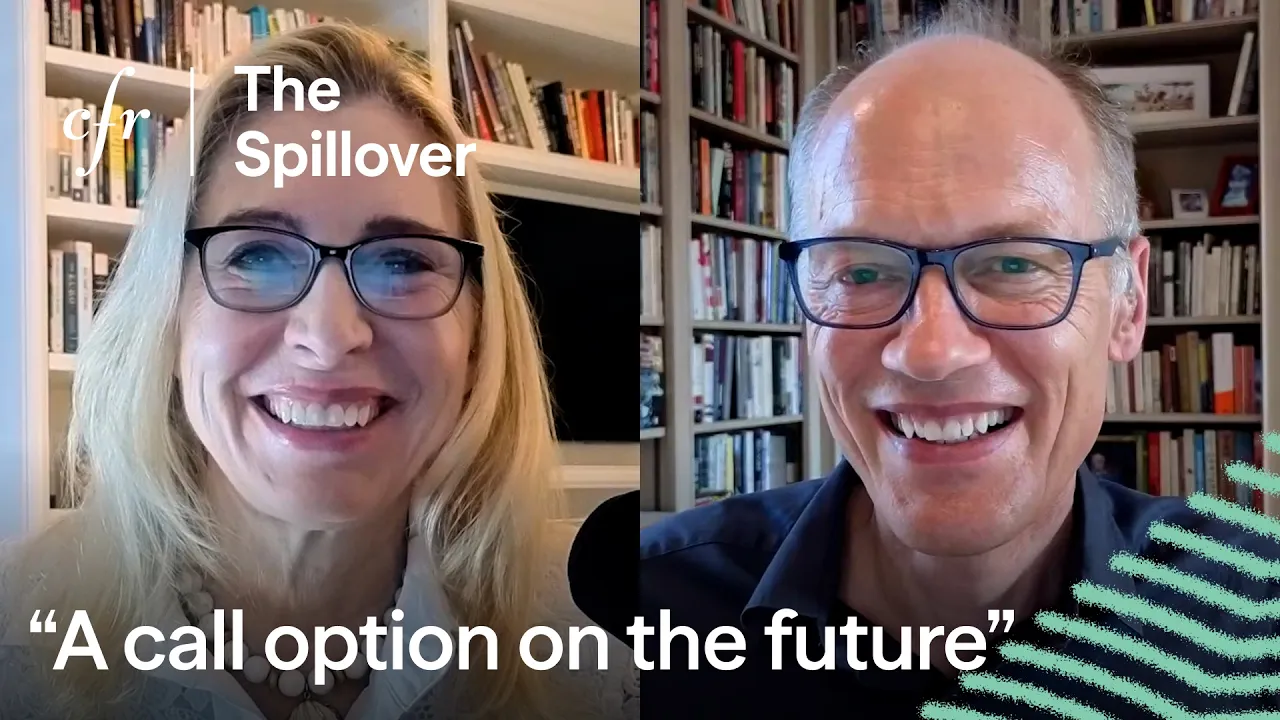
Cohosts Rebecca Patterson and Sebastian Mallaby stage a friendly debate over two so-called dollar alternatives—gold and bitcoin—weighing whether either has truly earned its reputation as a store of value. Patterson defends gold’s centuries of institutional credibility and diversification track record, while Mallaby makes the bull case for bitcoin’s finite supply and upside potential.

Published
Hosts
 Rebecca PattersonCFR ExpertSenior Fellow
 Sebastian MallabyCFR ExpertPaul A. Volcker Senior Fellow for International Economics
[Video: https://youtu.be/Srf50_QMRhk]
Transcript
This transcript was generated using AI and may contain errors.
PATTERSON:
So the last few weeks have seen the dollar debasement trade debased. The first half of the year wrapped up with a broad dollar rally and two closely followed so-called dollar alternatives sold off pretty sharply, Bitcoin and gold.
MALLABY:
Yeah, the swings in Bitcoin and gold have been extraordinary. Just last October, Bitcoin was trading near a record high of $125,000. Now it’s retreated all the way back to just over $60,000.
So that’s pretty much a round trip over a couple of years. And gold likewise went to the moon earlier this year, only to come back down in a hurry. So it seems like a good time to ask, are these assets really serving their alleged purpose of acting like a store of value?
Is one maybe better than the other? Or are they both pointless?
PATTERSON:
I like that. Well, okay, Sebastian, in the spirit of debate, maybe we can do a Atlantic debate here. And in an effort to understand what drives these two, I think, pretty unusual assets, maybe we can each pick one and defend it.
It can be a little cage match, so to speak, over dollar alternatives.
MALLABY:
So even if I hate one of them, or both of them, I have to still pick one even though that’s debate.
PATTERSON:
Yes.
MALLABY:
Okay. All right. Well, I’m Sebastian Mallaby.
PATTERSON:
And I’m Rebecca Patterson.
MALLABY:
Welcome to The Spillover. Each episode, we examine the ripple effects of global events. We cover everything from economics to finance to technology to geopolitics.
And we try to explain how they all interrelate. Today, this time, it’s a little bit different. Rather than looking at the spillovers from the subject that we are talking about into markets and geopolitics, we’re kind of looking at it through the other end of the telescope.
We’re looking at how all the things going on in the world affect these two assets, or maybe pseudo assets that we’re going to be discussing, Bitcoin and gold to try and determine if one of them makes more sense than the other one as a worthwhile thing to hold in your portfolio. Rebecca, I feel that, you know, with my technology hat on, maybe I ought to choose to support Bitcoin, not saying I like Bitcoin, but I will choose Bitcoin.
PATTERSON:
That works for me just fine, Sebastian. I’ll be on the side of gold for the conversation today. And, you know, maybe we can start with why both of them, at least till very recently, had been seen as attractive dollar alternatives.
I mean, they both had been rising pretty nicely against the dollar for some time. There’s one thing that they both have in common, at least one thing, and that’s limited supply. You know, obviously, when it comes to the U.S. dollar, there’s no constraints on supply. The U.S. can increase dollar supply anytime it wants, which obviously is going to create worries from time to time that money printing could happen as the government tries to grapple with very large and growing debts. But in contrast, gold supply increases only if you have one or both of two things. You have recycling or you have supply taken out of mines.
The gold recycling is primarily people melting down their jewelry when prices are high, but it’s more marginal. The bigger deal is mines and getting gold out of mines is very capital intensive, labor intensive, and it takes years. So it doesn’t turn the needle very quickly.
And in terms of like how much supply is out there, like how much new gold could we see? In theory, it’s material, right? You’ve got about 60,000, 64,000 tons of extractable gold reportedly that exists globally.
That is meaningful because the above ground stock of gold today is just under 220,000 tons. So again, in theory, gold supply could go up by just over a quarter.
MALLABY:
Just over a quarter. OK, well, maybe I get to score a debate point here because in contrast to gold, bitcoin supply is much more limited. It’s hardwired at 21 million bitcoins.
And the 20 millionth bitcoin was mined earlier this year. And the last 1 million of supply are going to be mined very, very gradually. I mean, the last one is supposed to be mined way out in the future.
- So this is a long way off. Basically, therefore, bitcoin supply is, you could say, pretty much fixed right now.
I mean, it can go up maybe by 5 percent, but even 5 percent, you know, which is the ultimate target in more than a century hence, is nothing compared to what you just told me as to how much the gold supply can increase. So, you know, if the supply of bitcoin is more constrained, then my asset bitcoin is surely more dependable in terms of value than your gold shiny thing.
PATTERSON:
Well, I will give you that. But I will add there is one caveat that I think is worth knowing, and that’s that the gold in the ground, that potential additional supply, has been there for years and years and years for a reason. It’s really hard and expensive to extract.
It tends to be lower grade. You tend to get a lot of iron ore or content when you pull it up. The actual gold in it is pretty small.
So, you know, gold prices have to be quite high. The technology needs to improve a lot. One or both of those things to make it worth going after.
So even though it can go up a lot, it doesn’t mean it will.
MALLABY:
Fair enough. But, you know, it could go up, whereas bitcoin is pretty much not going up, as I say. So maybe there’s a slight advantage for bitcoin on that measure, at least.
PATTERSON:
I will concede that one, Sebastian. All right, let’s talk about…
MALLABY:
Gracious, gracious.
PATTERSON:
You know what? I think you and I are both pretty competitive, so we’re not going to give up points easily. But I think I have to give you that one.
MALLABY:
I want to commend you for conceding a debating point to me. Thank you.
PATTERSON:
Well, I’m I’m a big believer in civil debate, and I think that’s what we’re attempting to do, despite the fact that it would be kind of fun to have a cage match on this. But anyway, we’ll leave that aside for now. So let’s let’s talk about a different point here on this and another reason people might want to own one or both of these assets, you know, and that’s diversification.
They want to think that having this asset in a portfolio can help help reduce volatility and returns compound over time. So what do you say to that one?
MALLABY:
Well, I’d say that, look, you know, that’s for me, too. Thank you very much for raising that point, because the whole thing about bitcoin, right, or any crypto is that it’s the opposite to traditional finance. Therefore, if stuff in the traditional finance system is going wrong, then your crypto, including your bitcoin especially, should be doing great because it’s the alternative system.
And if you look at the number of investment firms, you know, guys in the traditional camp who have kind of come over to this point of view and they’re offering bitcoin to their clients and suggesting that they include them in their portfolio, it certainly seems like they buy the idea that bitcoin has diversification benefits. I’ll give you maybe a couple of examples. Larry Fink from BlackRock used to be a crypto skeptic, used to be therefore in your camp.
Now he’s come over to join me because he feels way more comfortable by my side. He’s been won over, he said, in 2024, a couple of years ago on a CNBC interview, his new line was that bitcoin is an attractive option for portfolio diversification. He repeated that again on 60 Minutes this year.
A place for bitcoin, he said, OK, along with gold. I must admit, he did say that as well in a portfolio in small quantities, he might have said as well, but whatever. Let’s just focus on the big picture here.
He, I would say, you know, came over to my side and that is the biggest asset manager in the world. Now, you might say he’s a bit staid. I’ll give you somebody who’s not staid.
Paul Tudor Jones, certifiably crazy. I wrote about him when I did the history of hedge funds in my book, More Money Than God, and he was known to put on sort of special basketball sneakers to give him good luck on a big trading day in the oil markets. But leaving aside that slightly dubious indicator of analytic acumen, I will note that he says he likes to pair bitcoin and gold as diversifiers.
So it’s not just gold that he believes now will diversify your portfolio. I’m just saying that people are moving over to my side on this diversification point.
PATTERSON:
Okay. All right. Interesting, qualitative data you’ve got there, Sebastian.
You know, look, I want to give these gentlemen the benefit of the doubt. I respect them. They’ve built, both of them have built incredibly successful firms.
They’re obviously both very, very bright sneakers.
MALLABY:
Uh-oh, this is a setup for a kill.
PATTERSON:
Oh yeah, it is. This is a setup. It totally is.
Just hang on, hang on. And if you bought bitcoin at the right time, you could make a great return off it, but a return is not diversification. And I get so frustrated with people like Larry Fink and Paul Tudor Jones for saying it gives diversification because I know they’re smart enough to know that that to date is factually incorrect.
So if you have a portfolio, I’m going to step back. If you have a portfolio with risk assets like equities or credit, you want something else in so when equities fall, the other thing you own holds its value or goes up. That’s diversification.
That reduces volatility, lets you compound over time. You have more money in the end. That’s the goal here.
So if you look at bitcoin, that’s not how it trades. Since inception, it’s traded like a small FinTech stock. I can get that out of my mouth.
Most of the time it goes up with NASDAQ, up with tech stocks, and when they fall, it goes back down. It doesn’t trade anything like gold or frankly, very much like the dollar. So in the past decade or so, as you’ve owned bitcoin, it’s compounded your losses when equities fell, which makes me, I hate to say it, but speculate that perhaps these financial giants are looking at fees and making clients happy rather than actually helping them with diversification.
MALLABY:
Okay. All right. So that’s just typical of you.
You introduced data into the debate.
PATTERSON:
Oh, wait, let me give you more data. Hang on, hang on. I’ll give you more.
MALLABY:
Okay.
PATTERSON:
Okay. I looked at this carefully. I haven’t updated it for the last year and a half, but given what you just said at the top of this show, that bitcoin has fallen over the last two years, it’s round tripped.
It’s going to just augment my point. But if we take the decade between 2013 and 2023, I looked at daily data over a 10-year period, so a good sample set. Every time the NASDAQ fell by 5% or more, guess what?
Bitcoin fell an average of 5%, about 55% of those times of those episodes. Gold, in contrast, rose in those episodes where equities fell by just under a percent on average, and it rose about 63% of the time.
MALLABY:
Okay. Well, look, I have to concede that 10 years worth of data is more than just sort of anecdata. That sounds pretty real.
So I’ll give you that, but I’ll ask you a different question, which is, okay, your backward-looking data, backward-looking, Rebecca, backward-looking, may not tell us much about the future. And in particular, this could be the case if we’re talking about bitcoin, which is a relatively new asset. Obviously, it would trade in a kind of erratic and volatile and immature way for the first period in your data set, 2013, whatever, because it wasn’t really around until about 2010.
And so an immature new asset will trade in an immature new fashion. But what about going into the future? Don’t you think that bitcoin could start to behave differently?
PATTERSON:
Okay. So you’re trying to keep the point, or at least break the point with me by forecasting something unknowable. That’s cute, Sebastian.
But when I started researching bitcoin and meeting with people who were trading it and offering custodian services, et cetera, there was a lot of talk about exactly what you’re saying. And this was a decade ago that I was doing this. They were all saying, just give it time.
Institutional investors are going to get super excited about it and come in and they have longer time horizons. And so when they come in, it’ll reduce volatility, add liquidity, and voila, we will get more of these diversification benefits. And look, I will give you that directionally, we have seen more institutional investors coming into bitcoin over the last five, eight years, but generally in small size and more often than not through derivatives.
So instead of owning bitcoin or a bitcoin ETF, they’ll own, let’s say a private equity fund or VC fund or a hedge fund that has some investments in bitcoin related companies. So it’s indirect exposure because it’s safer and less volatile. But it hasn’t been enough, Sebastian, to really change the picture yet.
Again, I’m not talking about backward looking, I’m talking about today. Today, according to River Financial, and they did a very detailed study last year, about 15 to 16% of individuals, sorry, of institutions, those are the long-term sticky investors own bitcoin. The rest of it is retail.
And retail tends to be shorter term trading. It’s speculative, it’s volatile. It doesn’t create that diversification dynamic.
So contrast that again with gold, I’m not going to give up on gold. Gold is and has been for centuries, centuries, a store of value and a liquid choice for central banks. Central banks want to have liquidity, they want to have ease of transaction and they want to keep the value of their assets safe, no downside risk.
And they hold gold. When you look globally, gold represented about a quarter of all official central bank reserves as of last year. Now, a little bit of that was the value of gold increasing, but it’s still a very large number.
And central banks are not like jumping the gun to buy bitcoin. They don’t see it the same way. We’ve had two experiments in the last few years.
I was intrigued when El Salvador in 2021 announced it was going to make bitcoin legal tender in its country. I was very curious to see how that would play out. Well, guess what?
It had to roll it all back. It’s no longer legal tender because they needed a bailout from the IMF. And then the Central African Republic adopted bitcoin as legal tender in 2022.
Less than a year later, it said, never mind.
MALLABY:
Okay. So it sounds like you’re casting aspersions or as my kids used to say, casting nasturtiums at the Central African Republic and El Salvador as examples of good financial conduct. And you’re also sort of saying, okay, so bitcoin has some institutional pickup, but gold has way more.
And then when you look at central banks, there is a lot of institutional pickup and that’s very historical actually with gold, but zero pretty much for bitcoin. So I think I’ve understood your argument.
PATTERSON:
Yes. Thank you very much for following along. And that’s a good summary.
You got it. So, okay, it is a debate. You don’t get to cover up the fact that you lost that point just by rephrasing my argument, Sebastian.
MALLABY:
All right. Well, in the spirit of debate, let me try something else. Okay.
So these central bankers, okay, they love your asset gold because gold is yesterday’s safe asset. And central bankers, this is the kind of nonsense we expect from them, right? They’re traditionalist, backward looking, absolutely not a leading indicator of anything.
Definitely have no idea what’s going to be cool in the future. And what I’m hearing is that bitcoin is the future. Or maybe we could say at least it’s a call option on the future.
You pay something small up front and then maybe you get lucky and you get this enormous payout and who wouldn’t want that, right? And there are definitely catalysts out there that could support the idea of this huge, great payout. And potentially that would bring more investors to bitcoin in the coming months and years.
And there’s no such kind of exciting upside potential when you look at gold.
PATTERSON:
Okay. All right. So you’ve piqued my interest.
What are these catalysts that are going to magically draw the, as you put it, the fuddy-duddy central bankers to bitcoin? Tell me.
MALLABY:
I’m supposed to tell you an exciting catalyst? Yes, please. Okay.
Well, President Trump.
PATTERSON:
He’s exciting.
MALLABY:
He is indeed exciting. And he has repeatedly said that he wants to make U.S., the United States, the greatest country in the world, the crypto capital of the world, Rebecca. I mean, I know he likes gold bathroom fittings at Trump Tower or whatever, but fundamentally, this president is all in on crypto, not gold.
And think about it. The world’s most powerful man and the most important economy in the whole world is backing crypto. And for good reason, crypto investors have netted Trump and his family more than a billion last year, according to the financial disclosure he recently put out.
So he and his family have what we call skin in the game. And whatever else you may try to assert in this debate, Rebecca, you’re not going to tell me that Trump and his cronies made a billion out gold.
PATTERSON:
Not yet.
MALLABY:
What do you say to that?
PATTERSON:
Not yet. I mean, we have gold reserves in the United States. The prices have gone up a lot.
And I still don’t rule out that they try to monetize that somehow. But all right. All right.
MALLABY:
Yeah. Okay. But that’s the future.
Before you said I wasn’t supposed to invent the future. And I’m telling you that right now, here today, not only have I got the Central African Republic, not only have I got El Salvador, I have got President Donald Trump on the crypto thing. And more specifically, actually, to get serious here, there are a couple of things that I would say we should keep our eye on.
PATTERSON:
Okay. All right. What are we watching aside from the President?
MALLABY:
So first of all, Congress has been debating a bill. It’s called the Clarity Act. And this aims to set the regulatory rules of the road for cryptocurrency such as Bitcoin.
It also carries a provision that would prevent the Federal Reserve from issuing a retail central bank digital currency. In other words, the Fed doesn’t get to do its own Bitcoin competitor. So this would not only, this bill would not only legitimize Bitcoin, it would prevent the most obvious source of competition from muscling it.
Now, you’re going to raise pesky questions about whether this Clarity Act actually has any chance of becoming law. It hasn’t passed the House, I will say. I mean, sorry, it has passed the House, but it hasn’t passed the Senate.
And, you know, yeah, you know, passing the Senate is difficult. There are partisan politics. The window for passing it might be quite short.
If it doesn’t get through the Senate pretty soon, that could be the end of it because after the August recess, the congressional focus will be on the midterms. But I’m still telling you, watch the space because if the Clarity Act did become law, that would definitely reinforce confidence around my asset, Bitcoin.
PATTERSON:
I will agree with you on that. If clarity can pass, I think that would be meaningful for the cryptocurrency space broadly, including Bitcoin. And you’re right, I’m going to be pesky.
I like that word, because there is so much noise around this bill. You know, part of the bill focus on stable coins, which track the value of an asset off in the dollar and whether stable coins can offer some form of a yield. And there’s a lot of banks and other entities pushing back against that because they see it as a threat to money markets.
So that’s a pretty important lobbying group that doesn’t want this thing to go through as it stands today. But the other part of it, which is going to be problematic in the Senate, is the ethics provision in the bill. So the Democrats want the president, vice president, members of Congress from issuing or promoting digital assets.
You know, you just mentioned that President Trump, I think, and his family made over a billion dollars last year from crypto. You know, President Trump doesn’t want this bill to go through as it stands. So it’s going to be interesting to see if it passes.
But I agree, if it were to pass, there’s some upside there. But you said there was there were two catalysts, right? What’s the other one?
MALLABY:
Oh, yeah.
PATTERSON:
Okay. You got more.
MALLABY:
Okay. So there’s a potential, I think, also for the US to begin holding Bitcoin as part of the sort of strategic government reserve, similar to how it holds oil reserves. Trump did sign an executive order in March last year, establishing the strategic Bitcoin reserve.
It was initially capitalized by Bitcoin that the government had seized from illegal activity. The order bars selling those coins and instructs Treasury and Commerce to explore a budget-neutral way to acquire more. Budget-neutral might be a head-scratcher, but we’ll just lightly pass over that.
And so the US government already has about 328,000 Bitcoin because of the original, you know, the stash that it had seized. And at roughly $60,000 a coin, that’s nearly $20 billion. But your earlier point that central banks hold gold and they won’t touch crypto ever may not matter if you have a strategic Bitcoin reserve that in future may just get bigger and bigger.
PATTERSON:
Okay, that’s a good point. And I’d say that’s a good catalyst to watch. It is interesting to me that the US holdings of Bitcoin today are because of seizures from illicit activity with cryptocurrencies, which still tends to be one of the biggest reasons they get used.
But we can leave that aside, if you would like, Sebastian. Look, when the executive order was issued by President Trump to start looking at the strategic reserve, that was great. Bitcoin holders were very excited about it.
But here we are more than a year hence, and it’s not up and running. Congress has to do something beyond just being referred to be more than a custodian of the seized coins.
MALLABY:
Yeah, there is the big deal here, which is the Wyoming Senator Loomis’ Bitcoin Act. And if that gets traction, it would direct the purchase of a lot more Bitcoin over the coming years. And you’ll really like this bit, Rebecca.
Under the Loomis Act, the US government would finance the purchase of Bitcoin. It wouldn’t be an unfinanced mandate. How do you think they’re going to finance the purchase of Bitcoin?
PATTERSON:
I know what you’re going to tell me. I know, but go ahead.
MALLABY:
By selling the gold reserves. Yeah, yeah, or at least in part. Anyway, I mean, come on, slam dunk, right?
But before you get all nitty gritty on me, I’ll concede that the Loomis bill is on hold until we have more clarity over the Clarity Act, which hasn’t passed yet, as I earlier conceded. But the larger point is, if we’re looking for catalysts that could change who wants to own Bitcoin and why, there’s a bunch of bills that are worth watching. And I’m not sure there’s that many bills in Congress about sort of, you know, making gold great again or whatever the equivalent might be.
PATTERSON:
I’ll have to check on that. I actually don’t know if there are any gold bills flying around. But, you know, look, I will at a high level, at least concede that point, that looking forward, there are some catalysts, which I would call low probability, high impact, right?
It’s not likely these things are going to happen, but if they do, that would be a big deal for Bitcoin. And maybe it reduces volatility. Go ahead.
What were you going to say?
MALLABY:
What about portability? Portability, we should talk about that. It’s hard to carry large amounts of gold around.
But Bitcoin is easier to send across, you know, over the internet. You can transfer money out of Argentina into the U.S., whatever. You know, it’s just much, much easier with Bitcoin.
PATTERSON:
Yes. So it generally is easier to port Bitcoin. It is also easier to steal Bitcoin.
You know, you have seen, you know, cryptocurrencies broadly, mainly Bitcoin, but not only Bitcoin. Stolen currencies last year, I believe, reached about three point four billion. A lot of non-state actors and state actors like North Korea.
For North Korea, it’s a government revenue stream. Personal wallets get compromised. So last year, that was more than 700 million dollars.
So sure, maybe it’s more portable, although even there, gold, you now have ETFs and people are talking about creating tokenized gold. So I think that argument, looking backwards, held better than it does today. But you don’t see the same kind of illicit activity and stealing with gold that you see with Bitcoin.
MALLABY:
We should say that Bitcoin’s protocol itself has not been broken by hackers. The issue is always the hackers steal the private keys, which are the cryptography that grants control over the assets.
PATTERSON:
That’s true. That’s absolutely true. But I would argue that cryptography still remains a pretty important risk.
You know, you can’t use phishing emails to steal gold. You can with crypto. And there’s another one.
Again, we’re looking ahead now, talking about catalysts, but there’s one that you and I are both intrigued by, and that’s quantum. You know, it’s probably not an issue for this year or next year, but in the next few years, depending on how quickly the technology evolves, the emergence of quantum computing at scale is an existential risk for Bitcoin. And I would think if I owned any Bitcoin now, I’d be worried about it.
You know, we both know Bitcoin’s ledger is just a chain of transactions, right? It’s public. It’s immutable.
Every public key ever exposed on chain, you know, by some estimates, a third of all Bitcoins, it’s vulnerable to quantum and what it’s called a harvest now, decrypt later. So basically you get all that public key information today. And when quantum gives you the technological ability to decrypt, unencrypt, then you can just steal everything.
So that’s a third of the coins are at risk of that.
MALLABY:
Wow. Yeah. Yeah.
And I hear that the crypto world, you know, they’ve obviously heard of this threat and they’re coming up with kind of post-quantum cryptographic standards. But I guess that that only helps to the extent that the crypto owners are themselves smart enough to get into a, into a quantum safe environment. There’s going to be some people who just don’t make the switch and then they will have their crypto rendered vulnerable when quantum makes more progress.
PATTERSON:
Exactly. So it won’t be that the number I quoted, which is a third of coins, but it’ll be some potentially substantial fraction of that. So it’s, it’s not nothing as we like to say.
I think, I think I get that point net net, but I just don’t see any similar risk around gold in the foreseeable future from technology. And especially as it’s becoming more and more portable, you know, the gold, I own a small amount of gold in my personal portfolio and I own it through an ETF. Whereas if anything happens to the issuer of the ETF, they go bankrupt.
I actually get physical gold back. I’m not a creditor. I don’t have to go through a bankruptcy process to get my money back.
I get real gold. I like that.
MALLABY:
Is that true of all ETFs?
PATTERSON:
It is not. It’s true of some of them, but I think most serious investors buy that one.
MALLABY:
That’s news that people can use.
PATTERSON:
So we should put that in the show notes. Indeed.
MALLABY:
Can you tell people which one to buy?
PATTERSON:
Yes, we’ll put it in the show notes. All right. So maybe let’s circle back, Sebastian, you know, our, our final arguments or a summary of our debates.
Why, why own either of these assets? And, and you know, let me, let me just recap my arguments in favor of gold as a dollar hedge or a diversifying asset. First of all, it has centuries, not a decade or two centuries where it has proven consistently to be a reliable store of value.
It has second institutional credibility. It’s one of the largest holdings in global central bank reserves and people buy and hold onto the gold. It’s sticky investments and that reduces the volatility of the asset and makes it easier and cheaper to trade.
Third, it has been consistently effective to diversify portfolios, which means over time you make more money, you compound returns. And I’m going to add one fourth thing here that we haven’t really hit on yet, Sebastian, you know, some investors will stay away from gold because they say it doesn’t have a yield. You only make whatever money, if it goes up and it doesn’t have a business or cash flows behind it.
So they were like, this is just a speculative asset. There’s no there, there. And that’s true to a degree, but there is somewhat of a there, there, right?
It is used in the real economy for jewelry. About half of all gold demand is jewelry. That’s real.
I like jewelry. And it’s also used for technology. You know, gold is a good conductor.
It’s very malleable. I think it was Citi last year or earlier this year that estimated that tech related demand for gold last year was almost 323 tons. So there is a real business case for gold, even though a lot of people trade it speculatively.
OK, your turn. Why Bitcoin?
MALLABY:
Sum it up. Convince me. Well, first of all, I’ll concede that I think you might have come on this show at some point wearing a gold necklace, perhaps, but I don’t recall a Bitcoin necklace.
So I take the point. The what’s it called in the theater? You know, when you sort of like step out of character for a second and you break the fourth wall.
Yeah, that’s right. You break the fourth wall.
PATTERSON:
I have no idea why I know that, but I know that.
MALLABY:
OK, so I’m going to break the fourth wall for a second and note to listeners that I actually don’t really like Bitcoin or gold. The truth is that if you’re worried about debasement of the currency, why don’t you just own equities, which are claims on actual companies that will sell actual products where you can move the price up if there’s inflation and protect yourself against currency debasement by selling widgets or for that matter, buy some real estate, right, where, you know, if the location is good and the supply is scarce, you know, there’s lots of ways to hedge currency risk. It strikes me that are much more obvious than gold, which has limited actual use despite your important jewelry and Bitcoin, where frankly, there isn’t much either. But anyway, let me let me step.
I’m un-piercing the fourth wall or whatever it’s called, and I will give you my barristers or as we say in England, barrister, I guess attorneys. I’m pleading before the court here, feeling I have a slightly weak case. But I would say first of all for Bitcoin, finite supply.
OK. And almost no more Bitcoin being created between now and 2140. Right.
A large amount of upside potential because there are people who seem to be crazy in favor of this stuff, whether that’s President Trump, whether that’s various bills knocking around Congress. Next thing, the portability point. You know, you can’t freeze Bitcoin, confiscate it.
It’s tough for governments and banks, you know, to to to stop it from moving around if it’s self-custodied by people. So if you need to get money out of some tricky country, you know, in, you know, somewhere you really don’t trust the government or the authorities, Bitcoin just may be more transferable than other options. And we shouldn’t forget that, you know, the U.S. government did confiscate gold back in 1933 under FDR. So there is precedent for gold being seized. Hard to seize Bitcoin. And one last thing, I think you had a last point, which we haven’t gotten to before, but I’ll mention one, too. Bitcoin doesn’t require you to have any faith in any government or other institution.
You just have faith in the code that limits the supply. And so anyone, because of the design of the blockchain, can prove exactly how much Bitcoin exists today. And they can show that they hold it.
And you don’t have to trust any custodian. Whereas with gold, you may tell me how much gold there is in Fort Knox, but my retort to you might be that you need to go verify that for me. And you couldn’t.
PATTERSON:
Okay. That’s a very good point. Let’s, you know, before we wrap up, I want to touch on one thing we haven’t really dug into yet.
We can do it quickly. And that’s just how does the dollar affect both of these assets? You know, it felt like as the dollar was losing value over the last year and a half or so for different periods of time, gold and Bitcoin were both doing well.
So, you know, what does drive it then? And maybe I’ll hit gold really fast. You know, we mentioned it doesn’t have a yield like a bond.
The return is just the change in price. So fairly often the main driver of gold is what’s happening with U.S. bond yields. So if we think there might be a recession or we think growth might slow because of a war or some other catalyst and bond yields fall and expectations for the Fed cutting rates, people will buy gold because that opportunity costs that you don’t have a yield goes down.
Gold becomes relatively more attractive. And it also tends to be a fairly attractive asset when you have inflation that’s rising faster than expected. It is seen as an inflation hedge.
And often when inflation’s rising that fast, but the Fed is seen as behind the curve, you can have a weaker dollar. So I’d say that those are two of the factors that help drive gold. But again, it’s not the only thing we spoke a little bit earlier, Sebastian, about jewelry and industrial demand.
Those are pretty cyclical drivers of gold. And then there’s the strategic long term central bank demand, which has been pretty robust, especially in the last few years. So and then the investors, the speculators, they’re part of it, too, getting in and out of ETFs and other vehicles.
But the main point is that gold will tend to do well at the tails. If you have inflation that’s running above expectations and a perception that a central bank’s running behind, you can have a weaker dollar, stronger gold. And if you have a recession or a crisis, you can have a stronger gold and weaker dollar.
So those two extremes of kind of macro scenarios tends to be when gold does best. So that would just be my summary of how I think about gold and the dollar. But you know, what about Bitcoin?
MALLABY:
Well, we discussed earlier how Bitcoin often trades like a small cap fintech stock or something. And, you know, we see a lot of money coming into the US to buy US tech stocks. We see a stronger dollar in that case.
And we also get often higher Bitcoin prices at the same time. So higher dollar goes with higher Bitcoin. Okay, sort of the opposite of the theory that it’s a hedge.
But on the other hand, if you have rising US yields, which are lifting the dollar, and those yields are starting to weigh on equities, you could have in that case a higher dollar, but lower Bitcoin because the Bitcoin goes down with the equities. So I guess that, you know, what’s driving the dollar at any given time matters for how Bitcoin responds. And so I guess like gold, it’s not actually straightforward.
PATTERSON:
Right, right. And in a way, what you just described is diversification, just a very different type of diversification than what we were talking about earlier. Okay, well, look, that was fun.
And we can let listeners decide who won the debate today.
MALLABY:
Yeah, I think to be honest, gold won, frankly.
PATTERSON:
And you don’t like either. So that’s fine. Look, I appreciate your sportsmanship and taking on Bitcoin.
And hopefully, it’s helpful for people who don’t follow this stuff every single day. You know, it is interesting to think about how these two unusual assets tie to the geopolitics, the economics, the politics, the sentiment, all those things spill over into both gold and Bitcoin. Anyway, I know we want to end the podcast every week with something interesting, fun, weird that we noticed over the last week.
You know, there’s been so much going on, even with my hip recovery, there’s so much going on. I’m sitting on my couch, legs elevated going, holy mackerel, what else could happen today? The one that I wanted to share, which I think got overlooked is that one of the main statistic agencies in the U.S., the Bureau of Economic Analysis, has announced that it’s going to introduce changes in how it calculates part of the PCE inflation index this September. So that’s the main inflation measure that the Fed uses as it sees where it is vis-a-vis that part of its dual mandate. So the early analysis I’ve seen suggests that it’s going to shave a couple of tenths of a point off inflation. So it’s not a game changer, but at the margin, it’s going to look like inflation is headed lower.
And I’m very curious when this comes out. It’s a shame, but in the world we are today, I can imagine there’ll be headlines saying, oh, it’s political, the BEA is doing this to make the Fed or the government happy. I don’t think that’s true, but I still wouldn’t rule out the headlines and the speculation.
MALLABY:
Yeah, well, actually, I was going to bring up something also about central banking. I enjoyed the discussion you had on the spillover with Roger Ferguson, and I’m sorry, I missed it. And in that, you both paid tribute to Alan Greenspan, who died at the time of your show, just before the show, who, of course, I got to knew because of writing his biography.
And you also did some forward-looking stuff about the new Fed under Chairman Warsh. I don’t recall what you said about Jay Powell, but I thought, in light of this discussion that we’ve just had, it’s worth saying that Jay Powell, who stepped down from his position as chair because his term was up, and as we know, he was replaced by Kevin Warsh, is still a governor on the Federal Reserve Board, which is very unusual to stay on as governor. His term extends until the beginning of 2028.
And I think the fact that he stayed there because he wants to safeguard Fed independence is actually an important thing. And just in a way, relevant to this discussion we’ve had about crypto and gold, because people keep on saying, we need an alternative to fiat currency. And actually, the Fed viewed in a long perspective, let’s say from 1982 when Paul Volcker broke the back of inflation, inflation has been pretty well contained.
And I understand that COVID was an exception. But I want to point out that nobody forecast the turns within COVID, like the new strains of the virus that were going to come out, whether they would be super contagious or not super contagious. Nobody knew.
And so there were lots of private sector forecasters who were betting their own companies, supply chain management, whether they should expand production or not expand production. You’ve got it just 100% wrong. Like Peloton, the maker of exercise bikes, extrapolated the increase in demand for Peloton bikes and produced so many that they couldn’t sell any of them when the pandemic finished and people started going outside for walks.
And they didn’t need to be cooped up inside with their Peloton bike. So just the forecasting challenge from COVID was so extremely difficult that to sort of condemn the Fed because it was a bit off, strikes me as wrong. And then yes, it’s been difficult to get inflation back down to the 2% target.
And it hasn’t happened in the last five years. And ideally, it would have happened. But to miss the target by like a percentage or percentage and a half or whatever it’s been, this is small stuff compared to the shortfall in like either Bitcoin or gold.
If you’re looking to those assets to provide kind of a reliable hedge against fiat currency, ultimately, fiat currency is just way more stable, predictable, and honorably managed by people like Jay Powell, who stay in their job as governor, because they believe in the independence of the institution, and they want to make sure the dollar is properly safeguarded. You know, that is actually where I would put my faith more than in crypto or in gold.
PATTERSON:
Well said. Well said. Wow.
Okay, that was a strong end. Thank you, Sebastian.
If you want to stay up to date on the latest episode of The Spillover, sign up and receive our email alerts when new episodes drop at cfr.org newsletters. Or you can click the link in our show notes where I’m going to tell you about that gold ETF. Not a trading recommendation, just information. If you have an idea or you just want to chat with us, please email podcasts at cfr.org and be sure to include The Spillover in the subject line.
Today’s episode was produced by Molly McAnany, Gabrielle Sierra, Jeremy Sherlick. Our video editor today is Claire Seaton. Our sound designer and audio engineer is Markus Zakaria. And research for this episode was provided by Liza Jacob, Ishan Thakkar, and Jack Heeney.
You can subscribe to our show on Apple Podcasts, Spotify, YouTube, or wherever you listen to podcasts.
On this episode of The Spillover, cohosts Rebecca Patterson and Sebastian Mallaby stage a friendly cage match over two so-called dollar alternatives—gold and bitcoin. Patterson takes up gold while Mallaby, donning his technology hat, argues for bitcoin. The wager is simple: Has either asset actually earned its reputation as a store of value, and does either really need a weaker dollar to shine? Below are some takeaways from the conversation.
The one thing the two assets clearly share is scarcity, though of different kinds. Gold supply grows only through slow, capital-intensive mining or recycled jewelry. Patterson notes that all the gold still in the ground could grow existing supply by only about a quarter. Mallaby scores an early point here for scarcity—bitcoin is hard-capped at 21 million coins. The twenty-millionth was mined this past spring, and the last 5 percent is not due until 2140. “If the supply of bitcoin is more constrained,” Mallaby argues, “then my asset bitcoin is surely more dependable in terms of value than your gold shiny thing.”
On diversification, Patterson presses her strongest empirical case for gold. Big names like BlackRock’s Larry Fink and Paul Tudor Jones tout bitcoin as a portfolio diversifier, but she argues the data is not there yet. Daily figures from 2013 to 2023 show that bitcoin fell an average of 5 percent during Nasdaq drawdowns of 5 percent or more, while gold rose slightly and was positive most of the time. Bitcoin, Patterson says, “has traded more like a small-cap fintech stock” than a safe haven. Mallaby concedes that “ten years worth of data is more than just sort of anecdotal,” but holds out hope that broader institutional ownership could eventually calm bitcoin’s swings. Today, bitcoin largely remains a retail instrument, with individuals owning roughly two-thirds of circulating coins.
Institutional credibility is where gold pulls ahead. Central banks have treated it as a core reserve asset for centuries, and it now makes up about a quarter of official global reserves. Bitcoin, by contrast, has near-zero traction as a reserve asset—the Central African Republic and El Salvador both adopted and then abandoned it as legal tender. Mallaby flips this into his argument. Gold “is yesterday’s safe asset,” he says, and central bankers “are traditionalist, backward-looking, and absolutely not a leading indicator of anything.” Bitcoin, he suggests, “is a call option on the future. You pay something small up front, and then maybe you get lucky and you get this enormous payout.”
The bull case for bitcoin rests on U.S. policy catalysts. Mallaby argues that a president who wants to make the United States “the crypto capital of the world,” and who netted his family $1 billion in crypto earnings last year, is a catalyst with a lot of “skin in the game.” On top of that, the Clarity Act is working its way through Congress to legitimize crypto, and a Strategic Bitcoin Reserve—already holding some 328,000 seized coins—could be expanded by a bill sponsored by Senator Cynthia Lummis (R-WY). And how would that bill finance the purchases? “By selling the gold reserves,” Mallaby says, calling it a “slam dunk.” Patterson agrees these are worth watching but is skeptical that they will clear Congress before the August recess, given fights over stablecoin yield and an ethics provision aimed at the Trump family’s crypto interests.
Portability and security round out the fight. Mallaby prizes bitcoin’s ability to move anywhere and resist confiscation, recalling the 1933 U.S. gold seizure, while Patterson points to gold-backed exchange-traded funds (ETFs) and tokenization as reasonably portable. But Patterson flags that “it is also easier to steal bitcoin,” noting the more than $3.4 billion in crypto stolen last year, plus the looming, existential threat that quantum computing poses to bitcoin’s exposed public keys. On the original question of whether either hedges dollar weakness, both concede to a technical tie but agree that gold won.
Mentioned on the Episode:
SPDR Gold Shares (GLD): The largest and most highly traded physical gold ETF, holding bullion in secure London vaults. It carries an expense ratio of 0.40 percent. This is just for information; it is not a trading recommendation.
Rebecca Patterson, “Gold as an Equity Hedge Requires Patience,” Financial Times
“Central Bank Gold Reserves Survey 2026,” World Gold Council
The Spillover is a production of the Council on Foreign Relations. The opinions expressed on the show are solely those of the hosts and guests, not of the Council, which takes no institutional positions on matters of policy.
Producer
- Producer, Podcasts
Supervising Producer
- Director, Podcasting
Audio Producer
- Audio Producer & Sound Designer
Researcher
- Research Associate, Finance, Business, and Technology
Researcher
- Research Associate, Geoeconomics
More Episodes
 41:30Podcast
 35:24Podcast
 48:01Podcast
 47:25Podcast
 50:17Podcast
 47:25Podcast