Spillover Summer Reading: The Best Books on Forecasting, Silicon Valley, and the Future
In this episode of The Spillover, Rebecca Patterson and Sebastian Mallaby swap summer reading recommendations, including fiction and nonfiction picks covering American thinkers’ predictions for the twentieth century, an Irish murder mystery, and a Stanford student’s exposé on Silicon Valley venture capital and start-up culture.
Published
Hosts
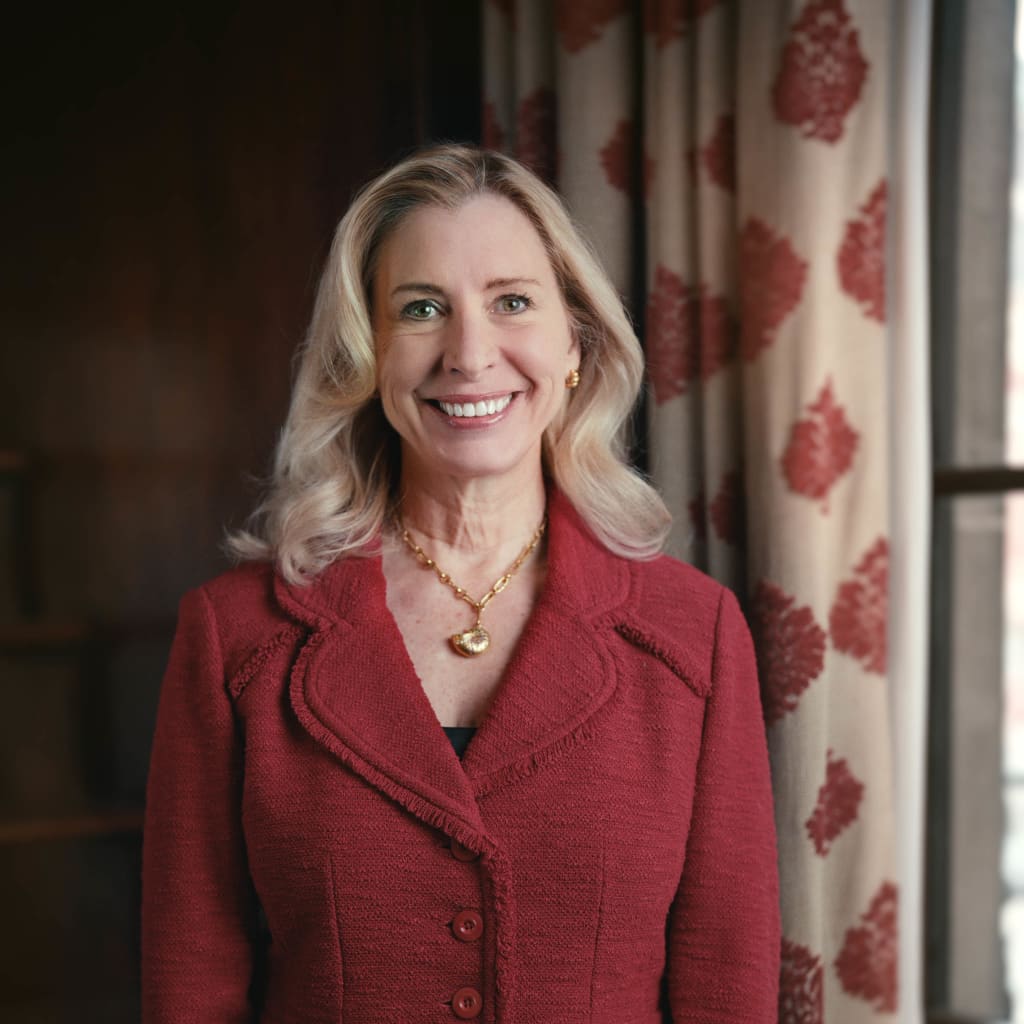 Rebecca PattersonCFR ExpertSenior Fellow
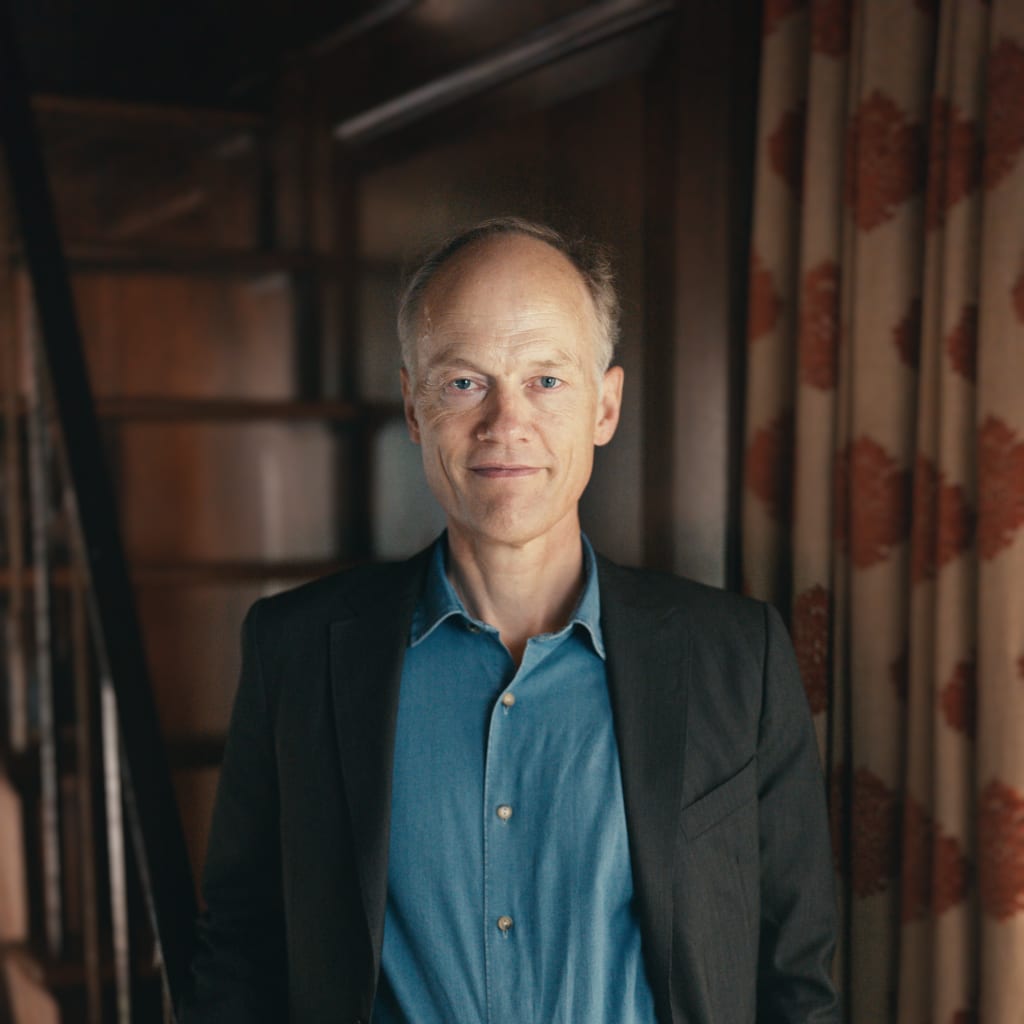 Sebastian MallabyCFR ExpertPaul A. Volcker Senior Fellow for International Economics
[Video: https://youtu.be/Y42Mcc2h-ss]
Transcript
This transcript was generated using AI and may contain errors.
MALLABY:
This week is something a little different. With summertime in mind, Rebecca and I have picked out some recommendations for reading for the Spillover community.
PATTERSON:
That’s right. We have most of August still ahead of us, with hopefully a little more time than normal for reading. So we wanted to share a few non-fiction and even a few fiction books we’ve recently read that we thought might be of interest.
MALLABY:
And then you’ll be all set for the summer.
PATTERSON:
I’m Rebecca Patterson.
MALLABY:
And I’m Sebastian Mallaby. Welcome to the Spillover. So, Rebecca, you go first.
What’s your top book?
PATTERSON:
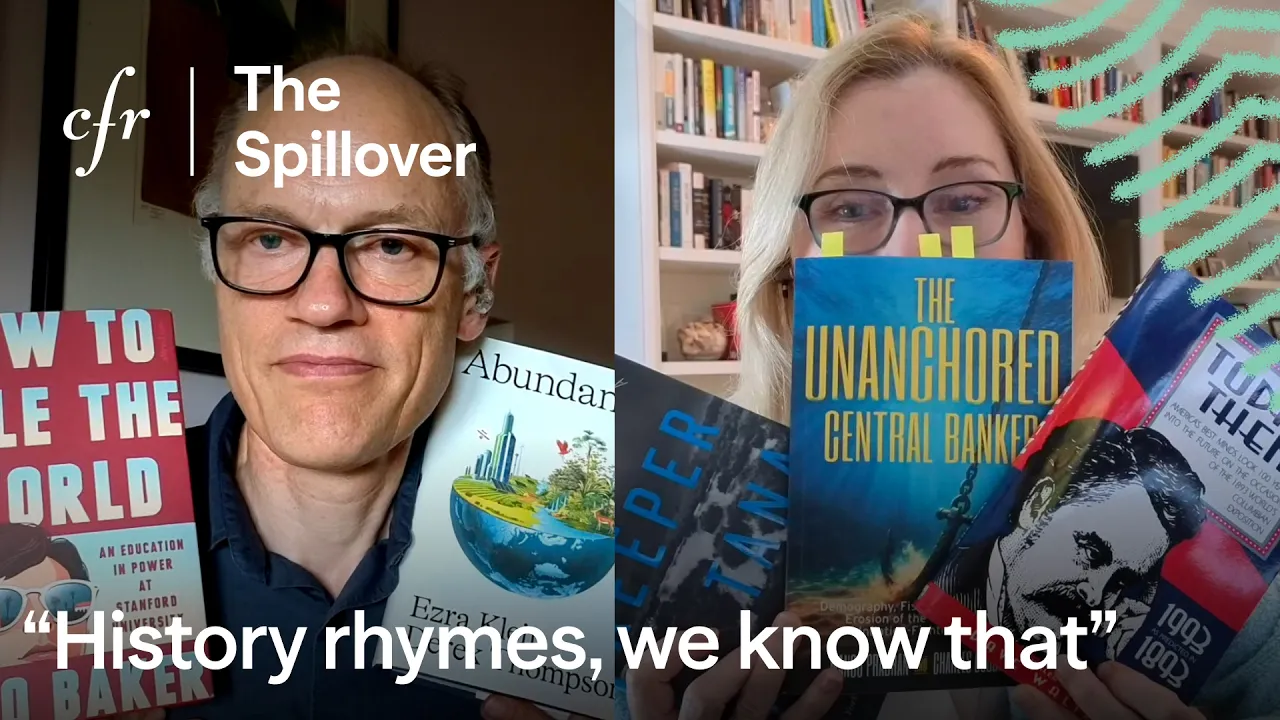
All right, here we go. This is Today Then by Dave Walter. And you’re not going to find this on any recent New York Times bestseller list or on an Amazon recently released.
This is actually from 1992.
MALLABY:
Can I just say right there, you are too cool to school, right? You’ve eschewed all the kind of fashions, the modern, you know, modishness.
PATTERSON:
Oh, I’m going to go fashionable soon enough. Don’t worry. This is my one cool esoteric book.
But it really jumped out to me because it’s all about forecasting. And I felt like that could be really useful given where we are today. And we’re all trying to make sense of where the world’s going to go in every respect possible.
So anyway, Today Then is actually a collection of essays. It’s a quick read. It’s about 74 essays written in the early 1890s by the great commentators and opinionists of the day.
It was pulled together to mark the opening of the World’s Fair in Chicago. And these were mainly people who wrote weekly newspaper columns, that sort of thing. And remember, back then, newspapers were the main way we got influenced, so to speak, that opinions were formed.
So that was interesting to me. And the other part that was interesting, Sebastian, is if you think about the early 1890s, people often refer to it as the Gilded Age, sometimes the Industrial Age. And there was a lot of technology growing, there was wealth growing.
And then, of course, America back then was all about our geographic expansion. Those were the defining characteristics of the time.
MALLABY:
So technology, wealth inequality is not so dissimilar to today.
PATTERSON:
Right. History rhymes. We know that.
Anyway, there was a lot of excitement in the early 1890s about innovation and what would come next. So each of these authors were given a series of fairly open-ended questions. They could choose which ones they answered.
Basically, their goal was to forecast what would happen over the following 100 years. So from the early 1890s to the early 1990s. Politics, business, the country generally, people’s rights, etc.
And the authors came from a lot of diverse backgrounds. You had men, women, different parts of the country, etc. So you got a lot of different experiences influencing their forecasts.
MALLABY:
Okay. And so how did these forecasters from 1890 do?
PATTERSON:
Pretty bad. That’s how I’d sum it up.
MALLABY:
But you’re still recommending the book.
PATTERSON:
I am still recommending the book partly because it is, to me, an illustration of how people who are even incredibly well-educated and well-plugged in to what’s happening at the time in different ways, it just shows you how hard it is to make predictions. In some cases, they were just extrapolating the then and now. So for example, there were a couple different authors who were sure that 100 years, early 1990s, Chicago would be the center of the universe, which it’s a great city, but it ain’t the center of the universe.
In other cases, there were assumptions that the innovation and technology would solve all of humanity’s ills. We would be better human beings. Everything would be grand because of technology.
And there was also even a view that humans in general would just get nicer in the future, which I thought was interesting, but I would argue that all of those are pretty incorrect.
MALLABY:
Okay. So extrapolation is not a good strategy.
PATTERSON:
Usually no. There were a few authors that got a few things right, which was also interesting to me to read. And I’m not going to give it all away in case someone here wants to actually go read the book, but just to give you one or two snippets.
One gentleman, Bill Nye, very popular newspaper columnist back then. He thought that wealth would become more concentrated. Interesting.
Corporations would be top heavy. Labor would always be oppressed. The one thing he got pretty badly wrong, which was also just interesting to me.
He said women would never want the right of suffrage. So he was right on some things. The women’s rights, again, it tells you what mindsets do to people at a moment in time.
MALLABY:
I’m feeling it’s more and more remarkable that you recommended this book, given that view of women’s interest in voting. But I’d actually say that your, what’s he called, Bill Nye, not great at even predicting the inequality in the sense that, sure, right now, yes, inequality is high. And to that extent, if you just look at the point of 1890 versus the point of 2026, you might say, well, that looks like a reasonable prediction.
But the reality is that it went through a lot of different fluctuations along the way, right? Basically inequality rose in the early 20th century, peaked in 1929. Then it kind of comes down with a new deal, comes down some more in the 50s and 60s.
And he starts picking up again in the 70s. I mean, there’s no Marxian inexorability about the ever, you know, the inexorable growth of inequality or the oppression of the workers. So I think even that part of his prediction isn’t entirely impressive.
PATTERSON:
I think that’s a very fair comment, Sebastian. I’ll give you just one more other one. Maybe this one is relatively more right in terms of a forecast.
And that was a gentleman named Samuel Barton. And he had been a very senior executive working for Vanderbilt. He was a financial guy.
So that could have something to do with it. I found his chapter interesting because it was all about the state of Florida, which is where I grew up. So I was like, oh, I wonder what people thought in the 1890s.
So he was very bullish on Florida. He thought that it was going to flourish economically, have more influence politically. Mainly, he thought that it would be a haven for tourists, especially in the winter, and a big source of crops.
MALLABY:
Okay. But did he predict the reason why Florida, you know, has flourished since then, which is basically air conditioning?
PATTERSON:
Yeah. God bless air conditioning. Yes and no.
Right. He did not see air conditioning coming. So that’s a big miss.
He did, I think, at least extrapolate well on transportation. Right. He was more focused on railways.
He wasn’t thinking about major highways or flights, but he got rail right, because that was a big deal for Florida in the beginning. And then I think he also correctly saw that you could drain some of the land, manipulate the land, really, to have different crops coming out of Florida that could have a material influence on the country. So yes and no.
But I would say definitely better than Bill Nye. You know, I just think with all of this, again, it’s an interesting book to read. Again, it’s a quick read.
It’s colorful. But I’ve spent most of my career trying to forecast stuff, whether it’s economies, financial markets, even events happening, not Cal-she like events happening, but just kind of bigger picture. And I have found that even predicting something correctly one year out is not a given.
It’s not easy. I mean, they say successful investors get it right 51, 52 percent of the time. Right.
That tells you how hard it is. Getting it right five, 10 years out, 100 years out is really just an educated guess. You know, I always giggled when I worked way back when at J.P. Morgan and I would have research colleagues make these models predicting something 10 years out or longer. And I thought from a career perspective, how brilliant, because 10 years hence, you’re probably going to be in a different role, maybe a different office, a different firm. If you get it wrong, no one’s around to blame you or take back your compensation. And if you get it right, you can find out and then applaud yourself.
So to me, again, it’s just a reminder that making forecasts is hard and that we all have to have a lot of humility when we’re talking about things, for example, like A.I. I mean, who the heck knows? Right. And so anyone who comes out there saying it’s going to change the economy or the world, one way or the other, they don’t know.
They just don’t know. And we should be cognizant of that.
MALLABY:
Yeah. Yeah. I mean, would you say that there are some things that are easier than others?
So for example, demography, you know, a lot of what’s going to happen in the future is sort of baked in and the number of babies who were not born or were born in the last 20 years. Or if you look at, say, fiscal projections for the U.S. federal budget, a lot of that is sort of baked in because there are entitlements which drive a lot of it and so forth. So there’s variations in the challenge.
PATTERSON:
I agree with that. I agree with that. You know, you and I are both so lucky to have the former Treasury Secretary, Bob Rubin, as a friend and colleague.
And he has written quite a bit over the years, including in a book called The Yellow Pad, if I’m remembering it right, about probabilities and scenarios. And when I talk to companies or governments, whomever, about longer term forecasts, one thing I always try to do is say, no one knows, but here are some reasonable paths. And here are my own subjective probabilities on those paths, which to me feels like something you can still use and plan around.
But it isn’t a binary. I’m going to be right or wrong. And then to your point, Sebastian, there are some slower moving trends or issues that are more reliable.
And demography, I think, is absolutely one of them. You know, you can’t change demographic trends on a whim. You just can’t.
I think debt is another one. I think climate may be one. I mean, hopefully there will be some solutions to mitigate or help the world deal with climate, but I could put that one in that group.
I would probably say government debt, you know, turning around that aircraft carrier is not something that’ll happen quickly either, probably. So I do think there are some known knowns that you can base forecasts around when you’re making those longer term predictions that are at least relatively more useful for the people who need to apply those predictions. You know, if you’re a CFO of a big company, whether you have confidence or not, your CEO and your board are saying we need to know if we should make this long term investment here or here.
What do you think? So I think to your point, Sebastian, those longer term variables that don’t change as much are one place to anchor.
MALLABY:
I remember actually even forecasting much more near term. So like, you know, six months a year when I was at The Economist magazine, and I would sometimes write a piece for the year in publication, which was like, whatever year you were in, you were writing about the following year. And the piece of advice I was given when I first did a piece for this, like, you know, look up some elections, which for sure are going to happen next year, look up some other, you know, big anniversaries that are going to attract as much as you can, you know, hang your completely subjective speculative forecast on things which are definitely happening, the more it will appear as if you’re, you know, grounded in reality. And so at least some of it is worth, you know, you know, it’s going to happen. And that’s just on a one year forecasting basis.
So I think part of the trick with forecasting is to forecast the things that are forecastable and stay away from the rest of it. But I think you mentioned maybe Philip Tetlock. He studied this formally, like the effectiveness of forecasters.
PATTERSON:
Yeah, yeah. So there has been some good research done on forecasting. You know, Philip Tetlock’s work, he collected about 28,000 predictions from hundreds of experts over two decades, so really good sample.
And the average expert, according to his work, performed about as well as and these are his words, a dart throwing chimpanzee. You know, his research also showed that people who were more famous tended to be worse forecasters. So to me, that was super interesting.
MALLABY:
Yeah, I think it wasn’t the argument there that if you’re famous, two things happen. First of all, you know, you’re being distracted by lots of people asking you to do TV interviews and what have you. So you’re taken away from the actual work of studying trends and what might happen.
And then secondly, because you’re famous, when you predict something, people pay attention to that and they know what you’ve said. And so you feel embarrassed about updating your model and forecasting something that’s inconsistent with what you said a couple of years ago. And so you don’t, you know, you anchor too much on what you’ve said in the past.
You’re not open minded anymore. And those two factors make the famous people less effective at forecasting.
PATTERSON:
I think it’s going to be really interesting what you just said there as these new task forces by the Federal Reserve were put together and launched. I mean, none of them are focused on forecasting per se, but they’re all focused on making the Federal Reserve work more effectively, which is obviously good for the U.S. and global economy. But in terms of looking at data forecasting, that human behavioral element of it, you know, if the Fed said, we’re going to do X or we’re giving guidance towards Y, it’s not that they’re full of ego, but was there something, you know, just human about it that got them a little stuck?
I think it’s fair to say that that could have happened, but it’ll be interesting to see if there’s any research on that coming out through these task forces.
MALLABY:
Actually, I have a friend who, you know, has this view that the way the Fed ought to operate is to have an algorithm, you know, an AI system that predicts what the appropriate interest rate ought to be. And that this is sort of an optimization task. You know, you know, that the goal is to stabilize inflation and keep an eye on the employment rate or whatever you want to specify the objective task at.
And then there’s a lot of inputs which can be analyzed very well by AI. And the AI will just, you know, just like an algorithmic trading system at a hedge fund, predict the price that makes sense. And that would basically guide interest rate setting better than humans.
PATTERSON:
I think it is a great idea for the Fed, if they haven’t already, to build that and have it run internally and have it compare its output to what the Fed does and then look back and say, who did it best? I think that would be a wonderful learning event for the Fed. I know today there are already people who’ve done things like build Kevin Warsh AI agents that take in everything he’s ever said, written, done, and try to predict what he will do as the head of the Fed, so to speak.
So mere mortals like us these days with vibe coding could be doing this ourselves. But I do think it would be a good exercise for the Fed. I would be very cautious about quickly launching that instead of having the FOMC meetings and the human judgment that goes along with the models into Fed decisions, mainly because I know AI, we’re in a different world, right?
I get it. I use my model every single day and it blows my mind. That said, I have had so much experience over the decades with models that work till they don’t.
And models that don’t necessarily know how to incorporate new variables correctly or quickly or put the proper weights on them. So for example, the advent of single day options, the huge amount of growth of levered single name ETFs. I mean, these are things that didn’t really exist five, 10 years ago.
Will AI understand how to incorporate it correctly? Again, that’s just like a tiny, small example, but it would be a reason in my mind to be cautious, obviously, not to say the least, but at the end of the day, the Fed is the anchor for global interest rates and therefore the financial system, the global economy. So if you’re going to just replace Fed officials with a model, you want to be pretty darn sure it works better than the humans, because if you get it wrong, the cost of getting it wrong is existential.
MALLABY:
Yeah, yeah, yeah. But I mean, the interesting thing here is that, you know, we’ve spent some time talking about the book from the, you know, the predictions from 1890, Philip Tetlock’s, you know, verdict on so-called experts when it comes to prediction. There’s a lot of negative evidence on human forecasters, and yet the idea of entrusting a machine forecaster is scary.
For good reason, you wouldn’t want to do that abruptly, not least for reasons of just kind of democratic legitimacy.
PATTERSON:
I think the internal parallel system doing, I think that, I mean, I did something like that when I was chief investment officer at Bessemer Trust. I had my quant team run what their allocations would be in a portfolio, and then I had my human portfolio managers making their own decisions, and I compared performance at the end of the year every year. And it was very useful learning for me, for the portfolio managers, and it pushed people to improve.
I didn’t get rid of them.
MALLABY:
You got to tell us who won. Who was better, the quants or the, I mean, like the mission?
PATTERSON:
I’ll be honest. I don’t want to be honest, because I don’t want to hurt anyone’s feelings. It was mixed.
There were some portfolio managers that kept up with the models or did better, but there were definitely some cases where the model did better. So it wasn’t black and white.
MALLABY:
Right, right, right. Okay, well, let’s get to your second book. What’s your second book?
PATTERSON:
Okay. All right. This is fun.
I’m enjoying this. All right. My second book, since we kind of talked about the Fed a little bit, we’re going to keep, oh, look, you can tell I’m marking my pages.
The Unanchored Central Banker. And this one is Manoj Pradhan and Charles Goodhart. And this one is recent.
It came out in April this year. And Charles Goodhart has spent most of his life in research several years at the Bank of England, later at the London School of Economics. And what made me excited to read this book was his last book, which was on demographics.
It was called The Great Demographic Reversal. And demographics is something I have been trying to understand the implications, the spillovers of it for years and years and years myself. So I was excited to get his two cents on it.
So the new book, The Unanchored Central Banker. So this is really focused on where we are with government debt and budget deficits. So very timely and how those things tie to inflation and monetary policy.
And we have a couple of countries today with aging populations and increasingly unsustainable fiscal outlooks. You and I, I think our first or second episode, one of our themes was the so-called Fragile Four, the U.S., Japan, France, UK. And this is part of what we were talking about, demographics, fiscal outlook.
So here we are again. The book takes a medium, longer term view, but I think we can illustrate the issue with a snapshot. And I don’t mean to pick on Kevin Warsh today, but his first press conference at the June FOMC policy meeting, there was no rate change at the meeting, but nine of the 18 officials signaled that they would prefer to have higher interest rates this year.
Six of them had two quarter point increases penciled in this year, which was a big change from just their March meeting. And at that time, no one had been looking for a rate hike. And Warsh reinforced this view that the Fed was prioritizing inflation as part of its dual mandate.
So when we had those things happen, so a more hawkish posture by the central bank, you saw the S&P fall 1.2 percent. The Dow dropped 507 points. Short-term treasury yields jumped.
The dollar rose its biggest amount in a single day in three months. And this is what Goodhart worries about, although writ large, that central banks, if they raise interest rates against a country with high levels of debt, it’s going to increase financial stress, possibly causing a crisis. But if they don’t raise rates, and this is one of the things being discussed right now in Japan, if they raise rates very slowly, not enough, so real interest rates maybe are too low or negative, then you’re going to have inflation leading to a weaker currency, and that has its own costs.
The book talks a lot about what we’re living through today, which I found extremely interesting.
MALLABY:
You know, just listening to you, what I find interesting is that, you know, Charles Goodhart became well known in the 1980s and put forward the idea of Goodhart’s law, which held that, you know, if a central bank or other policymakers target a particular measure, and what he had in mind was a measure of the money supply, because early 1980s, this was the era of monetarism, in targeting a particular measure, the policymakers will cause that measure to behave weirdly.
So it’s no longer a useful measure anymore. Another thing that was going on in the 1980s, and I remember this from writing about Alan Greenspan, when I did my biography of him, is that around the time he became Fed Chairman in 1987, there had been a big Fed retreat precisely on this issue of fiscal dominance, because debt levels had risen a lot in the 1980s. And there was this fear that, you know, the central bank would be forced into a position where if it targeted inflation stability, which might mean raising rates, it would be causing financial instability, because the higher rates would put stress on these very leveraged financial institutions.
And of course, this is the time when the savings and loan trouble, you know, was already visible. And, you know, finally, that got resolved in the early 90s. But it was already apparent that you had these, you know, you had the Latin American debt crisis, sovereign debt crisis.
Banks were very exposed to bad loans in Latin America, constant debt renegotiations, Mexican default in 1982, followed by a long series of Latin American debt restructuring talks. And so there’s just this general fear of excess leverage and bad debt, both in mortgage lending within the US and international lending by the big banks. And so this was very much on the Fed’s mind, I feel slightly that from your description, as if Charles is returning to his roots there and talking about the return of this, you know, the problem of debt and what it does to the central bank’s freedom to set interest rates in a way that control inflation.
But it strikes me that today, we may just have a different kind of financial system, much more market based, perhaps, right, less, less bank based. Banks are much more regulated, we have the whole kind of capital adequacy rules, which since the 2008 crisis have been quite stringently imposed. And so leverage in the private sector doesn’t seem quite so worrisome.
And if, you know, if the Fed raises rates and the stock market sells off, investors may not love that, but it’s not a systemic risk. So do you think there’s some, you know, like, if the claim is the central bank really risks proper financial instability, meaning contagion, the potential failure of a systemic institution? Are we there at the moment?
PATTERSON:
That’s a big question. You know, I agree with you that after 2008, 2009, and then the European sovereign crisis a few years later, as a result of that, all the regulatory changes that happened, whether you like them or hated them, have contributed to a much safer global banking system. So that’s definitely good news.
And I would also agree with you that in general, households, and many, not all, but many corporations are less levered today than they were going into 2008. So that risk is a lot lower. But that doesn’t mean that we’re risk free.
You know, we have seen a transfer of leverage from the private to the public sector. I think governments are able to manage that leverage longer than a private company for a variety of reasons. They have sticky buyers of their debt.
They can print money in many cases, etc. But it doesn’t mean it’s risk free. And there’s also new sources of leverage.
Yes, we have gates and other mechanisms to limit the risk from private markets, but there’s still risk there. And partly because they’re not as transparent as entities, we don’t necessarily know where all the risk is. I mean, we saw an example of that, not with private markets, but with hedge funds in the last week and a half, right?
When we had a hedge fund blow up because of very levered, concentrated positions. That’s what the report…
MALLABY:
Situational awareness.
PATTERSON:
Exactly. What a great name. So there’s still risk out there, and partly we can’t see it, which is always troubling.
So I don’t think we’re out of the woods on the risk. And I do think, again, what’s happening in Japan and the U.S. today is just such a great example of how those risks can turn into a reality we don’t want. Japan has so much debt that if they raise interest rates, the debt servicing costs quickly eat up all their fiscal resources and they don’t have enough money left over for anything else.
So they don’t want to raise rates too quickly. But if they don’t raise rates and the Fed is raising rates, then the yen weakens dramatically, which fuels inflation, which makes the population less happy, corporations less happy, and then the politicians feel like they have to do something. If the politicians do something, and that includes reducing the number of U.S. treasuries that owns, that has contagion back to the United States. None of these problems would be nearly as acute if we didn’t have the debt levels that we have today. So I think there’s still plenty of risk, even if the bank transmission vehicle and maybe the household transmission vehicle has gotten cleaned up.
MALLABY:
I have another question about this. So do they talk about artificial intelligence? Because it seems to me that there is, I don’t know if I believe this, but there’s a story out there that says, hey, AI will boost growth and so leverage ratios will be reduced by higher growth.
And then second of all, AI is going to cause price destruction. You’ll have more supply because you’ll have all these bots, you know, helping you to produce stuff. And therefore you have more stuff, therefore price of stuff goes down.
So there’s two channels where, you know, more growth, more supply, and therefore less inflationary pressure. Therefore Charles Goodhart shouldn’t worry.
PATTERSON:
Yeah. So the book does include this towards the end. You know, the first, I don’t know, nine chapters are fairly dark.
And then at the very end, how could we be wrong? How could this all turn out lovely? AI is definitely one possibility.
And for all the reasons you just said, more immigration is also thrown out there as something that could lift growth. And remember debt sustainability is all about growth versus the interest you’re paying on your debt. So if you can get G above R, that’s a happy thing.
So if you had more immigration that contributed to growth, that could help. Things that help on the healthcare front, given the cost for aging societies and then climate. So those were, if I’m remembering right, the four main buckets, but AI is definitely one thing.
Again, though, I’ll go back to my last book. Are you going to predict that? Are you going to count on that to save your fiscal position?
I wouldn’t. If it happens, awesome. But any policymaker who says, oh, we don’t need to worry about the deficit because AI will fix it.
History tells us that’s a dumb bet.
MALLABY:
That was kind of what Kevin Warsh was suggesting when he was a candidate to be Fed chairman, right? But I guess he’s backed off that now.
PATTERSON:
I haven’t heard him be as confident about that view since he’s taken the chairman’s seat. He did say that in a confirmation hearing that AI had the potential to do this, but I kind of think his words got maybe taken out of context a little with more emphasis on him than he intended, but we’ll see. We’ll see.
MALLABY:
There’s actually also, I mean, the counter view, right? That AI could make inflation worse in the shorter term. And I think Chris Waller talked about that.
PATTERSON:
Yeah. No, Chris has given a couple of talks about AI saying that he thinks in the shorter term that the build out of AI and just the demand for all the hardware, the compute could be inflationary. And we are seeing that in the data.
So it could be that AI in the shorter run is inflationary, which compounds this challenge for the central bankers and they could risk becoming unanchored to Charles and Eminoza’s point. But then later it ends up being a plus for the economy. But again, those are all things we’ll just have to watch and wait.
We don’t know.
MALLABY:
And I think you were saying, so Chris Waller, obviously one policymaker at the Fed, another is Lisa Cook. And she gave a speech in February, right? Which was interesting.
PATTERSON:
Yeah, yeah, yeah. Yeah. Good memory.
So if the AI build out continues to raise growth and inflation, even if we get more churn in the labor market, that policymakers are going to have to choose, right? Do you focus on the inflation or the potentially higher unemployment rate? That’s not the case today, but she’s saying it’s as a maybe.
And her line really was that the normal demand side monetary policy might not be able to help very much if the AI caused unemployment spell is also increasing inflation pressure. So what do you address? Again, it puts the central banks in the US and elsewhere in a very difficult situation.
MALLABY:
Okay. So maybe just to wrap up on this book, comment on your big picture conclusion on forecasting here. We’ve talked about two kinds of forecasting related book.
The first one we talked about how forecasting is very difficult. The second is an attempt to forecast. How do you square your affection for both books?
PATTERSON:
Okay. This is great. I’m going to square this circle in this wonderfully elegant way with a third book.
MALLABY:
You’ve turned it into a triangle.
PATTERSON:
Yeah. So it’s called The Keeper by Tana French, and it’s actually a trilogy. And it’s about a retired Chicago cop that moves to a little village in Ireland, in the countryside.
I like reading fiction before I go to sleep at night. I find it just helps turn my brain off. And I don’t sit there and think about interest rate differentials or fiscal sustainability all night long, which is not healthy.
MALLABY:
Yes, that would be bad. I agree.
PATTERSON:
Yeah, it is bad. So the books, basically, they’re lovely stories. They’re well-written stories, and they’re entertaining.
But to me, how they tie together on forecasting, the difficulty forecasting, the human nature element of it is that the books, one of the themes running underneath everything is that change is inevitable. So we all might want to hold on to some perception we have of the past, but it’s not going to stay. Things are going to change, whether we like it or not.
And so it takes me back to our comment earlier on those long-term variables that you can plan. There’s a lot I can’t know, but I know change is coming. If I want to try to forecast it well, I should try to stick to the variables that I have more confidence around, like demographics, like fiscal, like climate.
The book talks a little bit about change and the modernization and different industries coming into Ireland. I won’t spoil it by telling you more detail, but it kind of tied the other two books together for me in a nice way. Plus, they were fun.
MALLABY:
I’m reassured that even when you’re reading a bedtime novel to switch your brain off, Irish modernization theory still crops up.
PATTERSON:
All right, all right, fine, fine. You’re a little snarky there. So let’s go to you.
What do you got for us? What’s your first book that we’re telling people to spend their August reading?
MALLABY:
Right, so I’m going to hold this up. Can you see it? Abundance.
PATTERSON:
Yes.
MALLABY:
Ezra Klein and Derek Thompson. This was, I think, last year’s book. Made a bit of a stir.
It’s basically a message, principally, I think, to Democrats saying that if you want to get elected and you want to deliver a better life for the people who vote for you, you’ve got to be in favor of building stuff, of growth, but specifically building stuff. And if you get in the way of building more homes, building more infrastructure, whether that’s road or energy supply or what have you, you’re basically not going to be delivering the American dream to voters. And whatever the sort of environmental principles you think you’re defending, you’re actually not defending the people you’re trying to represent.
And so we should want more abundance in the economy is basically the message.
PATTERSON:
Got it. All right. I get the tagline.
I have read the book. I’m curious. The book, as you said at the start, came out a year ago.
So why did you want to focus on it now?
MALLABY:
Well, it’s partly just I didn’t get around to reading it until just now. I was kind of focused on finishing my own book and then getting it out into the world. But I’ve now read it.
But there’s also another reason, which is it does speak to this issue of AI data centers and the difficulty that we’re seeing politically right now in getting them permitted and the green light and so forth. And you have even sort of states that want to say that they are pro-growth, like New York, putting a moratorium on new data centers. So I guess what reading this book shows you is that it isn’t simply an anti-AI backlash that explains why people don’t want data centers.
It’s more of a larger political predisposition to being anti-building infrastructure of all kinds. And that is a longer story, not an AI specific story. It just underscores how tough it’s going to be to get that obstacle out of the way if we have ambitions to do well in deploying AI.
PATTERSON:
And where do you think all that stems from?
MALLABY:
So in the book, they describe that it goes back to Ralph Nader, who I guess got going in the late 60s, early 70s. And they make the point that Nader was a well-intentioned activist when he set out, and he had these notable successes like persuading the car industry to finally put in safety measures like seatbelts, if I remember that right. And so there was a lot of merited good intentions behind this Naderite project to sue companies or sue the government for allowing different kinds of production that were threatening to either safety or to health or to the environment or what have you.
But then the argument is, look, it just has way overshot. And you now got a situation where over time, the kind of buildup of regulatory restrictions on building has become so acute that I haven’t written this down, but there’s something like over 60 federal permitting programs, just federal ones for building infrastructure. And that’s before you count the state and local stuff.
So liberals may believe in active government, and they do favor active government in the sense of fiscal spending on welfare programs and what have you. But liberals do not in practice believe in active government when we’re talking about building infrastructure, and they make government inactive. And so you end up with a state, and this is a line from the book that I particularly liked, which says, we have yoked the state to a failed theory of legitimacy.
In other words, we think democratic legitimacy stems from protecting the environment, protecting workers’ safety and all that. But there’s another thing that you need to deliver, which is the good life for the majority of people. And if you don’t build new things, you just can’t do that.
PATTERSON:
Yeah, I hear you. I hear that sentiment all the time when I’m on the road and I’m speaking with companies or organizations in the US who are trying to get things done. And you can’t help but think about the Trump presidency.
We’re moving fast on getting things done and built. Now, we could question the negative externalities that might come from doing that in some cases or the costs of doing that, which can contribute to inflation. But both parties, pre-Trump, but especially with the Democrats, my fear is that every little corner of the executive branch, and certainly at times Congress, everybody wants their stamp on projects and processes as a way to show their respective power and influence in government.
Where government, it’s not about what you get paid. In Wall Street, it’s always kind of, what do you do? Who do you work for?
I can figure out how much you get paid. In Washington or government generally, it’s how close are you to the middle of power? How much power do you have?
And power can be reflected by influencing processes, which to me includes permitting and what caveats you put on legislation. And so, I know a lot of it, most of it, I’m sure, is very well-intentioned. Prevent those negative externalities.
But I think there is a part that comes from ego and whoever’s in power, they need to prevent that and keep an eye on costs. So, I’m just trying to figure out, Sebastian, if I’m right, and I don’t know I’m right, that’s just a perception, how do we fix it?
MALLABY:
Yeah, I think you are right. And I think it becomes particularly clear that you’re right when there’s something that’s just obviously perverse. So, for example, if you have an environmental regulation that blocks the ability to build green energy infrastructure, and the electricity grid is basically that, if you want to get away from burning coal, burning oil, and so forth, you need solar electricity, you need wind-generated electricity, maybe nuclear-generated electricity.
And for all of this, you need the grid. And so, improving the quality of the grid is part of helping the environment. And yet, people will cite environmental reasons not to modernize the grid sometimes.
And so, I think when you step back, you realize that there are these contradictions. Another thing which comes up in the book, which I thought was interesting, is the tension in our housing policy. On the one hand, we say, well, we want houses somewhere for people to live, and therefore, we should build more of them.
So, more people get to realize the American dream, and so forth. At the same time, we think of houses as an investment. And that’s kind of encouraged by government rhetoric, government policy, buy your home, own a piece of the American dream, and then buy the way the asset will appreciate.
But you can’t have it both ways. If the asset appreciates, that indicates the scarcity of housing. And so, either you have to view houses as an investment proposition, in which case you’re going to limit supply and not build too much.
Or you think it’s somewhere for people to live, in which case you want to build more, and then the prices won’t go up. But there’s that kind of have it both ways. Have your cake and eat it sort of cake-ism embedded in the current attitude.
PATTERSON:
Yeah. No, I think that’s definitely an issue. So, we have ego, we have power, we have contradiction.
I think another aspect to this challenge, to me, is timing. Even if you have a government that comes out with a great solution, let’s say to housing or the electricity grid, power grid, voters today are being conditioned more and more by social media and other mechanisms to have very short attention spans. They want to have their cake immediately, always.
And I think the U.S., it has always been trapped by a four-year political cycle, and in some ways, a two-year cycle with the midterms. But if you have something like the CHIPS Act that was passed under President Biden, but you can’t show job creation or something tangible for voters within one or two years, you don’t get rewarded for it. And that’s a worry I have with abundance.
I think there are some interesting policy ideas, but most of them, when I read the book, felt like they would take a while to roll out, they would take a while to have an effect, the benefits might be diffused across the economy. And so, even if it’s good policy, it might not be good politics. And if you’re not in power and you can’t control the politics, then you can’t control the policy.
So, to me, the timing is another challenge. Anyway, let’s keep moving on just in the interest of time. I think it’s an important book and it’s a good topic to be chewing on because it has lots of spillovers.
Your next book, please.
MALLABY:
Okay, so here we go. I hope you can see it. How to Rule the World by Theo Baker.
This is a fun one. Theo Baker is sort of the new enfant terrible, you could say, the new sort of young star of nonfiction writing. At the grand old age of 21, he graduated from Stanford and hit the New York Times bestseller list with this book.
And at the core of the book is something actually quite remarkable, which I respect a lot, which is that when he wasn’t even 18 yet, in his freshman year at Stanford, he was writing articles in the student newspaper, the Stanford Daily, which included a series of investigative exposes of the scientific record of Marc Tessier-Lavigne, the president of Stanford. And what it showed was that there were errors in some of the papers that published in Nature, and that these should have been admitted and maybe the paper should have been retracted. And Lavigne hadn’t done that.
And so against a huge amount of pressure, this young Stanford student who was being threatened with, you know, by the meanest lawyers in Silicon Valley, you know, that was the president of Stanford. His first reaction to the first article was to hire, you know, the baddest corporate lawyer he could get hold of to threaten the young kid who was attacking him. But he stuck to it.
He did more articles, he dug deeper, he got more evidence. He got, you know, inside testimony from Genentech, where the Stanford president had worked before, on sort of the internal debate about how accurate some of the scientific results had been. And so he really, with amazing courage, stuck to the story.
And it resulted in Marc Tessier-Lavigne ultimately resigning from his position as president of Stanford. And very deservedly, the author Theodore Baker became the youngest ever winner of the George Polk Award for investigative journalism.
PATTERSON:
That’s amazing. And kudos to him for keeping investigative journalism alive and kicking, especially at that age. So did you find the book more entertaining or persuasive, or both?
MALLABY:
Yeah, I mean, it’s definitely entertaining, because it’s sort of a coming of age novel at the same time. And he has some fun with the Stanford culture. And he describes, I don’t know what you think, you have, I believe, daughters at college or one daughter at college?
PATTERSON:
Yeah, one starting in the fall and one there. Yes.
MALLABY:
Yeah. So my two kids who went to US colleges are now older and they’ve left and I’m slightly out of date. But when Theodore Baker describes the Stanford war on fun, I was aghast.
I mean, the extent to which sort of any kind of student party requires permissions, I mean, it’s almost like abundance, right? So you have to go get permits to have your party show that there’s a proper fire escape, show that, you know, there’s absolutely going to be no alcohol, that, you know, consent amongst women and men is going to be very carefully delineated. And all these sort of hoops you have to jump through before you’re allowed to have fun such that the fun isn’t really fun anymore.
Quite an eye opener for me. So definitely, I found it entertaining. And he’s good on the anthropology of the campus.
Now, he also advances this thesis, which is where I’d say he’s sort of 90% persuasive. And that is to link the specific story of the Stanford president and the fact that his scientific results, you know, weren’t always honest with a larger claim about sort of ethics and money in Stanford and by extension in Silicon Valley writ large. So he’s saying that, you know, the presence of venture capitalists clustered around Stanford, you know, located on central road, which is just a short bike ride away.
It’s kind of deeply corrupting for the student culture that the venture capitalists are circling, they’re trying to meet the young students who might be brilliant and start some, you know, billion dollar startup, which would make the venture capitalists even richer than they already are. And so they’re trying to get their hooks into these, you know, young, talented students, almost like sort of vampire cycling in search of sort of youthful blood or something. And, and, you know, he, so he paints a sinister picture of this, this relationship between money and the way the students respond to the promise of money.
So if you are, you know, a promising freshman, you can easily set up an entrepreneurship club or a coding club and then get a VC to sponsor it. So now you’ve got kind of several thousand bucks to have a few parties, which of course, mustn’t be fun because of the university administration, but you can have, you can have them off campus because you can rent a place off campus because you’ve got all these VC dollars that you can go off and have your fun with. And, and so it’s, it’s encouraging, you know, students very early on to sort of focus on how do I get rich?
Should I drop out of Stanford early and just go to a startup? How do you fake it till you make it and kind of present yourself as something you’re not really, that’s not really who you are. And in the background of this story, of course, there are these famous precedents for this, you know, there’s the FTX founder, Sam Bankman-Fried, the crypto trading platform.
And Sam Bankman-Fried grew up on the Stanford campus and did his house arrest later on the Stanford campus when he was found to be fraudulent. So that’s one kind of Stanford-ish anecdote that sort of alluded to, and then there’s the, you know, other story about Theranos, which was a startup selling blood testing devices, which, you know, all the data was fabricated and it was a complete scandal, but that was founded by a Stanford undergraduate. So, so this is being presented as a larger story about the corruption of an academic institution, which is supposed to be seeking the truth because of the connection to Silicon Valley and venture capital.
PATTERSON:
Yeah. I mean, back to your earlier point on fun and not to digress, but just raising kids during the pandemic, during wars, during a very unusual time for the, the world, the, you know, social media, all of it, all of it has influenced these kids’ psyches and, and there’s definitely, and I don’t know if it’s always been thus, but it certainly feels extreme now, you know, to get an internship at one of the major banks, you apply two years in advance to get into a VC club your freshman year, you might have four or five rounds of interviews, you have to pitch companies that are tied to the university. I mean, it has gotten unbelievably extreme and I don’t know if that’s how it has to be, or it’s just, that’s become the model and people have accepted it, but it is, it definitely sucks out the fun of university, at least at some campuses.
I don’t, I don’t want to speak for all universities, but it’s definitely a trend I see plenty of evidence of.
MALLABY:
Yeah. Yeah. I mean, I think there’s a little bit of that going back, say, 20 years or so, I remember reading a piece in the Atlantic by David Brooks about the seriousness of kids on campus in his observation and how that contrasted.
I mean, he’s probably, I guess in his, in his early sixties, so he went to college in the eighties, you know, in his view, it had changed markedly between the eighties and let’s say the year 2000. So maybe the change kind of predates COVID a bit, but, you know, listening to you, one thing that I thought about this book by Theo Baker is, you know, is it unfair to pick on Stanford? Because as you were saying, banks give out internships and at other campuses, whether that’s somewhere on the East coast or whatever, where people are focused on going into careers in management, consulting or finance, you know, the same game of recruiting the young talent is going on.
And the same sort of maybe excessively early focus from the students on how to get rich later is going on. So maybe this isn’t unique to Stanford.
PATTERSON:
Yeah. No, I, I mean, Stanford might be an extreme example because it is in the middle of Silicon Valley, literally. But, um, I, I would agree with that.
I think to the degree Theo Baker is trying to hold this up as this exceptional thing and the very special, I don’t fully agree with that. I think there are versions of this happening on campuses all over.
MALLABY:
I mean, to be fair to him, I went to a, um, a literary conference in, you know, at West in Sun Valley two or three weeks ago, and he was there and I chatted to him about this. And, um, I think he had a good argument, which is not only is the money bigger in tech, but the cult of youth is bigger in tech. So they really want the, you know, the younger, the better almost.
And so an 18 year old, you know, according to the undergraduate law, the 18 year old is actually more likely to raise a lot of money for a startup than the 20 year old. There’s sort of a sense that, you know, youth is so fantastic that you should be younger as possible. And almost like if you’ve gotten to 20 at Stanford and you still haven’t done your first startup, you must be like only semi-enthusiastic about startups.
So maybe you’re not worth as much as a funding prospect. So that, I mean, if, if that observation is empirically true, and he was an undergraduate there just now, I wasn’t. And so I defer to him.
Well, then he’s right that this is actually worse than, um, the banks and the management consultancies and the law firms, what have you circling around other campuses because tech is both more money and more youth obsessed about, you know, some other kind of guests kind of questions about the thesis. And this is where I say I’m sort of 90% persuaded is, you know, there’s a sense in which, um, these venture capitalists trying to fund students is going to be a bad thing. And I remember reading when I wrote my book about venture capital, um, a great essay by Paul Graham, the founder of Y Combinator.
This is an essay published in 2006 called a student guide to startups. And it’s worth folks going back to look at that. If you want an antidote to the, uh, how to rule the world view, because basically he’s saying, look, this is liberation.
You know, they used to be that if you were an elite graduate from a, from a top university, you either went and did, um, you know, one of these high paying jobs or, you know, you did a job that was option one, or you did a graduate degree. Uh, but now program was saying there’s a third path. You can do a startup.
And it used to be that was just too daunting. How do you do a startup? How do you even like, you know, how do you incorporate a company?
You know, how do you get the money to do it? And it all seemed prohibitive, but by founding the startup incubator Y Combinator program was creating this third option where a smart, um, university graduate could say, I’ll join Y Combinator. If I’m admitted, it’s very hard to get into it, but if you do get in and they will give you money to get your company started and then connections to other people who are in that world, they also want to do startups and you’ll get Tuesday night, you know, kitchen dinners with your colleagues in the Y Combinator batch.
And somebody who’s done startups in the past will come and give a talk to you. And you get to have a conversation with these older, more experienced people. And it made me think how, you know, in, in life, sometimes people do something incredible and, you know, others say, well, yeah, they were smart, they worked hard, but they had these unfair advantages when they began money and connections.
And Y Combinator was essentially identifying talented people and then giving them money and connections. And to this extent, the, you know, the circling VCs around Stanford are offering, you know, an extra option, a kind of leveling device. So it’s not just privileged kids who have money and connections.
And so in some ways, there’s kind of an upside to this whole thing.
PATTERSON:
Yeah. I mean, just listening to reflecting on it, it feels like maybe both are right for their times, right? Paul Graham was right in 2006, but maybe Theo Baker is correct with his darker view, relatively speaking, 20 years later.
I mean, venture capital has just grown so much over those two decades. I mean, there’s just so much more competition to find the next great unicorn. You know, when I, when I think back to 2006, you know, till now we’ve had a long period of effectively zero interest rates, which meant that every investor was reaching for returns.
That was happening. Then you had banks regulated, which pushed more money into private assets, including venture capital. So you had, you had a number of forces propelling this industry and you had crossover investors, right?
The sovereign wealth funds, the family offices. So the competition for these students just soared over the period. So very different world than what we had in 2006, more money and more focus on trying to find this talent.
So I think, you know, the potential gold mine for VC firms just became much more competitive. And maybe that created some incentives for less than ideal behavior on both, on the part of the university, maybe some students, we talked about Sam Bankman-Fried and the VCs.
MALLABY:
Right, right, right. I agree with that. I think that’s totally fair.
You know, what, what was sensible and good and novel and liberating in 2006 may just have overshot. And it’s, and it’s interesting that, you know, or relevant, maybe that Theo Baker went to Stanford in 2022. And of course that was like a month before ChatGPT came out and then the AI revolution turbocharges investor frenzy to back young kids who know how to do machine learning.
Um, and so I think, yeah, you know, it, it, it could be a good thing that sort of overshot, I think, you know, in an ideal world, and maybe this is too optimistic and you’re going to shoot it down, but in some sense, you know, there ought to be, um, a kind of, um, self-correcting mechanism here because the, the moral test for whether venture capital is good or not is kind of the same as the commercial test, right? If you have a venture capitalist who backs a young kid who drops out of college and that kid is, let’s say Patrick Collison, who goes on to found Stripe and Stripe becomes this huge company that employs lots of people, gives them a good fulfilling job to do, and also makes a cool product that speeds up, you know, payments so that app developers who are writing code to build apps can get paid very easily by the app users. And there’s this whole kind of, you know, explosion of, of the app economy as a result.
I mean, that’s basically, first of all, it’s a good return for the investor to back Stripe at that point. And secondly, it’s a good thing for the world and for the people involved. Um, and so the sort of the moral objective of not kind of, you know, ruining youth by falsely distracting them into startups that actually go nowhere.
And they should have just stayed at Stanford and gotten their degrees like that. You know, it’s not actually in the interest of the VCs to back people who don’t succeed. And of course many don’t succeed, but the ex ante, you’re trying to find people who will succeed.
So if, if the VC is done properly, then it also ought not to be so toxic, or would you push back against that?
PATTERSON:
I hear what you’re saying. And I agree with a lot of it, but I think I’d probably take a different framing. And, you know, you have a VC ecosystem that in some ways I think we’d agree has gotten out of whack for probably some time now.
And it could take a while before a correction to that kicks in. You know, the, the lag between funding a startup, discovering you made a mistake, that can be a few years. So the price discipline, um, that you get enough winners who create jobs and the moral cost is worth it because there’s such a great economic outcome, both for the founder, for society.
It may be, maybe there’s just a lag there that we haven’t seen that yet to get to the discipline that perhaps we need.
MALLABY:
Yeah. Yeah. Yeah.
I agree with that. I mean, um, that’s the whole thing about private markets. They don’t do price discovery in any quick timeframe.
Um, whereas public markets give you feedback signal that’s a lot faster.
PATTERSON:
Right. Right. So on one hand, maybe we have too much venture activity and we see that reflected to a degree in some of these universities.
On the other hand, one might say we don’t have enough because we haven’t seen as many young people as we should wanting to do or actually embarking on startups. You know, I, um, this morning, actually today is Tuesday. So earlier today, treasury secretary Scott Bessent was on CNBC talking about the economy and he was talking about all the new startups happening across the United States.
And isn’t that a great thing for our economy? Of course it is. I think it’s wonderful, but I had been wondering about the same question when I saw the data on all these startups, um, and wondering who is doing the startups.
And what’s, what’s really interesting is that the data shows that it’s not the 18 to 25 year olds, it’s relatively older people. So you have a jobless rate in the United States for younger people, which has risen. And you would think that would be pushing them to do more startups.
The surveys say that young people are saying they intend to start a business. And yet when the rubber hits the road and you actually look at new startups in the United States today, you don’t see any change in the age mix. It isn’t skewing younger.
Again, maybe it’s still coming. It’s just not here yet. We’re not seeing it yet in the data, but I thought that was actually pretty surprising.
Um, anyway, we’ll, we’ll see if, if the age and the VC, they, they meet in the middle, but we haven’t yet.
MALLABY:
I mean, maybe also that shows us that the story in this book, um, by Theo Baker is a very rarefied, super, super elite. I mean, he actually talks about the Stanford within Stanford, um, and that, that actually gets, uh, to, to another thing, uh, which is that, you know, he’s, he’s critical and I can understand why of networks, uh, that he sees when he gets on campus and then people start, you know, talking about these kinds of secret societies. And if you’re really one of the cool kids, you’ll be invited into the hyper elite coding club or the hyper elite, you know, entrepreneurial club.
And these are sort of whispered about. And in fact, the title of the book, how to rule the world is the title of one of these secret societies. Like, you know, how do you really kind of make your billion before you’re 30?
Um, and so, you know, he, he has fun with that. He describes it. It is kind of grotesque and absurd in many ways.
And so he sort of, he’s basically saying that all these secret networks are a bad thing, but the reality is that networks are also a good thing, right? The, the, the way that you turn a cluster, um, you know, an agglomeration of, of smart, talented people into something that produces startups is you have to have a network whereby people who just happen to be living close to each other, communicate with one another. They have to talk, share ideas, bounce things off each other.
And that’s where you get the magic where, you know, ideas and talented people and then venture capital money all combined to produce a startup. And, and Silicon Valley only would function if you have these networks. In fact, um, you know, I, I joke that a venture capitalist is somebody whose job is to pollinate the network to kind of get up in the morning have breakfast with one founder, um, then have a coffee with a founder that he might find the next week and then see, you know, four young engineers who might be recruited by the startup that was funded last week.
Uh, and then, you know, eight more cups of coffee, hopefully decaffeinated before the venture capitalist finally goes to bed. Um, and, and that is why Silicon Valley has been so, so productive in terms of innovation and entrepreneurship. And so, you know, um, sure, uh, I can understand that networks can make the excluded feel unwanted and they’re a bit icky, but at the same time, they are quite central to what makes, um, Silicon Valley so productive for the U S economy.
Bottom line, um, how to rule the world is a, is a fun, good book. Um, and I think, you know, you’re right that venture capital can be great at sometimes and then overshoot and there’s just too much money being thrown around for not very good reasons in other phases of it precisely because there isn’t price discovery. There isn’t an immediate feedback signal that tells people when they’re overdoing the spray and pray venture capital stuff, but yeah, it’s, it’s, it’s definitely a fun portrait of the world in which we live.
PATTERSON:
So we’ve got lots of interesting reads for people with different interests, and we can put them all in our show notes and make them easy for people to check out.
If you want to stay up to date on the latest episode of this Spillover, sign up to receive an email alert when a new episode drops at CFR.org slash newsletters, or click the link in our show notes. If you’ve got an idea or want to chat with us, please email podcast at CFR.org and be sure to include this spillover in the subject line.
Today’s episode was produced by Molly McAnany and Gabrielle Sierra. Our video editor was Claire Seaton. Our sound designer and audio engineer is Markus Zakaria and research for this episode was produced by Liza Jacob.
You can subscribe to our show on Apple podcasts, Spotify, YouTube, or wherever you listen to podcasts.
In this episode of The Spillover, Rebecca Patterson and Sebastian Mallaby make the case for their favorite summer reads.
Patterson opens with Today Then by Dave Walter, a 1992 collection of 1890s essays forecasting the twentieth century. Her verdict on the quality of their predictions? “Pretty bad.” Columnist Bill Nye (not the Science Guy) guessed wealth would become more concentrated but insisted women “would never want the right of suffrage.” Mallaby notes that Nye was “not great at even predicting the…inexorable growth of inequality or of the oppression of the workers” that would continue to fluctuate throughout the twentieth century. Patterson then cites Philip Tetlock’s work, which “collected about twenty-eight thousand predictions from hundreds of experts over two decades,” finding the average expert predicted the future about as well as “a dart-throwing chimpanzee.” Patterson notes that “whether it’s economies, financial markets, even events happening…predicting something correctly one year out is not a given. Getting it right five, ten years out, [or] one hundred years out is really just an educated guess.”
Patterson’s second pick is The Unanchored Central Banker by Manoj Pradhan and Charles Goodhart, which focuses on debt, deficits, and inflation. She recaps their claim that aging populations would prove inflationary, saying Goodhart “got it right for the wrong reasons.” The dilemma is on display in Japan, where high debt levels mean “if they raise interest rates, the debt servicing costs quickly eat up all their fiscal resources,” but holding rates low weakens the yen. Mallaby lays out the bull case that AI could boost growth and drive “price destruction” through added supply. Patterson agrees it might, but warns that “any policymaker who says we don’t need to worry about the deficit because AI will fix it . . . history tells us that’s a dumb bet.” She flags two takes on inflation from members of the U.S. Federal Reserve Board of Governors: Chris Waller’s view that the near-term build-out “could be inflationary,” and Lisa Cook’s warning that policymakers may have to choose between fighting AI-driven inflation and rising unemployment.
Patterson’s final pick is the one novel in the bunch: The Keeper by Tana French. The mystery follows a retired Chicago detective who moves to the Irish countryside and falls down a rabbit hole investigating a local girl’s death. Patterson notes that the book underscores how people might like to “hold on to some perception of the past, but it’s not going to stay,” and notes a common theme with her earlier pick: “There’s a lot I can’t know, but I know change is coming. If I want to try to forecast it well, I should try to stick to the variables that I have more confidence around like demographics, like fiscal, like climate.”
Mallaby’s first pick is Abundance by Ezra Klein and Derek Thompson. The book makes a case against outdated regulation blocking the path toward material abundance. Mallaby summarizes the underlying message as “Democrats, if you want to get elected and you want to deliver a better life for the people who vote for you, you’ve got to be in favor of building stuff.” Patterson agrees but notes a timing problem: with short political cycles, “even if it’s good policy, it might not be good politics.”
Mallaby closes the episode with a final recommendation: How to Rule the World by Theo Baker. Baker wasn’t even 18 years old when his Stanford Daily investigation into scientific misconduct at the university forced out President Marc Tessier-Lavigne and won him the George Polk Award for journalism. Now at 21, his nonfiction debut links Stanford’s tech start-up culture to venture capitalists who are, according to Mallaby, vampires circling in search of “youthful blood,” or, as Patterson puts it, “the next great unicorn.” As a counterweight, Mallaby cites Paul Graham’s 2006 essay framing start-ups as a means for “liberation.” Patterson suggests both can be accurate representations of different eras, noting the ecosystem has drifted “out of whack for some time now” and, surprisingly, that new U.S. start-up activity “isn’t skewing younger.”
Mentioned on the Episode:
Dave Walter, Today Then
Manoj Pradhan and Charles Goodhart, The Unanchored Central Banker
Tana French, The Keeper
Ezra Klein and Derek Thompson, Abundance
Theo Baker, How to Rule the World
The Spillover is a production of the Council on Foreign Relations. The opinions expressed on the show are solely those of the hosts and guests, not of the Council, which takes no institutional positions on matters of policy.
This work represents the views solely of the host(s) and guest(s). The Council on Foreign Relations is an independent, nonpartisan membership organization, think tank, and publisher, and takes no institutional positions on matters of policy.
Producer
- Producer, Podcasts
Supervising Producer
- Director, Podcasting
Audio Producer
- Audio Producer & Sound Designer
Researcher
- Research Associate, Finance, Business, and Technology
More Episodes
 47:25Podcast
 50:17Podcast
 52:31Podcast