Why Washington Is Considering a Stake in OpenAI
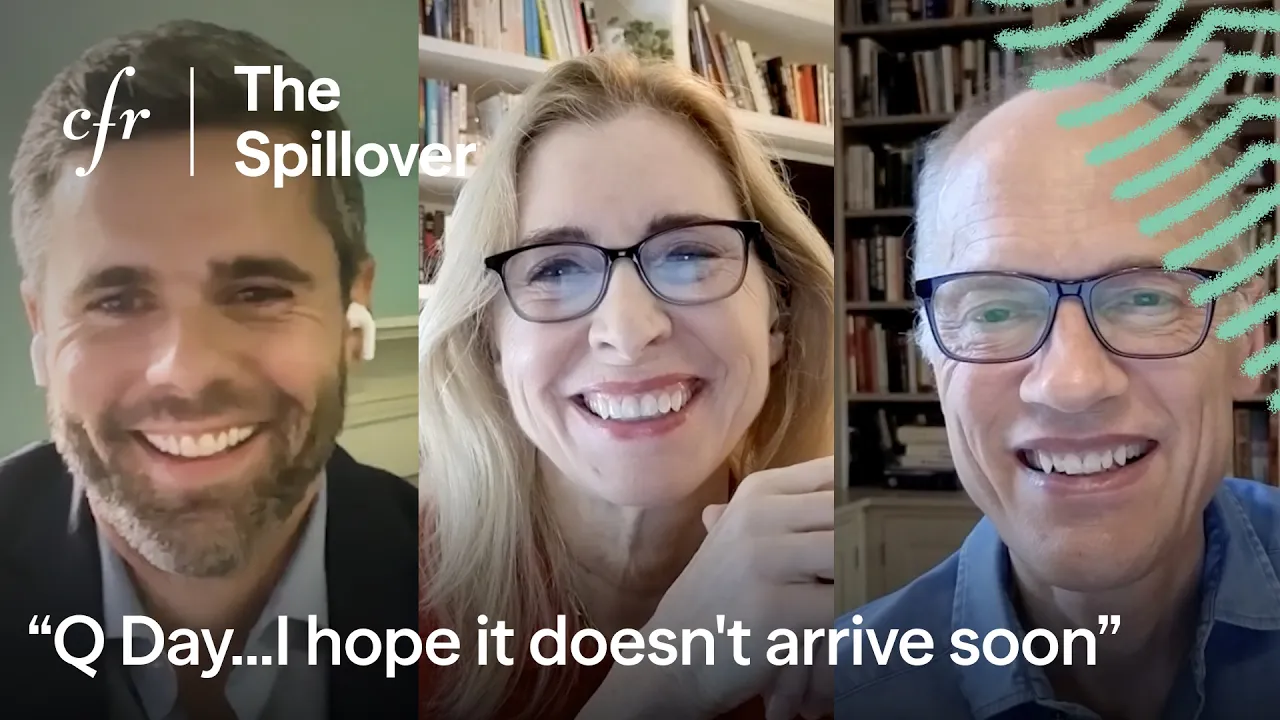
On this episode of The Spillover, Rebecca Patterson and Sebastian Mallaby, joined by CFR expert Jonathan Hillman, examine the U.S. government’s rapidly growing portfolio of equity stakes in private companies, including a potential stake in OpenAI.

Published
Hosts
 Rebecca PattersonCFR ExpertSenior Fellow
 Sebastian MallabyCFR ExpertPaul A. Volcker Senior Fellow for International Economics
Guest
 Jonathan E. HillmanCFR ExpertSenior Fellow for Geoeconomics
[Video: https://youtu.be/dUIINaP9Now]
Transcript
This transcript was generated using AI and may contain errors.
MALLABY:
The AI lab, OpenAI, has proposed giving a 5% stake in their company to the U.S. government. The CEO, Sam Altman, has suggested that other AI companies should follow his lead. Now, Altman says it’s to ensure that Americans get more of AI’s future upside.
Alternative theories might be that he’s trying to get the U.S. public or the U.S. government on his side to make friends with President Trump or just to secure government contracts.
PATTERSON:
Yeah, there’s an AI-specific U.S. government question here, clearly, but there’s also a bigger issue, Sebastian, and both have lots of spillovers. You know, we increasingly have an activist U.S. government that has announced plans to take stakes in dozens of companies since last year. And, you know, there’s so many questions.
Is this just the cost of national security and resilient supply chains and we just have to do it? Are we building a sovereign wealth fund like Norway or Singapore to benefit households? Are we going to be distorting capital markets?
How are we going to know if we get a good return? Like, these are taxpayer dollars in some cases. You know, the government’s putting its thumb on the scale of the private sector.
So what does all that mean?
MALLABY:
It’s a lot of questions. I’m Sebastian Mallaby.
PATTERSON:
And I’m Rebecca Patterson.
MALLABY:
Welcome to The Spillover. All right, Rebecca, you’re going to have to carry the load here. I’m almost on strike.
It’s like 95 degrees in London. I feel like I am in the belly of a fire-breathing dinosaur. And do you know what the thing about dinosaurs is, Rebecca?
PATTERSON:
I’m not sure where you’re going with this, so no.
MALLABY:
They do not have air conditioning. London does not have air conditioning. I mean, we’re in this time warp.
We haven’t figured out that, you know, it used to be a temperate aisle, all cool. You could, like, wear your long sleeves all the time all year round. The elegant bow tie for Wimbledon, whatever it was, it was all great.
No, no, not anymore. It’s an outrage. It’s a danger.
I’m sitting here and I can’t even have the window open because our podcast producers, charming though they may be, will probably tell me that the noise from the street is interrupting the recording. So, you know, I need you to go first now, Rebecca.
PATTERSON:
It’s all over to you. We’ve got cranky hot Sebastian today and you have my sympathy. I remember living in Rome in the summer and the choice was open windows, so maybe a breeze came in.
But if you kept the window open, then you got the noise and you got mosquitoes. Closed window, no mosquitoes, but you didn’t sleep. You just laid on your bed and sweat all night.
So I feel your pain, my friend. But let’s carry forth, shall we? Government intervention, industrial policy.
Okay, just think cool thoughts while we do this.
MALLABY:
I’ll do my best.
PATTERSON:
Since Trump came back to the White House last year, the U.S. government has stepped up intervention in the private sector in a big way. And we’re going to hear in a few minutes from our colleague at the Council on Foreign Relations, Jonathan Hillman. Very excited to have him on as a guest today because he and his team have started tracking these things.
30 announced investments worth $26.7 billion. And that’s involving direct government ownership. So basically we’re talking equity stakes and warrants.
And what’s interesting here is it’s not like one unifying organization within the government doing it. It’s all over the place. We’ve got the Departments of Commerce, Defense, Energy, and then more recently created the International Development Finance Corporation.
So you’ve got 17 deals with Commerce. You’ve got six with the DFC. You’ve got seven with Defense, two with Energy.
Again, it’s a bit all over the place, Sebastian.
MALLABY:
Yeah, and that’s what makes Jonathan Hillman’s article, his research, so cool because it is all over the place. So you needed somebody to come along, I think, and put it all together. So I recommend people check that out on the CFR website.
I mean, the standout deal from, I think it’s 30 that have been announced, is clearly the Intel deal, which was last summer. The US government now holds fully 10% of Intel’s equity. So it’s Intel’s largest shareholder and the stake is worth a lot of money, tens of billions.
And interestingly, the government didn’t actually have to pay for that stake with a new appropriation from Congress because it had some leftover Biden-era cash from the CHIPS Act. And it used that kind of grant fund instead to buy an equity stake in Intel. So weirdly, a Biden-era grant policy is funding a Trump-era equity acquisition policy.
PATTERSON:
So we go from the intervention in Intel, which you could argue was maybe national security, maybe a struggling company that we needed to support. And then we fast forward to OpenAI, which is a completely different ball of wax. Altman is talking about giving the US this 5% stake in this company, as you said, and he wants these other AI firms to follow suit.
So in contrast to Intel, these companies are not struggling. We’re seeing the money they’re making and we’re seeing their stock valuations, if they’re listed, going up. OpenAI has plenty of access to capital.
They’re planning an IPO next year, probably, or maybe even this year, we’ll see. So what is it all actually about? Is it industrial policy?
Is it a way to deepen ties with the administration ahead of the IPO? Or are they just trying to get government contracts? Again, it feels very noisy to me, Sebastian.
MALLABY:
Yeah, I think I’d take the other side of it slightly on the OpenAI case. I mean, as I’ve argued before on the spillover, I’m not sure that they’re in such great financial state. They’re certainly losing money, not making it, and the IPO might happen next year.
We’ll see. I think they are not in such great financial position. I actually think that’s why Sam Altman is proposing that the government should take 5%, because it wants to.
Really?
PATTERSON:
You think this is a backstop?
MALLABY:
Well, I think it’s actually a signal to the rest of the market that the US government is on Sam Altman’s side. And therefore, the US government is going to ensure that Sam Altman gets all kinds of contracts. And therefore, the IPO makes sense under that basis.
Because if you’ve got the government as your chief salesperson, ensuring that you do get business and that you do stay afloat, then you will stay afloat. So that is the clearest rationale to me. And we can come back to that.
I mean, I think the reason I believe this is partly because Sam Altman is in financial trouble. And the last fundraising deal was kind of a smoke and mirrors job where they said they’d raised $122 billion. But actually, if you did the analysis, they’d only raised about one third of that.
But it’s also the other thing is, you know, if you look back at what’s happened to Intel, since the government took a stake last year, it’s quite remarkable. I mean, there was a great New York Times story detailing how Howard Lutnick, the Commerce Secretary, had called other tech leaders, including Elon Musk, including Tim Cook at Apple. And I think there was another one too.
You know, basically saying, hey, next time you’re doing something big and you need a chip supply, I need you to include Intel on your list. So that’s the kind of backing that of course, you know, makes it kind of great for Intel. And I think Altman is expecting and hoping a little bit of the same.
PATTERSON:
It sounds kind of Chinese.
MALLABY:
Yeah, it does sound a bit Chinese. But it’s kind of messy. Yeah.
I mean, it’s like China, except it is a heck of a lot messier, right? At least with the Chinese, they have a five-year plan. They lay it all out.
They’ve got a theory about what they’re really up to. But again, you know, if we look at, say, the Intel deal, just as an example, you know, what was really the purpose there, right? When the Biden administration passed the CHIPS Act, one of the stated goals was job creation.
Well, that hasn’t worked because actually Intel, I think it’s got rid of 15% of its workforce since the government took its stake. On the other hand, if you had a different objective for the policy and you said that the goal was basically US national security, you know, the US depends too much on Taiwanese manufacturer of cutting-edge semiconductors. It wants to nurture Intel as an alternative.
If that’s the goal and you’re trying to strengthen Intel by driving up the stock price, then it worked incredibly well. Because, you know, indeed, Intel is at like 400% or something, almost 400% since the government took its stake. That’s way, way more than the Philadelphia Semiconductor Index is up, which is sort of the obvious benchmark to compare it to.
But then maybe on the third hand, and I’ll stop here in a second, you know, the government could have helped Intel without taking that stake, right? I mean, it’s not going to sell the stake. So what’s the point?
Is there really a financial upside to taxpayers that the government owns a stake in Intel, which on paper has accrued a lot of value, but in practice, you’re not going to realize the value. So what I’m saying is, you know, it’s all, it’s all a mess. It’s all, you know, we don’t have a clear theory of what the government is trying to do by mucking around in the private sector.
PATTERSON:
Right. And I’m depending on John later to explain to us what that goal is and the strategic vision that I am not able to see. But maybe, Sebastian, I think we could talk a little bit about what is happening now is unprecedented and messy and unusual.
But we also need to acknowledge it’s not new, right? Lots of governments around the world intervene and the U.S. itself, even though we talk about free market capitalism, laissez-faire capitalism, we’ve been intervening for decades. You know, if you think about 2008 and too big to fail, I was at JP Morgan at that moment.
And I remember sitting at that desk and people were stoned silent, waiting for shoes to drop. You know, Washington ended up owning something like 92% of AIG, 60% of General Motors, chunks of several of the biggest banks in the countries. That was, that was big, big stakes.
Now we’ll come back to it in a minute. We’ve seen even more during World War II. Of course, the government didn’t just make investments.
It really commandeered entire industries, building shipyards, factories to make aircraft, synthetic rubber plants, et cetera. So the thing about those interventions though, is they were very finite and they were times of crisis. So it wasn’t an equity stake for taxpayer benefit or, you know, for some future goal in national security per se.
It was, we have an emergency, we have a crisis, we need to do this. And as soon as we’re done, we get out. And going back to 08, you know, in the case of those interventions, I mean, they were big, but the government sold its last General Motors shares around 2013.
AIG was around 2012. So from start to finish, it was done in about five years. So they weren’t invested very long.
The goal was stabilize the company, get the hell out, pardon my French, and let the free market do its thing again. So I feel like this time, you know, that was about saving jobs. This time it’s not as clear.
Right.
MALLABY:
And, you know, again, that was a response to a clear emergency in the 08 crisis was obviously massive. And you didn’t even get to the fact that JP Morgan, your bank was being strong armed into buying other banks that were in trouble. So, you know, that was like a six alarm fire and the difference this time, and the evidence that the policy mindset really has shifted is that we’re seeing this big uptick in government intervention in the private sector without there being a comparable economic crisis.
I mean, growth has been just fine. So that shows that we’re in a different zone. And I think the change really begins with the pandemic, which brought the government into, you know, detailed management of demand and sort of intervention in the economy because it had to.
And then that was followed by Russia’s war in Ukraine. And the two things together sort of brought home the point that, you know, economies can be incredibly vulnerable to supply chain disruptions. If you’re importing, you know, all of your energy for a big chunk of your energy from Russia, as the Europeans were before the Ukraine war, all of a sudden you’re cut off.
And, and that’s just a huge economic shock. And in COVID there were, you know, semiconductor shortages, all kinds of other shortages because ships were not moving from continent to continent. So I think that really alerted people to this vulnerability to supply chain shocks.
And then that led to a, just a more general willingness of the government to get involved in shaping the economy for sort of strategic resilience, quote unquote reasons. And the CHIPS Act of 2022, which I referred to earlier, because that was the kitty of money out of which the government financed the Intel stake that was signed in 2022. It put roughly 52 billion into a pot for being granted and given to semiconductor manufacturing plants within the U S.
There was also an investment tax credit that went with that worth around 24 billion, which authorized a whole bunch more for research. And it got bypass and support. But generally it was a Biden policy.
The house Republicans fought against it. They called it a blank check. And then the other end of the political spectrum, you had a few holdout Democrats like Senator Bernie Sanders, who said, I’m voting against this thing, you know, because if we’re going to give money to these profitable companies, we damn well should get something back.
What about an equity stake for the taxpayers? And so the funny thing is, here we are today and this taking of equity stakes is exactly what the Trump administration is doing. And Trump and Bernie Sanders, the left and the right are on the same page.
Who would have thunk it?
PATTERSON:
Yeah, no kidding. No kidding. And it reminds me that you and I discussed this just a few episodes ago, just that we have populists on the left and the right kind of coalescing around similar policies in some cases.
And it’s, it’s fascinating. It’s intellectually fascinating to watch. I’ll leave it at that.
But going back to this administration’s approach, you know, what feels lacking to me is a person or one department or agency that at the end of the day is responsible, it’s accountable for what the strategic vision is for making sure that the different, you know, commerce, defense, energy, state, whoever, that they’re all talking to each other and coordinating, um, and that there’s some sort of audit trailing and oversight. Like, you know, in 2008 and 2009, the interventions, you know, the GM stake, AIG, et cetera, et cetera, those were all approved by Congress.
As you just talked about, you know, there were clear parameters and they were concentrated in a few areas that were seen as systemically important for the economy. And today, you know, when I look at John’s tracker on CFR’s website and I look at specific companies and the industries involved, I guess most of them you can put under the national security umbrella. Um, but it’s still kind of a mishmash, you know, you’ve got semis, critical minerals, nuclear energy, defense, aviation, AI, quantum healthcare.
Um, and there’s no single law authorizing it, uh, as a portfolio, it doesn’t feel like it’s crisis management. So I guess it’s strategically important sectors for the economy, but again, it’s, it is a new approach for the government and it’s, and it’s definitely a different approach and I’d argue probably a different scale than what we saw under Biden.
MALLABY:
Yeah. Yeah. I mean, it’s certainly different.
I don’t know if you saw the speech that, um, treasury secretary Scott Bessent gave recently in New York. Did you, did you take a look at that?
PATTERSON:
Yeah, yeah, yeah. The economic club of New York.
MALLABY:
Yes. I mean, you know, he was trying that to sort of put a kind of formula strategy around what the government’s been doing in terms of intervening. Um, but it, you know, it does feel even that he was trying to put coherence on it a bit like a sort of all of the above rationale, right?
So to the, depending on the situation, we’ve got a rationale to justify, you know, taking steps in the private sector if we feel like it. So when it’s Intel, our argument is going to be, you know, we don’t want to depend on Taiwan too much. And so we need to build up domestic semiconductor manufacturing, kind of similar with the rare earths intervention, not wanting to depend on China with rare earths, but a bit different or the same, because if you take a company like MP materials, which was one of the rare earth investments that US government has done, um, you know, it’s, it’s partly that you don’t want to get the rare earths from China, but it’s also that there’s a genuine market failure within the US. I mean, unlike with semiconductors, mining and processing are not really attractive businesses in the US because of the costs and the environmental concerns, especially, especially when you can get the stuff cheaply from China.
Um, and then you move on and you, you know, we mentioned open AI already a few times, but you know, that’s a totally different thing. It’s, it’s, you couldn’t argue that, um, you know, we’re short of AI companies in the US and that all the AI models are being built in Taiwan or somewhere else. And no, I mean, the leading labs are basically in the United States and there’s several of them.
And if open AI went away, it probably wouldn’t matter to frankly. So it is, it is a bit of a hodgepodge. Um, I can understand with open AI.
Um, but then again, this gets to the point that it’s a very, very different type of argument. You know, the argument would be look, wealth in America is already extremely concentrated at the top. You know, the top 1% own nearly a third of the wealth and the bottom half own collectively an astonishingly small 2.5%. Uh, and if AI, the argument would go, if AI raises the returns to capital relative to labor, this inequality, this divide could widen further. And by the way, you know, lots of human labor will be rendered obsolete. So whoever owns the machines will clean up and get all the profits. Uh, and in that kind of future, you need for political reasons to take those 5% of the shares in open AI and distribute them in some way to the public interest.
It could be that the government holds a stake of 5%, or it could be that they’re putting these Trump accounts, which are for, you know, Americans under the age of 18. Um, and they’re supposed to accumulate and mature, uh, to be helpful to the start of life, um, much later on. So, you know, we, we, we’ve got this sort of different types of intervention with different types of rationale.
It’s not clear if there’s a strategic framework around it. Um, and you know, yeah, uh, we’re in a new era, that’s for sure. Understanding the new era, slightly more complicated.
PATTERSON:
Yeah, no kidding. Um, you know, I, I also am curious if, and when Congress gets involved, you know, it, it, this has been, look, this administration is very executive branch, heavy executive branch leading. We get that, but it also seems like there would be some benefit to lots of different people to have more of a legal framework and a congressional oversight and blessing of whatever’s going on here.
You know, we know that the clock’s ticking, you know, Congress in August is going to go on recess and they’re going to go off to campaign for midterms and nothing else is going to happen, uh, this year, probably. So it doesn’t seem like Congress is going to do anything in the short term, although I will note, Sebastian, there, there is at least one or two bills that might do something that I probably worth mentioning. The House Defense Production Act reauthorization bill, it would include a framework for the executive branch equity investments.
So basically make them retroactively, um, blessed. So it would give them a legal container basically for the portfolio that exists today. You know, I’m sure that members of Congress are also keeping a close eye on the lawsuit against Intel, which argues that a country based on private enterprise requires Congress to authorize the president or a federal agency to be a partial owner of a publicly traded company.
So the lawsuit is interesting. Congress thinking about giving the executive branch more formal authority is interesting. Um, we’ll see where it goes.
MALLABY:
If it goes anywhere this year, what I wonder is, you know, if, if Congress does create a legal structure around some of these interventions, whether they go after what is obviously one of the big concerns, which is, you know, what about the potential for corruption in these deals? What about if the administration, you know, intervenes in the economy, take stakes in things in a way that helps the friends of the president, the family, the president, um, you know, does it create other conflicts of interest? You could imagine that the government owns a stake in a company and then it wants to help it.
Um, but doing so might be against the national interest, even the national security interest. Um, so it seems to me that congressional action trying to prevent those sorts of conflicts of interest would be super useful.
PATTERSON:
But, and I don’t want to interrupt you, but we spoke about this on our last episode in the context of cryptocurrency with the Clarity Act, which includes a provision that would prevent the president, his family, Congress, et cetera, et cetera, from having stakes effectively, um, in cryptocurrencies. And we’ve seen that’s completely stalled the bill.
MALLABY:
Yeah. You’re only bringing that up because you won the debate.
PATTERSON:
Barely, barely. I think it was a technical tie, technical tie, but you’re gracious. You’re a gracious loser.
You’re a hot temperature wise, gracious loser. I don’t mind losing at all. Oh man, you need AC quickly.
All right. I think we should get back to open AI. Cause there’s a different rationale that we’ve touched on a little bit.
And I think it’s worth digging in a bit more. Um, can we build something to benefit a broader set of Americans and Bernie Sanders, you say Saunders, which I’m sure he’d enjoy that pronunciation. Bernie Sanders, you know, he, he’s been pushing this summer for a one-time 50, five, 0% tax on large AI companies paid in stock, which would produce federal ownership, voting shares, government board seats.
So very, very interventionist, not for national security, but to try to address the inequality that you talked about a few minutes ago. And, you know, I’ve been thinking about his proposal. I’ve been thinking about Altman’s proposal and I have spent nearly 30 years working with sovereign wealth funds around the world that create these pockets of capital to benefit their populations.
And I, I, how would this work in the U S it’s not like a strategic oil reserve or even a strategic mineral reserve, a strategic wealth fund, where do you get the capital to go in it? So if we take it from these stocks, um, if it hurts the shareholders, existing shareholders, or the board hasn’t approved it, we’re going to have lawsuits like we have Intel. And then let’s say you get the money and it goes in this wealth fund.
Who are you distributing it to? Is it every American? Is it Americans who lose their jobs to AI?
How do you define that? And to make it big enough. So it moves the needle.
Usually these funds take years to develop. So it’s probably not going to be ready for prime time as job displacement potentially happens. So I, I’m not, I’m not so sure this thing is easy and quick.
You know, I think about places like Norway and Alaska, those funds came from natural resource capital that comes in every single year. There’s another model. I think of like Temasek in Singapore, this is a government entity.
It’s like a private equity firm. It has a mandate to go find commercially attractive investments. Long-term it makes them gets the proceeds.
One chunk runs the company. One chunk goes to the government, which then goes to the population. I think that’s what we’re talking about in the U S, but this is not exactly like that.
And they started in the seventies. So they have, they have governance, they have oversight, they have annual audited reports. They have structure.
It took them years to get where they are. So I just, I don’t know. I’m, I’m nervous that this whole sovereign wealth fund with AI to help Americans actually become something.
And if it does anytime soon.
MALLABY:
Yeah. I mean, I did some back of the envelope math on this and you know, if you make a list of the 12 biggest AI companies in America, and I’m including things like Apple, right. Which is a big company irrespective of AI, but it incorporates AI, you know, into Siri now and so forth.
So let’s just say for the sake of argument, we’ll take this maximalist definition of what the 12 top companies are. They’re big companies. And let’s imagine the government just helps itself expropriates 5% of all these companies.
And then sort of shares that out among American citizens, age below 18, how much do they get? Well, the kind of immediate value of the accounts, let’s say the money is kind of divided up into accounts is a bit under $20,000 per citizen under 18. And, you know, obviously that’s a one-off.
And if it’s supposed to compensate for a deep disruption of the labor market because of AI and people have less good job prospects and so forth, they ain’t going to cut it. I mean, that’s just 20 billion. It’s not, you know, if your career prospects or wage prospects have been severely curtailed, that just isn’t enough.
You know, and you mentioned Alaska, you know, the Alaska Permanent Fund was created in 1976. It’s funded by oil royalties and it took six years for it to start distributing any money at all to people. And if you fast forward to last year, the dividend was just $1,000 for each of Alaska’s residents.
PATTERSON:
So I think where we’re landing here, Sebastian, is that a government-run AI wealth fund of some sort that benefits some broader group, theoretically doable, but it would need time to develop. It would need legal protections, governance frameworks, and it would have to be really big to move the needle for some subset of the population, bigger than what you’ve even talked about, which is already pretty incredible. And best practices says it needs a lot more transparency than what we have now.
So it’s not going to happen quickly and it’s not going to be benefiting Americans probably quickly. So we’re delineating that from the economic and national security stakes. So we have two very different things, but both forms of government intervention.
I think, Sebastian, maybe this is a good time to pull in John Hillman and we can start picking his brain about this and see what else he’s thinking of that maybe we’ve missed. Does that sound good?
MALLABY:
It sounds excellent. John, thanks so much for joining us. Let’s start with the tracker that you built for CFR to keep tabs on these different government interventions.
And I guess the question is, was I right at the top when I said that this is something that, you know, there hadn’t been much transparency, the data was kind of scattered about, nobody brought it together. And so this was the service that you’ve provided, that you’ve created one consolidated dashboard where somebody can look at all of the different equity stakes the government has taken since the Trump team got into power in January last year.
HILLMAN:
Yes. So I think we created it for a few reasons. One is that the details are just hard to find anywhere.
And then the ones that do exist are quite dispersed. And so we felt like it would be helpful to pull it together into one place. But this is definitely the type of project where I would be happy to be put out of business tomorrow if the government would like to make this information available in a central place with, you know, obviously additional details too.
The other reason that we did this is, I think we’re really only seeing the tip of the iceberg in terms of this deal activity. So, you know, Rebecca mentioned at the top, we’ve, we’re tracking about 30 deals right now that have been announced that involve equity or quasi equity stakes since January of 2025. I know, you know, from talking with government officials that, you know, just at the department of war alone, they are evaluating hundreds of deals. [VERIFY AGAINST AUDIO: “department of war” — likely “Department of Defense”]
They may not do, they may not do hundreds of deals, right. And they will have constraints. But there, I think we were only seeing really the leading edge of a lot more activity that, that could follow in the weeks and months ahead.
PATTERSON:
So let me follow up on that, you know, the possibility that the government might take a state stake in open AI or other AI firms. I think you gave an interview recently and you described it as something more akin to political insurance than industrial policy. So when you look at this, but also those 30 or so announced deals that we know of, not the ones that else, you know, what else could be coming, are they all defensible?
Are some more defensible than others? You know, Spirit Airlines was in the media for a few weeks. Trump thought it would be nice to bail them out.
And then he didn’t, they went bankrupt. Like, I don’t even know where that fits in. So I would love just to get your perspective on this.
Like if you were in the government today, would you be doing all these deals?
HILLMAN:
So in my mind, I think there are two primary criteria that are driving the deals that we’ve seen so far, the vast majority of them. So the first one is, is this an area that’s strategically important? Now that can sound a little bit vague, but I think you can go through the list.
And I think you can argue that the vast majority of the deals announced since January of last year do have some strategic relevance. We, you know, you, you talked about critical minerals and semiconductors. You know, these are areas that they matter commercially, but also if our military doesn’t have access to them, then that becomes a very serious issue.
The second criteria that I think is quite important, and this is where the open AI comparison starts to get interesting, is there needs to be some type of market failure, or there needs to be a lack of private capital going to these areas. And so I think for, for example, the nine quantum deals that were announced by the commerce department in recent weeks, you know, that’s an area that’s very challenging to attract enough private capital, given some of the uncertainty about the development of those capabilities in the timeline. And so the government providing this, this patient capital can be useful in mobilizing more amounts of private investment.
And the argument for quantum, one version of it could be something like this, right, which is, do we want to live in a world in which an adversary acquires the capability to break traditional encryption for Q day to arrive, and for someone to have that capability to get through, you know, the encryption that our phones rely on, our financial services rely on, and so forth. And I think that’s something that it’s worth the government spending a bit of money, given the stakes there, right? The stakes seem quite significant.
And there does seem to be a private capital shortage.
MALLABY:
John, I think, I think I just learned a new word, Q day, that quantum Q day.
HILLMAN:
I like that. This is where the whole world goes wrong, because encryption doesn’t work. I’m contractually obligated, I think, to reference a task force report that Rebecca also served on that we published last fall, on economic security.
And we looked at AI, quantum and biotech, and looked at market impediments and failures in those areas. Some of our recommendations involved the government investing, some of them didn’t. But that was my introduction to Q day.
And I hope that it does not arrive soon.
MALLABY:
Okay, one more interruption. And you said the rationale with quantum is that, you know, capital won’t flow to such a difficult challenge. But isn’t it the case that Google or Alphabet, whichever you call it, is pouring almost a billion bucks a year into its quantum lab?
HILLMAN:
Yeah, yes, they’re definitely spending on quantum. Quantum is an area actually where we are being outspent by the Chinese.
MALLABY:
Well, that’s a different claim. That’s a different claim. I guess what I’m asking is, is there really a market failure?
Or I mean, how confident are you that it isn’t just a case of sort of pet projects getting government funds because there is persuasive entrepreneurs who have successfully lobbied their way into the government’s good races?
HILLMAN:
Yeah, look, I think you can always debate why a specific firm was selected. And that’s one of the risks and the set of activities that we see going on. Commerce announced nine companies.
And so I think it was really putting a broader bet on the sector. This is a little bit like insurance, right? If you believe that the consequences of not having that capability are significant, which I believe, then it is worth the government providing some patient capital.
The joke with quantum computing is that it’s always two years away, right? And it’s been like that for ages, and maybe it’ll surprise us. But this does seem to be an area.
And there are other types of quantum we could talk about too, sensing and communications. But the computing part seems to be especially important.
MALLABY:
So I know in previous administrations, these interventions were often loans and subsidies rather than equity stakes. And what benefit do you think the government really gets from the equity ownership? Intel has great paper gains, but maybe the government won’t realize them.
You know, if they did realize them, I guess that would undo the strategic purpose of supporting Intel to be a prosperous company. I mean, where do you come down on sort of using equity as an instrument versus grants or other interventions?
HILLMAN:
Yeah, I think there’s a few different reasons or situations in which equity may be more useful. Ultimately, it’s just a tool, right? I mean, the current administration has made this something of a signature tool that they’re using quite frequently.
But it’s not as if, as you mentioned before, it’s not as if it hasn’t been used before, right? I think, you know, there’s the World War Two examples. There’s also 1980, the bailout of Chrysler included some warrants that actually produced a pretty nice profit for the taxpayer when exercised.
And the argument then and one of the arguments now is that the taxpayer is shouldering basically only downside if you don’t give that upside opportunity. So it’s attempting to correct for an imbalance in terms of who’s holding the risk.
PATTERSON:
How does the taxpayer get that upside? Again, to Sebastian’s point, if you monetize the stock, you take profit on the gains to give to the taxpayer. That signaling effect is going to push the stock down, which hurts the government, the company and the shareholders.
Then you’re going to have a lot of lawsuits. How do you do that logistically?
HILLMAN:
Yeah, so I don’t think we have the structure to do this at scale right now. I think it’s very experimental. I think the vast majority of government officials attention is being put on screening potential investments, and I think very little attention is being paid to how do we exit these?
I think that’s important because you should be thinking about exits as you’re entering these and not down the road. And so you could imagine some structure like you were talking about a sort of sovereign wealth fund type structure that rolls up all of these investments that’s maybe run by a group that is somewhat insulated from politics. That may be too much to ask.
And then it could sell some stakes occasionally, and maybe the signaling effect wouldn’t be quite as severe then as if the government decided tomorrow to sell a good chunk of the Intel stake, which I think you’d want to avoid.
MALLABY:
Is this something that the Biden administration had thought through? I think there was consideration of setting up a fund in that period. And if it were to be set up, let’s say the Democrats got in next time, do you think it would look more like the Singapore model, the Alaska model?
What would be the choice?
HILLMAN:
Yeah, I’m not sure that the debate ever advanced far enough because it would require congressional action. I’m not sure it got to a point where the entire blueprint had been written. It was definitely an idea that was gaining traction, I think, both in the Biden administration as well as President Trump, I think, on the campaign trail was mentioning that this is interesting.
He also had officials earlier in his second term working on this. I think there’s a lot of agreement that something like this could be useful. Where it gets complicated is perhaps not surprising.
It’s like, what should the scope of this be, right? I mean, I’ve been talking primarily about national security applications, right? But you could imagine someone saying, we need to use something like this to expand the availability of public housing, right?
Totally different yet a justifiable goal. And so the scope of it, I think, would be heavily debated. I would personally prefer if we kind of started small and let’s see how we do and expand from there.
The other big question is how is it funded, right? And so different proposals have been given for that. Everything from let’s roll existing investments into it.
Let’s go get more appropriations, which I think would be politically difficult. Let’s invite foreign investors from allied countries who’ve made giant investment pledges to put capital into part of this. Let’s invite institutions and retail investors and charge some small fee to pay for the operations of this thing.
So this is very wide open territory support from both sides of the aisle. But the details are really, I think, yet to be determined.
PATTERSON:
Yeah, I remember when the Democrats were putting forward some of those ideas and there were some op-eds written, etc. And the immediate and loudest pushback was with what money? Just given that the vast majority of sovereign wealth funds in the world have a surplus of capital, often from natural resources, although not always, that fund these things.
And meanwhile, we’re running a budget deficit around 6% of GDP. So it’s not like we have money laying around to spare. I can’t imagine the foreign governments are like, oh, sure, we’re going to give you money for your slush fund with no governance or oversight.
It has to be professionalized. Yeah, I’m not against the idea per se. I think it’s far from straightforward.
MALLABY:
I would piggyback on that one slightly. It’s not just that we have a budget deficit in the United States. We have a current account deficit too.
And so another way that some governments have financed government accumulation of assets, maybe corporate assets abroad, is that they have this massive great trade surplus. They accumulate foreign currency as a result. And they say, well, what do we do with the foreign currency?
Well, we’ll go buy shares in whatever, American companies, European companies, whatever. They create an investment fund out of the surplus receipts from their trade position. And the US has the opposite.
PATTERSON:
That’s Singapore and China. That’s what they’ve done. Yeah.
Yeah. All right. We don’t mean to pick on you, John.
This is good though. Go ahead.
HILLMAN:
Yeah. No, I was going to say, I think there may be some regret too in terms of how we manage the revenue and assets that we do hold in things like social security, right? Where you could have imagined a different version of that many years ago, including some portion of it being in boring index funds or something, right?
That would have generated more of a return. And you were talking about that earlier. That is the key here.
Whatever is, if anything is set up, it’s going to take time to grow it. And you’re going to have to ride through some difficult periods too. That sounds like a wise point to end on.
PATTERSON:
John, thank you so much for your perspectives today and for letting us kind of dig at you a little bit. It was extremely helpful to hear your thoughts, especially because you’ve worked in three different cabinets, right?
HILLMAN:
Yeah. State, USTR and Commerce.
PATTERSON:
Right. So you’ve seen this from lots of different angles. And I think that makes your insights on this even more useful.
And we appreciate your tracker very much and we’re going to keep watching it. So thanks for joining us.
MALLABY:
Thanks for having me. Thank you. So Rebecca, what I get from this conversation is that picking winners has at least a couple of spillovers and maybe they point in opposite directions.
On the negative side, we’re already getting some market distortion, some sense that government is willing to change the playing field in an unpredictable way, which maybe reduces business confidence and so on. So there’s a kind of mispricing of risk, a sort of maybe just an increase in risk that comes from the perception that the government is willing to throw its weight around more. So that’s the negative spillover.
And the positive ones may materialize in the future, but they’re not here yet. And I guess there’s a couple. One would be that this does turn out to be a smart way to increase America’s economic security, that by taking equity stakes in rare earth companies and semiconductor manufacturers, we do reduce dependence either on China in the first case, on Taiwan in the second, and that’s a good thing.
Or, and I think it’s a bit more speculative, the upside turns out to be financial, that there is actually a success in creating a kind of Singapore style, Alaska style sovereign wealth fund that accumulates equity stakes. These appreciate over time, and although the financial reward takes some years to materialize, in the end, American citizens benefit because they have a stake in these companies, either through sort of government-run personal accounts or just on the government’s own balance sheet. But I want to stress, those things do seem like potential upsides, not actually realized yet.
And there seems like there’s going to be a lot of structural work and just sort of thinking through what kind of design or rules to put around any of these funds.
PATTERSON:
Yeah, I think today’s conversation has prompted me and John, perhaps, to agree that we should brainstorm a little bit on what a sovereign wealth fund for the U.S. could look like, and are there ways to fund it that actually make sense, given our fiscal position, given the inequality, et cetera. It’s not an easy one, but I think it’s worth more thought. So, who knows?
Maybe I will decide what our sovereign wealth fund looks like. Who knows? This whole conversation…
MALLABY:
In that case, I would support it straight away.
PATTERSON:
No, no, no, no, no. No, I need you to play devil’s advocate always. Tell me what I’m missing.
Tell me where I’m wrong. Our conversation today makes me more nervous than hopeful, I guess. I’m hopeful because we are doing things to have more resilient supply chains.
That is good. But I’m nervous because it feels like there’s a slippery slope. So, nuclear energy is critical.
Minerals are critical. Healthcare is critical. Well, we learned with the Iran war that helium is critical and fertilizer is critical.
During COVID, personal protective gear is critical. So, it is a slippery slope. When does Spirit Airlines become critical?
Where do you stop? And again, where does all the money come from? I don’t mean to be such a nervous Nelly today, but I think about the next government.
The Pandora’s box is now wide open, and there’s no reason the Democrats wouldn’t want to do a version of this, assuming a Democrat government gets in next. Who knows? But I would think they’re going to want to do a version of this as well.
And are we going to have better oversight, governance, or is it just this is the new world we’re in? I think today was helpful for me to understand the questions better, but I still walk away with a number of questions.
MALLABY:
Totally, yeah.
PATTERSON:
Which I don’t love doing that to anyone listening to us, but we’re going to work on answers. Don’t worry. And in the meantime, we always like to end our conversation with a few things we saw this week that were interesting, funny, weird, or underappreciated.
And Sebastian, I’m counting on you for something wonderful and hopeful, despite the 95-degree weather there, because mine is kind of dismal. The Atlantic Magazine’s latest cover story is about how Americans are not reading anymore, and that’s across age groups, gender, different demographic cuts. The article cites a National Endowment for the Arts survey that found that fewer than half of U.S. adults read a single book of any kind in 2022. And then another survey from the American Time Use Survey said that the share of Americans reading for fun on a given day in 2023 was 16%. So I get it. Social media, TikTok, all this stuff, people’s attention spans are shorter, they just go on their phones.
But I think there’s an important underlying issue here, which is that reading actually helps develop your brain, and it teaches you critical thinking and intelligence. And Sebastian, you know this better than anyone. In an AI world, one of the most important human skills we’re going to have left is creative critical thinking, and that depends in part on reading.
So to me, we’re going in the wrong direction in a pretty big way in the States.
MALLABY:
Yeah, yeah, I noticed that. It’s interesting that the first statistic that you cited was 2022, so that’s before ChatGPT became a factor. So we can’t pin that on AI, but we can pin it on social media and the other culprits that you were describing.
Yeah, it’s worrying. I was asked on another podcast the other day, if I had a billboard and I could put a message where it would be on some big intersection and millions of motorists would see it, what would be the slogan that I would want to communicate to people? And the answer I had was prepare your mind.
Prepare your mind partly because this is actually sort of scenario building in your head, thinking through what you’re going to do tomorrow. If X happens, then I will do Y in response, or even doing it longer term. This is a technique which people have mentioned to me, whether they are global macro traders at a hedge fund, whether they are AI scientists trying to get a breakthrough with neural networks.
Even it comes up actually in athletics, teams train certain formations and they know they study the other team. And if they see a particular formation in the other team, they kind of guess where the pass is going, if it’s a football game and they intercept. So this prepare your mind idea is generally quite a sort of weirdly recurring one, but it’s also specifically relevant as you’re suggesting with an era of AI because it’s so easy to regard these days information as being something you just sort of help yourself to.
Whenever you need something, you just tap into that friendly large language model and you’ll get the information you need. Yeah, you will. But if you don’t prepare your own mind and think about it for yourself, you’re not learning anything.
And in the end, you’ll be the victim of that. And so I think it’s sort of this distinction between, use it when it’s useful. But if you end up not reading as those statistics show, I think reading is especially active form of mental activity.
People often read with a, not a novel, but I’m talking about nonfiction. They might have a pencil in their hand, they’re making notes in the margin. They’re kind of thinking about it as they do it.
Even listening to a book, you’re not stopping to make the notes. And so on a podcast, maybe I shouldn’t say this, but I think regarding listening as a perfect substitute for reading is a kind of cognitive mistake as well. So yeah, I’m concerned about that data that you cite from the Atlantic.
And since I’ve waffled on about this for longer than I meant to, I will forego bringing up anything else for my thing of the week.
PATTERSON:
I will just give you my response. Your billboard is a good thing of the week. I like that a lot.
And it’s a great prompt. Like what would you put on your billboard? That’s a fun one to noodle on.
MALLABY:
I credit Tim Ferriss, the great podcaster for that.
PATTERSON:
It’s a good one.
MALLABY:
So if you want to stay up to date on the latest episode of The Spillover, then sign up to receive an email alert when the new episodes drop at cfr.org newsletters or click on the link in our show notes. If you have an idea or just want to be chatting with us, email podcasts at cfr.org and be sure to include The Spillover in the subject name.
This episode was produced by Molly McAnany and Gabrielle Sierra. Our video editor is Claire Seaton. Our sound designer and audio engineer is Markus Zakaria. Research for this episode was provided by Liza Jacob.
You can subscribe to the show on Apple Podcasts, Spotify, YouTube, or wherever you listen to podcasts.
On this episode of The Spillover, cohosts Rebecca Patterson and Sebastian Mallaby discuss the U.S. government’s new habit of taking direct equity stakes in private companies, and its consideration of a 5 percent stake in Sam Altman’s OpenAI. Joined by CFR Senior Fellow for Geoeconomics Jonathan Hillman, whose tracker has counted roughly 30 announced deals worth $26.7 billion since January 2025, the trio asks whether these investments are a coherent industrial strategy, national security insurance, or just a messy grab bag of interventions. Below are some takeaways from the conversation.
The flagship case is Intel, where a 10 percent government stake has made Washington the company’s largest shareholder. This stake was funded not by fresh appropriations but by leftover Biden-era CHIPS Act money, meaning, as Mallaby puts it, “a Biden-era grant policy is funding a Trump-era equity acquisition policy.” The deal has largely failed to deliver on job creation, with Intel shedding about 15 percent of its workforce, but has also seemed to prop up a national champion: Intel shares are up nearly 400 percent since the stake was taken.
The hosts stress that the broader investment strategy remains scattered, with deals spread across Commerce, Defense, Energy, and the DFC, overseen by no single agency, and subject to no unifying law. At the Economic Club of New York, Treasury Secretary Bessent attempted to lay out a coherent doctrine for the shift, but Mallaby argues his remarks landed as an “all of the above” grab bag of justifications tailored to each specific deal rather than grounded in any single guiding principle.
OpenAI is where the logic gets shakiest. The real implications of the U.S. accepting Sam Altman’s offer of a five percent stake are worth examining. On national interests, the leading AI labs are already American, and “if OpenAI went away, it probably wouldn’t matter to U.S. security, frankly,” Mallaby argues. OpenAI is likely the least financially solvent of the major labs, meaning that government backing is questionable in terms of industrial policy, and might just function as “political insurance” for OpenAI. Patterson emphasizes the exit problem, warning that any attempt to cash out would backfire. She notes that “the signaling effect is going to push the stock down, which hurts the government, the company, and the shareholders. And then you’re gonna have a lot of lawsuits.” Hillman concedes that there is no structure to unwind these stakes at scale.
Hillman offers two tests for evaluating any of these deals—genuine strategic importance and a real risk of market failure. He applies them to the nine investments into quantum computing announced by the Commerce Department amid fears of “Q Day,” the moment quantum computing cracks modern encryption. Mallaby notes that with Alphabet already pouring close to a billion dollars a year into quantum, the market-failure case is thinner than advertised. Hillman warns that we are likely “only seeing really the tip of the iceberg,” with hundreds more deals under evaluation at the Department of War alone.
The most seductive idea, a sovereign wealth fund distributing AI gains to citizens, falls apart on the math. Unlike Norway or Singapore, which built their funds on trade and resource surpluses, the United States runs both a large budget deficit and a current-account deficit, prompting the perennial “with what money?” objection. Mallaby’s math finds that expropriating 5 percent of the twelve largest AI firms would yield under $20,000 per American under 18, a one-time sum that, measured against genuine labor-market disruption, “ain’t gonna cut it.” Alaska’s oil fund, for example, needed years before paying out and last year distributed only about $1,000 per resident. The hosts close on the key spillovers: the near-term cost of these investments is market distortion and mispriced risk, while the hoped-for upside in economic security or citizen wealth remains unrealized.
Mentioned on the Episode:
Jonathan E. Hillman, “Washington’s Growing Portfolio: Tracking U.S. Government Investments,” CFR.org
Want to keep up with The Spillover? Sign up to receive an email alert when new episodes are released.
The Spillover is a production of the Council on Foreign Relations. The opinions expressed on the show are solely those of the hosts and guests, not of the Council, which takes no institutional positions on matters of policy.
Producer
- Producer, Podcasts
Supervising Producer
- Director, Podcasting
Audio Producer
- Audio Producer & Sound Designer
Researcher
- Research Associate, Finance, Business, and Technology
More Episodes
 41:30Podcast
 35:24Podcast
 48:01Podcast
 47:25Podcast
 50:17Podcast
 47:25Podcast