A New U.S. Grand Strategy: The Case for Multipolar Pluralism, With Stephen Heintz
Stephen Heintz, president and CEO of the Rockefeller Brothers Fund, sits down with James M. Lindsay to discuss how the United States should adapt to an era of renewed great power competition and domestic disagreement over what it should seek to achieve abroad. This episode is the fourth in a special TPI series on U.S. grand strategy.
Published
Host
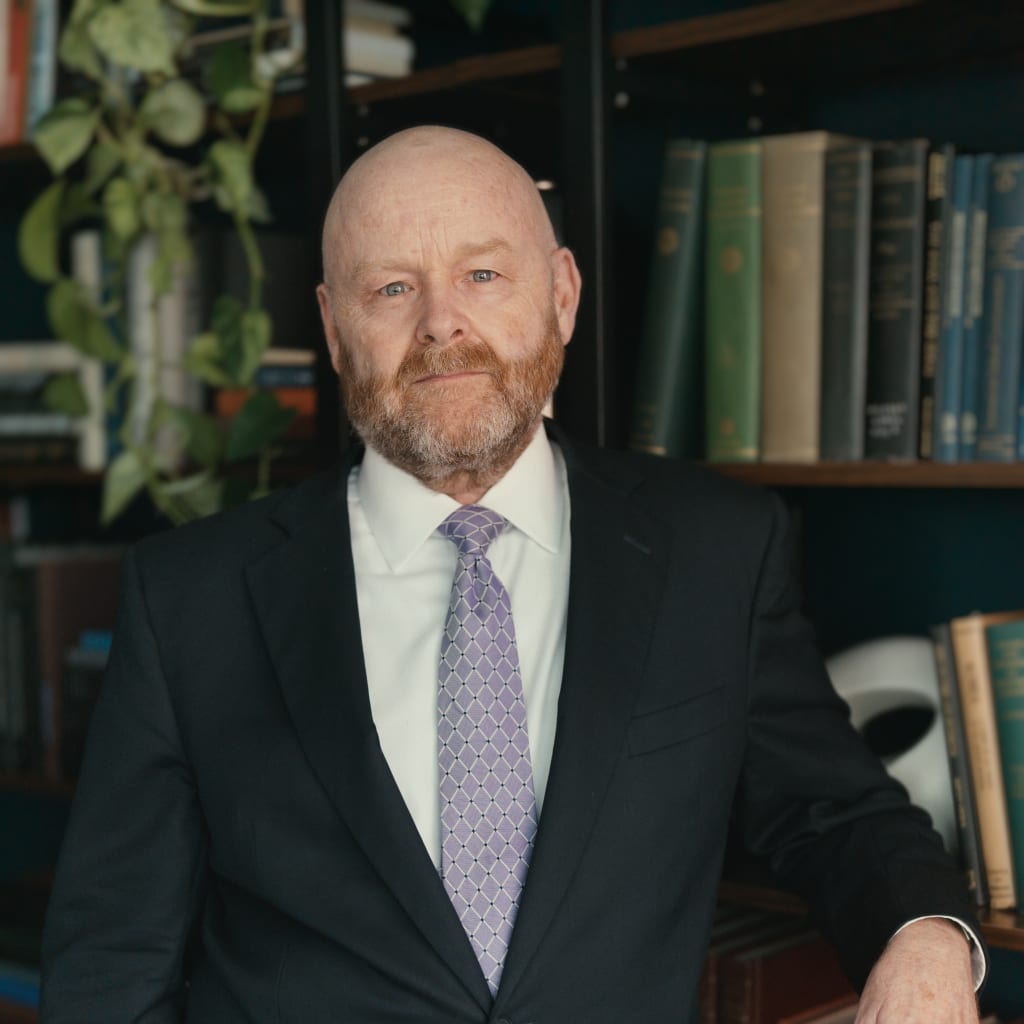 James M. LindsayCFR ExpertMary and David Boies Distinguished Senior Fellow in U.S. Foreign Policy
Guest
- Stephen Heintz
Show Notes
Mentioned on the Episode
Stephen Heintz, “A Logic for the Future: International Relations in the Age of Turbulence,” Rockefeller Brothers Fund
John F. Kennedy, “Commencement Address at American University,” June 10, 1963
Transcript
LINDSAY:
Welcome to The President’s Inbox, a CFR podcast about the foreign policy challenges facing the United States. I’m Jim Lindsay, director of Studies at the Council on Foreign Relations. This week’s topic is the case for multipolar pluralism.
With me to discuss how the United States should adapt its foreign policy to a changing international environment is Stephen Heintz. He’s the president and CEO of the Rockefeller Brothers Fund. He has led RBF, a philanthropic foundation that advances social change for a more just, sustainable and peaceful world, since 2001, Stephen is the author of the recently released report, “A Logic for the Future: International Relations in the Age of Turbulence.” This episode of The President’s Inbox is the fourth in my series on U.S. grand strategy. In the interest of full disclosure, I want to note that the Rockefeller Brothers Fund has supported work done by CFR’s Center for Preventive Action. With that out of the way, Stephen, thank you for joining me.
HEINTZ:
Thanks for having me with you.
LINDSAY:
Stephen, I wanted to chat with you because you have called for a fundamental rethink of how the United States approaches the world. You’ve argued that United States needs to recognize how much power has been dispersed around the world and how it needs to work on becoming an indispensable partner in global affairs and seeking to create a multipolar pluralism. But before we get to that prescription, I’d like to start with your diagnosis of the world we currently live in. You say we live in an age of turbulence. What features of that age stand out to you?
HEINTZ:
Well, I think we are seeing it around us every day. We are facing three potentially existential threats in the remaining decades of this century. First and most obvious, the climate crisis. Second, the prospect of a new nuclear arms race between the United States, Russia and China, and the proliferation risks that that also suggests. And third, the advent of hyper disruptive technologies like artificial intelligence, but also biomedicine and nanotechnology, all of which have the potential to change human life. So we see wars in Europe, the most brutal war since the Second World War. We see a new war in the Middle East. And we see 182 other armed conflicts around the world simultaneously, the most in the last three decades. And so I think the argument that we are living in turbulent times is pretty evident. Many have referred to this as the polycrisis. And these conditions call for a very different approach to international relations and international problem solving.
LINDSAY:
Let me draw you out a bit more, Stephen, on the notion of turbulence. Because I would imagine if I had a historian joining the conversation with us, they would say turbulence is an inevitable part of world affairs. We’ve lived through it for centuries. There’s nothing particularly new about the turbulence we face. How would you respond to that argument?
HEINTZ:
I certainly agree with the first part and I don’t agree with the second part. And in fact, in my paper, I acknowledge that history is often told in stories of turbulence, wars, genocide, plagues, et cetera. So we’ve seen a lot of turbulence even in recent decades. But why I disagree with the second part is that what distinguishes this age of turbulence is the confluence of factors that are leading us into these three potentially existential threats simultaneously. And I don’t think we’ve ever faced anything quite like that before.
LINDSAY:
I would also imagine it’s because these crises transcend or cross national boundaries. They’re not limited to a region or to a particular country.
HEINTZ:
That’s correct. And our international system, based on concepts that go back to the seventeenth century, is really based on the centrality of the nation-state as the locus of managing these affairs in concert with other nation-states. But we are finding that nation-states, even in multilateral institutions, are moving incapable of solving these enormous problems that have these existential risks.
LINDSAY:
Well, let’s talk a little bit about that. You’re fond of quoting the great management consultant, Peter Drucker, who argues that the greatest danger in times of turbulence is not the turbulence itself, but rather it is acting with yesterday’s logic. What is the outdated logic in international relations that you think we need to move beyond?
HEINTZ:
Well, I did a pretty comprehensive study of the origins and history and strengths and weaknesses of the existing international system and of the existing logic of international affairs. And I identified twelve elements of that logic. But I would say a couple of the core ones that are really anachronistic are first the concept of anthropocentrism. Putting human beings at the center and not understanding that actually human beings are not distinct from nature, but we are one element of nature and that we depend on nature for our livelihoods and our health and well-being. And we need to think in the future about how we solve the environmental crises that we face in a way that understands that we have in fact harnessed and exploited nature for centuries. And in the future, we must recognize that we need to create a sustainable way of living on this planet with the eight million other species of life.
A second, I think is the notion of great power dominance, which has really guided international relations since the end of the thirty years war, the Concert of Europe at the end of the Napoleonic Wars, certainly in the League of Nations and in the United Nations where we now have the P5 who are responsible for the most important decisions of international relations, in particular the use of force. And yet we’re seeing that this is a very different world than the world of 1945 when the United Nations Security Council was established. And the rising powers, the middle powers and even the developing nations are all clamoring for a greater role in international affairs and greater equity in international affairs. And so we need to move from this great power dominance to a more equitable distribution of global power.
A third, I would say, and maybe I’ll stop with three out of these twelve, is zero-sum thinking and the notion of blocks and alignment, which in particular became the dominant paradigm after the Second World War, during the Cold War, the notion of a bipolar world, an us versus them world. And now we’re in a place where we have this multipolar reality. The U.S. is no longer the undisputed hegemon that we were at the end of the Second World War. And we now need to think about instead of zero-sum solutions, positive-sum solutions that bring benefits for all the parties in a dispute or a conflict and the notion of variable alignment where we will be aligned with some countries on some issues and aligned with others on different issues. And that’s going to take a much more nimble and flexible approach to global problem solving, but it will be the reality of the future.
LINDSAY:
Well, let me ask you about that, Stephen, because I think many people listening to our conversation may think, but the international system is immutable. Great power competition is sort of the flesh and blood, it’s the operating software of international relations, always has been, always will be. You’re in some sense arguing that we have to redo that. Is that a utopian view?
HEINTZ:
Well, I think some people may describe it as utopian, but people describe the idea of the United Nations as utopian. And it was an act of both creativity and political will that created the United Nations. And if you go back to the Atlantic Charter of 1941, when Roosevelt and Churchill met off the coast of Newfoundland, and this was before the U.S. was in the war, Hitler had conquered almost the entire European continent. Great Britain was under mortal threat. And yet the two leaders issued a charter that envisioned a post-war world in which all peoples of the world would be assured of basic rights and the major powers would eschew the use of force in solving problems. This was a very utopian visionary concept that was put out in the middle of the darkest period of the second World War. And so my point is that, yes, some of these ideas are perhaps utopian, perhaps visionary, but we have to remember, as Hannah Arendt reminds us, that we are free to change the world and to start something new.
LINDSAY:
I would imagine, Stephen, that the European Union would be another example of conscious choices of rethinking the fundamentals of political interaction. I mean, I would imagine if you were to go back to the nineteenth century and ask a variety of European thinkers, can you imagine a Europe that is a whole free and at peace? They would’ve been stunned by the idea because what they saw were countries perpetually at war or threatening war.
HEINTZ:
I think you’re exactly right, Jim. I actually would say that the European Union is perhaps the single greatest political achievement of the post-World War II period. It’s a remarkable coming together of twenty-seven member states who agree to give up some of their national sovereignty because of the benefits of collective or shared sovereignty that they derive from being in the union. And it was originally a peace project. It has served that purpose quite well. But it’s been much more than that. It has been an economic project and a political project. And it is a great example of the kind of shifts to our understanding of sovereignty and its strengths and its inherent weaknesses and how we can compensate for that.
LINDSAY:
And I would also note it wasn’t something that happened overnight, it wasn’t necessarily inevitable. Its origins were really quite modest with the Coal and Steel Community back in the early 1950s and took quite a while to build into what we see today. And I understand the EU has its own challenges, but I don’t think either of us is arguing that you can reach a place in which you have no problems in any political organization.
HEINTZ:
No, I agree with that. And you’re absolutely correct that the EU has evolved and grown and we are still involved in debates to this date about the future of the European Union and especially in the matters of security. And this is natural. And so my vision for a new international system for the twenty-first century, I don’t expect to be adopted overnight and I don’t expect all of it to be adopted. But I do think this is a direction that is worth really debating, thinking about developing and implementing over time as we can muster both the creativity and political will to do so.
LINDSAY:
So let’s talk about where the United States fits in here. I think it’s pretty clear that you are a critic of primacy. You don’t believe the United States remains a hegemon and it’s a fool’s errand to try to reclaim hegemony or maintain primacy. So what is it that you want to see the U.S. government do in terms of engagement in the world?
HEINTZ:
Well, first I want to stress that I see the U.S. as an essential global leader. And without U.S. leadership, we won’t get to the world that we really need, which is a world of greater equity, more peace, and a sustainable planet. So I’m a patriot, I’m a big believer in this country, and I want to see it to become a more effective global partner.
LINDSAY:
But you said a leader, not the leader?
HEINTZ:
That’s correct. Because I think that the world has changed dramatically and we can no longer project ourselves as the leader. And this is where I used to have a wonderful argument with my friend Madeleine Albright, who of course used to say that the U.S. was the world’s indispensable country. And I would counter and I’d say, “We have been and we remain essential, but we need to become the indispensable partner and help solve global problems in a more nuanced and balanced way.” And I do see some evidence that the U.S. is slowly moving in this direction, but I think we need a national debate about this because these are old habits, old ways of thinking, and politically they’re very complex.
But we can’t continue to try to seek hegemony in a world in which power has already shifted and will continue to shift, and we can’t control that. So we have to adapt to the world as it is. And in fact, I would argue that what we need to be doing is shaping the world of the future that will advance our national interests while recognizing the global interdependence that is the reality of the twenty-first century.
LINDSAY:
Well, let’s talk a little bit about that, Stephen. How does that translate into practical policy? What is it that you think the United States should be promoting or doing to move to this world of multipolar pluralism?
HEINTZ:
Well, I think that just as it was the United States who invited really the rest of the nations of the world to come together to create the United Nations under first FDR’s leadership and then Truman’s, I think that the U.S. should be in essence inviting the countries of the world in this era to think together about the future of an international system that produces greater peace, more equity and a sustainable planet. And that’s the kind of leadership, I think, the vast majority of our global compatriots, the citizens in countries across the world, would respond very positively to. Second, I think we need to be aware that we need to follow a kind of doctrine of greater restraint in the use of military force. We have been too quick to use our vast military in very ambiguous cases where we have not solved problems. And in fact, it can be argued we’ve left behind numerous problems because of our use of military force.
And in the alternative, we should be really working to invest more in diplomacy. We really need a huge global diplomatic surge. We need to invest more in equitable development in partnership with responsible governments around the world. We need to address the sources of conflict as opposed to responding to conflict with the use of military force. So this is both a conceptual change in U.S. thinking and it has significant policy implications. And it will take an enormous amount of public engagement and debate and education in this country to help us get over the political challenges that will be very real as we try to accomplish this.
LINDSAY:
I want to talk about one of the specific ideas you have advanced, Stephen, and that is a notion that as we try to craft a new international order, that one of the driving values or goals of that order should be to promote democracy. And I’m curious how you see that fitting in with the fact that the other major powers who have a say in where the world goes aren’t democracies. China’s not a democracy, Russia’s not a democracy. We can go down the list. How do you craft an order in which something as fundamental as the nature of governance is debated among the powers themselves?
HEINTZ:
Well, it’s a very important question. I do believe deeply in the importance of democracy, both at the nation-state level and in international affairs. And I use the term democracy to mean, in this context, inclusion, representation, participation, transparency and effectiveness. And those qualities can apply to multilateral institutions and they can apply to nation-states. And we have to recognize that it won’t be universal and that trying to make it universal is actually going to result in greater conflict, not less. But we can try to move the system toward greater consistency with those principles, even while recognizing that important countries of the world are not democracies and are unlikely to become democracies anytime in the near future.
As one source of inspiration for this thought, I go back to John Kennedy’s speech in June of 1963, only six months or less before he was assassinated. It was a speech about world peace. And he basically was making the argument that we needed to make the world, “Safe for diversity,” meaning safe for diverse political systems and diverse political ideologies to coexist while solving global problems with less armed conflict. He stood up for values and we would stand up for the values of democracy and human rights and others, and we must be forceful in our defense of those values. But we have to recognize that other countries have other systems and they are not going to change because we want them to change. They may change over time because their people demand change. And that’s an evolution that we hope will happen. But in the meantime, we have to accept the realities that they are different from us, but we need to work together to avoid major power conflict, which is a real risk in the future, and to achieve a sustainable and more equitable planet.
LINDSAY:
Stephen, as you look at world trends, it is quite clear that one of the big trends has been the devolution or dispersal of power across the globe. Much of that is actually the result of the success of an American foreign policy trying to build an open economic order. Everyone had a chance to participate and many countries were able to take advantage of that opportunity. But even as we move toward a more multipolar world in terms of the broad distribution of power, it remains the case that two countries really stand above the rest, obviously one being the United States, the other being China. We’re in an era clearly of renewed geopolitical rivalry. How do you see the United States managing that relationship? What steps do you think Washington should be taking with Beijing?
HEINTZ:
Well, as many people have said, and I certainly agree with this, the U.S.-China relationship is the most consequential bilateral relationship of this century and perhaps longer. So it requires really careful management. It requires a really deep understanding of China, of its own aspirations, of its needs, of its red lines. And we have to be very clear in response with our views, with our needs, with our red lines. And we have to be talking to each other, not episodically, but all the time. And we went through a period after the balloon espionage incident where there was very little-
LINDSAY:
Oh, Balloongate.
HEINTZ:
Yeah, Balloongate. There was very little high-level contact between the U.S. and China. Fortunately that got reversed and we’ve seen in 2023 and in these months of 2024, a lot more high-level contact. And that’s good. That’s essential, but it’s not sufficient in my view. So one of the ideas I propose and others have talked about similar ideas is creating a permanent U.S.-China secretariat, for the lack of a better term, where senior civil servants from the key ministries of both countries would be dispatched to work together on an ongoing basis in a neutral location like Singapore or Geneva, doesn’t really matter where. But sitting together in the same building daily, debating issues, exploring red lines, clarifying points, and generating new ideas, which they then send back to their capitals for consideration in the bilateral relationship between the two countries.
And this of course would be enhanced by the embassies and the diplomatic communities in both Beijing and Washington and at the United Nations. But I think the point is we need more day-to-day contact at the kind of technical level with senior civil servants who are tasked to try to find areas of common ground and reduce the areas that could drive us to conflict. So that’s one idea, but this is a relationship we have to put enormous resources in. We need to really understand what China wants to be in the twenty-first century. We need to let them know what our concerns are about their rising power and the way they assert it. In particular, we have the flashpoint of Taiwan, which is the one spot in this relationship that could really trigger a major power conflict that we certainly don’t want to see.
LINDSAY:
Stephen, is there anything you would do with this idea of a U.S.-China secretariat that would try to take into account likely reactions among other significant world powers that in essence the United States and China would be trying to run the world or shut everybody else out? I remember a few years ago there was talk of creating a G2. And in my travel to other capitals other than Beijing or Washington, what I heard was no one really liked the idea because they thought they would end up with less voice, not more voice.
HEINTZ:
Well, that’s true. And I also observed that reaction to the idea of a G2. And I’m sure there will be other important countries that will be uncomfortable with this idea. But that is what we handle through diplomacy. Because I also think that we can make a very strong case that a constructive competitive relationship between the U.S. and China, which is what I think the best we can hope for, a constructive competitive relationship, is in the interests of these other countries who don’t want to be shut out. And I think here in particular of India, which will be very nervous about this. But I think we can make the case to India quite persuasively that a better relationship between the U.S. and China is in India’s interest.
They don’t want a major country conflict in Asia because that will put them at risk as well. And we’re not saying it’s the exclusive venue. It is an important venue, an additive venue, a supplementary venue to all the other venues like the G20, like the United Nations, like the other regional organizations, et cetera. So I think we can now make the case and I think people will see the logic in this and find it in their self-interest to support something like this.
LINDSAY:
Stephen, I’m curious, as you think about the United States trying to move to a model of partnership, positive partnership with other major powers, how confident are you that those other major powers are willing to reciprocate? And I ask for the following reason, I, like you, get a chance to travel to lots of countries, a chance to talk to senior officials in other countries. And I often hear particularly rising powers saying they want to have more say in the rules of the road for the world. But sometimes I come away with the impression that they’re much more interested in the benefits and the perks of being seen as having significant status than they are in bearing the responsibilities that come with that status. And that obviously gets tied up in the long-standing argument we’ve had in the United States about friends, partners and allies, freeriding on American power. So how do you think about that issue of the willingness of others actually to stand up and not just be at the meeting, be at the photo op, but do the hard work of actually trying to master these challenges?
HEINTZ:
Well, that issue is a realistic understanding of how the world works. And I think there are a lot of countries who are very good at projecting their interest in being part of the global system in a more meaningful way, who when the opportunity really arise failed to live up to the responsibilities of being a stakeholder in the international system. And so there’s a great deal of work to be done as we envision and try to move toward this kind of multipolar pluralism that I’ve described in this paper to make that point and to say, “Yes, we ready to invite you to the tables, because it won’t be a singular table, ”but when you get to the table, this is the way the table functions.“ And everybody has to come to the table with an understanding that, yes, they have claims, they have interests, they have aspirations, but they also have responsibilities to live by the rules.
And by the way, this also applies to the United States. I think part of the reason many of the rising powers are frustrated with the United States is that they see us rhetorically promoting the, “Rules-based international system.” But in action, they often find the United States is willing to uphold those rules when we make them and when we think they’re in our interest, but we ignore the rules when we don’t think they’re in our interests. And that can be on a very selective basis. And that leads to the sense that, A, the United States is hypocritical, B, the rules don’t really matter. So why should we play by the same rules if we’re not getting consistent adherence to those rules by the other major powers? So I think it’s a process of give and take. We want to make sure that as we invite more countries into this multipolar pluralism, that they’re really ready to engage responsibly. And we also want to demonstrate that our method of engagement is also going to be more consistent.
LINDSAY:
Stephen, do you think that the American people are ready for the kind of shift in foreign policy that you’re talking about? I ask that because there’ve been a lot of claims that the United States is turning inward. Obviously if we look to the current presidential election, Donald Trump has argued that America’s friends, partners and allies have ripped the country off and it’s time for the United States to assert and demand its fair share. How does the argument you’re making fit with where we seem to be politically here in the United States?
HEINTZ:
Well, it’s certainly not a slam dunk, that’s for sure. And we have a lot of work to do to help the American public understand why this would be in our national interest. And that’s the work of leadership. It’s also the work of civil society and the Council on Foreign Relations is a very good example. Non-governmental organizations and leaders in non-governmental organizations have an opportunity to help make the case, help educate the public, help bring them to this point of view. I do think that the American public is eager for U.S. global leadership and U.S. global leadership that helps create a more peaceful world, a more equitable world, and a sustainable planet. And that’s the argument we have to keep making, that the changes we are trying promote in the U.S. foreign policy are designed to help deliver those things, which will be to our benefit, the benefit of the United States and its people, and also to the benefit of the global community.
So I think with education and with leadership and with vision, the Americans will come around to this point of view. If on the other hand, leaders, both in the nonprofit sector and in politics and in government, are educating people to think differently, we will not make it. That’s for sure. So it is a question of national debate, it is a question of vision and leadership and bold new ideas. And I hope that this presidential debate and the next administration in Washington will be responsive to this notion that it is in our interests as a nation to have a less violent world, a more equitably developed world, and a planet that survives for the future.
LINDSAY:
On that note, I’m going to close up The President’s Inbox for this week. My guest has been Stephen Heintz, president and CEO of the Rockefeller Brothers Fund. He’s the author of the recently released paper, “A Logic for the Future: International Relations in the Age of Turbulence.” Stephen, thank you very much for coming on The President’s Inbox.
HEINTZ:
Jim, thanks for having me. I’ve enjoyed this conversation.
LINDSAY:
As have I, Stephen. Please subscribe to The President’s Inbox on Apple Podcasts, YouTube, Spotify or wherever you listen and leave us a review. We love the feedback. You can email us at [email protected]. The publications mentioned in this episode and a transcript of our conversation are available on the podcast page for The President’s Inbox on cfr.org. As always, opinions expressed on The President’s Inbox are solely those of the host or our guests, not of CFR, which takes no institutional positions on matters of policy.
Today’s episode was produced by Markus Zakaria, with Director of Podcasting, Gabrielle Sierra. Ester Fang was our recording engineer. This is Jim Lindsay. Thanks for listening.
Audio Producer and Sound Designer
- Audio Producer & Sound Designer
Associate Podcast Producer
- Ester FangAssociate Podcast Producer
Editorial Director and Producer
- Director, Podcasting
 33:42Podcast
 36:05Podcast
 41:07Podcast
 39:26Podcast
 35:04Podcast
 31:46Podcast