Two Years Since October 7, With Elliott Abrams and Ed Husain
This episode unpacks the state of the Israeli-Palestinian conflict on the second anniversary of the October 7 attacks.
Published
Host
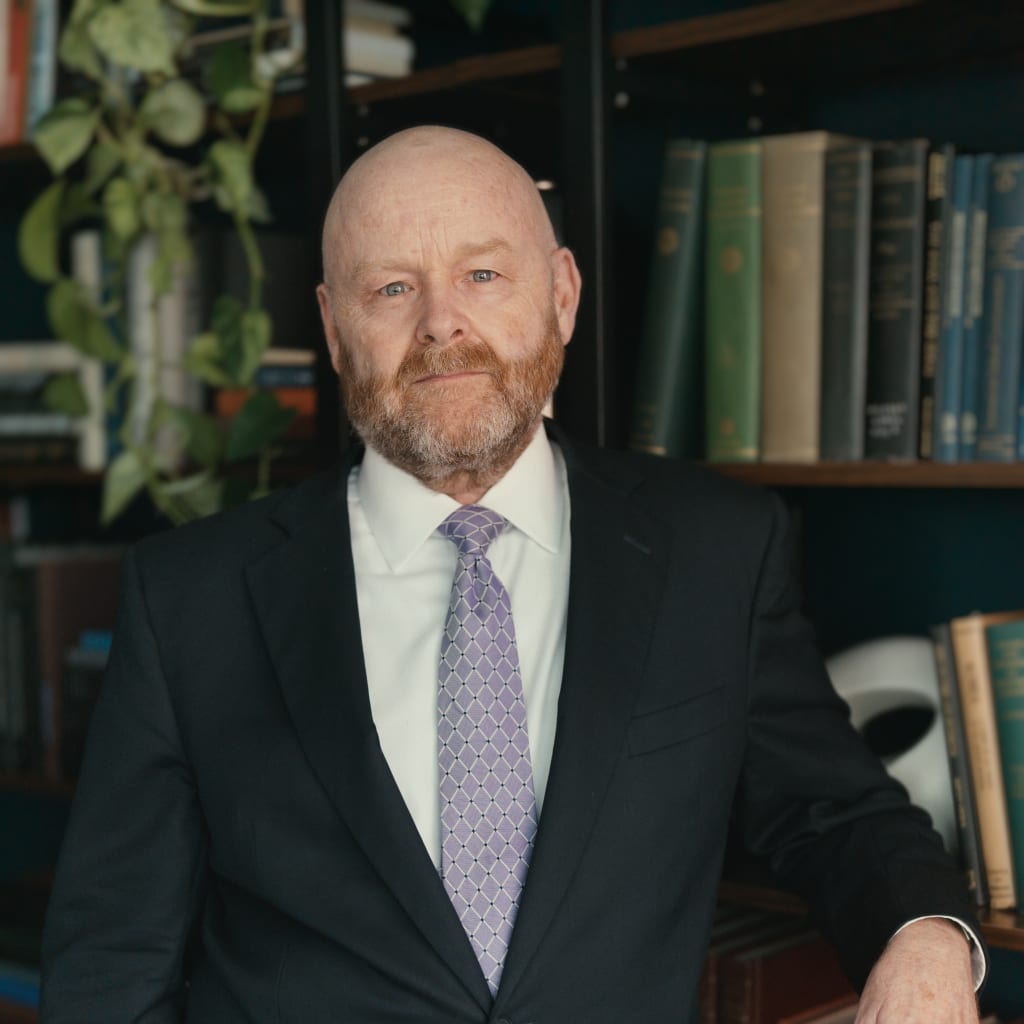 James M. LindsayCFR ExpertMary and David Boies Distinguished Senior Fellow in U.S. Foreign Policy
Guests
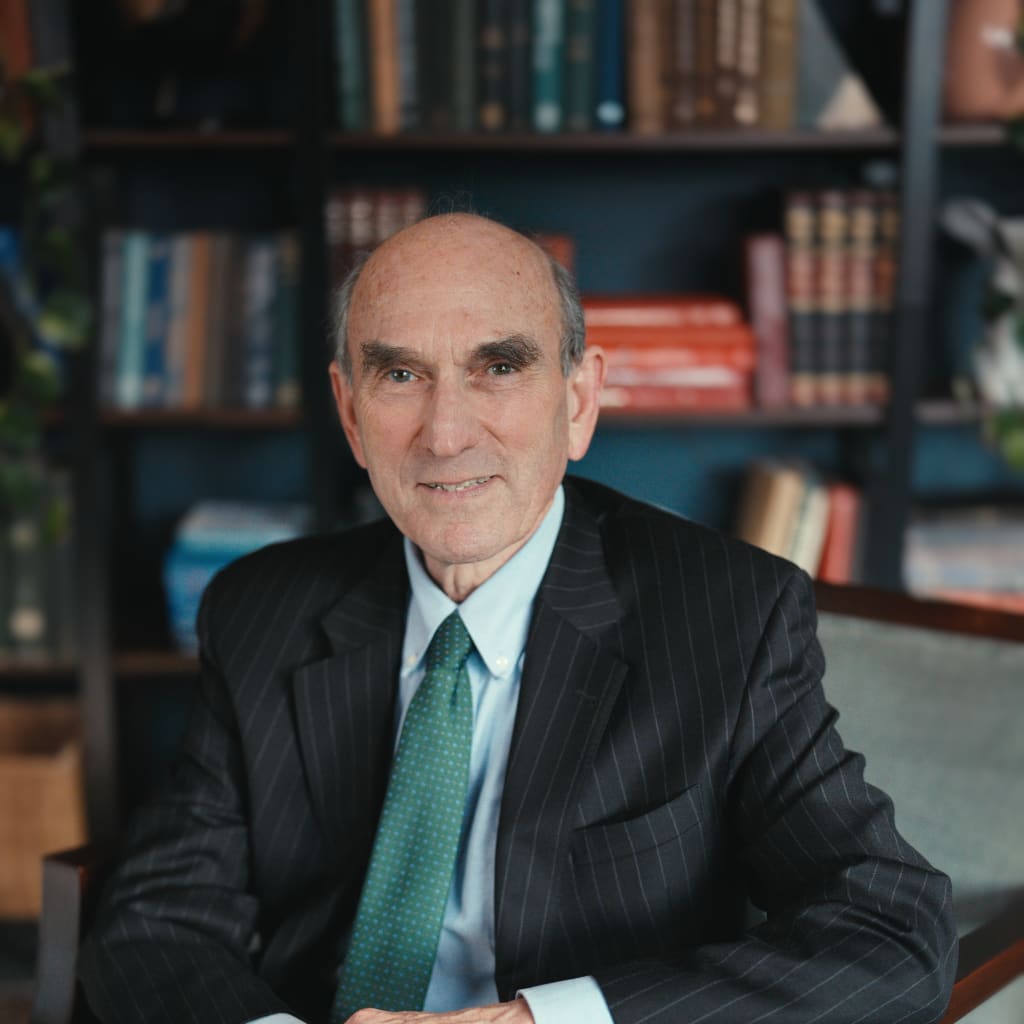 Elliott AbramsCFR ExpertSenior Fellow for Middle Eastern Studies
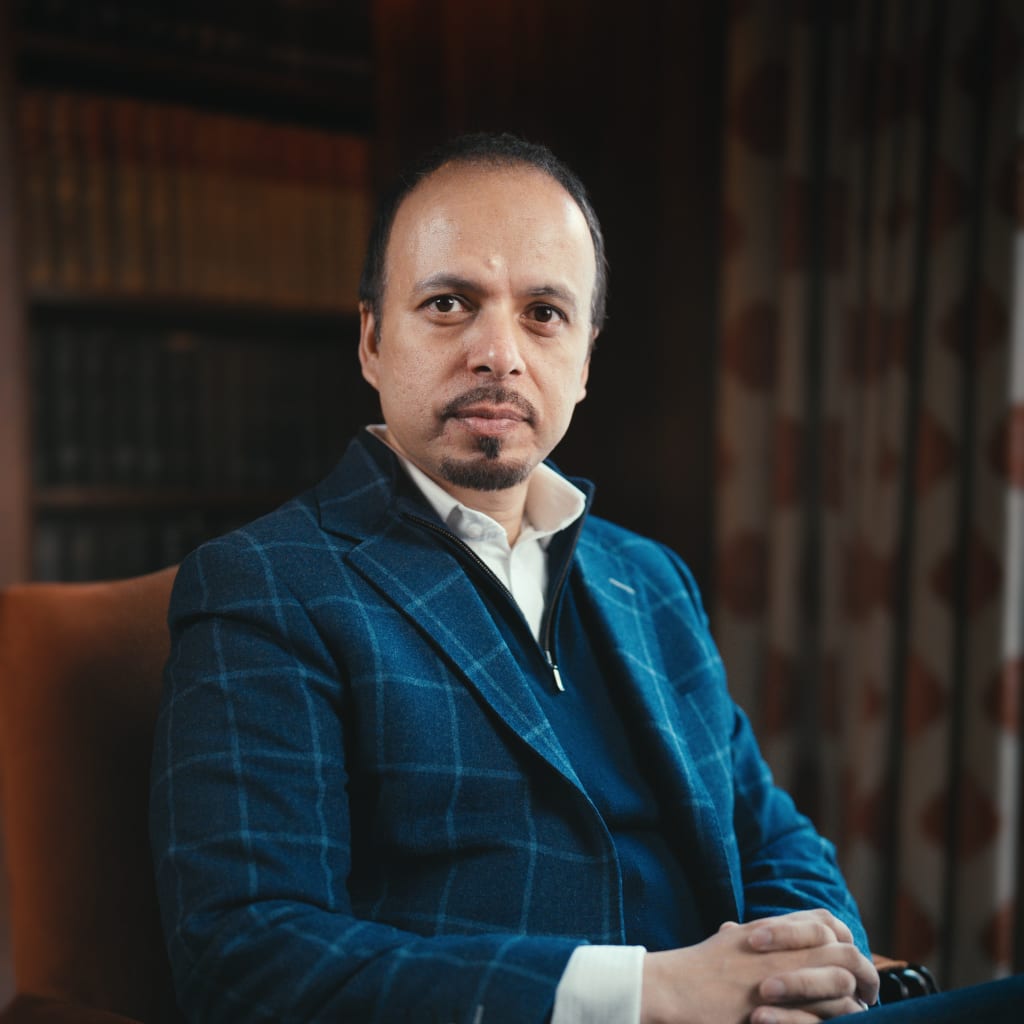 Ed HusainCFR ExpertSenior Fellow
Elliott Abrams, senior fellow for Middle East studies and the Council, and Ed Husain, senior fellow at the Council, sit down with James M. Lindsay to discuss the state of the Israeli-Palestinian conflict on the second anniversary of the October 7 attacks and whether President Donald Trump’s twenty-point peace plan will produce a lasting ceasefire.
TRANSCRIPT
LINDSAY:
Two years ago, Israel suffered the deadliest day in its history. Hamas fighters crossed from Gaza into Israel, killing more than twelve hundred people, wounding many more, and taking some two hundred and fifty hostages. Israel responded with a ferocious military campaign against Hamas. More than a million Palestinians have been displaced from their homes in Gaza, and perhaps as many as sixty-five thousand have been killed. Hundreds of thousands of Palestinians now face famine.
Israel also assassinated senior Hamas officials overseas, struck militant groups in Lebanon, Syria, and Yemen, and waged a twelve-day war with Iran, and most recently attempted to kill the Hamas negotiating team in Qatar. Over the weekend, Hamas accepted the outline of President Donald Trump’s twenty-point peace plan.
TV ANCHOR:
Hamas says it agrees with parts of the proposal, including the release of hostages and handing governance of Gaza to a Palestinian body of experts. But it says there are still sticking points.
LINDSAY:
Negotiators from Hamas, Israel, and the United States are meeting now in Egypt determine if they can finalize a ceasefire deal.
From the Council on Foreign Relations, welcome to The President’s Inbox. I’m Jim Lindsay. Today I’m joined by Elliott Abrams, senior fellow for Middle East studies at the Council, and Ed Husain, senior fellow at the Council.
Elliott and Ed, thank you for speaking with me.
HUSAIN:
Great to be with you, Jim.
ABRAMS:
Glad to be here.
LINDSAY:
Elliott, I’d like to begin with you, if I may. Help me understand the basics of President Trump’s peace plan and what the negotiators meeting in Sharm El-Sheikh are discussing.
ABRAMS:
The basic bargain in the peace plan is that Hamas releases all the hostages, living and dead. Israel starts to pull back out of Gaza. They withdraw to certain lines and ultimately withdraw fully.
Now, that leaves a lot to negotiate. Israel has to give up hundreds and hundreds of Palestinian Hamas, in some cases, prisoners, that it holds. Which? Which of them will it give up? There are some big names. That has to be negotiated. What exactly are the lines that Israel pulls back to and when?
Under Trump’s plan Hamas does not run Gaza. A new committee runs Gaza. Who’s on the committee? Who is the executive of that committee? Who are the technocrats that staff that committee? That’s mentioned in the president’s plan, but in no detail at all. So, all of that has to be negotiated. I think the critical thing is that negotiation could take weeks and weeks and weeks, but Trump wants the hostages released now. He wants the war ended now.
LINDSAY:
He’s been explicit on that point.
ABRAMS:
He initially said Sunday, last Sunday, he keeps saying, “I’m not going to let Hamas drag this out. I want it done now.” And I think that’s the critical thing this week, is Hamas going to let some hostages out by the end of the week or all of them out? Because that’s the other thing that Trump is insisting on, not piecemeal, all at once.
LINDSAY:
So, help me understand how this is going to work, Elliott, because you’ve laid out some of the complexities that they’re going to have to deal with, but the president wants moves right now. I would imagine from Hamas’s point of view, you don’t want to give up the hostages, in some cases it’s the remains of hostages, until you get what you want from the Israelis. Those things seem to be at odds at one another.
ABRAMS:
I think that’s right. There is a difference here between what Hamas wants and what the people of Gaza want, because I think what they want is stop the war. No more shooting. But Hamas wants to negotiate for its role in Gaza and more generally in Palestinian politics, because it wants a continuing role in Palestinian politics.
LINDSAY:
But that’s not what the president’s twenty-point peace plan says?
ABRAMS:
Right. It said no more Hamas. So, one of the things we’re going to find out this week is how much pressure the Arab League, Egypt, Qatar, can effectively put on Hamas. And I think the problem here is the guys they’re dealing with in Doha, Qatar, are not the guys on the ground inside, leading the fighting in Gaza, and they can’t necessarily give orders to those guys.
LINDSAY:
Ed, let me bring you in here. Help me understand from your vantage point why it is that Hamas has agreed to the terms of the twenty-point peace plan, or maybe a better way to put it is agreed to some parts of the twenty-point peace plan and suggested the remainder have to be negotiated?
HUSAIN:
Jim, Hamas’s response came framed in the language of, “We have agreed to negotiate and not agreed to surrender, not agreed to evacuate from Gaza, not agreed to disarm, not agreed to dismantle ourselves, not agreed even to leave government in Gaza.” So, key planks of the Trump plan are entirely absent and Hamas doesn’t even say, “We accept the peace plan.” Says, “We agree to negotiate.”
So, if you wind back a week, two weeks, well, Hamas was in negotiations and conversations then, and Hamas remains in negotiations and conversations now. And I think that’s the top line from Hamas, from their perspective, nothing really has changed other than being in conversations in Sharm El-Sheikh in Egypt rather than previously in Doha.
I also think we should pay attention to the optics on the ground as per previous declarations of victory by Hamas, Hezbollah, and other terrorist movements in the Middle East. Immediately upon Hamas’s so-called acceptance to negotiate and Western media interpretation and Israeli media spin of that as surrender, Hamas and its supporters were on the street yelling, shouting, “Victory.” So, I think we should pay attention to the fact that we’re dealing with two entirely different narratives and entirely different realities up against an American president who has his own domestic considerations and a Nobel Peace Prize deadline for submissions later in the week ahead. That makes for haste rather than patience for dealing with some of the details that Elliott just highlighted.
LINDSAY:
Help me understand, Ed, as you see it, why it is that Hamas agreed to as much as it agreed to with the Trump peace plan? And I ask that against the backdrop of the president’s threat, I think I can call it a threat, that if Hamas does not agree to the terms as stipulated, he’s going to let the Israelis do whatever they wish to do.
HUSAIN:
But the question is what more are the Israelis going to do? I mean, if you’re Hamas, you’ve got four hundred miles of tunnels underneath Gaza, you have existing Israeli hostages and the possibility of more Israeli troops on the ground increasing the likelihood of you taking hostages.
I mean, Israel, you mentioned earlier, stands accused of around sixty-five thousand-plus people dead. I mean, all Hamas has to do is eat to survive in the basements of Gaza and lob rockets occasionally into Israel and claim victory. So, the bar is so low for their declaration of victory, and the bar is so high for Israel and its allies, that it’s an entire mismatch in what we’re calling negotiation.
LINDSAY:
Elliott, do you see any of the Arab capitals putting pressure on Hamas to give up more than Ed has suggested Hamas is going to be willing to give up? And I ask that against the backdrop of the reality that many Arab capitals do not like Hamas.
ABRAMS:
I think the Qataris are under some pressure. My own view is that the Qataris panicked after they were attacked by Israel, and the Israelis, of course, say, “We didn’t attack Qatar, we attacked Hamas guys.”
LINDSAY:
But the Hamas guys are in Qatar.
ABRAMS:
They were in Doha. And I think the panic led them to turn to the president and President Trump then gave them a full security guarantee. It’s almost like the NATO Treaty, “Any attack on Qatar, the United States will help defend you.”
LINDSAY:
But it doesn’t have the Senate’s blessing in the way that the NATO Charter does.
ABRAMS:
Right.
LINDSAY:
This is just the president’s own words.
ABRAMS:
It’s just the president’s own words. Well, what did he get for that? I think what he got from the Qataris for that was a promise to deliver Hamas, and I think they will try to deliver Hamas. I think they will try to get this exchange done. I don’t know if they can deliver. I don’t know if Egypt can deliver, for the reasons Ed says. And the guys fighting on the ground in Gaza may prefer to go on fighting.
And then that’s a real test of the president. He’ll be very unhappy. He’ll be unhappy with the Arabs who failed to deliver Hamas. He probably will say to Netanyahu, “Just keep on going.” And of course, that’s a problem for Israel. They don’t get the hostages back, they have to keep on fighting and losing men in that fight, and they’re going to get the demonstrations all over and accusations of genocide and so on.
LINDSAY:
Ed, from your perspective, do you see the Qataris having any real leverage over Hamas? And maybe I should add in not just the Qataris but the Iranians. I mean, in the typical telling of the story, it’s the Iranians who have been supporting Hamas along with the other so-called Axis of Resistance groups. Do you see anyone putting pressure on Hamas?
HUSAIN:
The Iranians, based on the last two weeks of commentary from Hamas, the Iranians and their asset i.e., Hezbollah, did not step up on Israel’s northern border as Hamas had anticipated on October 7th. So, there’s a lot of, forgive me for the pun, bad blood between Israel and Hamas.
I think your question, Jim, pertaining to Qatar is much more pertinent in that can Qatar deliver? Now, Qatar has Khalil al-Hayya, who is being paraded as the chief negotiator, as the guy for Hamas, but he’s lost five of his children. His son was killed in the Israeli attack on Doha recently. So, I mean, I think it’s an understatement to say that the guy is feeling personally under attack for being in a position to negotiate with Israeli negotiators this week in Sharm El-Sheikh.
Now, where is the real challenge here? The real challenge is a guy called Izz al-Din al-Haddad, who’s on the ground in Gaza. He’s the one who calls the shots. And what we understand both from him and people around him is that there is no centralized control of Hamas today, next week, the next ten months, next couple of years, because of the nature of the decimation of the Hamas machinery that they’re all devolved, and there’s disorganized forces who generally harbor an immense hatred of Israel, Jews, and Israeli allies in the region. And we should not underestimate the force of this disorganized elements across Gaza, who loathe the Saudis, the Emiratis, the Qataris, the Iranians, the Lebanese, and indeed, the Americans and the Europeans.
So, I think that level of hatred in the devolved forces on the ground mean that even if there was some kind of agreement in Sharm El-Sheikh and given the underlying forces of hatred and unacceptance of Israel and its allies in the region, it’s a question of time before any kind of deal collapses. And I think that’s just a realistic reading of what we’re seeing on the ground in the coming weeks.
LINDSAY:
Elliott and Ed, I want to pull the aperture back and talk a little bit where we stand two years after the October 7 attacks.
The military situation today is much more favorable to Israel than it was in 2023. Israel has devastated Hamas, Hezbollah, other groups that are part of the so-called Axis of Resistance. Israel has seen President Bashar al-Assad’s regime in Syria collapse. The Israeli military has deeply damaged Israel’s nuclear and ballistic missiles program as well as knocking its air defense systems offline. On the other hand, the approach President Benjamin Netanyahu has taken, seems to have divided Israeli society, left Israel increasingly isolated on the world scene, and prompted many Americans to reconsider their support for Israel. So, how do you assess where we are now, Elliott?
ABRAMS:
Where we are now, or where Israel is now?
LINDSAY:
Let’s start with where Israel is and then we’ll get to where we, whoever the we is, shall be.
ABRAMS:
I think the Israelis have greatly improved their regional security situation, as you said, particularly by the harm to Hamas and Hezbollah, both of them in some sense Iranian proxies, and by the damage done to Iran’s nuclear program, its air defenses and missile program. That’s a huge gain. None of the Abraham Accord countries have spurned the Abraham Accords, broken relations with Israel. So, from that point of view, their situation is better.
The problem they have is that that comes from attacking, that comes from being tough. And the Middle East audience, which is to say, the governments, sees a very strong Israel, but those very actions, that very stance is very unpopular in the West and it has damaged Israel’s relations with Western governments and Western populations.
Now, if you ask the Israelis about that, they’ll say, “We’d rather be protested against and alive than popular and dead.” So, they’re not backing off from that. But they do have a short-term, medium-term, and long-term problem with public opinion in the West. And we are seeing, we’ve seen in the past week, outbursts of anti-Semitism in a number of countries, worst of all in the UK. So, they’re going to have to deal with that. Whoever is the government of Israel after their election, which has to come in the next twelve months, whoever’s prime minister, that’s a problem they cannot now escape.
LINDSAY:
Let me ask a follow-up question on this, Elliot, which is, at the UN General Assembly meeting last month, a number of Western countries, Canada, France, Spain, United Kingdom, came out and recognized the Palestinian state. They did so over the very clear objections of Prime Minister Netanyahu, without the support, at least overt, of the United States. How significant is that move?
ABRAMS:
I think it’s significant in one way, which is that they did it, in my opinion, for domestic political reasons, in each case. They knew that it would not help one Palestinian. They did it for internal reasons.
In Middle Eastern terms, I think it is not significant. It will not advance by one day the coming of a Palestinian state. It does not change the balance of power. And to repeat, it doesn’t help one Palestinian. The most recent polls I’ve seen suggest that majorities of Palestinians and Israelis don’t favor a Palestinian state, which doesn’t seem to have mattered to these heads of government.
LINDSAY:
Well, that is one of the great ironies, that being that the two-state solution is very popular except with the two communities in question.
Ed, I want to go to you and get your sense of why it is that the Abraham Accords, as Elliott pointed out, have not collapsed in the wake of October 7th, and particularly the very muscular response the Israelis have unveiled. I’m old enough to remember when you always used talk of the Arab street, and governments would go out and at least try to symbolically punish the Israelis, most famously with the Arab oil embargo back in the ‘70s, I know I’m dating myself. We haven’t seen anything quite like that in the two years since October 7th. Help me understand why.
HUSAIN:
Great question, Jim. I think that the first point to bear in mind is that we should not underestimate the power of personalities here. The Abraham Accords, to be totally candid, are led by both Sheikh Mohammed bin Zayed of the UAE and here, President Trump. If President Trump was now not in office, I think we would’ve seen greater fragility around the accords. And given that the accords were not only brokered by, but supported by a Trump White House, it would be a strategic disaster to now try and undo Trump first’s great diplomatic achievement.
I think the second issue to bear in mind is the Emirati president, Sheikh Mohammed bin Zayed, is famous for being a loyal ally to his friends and a persistent enemy until there’s a change in the calculation to his adversaries. And I think he wants to maintain that image that, “I’m loyal to the word that I’ve given.” And the word that he had given was peace with Israel, a warm peace, a peace that has benefited Israel and the UAE and other signatories, both economically and through diplomatic security and other relations.
And I think the third point, and I think that’s a really significant issue, is that the Abraham Accords would collapse on the back of what? On the back of a Hamas terrorist attack on Israel, that’s an ally of the West and of these Arab governments. That’s to say that those who wish to remove Arab leaders from power, i.e., the Muslim Brotherhood and Hamas, are somehow now in control of the future direction of travel of three hundred and fifty million Arabs and 1.8 billion Muslims. That’s almost sixty nation states.
And I mean, this is a famous reference from President Obama’s book, A Promised Land. He talks about the fact that Mohammed bin Zayed, the MBZ, asked the strategic question, if President Obama had turned his back on the Arab Spring leaders, what does that mean in terms of America’s reliability as an ally for Arab leaders? And the same question applies now, if Arab leaders walk away from the Abraham Accords because of a terrorist attack and a response, however disproportionate, what does that mean of them as allies to Israel and to Western nations?
So, I think those are some of the concerns and some of the upsides for which obviously the cost has been paid, which is an attack on Qatar. A cost has been paid, which is the loss of popularity on the Arab street. And indeed, I think for President Trump too, the cost has been paid in terms of loss of popularity on his right wing’s, bordering far-right flank, here in America. So, for all of those reasons, I think the Abraham Accords have stood and must stand.
LINDSAY:
Ed, let me ask you about the attack on the Hamas leaders in Doha. How has that been read in Arab capitals? Because it seems to me that the Israeli attack, which was resisted by some elements of the Israeli security establishment, really crossed a red line. My impression is the Qataris were particularly surprised at it. Is that a major event or is this sort of normal business, one way or the other people get over it?
HUSAIN:
No, far from it. It’s not normal business at all. I was in the Gulf just last week and meetings with friends who are involved in the negotiation process this week in Sharm El-Sheikh. And we have to remember that … And I know Elliott regularly speaks of some of the mistakes involved in the Sykes-Picot agreement from the last century. We have to remember that the Gulf Arabian Peninsula is a tribal part of the region. People who have tribal names in Riyadh, in Abu Dhabi, in Dubai, have family members in Doha, cousins, uncles, grandchildren. So, that attack was an attack on them, an attack on the entire Arabian Peninsula. And I think what we saw was an immediate rethink of the security relationships, not just with Israel, but also with America. And the very fact that there was an American base in Doha, I think most people in the region find it hard to believe that there was not some kind of approval from Washington, from the Trump White House, direct or indirect, for that attack.
And I think that the consequences are severe, and what we’ve seen, therefore, is the Saudis mobilizing and I would say, consolidating their security hedging by bringing in the Pakistanis as a security guarantee. Another nuclear power being brought in to further … I mean, in the long range what the Abraham Accords had done, Jim, was to break the tie of Islamizing the Middle East. In other words, Muslim Brotherhood and Islamic identity must be at the center. But bringing in the Pakistanis to bolster Saudi security is to say somehow Muslim nations are responsible for other Muslim nations, and Israelis and Jews, Christians and Americans have got to be stood up against. And that’s a dangerous, damaging long-term impact that comes out of the violation of Qatari sovereignty in relation to the Israeli attacks.
LINDSAY:
You want to jump in here, Elliott?
HUSAIN:
Oh, by the way, just one other point, and I know Elliott wants to come in, is just the optics of it, Jim. I don’t think most people in the Middle East, especially in the Arabian Peninsula, would be hurt by Hamas terrorists being killed by assassins, removed with a pager attack or some of the other successful … But to send in fighter jets, have smoke coming out of a building in Doha, miles away from other Arab capitals, that, I think, hurt and hurt deeply for many of the Arabian allies.
ABRAMS:
I guess, I don’t agree. First, it is exactly what we did when we killed Osama bin Laden, when the United States did. We would argue we didn’t attack Pakistan. Pakistan is an ally. We just took out Osama bin Laden. That’s the Israeli argument here.
LINDSAY:
But isn’t there a slight difference there, which is that Osama bin Laden was hiding in Pakistan and the Pakistani government insisted they had no knowledge?
ABRAMS:
Yes, but that was a lie.
LINDSAY:
But in the case of Qatar, they knew the Hamas officials were there. That was well known.
ABRAMS:
Right. I think that the Israelis were saying was—
HUSAIN:
And Qatar is not Pakistan, right?
ABRAMS:
The rules of the game changed on October 7th, 2023. You have there in Doha, the Israelis are saying to Qatar, murderers, people who support the mass murder of Israelis. Those rules are changing. And that’s not—
LINDSAY:
From Israel’s point of view.
ABRAMS:
From Israel’s point of view.
LINDSAY:
I’m not sure other capitals in the region are ready to accept that.
ABRAMS:
No, for the other capitals, I mean, I have also had people say to me that the Saudis and Emiratis were very angry about this attack by Israel in Qatar because it forced them to express solidarity with Qatar, a nation, a ruler with whom they do not feel any solidarity. It’s a complicated—
LINDSAY:
Well, also a ruler or a country that they were not too long ago trying to isolate and punish.
ABRAMS:
Yes. So, it’s a complicated set of facts, but I think the Qataris did rush to … Sorry, the Saudis rushed to Pakistan. The Qataris rushed to the United States, and as you were saying before, what they got was a statement from the president that is not binding and is dead the minute he leaves office. So, what they think they got out of this—
LINDSAY:
It may be a dead letter before he leaves office—
ABRAMS:
That’s true.
LINDSAY:
… given the president’s penchant for being flexible, how shall we say, in his policy pronouncements.
I want to just come back quickly to you, Ed, on one point. Before October 7th, there was a lot of speculation that the Abraham Accords had a tremendous amount of momentum and that we were on the verge of sort of the great diplomatic breakthrough, which is Saudi Arabia would establish formal diplomatic relations with Israel. And indeed, that led to some speculation that Hamas did this to derail that from happening. I’m somewhat skeptical of that explanation for the attack, but where do you see the Israel-Saudi Arabia link going?
HUSAIN:
Your skepticism is justified, Jim, on the grounds of many conversations with people who’ve gathered intelligence from Gaza, there’s no indication that that was the aim. But where the Israeli-Saudi relationship is heading is in a very dark, big, black hole, as things stand, simply because the private polling conducted by the crown prince and his team inside Saudi Arabia show before October 7th, those same polling, most young Saudis did not really care about the Israeli-Palestinian conflict because they’d grown up in a world in which there was no 1973. There was no invasion of Tunisia. There was no invasion of Jordan on behalf of the PLO. And so there was basically no conflict. They hadn’t seen the massacres. They hadn’t seen Gaza flare up in any significant way. They were focused on building their own country and their own region.
Now, those same polls show Israeli unpopularity to the tune of eighty-five, ninety, ninety-two percent, which makes the crown prince’s plans for any kind of normalization very difficult. There’s a deep, deep, deep, deep sympathy for what’s called a Palestinian cause, that, again, makes it very difficult for the crown prince to maneuver. And sadly, it’s ended up emboldening some of Saudi Arabia’s ideological allies. So, Saudi Arabia finds itself in a difficult bind when it comes to normalizing or being seen to be in the same … I mean, we were in a situation in the region where we … When I say we, our allies had Israeli ministers visiting Saudi Arabia, Israeli business people visiting Saudi Arabia. That’s not going to be happening in the next six to ten months at least. So, I think that the situation is dire.
Now, where is the silver lining? If there is a new government in Israel, I think the optics change. And I think some degree of calming down the situation in Gaza, whether it’s done with this new peace board or some other form, might result in some kind of back channels emerging again. But as things stand, the situation is far from ideal for re-upping those negotiations for normalization.
LINDSAY:
Elliott, I want to come back to the question we touched on briefly, which is what does Israel’s response to the attacks of October 7th mean for the future of U.S.-Israeli relations? And I ask that against the backdrop of a couple of things. One, a large number of polls in Israel suggest that even many Israelis believe that Prime Minister Netanyahu has been pursuing this war not to advance Israel’s security interests, but to protect his own political interests and particularly the sort of right leaning coalition he has.
I see that the Pew poll recently came out and said that about forty percent of Americans believe that Israel has gone too far in its attacks on Hamas. And there’s this recent Washington Post poll that shows that American Jews sharply disapprove of Israel’s policy. Something like sixty percent of American Jews say that Israel has committed war crimes. Do you think this has a lasting effect for U.S.-Israeli relations over the long term?
ABRAMS:
The slogan that American-Israeli relations have been based on for decades now is Israel should be able to defend itself by itself. That’s not true at this point. We saw that in Iran where Israel was unable to destroy the Iranian nuclear sites. The United States came in. Obviously their air force is American.
I think you will see more discussion of the nature of that relationship and that dependency. Israelis have already said they’re going to try to be more independent to the extent that they can when it comes, for example, to supplying themselves with bombs, missiles, bullets, that sort of armament.
Over the longer run, look, the left around the world has turned against Israel, and it’s not new. This has been going on for decades. And it’s true in Europe, and it’s true in Asia, and it’s true in Latin America. And it would be very odd if it were not true here.
LINDSAY:
But it seems to me it’s not just on the left. If I look at public opinion polls, particularly with the younger Americans—
ABRAMS:
No, well—
LINDSAY:
… even those who are on the right, the America-first crowd and deeply skeptical.
ABRAMS:
… yes and no. Yes and no. Republicans, as a group, remain extremely pro-Israel. The poll that you mentioned in the Washington Post about American Jews, I think was important, but really quite unreliable because it has no definition of who counts as an American Jew. And it is including in that poll people who have no real connection to the American Jewish community.
So, I think the general trend is a worrying one for Israel. Certainly on the left and in the Democratic Party, there is a real turn against Israel. You also see it on the far right where you see an outbreak of anti-Semitism. I would say you don’t see it in the president’s base generally, and you don’t see it in the Republican Party generally, in polls, but you do see it, I think quite significantly, in the Democratic Party, and as you said, it is also a youth problem.
The Israelis have never been very good at what they call hasbara, meaning, I don’t know, propaganda, I guess you’d say. And they’re going to have to review that too, because they need to make a much better case for themselves. One of the things we’ve seen in the last few years, just as an example, is the use of the term genocide, which has become quite widely popularized and I would argue is completely baseless by any traditional definition in a description of what’s going on in Gaza. That problem is one the Israelis are going to have to deal with now for a long time.
I agree with Ed that for Arab governments that have to worry about public opinion, democratic governments are not. There will need to be a pause and probably a change of government in Israel and an end to the war in Gaza before relations can come out of the deep freeze.
LINDSAY:
Ed, I want to bring you in on this question. Do you see any long-lasting shift in U.S. or even Western support for Israel based on the events of the last two years? I take Elliott’s point earlier that countries like the United Kingdom and France, Spain, were acting in part to respond to domestic political pressures and that that’s not unknown in history, recent or long. But I’m just wondering if you think any of the fundamentals of the conversation, of the diplomacy, have changed or are changing?
HUSAIN:
I think the diplomacy here in America at the level at which Elliott identifies, have not changed, and my conversations with U.S. government folk don’t indicate a real change, but we have to be cognizant to the fact that where the wider culture is, there’s been a shift. And Steve Bannon was a master of anticipating the change in culture that leads to a change in the thinking inside political parties.
Now, Elliott is absolutely right. On the left that debate has been firmly settled, and you’re seeing on the European left as well as the American left, much less support for Israel, among American Jewish communities as well as in the Democratic Party. I’m afraid to say we’re seeing the same thing on the American right. And if you don’t mind my polluting your prestigious podcast, Jim, with names such as Tucker Carlson, Megyn Kelly, recently deceased Charlie Kirk, and a whole host of others, that have really changed the dynamic.
And the last standing bastion, if you like, of the old school of thought is Fox News. That’s where we are. I think underneath Fox News … And those aren’t names or numbers to be negated. I think you have a total of about fifty-million plus recipients of that anti-Israeli, anti-Jewish mood music being played on what might be considered the right of the center right, and heading towards the far right in American politics. And I think that’s something significant. We shouldn’t dismiss it.
And it’s hard, I think, on university campuses or in that kind of underworld of the web, to find voices that will stand up with fact, rationality, reason, long-term prospects for world peace, given the emotions that have been stirred up by what’s come out of Gaza and the old voices of Jew hatred mobilizing that for devastating policy ends. So, I genuinely worry over the next five, ten, fifteen years as to what U.S. policy looks like in relation to Israel unless we see not just a stop to the war, and it’s not a threat, it’s just a different way of conducting relations in the Middle East by our ally, Israel, in understanding the laws of physics in the region. You can’t win by fighting on eight fronts. You just can’t sustain that in the long term.
So, how do you translate that to removing the culture of humiliation and fighting to a culture of coexistence and respect for your neighbors, based on learning Arabic, based on being like from the region rather than fighting and thinking that technological superiority alone will guarantee Israeli long-term stability?
LINDSAY:
I’m going to give you the last word, Elliott.
ABRAMS:
There does have to be a change, but I’d put the need for change more on the Arab side and certainly the Palestinian side. Palestinian textbooks to this day teach hatred of Jews. Jordanian textbooks to this day teach hatred of Jews. So, that cultural change, I think, has to come more on the Arab side. The Israelis are not trying to eliminate—
HUSAIN:
But Elliott—
ABRAMS:
… they’re not trying to eliminate fifteen or twenty Arab and Muslim states, but there are a lot of people who are trying to eliminate the one Jewish state.
HUSAIN:
I was just going to say—
LINDSAY:
Ed, I’m going to give you the last last word and then I have to wrap this up.
HUSAIN:
… with much love and respect for my colleague, Elliott, is that the Jordanian government and the other governments don’t have the likes of Smotrich and Ben-Gvir in government.
ABRAMS:
Doesn’t matter, Ed, what I’m worried about is what are they teaching their children? Is this hatred going to go on for generations more?
LINDSAY:
I think on that note, in my own observation, that there’s a lot of hatred coursing throughout the region. My hope is that calmer voices will prevail at the end and that we can find a way to go forward towards peace.
But with that note, I’m going to wrap up The President’s Inbox for this week. My guests have been Elliott Abrams, senior fellow for Middle East studies at the Council, and Ed Husain, senior fellow at the Council. Elliott and Ed, thank you for joining me.
ABRAMS:
Thank you.
HUSAIN:
Thank you, Jim.
LINDSAY:
Today’s episode was produced by Justin Schuster with recording engineers Antonio Antonelli and Bryan Mendives, and with director of podcasting, Gabrielle Sierra. This is Jim Lindsay. Thanks for listening.
Mentioned on the Episode:
Elliott Abrams, “The Teaching of Hate in Jordan,” CFR.org
Naftali Bendavid, Scott Clement, and Emily Guskin, “Many American Jews Sharply Critical of Israel on Gaza, Post Poll Finds,” Washington Post
Opinions expressed on The President’s Inbox are solely those of the host or our guests, not of CFR, which takes no institutional positions on matters of policy.
Associate Podcast Producer
- Associate Producer, Video and Audio
Editorial Director and Producer
- Director, Podcasting
More Episodes
 33:42Podcast
 36:05Podcast
 41:07Podcast
 39:26Podcast
 35:04Podcast
 31:46Podcast