President’s Message
2026 Annual Report
By experts and staff
- Published
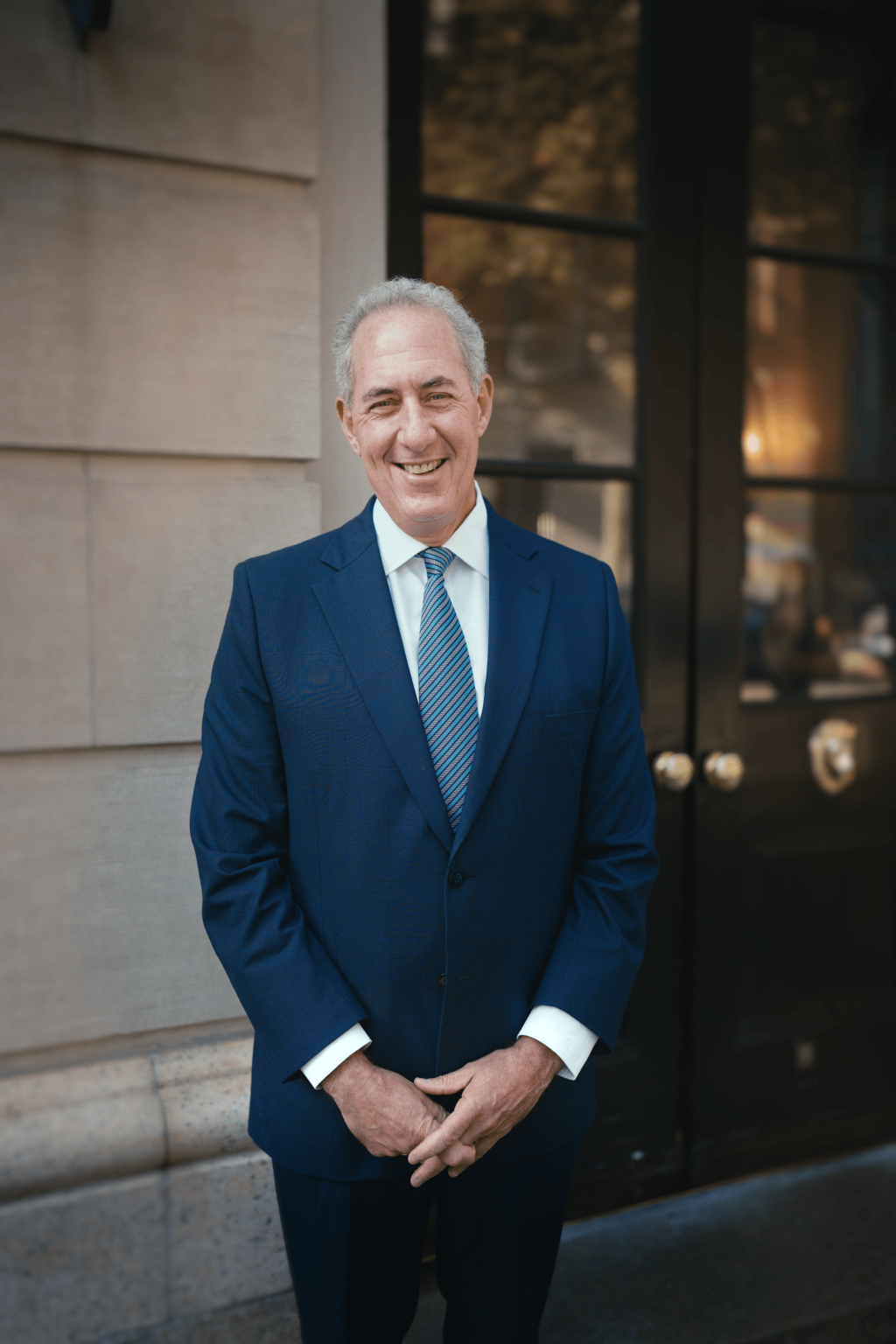
The Council entered fiscal year 2026 with the overarching goal of “meeting the moment”—an institution-wide effort to tackle the set of challenges and opportunities confronting the United States and the world with unity of purpose and urgency. That mission will require an extended effort but, as the last year demonstrates, the Council is making good progress—in terms of output and impact, and in the way we work to develop innovative and scalable approaches to strengthening our position as the leading nonpartisan, independent institution devoted to informing America’s engagement with the world.
In May, the Council launched its Future of American Strategy Initiative, a multiyear effort to understand, explain, and address what the current disruption means for the future of the global system and America’s role in it. This initiative will bring together perspectives across ideological lines to develop new thinking on U.S. foreign policy and leadership. To mark the launch, we published an initial set of twenty-seven essays from our fellows accompanied by short-form thesis videos that wrestle with fundamental questions about the nature of the international system, managing trade, conducting diplomacy, leading alliances, and negotiating with adversaries.
A key part of meeting this moment has been our effort to navigate the current political environment. The breadth of Trump administration officials who have engaged constructively with the Council this past fiscal year is one of the clearest indicators of our ability to provide members with the opportunity to hear directly from and ask penetrating questions of key decision-makers at this critical time. Highlights included conversations with Secretary of Energy Christopher A. Wright, Secretary of the Interior Douglas J. Burgum, U.S. Trade Representative Jamieson L. Greer, U.S. Ambassador to the United Nations Michael G. Waltz, Undersecretary of War for Policy Elbridge A. Colby, Assistant to the President and Senior Counsel for Trade and Manufacturing Peter K. Navarro, Director of the National Institutes of Health Jayanta Bhattacharya, Acting Chair of the Council of Economic Advisers Pierre Yared, President and Chairman of the Export-Import Bank of the United States John Jovanovic, and CEO of the U.S. International Development Finance Corporation Benjamin E. Black.
Throughout its programming, the Council has been committed to maintaining its position as a nonpartisan, independent institution. As just one example, the launch of the Future of American Strategy Initiative featured both Senators Elissa Slotkin (D-MI) and Tim Sheehy (R-MT) and both Jon Finer of the Center for American Progress and Victoria Coates of the Heritage Foundation, who were deputy national security advisors to Presidents Joe Biden and Donald Trump, respectively. That event was one of many bipartisan panels hosted in the last year, but it stands out for its demonstration of civil discourse at its finest.
That bipartisanship was also on display in our flagship publications. This year, the Council convened a Task Force on U.S. Economic Security. It was chaired by former Biden administration Secretary of Commerce (and CFR Distinguished Fellow) Gina M. Raimondo; former Trump administration Deputy Secretary of the Treasury (and CFR Board of Directors member) Justin G. Muzinich; and Lockheed Martin President, Chairman, and CEO (and CFR Board of Directors member) James D. Taiclet, and directed by CFR Senior Fellow Jonathan E. Hillman. The Task Force’s report addresses artificial intelligence (AI), quantum, and biotechnology with actionable recommendations on supply chain resilience, investment screening, and export controls. It has been well received by policymakers in the Trump administration and Congress, as well as by the media.
Foreign Affairs remains the premier journal in the field while shaping the debate on the most pressing near-term and long-term foreign policy challenges. Leading experts from across the political spectrum have published essays this year on economic statecraft, AI safety and governance, the future of North Korea policy, the future of the U.S.-China relationship, the Iran war, and the changing character of modern warfare. Additionally, The Foreign Affairs Interview video podcast, hosted by Editor Daniel Kurtz-Phelan, is now produced weekly and continues to grow its audience.
To meet increased demand for the kind of expert, fact-based research and analysis that the Council produces, we have expanded our capabilities. This year, the David Rockefeller Studies Program added nine fellows: Jim Baker, Sadanand Dhume, Elisa Ewers, Edward Fishman, Chris McGuire, Vinh X. Nguyen, Tony Oweke, Stephanie Psaki, and Joseph Torigian. We have hired top talent across other departments as well.
We have also invested in our digital assets, including a new and improved CFR.org that reflects a deliberate, strategic shift from an internally organized website to an audience-focused digital product organized around how people discover, consume, and return to sources of expertise. We have leaned into more vertical video products and additional podcasts, optimized to engage multiple audiences, highlighted our fellows’ work in new ways, and engineered to accommodate a rapidly growing number of AI agent visitors. Additionally, the Council is embracing new platforms and modalities, given that a substantial portion of the population gets nearly all of its news from social media.
As part of meeting the moment, we doubled down on our National Program, increasing the number and type of events in the dozen cities where we have a critical mass of members and expanding into new geographies. One example is the Endless Frontiers retreat convened in Austin, Texas, with four leading Texas universities, now in its second year. This year, the Council launched a National Retreat as another major tentpole convening, complementing the National Conference in New York and the National Symposium in Menlo Park, California. For its inaugural year, the retreat was held in Nashville, Tennessee, and it will rotate to a different location each year. We also convened events in Atlanta, Boston, Chicago, Detroit, Houston, London, Los Angeles, Miami, Palm Beach, Phoenix, and San Francisco.
To state the obvious, the past year has underscored the importance of the nexus between AI, broader technology developments, and national security. The Council has expanded its expertise in that area and is hosting more events with the technology community in Northern California and elsewhere to help bridge the divide between that community and the national security community. We are focused on further strengthening this work in the coming year.
Collaboration with other institutions to complement our strengths and expand our reach remains a central part of our strategy. Adding to partnerships with the Munich Security Conference and Open to Debate, as well as the CFR-Rodel Foreign Policy Forum, the Council launched a tabletop exercise program with the RAND Corporation, a content partnership with NBC News, and collaborations with CNN, C-SPAN, and Bloomberg.
The Council’s determination to respond with creativity and agility to the current environment has not gone unnoticed. This year, at the spry age of 105, the Council was named by Fast Company as one of the most innovative organizations in the world—the only think tank to earn that distinction.
It is a privilege to lead the Council at this decisive moment. Thank you for your continued support.
Sincerely,
Michael Froman
President