America Is Losing the Ability to Train Tomorrow’s China Experts. The Trump-Xi Summit Can Help.
Long-standing educational programs such as Fulbright, Boren, and the Critical Language Scholarship are all suspended. A leader-level deal could bring them back and protect the students who take part.
By experts and staff
- Published
- Rosie LevineExecutive Director of the U.S.-China Education Trust
 Rush DoshiCFR ExpertC.V. Starr Senior Fellow for Asia Studies and Director of the China Strategy Initiative
Derk Bodde set out for Beijing in 1948 expecting to spend a quiet year translating an esoteric work of Chinese philosophy. Instead, as the first recipient of the newly created Fulbright fellowship in China, he found himself an eyewitness to the Chinese Communist Party’s takeover, and his account of what he saw became a rare firsthand record for policymakers, academics, and the American public. When China closed to foreign contact for the next quarter-century, Bodde’s expertise didn’t just remain useful: it was irreplaceable.
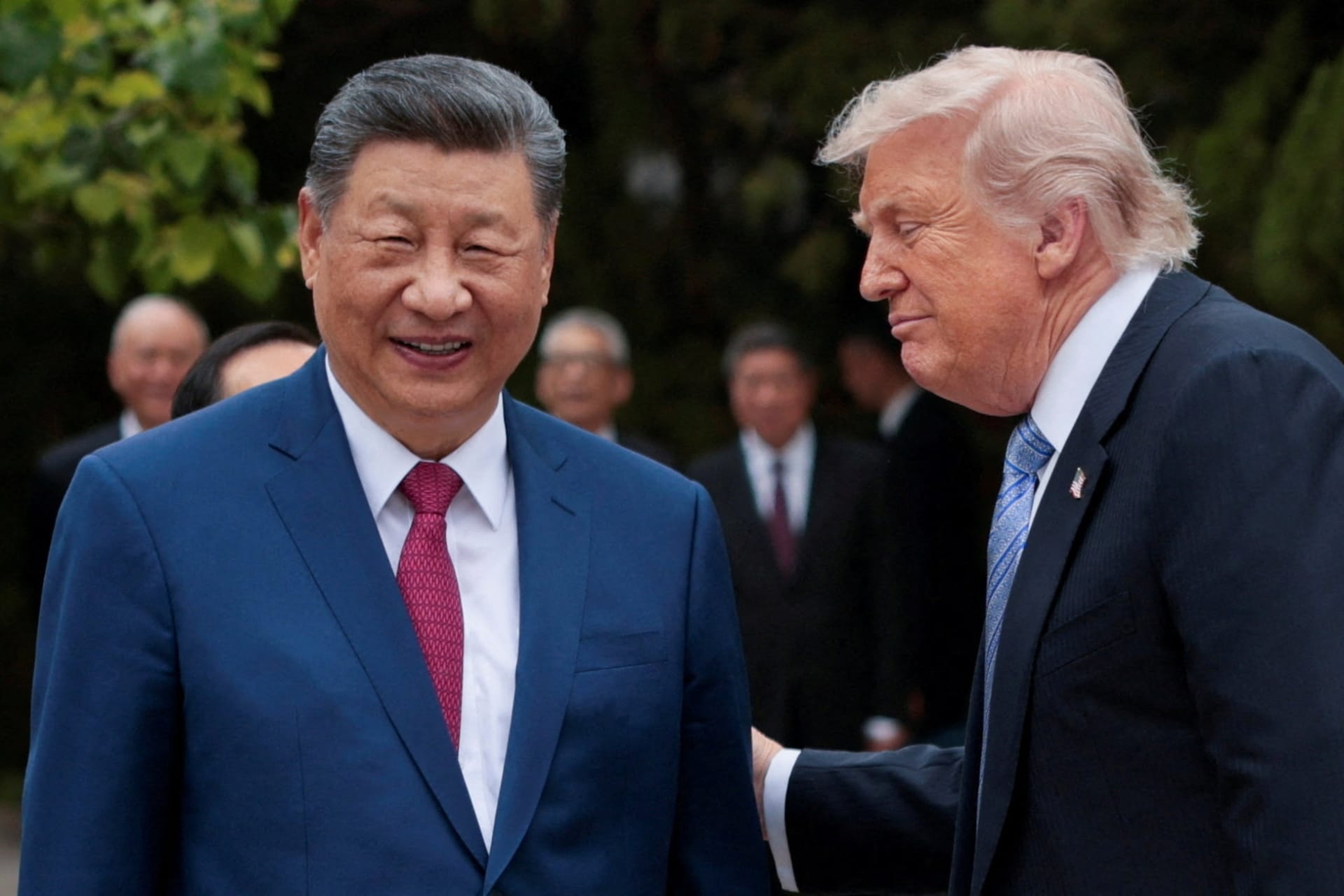
Bodde’s story is a clear example of the ways in which in-country research is a proven and often indispensable tool to strengthen American expertise of foreign countries—and not only with friendly nations. But as Presidents Donald Trump and Xi Jinping prepare to meet tomorrow in Washington, DC, only around two thousand Americans are studying in China, down from fifteen thousand a decade ago, and the public and private ecosystem that once supported deep American study of China is collapsing precisely when it is needed most.
That decline is due both to funding cuts and legitimate concerns that students may face risks of arbitrary detention in China. Currently, two American academics have been designated as wrongfully detained after traveling to China for academic purposes, creating risks that must be addressed by Beijing. Such cases are rare—the vast majority of Americans who study in China do so without incident—but they are real, and their chilling effect reaches far beyond the individuals involved. At the upcoming summit, Presidents Trump and President Xi should elevate specific programs like Fulbright into leader-level deliverables, with President Xi’s high-profile support for them at the summit providing implicit assurances that participants will not face undue risks from China’s security services.
This approach has some precedent. Exchange programs sometimes receive broad protections from leaders. Indeed, even at the height of the Cold War, the United States established the International Research and Exchanges Board (IREX) in 1968 as a formalized, bilateral academic exchange mechanism, sending generations of American Sovietologists into the Soviet Union, even as the two countries remained locked in rivalry. IREX and its successors, including the Committee on Scholarly Communication with the People’s Republic of China, which managed similar style exchanges with China before diplomatic normalization, were established to lend U.S. government protection to academic exchanges deemed essential to the national interest.
By contrast, the China programs that built a generation of expertise are now defunct. The Fulbright Program has been suspended in China since 2020, partly over risks that participating students and researchers might be detained by China. Alongside Fulbright, less well-known but essential U.S. government–funded programs specifically designed to encourage greater foreign area expertise in government have been suspended to mainland China, including the Boren Awards, the Critical Language Scholarship, the National Security Language Initiative for Youth (NSLI-Y), and more.
At home, the area studies infrastructure in U.S. universities that was built in the 1950s, including the National Resource Centers, Title VI funding, and Foreign Language and Area Studies (FLAS) fellowships, has been gutted amid cuts at the Department of Education. In recent weeks, new unclear federal restrictions on higher education’s ties to China have pushed some universities to conclude that even nonsensitive academic engagement—undergraduate study abroad included—carries too much risk: the University of North Carolina is the latest institution to pull down its study abroad program.
Critics of travel to China argue that Taiwan offers a safer alternative for Mandarin language study, and that the extent of state surveillance makes the risk of visiting China not worth the potential benefits. But Taiwan’s educational opportunities, while excellent, cannot fully substitute for the loss of access to China’s economy, society, and culture.
America needs a much deeper supply of China experts to handle a fast-changing relationship. In closed-door meetings compiled for the U.S.-China Education Trust’s 2026 report, America’s China Talent Challenge, stakeholders across the U.S. government, business, and academia described how their sectors depend on American expertise to interpret China’s actions—from geopolitics and security, to trade and supply chains—and to keep the United States competitive. The working group concluded that China expertise must be considered a national resource.
As Trump and Xi meet in Washington, progress on people-to-people diplomacy may be less challenging than in other domains. But both sides can take steps to improve the situation.
First, the Trump administration should negotiate with Beijing to elevate specific programs, from named legacy programs—including the Fulbright, Boren, Critical Language Scholarship, and NSLI-Y—to new initiatives, into summit deliverables. President Xi’s endorsement of these programs would provide implicit protection for those students who participate in them. President Trump could privately push to formalize assurances that participants will face no risks from China’s security services. And to make that gesture credible, Beijing should release detained academics.
Second, in tandem with these negotiations, the United States should reverse cuts to funding programs, which are in many cases entirely unrelated to China. The area studies infrastructure built nearly eighty years ago, to include National Resource Centers, Title VI funding, and FLAS fellowships, has been gutted and should be restored. Congress should also fund new programs, purpose-built for today’s U.S.-China relationship. Scrutiny of university ties to China is in some cases warranted, but it should be scoped so that nonsensitive academic engagement, such as undergraduate study abroad and language programs, are able to proceed with appropriate safeguards.
To some, these proposals may seem unrealistic. But they are rooted in history and pragmatism. Washington has long had educational programs in countries with competitors and adversaries. Those programs were often sustained by leader-level understandings that they would be insulated from competitive dynamics in the relationship. Improving mutual understanding is inherently valuable. For both Washington and Beijing, it also reduces the risk of miscalculation. If the next generation of policymakers has no China experience, both countries will suffer.
A United States that no longer trains people who can read Chinese primary sources, sit in Chinese classrooms, or track policy implementation on the ground is hardly more secure and is substantially less capable. Rebuilding China expertise is not an act of goodwill toward Beijing. It is a hard-nosed investment in the United States’ atrophying ability to understand and compete with its most consequential rival.
The United States and China have few bright spots in the bilateral relationship, and fewer still that could be elevated into summit deliverables. Naming and insulating a handful of exchange programs from political and security pressures is in fact one of the most straightforward areas for cooperation that exists between the two countries.
This work represents the views solely of the author(s). The Council on Foreign Relations is an independent, nonpartisan membership organization, think tank, and publisher, and takes no institutional positions on matters of policy.