Entangled Conflicts in the Horn of Africa
On both sides of the Red Sea, interconnected conflicts metastasize while Washington sends mixed signals.
By experts and staff
- Updated
 Michelle GavinCFR ExpertRalph Bunche Senior Fellow for Africa Policy Studies
The Red Sea region is in a state of upheaval. Iran’s stranglehold on the Strait of Hormuz led to an outsized Saudi dependence on the Bab el-Mandeb, and Yemen’s Houthis seized the moment. As my colleague Steven Cook has explained, these developments have strengthened the hand of the Iranian regime, and worsened supply chain disruptions, energy price increases, and both Saudi and Egyptian anxiety. But anyone who thinks the situation could not get much worse is not paying attention.
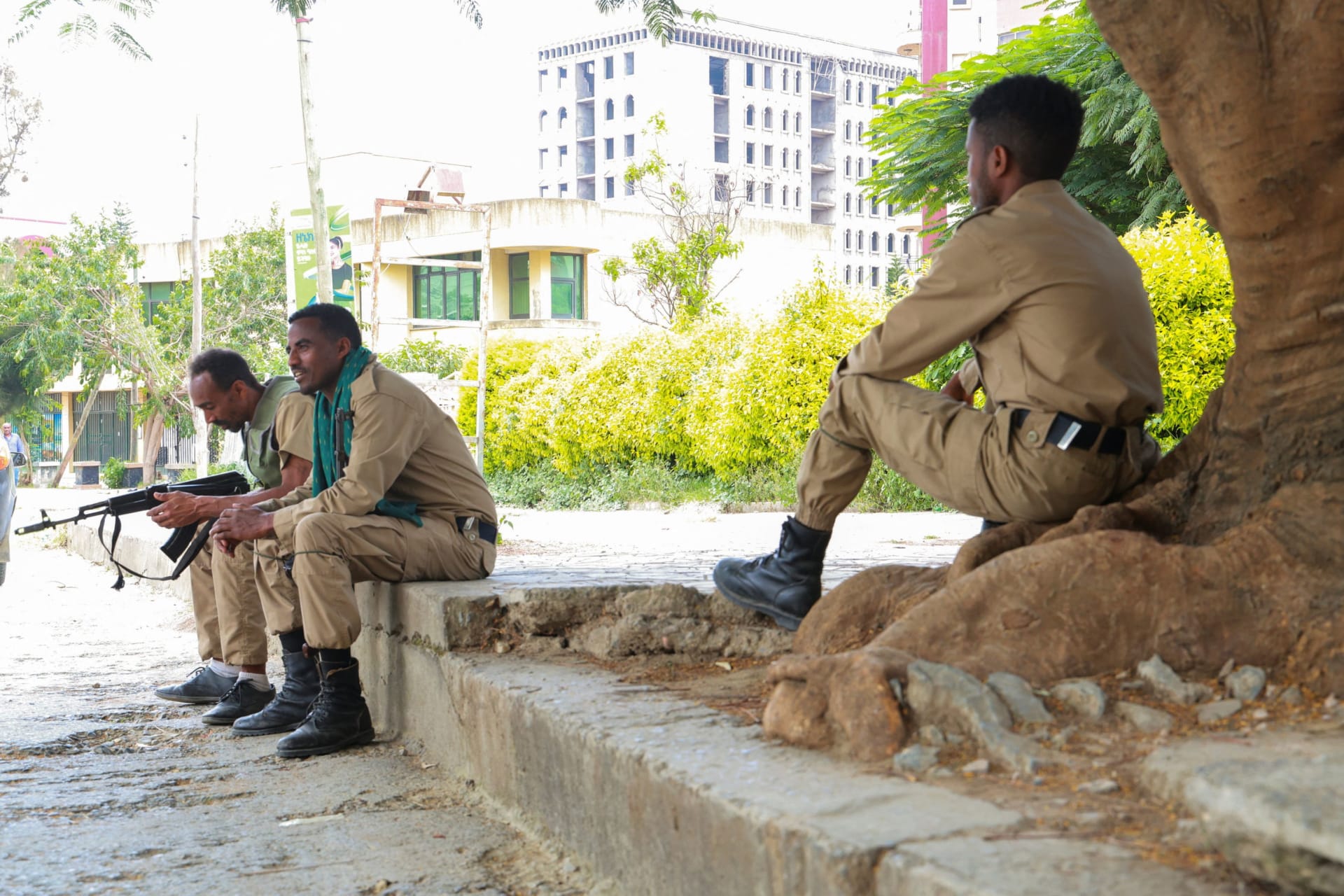
Last week, the Ethiopian government and Tigrayan forces dialed up the intensity of their simmering conflict, which has spread from Tigray into Amhara and Afar. The escalation has undeniable roots in Ethiopia itself. It is the logical result of the failure to fully implement the 2022 Pretoria Agreement to stop a conflict that the African Union estimated took some six hundred thousand lives—yet another example of the perils of diplomacy that enthuses over “deals” but rejects process. It’s also a function of the intense animus in the Ethiopian body politic; one week ago, seven Ethiopian armed groups with divergent agendas formed an “Alliance for Survival” aimed at bringing down Ethiopian Prime Minister Abiy Ahmed’s government. But while there are multiple domestic drivers of the conflict, it is not solely an Ethiopian matter. As the broader Horn of Africa splits into two opposing camps, external pressures are informing the logic of war.
Eritrea, having abandoned its marriage of convenience with Addis Ababa and formed a new, unlikely partnership with Tigrayan forces, may calculate that protecting its own security requires intervening against Abiy’s forces, lest they gain enough momentum to realize Abiy’s ambitions to claim a Red Sea port. But if restraint is called for anywhere, it is in the Horn of Africa, where the thicket of interstate tensions and intrastate disputes threatens to engulf the entire region. Already Ethiopia’s army commander has alleged that Egypt and Sudan are backing insurgents in Tigray. The interconnections between Egypt, the Sudanese Armed Forces, Somalia, and Turkey on one hand, and Ethiopia, Somaliland, and Sudan’s Rapid Support Forces on the other, intensify the risks that one conflict will spill into the next.
Meanwhile, the signals coming from the United States are confused at best. Earlier in September, the U.S. government declined to renew the targeted sanctions regime on Ethiopian and Eritrean officials implicated in the earlier Tigrayan crisis, even as conflict was flaring, and Secretary of State Marco Rubio has championed “a new era of U.S.-Eritrean relations” without any clear direction for what that might entail. Ethiopia and Eritrea support different sides in Sudan’s brutal civil war, which has not been staunched by a U.S. diplomatic strategy that involves teaming up with the foreign backers of the war to decry the continuation of the conflict. The two states also take different views of the aspirations of Somaliland, where Ethiopia has flirted with recognition, alarming Asmara. Meanwhile, U.S. enthusiasm for a closer relationship with Somaliland has been paired with a refusal to continue providing support to the African Union peacekeeping mission in Somalia. But it has not been accompanied by a clear alternative mechanism for preventing al-Shabaab—the Somali extremists who have deepened collaboration with the Houthis—from gaining even more ground. It is easy to understand the administration’s desire to move on from an effort that has lasted so long and yielded so little, but much harder to grasp how real security risks can be contained, particularly as Somalia’s federal and regional authorities are at odds.
The United States surely has a rationale for all of these positions, but taken together they send no clear signal as to what the U.S. might be trying to achieve in the region. A mix of improvisation and internal contradictions are painting a confused picture that encourages actors to pick and choose from the potpourri of U.S. statements and actions to find their preferred position and proceed to act without any sense of restraint. The United States has lost influence the region for years, and it is not as if the Horn would be peaceful if only Washington could get its act together. But with crisis metastasizing on both sides of the Red Sea and opposing blocks forming across multiple borders, the U.S. is running out of time to prevent worsening catastrophe.
This work represents the views solely of the author(s). The Council on Foreign Relations is an independent, nonpartisan membership organization, think tank, and publisher, and takes no institutional positions on matters of policy.