How I Got My Career in Foreign Policy: Manjari Chatterjee Miller
Manjari Chatterjee Miller’s career has centered on how history influences foreign policy, especially in China and India. She spoke to CFR about her experiences living abroad, what drew her to studying rising powers, and how a dinner conversation at Harvard changed the course of her career.
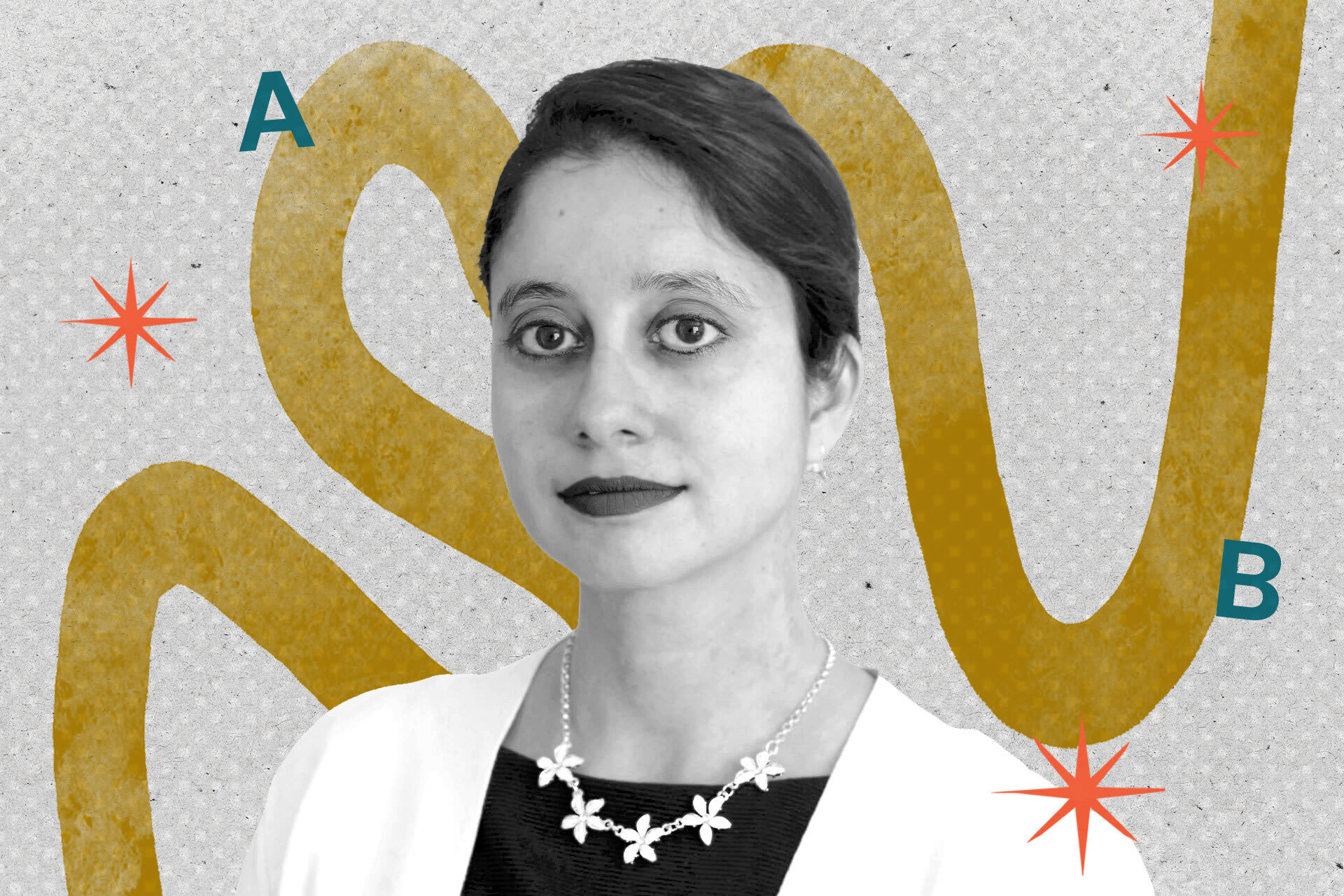
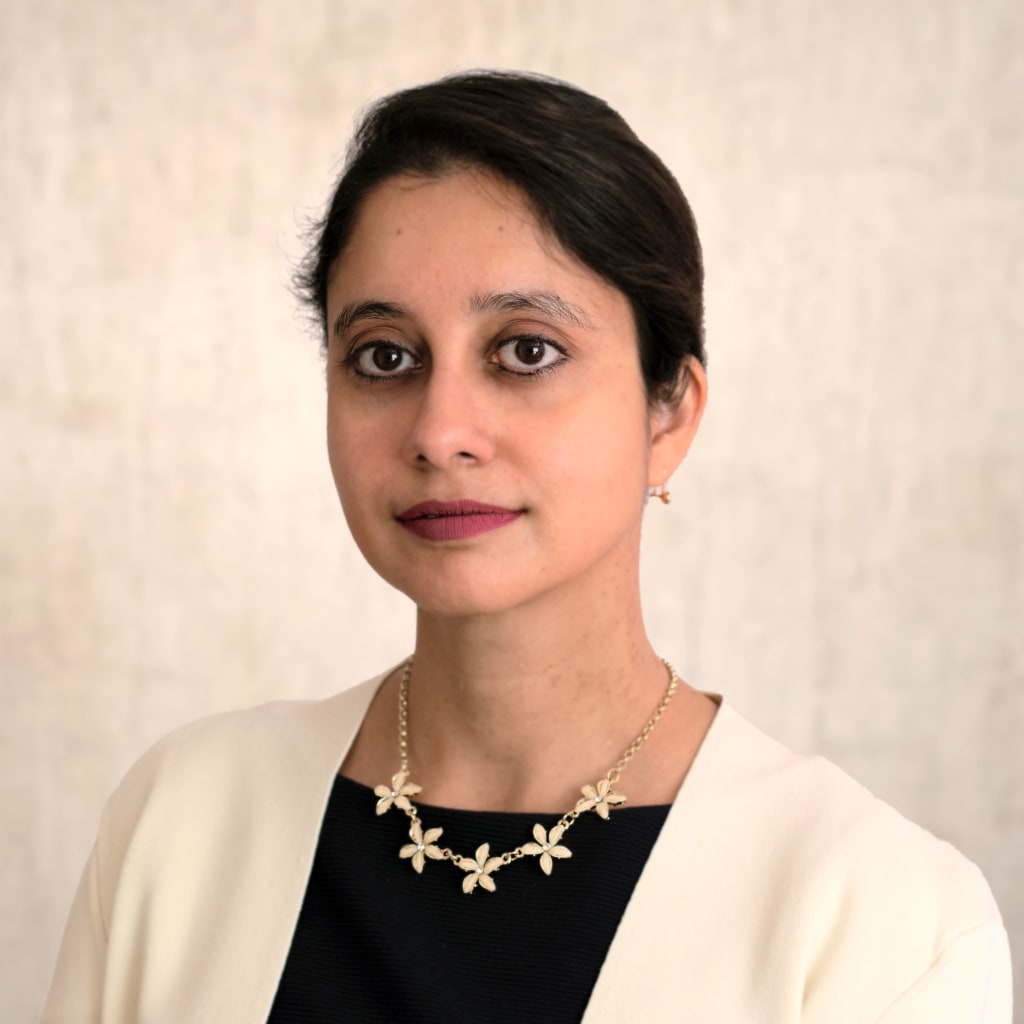
Manjari Chatterjee Miller’s interest in international relations began with her global upbringing. Raised across four continents, her exposure to different countries and cultures eventually led to a career studying foreign policy and the shifting dynamics of global power, with a particular focus on China and India. Miller, a senior fellow at CFR, is also a professor of international relations at the University of Toronto’s Munk School of Global Affairs and Public Policy. Read more about how Miller got her start, why she believes field work matters, and why she advises young people interested in foreign policy to travel.
Here’s how Manjari Chatterjee Miller got her career in foreign policy. If you’re interested in this series, check out more editions here.
What did you want to be when you were little?
I thought that I wanted to work in a bookstore. I was under the impression I would have lots of free time to spend reading books. I didn’t even aspire to own the store because I wasn’t that lofty. But if I could just get myself in the door, I thought I could read the books and I’d have a fine life. And if I got paid for it, even better.
When did you become interested in international relations?
It’s not so much that I was interested in international relations as I was surrounded by it. I essentially grew up on four continents. I was born in India and spent some of my childhood there, then lived in the United Kingdom (UK) and in Africa before moving to the United States while still quite young. Those experiences shaped my upbringing, and international relations was always a part of my life. As a result, it came very naturally to me to be interested in countries and why they do what they do.
My dad also had diplomatic postings, so I was constantly meeting people from different parts of the world. I don’t think it ever occurred to me not to enter the international relations field. I changed schools nine times by the time I was in high school.
Speaking of school, you did your undergraduate degree at Delhi University in India before you pursued graduate studies abroad—first at the University of London and then at Harvard. What made you want to study abroad, and how did that change your understanding of the field?
I was like any young person: it was just an adventure. I would love to lie to my students and say, “I thought if I did this, I’d be enriched.” No, I just wanted to be abroad and have fun.
I thought London was a super exciting city, so I moved there. Then I moved to the United States, actually following my American boyfriend, who is now my husband. We’ve been married for twenty-five years this year, so it’s a happy ending! But I basically just followed him. These were very young-person choices, as opposed to thinking, “Yes, I would gain so much if I studied abroad.”
But here’s the thing: I did learn a lot from those experiences. The best thing I have ever done is live in all those different environments. It completely changes who you are, how you think, and how you approach topics. Any parochial notions you have are totally stripped away. For example, the way I was taught history in India was very different from the way I was taught history in the UK, in Kenya, and in the United States.
After you completed your postdoctoral fellowship at Princeton, you became an assistant and then an associate professor at Boston University, where you directed the Rising Powers Initiative. What made that topic a focus for you, especially in regard to China and India?
That was part of my second book project. My first book in 2013 looked at colonial history and how it affects countries’ foreign policy today. In the early 2000s, people constantly compared China and India. I think that comparison is no longer relevant today given that China has outstripped India in so many capabilities. But back then, people talked about it a lot.
I found it really interesting that China and India constantly referred back to colonialism and their colonized past, and presented themselves on the world stage as these poor victims when it came to certain foreign policy issues. So I looked at why and how history mattered for them in that process.
By the time I wrote my second book in 2021, the dynamics of power were changing. China was on its way to becoming a great power, and it was now being compared with the United States rather than India. This idea of power transitions became very important to my work—looking not just at how China and India are similar, but how they’re different. That shift in focus came from real-world events that were unfolding around me after I finished my first book.
You actually lived in China, and you’ve also studied India as an Indian American. How do you think those experiences have changed your perceptions or perspectives on both countries?
I lived in China for a short time while learning Mandarin. You learn nuances that you don’t grasp unless you visit. Here’s something I can tell you: if you read American newspapers, a lot of the coverage equates Chinese foreign policy with President Xi Jinping. He is a very powerful leader, but there are a lot of dynamics to Chinese foreign policy that play out under him. It’s not a monolith.
You realize this when you visit China or you talk to people there. There is a wide spectrum of opinions that exists, and some of these opinions make their way to the top while some of them don’t. China isn’t homogenous, and you don’t know that unless you actually go there.
Take the Belt and Road Initiative, which the United States was so worried about for a long time. It came from the central government, but if you go to the provinces, you see how each province and its officials interpreted it differently. A lot of it was left to provincial officials to muddle through rather than being implemented as one coherent grand strategy emanating from the center. You don’t realize those things unless you’re in the country talking to people and scholars. That’s why I think field work, being able to speak the language, and going to these countries is so important.
Over the course of your career, you’ve held academic positions, worked at think tanks, been a columnist, and written books. All of those are research and writing roles, in a sense. How do you think about the distinct benefits of each one?
They’re very different. When I was working full-time at CFR, I would often be reacting to events on the spot. An event would occur, and then I would write an analysis, relying on my experience in the field.
When I’m working on an academic paper, I carry out intense research for multiple years before I actually write the paper. I gather evidence. I do empirical work. I may go into the field and conduct interviews. My analysis is heavily backed up by empirical evidence, comparisons, and a structured theoretical framework. It’s knowledge production in a much more substantive fashion, but it’s also much slower than an immediate response to an event. So writing for a think tank like CFR and academic writing both have value, but in very different ways.
I would say—and this is not true for everybody—that being an academic informs my policy writing in a much better way. It’s because I had the time to work on those substantive projects that I can then translate that research into analysis for people to read. What is not good is when you’re an academic writing things for only three people to read in a peer-reviewed journal. You’re producing knowledge, but don’t you also want to produce it for people outside your field, so they can understand it? That’s what I think think tanks let you do. That I’ve been able to do both is a really great combination and an incredible privilege.
That segues perfectly to my next question. What brought you to CFR?
Exactly that—because I didn’t want to be writing for just three people.
This series is geared toward young people who are just starting out. For those who want to study rising powers or foreign policy more generally, what advice do you have?
My advice is to travel. Really travel. And don’t think of career paths as linear. You never know what is going to push you into foreign policy, but expanding your horizon is one way to get there.
Say you’re interested in a particular region. Going there, learning the language—all of that helps. Some people are interested in conflict zones where you can’t visit. That’s fine. Go to neighboring countries instead. Ensconce yourself there and meet people. You will encounter people who have left their own countries to be there, and you will meet people who know their neighbors really well. There are many ways to learn about regions.
What you shouldn’t be is an armchair analyst. If you’re interested in foreign policy, your first question should not be, “How do I find all of the foreign policy jobs?” That can put you on a very narrow path. You don’t know what’s going to be a foreign policy job, or how you’re going to fall into it. But I think that expanding your horizons and seizing opportunities, particularly to travel and learn about other countries, is incredibly important.
I’m sure you’ve had many interesting work trips or dinners over the years. Is there a memorable trip or meal that you could share with us?
I’m going to tell you about a dinner that basically changed the course of my life. During my first semester at Harvard, I was invited to a fancy dinner at the Faculty Club, and I was seated next to Roderick MacFarquhar, a Harvard professor and one-time British politician and journalist who was a sinologist. He belonged to a generation of sinologists who were deeply ensconced in knowing all about China, its culture, and the language.
Rod was particularly interesting because he also had a truly deep knowledge of India. That semester he was chair of the Harvard Government Department, where I was doing my PhD. At this dinner, he turned and asked me a question that, in my experience, only Indians ever ask: “What does your father do?” I thought, “Why is this British man asking me this?” I told him my father had been in the Indian Civil Service, and he replied, “Well, so was mine.” Rod’s father had been in the British Indian Civil Service, and Rod himself had been born in India and spent some of his childhood there before moving back to the UK.
We started chatting, and I told him that I was interested in studying China but was intimidated by how hard the language was and how expensive it was to learn Mandarin. Rod told me three things. First, that Chinese was really easy. He said, “There’s no past tense, there’s no future tense. It’s just characters.” That was a complete lie! It was very hard to learn Chinese. The second was that Harvard always had money for students to learn, you just had to know where to look. Third, he encouraged me to talk to Alastair Iain Johnston, one of the most famous China foreign policy experts, who eventually became my PhD advisor.
I was so fired up after that dinner. I went to talk to Iain—who turned out to be an incredible advisor and mentor—started looking for funding, and began studying Mandarin. I don’t think I would have ended up studying China without Rod—I would have probably done something easier. But that encounter reshaped how I thought about research and what I was going to do. That’s why I think talking to people is so important. You never know when you’re going to meet someone who completely changes your mind about something.
This interview was edited for length and clarity.
This work represents the views solely of the author(s). The Council on Foreign Relations is an independent, nonpartisan membership organization, think tank, and publisher, and takes no institutional positions on matters of policy.