How I Got My Career in Foreign Policy: Michelle Nunn
Michelle Nunn cofounded a start-up, ran for the U.S. Senate, and now leads CARE USA, one of the United States’ largest humanitarian organizations. She spoke to CFR about a career shaped by civic leadership, volunteer mobilization, and commitment to service.
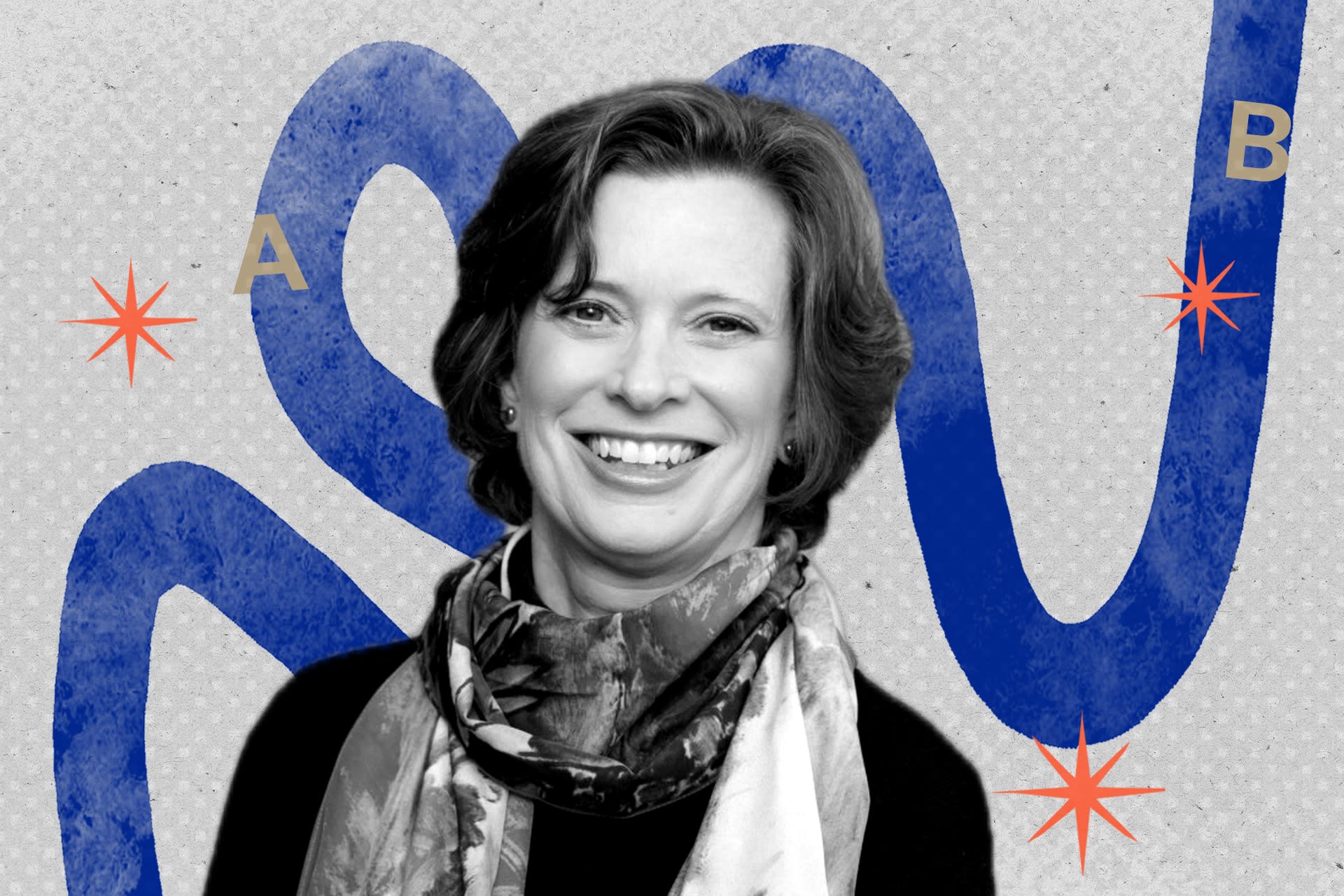
Michelle Nunn didn’t grow up with a specific career in mind—just that she wanted to help people and make a difference. That instinct took Nunn from helping launch a volunteer movement in Atlanta to leading the Points of Light Foundation, running for the U.S. Senate in Georgia, and becoming president of CARE USA. Across each role, the CFR life member’s career has been guided by the belief that meaningful change happens when people come together. Nunn spoke to CFR about the leadership lessons that translate from grassroots movements to global organizations, the importance of empowering local communities, and why service remains as important as ever.
Here’s how Michelle Nunn got her career in foreign policy. If you’re interested in this series, check out more editions here.
What did you dream of being when you were growing up?
I’m not even sure that I can remember dreaming of being anything specific, such as a fireman or the president of the United States. But I knew that I wanted to try to make a difference and do something in service. My parents embodied the idea of public service—my mom was a civic volunteer and my dad was a member of Congress. So that was the general idea of what I wanted to be, but then I had to find my specific path.
Your father is former U.S. Senator Sam Nunn. Growing up, did public service feel like a calling, or something you had to find your own way to?
I grew up partly in Washington, DC, but also with my Georgia roots. All around me were people committed to the ethic of public service, whether they were civil servants, members of Congress, or part of the ambassadorial corps. I grew up among a generation that believed public service was a noble calling, and I think that shaped my sensibility and aspirations.
I took a different path from my father, who had a national security orientation. I admired him, but I was more drawn toward social service, civic engagement, and citizenship. I started my career around national service and ultimately focused on issues of social justice. I think that broader framing was important. Growing up, I also volunteered as a mentor and by visiting seniors, and I think those experiences shaped my commitment to direct service and engagement. All of that gave me a sense of purpose and meaning that propelled me in my career.
You studied history and religion at the University of Virginia, and then went on to get your master’s in public administration at Harvard. You later received a Kellogg Fellowship to study faith and social justice across twelve countries. How did your education shape your sense of what you wanted to do in the world?
When I graduated college, I did not know the specific way I wanted to make a difference, but I knew I wanted to find that pathway. I originally thought I was going to join the Peace Corps, and I did apply. In the meantime, I met a group of people starting a local civic organization, a start-up called Hands On Atlanta. It was focused on mobilizing people in the Atlanta community, especially young people. I ended up deferring my Peace Corps application because I felt like I had more to offer in my own community.
Hands On Atlanta was where I learned what it meant to be part of a collaborative team creating, in a sense, a movement for change—not only in my own city, but ultimately nationally and internationally through the Hands On Network and eventually Points of Light.
Along the way, I had the chance to get my master’s at Harvard. I had the opportunity to participate in the extraordinary Kellogg Fellowship, where I was able to research and learn from social change movements around the world that were connected to or inspired by different faith traditions. I got to explore the common denominators across faiths around social justice.
As you can imagine, all of that converged into a real interest in community mobilization and engagement, citizenship, and democracy. How do we create meaningful and systemic change that is not just about direct service, but ultimately also changes systems? The Kellogg Fellowship and master’s program at Harvard also broadened my interests to include the global community and how these issues intersect with development and humanitarian concerns.
Speaking of Hands On Atlanta, it has grown into one of the country’s largest civic action organizations. What did working there teach you about the power of collective action?
I think the greatest gift was probably naivete—not knowing what would be hard about it. That’s one of the reasons we see so much change coming from young people, because they have both passion and aspiration, but they’re also not burdened by the idea that “this won’t work.”
I remember so many times at the beginning of our Hands On journey when people more senior than we were would say, “Well, you can’t do that.” And it turned out that we actually could do those things. It just took a different perspective and a different way of getting there.
It was also an opportunity for us to grow without a predetermined idea of what we would become. It was more like, “Let’s get something good going, and let’s continue to grow it.” So I think that was the animating impulse: let’s just do more good. That took us into questions of how we could spread this to other cities and deepen our reach? For instance, we were part of the first pilot programs for Summer of Service, AmeriCorps, and national service. So it grew into a much broader endeavor focused on civic change.
Really the power of collective action.
Exactly. That’s been reinforced throughout my career. We often underestimate the capacity of individuals to join together and create change. There’s the famous Margaret Mead quote: “Never doubt that a small group of thoughtful, committed citizens can change the world. Indeed, it’s the only thing that ever has.”
You then led the merger between the Hands On Network and President George H.W. Bush’s Points of Light Foundation in 2007, creating the world’s largest volunteer service organization. What was that process like, and what did you learn from it?
Mergers are not easy to accomplish in the nonprofit sector, and they’re a bit daunting. But this one was interesting because it brought together two organizations with different origin stories. Hands On Atlanta started at Manuel’s Tavern in Atlanta, passing around an empty beer mug and asking, “Can you make a contribution?” Points of Light started around the table at Camp David with presidents and CEOs.
We learned that when you have shared values and a shared, bold sensibility about what you want to create and what’s possible in the world, and you realize you can do more together, that becomes an opportunity. I was still part of what I considered a start-up movement. Then I found myself at an interview with President George H.W. Bush at a fancy restaurant in Houston, which was intimidating.
I think what we found—even across different political persuasions—was a shared vision around the importance of service. There are a lot of lessons there, especially at a time of so much polarization.
In 2013, you took a leave of absence from your role as CEO of Points of Light to run for the U.S. Senate in Georgia. What drew you to politics, and what did that experience teach you that your nonprofit career hadn’t?
I certainly had the example of my father, but if you had asked me through my teens, twenties, and even into my thirties whether I would run for office, it would not have been on my career aspiration list. But I kept coming back to my commitment to service, citizenship, and civic engagement, and my belief that we need a vibrant political system that represents the various voices in our society and pursues problem-solving—especially for those who are on the margins of power.
It was also at a time when there was not a particularly robust democratic contest in Georgia. Running for office was a tremendously inspiring, exhausting, and challenging endeavor, but I’m glad I did it. Obviously, I didn’t follow all the way in my father’s footsteps because I lost. But I won the Democratic nomination, and I found the experience to be a tremendous reminder of people’s aspirations to be involved in something larger than themselves. There is still a lot to be proud of in the civic fabric of our country and the passion of our citizens. It was a wonderful way to both participate in and experience that.
You took the helm of CARE USA in 2015, leading an organization working in more than one hundred countries to fight poverty and respond to humanitarian crises. What drew you to CARE—and to work at that kind of global scale?
When I joined CARE, I realized it was the first time that I hadn’t been a part of a start-up enterprise. I had always been part of something being built. So it was a big change to join a seventy-year-old organization. But it was an organization whose mission I found, and continue to find, extraordinarily inspiring and critical: saving lives, defeating poverty, and centering women and families as a way of doing that.
I think it harkened back to my initial Peace Corps aspirations, that idea of being part of a global citizenship movement. I had been involved in civic engagement and citizenship at a domestic level, but ultimately I believe in the importance of standing with one another across boundaries. I think that’s especially important given the levels of inequality that remain globally. Even though we’ve made great progress in reducing poverty and health inequities, there’s still so much more to do.
For me, it was the best of all worlds: a global remit with great scale. Last year, CARE reached sixty million people, focusing on the biggest challenges in the world, which I think are poverty and humanitarian crises. We are also really focused on gender equality and tapping into the capacity of women and girls to be global changemakers.
How have you approached leadership differently across your different roles?
There are all sorts of complexities to the work of CARE. We work in some of the most challenging contexts in the world—including Afghanistan, Haiti, and Yemen—so we have to build in safety and security safeguards. There are things you have to consider when you’re part of a large, multilayered institution that are different from what you encounter in a startup.
At Hands On, when Hurricane Katrina hit, we told one of our former AmeriCorps members, “Just go to New Orleans and figure it out.” So she was camping out and building the capacity to engage tens of thousands of volunteers, all coming and sleeping overnight in churches. I look back now, with my compliance and legal sensibilities, and think, “Wow, that was something.” But you do things differently when you are in a start-up, and appropriately so.
My hope with CARE is that we continue to tap into innovation, creativity, and entrepreneurship. We do that in part by working with local organizations. We’re a facilitator, and we can maintain agility and nimbleness in order to do the most important work. At their best, institutions are constantly being reinvigorated and reimagined. Especially with the disruption of the last eighteen months, in terms of the loss of humanitarian funding, we’re in a time of true transformation. A lot of those start-up sensibilities are actually important for larger institutions to embrace.
What skills have helped you be successful in a leadership role?
At a recent global town hall, we interviewed a woman from CARE Norway who is retiring after thirty-five-plus years. She was one of the founders, along with a group of women in Niger, of our Village Savings and Loan Program. It started with less than thirty women in Niger, and it’s now thirty million women in more than fifty countries.
We asked her, “What are the key ingredients of leadership? What do you look back on and think was part of the magic of these savings groups?” And she said, “Listening.” It was all about listening. I would say it was also about her humility in focusing on the voices of those women—their strengths, their capacity to drive their own change—and then helping facilitate that.
Humility and good listening are leadership attributes that are critical for the work that we do in the humanitarian development community. I would argue more broadly as well. I would also say that it’s important to hold on to a little bit of the naive, bold aspiration that especially animates us when we’re in the early parts of our careers, and to continue believing that big change is possible.
Is there a community you’ve visited, a person you’ve met, or a moment in the field that you’ll always remember?
Gosh, there are so many. There is an extraordinary woman that I met from West Africa named Salamatou. She was fourteen when she was married against her will to a man who was over the age of sixty. By the time she was twenty, she had five children and was living in desperate poverty. Her husband sent her away against her will to Ghana where she met some of our savings group women.
She was inspired by that model, and she started a savings circle, got a little bit of money out, and then started a small sugar cane business. She built her own business, moved back to Ivory Coast where she was from, and divorced her husband. Ultimately, she was able to send her younger children back to school and bought her older children a car so they could start a taxi service. On top of that, she started working with the CARE team in Ivory Coast to start savings groups there. She was called the mother of the Ivory Coast savings groups, and she was instrumental in starting savings groups for twenty thousand women.
I visited her a few years ago, and she said, “What I want to do now is mobilize other women and men like me who can be ambassadors.” They call themselves the Amazons. Since then, they’ve mobilized an additional forty thousand people in the savings groups. The moral of the story is that there are remarkable people everywhere, and that when we tap into their potential, they can not only change their own lives, but really change the world.
This interview has been edited for length and clarity.
This work represents the views solely of the author(s). The Council on Foreign Relations is an independent, nonpartisan membership organization, think tank, and publisher, and takes no institutional positions on matters of policy.