How I Got My Career in Foreign Policy: Ishaan Tharoor
CFR’s press fellow explains how he went from chasing stories across Asia at age twenty-two to writing one of Washington’s top foreign affairs newsletters—and now pens his own column for The New Yorker.
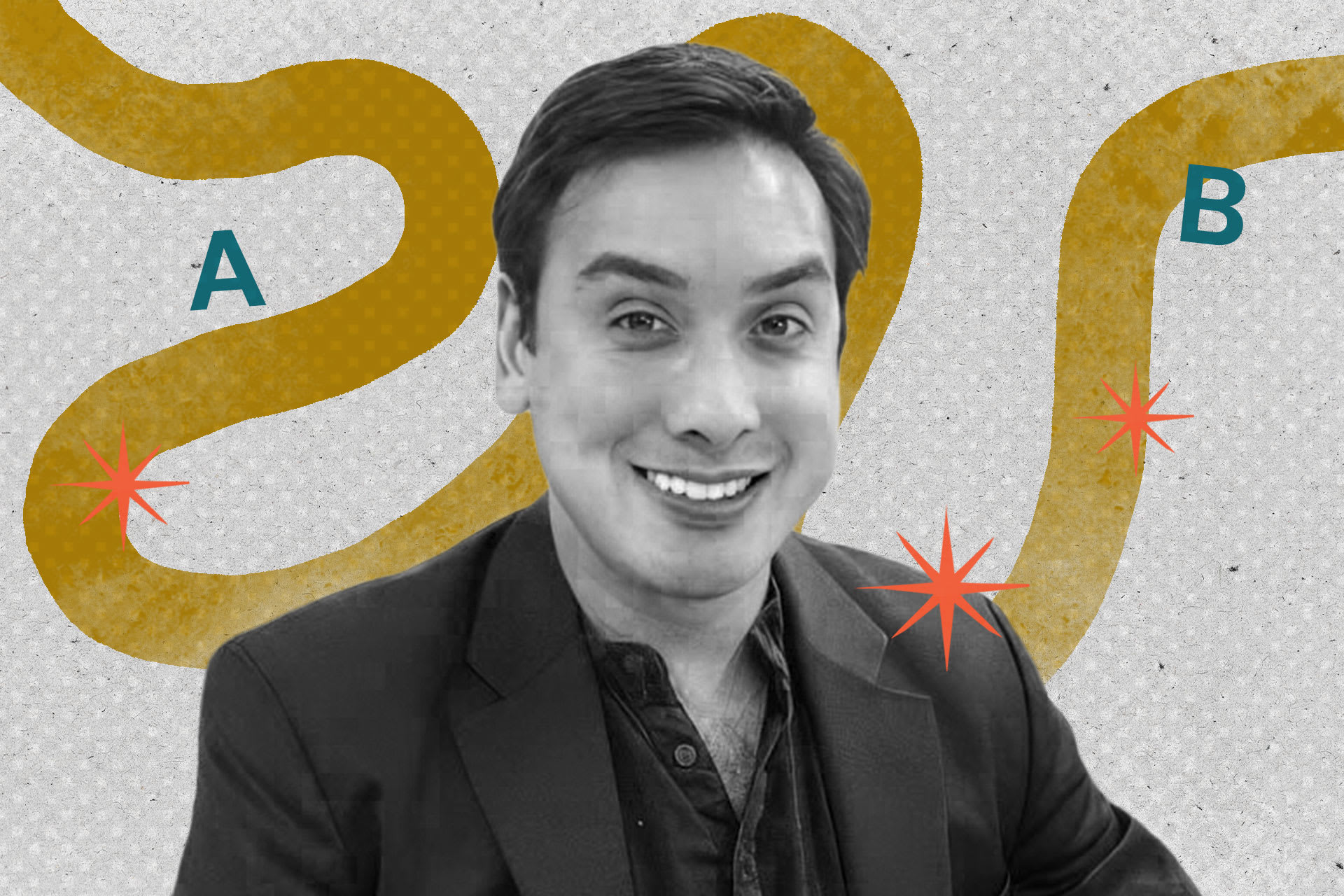
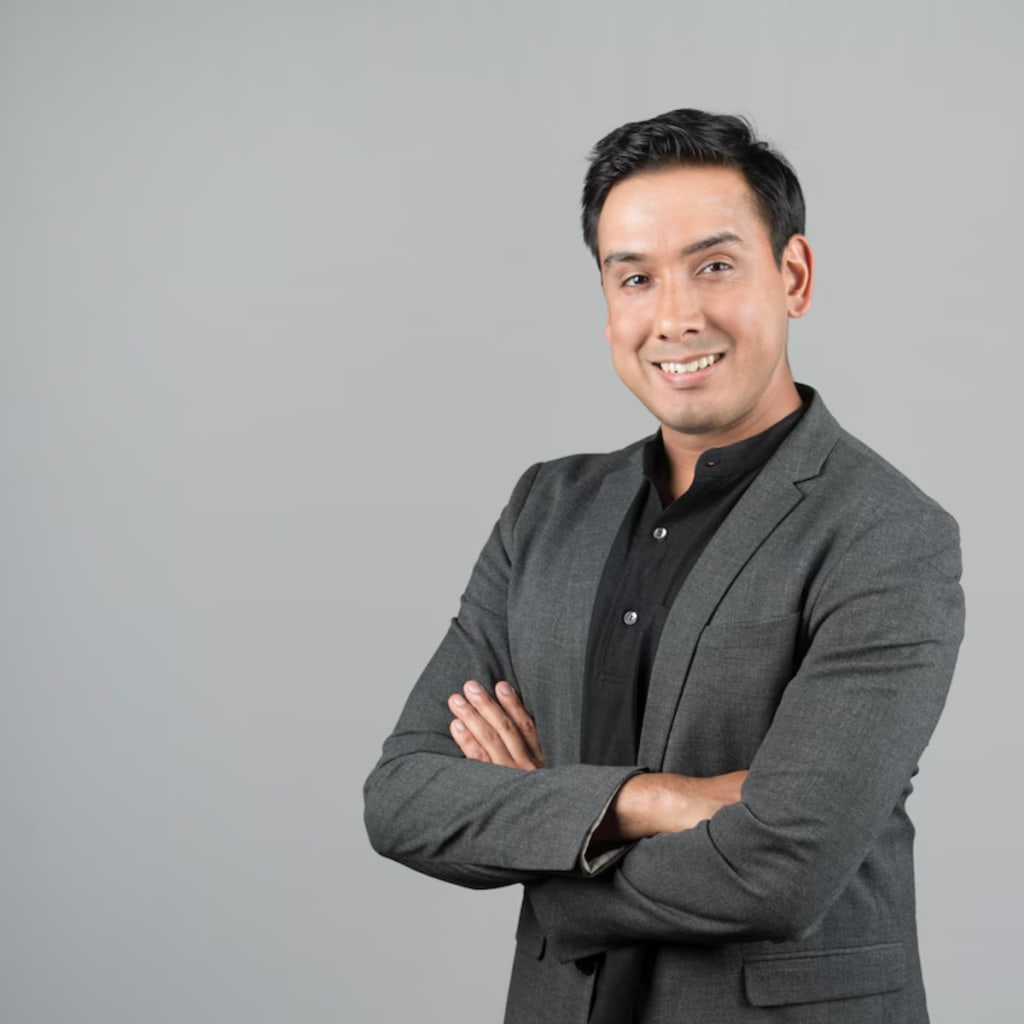
As the son of a UN diplomat, Ishaan Tharoor was raised around—and by—the world. He was born in Singapore, grew up in Switzerland and the United States, and held his first-ever job in Hong Kong. This global upbringing made him want to be a historian, until he became hooked by journalism. Tharoor went on to start the Washington Post’s flagship international newsletter, Today’s Worldview, which he wrote for nearly a decade. He took that expertise to the New Yorker, where he now writes his weekly column, Global Notes. Today, he’s also CFR’s press fellow. Tharoor sat down with CFR to discuss how his travels inform his work and how an unusual conversation with a Nobel Prize winner cemented his interest in journalism.
Here’s how Ishaan Tharoor got his career in foreign policy. If you’re interested in this series, check out more editions here.
What did you want to be when you were a kid?
I wanted to be a military historian. From a very early age, I was a total geek for battles and ancient wars and conflicts. Having a twin brother with similar interests, we fueled each other’s nerdiness on this. We devoured all the books in our school library about civilizations and kingdoms. I remember when we were ten years old, our family went to Gettysburg, Pennsylvania, and went on a tour led by a man from the U.S. Army. My brother and I could anticipate the various stories around fortifications on the battlefield before the experienced tour guide could even tell us about them. He was so taken aback by these geeky Indian kids going off about Little Round Top and regiments from Maine.
The mental image that story conjures is absolutely delightful and serves as a perfect preview into your choice to study History in college. How did that background later shape your approach to foreign policy coverage, as opposed to traditional international relations or journalism majors?
I was never interested in the models and analytic frames that you study in political science. I was much more interested in storytelling, unearthing ironies about the past that we hadn’t seen before, and poring over primary documents. I was lucky to go to Yale, which has amazing archives that are available for undergraduates to examine. If you think of history as storytelling, it does dovetail quite easily into journalism.
When did you identify that your interest was growing into journalism?
My first year of college was 2002, just as the United States was preparing to invade Iraq. At that time I was part of the campus antiwar movement, but eventually realized that I was not much of an activist at heart, and threw myself into political journalism instead. I founded a politically-minded campus publication.
I always thought I’d end up applying to a history PhD program, but I can tell you exactly when that changed. Straight after college, I got an internship at Time magazine in Hong Kong. During my first two months there, I was tasked with writing a profile for a special issue in the Asian edition on Muhammad Yunus, who at the time was known for his work in microcredit and building the Grameen Bank in Bangladesh.
It was a wonderful phone call. We were talking for over an hour, and then during the phone call, there’s a strange commotion. It sounded like people were trying to get into his office to tell him something, and he kept on shooing them away because he was talking with me. An hour-and-a-half into our phone call, he says, “I’m so sorry, there’s just too much noise outside my office. I’ll see what’s going on and call you back.”
I hung up and saw the editors across the newsroom running toward me. It turned out that Norwegian television had just announced that he won the Nobel Peace Prize. Yunus had not even heard the news himself because he was chatting with me on the phone—we were still in an era of landlines. I thought, “Wow, I’m not going to get this kind of experience writing in an academic journal for ten other people.”
Wow. So did he ever call you back after getting the news?
[Laughs] No, he didn’t call me back that day. But we’ve communicated since then, and he was very gracious and kind about the whole thing.
Only two months into the job, too! I can understand why this sealed your interest in this path. You’ve mentioned life in the United States and Hong Kong, but I know you were born in Singapore, raised in Geneva, and spent time in India, too. How did living and working across so many different cultures shape your approach to international topics?
My brother and I were born in Singapore when my father was posted there for the UN refugee agency, running their office there during the Vietnamese “boat people” crisis. We were also massively premature as twins, so we were lucky to be born in Singapore, which had some of the best neonatal care in Asia, because had we been born in our native India, we probably would not have survived.
We grew up in the UN system in this milieu of diplomats, academics, and journalists, going from Singapore to Geneva, then Geneva to New York when my brother and I were six years old. Our parents both come from a tradition of intellectual secular cosmopolitanism in India, so we were raised with a sense of belonging to lots of different places and not feeling like this compromised who we were or produced any frictions in our own sense of ourselves. I’m a naturalized American, but I spent my entire childhood and early adult life being an Indian citizen. I feel at home in a lot of places.
What did working in Hong Kong for your first job teach you that you couldn’t have gained from a DC or New York-based desk?
Starting my career in Hong Kong was fascinating. I went there in 2006, before the financial crash, at a moment when there was still a huge amount of optimism about China. There were still people in the city who really thought that Hong Kong today would be China tomorrow. Of course, there was a lot of excitement building up around the 2008 Summer Olympics in Beijing then, too. Being in Hong Kong and visiting friends in mainland China, it really felt like I was where the pulse of history was.
It was also an incredible place to start my journalism career. This was a phase at Time where I was deeply analog and not doing much digitally. The Asian edition was producing twenty to thirty pages a week out of Hong Kong. It was an education in journalism that I really value.
Because Time has such a brand name in Asia and had an expansive network at the time of stringers and fixers, I could go to different countries to report all kinds of stories. My first cover story was on the Maoist camps in Nepal and that country’s political transition after a bloody civil war. The gentleman who helped set up a lot of my interviews with prominent leaders was like the [New Yorker Editor] David Remnick of Nepal. He was surprised to learn that he was helping facilitate interviews and conversations with me, a twenty-three-year-old guy wet behind the ears. But it was a wonderful way for me to travel around Asia. I did stories in Bangladesh, India, Nepal, the Maldives, the Philippines, and other countries in between. Then I would come back from my reporting trips and have a couple weeks to write a four-thousand-word piece.
How did you get from writing magazine features across Asia to writing a daily flagship newsletter at the Washington Post in DC? Did you feel that you already had the skills you needed to make that shift?
Time was going through massive cuts, so I had to come back to their U.S. headquarters, where I launched the magazine’s first global affairs digital blog around 2010. That actually became the kickstart for me, as the journalism world was getting increasingly invested in blogging. When the Post came knocking in 2014, I couldn’t say no.
I’d done the first eight years of my career at a magazine, so I had to learn what it was like to be in a real daily newsroom. But I think my calling card was a capacity to write with authority, historical context, and internationalist sensibility on a range of issues—to be able to connect the dots between elections in one place to the contentious politics in another, for example. At a time when a lot of newsrooms were banking on social media driving the conversation, we found that leading a story with context was what the audience really wanted.
Part of the essential thing about being a generalist is you really have to have a good sense of what you don’t know. It’s not just about being conversant on a range of issues, it’s about really knowing the limits of how much you can try to get across in one article. That’s a skill that you’re always working on, and is one of the joys of being a journalist—the more you learn, the more you find out how much there is to learn.
And now you’re back in the magazine world again. Your writing at The New Yorker obviously operates in a different register than what you produced for both the Washington Post and Time. How do you approach choosing what to cover there?
The newsletter at the Post began as a five-days-a-week column. Eventually, thanks to my editors, I got to decelerate it to three days a week. But throughout the time I was doing it, I felt a bit like a hamster in a wheel. Now at the New Yorker, my column feels like it’s coming at a more appropriate cadence. I get to write with a level of depth and seriousness that I probably couldn’t muster at the clip I was on at the Post. It’s also a real joy to be edited and fact-checked at the New Yorker; all the legends about the place are true and it’s been such a thrill and honor to hang my hat there.
It’s been a thrill to keep up with your writing there, too. What are you working on here at CFR?
I’ve spent the bulk of the last decade thinking about the broader tectonic political forces shaping societies—puzzling over the erosion of liberal democracy in various contexts, the entrenched and toxic nature of debates over migration, and the geopolitical issues about what a new global order could look like in the post-American world. I aim to look at the conversations we’re having about democratic decline as well as a reconfiguring global order, and identify where those two intersect.
I’m also starting my fellowship at a very interesting moment in the Middle East, where we’re seeing a fascinating shift in geopolitical alignments there because of events like the U.S.-Israeli war on Iran. I’m thrilled that I’ll get to track these dynamics from inside CFR. I am also looking forward to working with CFR fellows and spotlighting their expertise in my ongoing New Yorker work.
You’ve covered all kinds of topics, including the Arab Spring, the war in Ukraine, and the World Cup. Is there one topic you feel the U.S. foreign policy space should be thinking about differently?
There are several, but I would actually point to the threads in how they connect. What’s interesting about the current moment is that we’re having a lot of the same conversations in different places, and I am fascinated by how political movements in some countries connect themselves to others. The last decade of U.S. politics reveals the extent to which the country is not aloof from political tensions we’ve seen elsewhere. And there’s an illiberal nationalist axis we’re seeing emerge with President Donald Trump at the center, and figures like Nayib Bukele in El Salvador, Javier Milei in Argentina, or the recently defeated Hungarian leader Viktor Orbán in his orbit.
There’s also a new kind of politics, often generated through social media, where passions over one particular issue—say, migration or affordability—end up getting echoed in or refracted into a totally different context across the world, too. I think we are seeing a crumbling of the national-international divide when it comes to many political conversations.
Things are changing in journalism, too, of course. What advice do you have for people that want to enter the field today?
The world needs journalists, especially journalists who care about the world, are interested in conversations that are not parochial, and look to connect dots between places and politics. The tragedy of the moment is that I don’t even know what advice I would give to somebody who wanted to have my career, because the pathways that existed for me or that I was lucky to stumble upon no longer exist. There’s a whole other world of technology and information distribution that young journalists are using that I have little insight into. But it does seem to me that if you’re starting out now, you would be naive not to think about the ways in which people actually consume their news, especially the younger generations, and how you get the attention of that audience.
It’s also very important to spend time in different places. I think the capacity we have now to publish ourselves is as great as it’s ever been, but I wouldn’t necessarily suggest launching your own Substack first. I would try to get your foot in the door at some kind of established news institution, whether it’s a wire service or a local newspaper or what have you, so you can get the raw skills that you need to be a journalist. Then from there, you have to be creative and you have to be lucky. That’s the state of our industry right now.
From Muhammad Yunus to the David Remnick of Nepal, I’d love to end on this theme of unique encounters—any other interesting characters you met while on an assignment?
I was representing the Post at the World Economic Forum in Davos for the better part of the past decade, and the first time I went, I bumped into Indian Bollywood star Shah Rukh Khan. I actually got him to make a video for my wife, and I don’t think any other reporting trip I’ve ever been on has gotten me such brownie points with her.
Sounds to me like what they say is true, that the meetings on the sidelines are often some of the most important!
This interview has been edited for length and clarity.
This work represents the views solely of the author(s). The Council on Foreign Relations is an independent, nonpartisan membership organization, think tank, and publisher, and takes no institutional positions on matters of policy.