How I Got My Career in Foreign Policy: Rebecca Bill Chavez
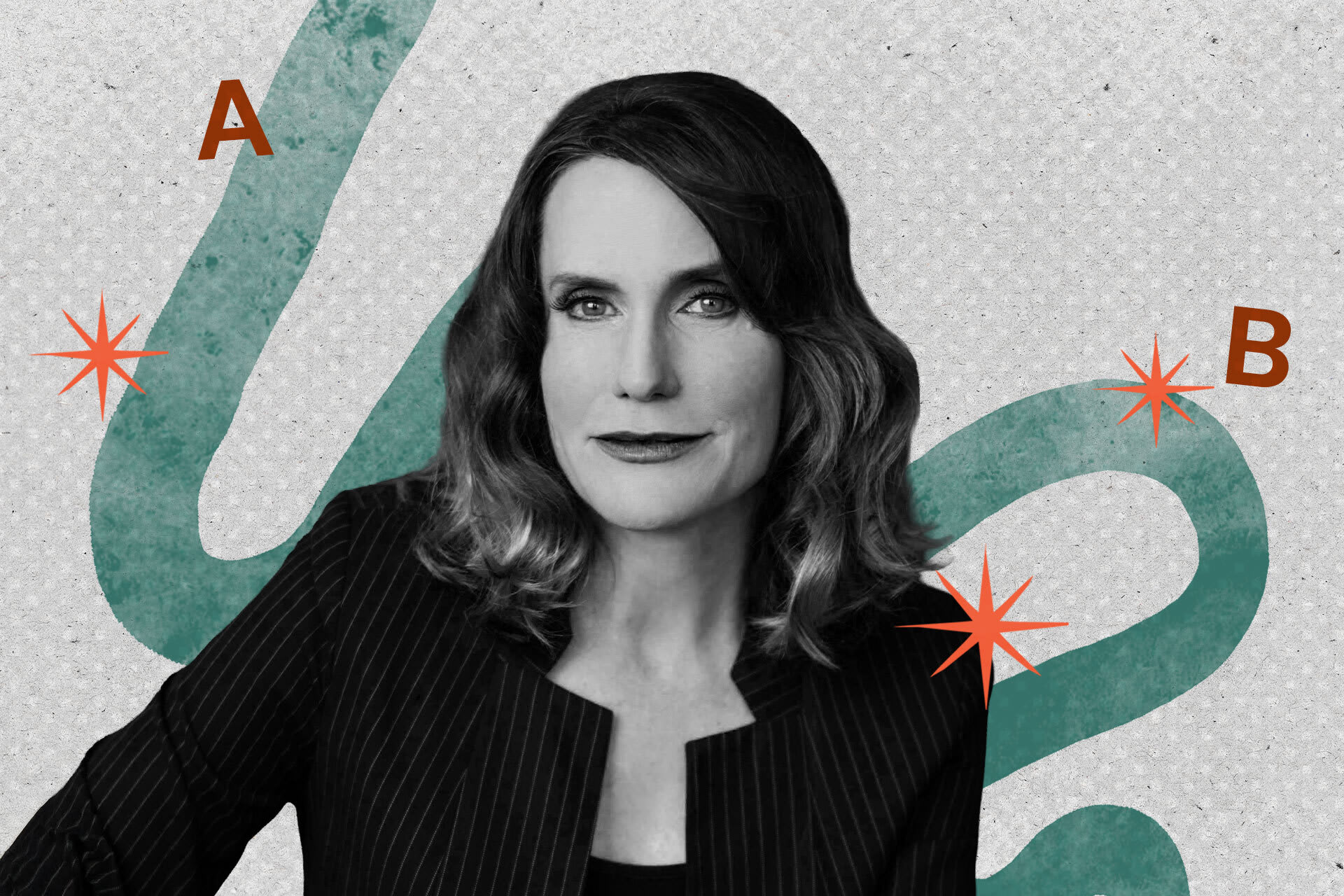
Rebecca Bill Chavez’s interest in foreign affairs was cultivated from an early age. The president and CEO of the Inter-American Dialogue spoke to CFR about what sparked her fascination with Latin America and how she pursued it across academia, government, and the think tank world.
By experts and staff
- Published
- Senior Editor
- Rebecca Bill ChavezPresident and CEO, Inter-American Dialogue
For Rebecca Bill Chavez, 1994 was a pivotal year. What began as a yearlong Fulbright fellowship in Argentina kicked off a career spanning more than three decades focused on Latin America in foreign policy and national security. The CFR life member’s path has included working at the U.S. Naval Academy, the Pentagon, and, most recently, the Inter-American Dialogue, where she became the first woman to lead the U.S.-based think tank. Read on for more about how Chavez’s interests evolved from academia to national security, what surprised her about working at the Pentagon, and why she believes in spending time in the places you study.
Here’s how Rebecca Bill Chavez got her career in foreign policy. If you’re interested in this series, check out more editions here.
What did you dream of being when you grew up?
I wanted to be a pediatrician but ended up as a professor. Go figure. Growing up in Austin, Texas, I also really wanted to have a four-door pickup truck.
How did you become interested in foreign affairs?
Notwithstanding my desire to be a pediatrician, I was always interested in foreign affairs. That’s in large part because my father was a political science professor at the University of Texas at Austin, and he focused on the Middle East. He was an old school comparativist, meaning he did deep field work in various countries in the region, with a particular focus on Iran. We frequently had his graduate students or colleagues, many from the Middle East, staying in our home, and I often heard them speaking Farsi. My mom always made sure our home was open and the guest room was ready.
My father was also the reason I developed an early love of travel. He thought it was important for us to see as much of the world as we could. If he was going somewhere interesting, he always tried to find a way to bring us along.
You got your bachelor’s in public and international affairs from Princeton, then chose to do your master’s and PhD in political science at Stanford University. How did your academic interests develop over that time?
As an undergrad at Princeton, I had really great professors, starting with Forrest Colburn, who taught the intro Latin American politics course. I did my senior thesis on the North American Free Trade Agreement with Jorge Castañeda as my advisor. Through Princeton’s grants, I was able to spend time in Mexico and Argentina. So that was a big part of it, having those opportunities—which I think are important for any undergrad—to go abroad and get out of one’s comfort zone.
The idea of becoming a professor started early, given my dad’s influence. I had a year-long Fulbright scholarship right after college, and I spent it in Argentina. That sealed the deal. I decided to follow his path into academia.
I was drawn to Stanford because of its excellent political science department. I was really lucky. My dissertation committee was Larry Diamond, Terry Karl, and Barry Weingast, and I focused on issues of democracy and the rule of law. Stanford also gave me the opportunity to do field work, primarily in Argentina and Chile.
What have you observed from visiting the region that you might not have gleaned from research alone?
Reading about a region or country isn’t enough. Living in a country and developing relationships is so important. For my dissertation, for example, I did a couple hundred interviews while living in Argentina. My dissertation was about how new democracies build the rule of law, and I had the chance to spend time with key actors and get the full picture. Because I was there, I could speak directly with the judges, the legislators, civil society, and academics. Spending time in a country is the only way to really gain a deep understanding of what’s happening there.
You then followed in your father’s footsteps and became a professor of political science at the U.S. Naval Academy, where you taught about Latin American politics and democratization. What was it like teaching at a military institution?
Many people thought the Naval Academy was an odd choice because my other options were more traditional research universities. I chose it in part because I appreciated the emphasis on teaching. Research is incredibly important, but a lot of schools don’t put the same emphasis on teaching. The students were absolutely fabulous.
I didn’t know a lot about the military before I started at the Naval Academy. I can admit I had some trepidation at the beginning, but I ended up loving my colleagues and the midshipmen. The Naval Academy had great military professors, but at the same time, were focused on bringing in civilian, tenure track academics.
I worry about the state of the service academies today. There are growing concerns about academic freedom. There’s also a debate about the tenure system. I’m concerned because having traditional civilian academics is critical, and I think the service academies will have a hard time attracting high-quality civilian faculty if things continue on this path.
As you mentioned, you move out of academia and into the government to work at the Pentagon. What was the transition like going from the classroom to the Defense Department?
In grad school and during my early years at the Naval Academy, I stayed within my original academic area of focus. That’s how I got tenure. Most of my writing was on the rule of law and judicial politics.
But while I was at the Naval Academy, I became more interested in security and defense issues. That was partly because of where I was working and partly because Admiral James Stavridis, then commander at U.S. Southern Command, invited me to join his advisory council. That meant traveling to the region with him and interacting with defense and military officials.
One lesson that stayed with me from my time with Southern Command has to do with the limits of what military tools can achieve. I was in Colombia with Admiral Stavridis, meeting with President Álvaro Uribe and his minister of defense about the enormously difficult task of recovering territory from the Revolutionary Armed Forces of Colombia (FARC) and National Liberation Army (ELN). The conversation kept returning to one point: the military alone would never be enough for what was termed the social recovery of territory. The military can go in and clear an area, but other agencies must follow and they have to stay. You need development and education, courts, police, roads, and schools. Without them, security gains don’t last. That is still true across the region today.
I began researching and writing more about defense and security, and that helped lead me to joining the Obama administration. If you had asked me ten years earlier, I would not have guessed I’d end up at the Pentagon. I think focusing more on regional security was critical to my selection to serve as deputy assistant secretary of defense for Western Hemisphere affairs.
Was there anything that surprised you about working at the Pentagon?
Any stereotypes I had about the military largely disappeared during my time at the Naval Academy. The midshipmen were so bright and they cared so deeply—not just about U.S. national interests, but also about values and principles. So I wasn’t surprised that was the case with most members of the military I worked with at the Pentagon.
I very much enjoyed working with the foreign area officers. These are members of the military that develop deep expertise and language skills in a particular region. The ones I worked with who focused on Latin America and the Caribbean were outstanding. I hope the Department of Defense continues to recognize the value of this sort of expertise and experience.
I was often the only woman in the room, which typically wasn’t a challenge. Though I sometimes stood out as a woman civilian when I was in the region and working with our partner militaries.
What was your experience as a woman in the national security field?
I rarely ran into problems, but a few moments come to mind. One involved a policy disagreement with a high-ranking military officer who tried to push me toward a position I knew was wrong. This happened in my first two months on the job. He was quite aggressive about it and warned that he would make my time uncomfortable if I didn’t go along. As a civilian reporting to the secretary of defense, I sat outside the military chain of command, and I was fortunate to have the undersecretary firmly in my corner. I didn’t back down. Experiences like that definitely helped me develop thicker skin.
You move again, this time into the think tank world, taking over the Inter-American Dialogue in 2022. Latin America and U.S.-Latin America relations have undergone quite a shift since then. What do you see as the Dialogue’s role in the current geopolitical moment, and how do you sustain that focus?
During my time in academia and government, the Dialogue was always my go-to think tank due to the deep in-house expertise. Our program directors are each leaders in their fields.
What’s different about the Dialogue is that we’re truly hemispheric. We’re based in Washington, DC, but we have staff from across the region. We have offices and people working in the region, the majority of our members are from outside the United States, and our board of directors is split between the United States and Latin America. All of this helps us get out of the Washington bubble.
In addition to supporting the amazing programs we already had, I’ve tried expanding into new areas. We’ve launched a new hemispheric security initiative. As you know, security is one of the top concerns across the region, and it’s what’s driving voters. Part of what we’re trying to do with this initiative is help develop a hemispheric approach to addressing crime and violence. Transnational organized crime doesn’t respect borders, so countries need to work together and overcome distrust and ideological differences.
In 2025, we’re proud to have launched the Brazil and Mexico programs at the Dialogue. The Dialogue always covered the two countries, but often through a functional lens, like the migration, energy, or rule of law lens. Now we have dedicated programs led by true experts. And it’s been wonderful to see them collaborate with our other programs. One great example is the collaboration between the Mexico and Asia and Latin America programs on the role of China. While there are still a couple areas where we’d like to expand, our mission remains the same. Democratic resilience, shared prosperity, social inclusion, and sustainable development are at the heart of all we do.
What advice would you give to young professionals who want to study foreign affairs, national security, or Latin America more broadly?
It’s important to spend time in the region, if possible. If you’re interested in Latin America and the Caribbean, take advantage of the work of the Dialogue and our peer organizations, the events being held, and so on.
There are so many opportunities and challenges in the region, and we live in such a rich, diverse hemisphere. So expose yourself to different countries, issue areas, and sets of views. One of the problems right now is that we’re much more comfortable in an echo chamber, but it’s really important to understand where another side is coming from, even if you disagree.
Finally, don’t be afraid to take risks. I was super comfortable with a tenured faculty position, and I gave that up to join the Obama administration. I wasn’t guaranteed a job afterward, but it was the best decision I’ve made.
I know you’ve traveled a lot. Is there a certain moment from your career that you find memorable?
Every time I leave the United States, whether it’s to go to Latin America or somewhere else, I learn something. Traveling abroad provides a comparative perspective, which is super important. The experience that influenced me the most was my Fulbright year in Argentina back in 1994. It really solidified my desire to focus on Latin America.
Programs like Fulbright or Rotary are so important. We talk a lot about the importance of U.S. soft power, and these people-to-people programs matter. I’ve maintained my relationships and friendships from 1994, and I attribute my academic career to my Fulbright. Having had the opportunity to spend a year in Argentina right after college, which I wouldn’t have been able to do otherwise, was really critical.
This interview has been edited for length and clarity.
This work represents the views solely of the author(s). The Council on Foreign Relations is an independent, nonpartisan membership organization, think tank, and publisher, and takes no institutional positions on matters of policy.