How I Got My Career in Foreign Policy: Stephanie Psaki
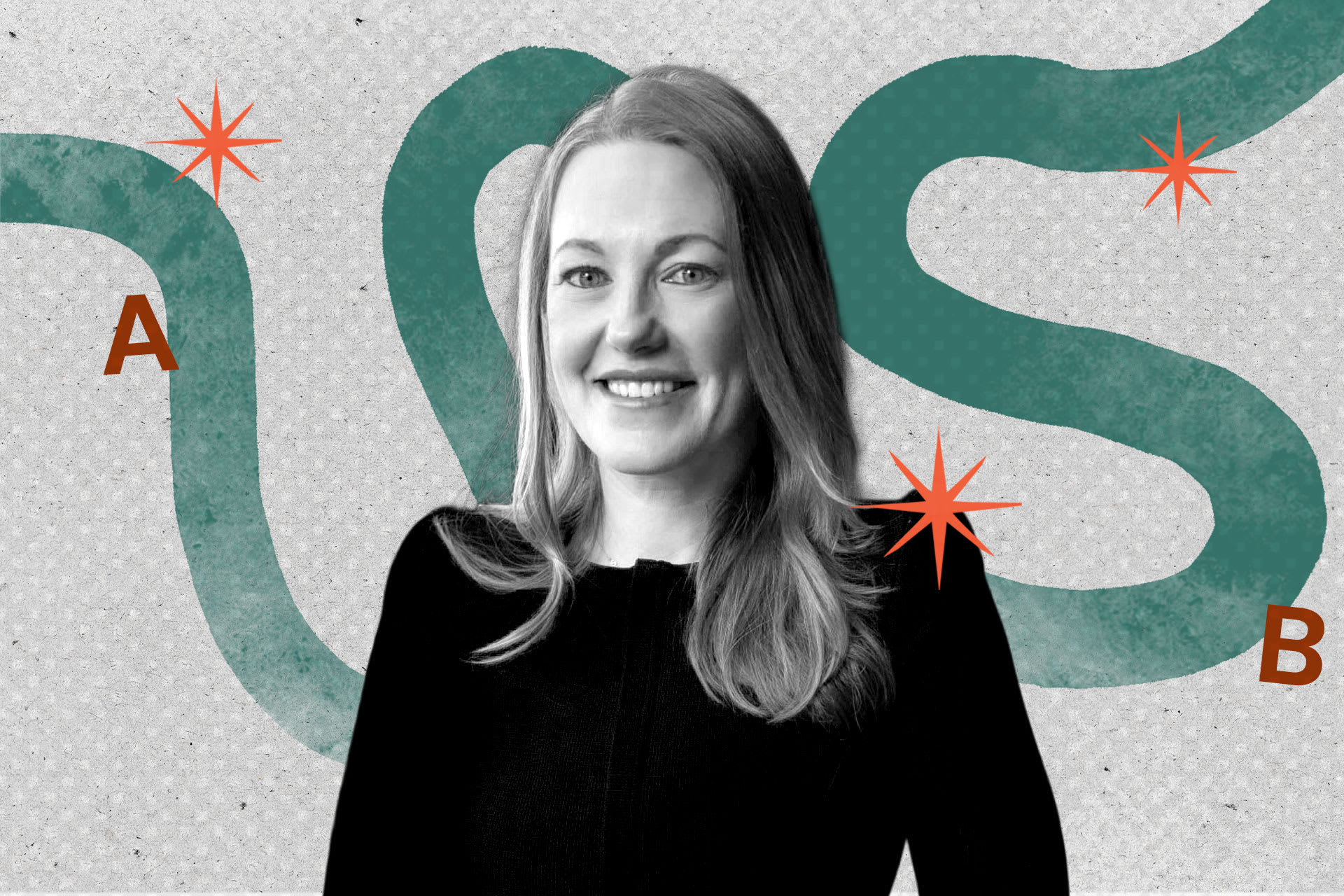
Stephanie Psaki has always believed that health is at the heart of every stage of life. She sat down with CFR to talk about her far-reaching career in international research, nonprofits, and the government, as well as her views on the current state of the public health space.
By experts and staff
- Published
- Roxy EkbergDigital Editorial Intern
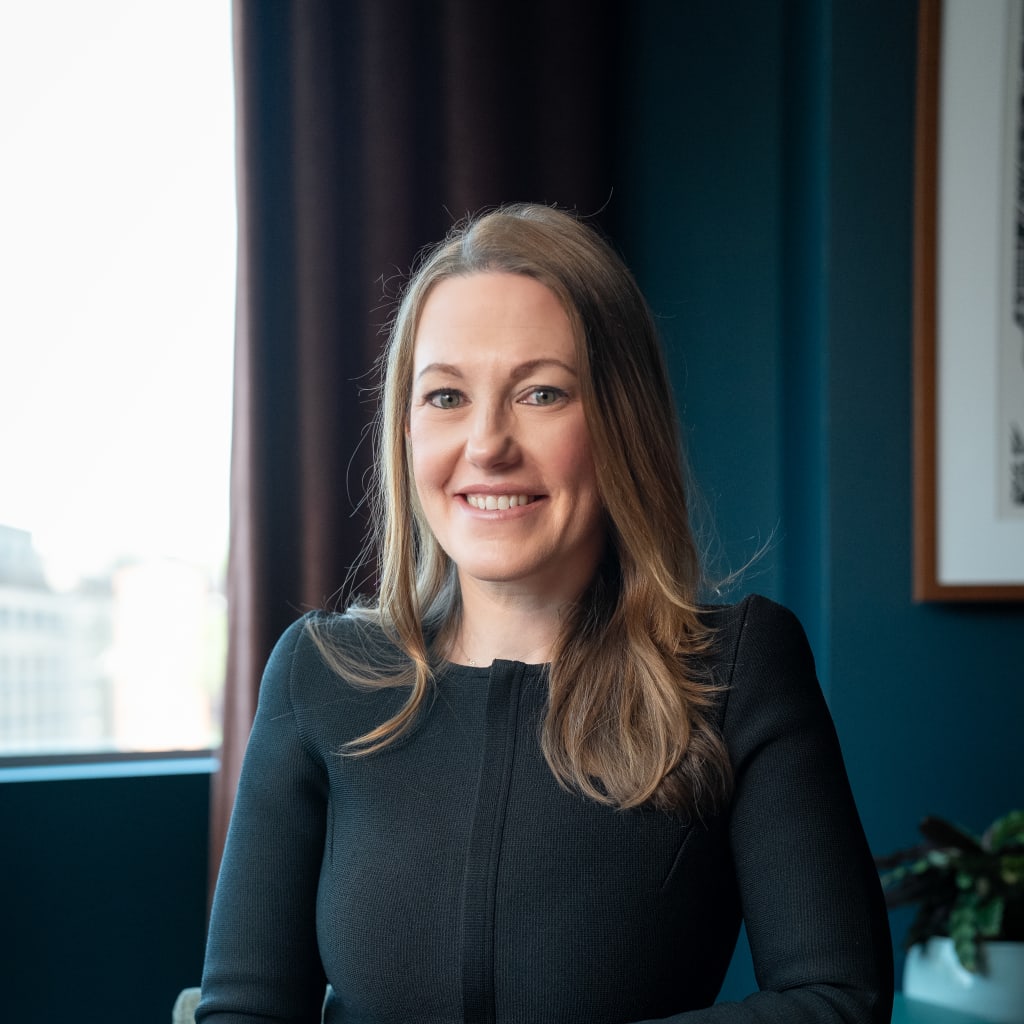 Stephanie PsakiCFR ExpertSenior Fellow for Global Health
Under the Biden administration, Stephanie Psaki was the first U.S. coordinator for global health security at the National Security Council (NSC), where she navigated the U.S. response to major disease outbreaks such as Ebola. Years of work in research and at nonprofits fueled her knowledge of what policies would lead to public health improvements. Now a senior fellow for global health at CFR, Psaki shares lessons learned from each outbreak, the skills needed to succeed in research and government, and why career paths don’t need to be linear.
Here’s how Stephanie Psaki got her career in foreign policy. If you’re interested in this series, check out more editions here.
What did you want to be when you were little?
I wanted to be a Supreme Court justice. I became very interested in Sandra Day O’Connor because she was the first female Supreme Court justice. I thought the idea of sitting on the highest court and issuing judgments about issues was something I would enjoy.
You studied foreign service during your undergrad at Georgetown. What sparked your interest in global health policy?
As long as I can remember, I’ve felt that health is such a core part of everyone’s existence. It’s a shared experience, from before you’re born until you die. Making sure that people have basic access to health care and public health services feels important for everything else we do.
I was thinking about being pre-med when I went to college, and then became more interested in public health. At that time, there was no public health or global health program at Georgetown, so I pivoted from pre-med to a different way of working in health.
You wrote your honors thesis your senior year on the human rights-centered rationale for the United States to provide support in the AIDS crisis in Africa, and you faced pushback for that. How did that experience motivate you to further dig into that topic?
When I was in college, I received a lot of information through classes but I didn’t feel like I was at a place yet where my ideas and my perspectives were adding to the conversation. I wrote my senior thesis in 2002, so we were at the height of the AIDS pandemic, but the United States hadn’t yet taken much of a role in responding internationally. It was a year before PEPFAR, the President’s Emergency Plan for AIDS Relief, was launched. My thesis was making an argument that the United States has both a national security and a human rights-based responsibility for taking action to address the AIDS pandemic in Africa.
Some professors at Georgetown said that it was inaccurate to say there is a human rights argument for the United States to take action because the United States was not responsible for the AIDS pandemic and therefore didn’t have a duty to take action. Now, we could go into the weeds about states holding responsibility to deliver on protecting and fulfilling the human rights of their own people, and I think that was part of the argument that they were making. But I think this gets back to the question that we are grappling with in the United States and many other countries, which is, why should we make these investments? Why should we use taxpayer dollars to make investments to address health challenges or health crises in other countries? I think that’s fundamentally the question that they were getting at, while trying to make the case that it’s not intellectually rigorous to say that the United States has a responsibility to do something in another region.
My reaction at the time was confusion, because I could point to the texts that they had assigned to me to demonstrate why I thought my argument was sound. I also thought, “wow, maybe I misunderstood what human rights doctrine says and what the responsibilities are of the U.S. government.” The more distance I’ve had from that, the more I’ve understood that there’s a lot beneath it, including this fundamental question about what really is the responsibility of a wealthy country with a lot of resources toward the rest of the world. I have an opinion about that—I don’t think there’s an objective answer—but I think the answer to that question is really at the core of what is happening in this country right now, and also where we go in the future.
You started your career working for NGOs and nonprofits like FHI 360 and the Population Council. What was it like transitioning to working for the federal government, at the Department of Health and Human Services (HHS) and then the NSC?
The culture of working in government is very different from NGOs, academic institutions, or think tanks.The government is very hierarchical in a way that I had not experienced before. When you are in a meeting, the most senior person in the room has the floor, and they have to defer to you before you speak. Every conversation or decision-making process is based on seniority, which took some adjustment for me.
The government is also massive. HHS houses a lot of different agencies. Just learning what each part of the government does, who works where, and how to get things done was a very, very steep learning curve. Even though I’d worked in the actual topic area for a long time, it was a whole different world in terms of how to get things done.
Was there anything else that surprised you about the transition?
In my last job before going into government, I was meeting with someone who worked for the United Nations at the time, and she said to me, “If you want to do research that informs policymakers, you should probably understand how policymakers make decisions.” I thought about that a lot when I was in government because I spent almost twenty years doing research to inform better policy and felt frustrated a lot. We know what works and what doesn’t work, yet we continue to implement and fund policies that don’t work. Being in government gave me enormous insight into how decisions are made and what the mechanisms would be for using evidence and science to inform decision-making. It’s much more complex than it seems from the outside.
So you saw both sides of the coin. Were there any skills that carried over from research into government?
Writing. There’s a lot of writing in research and government. You have to write things on a much shorter timeline in government, which is a good skill to develop, even in the research world. In every job, being able to communicate and work with people that have different perspectives is important. Part of the challenge is that when you’re in government, you have no time to read anything or to do a deep dive on a topic—you have to move really quickly. So I think coming in with a handle on the evidence and science on what does and doesn’t work, and having the skills to evaluate new research that came out and think about how it was relevant to policymaking was helpful.
I bet that insight was incredibly beneficial. You were the first person to hold the role of U.S. coordinator for global health security at the NSC. What was it like stepping into a job that didn’t have a predecessor to learn from?
Well, it is true that the role was created by Congress after the COVID-19 pandemic, but I feel like there were predecessors all around me—people who had played that role in different ways. Ron Klain, who was the Ebola czar at the White House during the 2014–16 West Africa outbreak, and Beth Cameron, who was the senior director for global health security and biodefense on the NSC while I was there, are two that come to mind. There are many people who built the literal playbook and the set of tools in government that I was picking up and running with, many of whom were still working in some part of the government.
So while the role itself was new, a lot of work had been done, especially in the last decade since the West Africa Ebola outbreak, to figure out a better way to detect biological threats and respond to those threats. I put on the hat when I was in that role to help coordinate that work, but there are many people in government who had been doing that work for longer.
At the NSC, you directed the U.S. government’s response to some of the most consequential biological threats of the past decade, including mpox and Ebola. What were the major lessons learned from leading those efforts?
I think the biggest lesson that’s relevant to a lot of other areas is that you need to have a very detailed plan in place before the crisis happens. The more time you spend in advance thinking through the types of threats that you might face and how you would respond to those threats, the more effectively you’re able to respond in the moment, because everyone knows what their job is and what resources you have available. You can move quickly to make decisions based on discussions that have happened before.
When we have seen crises, including outbreaks, that have unfolded in ways much worse than expected, it often happens because the team is not prepared with a plan before the crisis happens.
You also coordinated the largest ever replenishment of the Global Fund to Fight AIDS, Tuberculosis, and Malaria, mobilizing $15.7 billion across the government, private sector, and philanthropy. What challenges did you face in garnering that funding?
That replenishment was happening when we were still in the thick of the COVID-19 pandemic, and around six months after Russia’s invasion of Ukraine. There’s always one country that takes the lead on each replenishment, and this one was led by the United States. A lot of that role involves calling other countries and convincing them to make a donation or increase their donation to the Global Fund.
The top concerns for the people that we were calling were the other demands on their budgets because of COVID and Russia’s war in Ukraine. It wasn’t about convincing them that the work that the Global Fund does is important—everybody agreed with that and was on board—it was about figuring out how to make decisions between difficult trade-offs. It’s a reminder that global health decisions are not made in a vacuum—the broader foreign policy and domestic policy environment is often more important than whether or not countries believe global health matters.
What is your take on the moment we’re in today in the public health space?
There are a lot of challenges. Across the board in the public health space, there’s domestic preparedness, but also responses to ongoing health challenges such as the current measles outbreak in the United States, opioid addiction, gun violence, and a whole range of other issues, including the high cost of health care. I think we are struggling domestically to give Americans the tools to keep themselves healthy and safe.
Partly because of that struggle, there are questions about whether we should be playing a role at all outside of the United States, especially in helping respond to or address some of the problems that we still haven’t solved here at home. I think that’s a legitimate question that is raised by both Americans and people in other countries. What authority do we have to be giving advice when we haven’t been able to deal with some of these issues at home?
My answer is that there are a few reasons. One, as we are seeing with a whole range of infectious diseases—most immediately with Ebola, and recently with Hantavirus—what happens in the rest of the world affects Americans. There are now two Americans who have tested positive for Ebola. But we are also spending a lot of taxpayer money to help contain this outbreak, whereas if we had prevented it or identified it earlier on, we would have been able to spend that money on other issues.
Second, collaborating internationally on health is necessary to help drive innovation and progress at home. It gives us an opportunity to exchange lessons with other countries and learn from what they’re doing to get information that we wouldn’t have otherwise. For example, we now have an Ebola vaccine for the Zaire species of Ebola, and the reason that vaccine exists was because the United States worked in partnership with West African countries during the 2014 outbreak to test and develop that vaccine. Now, when there is an Ebola outbreak, that vaccine is available not only to help people in those countries, but to protect Americans if there are cases at home. Similarly, there’s a really robust global system that the World Health Organization manages to track influenza strains. That system has been used historically to develop seasonal flu vaccines used in the United States, as well as identify any changes to influenza that could potentially become the next pandemic.
So it’s not sufficient for the United States to only have a picture of what’s happening here. We need a picture of what’s happening all over the world, and the best way to get that is by working with people worldwide. The moment we’re in is pushing us to think about the best investments of American taxpayer dollars and how to support a global health system that more effectively delivers on the priorities for the world.
You’ve had a very unique career for which there’s no single degree or clear pathway. Do you have any advice for young people who admire or hope to emulate your path?
When I graduated from college—even though I knew what I was interested in and I had done all these internships and my thesis—I couldn’t get a job. I waitressed full-time at a restaurant in Georgetown for six months to pay my rent and I felt like a failure. I’d worked so hard, I had all these ideas, but it felt like nobody wanted to hire me. I think that a lot of people probably in the last year-and-a-half, especially former U.S. Agency for International Development (USAID) employees or people who have been studying global health and thinking about building a career, have felt like there’s not going to be another opportunity for them.
I just think that’s not how it goes. It doesn’t have to be a perfect path where every single stone in the path leads directly toward your ultimate goal. I’ve had different jobs where I felt like “I have no idea why I’m in this job or what I’m doing,” and then they ended up being useful later on. I also didn’t have an entire path charted out when I started my career. Even now, I don’t know what I’m going to be doing five years from now. My advice would be to pursue your passion in terms of what you feel matters, because when you believe deeply in it, you can have an impact and you’re going to see things in a way that’s different from other people.
And don’t let people who have been in the field longer than you, including myself, tell you that your ideas are wrong or you’re misunderstanding how things are supposed to work. People get very set in their ways and their vision of seeing things. We’re in a moment of change and evolution, which means that we need the views and opinions and insights of a new generation to come in and come up with better ways of doing it.
You’re newer to CFR. Is there anything that you want readers to know about you?
There’s often a sense that you have to pick one topic that you work on or have expertise in, or one perspective that you represent. I’ve done a lot of work on international education, too, so I’ve often encountered people who ask, “Are you interested in health or in education?” Or, “Do you want to work in government or in research?” There’s a pressure to pick one or the other.
The thing that motivates me is using data and evidence to improve people’s lives, and there are a lot of different ways to do that. So I don’t really put myself in any of those boxes. I’m looking to do it wherever I can to help, so now, hopefully, I’ll be able to do that from CFR.
Over the years, you’ve had several interesting work trips and dinners. Is there a memorable story from one of these you could share?
When I was in my twenties, I was working on a USAID-funded PEPFAR program. I was with a colleague working for an NGO, and we had to travel to northern Niger for some meetings. This was a fully nomadic area, so we had to travel by car and bring all of the food with us, and camp in northern Niger on the edge of the Sahara Desert for several days while we were having meetings.
There really is something about just getting so far outside of your comfort zone that is very humbling. Part of that experience to me was feeling like I’m a twenty-five-year-old who has no business being here really, and there must be a better way for us to do this work. Those types of experiences were the ones that led me to end up going into research and thinking about how we use evidence and science to inform policies, make sure that we have the right people at the table, and spend money in ways that make sense to actually improve outcomes for people in the United States and around the world.
This interview has been edited for length and clarity. It represents the views and opinions solely of the interviewee. The Council on Foreign Relations is an independent, nonpartisan membership organization, think tank, and publisher, and takes no institutional positions on matters of policy.