Is the U.S. Army Backing Off on Drones?
Recent developments have raised questions about the Army’s commitment to scaling drone adoption. But doing so, and at pace, is critical for future military success.
By experts and staff
- Published
 Michael C. HorowitzCFR ExpertSenior Fellow for Technology and Innovation and Director of the Defense and National Security Program
Michael C. Horowitz previously served as deputy assistant secretary of defense for Force Development and Emerging Capabilities, and director of the Emerging Capabilities Policy Office.
A series of developments over the past month has raised questions over how serious the U.S. Army is about integrating lessons on the changing character of warfare, and how it plans to fight in the future.
First, there were reports last month that U.S. military units fared poorly against Ukrainian drone units in an exercise in Germany earlier this year. This was followed by news that the Army will phase out a specialized drone unit created less than a year ago to improve the service’s drone capabilities. Finally, last month saw the resignation of U.S. Secretary of the Army Daniel Driscoll, the Army’s most prominent remaining champion of transforming the service for an age of precise mass—meaning that relatively cheap, highly accurate, uncrewed systems are deployed at scale.
If the Army is going to continue evolving to meet new threats as they emerge, it will need to keep accelerating not just the acquisition of drones, but their integration into units around the world. Adoption, more than the acquisition of technology, is the difference between winning and losing in war.
Combined Resolve and Lessons From Ukraine
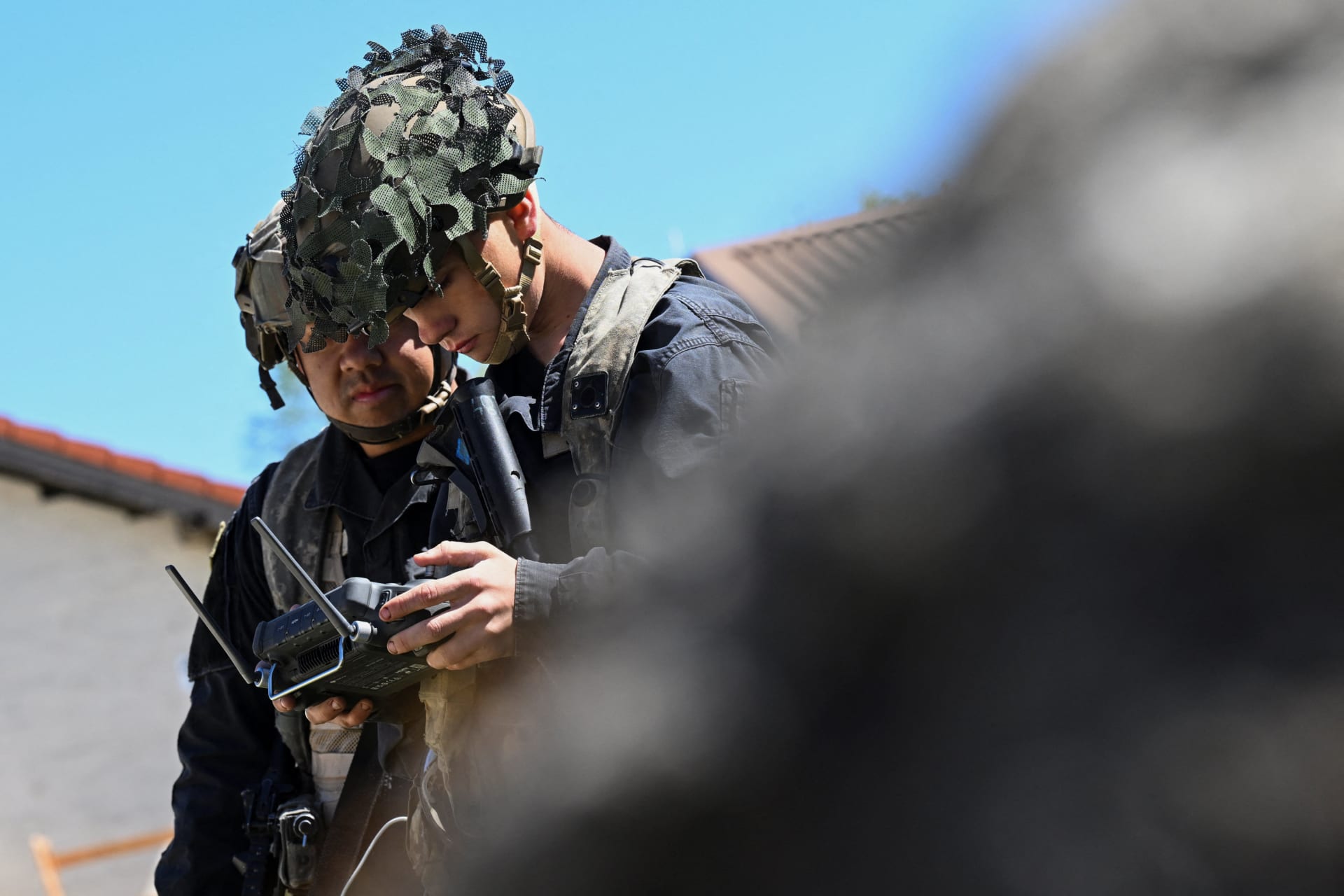
One of the most important ways militaries decide how to position themselves for future conflicts is by learning lessons from ongoing conflicts. In April and May, roughly 3,500 U.S. soldiers drawn largely from the 3rd Armored Brigade Combat Team, 1st Cavalry Division, participated in Combined Resolve, the U.S. Army’s semi-annual exercise at its training center in Hohenfels, Germany. Waiting for them was a Ukrainian-reinforced formation. According to the Wall Street Journal, Ukrainian operators excelled against their U.S. counterparts.
The results of the exercise were unsurprising—Ukrainian drone units have spent four-and-a-half years refining drone reconnaissance and strike operations and building tacit knowledge that U.S.-based training cannot replicate, a point underscored by NATO’s top military commander, Air Force General Alexus Grynkewich. U.S. soldiers, whatever equipment they may have at their disposal, have never faced an adversary flying and dropping ordnance as persistently as was the case in Combined Resolve.
That such exercises are happening at all is arguably evidence that the Army’s leadership is trying to learn lessons from the war in Ukraine and that it knows there is work to do. That is a good thing. What matters most now is how the Army, and the U.S. military in general, responds. After all, there is always a temptation to dismiss these exercises as one-offs, for example, by arguing that the lessons of Ukraine will not matter because the United States will not fight a similar ground war. But precise mass capabilities, including drones and the sensors guiding them, now sit at the center of how militaries find and attack each other—a lesson this year’s exchanges among the United States, Iran, and Israel have reinforced.
Another lesson that the success of Ukraine’s drone units should have underscored is that the pace of adoption is critical, and that success at the operational level of war is generally less about who invents a technology than about who effectively adopts it. For example, Ukraine is out-adopting Russia, building repair networks, six-week software update cycles, and command relationships around cheap, uncrewed systems faster than its much larger adversary can match.
The question now is how quickly the U.S. military can close the adoption gap to keep its overall edge.
End of an Experimental Drone Unit
The Wall Street Journal followed up the story about the Combined Resolve exercise by reporting that the Army is ending the assignment for a unit that had been specifically tasked with learning lessons to accelerate drone integration. Last year, the Army assigned an airborne infantry battalion in Europe to learn lessons from the Ukraine war and, among other things, to accelerate the integration of drones for sensing and strike. That unit is now returning to its airborne infantry mission. The move, combined with the release of a statement on the Army’s mission by Acting Army Chief of Staff General Christopher LaNeve that references drones and artificial intelligence but also discusses returning to the “fundamentals of Soldiering,” has raised additional questions about the Army’s commitment to scaling drone adoption throughout the force.
But again, such news does not itself necessarily tell the entire story. LaNeve is undoing many of the actions taken by his predecessor, meaning that the decision to end the drone experiment could be more about LaNeve’s attempt to put his own stamp on the Army’s plans to prepare for the future of war—and the Army’s continuing shift away from Europe under the Trump administration—than about a genuine change in priorities around emerging capabilities.
End of the Driscoll Era
The resignation of Secretary Driscoll, an Army veteran with venture capital experience who championed accelerating the Army’s experimentation with and adoption of emerging capabilities such as drones, was the final piece of this summer’s puzzle over the future of drones.
The Army Transformation Initiative, launched under Driscoll’s leadership, is now in doubt, and Driscoll’s departure removes a senior, Senate-confirmed leader committed to preparing the Army for the future of war. But, as with the other events above, one could imagine a world in which the Army succeeds despite Driscoll leaving. The Pentagon’s Drone Dominance Program, for example, is not an Army initiative but a priority for Secretary of Defense Pete Hegseth. Moreover, the Trump administration’s fiscal year 2027 request for around $55 billion for the Defense Autonomous Warfare Group should have enormous consequences for Army capabilities regardless of individual personnel moves.
However, Driscoll’s departure, in combination with the events above and the departures of Army leaders who drove transformation forward, such as Generals Donahue, George, and Hodne, raises questions about whether the Army, which had started embracing a central role in a world of precise mass, may change course. Only time will tell whether these changes reflect a shift in the Army’s approach. Given the role that leaders play in setting the tone and signaling the importance of emerging capabilities, it certainly feels like a step back. Because of the central role that drones and other emerging capabilities will play in the future of war, hopefully it is not.
This work represents the views solely of the author(s). The Council on Foreign Relations is an independent, nonpartisan membership organization, think tank, and publisher, and takes no institutional positions on matters of policy.