The 1863 Gettysburg Address
President Abraham Lincoln’s brief remarks dedicating the Soldiers’ National Cemetery at Gettysburg provided a defining statement of America’s democratic ideals.
By experts and staff
- Published
 James M. LindsayCFR ExpertMary and David Boies Distinguished Senior Fellow in U.S. Foreign Policy
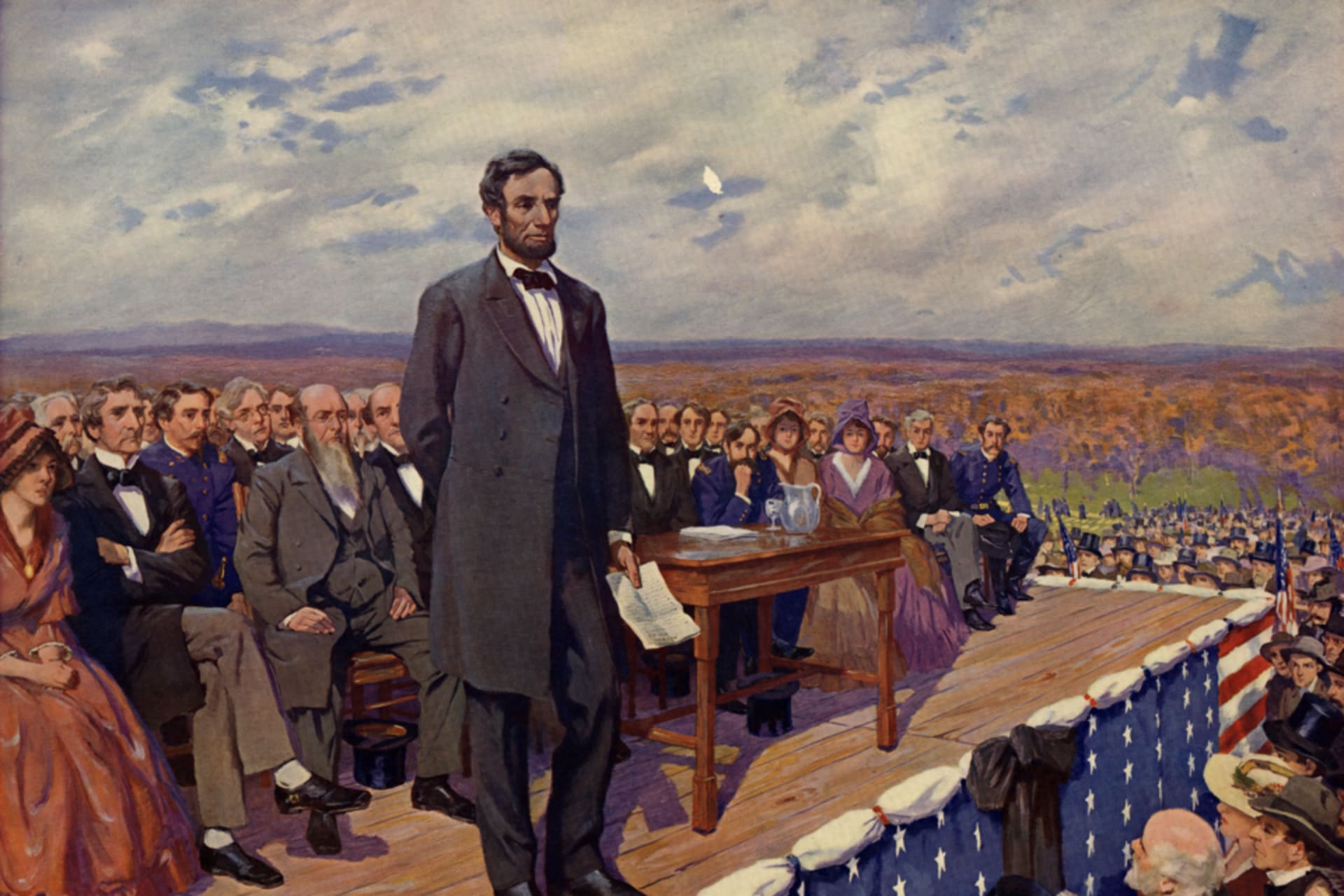
On November 19, 1863, President Abraham Lincoln spoke at the dedication of the Soldiers’ National Cemetery in Gettysburg, Pennsylvania. Four months earlier, Union forces had repelled the Confederate Army of Northern Virginia at the Battle of Gettysburg. The three-day battle marked a turning point in the Civil War and remains one of the bloodiest in U.S. history. As Lincoln spoke, more than half of the Union dead remained buried in hastily dug field graves nearby.
Lincoln was not the featured speaker at the dedication. That honor fell to the famed orator Edward Everett, who spoke for two hours. Once Everett finished, Lincoln took just two minutes to deliver his remarks. Initial reactions to his address were mixed. The Springfield (Mass.) Republican called it a “perfect gem.” However, Lincoln’s home-state paper, the Chicago Times, declared that the “cheeks of every American must tingle with shame as he reads the silly, flat, and dishwatery utterances.”
The verdict of history has sided firmly with the Springfield Republican. The Gettysburg Address is widely considered one of the greatest speeches ever delivered and has spawned thousands of books and articles. Some analyze the five written copies of the speech and debate which wording most accurately captures what Lincoln said. Some examine the history of the speech’s writing and its legacy in U.S. history. Some look at the sources, from Pericles to the Bible, that inspired Lincoln.
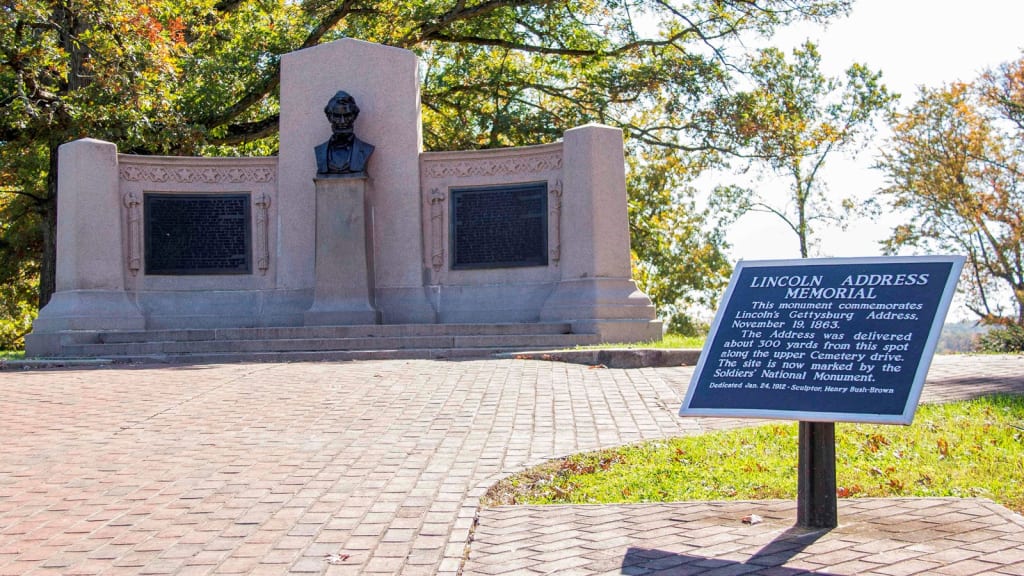
The words that Lincoln spoke on that blustery November day in Gettysburg are worth remembering today:
Four score and seven years ago our fathers brought forth on this continent a new nation, conceived in liberty, and dedicated to the proposition that all men are created equal.
Now we are engaged in a great civil war, testing whether that nation, or any nation, so conceived and so dedicated, can long endure. We are met on a great battlefield of that war. We have come to dedicate a portion of that field, as a final resting place for those who here gave their lives that that nation might live. It is altogether fitting and proper that we should do this.
But, in a larger sense, we can not dedicate, we can not consecrate, we can not hallow this ground. The brave men, living and dead, who struggled here, have consecrated it, far above our poor power to add or detract. The world will little note, nor long remember what we say here, but it can never forget what they did here. It is for us the living, rather, to be dedicated here to the unfinished work which they who fought here have thus far so nobly advanced. It is rather for us to be here dedicated to the great task remaining before us—that from these honored dead we take increased devotion to that cause for which they gave the last full measure of devotion—that we here highly resolve that these dead shall not have died in vain—that this nation, under God, shall have a new birth of freedom—and that government of the people, by the people, for the people, shall not perish from the earth.
Reading the speech more than a century-and-a-half later, it is easy to understand why Massachusetts Senator Charles Sumner wrote that the “battle [of Gettysburg] itself was less important than the speech” that Lincoln gave.
Oscar Berry and Jack Patton assisted in the preparation of this article.
The United States celebrates its 250th anniversary in 2026. To mark that milestone, I am resurfacing essays I have written over the years about major events in U.S. foreign policy. A version of this essay was published on November 19, 2011.
This work represents the views solely of the author(s). The Council on Foreign Relations is an independent, nonpartisan membership organization, think tank, and publisher, and takes no institutional positions on matters of policy.