Trump Needs a Humanitarian Plan for Iran and the Middle East—Before It’s Too Late
That the president hasn’t adopted a U.S. humanitarian agenda in response to the conflicts in the Middle East isn’t a capacity problem—it’s a policy choice. The security implications, for the region, Europe, and the United States, are growing with every hour of inaction.

Sam Vigersky is an international affairs fellow at the Council on Foreign Relations.
More than three weeks into Operation Epic Fury, with U.S. President Donald Trump unleashing the full might of military dominance, a critical feature of the country’s power is conspicuously absent—humanitarian aid.
Since 1945, the United States’ global authority has rested on being a complete power: an unmatched military paired with the diplomatic and economic tools needed to advance peace. Together, this has secured a period of safety and prosperity that has defined U.S. leadership for decades.
Despite having spent an estimated $11 billion on military operations in the first week of the Iran conflict alone—and an additional $200 billion war supplemental under debate on Capitol Hill—the State Department’s new Bureau of Disaster and Humanitarian Response has yet to articulate, never mind deploy, a coherent humanitarian strategy for the conflict.
There’s been no airlifting of emergency supplies to relieve choke points in the Strait of Hormuz. No food assistance to offset inflation in countries nearing famine. No meaningful programming of the $5.4 billion just appropriated by Congress for global humanitarian aid. And no warehouse runs for tarps or blankets to shelter Beirut’s newly homeless families, who have faced heavy rain and thunder on top of a renewed Israeli offensive in recent days.
But the absence of a U.S. humanitarian agenda today isn’t a capacity problem—it’s a policy choice.
Though this conflict in Iran is oft compared to the war in Iraq, that conflict differed in a core way: humanitarian planning started when the military planning did. In 2003, before the first bombs fell on Iraq, the White House had already pre-positioned emergency supplies in warehouses across Jordan, Kuwait, and the United Arab Emirates, and planned for 600,000 potential refugees at Iraq’s borders. Within weeks of the American invasion, Congress approved $2.5 billion for immediate relief.
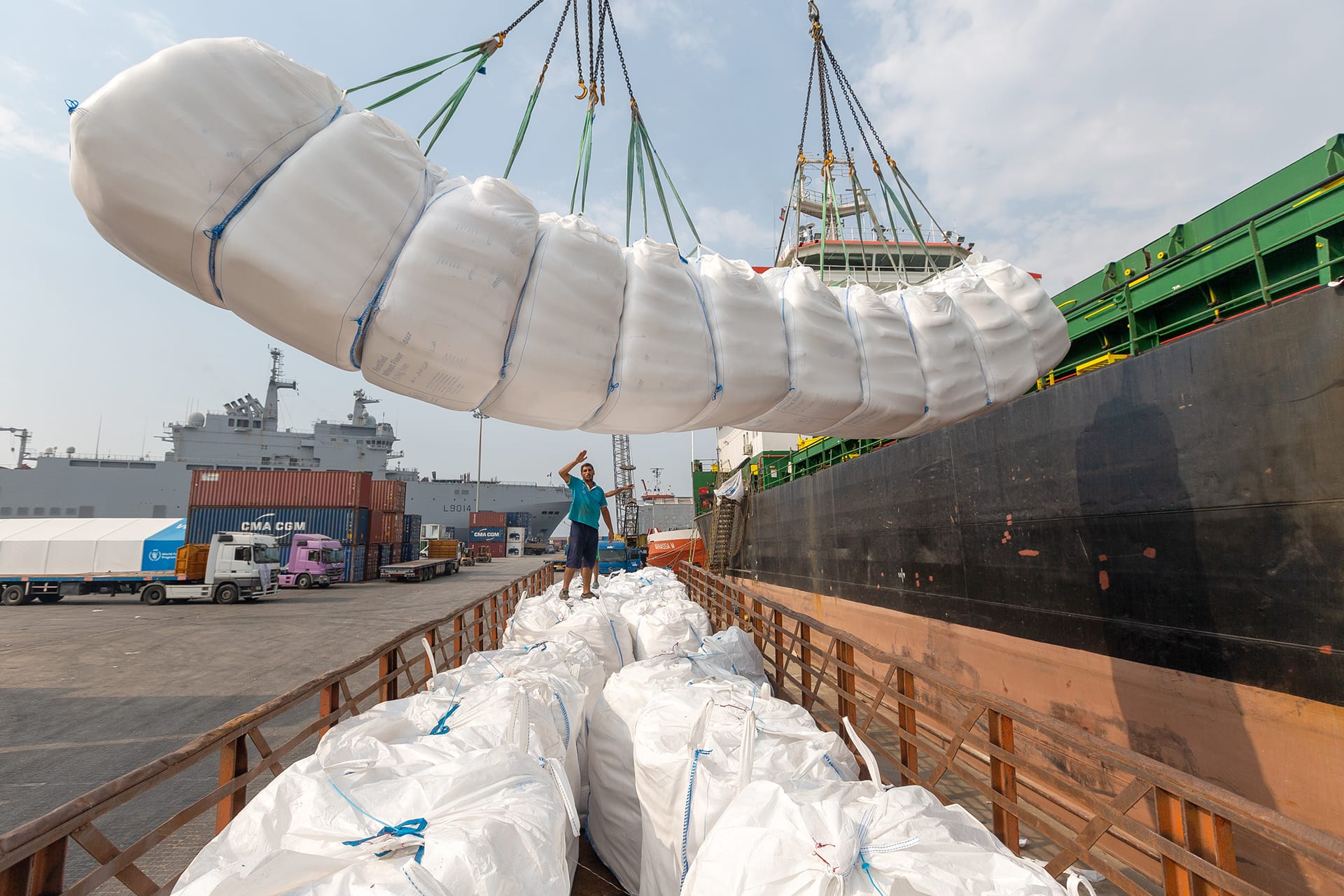
The current dearth of humanitarian response to conflicts in the Middle East isn’t only a break from historical precedent; it’s a break from Trump’s own record. When a massive explosion rocked the Port of Beirut on August 4, 2020, in his first term, Trump didn’t hesitate. He sent an elite Disaster Assistance Response Team, or DART, to assess needs on the ground, airlifted three months’ worth of emergency medical supplies for 60,000 people on C-130 military aircraft, and disbursed $15 million to UN agencies and NGOs—all in under one week.
Even as recently as last fall, when Hurricane Melissa barreled across Jamaica on October 27, 2025, the administration acted within hours of the storm striking the Caribbean. It surged a DART, two Urban Search and Rescue teams from California and Virginia, one million pounds of food and water by military helicopter, and $37 million for relief programs. It was early proof that in a post-U.S. Agency for International Development (USAID) world, the Trump administration both would and could continue U.S. humanitarian work.
A cascading crisis
Trump is avoiding the effectiveness of that decisive work now, allowing his moment to mount a humanitarian intervention to slip away. The security implications for the region, Europe, and the United States are growing with every hour of inaction.
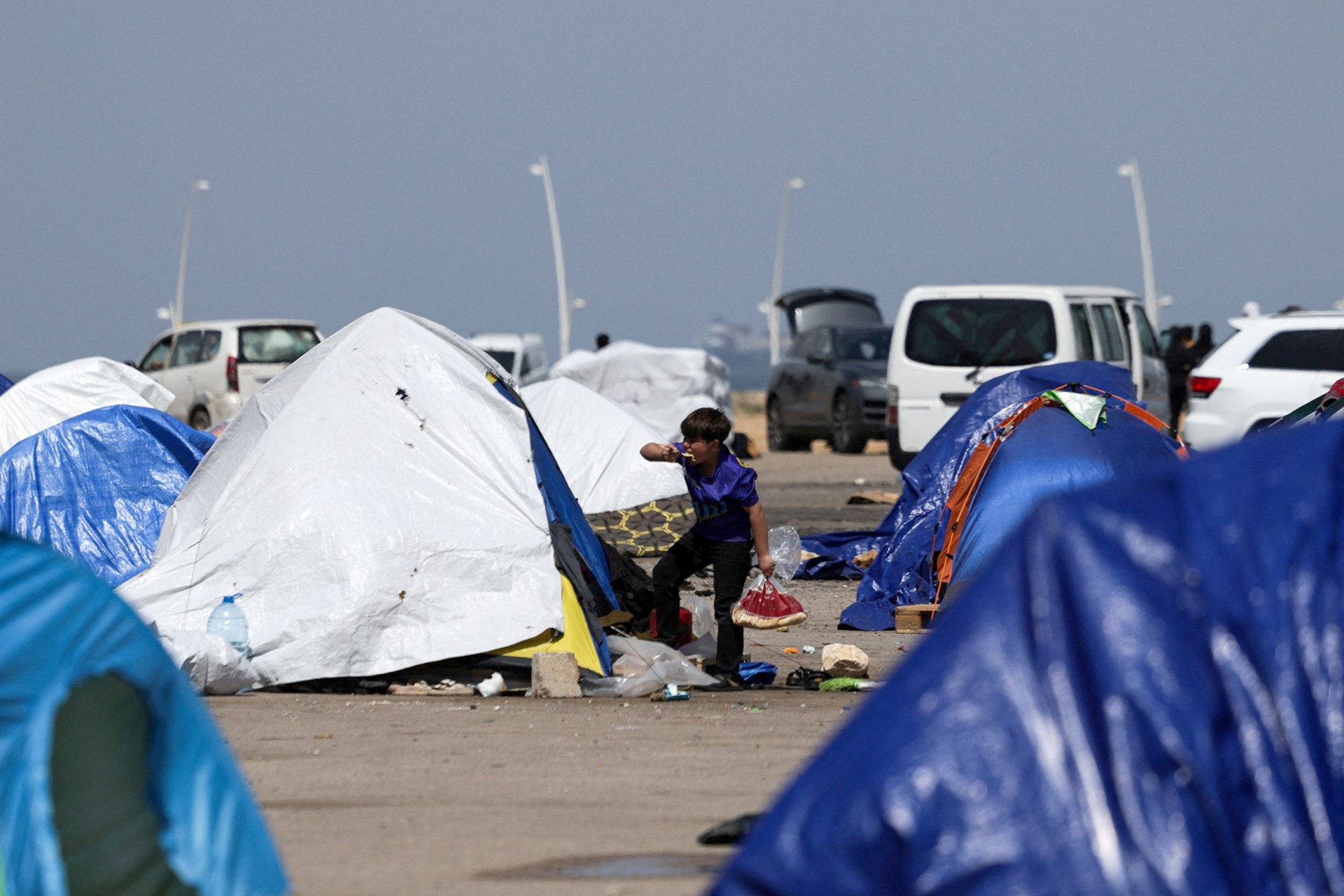
In Lebanon, the Israel Defense Forces’ evacuation notices in southern Lebanon and extensive bombings in Beirut have displaced over one million people, exceeding worst-case projections from NGOs under a monthslong conflict scenario. Emergency shelters are beyond capacity; streets and parks now teem with homeless families. More than 125,000 Syrians who once fled their country for safety in Lebanon are now streaming back across the border—not because it is safe, voluntary, and dignified, but because it is, for now, the furthest from danger.
The displacement crisis in Iran is far larger. The United Nations estimates that up to 3.2 million Iranians were displaced in the first two weeks of the war alone. Iran’s crisis is not even a month old. If even 10 percent of Iran’s ninety-two million people flee the country, it would become the largest refugee crisis of the twenty-first century—surpassing Syria and Venezuela, which saw 25 percent of their populations leave.
Then there are the cascading crises in the wings, around the world, that are absorbing the shocks of this one. The World Food Program forecasts forty-five million additional people will become acutely food-insecure as oil prices spike, fertilizer supplies dwindle, and inflation rattles poor countries. That’s on top of the 318 million people already in crisis, including seven nations currently one step from famine.
Meanwhile, Costco-size warehouses full of life-saving commodities—medicines, food, shelter materials—stored at Dubai’s International Humanitarian City are collecting dust as access through the Strait of Hormuz grinds to a halt and commercial air traffic thins. The World Health Organization reports deliveries to twenty-five countries have been disrupted as missiles and drones fly across the Gulf. Maritime shipping companies are already rerouting around the Cape of Good Hope, adding a month-long delay and immense expense to life-saving aid operations across Africa.
Unaddressed humanitarian catastrophe runs a predictable course: extremist recruitment that threatens U.S. safety, mass migration that strains U.S. resources, and collapsing states that demand the next U.S. intervention—the exact threats the United States’ foreign policy was designed to prevent, and the ones cheapest and easiest to disrupt at the source.
Conversely, the returns on humanitarian investment are historically outsized: stable states don’t breed the security, sociopolitical, and economic risks that cost the United States trillions of dollars to contain. USAID was created in 1961 for precisely this reason—not out of altruism, but out of the Cold War recognition that hungry, unstable populations were fertile ground for Soviet influence.
Time for Trump to act
The Trump administration is approaching a point where even if it decides to act, it could find that it cannot act fast enough. The window to prevent the worst outcomes narrows every day. The president should change course now.
The State Department has billions in humanitarian money for the United Nations and NGOs. It needs to be programmed—all of it—with a clear signal to Capitol Hill that any military supplemental for Iran has to include a proportional humanitarian backfill.
In addition, it’s time to get serious about an emergency food security strategy. The U.S. Department of Agriculture has $1.2 billion appropriated to purchase food from American farmers for exactly this kind of crisis. This benefits the farmers in addition to hungry people globally.
The Treasury should prepare humanitarian sanctions carve-outs for Iran. Tough sanctions on the regime shouldn’t prevent life-saving aid from reaching civilians, and yet—absent Treasury protections—aid agencies and their banks fear criminal prosecution. Trump has already lifted sanctions on Iranian oil at sea; aid workers deserve equivalent action.
The United States needs to work with the United Nations to establish a framework and humanitarian operation center to ensure fertilizer and life-saving supplies can move through the region. This could be modeled on the Black Sea Grain Initiative that kept food flowing after Russia’s invasion of Ukraine.
And the administration should convene a humanitarian pledging conference with other donors and the private sector—an arena where Trump would likely find willing partners, and where the world is desperate for U.S. leadership.
Ultimately, Trump has the tools, funding, precedent, and partnerships. He demonstrated his willingness to use them in Beirut in 2020, and again in Jamaica last fall. The choice now is not between hawkishness and compassion—but between exerting dominance and exercising a complete power.
This work represents the views and opinions solely of the author. The Council on Foreign Relations is an independent, nonpartisan membership organization, think tank, and publisher, and takes no institutional positions on matters of policy.