What COP31 Missed About Global Food Security
In 2018, the UN Security Council unanimously condemned the intentional starvation of civilians as a method of warfare. Yet the practice persists—and COP31 missed an opportunity to advance the conversation, says CFR Senior Fellow Michael Werz, who moderated a panel on food weaponization and its geopolitical implications.
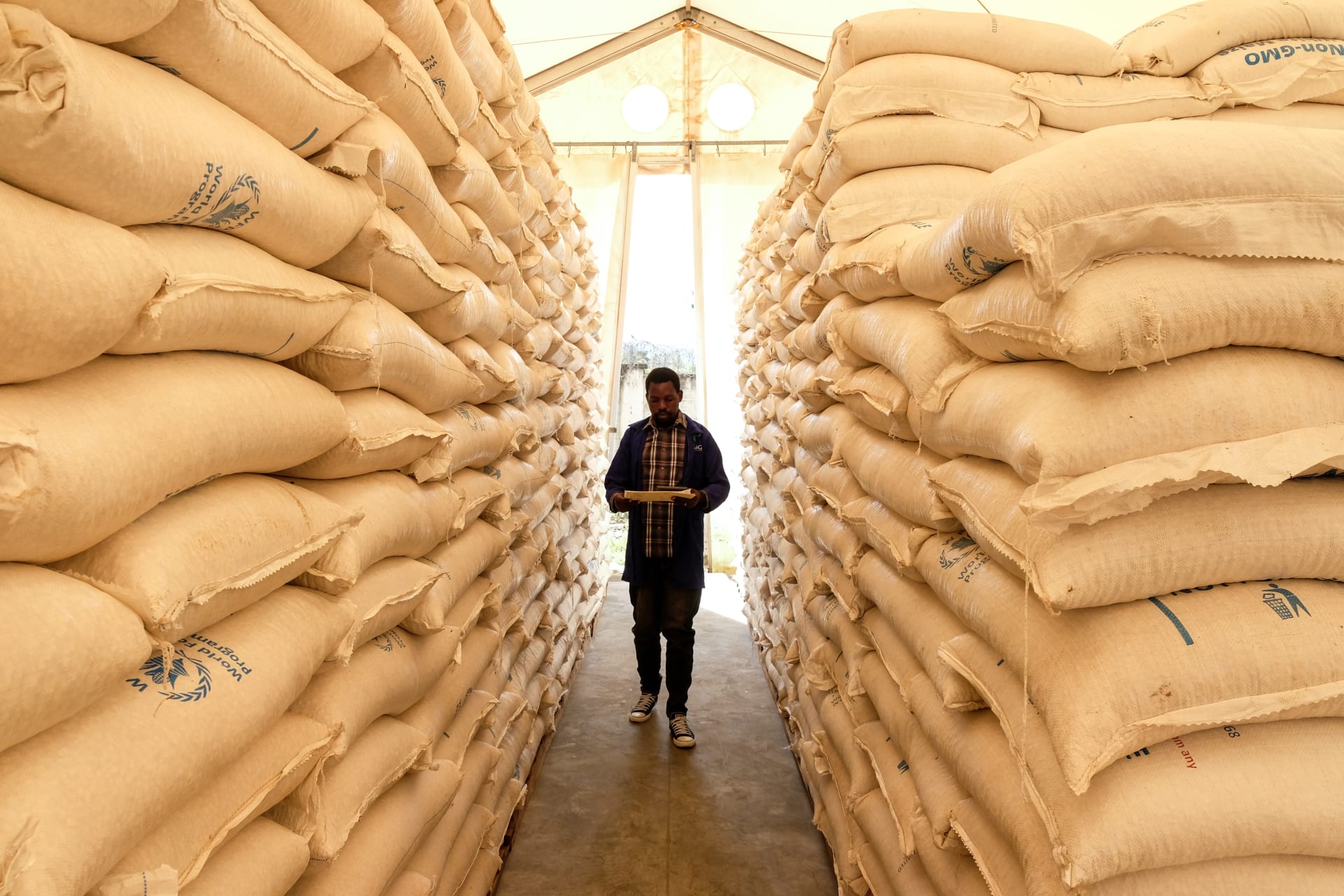

Representatives from around the world are currently gathered in Antalya, Turkey, for the thirty-first UN climate conference, known as COP31. The annual summit convenes members of the UN Framework Convention on Climate Change to advance global action on climate change that addresses its far-reaching consequences on food systems, human security, and the environment.
Food security featured on the opening day of this year’s COP agenda, but it did not address the important challenge of food weaponization: the manipulation of food access, infrastructure, or supplies to achieve economic, military, or political objectives. The issue gained international recognition in 2018, when the UN Security Council adopted a resolution condemning the intentional starvation of civilians as a method of warfare.
Michael Werz, CFR senior fellow and director of the Food Security Program in the Wachenheim Center for Peace and Security, moderated a panel at COP31 examining the weaponization of food in modern conflicts. He spoke with CFR about the growing geopolitical risks to global food security, the gaps in international efforts to prevent the practice, and what policymakers should prioritize moving forward.
Why is food weaponization on the agenda at a climate summit?
Food insecurity has to be understood as an important vector of geopolitical instability and as an area where malign actors pursue new weaponization strategies. The current climate shocks create a more vulnerable global food system, and drought, flooding, or failed crops increase the risk of starvation in existing conflicts.
In this context, the United Kingdom’s recent appointment of former Joint Intelligence Committee Chair Madeleine Alessandri as special representative for climate security is significant. The move signals recognition of the geopolitical dimensions of climate and food security, which are often underestimated. Understanding food security requires looking beyond agriculture to account for fertilizer shocks caused by the Iran war and disruptions in the Strait of Hormuz, as well as continuing Russian attacks on Black Sea grain infrastructure and a potentially record-setting El Niño climate phenomenon.
Anticipation is central to what my colleague Swathi Veeravalli terms “forward defense”: when countries recognize the links between food security risks and act proactively ahead of shocks to build resilience. These risks are mutually reinforcing and will significantly affect the 2027–28 harvest season. At COP31, food security was one of the stated priorities—for good reason.
What are the biggest obstacles to addressing food weaponization globally?
There are two problems: the complexity of the issue and the unwillingness of many countries to address its political aspects. First, a major challenge lies in how closely connected issues are often discussed separately. Current policy conversations about trade coercion, wartime starvation, and the use of food as a long-range weapon need to converge, as these issues can no longer be treated in isolation from one another.
Second, enforcement remains weak despite the existence of some international norms. The international community currently lacks effective mechanisms to deter food weaponization on a global scale. In Sudan, for example, food is being used as a weapon, contributing to mass starvation amid a conflict involving warring factions supported by Turkey, the United Arab Emirates, and Russia.
Meanwhile, funding cuts in the United States are affecting aid delivery, while the number of aid workers on the ground has declined. This issue is particularly pressing given that conflict is the primary driver of acute food insecurity and that some 70 percent of acutely food-insecure people live in countries affected by crises.
Did COP31 adequately address food security?
This COP was a missed opportunity to steer the food security conversation in a direction of greater geopolitical awareness and action.
Instead, the Turkish COP presidency has focused on important but long-established issues, such as the food-water-climate nexus, financing for women farmers, and climate-resilient agriculture. In Australia, president of this year’s COP negotiations, food security is rarely discussed as a geopolitical concern, and climate security sits at the margins of foreign policy priorities.
Given the growing prospect of a global food crisis, COP31 should have launched a strategic food security roadmap toward COP32 that linked sustainability and resilience to the growing weaponization of food through actionable recommendations.
There was, however, some progress on this front in other multilateral institutions. In October, the Group of Twenty (G20) trade ministers reached a consensus on condemning food weaponization through coercive trade actions in their working group. While the text stated that “weaponization of food threatens livelihoods in targeted countries, undermines the functioning of and confidence in international markets and the global trading system,” it did not address starvation as a method of war as seen in Gaza. In addition, although the world agreed to stop using food as a weapon, it hasn’t, and this gap between rhetoric and enforcement must be closed.
What should COP deliver on food security moving forward?
The COP presidency and participating countries should have pushed for a serious, strategic food security roadmap toward COP32, framing sustainability and resilience within the current geopolitical context of increasing food weaponization. The meetings in Antalya should have significantly expanded traditional agricultural conversations to recognize food-system infrastructure, fertilizer, and droughts as major factors in armed conflicts.
One step forward, however, was the United Nations’ announcement of plans to establish a Disaster Risk Financing Platform that Máximo Torero, chief economist of the UN Food and Agriculture Organization, described as an instrument for establishing “predictive capacities to anticipate risks and act before they escalate.” Future conversations must broaden the use of early-warning indicators for droughts and identify ways to connect climate adaptation efforts with conflict-prevention bodies.
This work represents the views solely of the author(s). The Council on Foreign Relations is an independent, nonpartisan membership organization, think tank, and publisher, and takes no institutional positions on matters of policy.