Why The G20 Should Listen to Faith Leaders in Utah
Technological innovation and economic growth are expected to dominate the G20 agenda in Miami. But a recent gathering of religious and civil society leaders made clear that humanity’s progress also includes cooperation to reduce suffering and advance peace.
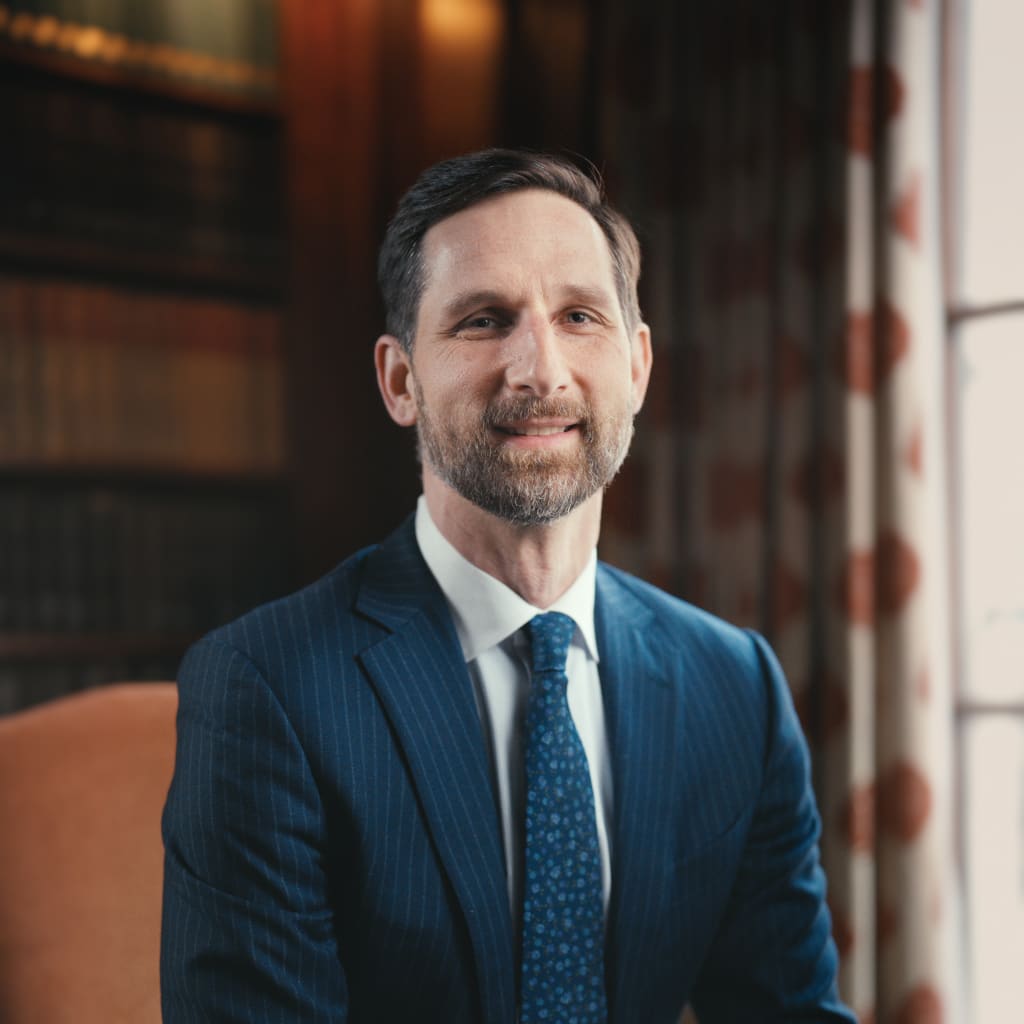
Sam Vigersky is the former senior humanitarian advisor to the U.S. Ambassador to the United Nations and attended the G20 Interfaith Forum in Salt Lake City.
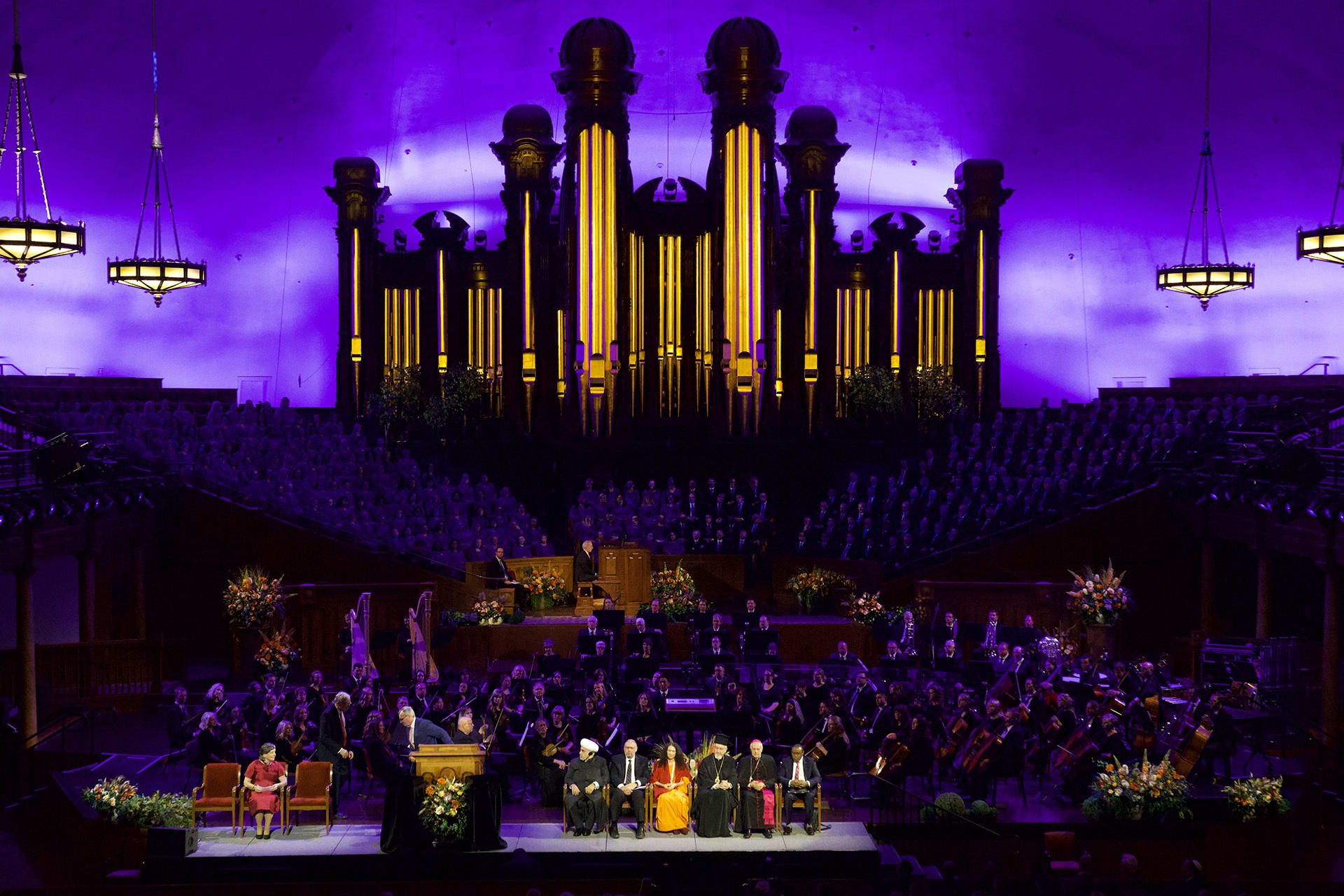
As religious and civic leaders filled the pews at the historic Tabernacle on Temple Square in Salt Lake City for the G20 Interfaith Forum (IF20), Utah Governor Spencer Cox rose to welcome the crowd. Those gathered represented more than fifty countries and thirty-five religious traditions. The home of the Church of Jesus Christ of Latter-day Saints was a fitting venue, Cox noted: “nearly 180 years ago the [Latter-day Saint] pioneers who settled this valley were religious refugees,” fleeing persecution in Illinois to freely practice their faith in what was then Mexican territory.
Founded in 2014, IF20 rests on the belief that faith communities, which run schools, hospitals, and global relief networks, are uniquely positioned to shape policy across the world’s largest economies. In a moment of record armed conflict and surging humanitarian need, a core ambition of the forum is for religious and civic leaders to work together to reduce human suffering and advance peace initiatives.
It’s a hopeful proposition—and one in stark contrast to the policy decisions being made some 1,850 miles away in Washington, DC. The White House has asserted that President Donald Trump is the most pro-faith president in U.S. history. Yet that same administration has gutted the humanitarian relief and refugee protections faith communities have long championed.
Few examples illustrate the contradiction as clearly as the hollowed-out U.S. refugee admissions program. During the Biden administration, the United States capped refugee admissions at 125,000 per year; Trump cut the ceiling to 7,500, later raising it to 17,500 to admit more Afrikaners—a drop of 86 percent. Of the 16,292 refugees admitted last fiscal year, five were from Afghanistan. The other 16,287 were from South Africa, nearly all white Afrikaners.
HIAS, the international Jewish organization that resettles refugees in the United States, was forced to close the Resettlement Support Center in Austria. It had managed the center for more than twenty-five years with the U.S. State Department and had helped resettle more than 33,000 people from Iranian religious minority communities in the United States, including Jews, Christians, Baha’is, Zoroastrians, and Sabean Mandaeans. HIAS warned that more than 14,000 people experiencing religious persecution are now stranded in Iran as a result.
What’s more, as U.S. humanitarian funding was slashed by 71 percent in 2025, numerous faith-based organizations were forced to cut their programming. World Vision had to terminate child malnutrition programs, while Catholic Relief Services lost funding for school meals serving 780,000 children.
But the humanitarian recession extends beyond the United States. European nations began cutting their lifesaving aid budgets even before the U.S. Agency for International Development’s dismantling in 2025, with Germany, once the second-largest donor government behind the United States, decreasing funding by 60 percent between 2022 and 2025. Meanwhile, the use of starvation as a weapon of war, a tactic at odds with faith communities’ commitment to feed the hungry, drove famine in both Gaza and Sudan last year.
Many IF20 speakers noted this dissonance between moral teachings and global disorder. The day’s keynote speaker, Sheikh Dr. Mohammed bin Abdulkarim Al-Issa, secretary-general of the Muslim World League, offered a timeless warning: that bad words can “serve as a gateway to hate,” cautioning that “any unjust war in human history, including those made in the name of religion, is not a divine banner, but a satanic one.”
Martin Luther King III, who joined former World Food Program Executive Director David Beasley on stage for Governor Cox’s Disagree Better dialogue series, framed his message around his father’s final book, Where Do We Go from Here: Chaos or Community? Published in 1967, the book poses a question that feels as salient today as it did then. “Communities are sustained by the values they believe in,” King said, stressing that “when faith does what it’s supposed to do instead of pulling people apart, community is advanced.”
Turning Ideals Into Reality
While the Salt Lake City gathering was billed as a platform for policy ideas ahead of the G20 summit taking place in Miami next month, the city, and its state, offered something else G20 leaders would do well to learn from: an example of turning faith’s ideals into reality. Last year, Utah ranked as the most charitable state in the United States, according to WalletHub. When Catholic Community Services, which has helped resettle refugees in the state for more than four decades, lost U.S. State Department funding for its programs and faced imminent closure, Utahns donated more than $1.5 million to keep it open.
Civil society support is only part of Utah’s recent history. In 2010, more than 120 leaders across civil society, business associations, law enforcement, and the religious community issued the Utah Compact on Immigration, a five-point agreement that outlined shared values on immigration. Among them were keeping families together and ensuring Utah remains “a place that welcomes people of goodwill.” Today, Utah is ranked eleventh nationally for refugee arrivals per capita. Five years after the Compact was signed, in a city where Temple Square sits about a mile from what is now named Harvey Milk Boulevard, Utah’s Republican-controlled legislature passed the Utah Compromise, ensuring protections for LGBTQ+ individuals in housing and employment while simultaneously codifying protections for religious liberty.
Recent developments have tested the ideals of the Compact as the state’s cooperation with federal immigration enforcement has widened the gap between principles and practice. In the year following President Trump’s return to office, U.S. Immigration and Customs Enforcement (ICE) arrests in Utah roughly tripled compared with 2024, and this year’s numbers are on track to be record-breaking, according to the Deportation Data Project. Half of those arrested in the community by local law enforcement working with ICE under the federal 287(g) program have no criminal background, according to KUER. The latest developments weaken one of the key pillars of the Utah Compact: that local law enforcement “focus on criminal activities, not civil violations of federal code.”
Recent tragedies are testing Utah’s community in a different way. IF20 came weeks after the first anniversary of conservative political activist Charlie Kirk’s assassination at Utah Valley University, and three months after a Utah man allegedly stabbed a Muslim man at least fifteen times at a mall outside Salt Lake City because of his faith. Both attacks underscore why dialogue designed to bridge differences, like Governor Cox’s Disagree Better series, matters. A Stanford study found that its ads, featuring Democratic and Republican governors in conversation to support civil debate, measurably decreased partisan hostility.
Shaping the G20’s Humanitarian Agenda
Leaders of the nations gathering in Miami should remember the message on display at the forum in Utah: that when different communities, civic leaders, and lawmakers act on shared values, meaningful change can happen. With 85 percent of global GDP, the largest and most powerful militaries in the world, and tens of billions of dollars cut from aid budgets, they have the power to harm humanity, or help it. Three steps would help usher in a more hopeful future, one Salt Lake City, at its best, modeled.
First, the incoming U.S. Congress should appropriate $1 billion in supplemental funding for the Child Nutrition Fund (CNF), a UN Children’s Fund (UNICEF)-led effort that helps governments prevent and treat malnutrition and wasting. The U.S. money would have one condition: it would be released, dollar for dollar, as other G20 nations put money forward. The approach builds on a model highlighted at IF20’s welcome dinner, where the Church of Jesus Christ of Latter-day Saints noted its $25 million donation to the CNF was matched by the Bezos family, which has committed up to $500 million in matching donations. Such an approach would assert U.S. leadership, incentivize burden sharing, leverage an existing public-private partnership, and build capacity among recipient governments to transition them away from foreign aid.
Second, IF20 leaders should urge the White House Faith Office—located in the West Wing—to halt deportations of Haitian immigrants recently stripped of Temporary Protected Status, which allowed them to legally live in the country. The issue is particularly salient in southern Florida, home to this year’s G20 and the largest Haitian diaspora in the United States. The U.S. State Department’s own “Do Not Travel” advisory for Haiti cites terrorism, kidnapping, and limited health care; still, ICE had sent 766 Haitians back by late October, with a U.S.-born one-year-old among those on the weekly flights. The appeal should make the case that the nation, like Utah under its Compact, “should always be a place that welcomes people of goodwill.”
Finally, the United States, as G20 host, should rally leaders behind a Miami Declaration condemning the use of food as a weapon of war. At a moment when the rules-based order is buckling, the declaration would reaffirm international law and UN Security Council Resolution 2417, unanimously adopted in 2018. Recent attacks on food supplies in the Black Sea, as well as fertilizer stuck in the Strait of Hormuz chokepoint, illustrate how direct and second-order effects of this tactic are being used as leverage on the battlefield.
Right now, the G20’s agenda is filled to the brim with conversations on economic growth and technological innovation. As people continue to live in want and in fear, in the United States and across the world, conference participants would be wise to ask themselves the same question Dr. Martin Luther King Jr. did nearly sixty years ago: do we choose chaos or community?
This work represents the views solely of the author(s). The Council on Foreign Relations is an independent, nonpartisan membership organization, think tank, and publisher, and takes no institutional positions on matters of policy.