COP31 and Climate Action’s New Centers of Gravity
As the world is on track to miss climate targets, governments are grappling with the consequences of climate change. Three think tank experts in the United States, Canada, and South Africa offer analyses on the status of multilateral cooperation on climate action, the importance of energy security, and the role of technology in the climate conversation.
By experts and staff
- Published
Multilateral action on climate change is often at odds with the politics and policy agendas of individual states, even as the world is on track to surpass the 2°C (3.6°F) warming target laid out in the Paris Agreement. Council of Councils experts provide insight into the status of global climate action and what we can expect from international cooperation.
Multilateralism Is Still Vital as Climate Realities Set In

Consensus-based climate negotiations are slow, especially as countries disagree over finance, responsibility, and the pace of change. Multilateralism—climate multilateralism, in particular—is in a tough spot.
The blame cannot all be laid at the door of the Trump administration. In Europe, political parties critical of development assistance and the impact of climate action on domestic competitiveness are becoming more prominent, while budgets are shifting toward defense spending. Energy security is the new watchword, both in the Global North and the Global South—a concept that can be used to justify switching away from fossil fuel imports, but equally to call for continued exploitation of domestic fossil fuel resources.
In periods of threat and uncertainty, time horizons shorten and circles of concern narrow. The call for ambitious action against a global challenge like climate change, which will worsen for coming generations, is being drowned out and even actively shouted down. Yet climate impacts are crossing borders and escalating while the resources available to respond are deeply insufficient and unequally distributed.
The UN Framework Convention on Climate Change and its Paris Agreement remain an essential shared decision-making forum. In this complex global environment, the forum allows countries to voice their concerns and hold others accountable. Countries can grapple with important questions that cannot be resolved by markets, such as how historical emissions should shape the responsibilities countries have in addressing climate change, how and by whom the immense costs of adaptation and the losses and damages of climate change are financed, and how to navigate a just energy transition at national and global levels. For vulnerable countries, those questions are central to realizing a more just world and maintaining trust in the multilateral system.
Although the multilateral process remains central to addressing climate change, one must also recognize that climate action is accelerating beyond the negotiating room.
Governments are revising energy and industrial priorities, while cities and communities are developing ground-level solutions to manage worsening heat, floods, and water stress. Businesses and financial institutions are developing innovative products, technologies, and financial instruments. Clean energy is being embraced as a pathway to affordable power, jobs, and industrial opportunities, as well as a way to contribute to greater energy security. Increasingly, altruism is not the main calculus in making the right climate decisions; it is simply the economically and strategically sensible thing to do.
The African Union’s Climate Action Innovation Hub illustrates how entrepreneurs across the continent are developing innovative solutions to Africa’s climate challenges. These innovators show how climate action can be linked to greater resilience, innovation, and job growth. However, such action must also be linked with capital to scale its impact.
The vital areas of dynamism and innovation in climate action can be found in cities, on farms, and in financial institutions, but the painstaking work of multilateral negotiation on shared responsibilities and collective action cannot be abandoned—it must be defended.
In Climate Action, Solar Leads the Way

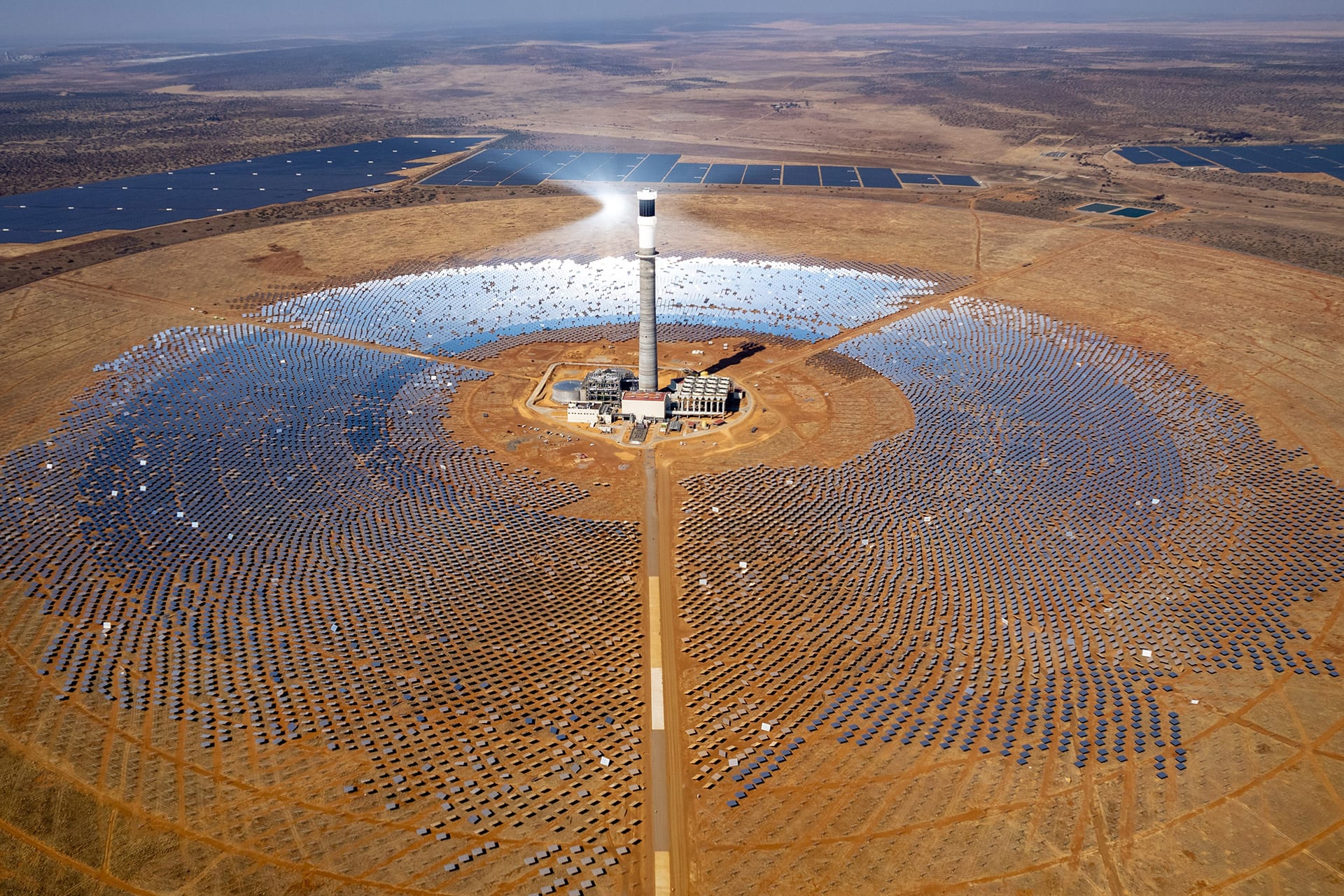
Globally, climate action is shifting from pledges to deployment, with energy security and industrial policy emerging as new centers of gravity. Solar provides the evidence.
Total global solar capacity in 2025 was over ten times greater than it was in 2015 and has grown by more than four times what the International Energy Agency predicted in 2015. Prices have dropped dramatically, making solar the cheapest energy source in many places. Solar photovoltaic (PV) adoption is expected to account for almost 80 percent of growth in renewable electricity capacity worldwide and, in 2025, solar PVs accounted for over one-quarter of energy demand growth. Battery capacity additions also increased by about 40 percent.
Despite rising demand for electricity, including from artificial intelligence (AI) and increased use of air-conditioning, the climb in global energy-related carbon emissions remained slow last year—around 0.4 percent. And this year, as flows through the Strait of Hormuz remain stalled, they are on course to drop by 0.5 percent.
Even as nations built out liquefied natural gas and restarted coal plants in response to conflicts in Ukraine and the Middle East, they sought to reduce their dependence on imported fossil fuels. The support provided by China’s industrial policy for clean energy technology helped it to underwrite the global spread of solar.
Growth in solar allowed some nations to insulate themselves against fuel price volatility. But it also deepened dependence on Chinese industry and technology. China itself doubled down on solar and other low-emissions technology. The United States, however, took a different path, shifting federal policy to favor fossil fuels under President Donald Trump.
Meanwhile, communities are struggling to adapt to climate impacts like flooding and extreme heat. Meteorologists expect the 2026–27 El Niño to spread weather and temperature extremes across the globe. The world is unprepared for these record-breaking events that cut across boundaries and exceed prior experience. As the glacial collapse in Nepal and Tibet revealed, the gulf between adapting to climate change and its power to destroy is widening. Better monitoring and early-warning systems are urgently needed to reduce damage from future climate-fueled calamities.
As climate impacts mount and adaptation lags, entrepreneurs, nations, and scientists have increasingly embraced atmospheric interventions. No binding governance regime sets guardrails, meaning nations or private actors could deploy them with global effects. This issue can no longer remain in the shadows; it requires immediate multilateral action to oversee experimentation and manage any potential usage.
That solar energy is spreading widely is a welcome development in the fight against rising greenhouse gas emissions. But that spread alone will not meet the moment when it comes to sparing people from climate harm. As nations gather in Turkey for the thirty-first Conference of the Parties to the UN Framework Convention on Climate Change in November, they can celebrate the emissions reduction achieved by the turn to solar and other renewables. However, this year’s record-setting high temperatures should serve as a prod to accelerate climate action. It is time to honor past promises to prevent the rise of temperatures to catastrophic levels.
The Real Climate Innovation is political, not technological

Climate change has been considered by many to be the greatest challenge of the twenty-first century. This led to the development of effective technological solutions that have begun to turn the tide in decreasing global greenhouse gas emissions. Policymakers have at their disposal the tools required to stave off the worst of the climate crisis and meet the Paris Agreement targets of 1.5°C (2.7°F) to 2°C (3.6°F) of warming.
However, it has become clear that the world will soon exceed the more ambitious of the two targets, and even the more problematic 2°C target seems likely to be surpassed. This ongoing failure is not the result of a lack of technological tools, know-how, and innovations required for success, as renewables have quickly become cheaper than fossil-fueled sources of energy, and various incentive structures exist that have been proven to encourage the adoption of less carbon-intensive modes of production. That governments continue to fall short of the required action is instead a political problem fanned by the flames of disinformation and polarization.
The good news is that those issues are already spurring significant action to address climate change today—namely through the Global Initiative for Information Integrity on Climate Change (GIIICC) and similar governance agreements aimed at combating the scourge of climate disinformation. The initiative funds journalism, research, and public outreach campaigns, and serves an important coordinating role for like-minded actors to ensure greater access to accurate, reliable, and accessible data in countries around the world. Initiatives like the GIIICC are more important than ever, as they not only deal with the specific issue of the ever-worsening climate crisis, but also seek to promote healthier information ecosystems.
As information systems become increasingly disaggregated, polluted, and divided, the social fabric that enables societies and healthy functioning democracies is further strained. The GIIICC serves as a global convening function to provide funding and support for traditional journalists, researchers, and trusted community messengers in order to promote healthier information ecosystems.
Therefore, the GIIICC, along with the UN Global Principles for Information Integrity, the International Partnership for Information and Democracy, and similar ongoing efforts to maintain effective multilateral governance, are pivotal, not only for dealing with transborder problems, such as climate change, but also for the continuation of the weakening liberal international order.
This work represents the views solely of the author(s). The Council on Foreign Relations is an independent, nonpartisan membership organization, think tank, and publisher, and takes no institutional positions on matters of policy.