White House Seeks Iran Off-Ramp
By experts and staff
- Published
Welcome to the Daily News Brief, CFR’s flagship morning newsletter summarizing the top global news and analysis of the day.
Top of the Agenda
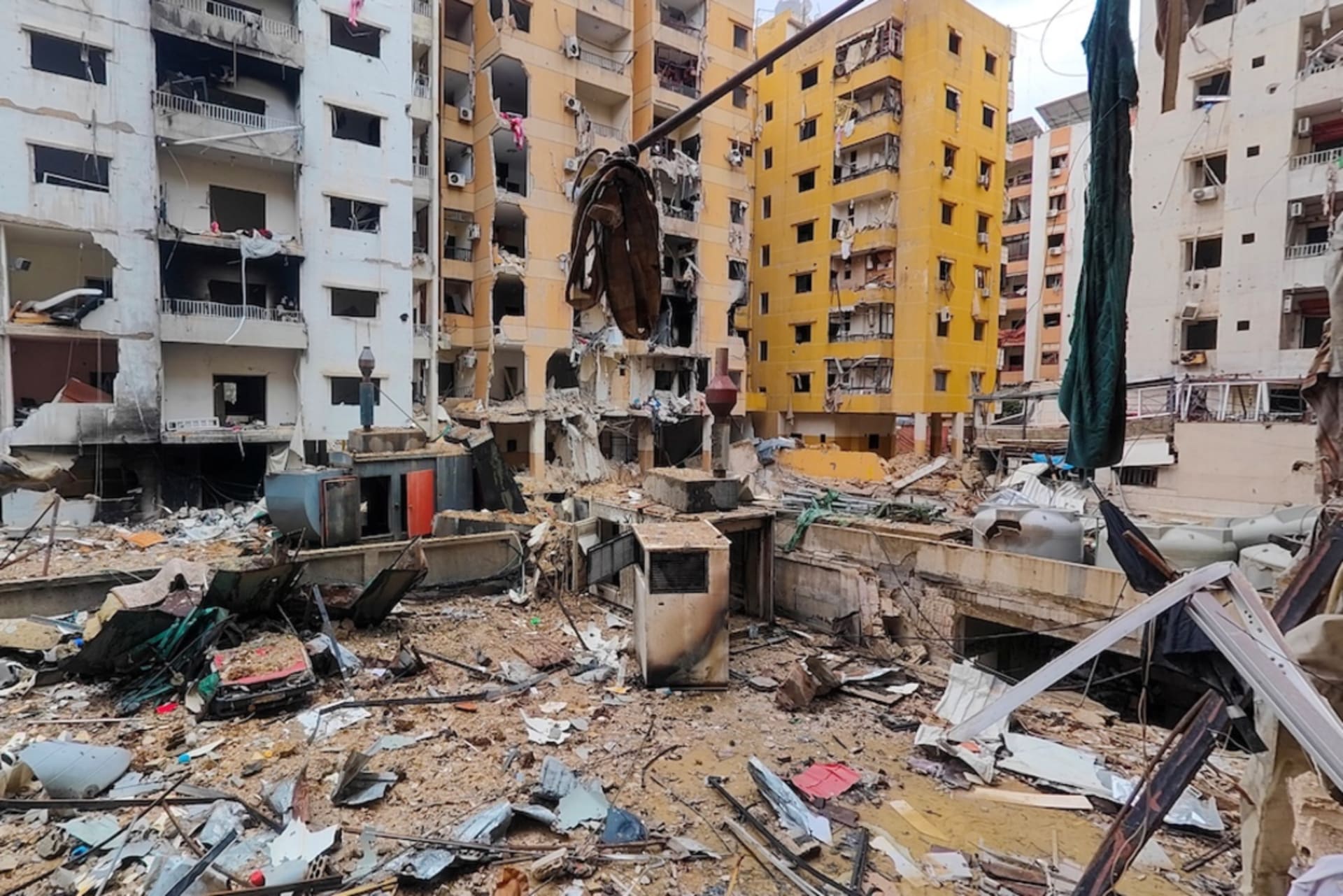
The White House is reportedly still pushing for an off-ramp to the Iran war, though Iranian leaders say they are not officially negotiating. The two sides are passing indirect messages to each other via Pakistan, Pakistan’s foreign minister wrote on social media today, while unnamed U.S. officials told CNN the Trump administration is trying to set up talks in Pakistan this weekend. Even as Washington makes overtures to peace, reports suggest it is also preparing for potential military escalation.
It takes two. Iran’s Foreign Minister Abbas Araghchi said yesterday Tehran was reviewing a fifteen-point U.S. peace plan but insisted it did not intend to negotiate. Iranian state television quoted a senior official as saying the war would only end when Tehran’s conditions are met, including an end to fighting on “all fronts” and guarantees Iran will not be attacked in the future.
Trump is prepared to “unleash hell” if Tehran does not make a deal, the White House press secretary said yesterday. Meanwhile, Israel has accelerated strikes to hit key targets before a potential end to the war, unnamed Israeli officials told the New York Times. Israel’s defense minister said today its military killed the Islamic Revolutionary Guard Corps’ naval commander overnight.
Reports about U.S. military options. U.S. defense and intelligence officials told lawmakers in a closed-door briefing yesterday that the use of ground troops had not been ruled out, without explaining what they could be used for or if they could be protected, NBC News reported. In a sign of the tensions among Republicans over the war, Representative Nancy Mace (R-SC) wrote on social media that the briefing reaffirmed her opposition to sending U.S. troops to Iran.
Iran believes its adversaries are preparing to occupy an Iranian island with the help of a Middle Eastern country, Iran’s parliamentary speaker Mohammad Bagher Ghalibaf wrote on social media yesterday. In the case of an attack, he threatened Iran would retaliate against “all the vital infrastructure” of that country.
“The military campaign against Iran is probably weeks from achieving what was initially envisioned… Nonetheless, the degradation of the Islamic Republic as a military and nuclear power has been enormous and is likely irreversible. It will take years, perhaps decades, for the clerical regime—if it survives—to rebuild.”
—CFR expert Ray Takeyh and the Foundation for Defense of Democracies’ Reuel Marc Gerecht, the Wall Street Journal
Across the Globe
Russian oil exports hampered. Ukrainian strikes, a pipeline attack, and international seizures of tankers have reduced Russia’s oil export capacity by at least 40 percent as of yesterday, Reuters reported. Ukraine has targeted Russia’s three main western oil export ports in recent weeks.
New date for Trump’s China visit. Trump plans to visit China for a summit with Chinese President Xi Jinping on May 14 and 15, White House Press Secretary Karoline Leavitt announced yesterday. The trip was rescheduled from late March due to the Iran war, which Leavitt suggested could be over by then.
U.S. chip smuggling charges. The Department of Justice unveiled charges yesterday against two U.S. citizens and a Chinese national for violating export controls by conspiring to smuggle artificial intelligence (AI) technology into China. The announcement followed a previous set of U.S. chip smuggling charges issued last week against Yih-Shyan Liaw, the cofounder of a California-based tech company, along with two other people. The company said it is cooperating with the investigation.
UN resolution on slavery reparations. The United Nations General Assembly yesterday adopted a resolution calling the trafficking of enslaved Africans the “gravest crime against humanity” and endorsing reparations. The resolution, proposed by Ghana, was passed by 123–3 countries, with 52 abstentions that included the United Kingdom and members of the European Union (EU). Argentina, Israel, and the United States voted against it.
Mexico to keep Cuban doctors. Mexican President Claudia Sheinbaum said yesterday the country would continue hosting Cuban medical missions despite pressure from Washington. The U.S. State Department has urged countries to stop accepting Cuba’s medical diplomacy, saying it amounted to “forced labor.” The Bahamas, Guatemala, and Paraguay have recently ended their participation in the Cuban program. Sheinbaum said the doctors provide critical support to Mexico’s rural health system.
U.S.-Cameroon deportation deal. Cameroon appeared to agree to accept third-country deportees from the United States in exchange for U.S. silence regarding a political crackdown and the release of frozen U.S. funds for UN refugee services, according to a New York Times investigation that cited unnamed officials and State Department documents. The State Department did not comment.
Probe of South African police chief. South African police commissioner Fannie Masemola has been charged over the allegedly corrupt handling of a police health services contract, a police spokesperson said. It is one of several anti-corruption cases currently moving forward involving the country’s police forces. Masemola pledged to cooperate with the investigation.
Postal service price hike. The United States Postal Service announced yesterday it plans to raise prices on most packages sent between April 26 of this year and January 17, 2027 by 8 percent in response to rising fuel costs. Stamps for mail will not be affected. The postal service was already struggling financially before the Iran war strained the global energy supply. The proposed price increase is now under review by a federal regulatory commission.
What’s Next
- Today, former Venezuelan President Nicolás Maduro appears in federal court for drug trafficking charges in New York.
- Today, a meeting of Group of Seven foreign ministers begins in France.
- Today, the World Trade Organization begins a ministerial conference in Cameroon.
- Tomorrow, EU finance ministers hold a virtual meeting on the impacts of the Iran war.