Will the United States Attack Iran After the Midterms?
After nearly nine months of war with Iran, President Donald Trump faces a choice: escalate the conflict with Tehran, find a way to coexist, or stand pat.
By experts and staff
- Published
 James M. LindsayCFR ExpertMary and David Boies Distinguished Senior Fellow in U.S. Foreign Policy
Will the United States escalate its war with Iran after the U.S. midterms end on November 3?
President Donald Trump has been suggesting as much for several weeks. Earlier this month, he said that the United States will win the war “right after the election” or “maybe before the election.” When the Atlantic magazine reported that he was considering attacking Iran before the midterms, Trump announced that “we will not be attacking Iran any time prior to the Midterm Elections to be held in the United States on November 3rd.”
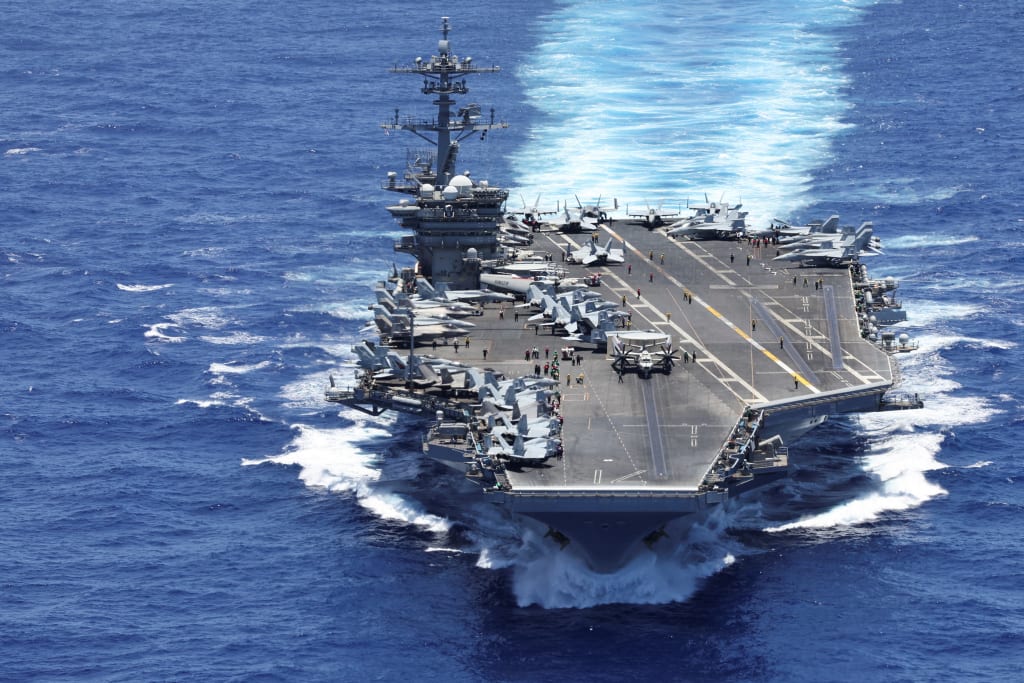
Meanwhile, the Pentagon continues to build up its forces in the Middle East. By the end of next week, three of the United States’ eleven aircraft carrier groups will be in the region. The Pentagon has also directed U.S. Central Command to finish preparations to resume major combat operations against Iran. And on Wednesday, Israeli Prime Minister Benjamin Netanyahu said that Trump had told him that the United States was “ready to finish the job” in Iran.
Trump’s declaration that the United States will not attack Iran before November 3 solved an immediate political problem. The war on Iran is deeply unpopular with the U.S. public, with just one in three Americans supporting it. The fighting has caused gasoline and diesel prices to spike, leading many Americans to ask why Trump is not doing more to address the country’s affordability crisis. Renewing the war with Iran just as voters go to the polls would intensify the political headwinds that Republican congressional candidates face and increase the odds of a blue wave for Democrats on Election Day.
After November 3, the political constraints on Trump will ease. However, his strategic challenge will remain the same: Is there a set of military and economic options he can implement that will deliver the victory he has promised at a cost acceptable to the American public? The U.S. military inflicted massive damage on Iran’s military and economic infrastructure in the opening phase of Operation Epic Fury. However, the United States has been unable to translate those battlefield successes into a diplomatic victory. Instead, it is locked in a stalemate with Iran, with each side waiting for the other to blink.
The stakes for the United States are immense. Renewed fighting could bring victory or deepen the current stalemate, send energy prices soaring, and push the global economy into a tailspin. But maintaining the status quo or finding an acceptable negotiated settlement may be just as challenging.
To better understand the prospects for U.S. escalation against Iran and what that might look like in practice, I sat down with Cole Bucy and Nate Swanson, authors of a recent article in Foreign Policy titled “Trump Unleashed: How the U.S. President Might Escalate Against Iran After the Midterm Elections,” for the latest episode of The President’s Inbox. Cole is a former CIA analyst who served as director for Iran on the staff of the U.S. National Security Council from 2015 to 2016. Nate is the director of the Iran Strategy Project at the Atlantic Council. He also has served as director for Iran on the staff of the National Security Council and was a member of the Trump administration’s Iran negotiating team last year. We spoke before the news broke about Netanyahu’s comments on his conversation with Trump.
[Video: https://vimeo.com/1238582857]
Here are my three main takeaways from my conversation with Cole and Nate:
1. Trump has three basic options in Iran: escalate, negotiate, or wait. First, he could order the U.S. military to renew attacks on Iran and ratchet up economic pressure on the regime. The goal could be to force the regime’s collapse or compel it to accept U.S. terms for a peace deal. Second, Trump could double down on negotiating efforts, perhaps using the threat of renewed U.S. military attacks as a lever to force Iranian concessions. Third, Trump could maintain the status quo in the hope that, in time, the Iranian regime will yield to U.S. demands or perhaps collapse because of growing Iranian public unrest.
2. All three options have substantial downsides and a questionable likelihood of succeeding. Calls for renewed fighting raise two immediate questions. First, why would another round of attacks succeed where Operation Epic Fury failed to topple the Iranian regime or force it to capitulate? Second, can the United States prevent Iran from attacking its Gulf neighbors, particularly their energy infrastructure? The risk Trump faces is that Iran’s leadership will survive the attacks as disruptions to oil and gas production in the Persian Gulf send energy prices soaring and potentially trigger a global recession. Calls for increasing the economic pressure on Tehran by sanctioning China for extending Iran an economic lifeline run a similar risk. U.S. Treasury Secretary Scott Bessent said in August that targeting Chinese firms could “blow up the global financial system.” At a minimum, China could retaliate by cutting off U.S. access to the critical minerals essential for the U.S. economy.
Iran has shown no interest in negotiating on terms that would be acceptable to the United States, and its intransigence may be growing. Tehran may even believe that a blue wave in the midterm elections will weaken Trump and strengthen its own negotiating hand. At the same time, Iran will use the time provided by negotiations to rebuild its military and hone its capacity to attack U.S. partners in the region.
Standing pat may be the most attractive option, but it could be difficult to sustain. Operation Economic Outcast has intensified U.S. pressure on the Iranian economy, but there are no signs that it is spurring a popular movement to unseat the hardliners. As Cole noted, “the Iranian people seem to be hunkering down. They’re not rising up.”
Likewise, the U.S. naval blockade has shut down Iranian oil exports through the Strait of Hormuz while enabling exports from Arab Gulf countries to surge. But that success has not translated into substantially lower global energy prices, in part because of the high insurance costs for oil tankers transiting the strait. And the blockade is taking a toll on the U.S. military. Cole noted that “we’ve already seen complaints from [U.S. Indo-Pacific Command] PACOM and [U.S. European Command] EUCOM that it’s not sustainable for all the military resources to go to this one operation.” And as with negotiations, Iran will use the respite from fighting to rebuild its military.
3. Which option makes the most sense depends on the answer to a fundamental question: Can the United States coexist with the Islamic Republic? If Iran poses an existential threat to the United States, Trump should be willing to take risks and pay a high price to either topple the regime or compel it to accept U.S. demands. If, however, as Cole pointed out, the Iranian threat falls short of being existential, “then we’re not willing to pay the costs to get rid of the Islamic Republic, then at that point, let’s figure out how we can get what we need and want and make them stop shooting at ships.”
Cole, Nate, and I covered a lot of other topics in the episode. These included how much U.S. air strikes and economic pressure have weakened Iran; why Trump ruled out attacking Iran before November 3; whether the United States would attack a broader array of targets if fighting resumes; whether Trump might attack Iran, not to win the war, but to create political cover for ending it; how the war has turned U.S. military bases in the Persian Gulf from an advantage into a vulnerability; and whether the Yemen-based Houthis are making common cause with Iran. I encourage you to give the episode a listen.
Oscar Berry and Diana Roy assisted in the preparation of this article.
This work represents the views solely of the author(s). The Council on Foreign Relations is an independent, nonpartisan membership organization, think tank, and publisher, and takes no institutional positions on matters of policy.