Five Things to Know About the Midterms
A few observations explain what is likely to happen on Election Day 2026 and why it matters.
By experts and staff
- Published
 James M. LindsayCFR ExpertMary and David Boies Distinguished Senior Fellow in U.S. Foreign Policy
Election Day is three weeks away. As of today, early voting has begun in fifteen states. To get you ready for the vote that could change party control of Congress, and with it, the direction of U.S. politics, here are five things to know:
1. We already know the winners of 90 percent of House races and 75 percent of Senate races. The speculation over whether the 2026 election will produce a blue wave or just a blue ripple obscures the fact that only a small number of seats in Congress are at risk of changing party hands. Election forecasters rank only about twenty House races as toss-ups. Even if you think that number is low and doubled it, the percentage of House seats in play is at most 10 percent. Most election forecasters rate just five Senate races as toss-ups. Even if you think that as many as nine Senate seats are still too close to call, that means that three-quarters of the Senate races aren’t. In short, most congressional general elections are uncompetitive, hardly the sign of a healthy, well-functioning democracy.
2. Control of the House of Representatives is the Democrats’ to lose. House midterms generally go badly for members of the president’s party: it has lost seats in thirty-seven of the past forty-one midterms. Over the past five midterm elections, the average net seat loss for the president’s party has been thirty-one. In 2026, the Democrats need a net gain of just three seats to retake control of the House. With President Donald Trump’s approval number in the mid-thirties, history suggests that Democrats are a shoe-in to retake control of the House come January 3.
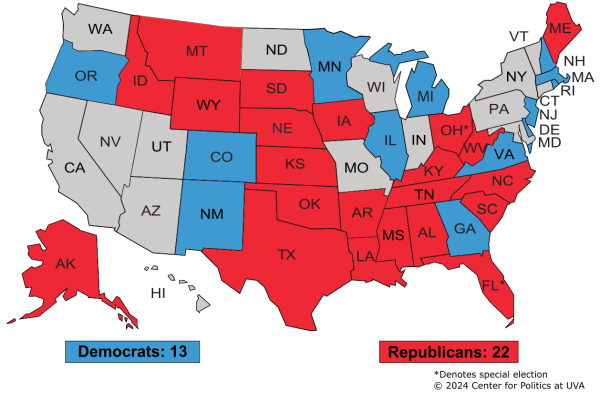
3. A friendly electoral cycle for Senate Republicans has turned difficult. Unlike the House, Senate midterms elections have not historically functioned as a referendum on the president. In 2022, for instance, Democrats gained one seat in the Senate while losing nine in the House. At the start of 2026, Republicans expected a similar split verdict this year. Although they are defending twenty-two of the thirty-five seats at play, twenty-one of those are in states in which Trump won the popular vote in 2024; twenty of them are in states he won by ten percentage points or more. Conversely, Democrats are seeking to retain Senate seats in two states that Trump won in 2024—Georgia and Michigan—and in two states that Trump lost by less than five percentage points—Minnesota and New Hampshire. Making things even easier for Republicans, the Democratic incumbents in Illinois, Michigan, Minnesota, and New Hampshire opted to retire. It is generally easier for a party to win an open seat than to defeat an incumbent. Despite these favorable political winds, Trump’s unpopularity, rising fuel prices, and a general sense that life is becoming unaffordable for too many Americans have combined to put a half dozen supposedly safe Republican seats in play.
4. Neither the Democrats nor the Republicans have cemented their control of Congress in this century. If there is one word to summarize Congress in the twenty-first century, it is “turnover.” The Democrats controlled the House of Representatives for four-decades from 1955 until 1995. They also controlled the Senate from 1955 to 1981. Neither party, however, has established similar dominance since the start of the millennium. Party control of the House has changed four times since 2000, and party control of the Senate has changed seven times, though once it was because a senator left his party and not because of the choices that voters made. Control of one if not both houses of Congress will change after the 2026 vote, a further sign of the country’s inability to forge a stable governing coalition.
5. Election Day is also about state races. Overlooked in the discussion about the return of divided government to Washington is what will happen in the states. Thirty-six governorship are on the ballot in 2026, with eighteen Republican seats and eighteen Democratic seats up for grabs. Meanwhile, eighty-eight legislative chambers in forty-six states are holding elections, with Republicans holding majorities in fifty-seven individual legislative chambers and Democrats holding majorities in thirty-nine chambers. (Those numbers do not add up to one hundred because Alaksa’s two legislative chambers are run by a coalition, the Minnesota House is evenly split, and Nebraska has a unicameral legislature.)
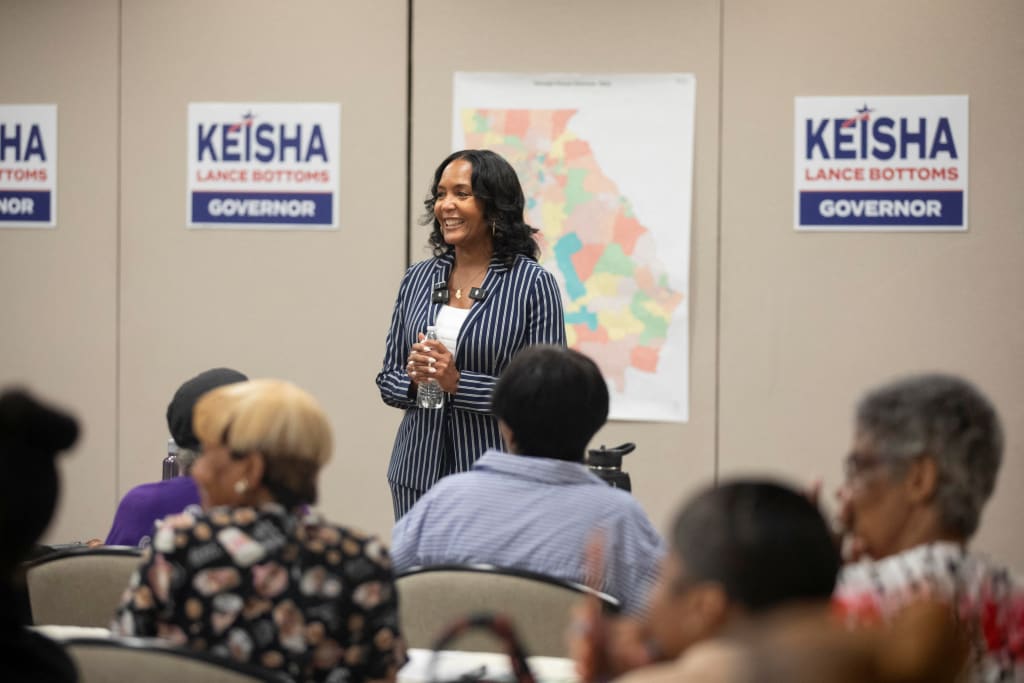
Democrats are hoping that the favorable political winds they are seeing at the national level will also boost their candidates at the state level. If so, Democratic fortunes in state capitals will have undergone a remarkable reversal in a single decade. In 2016, Republicans held thirty-one governorships and controlled both houses in twenty-nine of the forty-nine states with bicameral legislatures as well as Nebraska’s state legislature. If election forecasters are right, Democrats could emerge from Election Day 2026 controlling a majority of governorships and a near majority of state legislatures. That is important because the states historically have operated as the junior varsity for the federal government, giving candidates a chance to build a record and test ideas that may gain national appeal.
Oscar Berry and Jack Patton assisted in the preparation of this article.
Other posts in this series on the 2026 U.S. midterm elections:
This work represents the views solely of the author(s). The Council on Foreign Relations is an independent, nonpartisan membership organization, think tank, and publisher, and takes no institutional positions on matters of policy.