The Iran War and the Midterms
This episode unpacks America’s strategic stalemate with Iran, Trump’s post-midterm options, and how Tehran and the Gulf see the war.
Published
Host
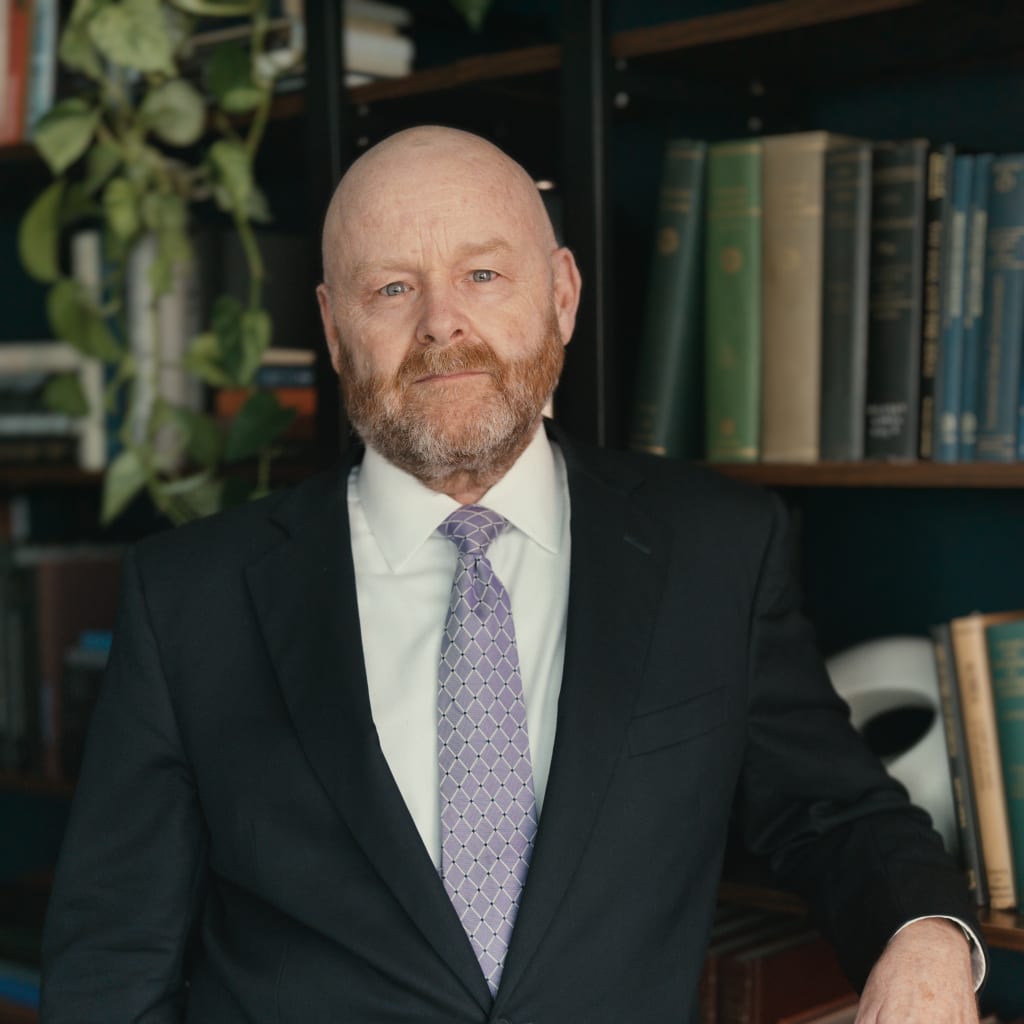 James M. LindsayCFR ExpertMary and David Boies Distinguished Senior Fellow in U.S. Foreign Policy
Guests
- Nate SwansonDirector of the Iran Strategy Project, Atlantic Council
- Cole BucyFormer Director for Iran, U.S. National Security Council
TRANSCRIPT
LINDSAY:
Will the United States escalate the war in Iran after the U.S. midterms on November 3rd? President Donald Trump has been suggesting as much for weeks. Earlier this month, he said that the United States will win the war right after the election, or maybe before the election.
When The Atlantic Magazine reported that the Trump administration was considering renewing attacks on Iran before the midterms, Trump announced on Truth Social that we will not be attacking Iran any time prior to the midterm elections. Meanwhile, the Pentagon continues to build up its forces in the Middle East. By the end of the month, three of the United States’ 11 aircraft carrier groups will be in the region.
The Pentagon has also directed U.S. Central Command to finish preparations to resume major combat operations. Just this week, Israeli Prime Minister Benjamin Netanyahu said that Trump had told him that the United States was ready to finish the job in Iran. Trump solved one political problem by declaring that the United States will not attack Iran before the midterms.
The war in Iran is deeply unpopular with the U.S. public, with just one in three Americans supporting it. The war has spiked the prices of gas and diesel, leading many Americans to ask why Trump is not doing more to address the country’s affordability crisis. Renewing the fighting before voters go to the polls would intensify the political headwinds Republican congressional candidates are facing and increase the odds of a blue wave for Democrats on Election Day.
After polls close on November 3rd, the political constraints on Trump will ease, but his strategic challenge will remain the same. Is there a set of military and economic options he can implement that will deliver the victory he has promised at a cost that is acceptable to the American public? Despite inflicting massive damage on Iran’s military and economic infrastructure in the opening phase of Operation Epic Fury, the United States finds itself in a stalemate with Iran, with each side waiting for the other to blink.
The stakes for the United States are obviously immense. Renewed fighting could bring victory or deepen the stalemate, send energy prices soaring and push the global economy into a tailspin. But maintaining the status quo or finding an acceptable negotiated settlement may be just as impossible.
To assess those possibilities, I sat down with Cole Bucy and Nate Swanson, authors of a recent article in Foreign Policy titled, Trump Unleashed, How the U.S. President Might Escalate Against Iran After the Midterm Elections. Cole is a former CIA analyst who served as director for Iran on the staff of the National Security Council from 2015 to 2016. Nate is the director of the Iran Strategy Project at the Atlantic Council.
He has also served as a director for Iran on the staff of the National Security Council and was a member of the Trump administration’s Iran negotiating team last year. We spoke before the news broke about Prime Minister Netanyahu’s comments that President Trump intends to finish the job in Iran. Cole and Nate, thank you for coming on the President’s Inbox.
Thank you so much. Thank you for having us. Cole, I want to begin with you.
I want to get where you think U.S. policy toward Iran is headed, but I would like to begin with where we are today. If you were asked, Cole, to give a situation report, a SITREP on the war with Iran, where would you say we are?
BUCY:
Look, the answer is we’ve been largely stuck in the same place for months. The specifics and the day-to-day news cycle may have new information or new specifics, but the reality is the United States has been stuck strategically in the war in Iran since the early days of the war with three basic ways forward. The first is to escalate further, which is what I know there’s a lot of concern about potential military escalation or other ways we could try to dislodge the regime.
Or there is obviously what we saw in June with the Memorandum of Understanding when there was an attempt to diplomatically off-ramp the crisis, the conflict, where there was an effort to come to some kind of arrangement with Iran to open the strait, the double blockade of Iran’s and the United States’ blockade, and find a way forward to potential negotiations about Iran’s nuclear program, its role in the region, et cetera. Obviously that fell apart very quickly for a variety of reasons.
And then where we’ve been kind of in between those two left and right options is where we’ve largely been, which is a game of chicken or of who can outlast the other, test the other’s will of economic pain. We have the United States’ blockade, stopping their ability to export oil as well as import lots of critical goods. It’s almost a siege-like environment insofar as we’ve also really increased sanctions on their air travel, limiting most of Iran commercial air flights in and out of the country.
And my understanding is lots of reports suggest we’ve also done a bit of a push diplomatically with Central Asian partners to see if they would limit or slow or otherwise harry Iran’s ability to move trucks and rail over Central Asian routes. Therefore, land, air, and sea, trying to tighten the pain economically on Iran, hoping that eventually they will feel that sting and blink, so to speak, in this game of chicken that we’re in. Meanwhile, they’ve closed the strait.
Obviously, the United States military has done a good job of sort of white-knuckle crowbar opening, if you will, a bit of that. So there has been increased traffic flow. At points, some suggest it’s almost back to pre-war.
That being said...
LINDSAY:
It’s back to pre-war, but at much higher insurance premiums. And you’re also not getting diesel out of the Persian Gulf, as I understand it.
BUCY:
Yes. So my point is I think that it may... Some have crowed, oh, it’s open, see, we’ve won.
Exactly what you’re saying. I think if you look below the hood, there’s actually a lot of problems with that. These are much more expensive tankers to get in and out.
The premiums you’re paying for in and out. Also, the Iranians are launching a lot of rockets. And we sort of accepted this, but that’s not a normal that can continue indefinitely.
Not to mention the incredible resources the U.S. military has put in to keep this white-knuckle partial opening, if you will. And the question is...
LINDSAY:
Sucking up a lot of military resources to clamp down on one strategic naval choke point.
BUCY:
Exactly. And we’ve already seen complaints from PACOM and EUCOM that it’s not sustainable for all of the military resources to go to this one operation to try to keep this open. When it’s unclear, I don’t think Iran is at all looking to blink, if you will.
And they think that Americans are soft. We have the elections coming up. And they think we ultimately will feel the pain of the pump long before they do economic when they’re used to decades of sanctions.
LINDSAY:
Okay. And I want to bring you in here. I don’t know if you have anything you want to add to that situation report.
And I ask that against the backdrop of what I often hear, and Cole alluded to it, is that a lot of people think that the sort of conventional wisdom is underselling how well the United States is doing in the war. In essence, that Washington has Tehran on the ropes. It’s just a matter of holding on a couple of weeks more, and this is going to split open like, well, since it’s almost Halloween, a ripe pumpkin.
Give me your sense of that argument.
SWANSON:
Yeah. I don’t buy it. Bottom line.
I mean, I think, look, Iran is certainly hurting, right? There’s no doubt about this. The real has been in free fall for the entire- That’s their currency.
That’s their currency. It’s been in free fall, you know, really since the start of the war, but really since the revolution, right? It used to be 1 to 80 when the time of the revolution happens.
Now it’s 1 to 2.5 million. So economically, they’re hurting. That’s almost like Weimar Germany.
LINDSAY:
Exactly. It is.
SWANSON:
Yeah, it is. And they’re hurting economically. I think, you know, they have some really existential environmental problems that are going on, and they have the old political legitimacy problems coming out of these protests where they killed at least 7,000 of their own people.
So like really, you know, the regime was kind of at a very brittle moment at the start of the war, but they’re not cracking. You know, we’re not seeing any elite or security defections.
LINDSAY:
What would you look for in that situation that would tell you, ah, something significant is happening?
SWANSON:
Yeah. So like, look, when the protests broke out, I was one of those analysts wondering if this is in fact Iran’s breaking moment. And so you were looking for large protest size, which we saw, right?
You know, you had, you know, maybe up to 5 percent of the population hitting the streets different times. And you were looking for a clear opposition to emerge, which we did not see. And I think the most important factor what you’re looking for is whether there was any defections.
And we saw virtually zero, you know, both across the protests, the crackdown and then the war. I think that just speaks to the fact that these guys don’t really have other options. So they aren’t going to just capitulate.
They’re going to fight to the end. And so while, yes, you know, as you and Cole said, you know, we’ve done a pretty remarkable job since getting stuff, you know, partial products out of the Strait of Hormuz, you know, Iran, I don’t think their strategic thinking has changed other than maybe it’s gotten a little more hard line.
LINDSAY:
Cole, just coming back to you for a second, help me understand why it is that the Trump administration, President Trump, has signaled that he has no desire to use force before the midterms. There was a report by Jonathan Lemire and someone else in The Atlantic, I think, early October, arguing that the administration was meeting potentially to plan strikes before the midterms. And the president came out on Truth Social and denied that this was happening.
But he also has said repeatedly that once the midterms wrap up, America is going to win the war. So help me understand what you take to be the administration’s or the president’s view on this right now.
BUCY:
Well, that is a difficult question to try to get inside the mind of the president or his administration. So because it is a little bit of a every day, it feels like the news is a bit of whiplash where the reporting from Axios or others about whether or not the U.S. and Israel are looking to do something. Even since this Truth Social denial, we’ve still seen lots of reporting suggest they are still considering a pre-election strike.
So all to say, and it’s probably a good caveat to add here, you know, former government, but don’t speak for the U.S. government in this case. This is pure speculation as a private citizen. My sense is that a couple of things are going on here.
One, obviously one of the biggest reasons the president has held up or stopped short of more escalation, as we discussed in our article, is because of the economic pain in terms of oil prices, in terms of energy prices on the global economy and the downstream implications for the U.S. economy, the global economy that has stopped more escalation because any escalation Iran’s means Iran’s going to hit back at the Gulf infrastructure and, you know, that kind of destruction.
LINDSAY:
So at least until November 3rd, gas prices, diesel prices are like a check on the administration. They don’t need that headache.
BUCY:
Precisely. And the war itself is incredibly unpopular in most of the polls that I’ve seen regarding the American public, including among a lot of his own base. So I think the theory is the president doesn’t want to inflame anti-war sentiment or make the economy any worse before the midterms, when even though you could argue he’s maybe accepting he may not do well, his party may not do well in the midterms, there’s a difference between maybe, you know, three Senate seats versus seven Senate seats or 10 seats in the House versus 30.
And I think there’s a margin there, at least he seems convinced of. It’s unclear from an Iran perspective, there’s not anything magical about the midterms in terms of the region, the strategic makeup or outlook that is purely a U.S. domestic consideration.
LINDSAY:
Well, let me ask you about that, Nate. Do you have any sense that the Iranians view the midterms as a pivot point that is going to help them? Because what I’ve heard people speculate is that the Iranian leadership looks at American politics as midterm elections, history indicates that the president’s party does poorly at those times.
Democrats may come back and take the House and the Senate. Donald Trump’s leverage negotiating ability will be even more constrained. So all Iran has to do is get to November 3rd and things are going to turn in their favor, whereas I think a lot of the speculation here in the United States is we get to November 3rd, now all of a sudden Donald Trump is freed.
And so help me sort of parse between those two narratives.
SWANSON:
Yeah. Well, look, I think there’s partial truth to both. The Iranians aren’t a monolith to start with, but I do think there are some within their decision making structure who do have a personal dislike for the president and would like to see him fail.
Right. I mean, he’s the one that pulled out of a nuclear deal. He’s the one that’s, you know, bombed them, you know, on multiple occasions.
So I do think there probably is some within Iran’s decision making who likes that the president seems to be floundering on this war. So that’s true, probably to some extent, but I don’t think it ultimately is what’s driving their decisions. At the end of the day, Iran’s going to make decisions based on what’s in their own best interest.
And I think for them, this long drawn out war of attrition with very narrow off ramps, right? Basically, they’re only agreeing to a deal that they’ve laid out these, you know, these conditions is the only thing they’re sticking to right now. And I don’t really think the midterm factors into that.
You know, I do think they’ve calculated that they can survive. And so, you know, they’re happy to see this war of attrition go on. If it helps me in the long term, that the U.S. and our allies are less likely to attack them in the future. And so I think that at the end of the day is what’s most important to them.
LINDSAY:
Okay, so let’s talk about November 4 on recall. And again, I think there’s pretty clear reason to believe that the immediate political constraint that the president faces will be relaxed. We will know the outcome.
That may take several days, maybe even weeks to get a final accounting. But you’ll have a sense of what the balance is and that we know more sort of prospect of if the president does this, it’s going to cost us votes that will all be in the rearview mirror. How do you think the president is going to view the situation then?
Does he have reason to believe he has carte blanche? Do you think an escalation is likely?
BUCY:
Yes, I do. Insofar as exactly as you say, I think if he’s not concerned about angry voters at the polls because of gas prices or the stock market having a couple of bumpy weeks because of increased war, I think he may perceive a window to take the gloves off and do the things that he felt hamstrung from doing in the past couple of months. Because having been in these briefings in the past for previous presidents, I guarantee you he’s looked at all kinds of escalation options.
And the U.S. military and others, U.S. government are saying, we can do this boss, but here’s the thing. They’re going to push back. They’re going to hit, you know, Gulf infrastructure.
They’re going to, you know, come after us here. They’re going to hit more base. And he’s thinking through all those consequences because Iran’s the enemy.
They get a vote, too. And I think he’s thought through. So for him, it’s more about willing to accept that blowback.
So the question becomes, what are the options that he thinks he could do to escalate to maybe change this strategic trapeze?
LINDSAY:
Let me just, I guess, get some clarity here. We say escalate. Are we talking about military escalation?
Are we talking about economic escalation? We’re talking about both talking about unveiling a new diplomatic initiative. Give me some sense of what it is when you see the chance for escalation, what it is.
SWANSON:
Yeah. I mean, I think it’s all of them. Right.
I mean, he has the opportunity to do a number of options, which which Cole and I have kind of worked on together in terms of, you know, redoing what we did in the early parts of the war. Right. You know, it’s kind of going after the same types of military and economic and infrastructure targets that he went after before.
BUCY:
So it’s basically Operation Epic Fury 2.0, which Cole referred to as. We joked, we wrote it instead of calling it more Epic Fury, we were going to call it more Cowbell. It’s an SNL reference.
And not everyone get just more of the same. I think one key part of that, in addition to military targets. Classic SNL sketch.
Yes, exactly. It kind of speaks to where we are strategically. That was our original draft.
Yeah. The other piece that I think is important in terms of escalation military options is decapitation strikes. I would not be shocked that we are looking to fix locations of the current Iranian leaders to survive the first round.
Mojtaba Khamenei, the new supreme leader, the son of the former supreme leader, is apparently hidden. I can imagine that’s partly almost Osama bin Laden style, wanting to hide him to stop the U.S. military and the Israelis from finding him.
LINDSAY:
Let me ask you about this, because I’ve heard that argued. But I would think that if you look back at Operation Epic Fury 1.0, it began with a decapitation strike. The thought was, is this was going to make the war quick and easy.
Great victory. We took out a large swath of the Iranian leadership, including the supreme leader. But that didn’t solve the problem.
So why would you think doing it again, what would be the argument that doing it again would be more likely to succeed?
SWANSON:
I don’t think it’s more likely to succeed. I think it’s more a reflection of the reality that there’s just no good options. Right.
I mean, they don’t have a clear, easy diplomatic off ramp. They don’t have like escalation options that are really good. And you can’t really just walk away.
You can’t walk away with the street being closed.
LINDSAY:
So the answer is, what else would you do?
SWANSON:
Yeah. I think. Oh, OK.
So I mean, yes, essentially. Right. I mean, I think that this is not unique to Iran.
This is, you know, pretty common across all policy. When you don’t have a good solution, you try old things again and again, hoping that maybe this time it would be different. And I think that’s what’s happening.
LINDSAY:
But what about having a military operation that is different from Operation Epic Fury? Because Operation Epic Fury had some real constraints on what we attacked. One could think about destroying all of Iran’s energy infrastructure.
You could think about trying to take Kharg Island. You could actually think about a ground invasion of some sort. Take the heights governing the Strait of Hormuz.
I don’t know. What do you think the prospects are for doing that? What are the pros and cons?
SWANSON:
I mean, I’ll say, I mean, look, I think those are all in play, including the one that I think is being floated by the White House, which is to attack Pickaxe right now and right which may have some kind of nuclear infrastructure. I’ll have to get to explain Pickaxe because this is inside Washington.
LINDSAY:
Right, right. Right.
SWANSON:
Sorry. Sorry. So.
So Pickaxe Mountain is a hardened facility well underground that, frankly, I don’t think we know totally what it’s being used for. Right. There is some reporting out there that there could be, you know, kind of some kind of nuclear infrastructure in there.
But as far as we know, we don’t know if that’s true.
LINDSAY:
And this is where there’s talk about the president authorizing the use of the MOAB, the mother of all bombs.
SWANSON:
The mother of all bombs.
LINDSAY:
The world’s biggest and most explosive conventional war.
SWANSON:
Right. And so at least from our understanding, you know, outside government and is this would not destroy a facility, but it’s a big showy response and it would basically blast all the doors closed on us. And so the theory, I guess, is that, you know, by doing that, if you saw any Iranian action to dig out or anything like that, you could go in and hit it again.
And so I guess, you know, maybe there’s like some utility to that. But mostly, I think it would just potentially be a way for the president to seek an off ramp. Right.
He’s done this big, you know, muscular military strike. They’re not going to be able to use this facility. We can we can get out.
LINDSAY:
That’s something fundamentally different, though. I mean, it seems to me that what you’re suggesting is unlike the other military options or the ideas to increase the pain on the Iranian leadership or to remove the Iranian leadership. Hence, we win.
We get what we want. And this is to create the sort of underpinnings of a narrative where we could say we won and then leave. I mean, I’m reminded of George Aiken back in the 1960s who gave the advice to Lyndon Johnson, Vietnam, just declare victory and come home.
I mean, that sounds more. Is that what you’re saying?
SWANSON:
Yeah, it’s much closer to that, right? It’s like what I referred to as kind of like a season finale, you know. And so there’s a number of iterations like that.
A lot of it relates to nuclear program. But but, you know, it fundamentally is to to paper over this idea that there is not a clear strategic win the way that I think was envisioned in the early days of the war.
BUCY:
Yeah. Go back to your your fundamental question about is there a military operation that could, in theory, win the war? As Nate said, he and I, we’re both pretty skeptical in the war at an acceptable cost.
Yes. Yes. In terms of there’s another round of strikes and a combination of things that suddenly Iran gives up or the regime collapses or whatever other vision I think that you’ve seen articulated by the White House at various points.
We’re skeptical. But thinking through, there’s a lot of smart people in the U.S. government thinking about this and they can get creative. So you could do some kind of decapitation strike mixed with another round of strikes taking out their military radars that allows us to go in and, you know, potentially support some kind of uprising.
The problem is a lot of this depends on things outside the U.S. military’s control. And the Iranian people seem to be hunkering down. They’re not rising up.
They’re not looking for freedom when there’s bombs falling on them. And that seems to be a fundamental disconnect in the current strategy. But one thing you did call out, I do want to address, is this idea that I’ve seen it a lot in the press about seizing Kharg Island or bombing Kharg Island or hitting there.
LINDSAY:
I should point out Kharg Island is in the northern portion of the Persian Gulf. The Iranians have oil facilities there for offloading onto ships to take it around the world.
BUCY:
And so they have oil refineries. So it’s the primary bit of their own oil exporting infrastructure in Iran.
LINDSAY:
Take that offline and the Iranians are going to have a very hard time exporting.
BUCY:
Which is funny that people think that, when in reality, our military blockade has effectively ended all Iranian energy exports. So they’re not exporting anything anyways. So you’d be hitting a largely stationary, defunct island and infrastructure at the time.
Sure, that hurts them long term. It lowers their long term ability to export oil and make money in a world where they survive this crisis. But that’s not going to do anything to move the needle for the current leadership in Tehran’s view about surviving right now.
LINDSAY:
Nate, we’re talking this point about how the White House, the Pentagon, or the State Department is thinking through its options, what the potential consequences of different choices are, what the price tag might be. But as Cole said earlier on, in any war, the adversary gets a say as well. Do you have any sense of what it is that the Iranians are thinking right now about how they might respond to some of these options?
Because from my conversations with people I know in Gulf countries, they’re greatly concerned that while the Iranians are down, they’re not out. They’ve used this sort of interregnum period to rebuild their capacities, particularly with drone missiles, and that if we take off the gloves, they’re going to take off the gloves. And if you’re thinking about Doha or Dubai or Abu Dhabi as transit points to the rest of the world, that’s all going to shut down.
So how do you think the Iranians are thinking about this?
SWANSON:
Yeah, I think that’s a good point. Let me just say, as one caveat up front, is that this is a different Iran. This is not an Iran at the end of the day that has a supreme leader making decisions.
So now it’s a little different. It’s a consensus-driven system that’s different. But I think you basically have two camps within this.
You have one saying, we survived this war, we’ve done well, we need to cash in the leverage we have right now and make an accommodation that locks in these gains strategically. And those are the people that are kind of pushing the MOU that was signed in June, which was, I think, from our perspective, quite advantageous to Iran’s perspective. But you also have, I think, a pretty considerable number of people who are in the inner courts making decisions that feel like escalation works.
This is their big takeaway from the war, is that when we escalate, the international community backs down. And so what they’re seeing now is that where our soft underbelly is, you know, the U.S., is energy infrastructure. So it’s the Gulf energy infrastructure.
It’s like data centers, you know, it’s all these different things. It’s tourism within the Gulf. Well, but it’s also the military infrastructure.
LINDSAY:
I think that’s one of the really interesting consequences. We built these bases, poured a lot of money into it. We saw it as a way to project power, it was a sign of our strength.
Now they become, to some extent, Achilles heels because they can be attacked.
SWANSON:
That’s absolutely right. I mean, and they were there ostensibly to protect our Gulf allies, and in many cases they were, you know, used as a pretext for attacking our Gulf allies. So, you know, I think they show that they were not successful in protecting them and quite harmful.
And I think what you’ve seen, you know, the Navy secretary said it, you know, a few weeks ago, these have been devastated throughout the region. So, you know, we’re out in NAVCENT and other, you know, Al Udeid and other really important locations that, you know, would have been unthinkable a year ago. And I don’t know if we’re going back.
I think probably not. Right. So, I mean, Iran has, you know, strategically probably succeeded in moving our basing structure back further away from Iran.
You know, who knows? I mean, that would probably be a decision for a future administration.
LINDSAY:
Well, I think that’s going to be one of the big conversations to have because, obviously, if you withdraw, at least the arguments about America retreating from the world. On the other hand, if you have chosen a basing strategy that creates a massive vulnerability for you that your adversaries are going to exploit, it would seem kind of bullheaded to sort of double down on an unwise strategy. Cole, I want to draw you in on this question about how the Iranians might respond, because obviously we have visions of them launching drones against Dubai or Doha.
But what’s also happening right now is that the Houthis have ramped up their activities in the Red Sea. They also appear to be engaged in a war with Saudi Arabia, attacking Saudi Arabia’s international airport in Riyadh. Do we see this, or do you see this as coordinated with the Iranians, just mutually beneficial?
Something that the Iranians might be either encouraging or urging a further expansion of as a way of putting pressure back on the United States?
BUCY:
There’s no question that the Houthi-Saudi conflict threats to the Bab el-Mandeb and the closure of a second...
LINDSAY:
The Bab el-Mandeb being the strait that connects the Red Sea to the...
BUCY:
Correct. It’s the second bottleneck for tankers in the region coming out of the Gulf. There’s no question Iran has wanted that and sees that as strategically advantageous for that.
The murky truth about are they a proxy, do they make their own decisions, I think you get six people, you get 12 really good opinions about that. I tend to be... Fall in the camp of the Houthis make their own decisions.
Now, they are cognizant of what their Iranian friends and patrons want, but ultimately the Houthis make decisions for the Houthis. And in this case, their fight with the Saudis that is kicked back up is a bit organic from the Iran conflict. That being said, no one’s naive here.
Everyone understands the way in which these play off of each other and potentially benefit the Iranian angle to have the Houthis threatening the Red Sea and distracting the Saudis.
SWANSON:
Yeah, I completely agree. The one comment I’d say is, and part of these attacks on Saudi, you’ve also seen come out of Iraq, right? So I do think while the Houthis are kind of an independent decision maker, and this is to Iran’s benefit, but happening independently, the fact that these Iraqi affiliated groups are hitting Saudi Arabia to me seems to pretty firmly indicate Iranian involvement.
And so I think you have this confluence of events that are complementing each other, but are also independent. And so it’s complicated, but it only makes the situation that much harder to solve.
LINDSAY:
And I do think we are challenged in determining what the actual capacity is of the Houthis and to what extent they can escalate against Saudi Arabia. Because obviously, if you’re worried about the closure of the Persian Gulf because of what it means for oil prices, if the Houthis have the capacity to take the Saudi oil production offline, that is a disaster, not just for the Saudis or the United States, but for the global economy, which I’m going to use as a segue call to ask you about another possible way of escalating for the United States, and that is to play the economic instrument.
We had the administration talk about what President Trump called economic D-Day against Iran. And we launched its Operation Economic Outcast, in which we were going to squeeze every possible vessel bringing money, goods to Iran. But we stopped short, at least to this point, because really squeezing the Iranians require us to go after the Chinese, who both buy oil from Iran and provide lots of technology and help.
And Treasury Secretary Scott Bessent said in response to a question that actually going that far could basically throw the global economy into turmoil. And I would think that if you’re looking at a policy choice, which could, in essence, make things not just bad, but a lot worse, it’s really kind of hard to implement that. But maybe when all your other choices look lousy, that looks to be good.
BUCY:
The Chinese angle has long been a complicating factor for those seeking maximum pressure economically on Iran. This has been true for multiple presidential administrations. I think in the current crisis, as I discussed earlier, if you think almost like it’s a siege, air, land, and sea, that Treasury Department has lead, obviously doing the actual military blockade, but Treasury doing a lot of the heavy lifting in terms of convincing other countries to ground Iranian air flights, to close their borders as much as they can.
The one big hole, if you will, in the seal of that siege is China. Insofar as there are still flights going to China, as near as I can tell from the reporting, China seems to have said they are not going to honor Treasury Department concerns regarding designations of airlines. And a lot of Iran’s money, to the degree how much they have left, is a great question, largely in Chinese banks, because we understand that’s where a lot of the oil has been exported.
So they can still buy goods from China and fly them in and out. It’s not ideal. Tankers on the water are much more efficient in and out for critical goods and oil out.
But that Chinese lifeline, so to speak, is a critical element. And so you’re correct. Is the United States willing to start an economic war with China for closing that last loophole, that last lifeline for Iran?
I think probably not, just because that starts to be a much bigger issue.
SWANSON:
But you’re going to say, yeah, I can just say, I mean, like, you know, so I’ve worked in the U.S. government together for a long time on this. And as someone who’s worked on Iran for too long, I was consistently always annoyed that whenever we wanted to put pressure on Iran, we would always run into this China wall across administrations, you know, Trump, Biden, Obama. And it was because, you know, at the end of the day, one, China called our bluff a little bit on this.
And they just went forward and did a bunch of sensual activity and knew that, you know, the U.S. has higher bilateral priorities with China than the Iran file. Right. I mean, we care about trade.
We care about our economy. And, you know, as an Iran person, that always frustrated me. But when you’re on the outside, you’re like, oh, yeah, clearly that makes sense.
LINDSAY:
And so at the end of the day, it doesn’t really require the Chinese to do much. I mean, one thing they would simply do is sit on critical minerals and all of a sudden correct plants here in the United States would begin shutting down pretty quickly.
SWANSON:
Absolutely. Right. And just in China, you know, remember, if you go back to when we pulled out of the JCPOA and started implementing maximum pressure in the Iran nuclear deal, the Iran nuclear deal when Trump pulled out of the Obama deal in 2018, China was, you know, importing, you know, roughly like a third of Iran’s oil exports at that time.
You know, they basically just took everyone else’s market share and filled it up. So not only did they just not comply with us, they like doubled and ultimately like tripled their imports of Iranian oil. So, you know, they basically, I think, called our bluff on this.
And we don’t really have a good result because that’s just the limitations of sanctions.
BUCY:
I think an important element as well, because sometimes people are like, well, can’t we just talk to Beijing? Can’t we get them to understand our position? And I think it’s important to understand from China’s perspective, Iran is a great foil against their American geopolitical rival.
And they can basically keep Iran afloat on the cheap, so to speak. They’re not necessarily going to go to war for Iran, but they’re more than happy to let them be a thorn in our side.
LINDSAY:
Well, I think the Chinese recognize they don’t have to choose between us and the Iranians. Precisely. That’s exactly right.
So this takes me, Cole and Nate, back to the question of what do you do? What is your advice for this White House? I don’t want to talk about, well, we shouldn’t have launched Operation Epic Fury.
We should have prosecuted. No time machine options. No time machine.
No going back. You know, you are where you are. And the question is, what do you do going forward?
Because it seems to me, as we talk about things we could do to try to break out of this impasse, we don’t like them. We don’t like them either because it’s likely to lead to more conflict, higher gas prices, minimal or unclear chance of success. All we can do is simply give up.
And we don’t like the consequences of giving up because people argue that it sends a broader message to the world. It weakens us. It weakens our deterrence.
It runs the risk of creating conflict elsewhere. What do you do?
SWANSON:
Look, there’s no good answers. And look, from my personal perspective, I think our number one priority should be is to end the war. And I hear what you’re saying about the repercussions elsewhere.
End the war. But on what terms? I have to sort of push you on this.
So I’ll be happy to take that up because I’m thinking and writing about this right now. So the formula is relatively simple, right? I mean, every U.S.-Iran deal in the past has always had basically some form of money, some constraint on Iranian behavior, and then maybe some acknowledgment of Iranian sovereignty or whatever. And so, I mean, that is basically the same formula’s play here. But what I think—and we saw that with the MOU, right? You know, you get frozen assets, some kind of sanctions relief, and, you know, some kind of acknowledgment of the strait, and Iran would stop shooting at ships and maybe do something on a nuclear program.
So the formula’s there. The problem to me is fundamentally neither side is willing to make the concessions the other wants because they don’t want to lose face. So to me, the way out of this is actually to do what Trump has already said, is let the Gulf negotiate a deal with Iran on the strait that basically takes care of those basic elements.
I mean, because the end goal—at the end result, at the end of the day, is you don’t want Iran shooting at ships and you want the strait open.
LINDSAY:
And those are things that the Gulf countries absolutely need to— And you say this even though a longstanding—and by longstanding, I mean more than two-century-long principle of American foreign policy—is freedom of navigation in international waters. You’re willing to say, well, we’re going to have a caveat or we’re going to step back from that.
SWANSON:
No, no, no.
LINDSAY:
Sorry, George Washington and Thomas Jefferson.
SWANSON:
I—no, no, no. The Gulf can’t have those things either, though, right? I’m not talking about tolls or fees or any of these other things the Iranians are throwing around, right?
I mean, if Iran and the Gulf want to come up with some, I would say, relatively meaningless agreement on what routes are used, you know, a northbound and a southbound route as proposed between Iran and the Gulf, I think we can live with that. What you do care about, though, is that Iran is not shooting at ships or restricting the traffic, commercial traffic.
LINDSAY:
So you would, in some sense, try to find a way to split the loaf and live to fight another day.
SWANSON:
I think so. And I think the Gulf is uniquely positioned to help us get there, the Gulf countries, maybe not as an institution but as individual members, because they’re the ones that are paying the highest price, right? The Qataris are the ones that lost 9% of their GDP.
Like this is undermining the UAE model of business and the Saudis. And so they fundamentally need this open the most and are probably best positioned to navigate between both us and Iran right now.
BUCY:
I think it comes back to a fundamental question, which is, do you think we can live with the Islamic Republic? And how you answer that question will determine a lot of how you answer that question. And so far as as Nate was laying out, that if we’re not getting rid of them, or at least we’re not willing to pay the costs to get to get rid of the Islamic Republic, then at that point, let’s figure out how we can get what we need and we want and make them stop shooting at ships and we can live to fight another day.
Get our interceptors back up, recreate some military deterrence that we had, and figure out how to get a better position next year or the year after. Vice, those arguably some hawks around the president, some in Israel, that their fundamental position is we cannot live with the Islamic Republic and the regime’s got to go. And their thinking seems to be, we have a president willing to decapitate, willing to take steps.
This is our best chance to topple this regime. So we can’t give up the momentum. And I think that’s where the concern is with potential escalation after the midterms is, is the president seeing removing this regime, his legacy?
And also, let’s be very clear. He seems very angry at Iran because they’ve foiled his midterm plan. They for the lot of his domestic agenda and the distraction that’s been this year when he thought this would be a three, four week campaign.
Or does he potentially see his legacy as not getting in another forever war and spending the last two years in office doing something else? And how you answer that, I think, determines a lot about what we’ll see after the midterm.
LINDSAY:
So with that fundamental framing question of whether we can or can’t live with the Islamic Republic, I’m going to close up this episode of the President’s Inbox. My guests have been Cole Bucy and Nate Swanson, Cole and Nate, thank you very much for joining me. Thank you for having us.
Today’s episode was produced by Justin Schuster, the director of podcasting, Gabrielle Sierra. Jorge Flores was our recording engineer. Research assistance was provided by Oscar Berry.
We Discuss:
- Why the United States has been strategically stuck in the Iran war for months with three bad options: escalate, negotiate, or hold the line.
- How the U.S. blockade and sanctions have squeezed Iran without cracking the regime.
- Why no Iranian elite or military defections have appeared and what that says about the regime’s staying power.
- Whether and how President Trump will “take the gloves off” after the midterms, with options including decapitation strikes and the “mother of all bombs.”
- How Tehran reads American politics, and whether the midterms are truly the pivot point each side assumes they are.
- Why China is the hole in the sanctions “siege,” and how Beijing is exposing the limits of Washington’s power.
- What Bucy and Swanson would advise the White House to do now, and why the Gulf may hold the key to regional security.
Mentioned on the Episode:
Cole Bucy and Nate Swanson, “Trump Unleashed,” Foreign Policy
This work represents the views solely of the host(s) and guest(s). The Council on Foreign Relations is an independent, nonpartisan membership organization, think tank, and publisher, and takes no institutional positions on matters of policy.
Associate Producer, Video and Audio
- Associate Producer, Video and Audio
Editorial Director and Producer
- Director, Podcasting
More Episodes
 33:42Podcast
 36:05Podcast
 41:07Podcast
 39:26Podcast
 35:04Podcast
 31:46Podcast