Women This Week: Indigenous Women Fight Wildfires in Bolivia
Welcome to “Women Around the World: This Week,” a series that highlights noteworthy news related to women and U.S. foreign policy. This week’s post covers June 21 to June 27.
By experts and staff
- Published
- Noël JamesResearch Associate, Women and Foreign Policy
Communities are Working to Fill Gaps with Minimal Government Support
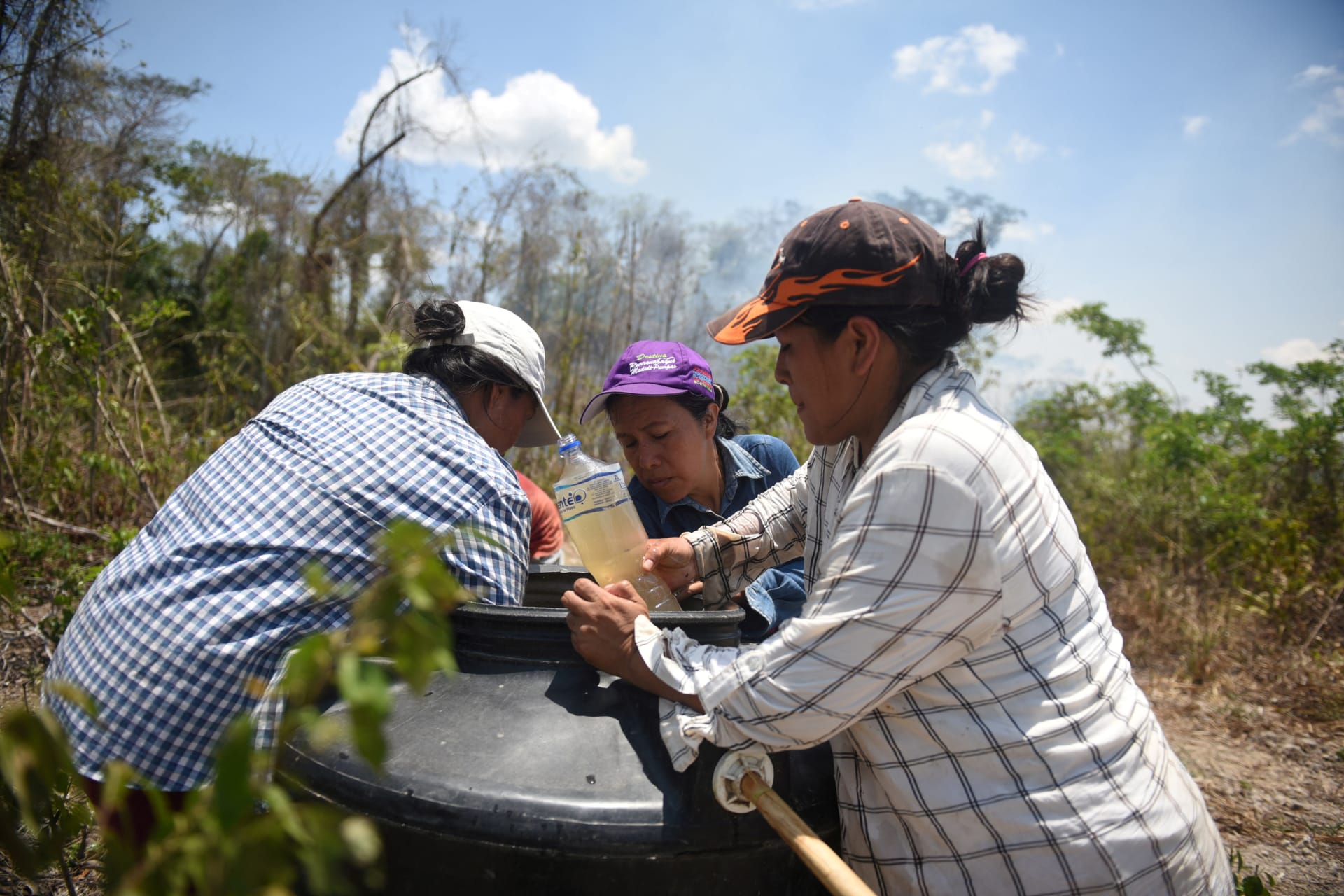
With wildfire season looming in eastern Bolivia, Indigenous women from sixteen communities are training to fight the fires themselves. In previous years, the government has made little effort to provide official support in vulnerable areas, leading to significant destruction in the dry forests and fields. “I became a firefighter because of the helplessness of seeing how fires destroyed communities every year,” said Angelina Rodas, a local leader of the Chiquitanas Indigenous People. Last year, more than 10 million hectares, or 24.7 million acres, were burned during the fire season, which runs from early July to September. Indigenous women in Robore have been offered a basic training course, but are otherwise reliant on their method of extinguishing the flames with soil and used donations of gear from male firefighters. Still, they continue to push for better management and support from the government. “Here in Robore, women and men are all aware that preserving the land for future generations means leaving something behind, leaving forest and water for our children,” said Arabel Zeballos, who has volunteered since 2019.
Women in the DRC Unite to Demand Peace
This week, women from various associations and human rights groups came together to demand peace in the eastern Democratic Republic of Congo (DRC). After nine consultation sessions supported by the United Nations Peacekeeping Mission in the DRC (MONUSCO), UN Women, and other UN agencies, the group drafted a letter to Congolese Foreign Minister Therese Kaykwamba Wanger highlighting issues concerning women and communities impacted by the ongoing conflict. The letter, which also contained practical proposals for peace, was well received by Minister Wagner, who called it “a timely call to action, responsibility, and solidarity, national and international alike. The Ministry will continue to carry this message to regional, continental, and global platforms.” The minister emphasized that conflict-related violence poses a serious challenge to human dignity and development, adding that “when women call for peace, their voices must be heard with respect and urgency.” The DRC is set to sign an agreement with Rwanda to end the conflict, although its vague nature has left many concerned about its long-term prospects for success.
All-Female Drone Interception Team to Help with War Effort in Ukraine
This week, the Ukrainian Armed Forces announced that it is working to form its first all-female drone interception team. Announced by the 427th Separate Regiment of Unmanned Systems, known as RAROG, the crew will specialize in tracking and destroying enemy drones in real time. The regiment is currently recruiting women for selection and training. According to reports, as of January, seventy thousand female soldiers were serving in the Ukrainian army, which is 20 percent higher than the number from 2022. “Motivated women are better at any job than unmotivated men,” said Alina Andreieva, a drone operator in a Khartiia’s reconnaissance unit and a leader who is working to encourage more women to volunteer for tech roles in the military.
Janelle Umana-Limon is the intern for the Women and Foreign Policy Program.