Artificial Intelligence (AI)

Experts in this Keyword

Jessica Brandt Headshot
Jessica Brandt

Senior Fellow for Technology and National Security

Kat Duffy
Kat Duffy

Senior Fellow for Digital and Cyberspace Policy

Sebastian Elbaum
Sebastian Elbaum

Adjunct Senior Fellow for Emerging Computing Technologies

Matthew Ferren

International Affairs Fellow in National Security, sponsored by Janine and J. Tomilson Hill

Sebastian Mallaby headshot
Sebastian Mallaby

Paul A. Volcker Senior Fellow for International Economics

Chris McGuire

Senior Fellow for China and Emerging Technologies

Vinh Nguyen

Senior Fellow for Artificial Intelligence

Gina Raimondo Headshot
Gina M. Raimondo

Distinguished Fellow

  • Technology and Innovation
    Are We Ready? | The U.S.-China Chip War, With Chris McGuire
    Podcast
    Chris McGuire, senior fellow for China and emerging technologies at the Council, sits down with James M. Lindsay to discuss whether U.S. efforts to deny China advanced semiconductor chips will sustain the U.S. lead in artificial intelligence or unintentionally accelerate Chinese innovation.
  • Defense and Security
    U.S. Economic Security: Winning the Race for Tomorrow’s Technologies
    Strategic competition over the world’s next generation of foundational technologies is underway, and U.S. advantages in artificial intelligence, quantum, and biotechnology are increasingly contested. The United States must address vulnerabilities and mobilize the investment needed to prevail.
  • Artificial Intelligence (AI)
    Are We Ready? | AI, Espionage, and Influence, With Jessica Brandt
    Podcast
    Jessica Brandt, senior fellow for technology and national security at the Council, sits down with James M. Lindsay to discuss how artificial intelligence is reshaping cyber operations, influence campaigns, and intelligence gathering, and what those changes mean for U.S. national security.
  • Artificial Intelligence (AI)
    Securing Intelligence: Why AI Security Will Define the Future of Trust
    U.S. leadership in the AI century will depend on whether democracies can secure machine intelligence fast enough to preserve the trust and resilience their systems rely on.
  • State and Local Governments (U.S.)
    AI Policy: Global Stakes, Local Governance
    Play
    Margaret Woolley Busse, executive director of the Utah Department of Commerce and cofounder of the state’s Office of Artificial Intelligence Policy, discusses the regulatory environment for artificial intelligence in the United States, with particular focus on its implications at the state and local level. Adam Segal, Ira A. Lipman chair in emerging technologies and national security and director of the Digital and Cyberspace Policy Program at CFR, assesses the global race in artificial intelligence and why these dynamics matter for U.S. national security and the strategic competition with China.
  • United States
    Will Artificial Intelligence Do More Harm Than Good for U.S. Growth?
    AI investments have contributed meaningfully to U.S. economic growth, but investors could find this financial boon is a double-edged sword next year when it brings greater job cuts.
  • United States
    Is the Pentagon Slowing Artificial Intelligence Adoption?
    Senior Pentagon officials have demoted a crucial AI office from senior leadership to inside the research and development shop. They say it will lead to an AI-first push, but the move could put Trump’s plan for AI dominance at risk.
  • Artificial Intelligence (AI)
    AI in the Federal Government: A Fragmented Reality
    Despite bipartisan presidential directives and significant investment, federal AI use remains limited by siloed agency adoption. To realize the potential of AI, the federal government requires a more agile and comprehensive AI strategy.
  • Artificial Intelligence (AI)
    The Administration’s AI Policy Should Prioritize Safety for Women and Girls
    Cailin Crockett is a former National Security Council director and White House Gender Policy Council senior advisor. She is a visiting scholar at American University and serves on the Advisory Committee of the Cyber Civil Rights Initiative.
  • United States
    The Opportunities and Risks of Trump's AI Action Plan
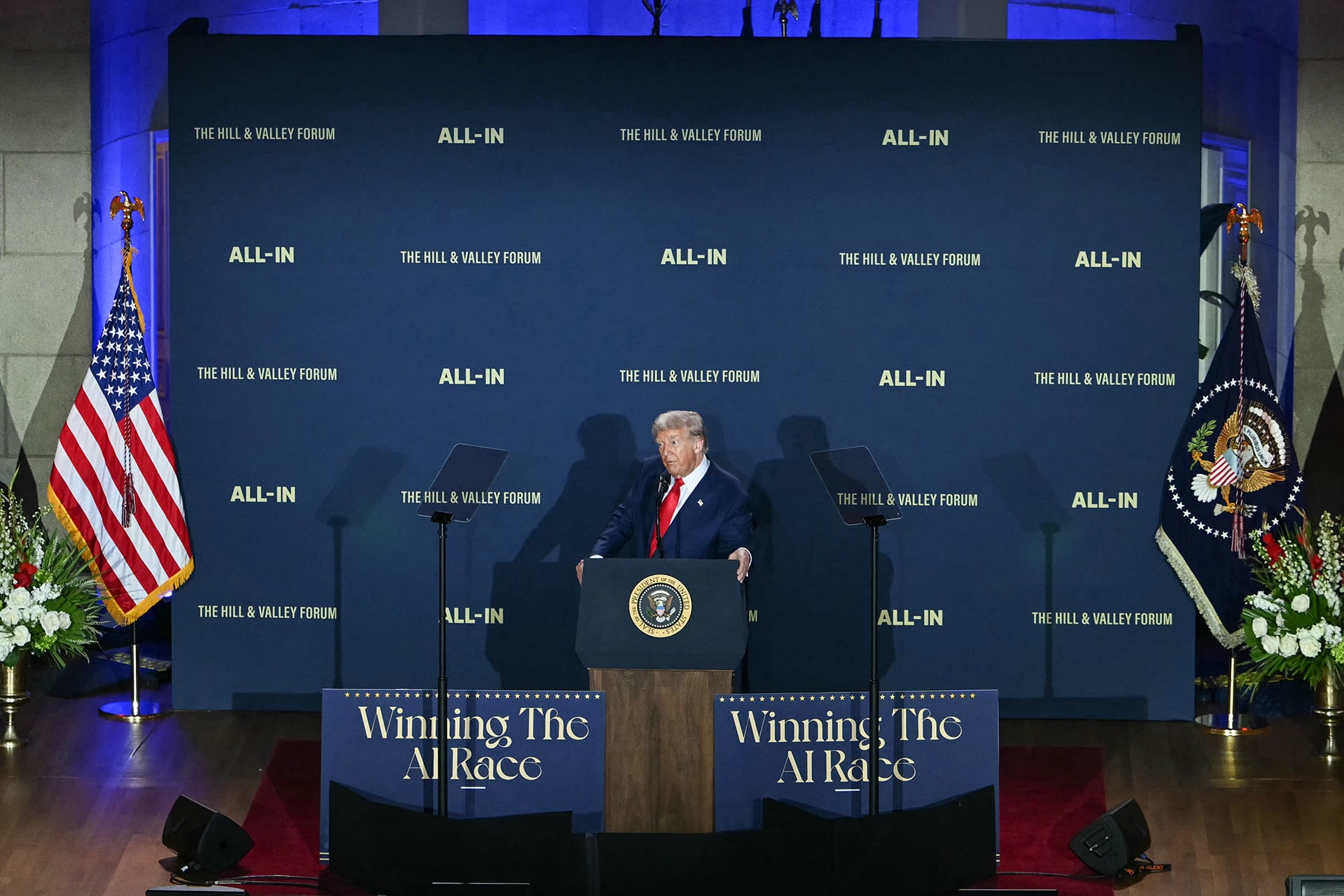
    The Trump administration released its AI action plan on July 23 to coincide with its ‘Winning the AI Race’ summit in Washington. CFR convened seven of its experts to examine the plan and detail the opportunities and risks they foresee. 
  • Artificial Intelligence (AI)
    Trump’s AI Gamble in the Gulf Reshapes U.S. Tech Strategy
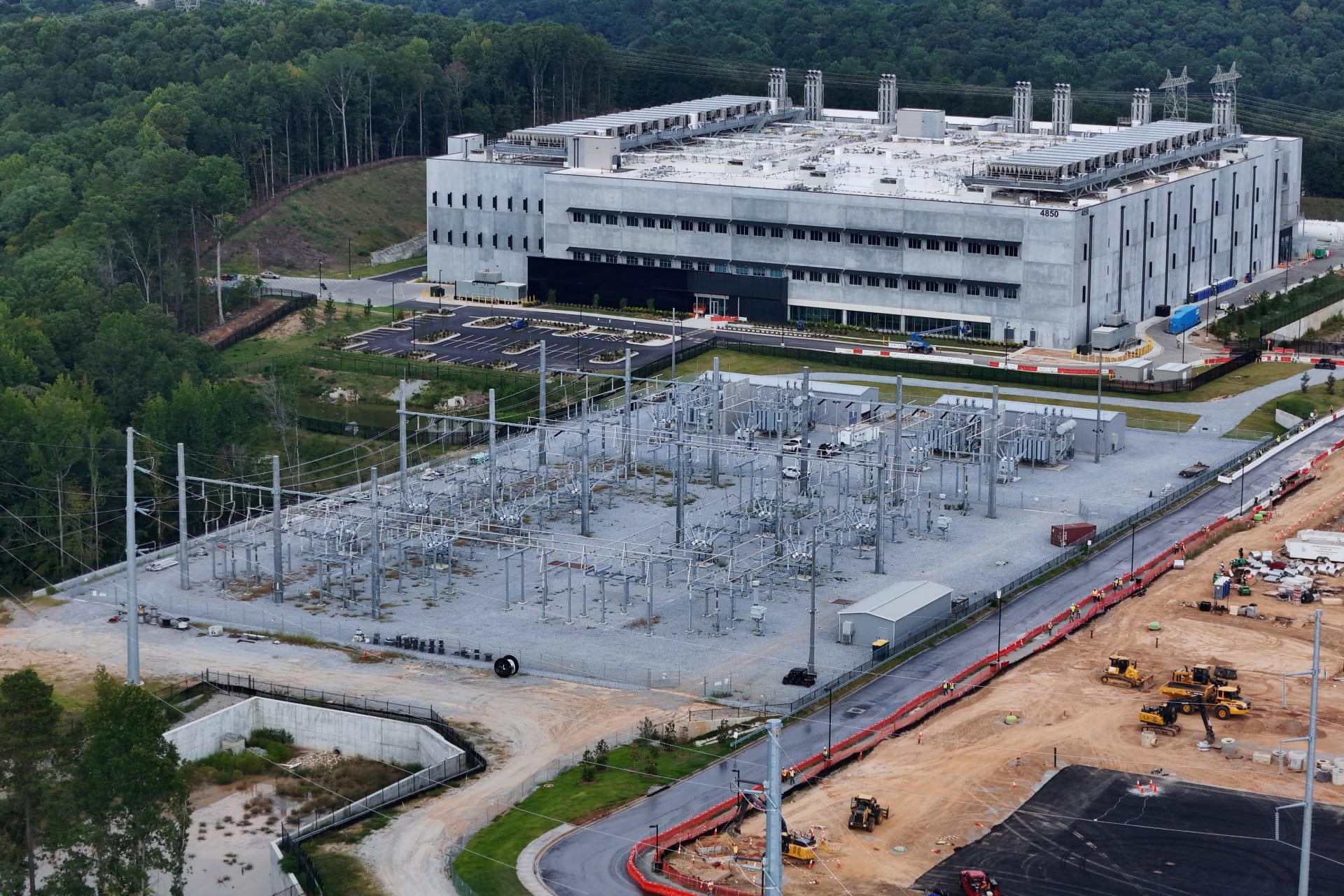
    Sign up to receive CFR President Mike Froman’s analysis on the most important foreign policy story of the week, delivered to your inbox every Friday afternoon. Subscribe to The World This Week. In the Middle East, Israel and Iran are engaged in what could be the most consequential conflict in the region since the wars in Afghanistan and Iraq. CFR’s experts continue to cover all aspects of the evolving conflict on CFR.org. While the situation evolves, including the potential for direct U.S. involvement, it is worth touching on another recent development in the region which could have far-reaching consequences: the diffusion of cutting-edge U.S. artificial intelligence (AI) technology to leading Gulf powers. The defining feature of President Donald Trump’s foreign policy is his willingness to question and, in many cases, reject the prevailing consensus on matters ranging from European security to trade. His approach to AI policy is no exception. Less than six months into his second term, Trump is set to fundamentally rewrite the United States’ international AI strategy in ways that could influence the balance of global power for decades to come. In February, at the Artificial Intelligence Action Summit in Paris, Vice President JD Vance delivered a rousing speech at the Grand Palais, and made it clear that the Trump administration planned to abandon the Biden administration’s safety-centric approach to AI governance in favor of a laissez-faire regulatory regime. “The AI future is not going to be won by hand-wringing about safety,” Vance said. “It will be won by building—from reliable power plants to the manufacturing facilities that can produce the chips of the future.” And as Trump’s AI czar David Sacks put it, “Washington wants to control things, the bureaucracy wants to control things. That’s not a winning formula for technology development. We’ve got to let the private sector cook.” The accelerationist thrust of Vance and Sacks’s remarks is manifesting on a global scale. Last month, during Trump’s tour of the Middle East, the United States announced a series of deals to permit the United Arab Emirates (UAE) and Saudi Arabia to import huge quantities (potentially over one million units) of advanced AI chips to be housed in massive new data centers that will serve U.S. and Gulf AI firms that are training and operating cutting-edge models. These imports were made possible by the Trump administration’s decision to scrap a Biden administration executive order that capped chip exports to geopolitical swing states in the Gulf and beyond, and which represents the most significant proliferation of AI capabilities outside the United States and China to date. The recipe for building and operating cutting-edge AI models has a few key raw ingredients: training data, algorithms (the governing logic of AI models like ChatGPT), advanced chips like Graphics Processing Units (GPUs) or Tensor Processing Units (TPUs)—and massive, power-hungry data centers filled with advanced chips.  Today, the United States maintains a monopoly of only one of these inputs: advanced semiconductors, and more specifically, the design of advanced semiconductors—a field in which U.S. tech giants like Nvidia and AMD, remain far ahead of their global competitors. To weaponize this chokepoint, the first Trump administration and the Biden administration placed a series of ever-stricter export controls on the sale of advanced U.S.-designed AI chips to countries of concern, including China.  The semiconductor export control regime culminated in the final days of the Biden administration with the rollout of the Framework for Artificial Intelligence Diffusion, more commonly known as the AI diffusion rule—a comprehensive global framework for limiting the proliferation of advanced semiconductors. The rule sorted the world into three camps. Tier 1 countries, including core U.S. allies such as Australia, Japan, and the United Kingdom, were exempt from restrictions, whereas tier 3 countries, such as Russia, China, and Iran, were subject to the extremely stringent controls. The core controversy of the diffusion rule stemmed from the tier 2 bucket, which included some 150 countries including India, Mexico, Israel, Switzerland, Saudi Arabia, and the United Arab Emirates. Many tier 2 states, particularly Gulf powers with deep economic and military ties to the United States, were furious.  The rule wasn’t just a matter of how many chips could be imported and by whom. It refashioned how the United States could steer the distribution of computing resources, including the regulation and real-time monitoring of their deployment abroad and the terms by which the technologies can be shared with third parties. Proponents of the restrictions pointed to the need to limit geopolitical swing states’ access to leading AI capabilities and to prevent Chinese, Russian, and other adversarial actors from accessing powerful AI chips by contracting cloud service providers in these swing states.  However, critics of the rule, including leading AI model developers and cloud service providers, claimed that the constraints would stifle U.S. innovation and incentivize tier 2 countries to adopt Chinese AI infrastructure. Moreover, critics argued that with domestic capital expenditures on AI development and infrastructure running into the hundreds of billions of dollars in 2025 alone, fresh capital and scale-up opportunities in the Gulf and beyond represented the most viable option for expanding the U.S. AI ecosystem. This hypothesis is about to be tested in real time. In May, the Trump administration killed the diffusion rule, days before it would have been set into motion, in part to facilitate the export of these cutting-edge chips abroad to the Gulf powers. This represents a fundamental pivot for AI policy, but potentially also in the logic of U.S. grand strategy vis-à-vis China. The most recent era of great power competition, the Cold War, was fundamentally bipolar and the United States leaned heavily on the principle of non-proliferation, particularly in the nuclear domain, to limit the possibility of new entrants. We are now playing by a new set of rules where the diffusion of U.S. technology—and an effort to box out Chinese technology—is of paramount importance. Perhaps maintaining and expanding the United States’ global market share in key AI chokepoint technologies will deny China the scale it needs to outcompete the United States—but it also introduces the risk of U.S. chips falling into the wrong hands via transhipment, smuggling, and other means, or being co-opted by authoritarian regimes for malign purposes.  Such risks are not illusory: there is already ample evidence of Chinese firms using shell entities to access leading-edge U.S. chips through cloud service providers in Southeast Asia. And Chinese firms, including Huawei, were important vendors for leading Gulf AI firms, including the UAE’s G-42, until the U.S. government forced the firm to divest its Chinese hardware as a condition for receiving a strategic investment from Microsoft in 2024. In the United States, the ability to build new data centers is severely constrained by complex permitting processes and limited capacity to bring new power to the grid. What the Gulf countries lack in terms of semiconductor prowess and AI talent, they make up for with abundant capital, energy, and accommodating regulations. The Gulf countries are well-positioned for massive AI infrastructure buildouts. The question is simply, using whose technology—American or Chinese—and on what terms? In Saudi Arabia and the UAE, it will be American technology for now. The question remains whether the diffusion of the most powerful dual-use technologies of our day will bind foreign users to the United States and what impact it will have on the global balance of power.  We welcome your feedback on this column. Let me know what foreign policy issues you’d like me to address next by replying to [email protected].
  • Religion
    Religion and Foreign Policy Webinar: AI’s Religious and Policy Implications
    Play
    Ilia Delio, founder of the Center for Christogenesis and a Franciscan sister of Washington, DC, and Noreen Herzfeld, the Nicholas and Bernice Reuter professor of science and religion at the College of Saint Benedict and Saint John's University, discuss how religious worldviews and spiritual traditions can inform global AI policy and explore the role of faith leaders in shaping inclusive, ethical, and internationally responsible governance of artificial intelligence.