Protests Arrive in Madagascar
Poor public service provision, poverty, and inequality have made Rajoelina’s government the latest target of Gen Z demonstrations.
By experts and staff
- Published
 Michelle GavinCFR ExpertRalph Bunche Senior Fellow for Africa Policy Studies
I recently wrote a book, The Age of Change, about how youth-dominated societies that have become more urbanized and digitally connected are ripe for political upheaval. Madagascar is the latest example.
Protests over extreme water and power shortages were the spark that began the popular uprising in late September, which grew to include demands for the president’s resignation, an end to corruption, and widespread institutional reform. The United Nations reported that over twenty people were killed and at least one hundred injured in the first week of protests. In response, President Rajoelina sacked his government and sought to shift blame first to his recently fired officials, apologizing for “members of the government who have not done the work that the people expected,” words that rang particularly hollow given his extreme centralization of power since the last election. More recently, he is suggesting that vague “external forces” are manipulating young people to provoke a coup d’etat.
The country has been urbanizing at a rapid clip, outpacing any urban planning or infrastructure investment. Last year the World Bank published a report indicating that 60 percent of urban citizens live in informal settlements lacking basic services. Without affordable housing, water and sanitation infrastructure, or transportation, these cities have become a breeding ground for grievance. Political strategies have not kept pace either. President Rajoelina’s 2018 campaign focused resources on mobilizing rural communities, while his approach to the latest polls in 2023 involved restricting political space to the point that most opposition parties boycotted the elections. When he was declared the winner, he claimed that “the Malagasy people have chosen the path of continuity, serenity and stability.” It appears he spoke too soon.
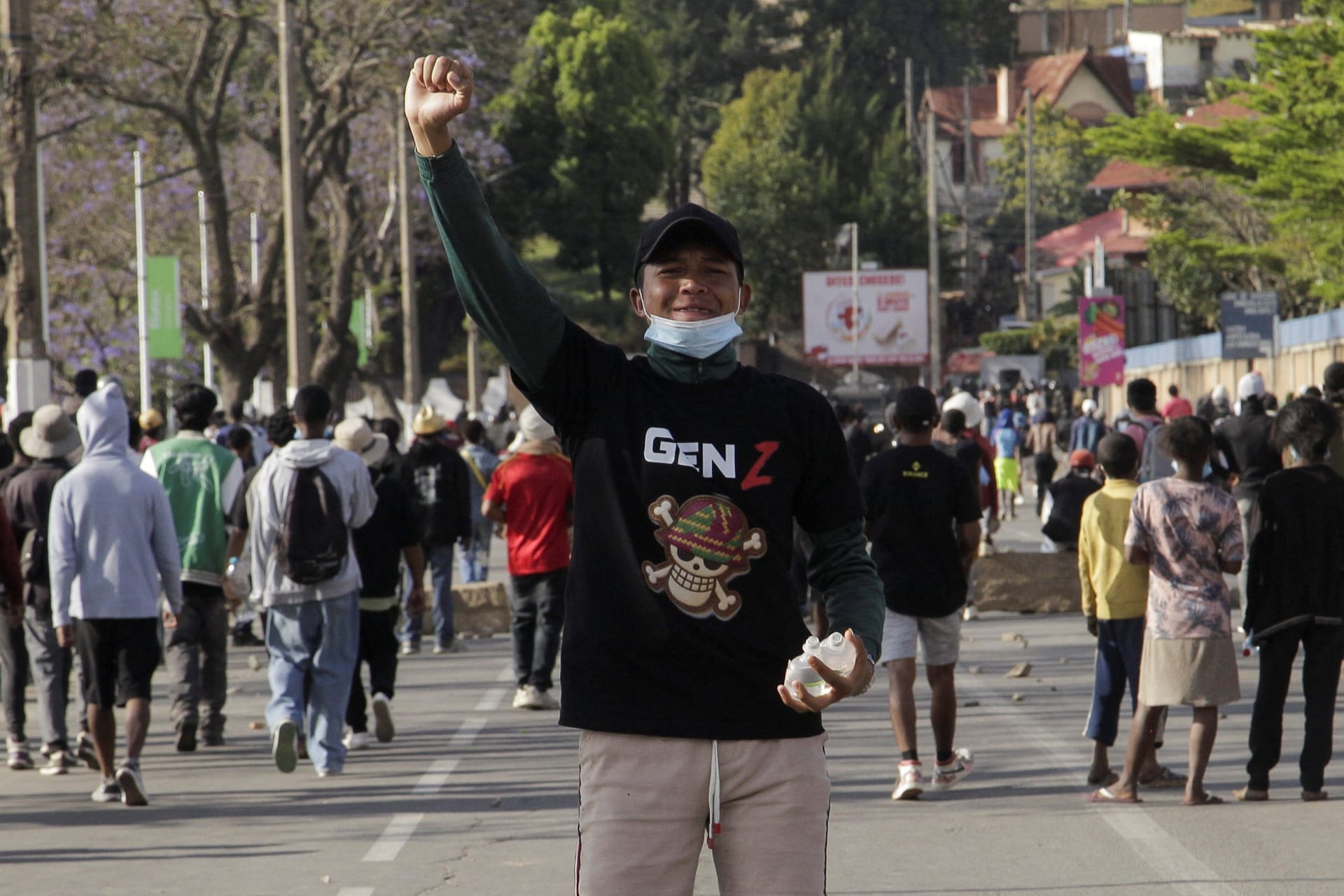
Polling conducted in late 2024 indicates over 70 percent of citizens felt the country was going in the wrong direction. The grinding poverty urban Malagasy experience in cities is amplified by their front-row seats to the lifestyles of elites, and their access to information from abroad that can both enhance a sense of relative deprivation and provide inspiration to mobilize for change. It’s no accident that the skull and crossbones symbol adopted by protesters in Nepal, the Philippines, Morocco, and Indonesia is showing up in Madagascar as well.
For now, President Rajoelina is offering “dialogue,” while protesters demand accountability for the violent repression they have faced in the streets. What he is not offering is any kind of reasonable plan to lift his youthful population out of poverty or to strengthen the connective tissue of accountability between the governed and the governing. He has suggested that popular ire should be directed at “the people who kept telling me that everything was fine.” His dialogue may go nowhere, but his apparent lack of familiarity with the realities of life in the country he is leading for a third time as president speaks volumes.