Media Briefing: What Comes Next After the U.S. and Israeli Strikes on Iran
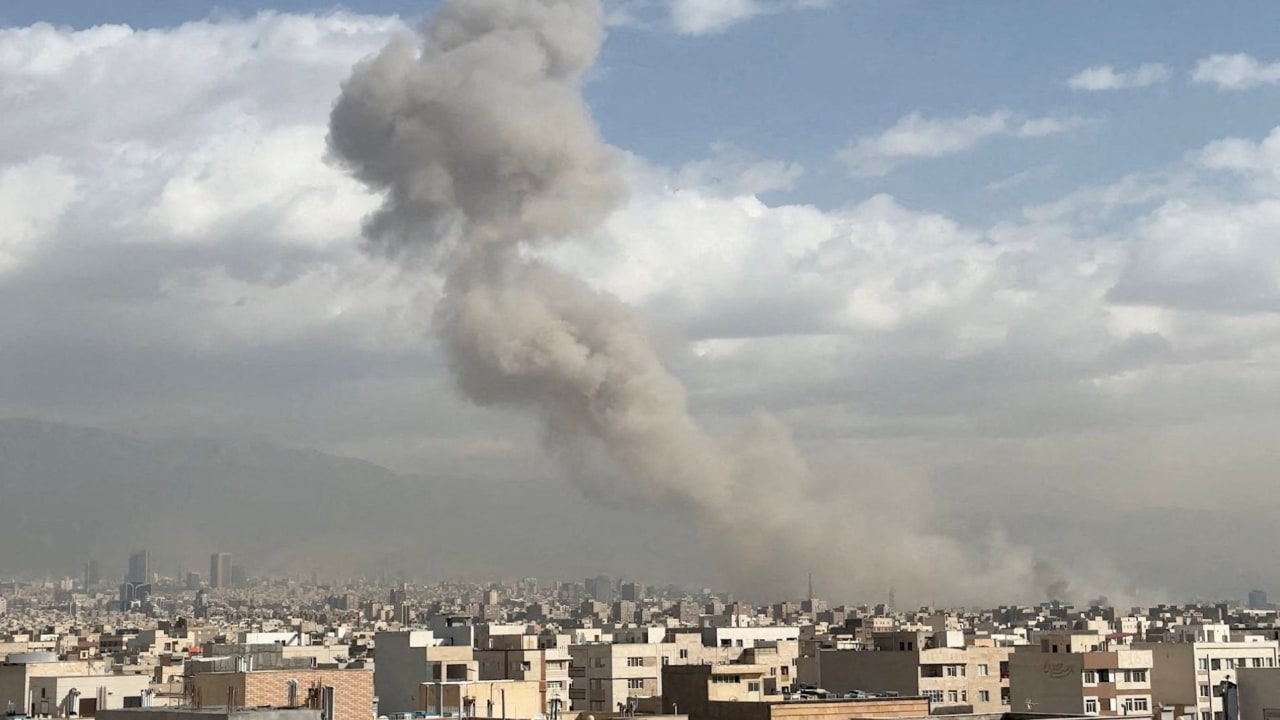
Event date
Speakers
 Elliott AbramsCFR ExpertSenior Fellow for Middle Eastern Studies, Council on Foreign Relations; CFR Member
 Max BootCFR ExpertJeane J. Kirkpatrick Senior Fellow for National Security Studies, Council on Foreign Relations
 Steven A. CookCFR ExpertEni Enrico Mattei Senior Fellow for Middle East and Africa Studies, Council on Foreign Relations; CFR Member
- Senior Fellow for Middle East Studies, Council on Foreign Relations
 Ray TakeyhCFR ExpertHasib J. Sabbagh Senior Fellow for Middle East Studies, Council on Foreign Relations
From Media Briefings and Middle East Program.
CFR experts assess the United States and Israel’s strikes on Iran, examining the implications for the region and U.S. policy.
Ahead of the briefing, read analysis from Elliott Abrams, Max Boot, Steven A. Cook, Elisa Catalano Ewers, Linda Robinson, and Ray Takeyh on the impact of the February 28 operation.
KIM: Good afternoon. My name is Sophia Kim, director of media relations and communications strategy at the Council on Foreign Relations. Thank you for joining today’s media briefing on the evolving situation involving the U.S.-Israeli strikes on Iran.
We are privileged to have an exceptional group of CFR experts with us today. Today we have Max Boot, Steven Cook, Ray Takeyh, Elisa Ewers, and Elliott Abrams.
Today’s conversation will address several key questions, including what the United States has achieved to date, latest developments on the ground, the nature of U.S.-Israeli coordination, tactical proficiency, and observable results of the strikes.
Before we begin, just a brief housekeeping note. This discussion and the Q&A that follows is on the record. A recording will be posted online following the session. This briefing is part of the Council’s ongoing mission to inform U.S. engagement with the world. That mission is supported by the broad analysis and resources available across CFR.org and ForeignAffairs.com. We encourage you to continue to tune into the Council as a resource.
With that, I’ll turn it over to Steven Cook to begin the discussion. Steven, off to you.
COOK: Thanks very much, Sophia. And good afternoon to everybody who has tuned in with us.
The way it’s going to go today is I’m going to be—sort of do double duty as both a participant as well as a moderator. So I’ll start out with some brief remarks and then go around the horn to my colleagues Elliott, Max, Ray, and Elisa for their perspective.
I think we all woke up on Saturday morning somewhat surprised at this rather unprecedented military operation under the code names Operation Epic Fury and Roaring Lion, a joint American-Israeli operation intended to do further damage to Iran’s nuclear program, destroy its ballistic missile manufacturing capabilities, and its—do as much damage to its inventory of ballistic missiles and other military capabilities—and importantly, as President Trump has now stated publicly, he called upon the Iranian people to bring down the Islamic Republic. This is once again being referred to as regime change in the Middle East, and there’s a whole host of questions about whether the United States can bring that about from the air and from so far away. But it’s clear the hope is, is that with the kind of destruction that both Israel and the United States are wreaking across Iran and across its institutions of the state that it will provide an opportunity for the Iranian people to rise up and bring down the Islamic Republic.
So far we haven’t seen a lot of evidence of that. We’ve seen some celebration of the Ayatollah Khamenei’s demise, but we haven’t yet seen large demonstrations. That may very well be because there’s still high-intensity military operations underway. It’s one of those questions that I think we’ll be looking at in the days and, in fact, weeks to come.
The Iranian strategy in response is clear. It is intended to widen the conflict. As we now all know, they have attacked all of the members of the GCC, plus Jordan, plus Iraq, plus even as far away as Cyprus. It seems that the thinking in Tehran was that attacking these countries, their tourist destinations, civilian infrastructure like airports, that those governments would then in turn put pressure on the United States and Israel to halt its military operations. The exact opposite seems to have occurred. The GCC states, which there were differences among them, are now hanging tough together. The main traditional European allies—the French, the British, and the Germans—have talked about getting involved should their partners in the Middle East continue to take fire from the Iranians. So for now it seems like the Iranians’ strategy in widening the war has backfired a bit.
There does seem from my perspective to be a somewhat slight difference between the United States and Israel. It may not be as slight. It hasn’t reared itself so far in the last couple of days, but it strikes me based on the words that President Trump has used in his statements that despite calling for regime change he would be willing for a Venezuela-like solution to change in Iran. And that’s something that the Israelis would not like to see. They would not like the United States to make a deal with a member of the IRGC moving forward. I think that’s why you see the Israelis moving swiftly to take out as many of those possible candidates as they can. The president, in fact, made that—made a statement to that effect, said he had a number of candidates in mind but they were killed in the opening phase of the conflict.
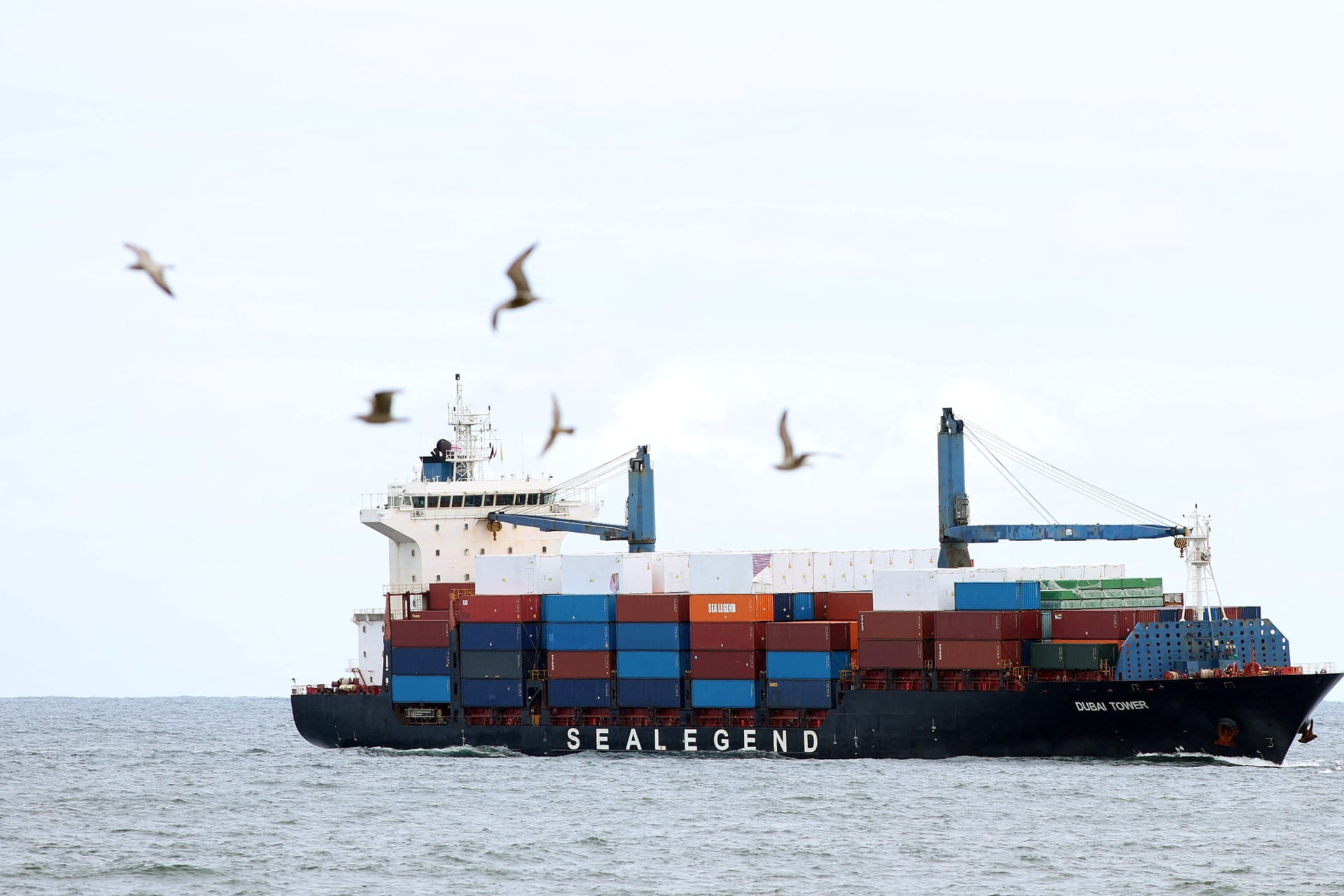
And then, finally, something that is often overlooked, oil prices are up $3½—it’s about 5 percent—on the closure of the Strait of Hormuz. The Iranians have announced their intention to close it. I think it’s moot; most tanker traffic ceased heading in the direction of the strait beforehand, before that announcement, once the war commenced. The United States has long made it its policy that closure of the strait would be met with significant force. It’s another thing to watch as we go forward.
I’ll stop there and I’ll just go along who I see on my screen here, and I’ll go to my colleague Elliott Abrams. Elliott?
ABRAMS: Thank you.
I don’t want to repeat what Steve has said. I would say that there’s been a lot of discussion of regime change, and the president of course never uses that term. But I think what will clearly emerge from this war is a very, very much changed regime, even if it hangs on. There won’t be a supreme leader who’s truly supreme in the way that Khomeini and Khamenei have been. This will be a country largely without the ability to use force. I think by the time this is done, even if it’s only another week, they will have no nuclear program at all. They’ll probably have no missile launchers and maybe no missiles. They will have no navy.
We’re used to saying that the sort of key organizing event in the region in the last few years—say, ten years—may be the Abraham Accords, but I would argue—I can make a good case for, no, it’s the inclusion of Israel in CENTCOM, because that has led to a kind of reorganization of the relations—and not only military, but intelligence and to some degree political—that includes countries that are not involved in the Abraham Accords. It just—it includes just about everybody except Iran.
I am noticing—Steve remarked on the oil prices. I would have thought we’d see much more of a spike. I notice also that Wall Street is pretty flat. There’s no, you know, huge drop because of the war. Natural gas prices will probably go up now that Qatar has closed off production. But everybody seems to be assuming, I think rightly, that, you know, this may last a few days, it may last two weeks—the president has been talking about longer—but it’s not permanent. The fact that Iran doesn’t have a navy when we’re done with this means that the threat of closing the Strait of Hormuz will actually be nonexistent. It’ll be interesting to see what the Houthis do, I think, in the course of and after the conflict, and whether they continue what they’re doing.
Just a word about Hezbollah. Talking about—(laughs)—talk about wars of choice, Hezbollah jumped in, which it had no need to do; probably an instruction from the IRGC. But Hezbollah jumped in, which was an invitation to Israel to take out more of Hezbollah’s power. And the result of it has been a remarkable statement—so far words only—by the prime minister of Lebanon to the effect that everything Hezbollah’s doing is wrong and is illegal, and they have to stop. Now, whether the Lebanese Army does something about that we’ll see in the next few days, but it is interesting to see Hezbollah, against the—clearly against the interests of Lebanon and the Lebanese people, insist on jumping into this conflict.
There is, obviously, so much more to say. But we have limited time, so let me stop there.
COOK: Thanks, Elliott.
Ray, please. You are an expert of experts on Iran. We eagerly anticipate your wisdom.
TAKEYH: You may not be that really anticipating once I’m done. (Laughter.)
I’ll say a couple of things about succession and the public mood as far as one can assess it. I tend to be of a school of thought, a rather minority one, that believes in the aftermath of June war, Ali Khamenei was no longer really that supreme. The cascade of misjudgments that he engaged, age, and others, he was increasingly sidelined, in a sense that the regime was making decisions in contradiction to what he was saying. So that means some sort of apparatus of succession had already been in place. And you can see how the regime is making decisions rather swiftly without necessarily his strong hands to be involved.
They have established a committee of three to—as a transition committee. That’s part of the constitutional convention. The constitution itself, I think it’s Article 111, the head of judiciary, the president, and the member of the Assembly of Experts. I think they’ve chosen Arafi because the head of the Assembly of Experts, Ayatollah Jannati, is about 180 years old. So he might not necessarily be up to the task. And then the Assembly of Experts is supposed to essentially choose the next supreme leader, although that’s usually—in the one experience we had—it was more formal than real. I even will go so far as to say they probably know who this next leader is. They have not unveiled it. Obviously, Assembly of Experts cannot meet in the current situation. The head of judiciary, Eje’i, is one of the candidates, simply because he has had so much administrative experience, particularly in the apparatus of repression. So he has already relationships. And he was a minister of intelligence as well.
Anyway, so I think the regime is capable of functioning without Ali Khamenei because, in my opinion, it’s been functioning without him, at least since June war—or without his steady and direct overseeing of national affairs. In the aftermath of the uprising, the regime once again gained command of the streets, with a rather considerable amount of casualties. I think one of the figures I have seen from the human rights organization in North America was 7,000 fatalities. That seems reasonable, although it is kind of extraordinary number given the fact that those—that most of the killing was concentrated in a week. The barrier of fear that all despotic regimes require to remain in power was reinforced. Now, the question is, how much of it has been tattered as a result of this latest operation? So we may see the cycle of June, where the regime engages in a war, it loses the war rather decisively, as Elliot mentioned, and then that sparks another protest. And we’ll see at that time whether regime has the resources to repress that protest, as it did, viciously, last time around. We may see that cycle take place again.
At this particular point, and I’ll end with this because there’s a lot of other people here, Ali Khamenei ruled for thirty-seven years. Ironically, exact number of years that the shah ruled. And so for 60 percent of the Iranians that are under age thirty, he’s the only ruler they know. And that must be discombobulating, disconcerting. Or how do you process that situation, where he not only is dead, but he was killed by foreign intervention? So that has to have some sort of a—some sort of a psychological impact, as everybody’s trying to absorb this news of his, not just death, but death in terms of Israeli and American intervention. We’ll see how the population responds to this once it gets its bearing. And we’ll see if the Islamic Republic can once again engage in repression once it gets its bearing.
I will say one thing about this particular operation that I think has not always been discussed. People talk about what is the rationalization of it? What is the justification of it? The justification of it is justice. Ali Khamenei was responsible for killing scores of Americans since 1979, and other people in the region. And, of course, his first and foremost victims were the Iranian people themselves. There is an element of justice and the fact that he died not in his bed, not being commemorated in parades and so forth, but in the manner that he did. This is a regime that started out by taking four—an American embassy hostage for 444 days. And has began since then thirty-seven years of rampage against Americans. And this is really the first time America struck back decisively. And I think to some extent, Donald Trump has reclaimed not just deterrence but American national honor. And so I’ll stop there.
COOK: Thanks, Ray. We were not disappointed at all.
Elisa.
EWERS: I just want to hear Ray keep going, but let me—let me add—
TAKEYH: No, you don’t.
EWERS: I really do.
COOK: I won’t let you. Elisa, please.
EWERS: A couple of quick thoughts. Not repeating anything that the three of you have already said. And I think you’ve outlined, Steven, Elliott you as well, a number of pretty ambitious objectives of this campaign. And I think we still lack clarity on which of these are, A, achievable through the means that are being used, both by the United States and by Israel, and the willingness to continue until all are achieved, right? And so we’re still struck by, I think, this mismatch of the very operational timelines and operational successes that we’re seeing on the ground, and a lack of clarity of what our endgame is.
Is the endgame, as the chairman of the Joint Chief said, eliminating Iran’s ability to project power beyond its own borders? Is it regime change? Is it decimating its naval capability? All of these things are possible, but they are not necessarily all possible in the time that you have, when real economic costs are being exacted from the gulf, especially. And there’s only so much of that I think that is sustainable until those impacts are seen, not only on oil prices but more broadly in commercial shipping insurance, et cetera.
The defensive capabilities that are at play—I mean, Steven, you mentioned this—but it’s really quite striking that there are more incoming drones and missile attacks on gulf states, on the United Arab Emirates, than on the state of Israel. And these governments and their militaries are capable of defending themselves, but it comes at a cost. And drones are cheap and interceptors are not. And so there’s a timeline there as well. There’s an Iranian capabilities timeline, as we’re seeing, a focus on the use of drones rather than expending all of their long-range missiles. But all of these kind of tactical considerations come into play. And when you don’t have a firm end state in mind it’s harder to see how you lay out these timelines in parallel and get the most tactical and operational successes as you can.
And, at the end of the day, I think there’s still very much a big question mark as to what the president’s intentions are with respect to an off-ramp to diplomacy. I don’t think that’s clear. Certainly not clear to me. And what that negotiation looks like with the kinds of institutions in place that Ray just outlined. So a couple of more questions than answers there.
COOK: Thanks, Elisa.
And, finally, Max. Max, when I first came to the Council on Foreign Relations you already here, and you had a reputation of moving guns and trucks around sandboxes. So if you have any perspective on the specific military operations that would be super useful for us all.
BOOT: Well, I just wanted to start by making a broad point, which is that I think this war that Trump launched is unwarranted and illegal. That it doesn’t necessarily mean it’ll be unsuccessful. And I’ll talk about that in a second. But let me start with the unwarranted and illegal. Unless the U.S. has already been attacked or facing the imminent threat of attack, my understanding of the War Powers Act and the U.S. Constitution is that the president needs to go to Congress and ask for authorization to act. Certainly, that has been the custom for a long time, even though, obviously, presidents have used military power without direct congressional authorization, but usually very brief operations or, you know, operations where there’s a time element dictating immediate action. Grenada, for example, Panama, what have you.
That wasn’t the case here. Trump, basically—there was no imminent threat because there was no evidence that Iran was enriching uranium after the June strikes. And there was no evidence that they were building ICBMs that would threaten the United States. And so I don’t think there was any threat that justified this massive American military operation, certainly not absent any congressional authorization. It’s just shocking to me to the extent to which Trump has not only not asked for congressional authorization, but has not even explained to Congress or the American people why he is acting, or trying to bring the American people along. And right before the action started polls were showing about 20 percent of Americans supported an attack on Iran. And he didn’t seem to care about that, and went ahead anyway. So, again, I don’t think it was justified by the strategic situation, or I don’t think it was legal. Notwithstanding all the heinous crimes that Iran has committed against its neighbors, the United States, and its own people over the years.
Now, all that said, that’s not to say it won’t be successful on some level. Clearly, at a tactical military level, it is already a success. And the United States has, you know, the most powerful military force in the world. Israel has a very powerful military force. It was obvious after June that we could essentially attack Iran. Well, that’s what we’re doing. But we have a long record over the last many decades of demonstrating tremendous tactical proficiency, but not translating that into long-term strategic success, right? We didn’t have any difficulty dismembering Saddam Hussein’s regime and military. We had a lot of difficulty building something up in its wake. Same thing with the Taliban and Afghanistan. And so I—like Elisa, I have major questions about what is the end state here, and how are we going to achieve it?
The only thing that Trump has really said—I mean, he’s given contradictory remarks. And that confusion, I think, was heightened by Hegseth’s remarks at the Pentagon today. Because on the one hand Trump is suggesting his goals are regime change. On the other hand, he’s suggesting that his goal is a change of regime behavior. So it’s hard to know which it is. And I think he’s basically keeping it ambiguous so that whatever happens he can claim it was a huge victory. So he will claim vindication no matter what happens. But, you know, I have major questions about the way he’s phrased or laid out his regime change operation, because, of course, he doesn’t want to commit ground troops. There’s no way to actually topple the regime because there’s really no examples of a regime being toppled by airstrikes alone.
So what he’s basically saying is: Iranian people, rise up and revolt. But it’s basically on you. You’re going to take that risk. And, you know, if they do rise up and they get slaughtered by—once again by the security forces, as they were in January, he’ll say, oh, too bad. Or if they don’t rise up, he’ll say, well, you failed me, what have you. It’s very reminiscent, in some ways, of what George H.W. Bush did after the Gulf War in 1991, saying to the people of Iraq: Rise up and overthrow Saddam Hussein. They did. We did nothing to help them. They were slaughtered. Did not work out well. So I’m concerned that we’re, you know, kind of down a similar path today. But at the same time he’s also holding out hope that there will be some kind of Iranian Delcy Rodriguez who will come along who will lead the regime, and he can make deals with them. And I think Ray and others have talked about the improbability of that happening.
In some case, from his perspective, that might be the best possible scenario, if there were this mythical Iranian moderate that we’ve been trying to deal with ever since the days of Iran Contra. And if this Iranian moderate would take power and then do a deal to get rid of their nuclear program, for example, or to moderate regime behavior, that would be great. But it seems like an unlikely outcome, because, you know, with these attacks on the regime it’s not clear who’s even in control anymore. And if you don’t have a strong leader, you’re not going to be able to make concessions, I don’t think. So, you know, it’s very murky. And I think the Iranian people should be very concerned about what happens if this regime does fall, because under that scenario the least likely outcome, in my view, is, you know, a flowering of Jeffersonian democracy in Persia. I think you’re more likely to see, as the U.S. intelligence community has assessed, you could have a hardline nationalist IRGC regime taking over. Or you could just have a collapse of authority, of the kind that we’ve seen in Iraq, Afghanistan, Libya, and Syria. And those are all very, very concerning scenarios.
So, I mean, I think there could be some positive things that come out of this. As Elliot said, I think the Iranian military forces are being pounded. And the Iranian ability to project power will be much, much less in the future than it has been in the past. So I think that’s a positive outcome, whatever happens. But in terms of achieving these more ambitious political outcomes, whether regime change or an agreement with the regime, that, to me, seems more of a long shot right now.
COOK: Thanks. Thanks, Max. I think your statement in which you talked about the fruitless search for the Iranian moderate—(laughs)—is one that, I think, carried the day within the administration. It’s certainly the perspective that the Israelis have had.
But, Ray, I want to—you know, all of us have raised this issue about, you know, the Iranian people. And no one knows the politics and what’s going on Iran better than you. So what do you think is going on? I mean, there is obviously a divided opposition, but we haven’t really heard much from the Iranian people yet. What’s your sense of what’s happening at that level?
TAKEYH: There has been some celebrations of Ali Khamenei’s demise. There have been some demonstrations in his support. The regime is very good in organizing such demonstrations. I suspect—and if June is an example of this—it’s very difficult to mobilize support when bombs are still falling. And so in situations like this, there’s an aftershock. And the regime should expect the fact that there will be some kind of an aftershock after this earthquake. The question is, how will it be able to handle that, given how weakened it has become? In the past, it demonstrated that even when it loses wars abroad it is capable of enforcing its authority at home, and do so rather viciously and indiscriminately.
Whether that’s still going to be the case? In situations like this, it’s kind of easy to fall back on conventional wisdom. And conventional wisdom is sometimes very wise. But we need to kind of stretch our imaginations because Donald Trump has done so. He has done things that previous presidents considered inconceivable. So we’re in a situation where unthinkable may still be unthinkable, but—(laughs)—but it may not be. I realize that’s an unsatisfactory answer, but in such an ambiguous situation honestly that’s the only honest answer I can proffer.
COOK: Well, thanks, Ray. But, Elisa and Elliot, we just have a three more minutes before we wanted to get to questions. So if either of you want to get in on anything that any of us had said, or my question to Ray about Iranians themselves, please go ahead.
ABRAMS: I’d just make a very quick point. I do remember the seven-month bombing campaign in Libya conducted by President Obama. He had seven months to ask for a declaration of war or congressional permission. He didn’t do it. One can be sorry that Congress, in very general terms, is not fulfilling its constitutional role. I am, generally, sorry. But when I think of Bill Clinton in the Balkans and I think of Barack Obama in Libya, we just don’t have the practice anymore of getting declarations of war. We haven’t for seventy-five years. What presidents do is they do what they want and then they send a notice to Congress. And I’m sure that today or tomorrow Trump will send a notice.
COOK: Elisa.
EWERS: Oh. Well I think, on that last point, I’d be remiss if I didn’t add a couple of thoughts. I mean, one, a War Powers Act is not the only tool. An authorizations for use of force or others. We obviously got one in 2001 and 2003. And it is clear that the experience of those AUMFs still weighs quite heavily in the political discourse, including with continuing to serve members who were part of those votes. But there are appropriations. There are authorizations. There are lots of ways for Congress to act. We’ll see a couple of votes, I think, this week on War Powers, but I would—I would just take the opportunity to remind that if Congress is interested in exercising its authorities, it doesn’t just War Powers to do so.
I do think, to the question of the ever-searching Iranian—the search for the Iranian moderate—I mean, look, this is part of our challenge here, right? Is that we have engaged in an extensive military campaign when conditions, perhaps, on the ground were not set to maximize what happens next, and what this day-after planning looks like. And a lot of it is being left to the Iranian people, who are celebrating what’s occurred over the last seventy-two hours, but ultimately still have a Basij, a Revolutionary Guard, and lots of other security apparatus on the ground that they are going to have to contend with. All of whom remain armed. And so I would just remind us that there is very bad history in terms of the United States participating in that kind of condition setting. But nonetheless, that did not happen here, despite the pronounced objective of putting the Iranian people in a position to do so themselves.
TAKEYH: Can I just say one thing? Everybody’s saying we’re looking for Iranian moderate. That may not necessarily be the case. The president is not looking for a Venezuelan moderate. (Laughs.) If Ali Larijani comes up and offers a deal that is satisfactory, I’m not quite sure if the moderation or immoderation of the political leadership in Iran will be a factor.
COOK: And that is, as I pointed out, I think a difference between Israelis and Americans in this joint operation, is that the Israelis do not want to see the deal with Ali Larijani, or others.
Anyway, we are at 1:00. And I’m going to hand it back to Sophia Kim for instructions on asking questions. And then we’ll proceed to that part of the program. Thanks.
KIM: Great. Thank you, all. Thank you, Steven. We are now moving on to the Q&A portion of the discussion.
(Gives queuing instructions.)
I will now pass it on to my colleague Will Cornell to help navigate the Q&A. Will.
OPERATOR: We will take the first raised hand from Stefanie Bolzen.
COOK: Hi, Stefanie.
Q: Hi. Can you hear me OK?
COOK: Yes, we can. Yes, we can.
Q: Hi. I’m the correspondent for German Welt, Axel Springer.
If I may ask a transatlantic question, Secretary Hegseth this morning, in his press conference he talked about our traditional allies who wring their hands and clutch their pearls. In the Iran context, how is Europe seen in the administration regarding the war? And tomorrow morning, Tuesday morning, our German Chancellor Merz will be in the Oval Office. What do you think? What is his position? What is his role going to be tomorrow morning? Thank you.
COOK: Who wants to take that? Unfortunately, we don’t have a transatlantic specialist here. But, hey, Elliott will do.
ABRAMS: No, a quick comment. I noticed the Spanish saying the United States cannot use our bases in Spain at all for this. And the British, of course, began by saying no. Now they seem to be moving to yes. I think the net effect is going to be negative. Now maybe it—maybe it can be turned around a bit by Mark Rutte and by the chancellor. I assume the chancellor will say, you know—(laughs)—good things during the visit to the White House. And the president, you may recall in his remarks, his initial eight-minute video, had some warm things to say about, you know, our dear friends in Europe, whom we are also protecting. But I think the kind of what’s left—the taste that’s left is a sense that the Europeans are not very relevant and not very helpful, at first glance.
COOK: I think—again, I watched the Hegseth statement just before we came on. And he made those statement, Stefanie, in comparison to the partnership that the United States is engaged in in this operation with the Israelis, in which he called them a capable ally. And he emphasized that term. And I think that this is a—I think it’s a throughline with what this administration has been saying from the beginning, and going back to the first Trump administration, which is lamenting the fact that Europe has, from their perspective, made themselves irrelevant in international security issues. Not just in Europe, but also out of area as well.
BOOT: Can I just—can I just jump in quickly here?
COOK: By all means, Max.
BOOT: Because I’m old enough to remember when George W. Bush was plotting the invasion of Iraq. And the French and other allies were saying this was not a good idea. And a lot of folks in the Republican Party were, you know, changing French fries to freedom fries, and all that kind of stuff. But guess what? At the end of the day, the Europeans were right and we were wrong. I think that should be a reminder that when we—and Trump’s foreign policy is all over the place because he’s gone from quasi-isolationism to imperialism. And he has gone from attacking nation building, attacking American military interventions, to engaging them at a hyper-kinetic level. But one thing he has been consistent in being is a unilateralist. And he will act with an ally occasionally, Europe, Israel in this case. But generally, he eschews alliances like NATO. He has nothing but contempt for Canada, for France, for other traditional allies.
But at the end of the day, he’s not asking for congressional permission. He’s not even explaining what he’s doing. He’s not asking for American public support. And he’s definitely not asking—he’s not asking for the U.N. Security Council to weigh in, for NATO to weigh in. He’s not asking for our European allies to weigh. So and many of those institutions and countries are very skeptical of what we’re doing. And I tend to trust their skepticism more than I trust Trump’s faith. Maybe he’ll be vindicated, but he’s really taking this on all by himself. He is taking a massive gamble. And he’s taking complete responsibility because he’s not trying to share it with Congress, with the American people, with U.S. allies, with anybody. It’s all on him. So this is a kind of staggering level of confidence, or, if you prefer, hubris, I would say.
COOK: Thanks, Max. Let’s get the next question.
ABRAMS: Just one—I have one short thing to add. Interesting question about basing, not only in Europe but in the Middle East. I mean, for example, does the president get angry now and say, why do we have a base or bases in Spain if we can’t use them? The same question could be asked about Al Udeid in Qatar, which in most conflicts we can’t use. (Laughs.) And it’s so close to Iran it’s really terribly vulnerable. I would think that it would be, not tomorrow morning but, you know, over the next few years, sensible for the United States to review the question of where in Europe and where in the Middle East our bases are, and whether there are better places in Europe, maybe further east for example, than some of the bases we now have.
COOK: Thanks, Elliott. Will, next question, please?
OPERATOR: We’ll take the next question from Aaron Miller.
Q: Yeah. Brilliant. It was a great—you guys are really, really, really smart. So Trump’s just—Trump just spoke, right? He’s given his first live broadcast since the operation. He laid out four objectives for the war. Only four. Missiles, get rid of them. Navy, get rid of them. Proxies, ensuring the regime cannot continue to arm. And then nuclear. There was absolutely no mention of regime change, no mention of potentially U.S.-endorsed or backed successors. Which to me strikes me as, you know, a default to reason. So I just want to ask you guys, all of you, a question. The Middle East doesn’t offer up transformations. Very, very, very rarely.
The Israelis killed Sinwar. Hamas now occupies 47 percent of Gaza. The Israelis killed Nasrallah. Hezbollah is down, but out—down, but not out, but still a preeminent political and security actor. The Israelis killed Ali Khamenei. The real question to me is the ideologies, the structures, the environments, the partners that acquiesce and, to some degree, when it comes to the Palestinian issue, the Palestinian partner, namely Israel, also have a set of objectives and motives which seem to me to preclude transformation. So maybe, Ray, it’s to you. In terms of regime change in Iran, I mean, yeah, they’ve killed many of the senior military and security and political leaders. In the end, what’s the impact in terms of Iranian national interest and its ideology?
TAKEYH: Thanks, Aaron. Those are fair points. I’ll say one thing. Just behind me is a series of documents about a transformation that took place in the Middle East, the 1979 revolution. So at times these things do happen. Revolutions are impossible to predict ahead of time. You don’t often know you’re living through it when you’re living through it. And as I found out, they’re very difficult to chronicle in retrospect because they tend to be a psychological phenomenon.
The point that you’re making is that Ali Khamenei has actually been one of the most successful revolutionaries of the twentieth century, now into twenty-first century, in the sense that he has reproduced himself. It’s one of the reasons why he could be redundant and the regime essentially functions along those particular parameters. The Islamic Republic is a system. It is not a personalized dictatorship. It has overlapping elites. It has cadres throughout the system. And for a segment of the population, Christ knows how many, it still is an important mission and an important system to hold on to. Not just for economic reasons, but for ideological reasons, if not redemptive ones.
Having said that, it’s never been in a position like this since the early 1980s. However, there’s one difference. In the early 1980s, the revolution still had legitimacy. It wasn’t drowning in corruption. And it wasn’t stained by all the misjudgments and misapprehensions that went around for four decades. So this is a difficult position for the regime to be in. It may very well, as you suggest—as has being suggested, it will survive. Apparently, the president believes that because he has retreated from his position that this is a war for national liberation of Iran.
If you’re a betting person, you should reasonably place a bet on regime. I am just saying I have seen so many unpredictable things in the past few years and so many remarkable things since October 7 that I am not just instinctively holding onto old assumptions without reexamining them, reconsidering them, and they may actually turn out to be the case. The Israelis have done things that seemed inconceivable to me. So I think we should not necessarily believe we will not be surprised, because at least speaking for myself I’ve been surprised almost every day since October 7.
Thanks.
COOK: Yeah. I think words to the wise for all of us analysts is to reexamine all of those assumptions over a long period of time.
I would just add very quickly that, is the president’s apparent retreat from regime change permanent? He said it twice, now he’s pulled back from it once. We know now this is the perils of trying to divine what a policy is from someone who primarily relies on his gut.
Will, next question, please.
OPERATOR: We’ll take the next question from Craig Charney.
COOK: Hey, Craig.
Q: (Off mic)—everyone, and thank you for a very interesting discussion so far.
There’s only one actor whom I haven’t heard discussed either today or in the other conversations, and that is the Iranian Army—the regular army, that is, I mean. As I understand it, they are more nationalist and less ideological than the IRGC, and don’t like them very much. And the neutrality of the army has been very important in the Egyptian revolution and, indeed, even in the original Iranian revolution in 1979. So, given that we have an assemblage of probably the best brains on Iran outside of Tehran, what can we say about the potential role of the army?
TAKEYH: I’ll just say one thing: The idea that the army and Revolutionary Guards are distinct from another is a relic of early 1980s. Forty-seven years later, there has been sort of a meshing of the command structures. They may have different functions, and the army at the—at the basic level in terms of conscript level may be less ideological—the Revolutionary Guard selection tends to be a little more doctrinaire—but I don’t think in terms of command that particular differentiation between nationalists and religious exists as it did in the early part of the revolution.
I will say one more thing: The Revolutionary Guards themselves, that’s also a conscript army. They tend to be more ideological, and driven from certain neighborhoods, and whatever the sort of recruitment mechanism have, but I’m not sure if the army has a distinct Persian nationalist identity, at least at their officer corps level, different from the Revolutionary Guards as it was in the 1980s.
COOK: Will, next question, please.
OPERATOR: We’ll take the next question from Stephen Collinson.
Q: Hi there. Can you hear me OK?
COOK: Yes, just fine. Thanks.
Q: So I’m interested in the idea about the Iranian state. Is there anything to the idea that because of its history that the Iranian state is perhaps more resilient and contiguous than perhaps Libya, or Iraq, or Afghanistan in a way that would make comparisons with what happened after those regime topplings not accurate here? Or are we talking about a country that’s been, you know, under this totalitarian repression for nearly fifty years under the current regime and that, you know, we cannot predict how that may play out and the kind of shredding of institutions that could go on?
COOK: I think that’s Ray, although I have a—I have a few random thoughts about Libya in this context. But, please, Ray, go ahead.
TAKEYH: Yeah. I don’t want to—
COOK: Libya’s not—
TAKEYH: I don’t to monopolize the conversation.
There is a book right here somewhere by two Harvard political scientists that essentially said that regimes that are born out of revolutions are better capable of withstanding and surviving revolutions. The first chapter of that book is the Soviet Union. So, you know, things work until they don’t.
One thing I would say about the Iranian people into the twentieth and twenty-first century is they have had a persistent struggle and a persistent desire to have accountable governments, responsive governments, and they’ve been in conflict with a variety of central governments. And in almost all those cases, central governments prevailed—except 1979. So this is not a population that has essentially foreswear—foresworn representative institutions. And I don’t think it’s similar to the Saudis, where you can give them the circuses, and golf tournaments, and no political representation, and they’ll be happy with that. That’s a bargain that the shah tried, economic dividends and cultural liberalization for political passivity. It was rejected then; it’s been rejected now.
The Islamic Republic is more vicious than its monarchical predecessors because it’s more ideological. Now, in its weakened, stressed state can it still muster the ability to repress? Again, that remains to be seen. And one thing that Craig asked the question is there has to be some kind of a defection/dissent from within the security forces if they are going to be toppled, and that’s what we have to essentially see and wait for.
COOK: Ray, let me—let me ask you and push you a little bit on that question, because I understood Stephen’s question just slightly differently.
TAKEYH: OK. OK.
COOK: It seems to me that—I think he was asking about the kind of resilience and durability and adaptability of the Islamic Republic’s political and social institutions. And here my frame—and it won’t—it won’t surprise you—is Egypt, right? Everybody called the uprising in 2011 a revolution, and I said this was not a revolution because the institutions of the Free Officer state survived, and were taken up by successors to Mubarak, and have carried on. Is that a possibility? In the parlance of, you know, 2012 or 2013, you know, there was Mubarakism without Mubarak. It’s just headed by Sisi, which was basically the Free Officers regime. Can there be—after this episode, can there be some semblance of the Islamic Republic but under someone else? Or have we just unleashed forces that are naturally going to overthrow the political and social order?
TAKEYH: I’ll let others speak about this as well.
In my opinion, very briefly, this is going to be root and branch: The Islamic Republic will either exist or it will not.
COOK: Understood.
Next question, please.
BOOT: Actually, I actually thought that the caller was asking more about what happens if the regime falls. Well, what is the risk of Iranian disintegration along the lines of Syria, or Libya, or, you know, Iraq?
ABRAMS: Or Yugoslavia.
BOOT: Yeah. Ray?
TAKEYH: Sure.
BOOT: (Laughs.)
TAKEYH: I happen to believe that the territorial integrity of the country will be maintained. The largest ethnic group—(inaudible)—Azeris, are well-integrated into the system. Ali Khamenei was an Azeri. There will be, certainly, pressures for some degree of cultural autonomy from the Kurds and from Baluch and others, and the Persian core will try to maintain that in this respect.
I’m actually not as pessimistic about the territorial disintegration of Iran. I realize that’s been a concern of a lot of people, and maybe I’m being excessively sanguine. There would have to be some kind of a rearrangement where the central power devolves some kind of authority and decentralizes a bit, especially when it comes to ethnic minorities, in terms of—in terms of the Kurds, which are probably the most restive, although they’re more part of the Iranian society than they were in Iraq or elsewhere. But, again, this is just a prediction and it may not be worth much, but I tend to believe that the country will hold together in a different governing arrangement. And any democratic polaristic order will have a different arrangement. Different interest groups will be represented in terms of national affairs, I think.
COOK: Thanks, Ray.
Next question, please.
OPERATOR: We’ll take the next question from Laura Kelly.
Q: Hi. Thank you so much for taking my question and for doing this event. It’s super helpful. This is Laura Kelly. I cover foreign policy for the Hill.
I wonder if we can touch on a little bit more Ali Larijani, if he—you know, what would make him a Delcy Rodriguez, if possible, or why the Venezuela model won’t work for Iran. And maybe if we just want to get crazy, like, is this—it is more comparable to Libya, or if you want to make comparisons to Iraq or Syria. Thank you so much.
COOK: Let’s give Ray a break and, Elisa and Elliott and Max, if you have some views on this issue.
ABRAMS: Well, I’d just say one thing. There is one way in which Ali Larijani is very much like Delcy Rodriguez, which is he is complicit in every crime of the regime just as she is. I mean, that’s the kind of player we’re talking about.
You know, what’s missing, of course, is—though there is a thing called Chavista ideology, it’s not a religion. And what’s missing in the Venezuelan case is religion, which may give the elite more staying power. Although it’s worth—at the risk of asking Ray another intervention, it is interesting that none of us are talking about religion yet. That is, for example, most Shia, I think it’s fair to say, around the world actually are followers of the Sistani approach, Ayatollah Sistani in Iraq; the quietest approach. And what this regime has managed to do under two ayatollahs is largely destroy Shiism in Iran, which is in many ways a highly secular country now. So I wonder if that has any effect on where the country goes over the coming years, and whether it is conceivable that you begin to see some clerics play a role in returning Iran to the kind of religion that it had before 1979.
COOK: Elliott, I thought you were going to say the connection between Rodriguez and Larijani is that they both like the finer things in life.
ABRAMS: Well, that’s—
COOK: Elisa or Max, do you have a—do you have any comments on this—on this question?
EWERS: So I think the only—the only thought that I get stuck on with the kinds of questions that Laura’s asking, which I think are really critical ones, it’s hard to imagine how a Larijani or others who are still very much ideologically representative of the regime and what the revolution was meant to put into place, how they concede to some of the demands that the president has made, right—so ideological commitment to a deterrent like the missile program, like the nuclear program—as part of how you protect the regime’s existence from being completely snuffed out. So it’s really hard for me to—and really defer to Elliott on this—where there are any similarities to the Venezuela case with the individuals and the—and the institutional personalities of what we’re dealing with in Iran is very distinct, and those connections to the demands that are being made by the United States with respect to the ongoing operations, right?
So if this was just simply to remove the supreme leader and that was the only demand, then we’re in a different kind of environment. But that’s not what the president’s asking for. He’s now asked for what is four things; maybe that’ll change again. But there is no clear path for me to see a Larijani or anyone else being able to satisfy what has been laid out in a way that brings these individuals into kind of a sustained position of power.
COOK: I want to get to Max on this, but I just want to say that the five of us can say that the—you know, the Venezuela resolution doesn’t fit in Iran. The question is whether the president believes that or not, and he clearly has been thinking in that direction because he said his three candidates had been killed in the first minute of the war or so.
Max?
BOOT: Yeah. I mean, I think it’s hard to imagine under the ongoing situation, where power in Iran is so uncertain. You have this, you know, leadership council which has been appointed. It’s hard to imagine that there is going to be one individual who’s going to be strong enough to make major concessions that the supreme leader was not willing to make, right? I mean, that’s—that, to me, seems like an unlikely scenario unless and until there’s another supreme leader, or somebody—or there’s some maximum leader in Iran who consolidates authority and can then make those—perhaps make concessions that would be—probably be controversial within the ranks of the—of the Iranian regime.
Look, I mean, I think we can talk about, you know, treaties, we can talk about regime downfall, all these other scenarios. They’re all possible. But I think the likeliest scenario is simply that the Iranian regime absorbs a lot of Israeli and U.S. bombs for about a month. The generals then go to Trump and say, sir, we’re running low on munitions. In fact, I would think that they’re probably going to do that in less than a month because the Iranians are sending a lot of Shaheds and a lot of other things, a lot of other, you know, drones and missiles to hit neighboring states. And we’re probably expending a lot of very expensive interceptors, as Elisa alluded to. And the cost curve is very unfavorable when you—if you use, like, a $3 million PAC-3 missile to take down a $25,000 Shahed. I’m not saying that’s happening, but it could be happening. We don’t know.
But, you know, the generals are going to go to Trump at some point—and you already saw General Caine raising this point and the military leaking it out ahead of time, is that I think one of the major limiting factors on U.S. military action is simply our stockpiles and munitions are pretty low. You already saw this scenario play out exactly a year ago with Trump’s operations against the Houthis, where he bombed them and claimed he was obliterating them and all that kind of stuff, but after about a month he decided, well, not much is happening. Our stockpiles are running low. So let’s do a face-saving deal and then, you know, claim victory. I think something like that is quite possible, even without the deal.
He could just say, I’ve achieved my objection. The Iranian Navy is no more. Their missile forces are no more. Their nuclear program is no more. We won. This is the greatest victory of all time, far better than those losers FDR and Truman and all those others who came before me. It’s—this is—we’re winning, we’re winning, we’re winning. And then he ends the war, and basically you still have this weakened but Iranian regime in place. But as we saw, you know, after the 1991 Gulf War, where Saddam Hussein was decisively defeated militarily, he still retained plenty of capacity to repress uprisings. And so you could easily see a scenario where the Iranian regime is weakened, not able to threaten its neighbors to the same extent it did before, but still able to repress its population.
And then we have to see kind of the long-term fallout. I mean, you could also have a scenario like you had after the U.S. intervention in Bosnia and Kosovo, where eventually Milošević lost power, but it took a while for that to happen. So, I mean, we just don’t have any idea what’s going to happen. But I don’t—I mean, I think the safest bet right now, and I could be wrong, as Ray says, because we always have to expect the unexpected these days. But the safest bet is just to assume that we bomb them, degrade them, and then declare a ceasefire. And then there’s a, you know, weakened Islamic Republic left in place.
ABRAMS: Can I just say one thing about Larijani? All Islamic Republic officials are fantastic liars, but Larijani takes it to a different level. He’s the LeBron James of lying. I am absolutely sure he’s reaching out to the Americans because that’s what he does. He is—I’m sorry for the language—one of the great scumbags of Iranian politics. That may actually help him in this situation. (Laughter.)
COOK: We’ve got three minutes left. We got time for one more—one more question. And while we’re getting that question I just say, you know, an Iran without missiles and navy and a variety of other things is not half bad. Next question, Will.
OPERATOR: We’ll take the last question from Jeff Sommer.
Q: Yes. Hi. Can you hear me?
COOK: Yes, we can.
Q: Great. I’m Jeff Sommer. I’m with the New York Times. I’m a financial columnist.
So I’m interested in the fact that, as you’ve been speaking, you know, the markets have—if anything, they’ve strengthened. And, you know, if you didn’t know what had happened over the weekend, and you looked at the markets right now, the S&P 500 is actually up.
COOK: As we all go to our phones.
Q: And the Brent crude is around seventy-seven. I’m wondering, given what you’re saying, is this rational? That is to say that you’ve all—you all do seem to believe that there’ll be virtually no Iranian Navy left, and et cetera, but in the—but what about, you know, terrorism, et cetera? You know, oil. How much vulnerability is there? You know, the markets look like they are assuming that we’re out of the woods already on this. And I’m wondering what your view of that would be.
COOK: Well, thanks, Jeff. And you know market psychology you know better than we do, whether it’s rational or irrational. But I would say, just to one of your points, as we’re running out of—running out of time here, I think one of the things that we should all be concerned about is an Iranian asymmetric response. Certainly, they have sought to widen the war in this opening phase of it, but if the Islamic regime or some remnant of it, the Guard, survives this, one of the ways in which they will seek to exact their revenge and carry on the conflict that they began forty-seven years ago is asymmetrically. And we know that they’ve done it. The, you know, new head of the Islamic Revolutionary Guard Corps orchestrated the Buenos Aires attack on the Jewish center there in 1984. So this is something to be quite concerned about.
Anybody else, as we’re running out of time?
BOOT: Quickly, just keep in mind what happened in ’86. Reagan bombed Libya. It seemed like Gaddafi couldn’t do anything. But then two years later Libyan agents blew up Pan Am 103 over Lockerbie, Scotland. So sometimes there is a terrorist response. And sometimes it’s delayed.
COOK: Does anybody have one ten-second intervention? Elisa, please. And then we’ve got to get out at 1:30.
EWERS: This is where, coming back to European partners, gulf partners, other capable partners who aren’t necessarily doing the same thing that Israel is doing, is going to be key. Because that’s where the asymmetric threats are going to emanate. They’re not just going to be drone attacks. They can emanate from cells anywhere in the world. And so a reminder that the defensive posture that we’re seeing from our gulf allies also is in the realm of terrorism. It’s the same thing with our European allies. These are the areas where we need to ensure we’re still doing what we need to be doing to protect ourselves and each other from the asymmetric threat.
COOK: Thanks very much, everybody. I’m sorry I have to cut it short. It’s been a great conversation. Let me hand it back to my colleague, Sophia Kim.
KIM: Thank you, Steven. Thank you everyone. Thank you to our experts for the thoughtful discussion. And thank you to everyone who joined us today. This concludes our briefing. A replay will be available shortly on CFR.org. Thank you.